





Jeebly | Logistics Solutions

Categories
blogs

Best Courier Services in UAE: 2026 Comparison Guide.

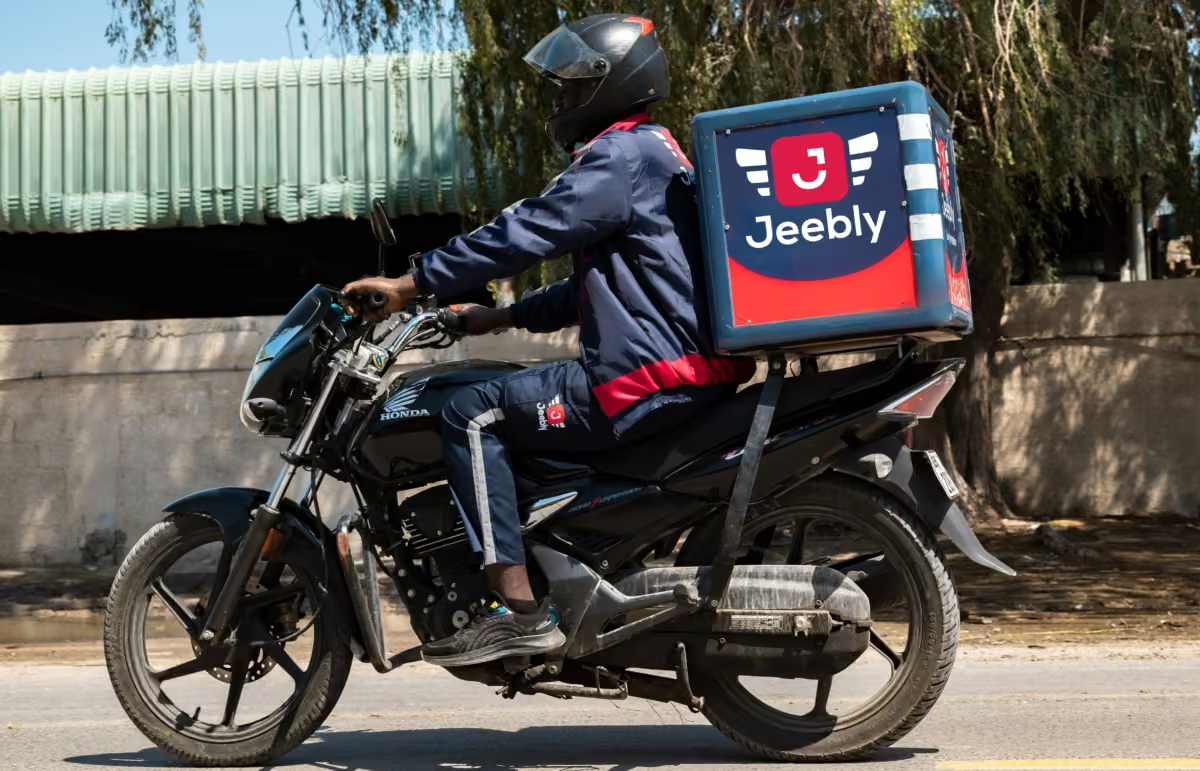
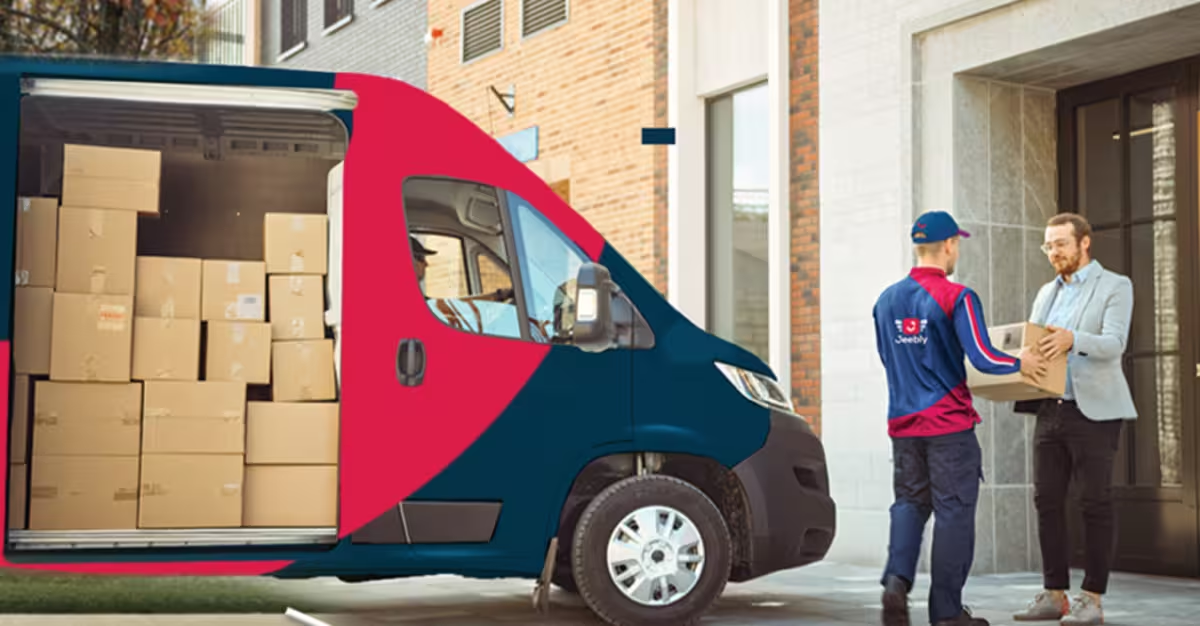
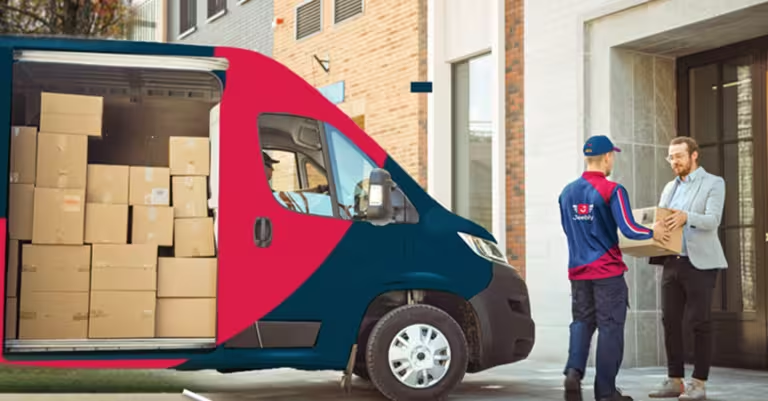
A Jeebly courier service delivery van filled with cardboard boxes parked outside a building in the UAE, while a courier uniform-clad driver hands over a parcel to a customer.

Best Courier Services in UAE: 2026 Comparison Guide

Every UAE e-commerce business reaches the same inflexion point: the courier that worked fine at 30 orders a day starts showing cracks at 300. Deliveries get missed, and COD reconciliation runs late. The tracking page shows “out for delivery” for six hours. And your customer contacts you, not the courier.

Finding the best courier service in UAE is about matching a provider’s operational capabilities to your actual delivery profile: by order volume, coverage zone, speed requirement, and the tech stack you need to integrate with your store.

This guide compares the leading UAE courier services for 2026 based on the criteria that directly affect your margins: first-attempt delivery rates, COD handling, platform integrations, returns management, and pricing transparency. It also covers what to ask any provider before you sign anything.

Top 6 UAE Courier Services Compared: Who Does What Well

1) Jeebly

Jeebly is built around a single operating principle: the courier experience should be invisible to the end customer and frictionless for the business running it. That means AI-assisted dispatch, automated NDR workflows, direct platform integrations, and a 98% First-Day Delivery Success rate across 50,000+ daily deliveries, supported by a fleet of 4,000+ active vehicles.

The service structure is designed to match different business profiles rather than forcing every operation into the same product:

Jeebly Dash covers express, same-day, and next-day domestic delivery. Published base rate: AED 17.31 per parcel up to 5 kg, with same-day delivery available within Dubai. Direct integrations with Shopify, WooCommerce, Magento, ChatFood, and Grubtech. COD collection and weekly remittance are standard.

Jeebly Bizz is the logistics management layer for businesses that need more than delivery, like warehousing, fulfilment, reverse logistics, automated dispatch, and real-time reporting in one connected platform. Built for operations running hundreds of daily orders where manual coordination isn’t viable.

Jeebly Haul handles freight and bulk shipments above 20 kg: road freight across the UAE and GCC, air freight, and ocean freight. Custom-quoted, not bookable via app.

Jeebly works with brands including BFL Group, Mumzworld, Instashop, and Zomato. If your priority is UAE-native coverage, verified performance data, and a single partner that scales with you, Jeebly is the place to start.

Best for: D2C and e-commerce brands at any stage of growth, from 20 to 2,000+ daily orders. 

Watch out for: Express (60–120 min) delivery is currently available only in Dubai. 

2) Aramex

Aramex leads GCC-wide e-commerce delivery with the most mature COD infrastructure and a regional last-mile network across more than 60 countries. For brands already operating at scale with significant volume in Saudi Arabia, Kuwait, or Egypt, the depth of the regional network is genuinely valuable. Their Shop & Ship cross-border service and reverse logistics workflows are well-established.

Best for: Mid- to large businesses with consistent GCC or MENA export volume. 

Watch out for: Enterprise-leaning pricing. Smaller brands shipping fewer than 50 orders a day may find better value with local carriers.

3) DHL Express UAE

DHL Express offers the widest global reach across 220+ countries and advanced customs automation tools designed to streamline cross-border processing. Their Dubai South (DWC) hub is one of the most active in the region.

Best for: Businesses where international express speed justifies the cost of high-value products, time-sensitive B2B shipments, or Europe/US-bound parcels.

Watch out for: For domestic UAE e-commerce at volume, DHL Express is typically priced at a premium, compressing margins on high-frequency local orders. It’s not the right tool for scaling the domestic last-mile. 

4) Quiqup

Quiqup delivers within 4 hours in Dubai, with a 99% first-attempt delivery rate, making it a strong option for brands prioritising fast delivery in the city. The fleet is owned and managed in-house, which supports consistent quality but limits peak capacity compared to larger operators.

Best for: Brands with a Dubai-centric order profile where sub-four-hour delivery is a direct commercial differentiator: grocery, beauty, fashion. 

Watch out for: Multi-emirate coverage is limited. Not built for fulfilment, freight, or returns at scale. Higher per-delivery cost than next-day carriers.

Here’s a quick snapshot for easy understanding:

Courier Best For Delivery Strength COD Integrations
Jeebly UAE eCommerce brands Same-day + scalable delivery ✓ Yes Shopify, WooCommerce, Magento
Aramex GCC expansion Regional coverage ✓ Yes ✓ Yes
DHL International shipping Global express Limited ✓ Yes
Quiqup Dubai same-day delivery Fast urban delivery ✓ Yes ✓ Yes
Emirates Post Remote locations Nationwide reach ✓ Yes Limited
Shipa SMEs Easy onboarding ✓ Yes ✓ Yes

Quiqup and Jeebly are the two most-compared same-day providers in Dubai. Read the full head-to-head comparison on Quiqup vs Jeebly.

5) Emirates Post (EMX/7X)

Emirates Post and its courier arm, EMX, cover remote areas that most private providers deprioritise, including PO Box delivery, government-adjacent shipments, and addresses outside the main urban corridors.

Best for: High-volume domestic shipments to addresses in the northern and eastern emirates that private couriers don’t reliably serve. 

Watch out for: Tracking visibility and delivery windows are more limited than with tech-native providers. Not suited for speed-sensitive e-commerce or brands where real-time customer communication is a priority.

6) Shipa Delivery

Shipa provides last-mile delivery and e-commerce fulfilment across the UAE with a focus on SME accessibility and straightforward onboarding.

Best for: Early-stage brands looking for a clean setup without complex volume commitments. 

Watch out for: Primarily last-mile focused. Businesses that also need freight, warehousing, or returns management will require additional vendors, adding coordination overhead as they scale.

What to Look for Before You Commit to Any UAE Courier

Most businesses choose a courier based on price per parcel. Many businesses reconsider their courier partner once delivery volume increases. The two things are related.

Per-parcel rate is one input. The total cost of operations is the number that matters. Here’s what actually drives that figure:

  • First-attempt delivery success rate (FDSS): Every failed delivery costs you twice: the re-attempt fee and the time your team spends managing the NDR (Non-Delivery Report). The brands winning in the UAE right now are demanding API-first carrier integrations and automated workflows that handle failed deliveries before they eat into margins.


  • COD remittance speed: Cash on delivery still accounts for a significant share of UAE e-commerce transactions. The remittance cycle directly affects working capital. A courier remitting weekly versus one remitting fortnightly can hold two weeks of your revenue at any given time. At volume, that’s a meaningful float.


  • Platform integration depth: “Shopify integration” means different things to different couriers. Some offer a full two-way API. Others require manual CSV uploads or a basic webhook that breaks under load. If your operations team is spending more than 20 minutes a day on manual logistics tasks, your integration isn’t working properly.


  • UAE-wide coverage with confirmed emirate-level SLAs: “Nationwide coverage” is a common claim. The reality is that next-day delivery to Dubai and next-day delivery to Ras Al Khaimah are not the same operational challenge. Confirm which emirates your courier covers for same-day, next-day, and standard delivery.


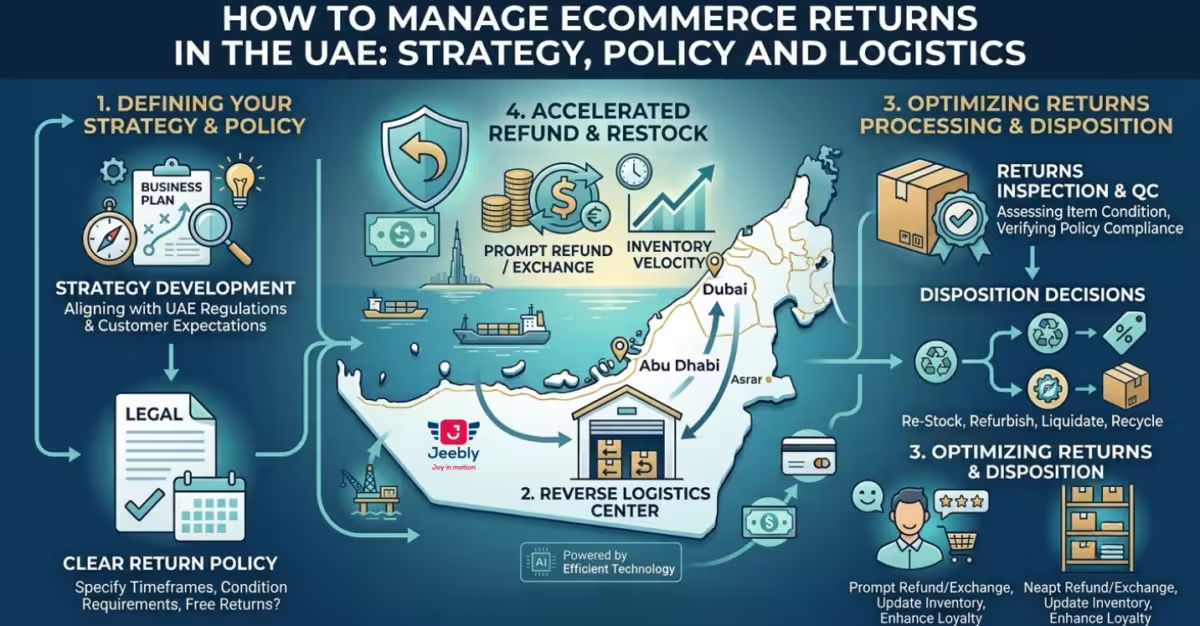
  • Returns management: Reverse logistics is where most UAE courier relationships quietly fall apart. Ask specifically: Is the return managed in-house or handed off to a third party? What’s the SLA from the customer’s door back to your warehouse? Is there a per-return fee in addition to the standard rate?


Understand your full shipping cost picture before you negotiate. Read: Cost of Shipping for a Small Business in UAE (2026).

Choosing by Business Stage: A Practical Framework

1) Under 50 orders/day: 

Flexibility matters more than infrastructure at this stage. Choose a provider with no minimum commitment, transparent per-parcel pricing, and COD support if your customers expect it. Test for 60 days before negotiating volume terms. 

Jeebly Dash is structured for exactly this: no minimum order volume, clean onboarding, and the ability to scale without renegotiating contracts.

2) 50–300 orders/day: 

This is where the choice compounds. You need UAE-wide coverage with confirmed emirate-level SLAs, a first-attempt delivery rate you can model against, and a returns process that doesn’t create a separate daily workflow. 

A single provider handling all of this is cheaper in practice than two providers each handling part of it. Jeebly Bizz brings dispatch, tracking, NDR management, and reverse logistics into one platform at this volume tier.

3) 300+ orders/day: 

At this volume, switching providers is expensive and operationally disruptive. Choose for the next two years, not for today. You need owned or controlled fleet capacity with warehousing integration, and tech infrastructure that communicates directly with your OMS without manual intervention. 

Jeebly’s platform integrates with Shopify, WooCommerce, Magento, ChatFood, and Grubtech. See how the technology is structured before evaluating any other provider.

Questions to Ask Any UAE Courier Before Signing

Generic sales conversations from couriers will cover speed, price, and coverage. These are the questions that reveal operational reality:

  • What is your published first-attempt delivery success rate, and is it auditable?
  • What is your COD remittance cycle: weekly, fortnightly, or monthly?
  • How do you manage NDR events: automated workflows or manual follow-up?
  • Which specific emirates are covered for same-day delivery, and what are the cut-off times?
  • Is returns management handled in-house or outsourced?
  • What does onboarding look like? Is there a minimum volume commitment or a trial period?

A courier who can answer all six clearly, in writing, is a courier you can plan around. One that hedges on any of them will create operational uncertainty at the worst possible time.

Conclusion

The best courier service in UAE for your business depends on three things: where your customers are, how many orders you ship, and how complex your fulfilment needs are. 

Global carriers like DHL and Aramex are genuinely strong for international and GCC-wide volume. Hyperlocal providers like Quiqup serve a specific speed-sensitive niche in Dubai. For UAE domestic e-commerce at any meaningful scale, Jeebly is built for exactly that operation. Jeebly Dash for last-mile delivery, Jeebly Bizz for integrated fulfilment, and Jeebly Haul for freight. One partner across the full chain. 

Need a courier partner that can handle your current volume and your next growth stage? Speak with Jeebly’s logistics team to build the right delivery setup for your business.

Frequently Asked Questions

Jeebly maintains a 98% First Day Delivery Success rate across 50,000+ daily deliveries in the UAE. Quiqup also publishes a 98% first-attempt rate, though primarily within Dubai. Always ask any courier for auditable performance data before committing.

Most major UAE couriers collect cash at the point of delivery and remit funds back to the sender on a set cycle, weekly, fortnightly, or monthly, depending on the provider. Jeebly remits weekly. COD fees typically range from 1–2% of the collected amount per transaction.

Rates commonly vary depending on parcel weight, destination, delivery speed, and contract volume. The cheapest headline rate isn’t always the lowest total cost. Providers with high first-attempt success rates reduce your RTO costs, which often outweigh the benefits of a lower base rate.

Jeebly integrates directly with Shopify, WooCommerce, Magento, ChatFood, and Grubtech. Aramex and DHL also offer Shopify integrations, though the depth and automation capabilities vary. Test any integration in a live environment before relying on it for daily operations.

Confirm whether returns are managed in-house or handed off to a third party, what the SLA is from the customer door back to your warehouse, and whether there’s a separate per-return fee.

Routes to insightful reads

A comparison banner for UAE eCommerce delivery showing two hands holding smartphones side-by-side against a blurred Dubai skyline. The left screen displays the DHL Express logo with an "International Express" badge below it, while the right screen displays the Jeebly logo with a "Local Hyper-local" map route badge. A bold "VS" graphic splits the center.
DHL vs Jeebly: Which Is Better for UAE Businesses and eCommerce Delivery?

Looking for the right logistics partner in the UAE? We break down DHL vs. Jeebly to help you choose between global express shipping and local, tech-driven e-commerce fulfillment. Discover which courier wins on domestic delivery speeds, Cash on Delivery (COD) handling, and cross-border customs.

Read More
Logisty vs Jeebly comparison for UAE eCommerce delivery, last-mile logistics and courier services
Logisty vs Jeebly: UAE eCommerce Delivery Comparison

Logisty and Jeebly serve different logistics needs, but which is the better choice for your business? This comparison explores their services, delivery capabilities, technology, coverage, eCommerce integrations, cash on delivery (COD), and fulfilment solutions to help UAE businesses choose the right logistics partner for growth.

Read More
UAE VAT on imports and exports showing tax compliance, logistics, shipping and customs documentation
VAT on Shipping and Delivery Services in UAE: What Businesses Need to Know

VAT can significantly impact the cost of shipping and delivery services in the UAE, making it essential for businesses to understand how it applies to domestic and international shipments. This guide explains VAT rules, zero-rated and standard-rated services, invoicing requirements, and practical compliance tips to help businesses manage logistics costs and stay compliant with UAE tax regulations.

Read More
COD fraud prevention in the UAE with secure payment verification, order authentication and logistics risk management
COD Fraud in UAE eCommerce: How to Detect, Prevent and Reduce Losses

Cash on Delivery (COD) fraud is a growing challenge for e-commerce businesses across the UAE, leading to fake orders, delivery failures and unnecessary operational costs. Learn how to identify common fraud tactics, implement effective prevention strategies and protect your business while maintaining a seamless customer experience.

Read More
UAE import and export guide featuring trade documentation, cargo ship, air freight, customs clearance and logistics operations
UAE Import and Export Guide: Trade Documentation, Logistics and Compliance

Customs clearance is a critical step in moving goods into and out of the UAE. Whether you’re importing, exporting, or shipping across borders, understanding the customs process, required documentation, and compliance requirements can help you avoid delays, reduce costs, and keep your supply chain running efficiently.

Read More
Categories
blogs

Delivery SLAs in UAE: What businesses must demand from their logistics partner

Understanding Delivery SLAs: What UAE Businesses Should Know​

Understanding Delivery SLAs: What UAE Businesses Should Know

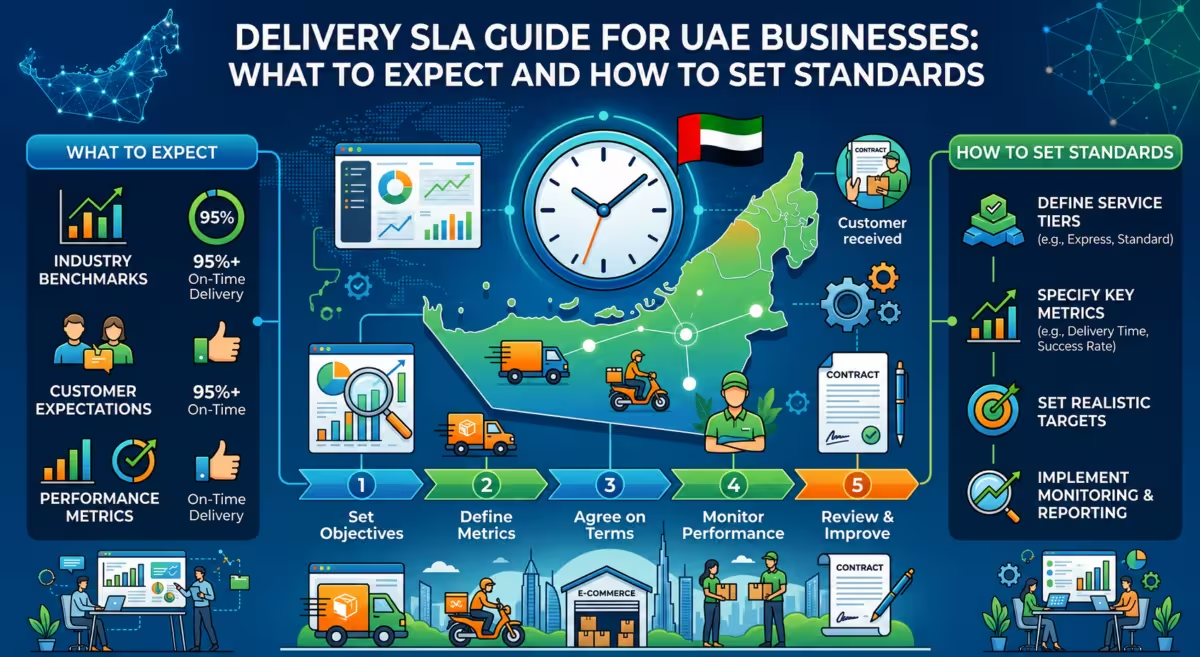
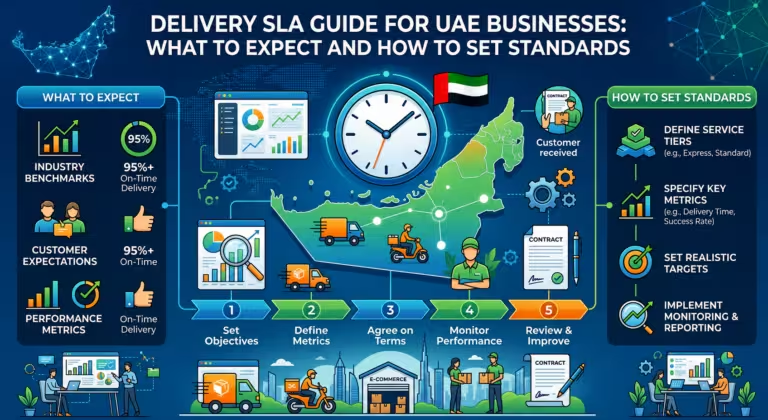
A delivery SLA (Service Level Agreement) defines the maximum time allowed for a shipment to be delivered. In UAE eCommerce, standard SLAs are 24–48 hours for same-emirate and 72 hours for inter-emirate deliveries.

Core SLA components every UAE business should expect

A logistics SLA typically covers: promised delivery windows (same day, next day, timed slots), on time delivery metrics, first time delivery success, lost/damaged goods handling, customer support response times, and dispute or refund processes. These elements remove ambiguity and ensure accountability.

The KPIs that matter

The most common SLA KPIs are:

On-Time Delivery (OTD): percent of deliveries made within the promised window. This is the single most important trust metric for customers.

First-Delivery Success Rate (FDSR): how often parcels are delivered on the first attempt (reduces cost and returns).

Order Accuracy & Damage Rate: percent of orders delivered correctly and undamaged.

Customer Response / Resolution Time: how quickly the carrier responds to exceptions.

Tracking these KPIs in your SLA helps you measure carrier performance and protect margins.

Why local context matters in the UAE

UAE logistics operate under specific rules (postal and transport frameworks) and seasonal patterns (e.g., Ramadan/Eid surges). Make sure SLAs reference local requirements and include contingency plans for regulatory checks or peak-season capacity. (See Emirates Post / postal framework for local rules.)

Practical SLA clauses to negotiate

* Defined delivery windows (not “same day” vaguely — specify cut offs and guaranteed slots).

* Remediation & penalties (credits or refunds when KPIs miss targets).

* Escalation matrix & SLAs for support (response times for customer queries).

* COD handling & reconciliation terms (critical in UAE markets).

* Peak season capacity guarantees (Eid/Ramadan surge support).

For operational playbooks on cut offs and surge planning, see Jeebly’s Ramadan and peak season guidance. (e.g., How Jeebly Helps SMEs Scale During Peak Shopping Seasons).

How to monitor and enforce SLAs

Automate performance dashboards, ingest carrier telemetry (ETAs, proof of delivery), and run weekly KPI reviews. Use API integrations so order status and PODs flow into your CRM/ERP, this removes reconciliation lag and enables faster refunds and dispute handling.

Final checklist for choosing an SLA partner

* Are OTD and FDSR explicitly defined?

* Are penalties and remediation clear?

* Is there an API for real time data and digital proof of delivery?

* Does the SLA include peak season capacity and COD terms?

* Can the carrier demonstrate UAE compliance and local experience?

A well-written SLA converts promises into predictable business outcomes. For UAE businesses that depend on customer trust, tight delivery SLAs UAE are a commercial necessity and a strong SLA with the right partner (and API integrations) is one of the fastest ways to improve delivery performance and reduce customer complaints.

Frequently Asked Questions

A delivery SLA (Service Level Agreement) is a formal commitment that defines the expected delivery performance between a business and its logistics provider. It typically outlines delivery timelines, service standards, tracking requirements, reporting obligations, and performance metrics used to measure delivery success.

Delivery SLAs for UAE eCommerce businesses vary by service type. Same-day deliveries are often completed within a few hours, while next-day delivery is a common standard for orders placed before a specified cutoff time. Many businesses also track metrics such as on-time delivery rates, successful first-attempt deliveries, and customer satisfaction levels.

When a courier misses an SLA, the outcome depends on the agreement between the business and the logistics provider. Common responses include performance reviews, service credits, corrective action plans, reporting requirements, or other remedies defined within the contract. Consistent SLA failures may indicate operational issues that require improvement.

A delivery SLA should clearly define delivery timeframes, service coverage areas, pickup and delivery windows, tracking requirements, reporting standards, escalation procedures, performance targets, and responsibilities for both parties. It should also specify how performance will be measured and what happens if service levels are not met.

The right SLA depends on your business model and customer expectations. Most businesses should seek clear commitments around on-time delivery performance, shipment visibility, delivery attempt success rates, customer support responsiveness, proof of delivery, and issue resolution timelines. The SLA should align with your operational requirements and customer experience goals.

Routes to insightful reads

A comparison banner for UAE eCommerce delivery showing two hands holding smartphones side-by-side against a blurred Dubai skyline. The left screen displays the DHL Express logo with an "International Express" badge below it, while the right screen displays the Jeebly logo with a "Local Hyper-local" map route badge. A bold "VS" graphic splits the center.
DHL vs Jeebly: Which Is Better for UAE Businesses and eCommerce Delivery?

Looking for the right logistics partner in the UAE? We break down DHL vs. Jeebly to help you choose between global express shipping and local, tech-driven e-commerce fulfillment. Discover which courier wins on domestic delivery speeds, Cash on Delivery (COD) handling, and cross-border customs.

Read More
Logisty vs Jeebly comparison for UAE eCommerce delivery, last-mile logistics and courier services
Logisty vs Jeebly: UAE eCommerce Delivery Comparison

Logisty and Jeebly serve different logistics needs, but which is the better choice for your business? This comparison explores their services, delivery capabilities, technology, coverage, eCommerce integrations, cash on delivery (COD), and fulfilment solutions to help UAE businesses choose the right logistics partner for growth.

Read More
UAE VAT on imports and exports showing tax compliance, logistics, shipping and customs documentation
VAT on Shipping and Delivery Services in UAE: What Businesses Need to Know

VAT can significantly impact the cost of shipping and delivery services in the UAE, making it essential for businesses to understand how it applies to domestic and international shipments. This guide explains VAT rules, zero-rated and standard-rated services, invoicing requirements, and practical compliance tips to help businesses manage logistics costs and stay compliant with UAE tax regulations.

Read More
COD fraud prevention in the UAE with secure payment verification, order authentication and logistics risk management
COD Fraud in UAE eCommerce: How to Detect, Prevent and Reduce Losses

Cash on Delivery (COD) fraud is a growing challenge for e-commerce businesses across the UAE, leading to fake orders, delivery failures and unnecessary operational costs. Learn how to identify common fraud tactics, implement effective prevention strategies and protect your business while maintaining a seamless customer experience.

Read More
UAE import and export guide featuring trade documentation, cargo ship, air freight, customs clearance and logistics operations
UAE Import and Export Guide: Trade Documentation, Logistics and Compliance

Customs clearance is a critical step in moving goods into and out of the UAE. Whether you’re importing, exporting, or shipping across borders, understanding the customs process, required documentation, and compliance requirements can help you avoid delays, reduce costs, and keep your supply chain running efficiently.

Read More
Categories
blogs

How Jeebly Helps SMEs Scale During Peak Shopping Seasons

How Jeebly Helps SMEs Scale During Peak Shopping Seasons

How Jeebly Helps SMEs Scale During Peak Shopping Seasons

Peak shopping seasons can be both exciting and overwhelming for small and medium sized businesses (SMEs). Whether it’s festive sales, online shopping events, or promotional campaigns, order volumes can surge overnight. Without the right logistics support, this growth can quickly turn into delayed deliveries, unhappy customers, and lost revenue. That’s why choosing the right logistics solutions for SMEs during peak season becomes critical for sustainable growth.

At Jeebly, we help SMEs prepare for and scale smoothly during high demand periods with smart logistics planning, reliable delivery networks, and real time visibility.

Managing Sudden Order Surges with Ease

One of the biggest challenges SMEs face during peak seasons is managing sudden spikes in orders. Manual processes and limited delivery capacity can lead to missed pickups, delayed dispatches, and operational stress. Jeebly offers scalable delivery infrastructure that adjusts to your order volume, ensuring your business stays efficient even during high demand.

With flexible pickup scheduling, on demand delivery options, and same day or scheduled services, SMEs can keep operations running smoothly without overloading their teams.

Faster Fulfilment and Reliable Deliveries

During peak shopping periods, customers expect faster deliveries and accurate timelines. Delays can lead to negative reviews and lost repeat business. Jeebly’s optimized routing technology and reliable delivery network ensure that packages reach customers on time, even during busy periods.

Real time tracking and ETA updates also help businesses in Dubai keep customers informed throughout the delivery journey. This transparency reduces customer complaints and builds trust, which is essential during high volume sales seasons.

Smart Technology for Better Planning

Peak seasons require more than just extra delivery capacity. Businesses need visibility into orders, shipments, and delivery performance. Jeebly’s platform provides SMEs with real time dashboards, tracking tools, and analytics that make it easier to plan and manage operations.

With clear insights into delivery timelines, order status, and performance metrics, businesses can make quick decisions and maintain service quality. This technology driven approach is a key reason why many companies rely on logistics solutions for SMEs during peak season to stay competitive.

Cost Control During High Demand

Scaling during peak seasons can increase operational costs if not managed properly. Hiring temporary staff, arranging extra vehicles, or handling failed deliveries can quickly add up. Jeebly helps SMEs control costs through optimized routing, consolidated deliveries, and transparent pricing models.

By reducing failed delivery attempts and improving route efficiency, businesses can maintain profitability while meeting customer expectations.

Seamless Customer Experience

Customer experience plays a major role in repeat purchases and brand loyalty. During peak seasons, even small delays can affect customer satisfaction. Jeebly ensures smooth deliveries, accurate ETAs, and responsive support so that SMEs can deliver a consistent and reliable experience.

From first mile pickup to last mile delivery, our services are designed to support growing businesses and help them maintain service quality during their busiest periods.

Scale with Confidence

Peak shopping seasons are an opportunity for SMEs in UAE to grow their customer base and boost revenue. With the right logistics partner, scaling operations becomes far more manageable. Jeebly provides dependable, flexible, and tech enabled logistics solutions that help SMEs meet demand without compromising on service.

If your business is preparing for the next big sales season, investing in the right logistics solutions for SMEs during peak season can make all the difference. With Jeebly by your side, you can scale confidently, deliver faster, and keep customers coming back long after the peak season ends.

Routes to insightful reads

A comparison banner for UAE eCommerce delivery showing two hands holding smartphones side-by-side against a blurred Dubai skyline. The left screen displays the DHL Express logo with an "International Express" badge below it, while the right screen displays the Jeebly logo with a "Local Hyper-local" map route badge. A bold "VS" graphic splits the center.
DHL vs Jeebly: Which Is Better for UAE Businesses and eCommerce Delivery?

Looking for the right logistics partner in the UAE? We break down DHL vs. Jeebly to help you choose between global express shipping and local, tech-driven e-commerce fulfillment. Discover which courier wins on domestic delivery speeds, Cash on Delivery (COD) handling, and cross-border customs.

Read More
Logisty vs Jeebly comparison for UAE eCommerce delivery, last-mile logistics and courier services
Logisty vs Jeebly: UAE eCommerce Delivery Comparison

Logisty and Jeebly serve different logistics needs, but which is the better choice for your business? This comparison explores their services, delivery capabilities, technology, coverage, eCommerce integrations, cash on delivery (COD), and fulfilment solutions to help UAE businesses choose the right logistics partner for growth.

Read More
UAE VAT on imports and exports showing tax compliance, logistics, shipping and customs documentation
VAT on Shipping and Delivery Services in UAE: What Businesses Need to Know

VAT can significantly impact the cost of shipping and delivery services in the UAE, making it essential for businesses to understand how it applies to domestic and international shipments. This guide explains VAT rules, zero-rated and standard-rated services, invoicing requirements, and practical compliance tips to help businesses manage logistics costs and stay compliant with UAE tax regulations.

Read More
COD fraud prevention in the UAE with secure payment verification, order authentication and logistics risk management
COD Fraud in UAE eCommerce: How to Detect, Prevent and Reduce Losses

Cash on Delivery (COD) fraud is a growing challenge for e-commerce businesses across the UAE, leading to fake orders, delivery failures and unnecessary operational costs. Learn how to identify common fraud tactics, implement effective prevention strategies and protect your business while maintaining a seamless customer experience.

Read More
UAE import and export guide featuring trade documentation, cargo ship, air freight, customs clearance and logistics operations
UAE Import and Export Guide: Trade Documentation, Logistics and Compliance

Customs clearance is a critical step in moving goods into and out of the UAE. Whether you’re importing, exporting, or shipping across borders, understanding the customs process, required documentation, and compliance requirements can help you avoid delays, reduce costs, and keep your supply chain running efficiently.

Read More
Categories
blogs

7 UAE logistics trends reshaping 2026 — what businesses need to know now

Expected 2026 Trends in UAE Logistics and Delivery

7 UAE logistics trends reshaping 2026 — what businesses need to know now

UAE logistics in 2026 is being reshaped by AI route optimisation, hyperlocal fulfilment, drone delivery trials and the rise of social commerce logistics. Here are the 7 trends businesses need to act on now.

The logistics industry in the UAE is evolving rapidly as technology, consumer behavior, and infrastructure continue to reshape how goods move across the region. Over the past decade, the UAE has become one of the most advanced logistics hubs in the Middle East, supported by strong trade connectivity, modern infrastructure, and rapidly growing e-commerce adoption.

By 2026, these changes will accelerate even further. New technologies such as artificial intelligence, micro fulfilment infrastructure, and predictive analytics are already redefining delivery operations. At the same time, rising customer expectations for faster and more transparent deliveries are pushing logistics providers to innovate.

According to the Statista eCommerce market outlook for the UAE, the country’s e-commerce sector is expected to continue growing significantly through 2026, increasing the demand for efficient last-mile logistics networks.

For businesses operating in the UAE, understanding the key logistics trends shaping 2026 will be essential for maintaining operational efficiency and delivering a better customer experience.

1. AI-Powered Route Optimization Will Become Standard

Artificial intelligence is transforming how logistics networks operate. In 2026, AI-driven route optimization will play a central role in helping delivery companies reduce travel time, fuel costs, and operational inefficiencies.

Modern logistics platforms analyze multiple variables simultaneously, including:

* Real-time traffic conditions

* Delivery density in specific areas

* Rider availability

* Customer delivery windows

* Historical route performance

These systems automatically adjust delivery routes throughout the day, ensuring that drivers follow the most efficient path.

For businesses managing large order volumes, this means faster deliveries and more reliable service.

At Jeebly, AI-enabled routing technology already supports delivery operations across the UAE, improving delivery success rates and reducing delays in the last-mile stage of the supply chain. If you’re exploring how last-mile delivery works in detail, you can read our guide on what last-mile delivery means for modern logistics.

2. Micro-Fulfilment Centres Will Transform Urban Logistics

One of the most important developments in UAE logistics is the rise of micro fulfilment centres (MFCs).

Traditional warehouses are typically located on the outskirts of cities. While this setup works for bulk distribution, it increases delivery time for urban customers.

Micro fulfilment centres solve this challenge by placing inventory closer to residential demand zones within cities.

These compact fulfilment hubs allow businesses to:

* Shorten delivery distances

* Improve order processing speed

* Support same-day delivery models

* Reduce logistics costs for urban deliveries

Jeebly has recently launched its Micro Fulfilment Centre (MFC) network, designed to support fast urban deliveries across Dubai and other key UAE markets. By positioning inventory closer to customers, retailers can significantly reduce fulfilment times and support hyperlocal delivery models.

As online shopping continues to grow, MFC infrastructure will become one of the most important components of modern logistics networks.

3. Q-Commerce and Hyperlocal Delivery Will Continue Expanding

Consumer expectations around delivery speed have changed dramatically. Waiting several days for an online order is no longer acceptable for many shoppers.

Instead, customers increasingly expect:

* Same day delivery

* Instant delivery options

* Accurate delivery windows

This shift has led to the rapid growth of Q-commerce (quick commerce).

Q-commerce focuses on ultra-fast deliveries, often within hours or minutes of placing an order. The model is especially popular for products such as groceries, pharmacy items, electronics accessories, and urgent retail purchases.

Jeebly has expanded its Q-commerce delivery capabilities through Jeebly Dash, enabling rapid deliveries across high density urban areas.

Hyperlocal delivery networks like these are becoming essential for retailers and social sellers who want to compete in an on-demand retail environment.

4. Sustainability and Green Logistics Will Gain Momentum

Sustainability is becoming a key priority for logistics companies across the UAE.

The country has committed to ambitious environmental targets through initiatives such as the UAE Net Zero 2050 strategy, which aims to reduce carbon emissions across industries.

To align with these goals, logistics companies are exploring several sustainability initiatives, including:

* Electric delivery vehicles

* Optimized delivery routes to reduce fuel consumption

* Environmentally friendly packaging solutions

* Carbon-tracking systems for supply chains

Green logistics is no longer just a regulatory requirement, it is becoming an important factor for brands that want to operate responsibly while maintaining operational efficiency.

5. Reverse Logistics Will Become More Important

As e-commerce continues to grow, so does the volume of product returns.

Returns, exchanges, and failed deliveries create operational challenges for retailers. Without a proper reverse logistics system, businesses can face increased costs and inventory management issues.

Efficient reverse logistics solutions help businesses:

recover returned inventory faster

reduce operational losses

improve customer satisfaction

Many companies are now investing in structured return processes to make returns more efficient. If you’re interested in understanding this area of logistics further, you can explore how reverse logistics supports modern supply chains.

6. Autonomous Delivery and Drone Logistics Will Continue Developing

Autonomous delivery technologies are also gaining attention across the UAE and the wider Middle East.

Government regulators are actively exploring frameworks to support these innovations. Authorities such as the General Civil Aviation Authority (GCAA) are working on regulatory systems that allow controlled drone logistics trials.

These technologies are still in early stages but could eventually support:

* Medical supply delivery

* Remote area logistics

* Lightweight parcel transport

While drones will not replace traditional delivery vehicles anytime soon, they are expected to complement existing logistics infrastructure in the future.

7. Data Visibility and Predictive Logistics Will Improve Customer Experience

Modern logistics operations are increasingly driven by data.

Businesses rely on predictive analytics to forecast demand and optimize delivery operations. Customers, meanwhile, expect greater transparency during the delivery process.

Predictive logistics systems help companies:

* Forecast demand spikes

* Optimize delivery routes

* Improve ETA accuracy

* Reduce failed deliveries

Jeebly’s delivery platform already provides real-time delivery updates and operational insights, helping businesses maintain better visibility across their logistics operations.

The Future of Logistics in the UAE

The logistics ecosystem in the UAE is entering a new era of innovation. From AI-driven routing and hyperlocal fulfilment to micro-fulfilment infrastructure and predictive analytics, the trends shaping 2026 will redefine how businesses manage supply chains.

Companies that invest early in modern logistics infrastructure will be better positioned to scale operations, reduce delivery delays, and improve customer satisfaction.

At Jeebly, we continue building technology-driven logistics solutions designed for the next generation of commerce—combining smart fulfilment, rapid delivery networks, and data-driven operations.

As logistics technology continues to evolve, one thing remains certain: the future of delivery in the UAE will be defined by speed, intelligence, and adaptability.

Frequently Asked Questions

The UAE logistics sector continues to evolve through increased automation, AI-powered operations, real-time visibility, sustainability initiatives, and the growth of e-commerce and social commerce. Businesses are investing in smarter fulfilment, faster delivery networks, and technology-driven supply chain management to meet rising customer expectations.

AI is helping logistics companies improve route planning, demand forecasting, delivery scheduling, and operational efficiency. By analyzing large volumes of data, AI can optimize delivery routes, reduce transit times, improve resource utilization, and provide more accurate delivery estimates for customers.

The UAE continues to explore and test advanced delivery technologies, including drones and autonomous delivery solutions. While pilot programs and innovation initiatives are ongoing, availability depends on regulatory approvals, operational requirements, and specific use cases. Businesses should monitor official announcements for the latest developments.

Social commerce is increasing demand for faster, more flexible delivery services. As more businesses sell through platforms such as Instagram, TikTok, WhatsApp, and Facebook, logistics providers are adapting by offering quicker fulfilment, cash-on-delivery services, improved returns management, and scalable last-mile delivery solutions.

UAE businesses are increasingly adopting technologies such as transportation management systems (TMS), warehouse management systems (WMS), route optimization software, real-time tracking platforms, AI-powered analytics, automation tools, and integrated logistics platforms. These technologies help improve visibility, efficiency, customer experience, and overall supply chain performance.

Routes to insightful reads

A comparison banner for UAE eCommerce delivery showing two hands holding smartphones side-by-side against a blurred Dubai skyline. The left screen displays the DHL Express logo with an "International Express" badge below it, while the right screen displays the Jeebly logo with a "Local Hyper-local" map route badge. A bold "VS" graphic splits the center.
DHL vs Jeebly: Which Is Better for UAE Businesses and eCommerce Delivery?

Looking for the right logistics partner in the UAE? We break down DHL vs. Jeebly to help you choose between global express shipping and local, tech-driven e-commerce fulfillment. Discover which courier wins on domestic delivery speeds, Cash on Delivery (COD) handling, and cross-border customs.

Read More
Logisty vs Jeebly comparison for UAE eCommerce delivery, last-mile logistics and courier services
Logisty vs Jeebly: UAE eCommerce Delivery Comparison

Logisty and Jeebly serve different logistics needs, but which is the better choice for your business? This comparison explores their services, delivery capabilities, technology, coverage, eCommerce integrations, cash on delivery (COD), and fulfilment solutions to help UAE businesses choose the right logistics partner for growth.

Read More
UAE VAT on imports and exports showing tax compliance, logistics, shipping and customs documentation
VAT on Shipping and Delivery Services in UAE: What Businesses Need to Know

VAT can significantly impact the cost of shipping and delivery services in the UAE, making it essential for businesses to understand how it applies to domestic and international shipments. This guide explains VAT rules, zero-rated and standard-rated services, invoicing requirements, and practical compliance tips to help businesses manage logistics costs and stay compliant with UAE tax regulations.

Read More
COD fraud prevention in the UAE with secure payment verification, order authentication and logistics risk management
COD Fraud in UAE eCommerce: How to Detect, Prevent and Reduce Losses

Cash on Delivery (COD) fraud is a growing challenge for e-commerce businesses across the UAE, leading to fake orders, delivery failures and unnecessary operational costs. Learn how to identify common fraud tactics, implement effective prevention strategies and protect your business while maintaining a seamless customer experience.

Read More
UAE import and export guide featuring trade documentation, cargo ship, air freight, customs clearance and logistics operations
UAE Import and Export Guide: Trade Documentation, Logistics and Compliance

Customs clearance is a critical step in moving goods into and out of the UAE. Whether you’re importing, exporting, or shipping across borders, understanding the customs process, required documentation, and compliance requirements can help you avoid delays, reduce costs, and keep your supply chain running efficiently.

Read More
Categories
blogs

What Is Last Mile Delivery? A Guide for Businesses & Shoppers

What is Last-Mile Delivery and Why It Matters in the UAE

What Is Last Mile Delivery? A Guide for Businesses & Shoppers

When people ask, what is last mile delivery, they are really asking about the final step of a package’s journey. It is the moment when a product moves from a local hub to the customer’s doorstep. Even though it sounds simple, this step often decides whether a customer feels happy or frustrated.

In ecommerce, this final stretch is the most visible part of the supply chain and delivery speed impacts customer loyalty in e-commerce more than most brands realize. Studies from Capgemini Research Institute show that most customers will not return to a brand after a poor delivery experience. That means businesses cannot afford to ignore it.

In this guide, we explain the last mile delivery meaning, how it works, why it is expensive, and what it looks like in the UAE.

What is Last-Mile Delivery?

So, what is last mile delivery in simple terms? It is the final step in the shipping process where a package travels from a nearby warehouse or delivery hub to the customer’s address.

Think of it like a relay race. The warehouse prepares the order. Trucks move it across cities. But the last runner, usually a delivery driver, brings it to your door. That final run is called the last mile.
In last mile delivery in ecommerce, this stage matters the most because it directly affects the customer. If the package arrives late, damaged, or not at all, the customer blames the brand, not the warehouse.

This is why businesses in the UAE now invest heavily in faster and smarter delivery systems. The final delivery experience shapes trust, reviews, and repeat orders.

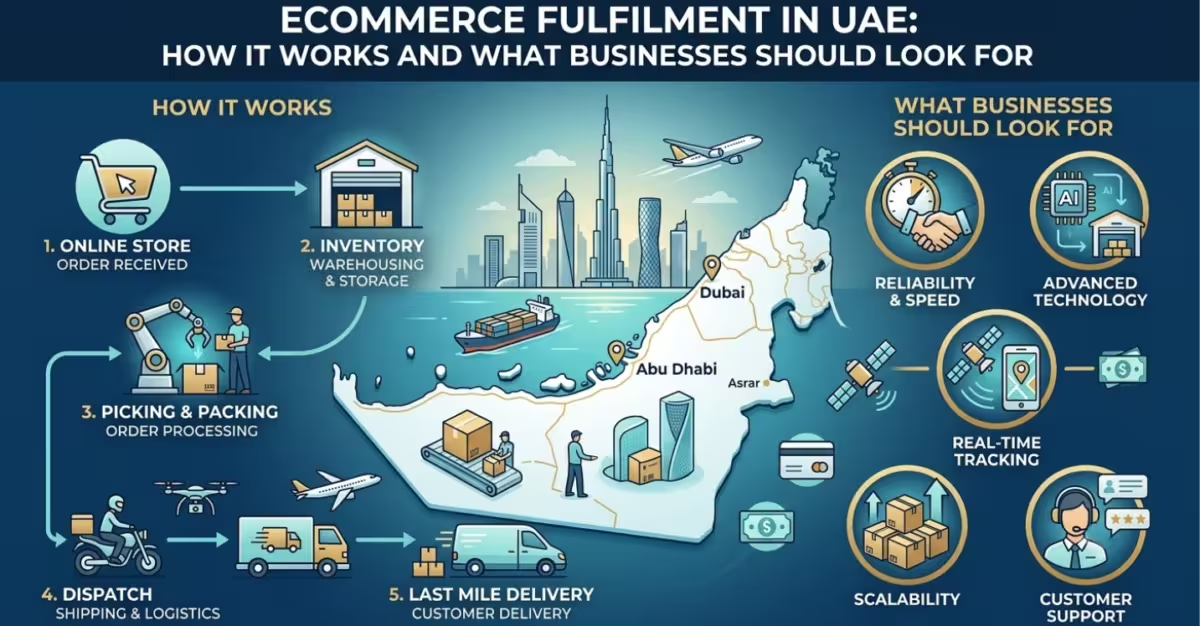
How Does Last Mile Delivery Work Step by Step?

The process usually follows these steps:

1. Order Confirmation
The customer places an order online. The system confirms payment and prepares the request.

2. Warehouse Fulfillment
Staff pick, pack, and label the product.

3. Transfer to Local Hub
The package moves to a delivery center close to the customer’s area.

4. Route Planning
Software selects the fastest and most efficient route.

5. Out for Delivery
A driver loads multiple packages and begins delivery.

6. Real Time Tracking and ETA Updates
The customer receives notifications and real time ETA delivery updates because real-time ETA updates reduce customer complaints and failed attempts.

7. Final Delivery Attempt
The driver delivers the package and collects proof of delivery.

Many UAE shoppers now expect live tracking. In fact, a McKinsey report found that customers increasingly demand same day or next day shipping. Because of this, businesses must use smart routing and clear communication to stay competitive.

Next, we will look at why this final step is often the most expensive part of the entire delivery process.

Why Is Last Mile Delivery So Expensive?

Many businesses ask, why is last mile delivery expensive if the product has already traveled across cities or even countries.

The reason is simple. The last mile is the least efficient part of shipping. A truck may carry hundreds of packages to one city. However, during final delivery, a driver may stop at each home one by one. That takes more time, fuel, and effort.

Last mile delivery can account for more than half of total shipping costs. This includes driver wages, fuel, vehicle maintenance, and delivery management systems.

Failed deliveries also increase costs. If a customer is not available, the company must attempt delivery again. In busy cities like Dubai and Abu Dhabi, traffic congestion adds even more delays. Therefore, businesses must manage this stage carefully to protect their margins.

What Affects Last Mile Delivery Speed and Reliability?

Speed and reliability depend on several factors. Even small issues can cause delays.

Here are the main factors:

Address Accuracy
Incomplete or unclear addresses slow drivers down.

Customer Availability

If the customer is not home, the delivery fails.

Traffic and Urban Density

UAE cities can experience heavy traffic during peak hours.

Delivery Time Slots
Poorly planned delivery time slots create missed attempts.

Real Time Communication

Real time ETA delivery updates help customers prepare.

For example, if a customer chooses a delivery window between 2 PM and 4 PM but leaves home early, the driver wastes time. However, when businesses follow delivery time slots best practices and send reminder notifications, the success rate improves.
Clear communication builds trust. It also reduces stress for both drivers and customers.

Common Last Mile Delivery Challenges in Real Life

Even with planning, problems still happen. These are common last mile delivery challenges businesses face every day:

1. Incorrect Addresses
A missing building number can delay delivery for hours.

2. Customer Not Reachable
Drivers may call, but the phone is switched off.

3. High Return Rates
In some markets, customers reject cash on delivery orders, strong processes for secure COD delivery in UAE reduce refusals and payment disputes.

4. Peak Season Overload
During holidays or sales, order volumes increase sharply.

5. Limited Visibility
Customers feel anxious when tracking updates are unclear.

In the UAE, where ecommerce continues to grow rapidly, these challenges become even more visible. According to Statista, online shopping in the UAE continues to expand year after year. As order numbers rise, delivery pressure increases.

However, understanding these challenges is the first step toward solving them. In the next section, we will explore practical ways businesses can reduce failed deliveries and improve performance.

How Businesses Can Improve Last Mile Delivery?

Now that we understand the challenges, let us focus on solutions. Businesses often ask how to reduce failed deliveries without increasing costs.

Here are practical steps that work:

1. Offer Flexible Delivery Time Slots
Let customers choose a time that suits them. This reduces missed attempts.

2. Send Real Time ETA Delivery Updates
Real time updates help customers plan their day.

3. Use Address Validation Tools
Confirm location details before dispatch.

4. Confirm Availability Before Delivery
A simple reminder message can prevent failure.

5. Use Smart Route Planning
Software can reduce fuel use and save time.

For example, a fashion brand in Dubai may face frequent failed deliveries. After adding SMS reminders and clearer time slots, the success rate improves within weeks. Small changes often create big results.

When businesses follow delivery time slots best practices, they improve both efficiency and customer trust.

What Shoppers Should Know About Last Mile Delivery?

Delivery is not only the company’s responsibility. Customers also play a role.

Here is what shoppers can do:

* Provide clear and complete address details

* Keep their phone reachable on delivery day

* Choose realistic delivery time slots

* Track real time ETA delivery updates

* Reschedule if plans change

Think of delivery like a meeting. If one side does not show up, it fails. When customers stay available and responsive, the process becomes smoother.

In fast growing ecommerce markets like the UAE, better coordination between brands and shoppers leads to fewer delays and better experiences.

How Jeebly Supports Last Mile Delivery in the UAE?

In the UAE, last mile delivery isn’t just about moving packages, it’s about understanding local roads, traffic patterns, and customer expectations across all seven emirates. Jeebly is built for exactly this.

Jeebly Dash — For Speed-First Ecommerce Brands

Express and scheduled delivery across the UAE
* Multiple cut-off windows to match your order flow
* Real-time tracking with WhatsApp, SMS, and email notifications
* COD collection built in with fast remittance cycles

Jeebly Bizz — For Higher-Volume Business Operations
* End-to-end supply chain support warehousing, pick-pack-deliver, and reverse logistics
* Live inventory and order tracking from a single platform
* Multiple fulfilment centres pan-UAE for faster dispatch
* Fewer failed deliveries, faster response times, better customer experiences

Tech That Works Behind Every Delivery
*OMS and WMS integration for full operational visibility
*Smart route planning that reduces idle driver time
*Riders allocated to dedicated zones across the UAE
*97% delivery success rate across UAE operations

As UAE ecommerce continues to grow, the difference between a good brand and a great one often comes down to the last mile. With the right logistics partner, delivery stops being a problem and starts being a competitive advantage.

Conclusion

Last mile delivery may seem like a small part of shipping, but it has the biggest impact on customer experience. When people ask what is last mile delivery, they are really asking why their package arrives on time or gets delayed.

For businesses, this stage affects costs, reviews, and repeat sales. For shoppers, it shapes trust. In fast growing ecommerce markets like the UAE, companies must invest in smarter routing, better communication, and reliable local partners.

When brands focus on reducing failed deliveries and improving real time updates, they turn delivery into a competitive advantage. And when customers stay informed and available, the process becomes smoother for everyone.

In the end, strong last mile delivery is not just about speed. It is about reliability, clarity, and building long term trust.

Frequently Asked Questions

Last mile delivery is the final step of shipping. It is when a package moves from a local hub to the customer’s home or office.

It costs more because drivers deliver packages one by one. Fuel, wages, traffic, and failed attempts increase the total cost.

Businesses can reduce failed deliveries by offering flexible time slots, sending reminders, and using real time ETA delivery updates. Clear communication makes a big difference.

Tracking shows that the driver is on the way. However, traffic, wrong addresses, or customer unavailability can still cause delays.

In the UAE, delivery companies use local hubs across cities like Dubai and Abu Dhabi. Drivers follow optimized routes and provide live updates. Because ecommerce is growing quickly, speed and reliability matter more than ever.

Routes to insightful reads

A comparison banner for UAE eCommerce delivery showing two hands holding smartphones side-by-side against a blurred Dubai skyline. The left screen displays the DHL Express logo with an "International Express" badge below it, while the right screen displays the Jeebly logo with a "Local Hyper-local" map route badge. A bold "VS" graphic splits the center.
DHL vs Jeebly: Which Is Better for UAE Businesses and eCommerce Delivery?

Looking for the right logistics partner in the UAE? We break down DHL vs. Jeebly to help you choose between global express shipping and local, tech-driven e-commerce fulfillment. Discover which courier wins on domestic delivery speeds, Cash on Delivery (COD) handling, and cross-border customs.

Read More
Logisty vs Jeebly comparison for UAE eCommerce delivery, last-mile logistics and courier services
Logisty vs Jeebly: UAE eCommerce Delivery Comparison

Logisty and Jeebly serve different logistics needs, but which is the better choice for your business? This comparison explores their services, delivery capabilities, technology, coverage, eCommerce integrations, cash on delivery (COD), and fulfilment solutions to help UAE businesses choose the right logistics partner for growth.

Read More
UAE VAT on imports and exports showing tax compliance, logistics, shipping and customs documentation
VAT on Shipping and Delivery Services in UAE: What Businesses Need to Know

VAT can significantly impact the cost of shipping and delivery services in the UAE, making it essential for businesses to understand how it applies to domestic and international shipments. This guide explains VAT rules, zero-rated and standard-rated services, invoicing requirements, and practical compliance tips to help businesses manage logistics costs and stay compliant with UAE tax regulations.

Read More
COD fraud prevention in the UAE with secure payment verification, order authentication and logistics risk management
COD Fraud in UAE eCommerce: How to Detect, Prevent and Reduce Losses

Cash on Delivery (COD) fraud is a growing challenge for e-commerce businesses across the UAE, leading to fake orders, delivery failures and unnecessary operational costs. Learn how to identify common fraud tactics, implement effective prevention strategies and protect your business while maintaining a seamless customer experience.

Read More
UAE import and export guide featuring trade documentation, cargo ship, air freight, customs clearance and logistics operations
UAE Import and Export Guide: Trade Documentation, Logistics and Compliance

Customs clearance is a critical step in moving goods into and out of the UAE. Whether you’re importing, exporting, or shipping across borders, understanding the customs process, required documentation, and compliance requirements can help you avoid delays, reduce costs, and keep your supply chain running efficiently.

Read More
Categories
blogs

UAE E-commerce Boom: How Delivery Services are Evolving

UAE E-commerce Boom: How Delivery Services are Evolving

Explore 2025 Trends in UAE Logistics & Delivery

The UAE stands at the heart of the Middle East’s digital transformation. With one of the world’s highest internet penetration rates and a tech-savvy population, the country’s e-commerce sector is booming. This rapid growth isn’t just about more online stores; it’s fundamentally changing how goods move, placing immense pressure on traditional logistics. The key to thriving in this dynamic landscape lies not just in offering a product, but in providing a seamless and reliable UAE ecommerce delivery 2025 experience.

The E-commerce Surge in the UAE

Online retail sales in the UAE continue to shatter records in 2025. Shoppers today expect not just variety and value, but also transparency and speed in product delivery. Brands—whether local startups or global giants entering the GCC region—know that last-mile delivery excellence has become their true differentiator for customer loyalty and market growth.

Meeting the Demand: New Delivery Models

As order volumes soar, UAE ecommerce delivery 2025 has moved beyond traditional courier services. The rise of hyperlocal marketplaces, on-demand platforms, and specialized verticals means delivery providers must now offer:

Same-day and next-day delivery for instant gratification

Flexible, time-slot scheduling for busy urban lifestyles

Advanced order tracking and proactive communication

Contactless and secure delivery options for health-conscious consumers

To serve a market that expects seamlessness, innovative companies like Jeebly have introduced user-friendly dashboards, real-time fleet tracking, and dedicated support teams for retailers of all sizes.

Technology: The Cornerstone of Reliable Delivery

The evolution of UAE ecommerce delivery 2025 is powered by technology. Automated sorting hubs, AI-powered route optimizations, and robust APIs for e-commerce integration ensure faster fulfillment and higher accuracy. Smart inventory placement—moving goods closer to high-demand zones—means brands can promise and deliver ultra-fast shipping at scale.

For retailers and restaurants, modern logistics platforms offer direct access to order dashboards across mobile and desktop, making it easy to manage surges, returns, and customer care—all from one place.

The Role of Jeebly in Shaping UAE Ecommerce Delivery 2025

At Jeebly, we understand that businesses in the UAE need more than just a delivery partner—they need a logistics ally who can scale with their growth. Our solutions are designed to support retailers, e-commerce platforms, and SMEs during both regular and peak shopping seasons. With a focus on innovation, reliability, and rider empowerment, Jeebly ensures that every delivery contributes to stronger customer satisfaction and long-term business success.

From real-time order visibility to rider excellence initiatives, Jeebly is constantly adapting to meet the evolving needs of UAE ecommerce delivery 2025. We build systems that work for the people who make it all work—our frontline riders and our business partners.

Looking Ahead

With continued expansion of e-commerce and rising customer expectations, the future will be defined by even greater personalization, predictive delivery, and sustainability. Businesses that partner with agile, tech-driven logistics providers will not only meet but exceed customer demands.

As UAE ecommerce delivery 2025 evolves, Jeebly stands ready as a reliable ally for retailers, restaurants, and brands—delivering seamless, transparent, and future-focused logistics solutions for the nation’s digital retail boom.

Routes to insightful reads

A comparison banner for UAE eCommerce delivery showing two hands holding smartphones side-by-side against a blurred Dubai skyline. The left screen displays the DHL Express logo with an "International Express" badge below it, while the right screen displays the Jeebly logo with a "Local Hyper-local" map route badge. A bold "VS" graphic splits the center.
DHL vs Jeebly: Which Is Better for UAE Businesses and eCommerce Delivery?

Looking for the right logistics partner in the UAE? We break down DHL vs. Jeebly to help you choose between global express shipping and local, tech-driven e-commerce fulfillment. Discover which courier wins on domestic delivery speeds, Cash on Delivery (COD) handling, and cross-border customs.

Read More
Logisty vs Jeebly comparison for UAE eCommerce delivery, last-mile logistics and courier services
Logisty vs Jeebly: UAE eCommerce Delivery Comparison

Logisty and Jeebly serve different logistics needs, but which is the better choice for your business? This comparison explores their services, delivery capabilities, technology, coverage, eCommerce integrations, cash on delivery (COD), and fulfilment solutions to help UAE businesses choose the right logistics partner for growth.

Read More
UAE VAT on imports and exports showing tax compliance, logistics, shipping and customs documentation
VAT on Shipping and Delivery Services in UAE: What Businesses Need to Know

VAT can significantly impact the cost of shipping and delivery services in the UAE, making it essential for businesses to understand how it applies to domestic and international shipments. This guide explains VAT rules, zero-rated and standard-rated services, invoicing requirements, and practical compliance tips to help businesses manage logistics costs and stay compliant with UAE tax regulations.

Read More
COD fraud prevention in the UAE with secure payment verification, order authentication and logistics risk management
COD Fraud in UAE eCommerce: How to Detect, Prevent and Reduce Losses

Cash on Delivery (COD) fraud is a growing challenge for e-commerce businesses across the UAE, leading to fake orders, delivery failures and unnecessary operational costs. Learn how to identify common fraud tactics, implement effective prevention strategies and protect your business while maintaining a seamless customer experience.

Read More
UAE import and export guide featuring trade documentation, cargo ship, air freight, customs clearance and logistics operations
UAE Import and Export Guide: Trade Documentation, Logistics and Compliance

Customs clearance is a critical step in moving goods into and out of the UAE. Whether you’re importing, exporting, or shipping across borders, understanding the customs process, required documentation, and compliance requirements can help you avoid delays, reduce costs, and keep your supply chain running efficiently.

Read More
Categories
blogs

What to Look for in a Reliable Logistics Company: Key Factors

What to Look for in a Reliable Logistics Company: Key Factors

Why Choosing a Reliable Logistics Company in UAE Matters

A logistics partner does much more than transport packages. The right provider becomes an extension of your business, representing your brand during the most important customer touchpoint, delivery.

Working with a reliable logistics company in UAE helps you:

1. Ensure timely and secure deliveries
2. Improve customer satisfaction and retention
3. Gain real time visibility into shipments
4. Scale operations during peak seasons
5. Reduce operational complexity

Optimize overall logistics costs

According to the UAE Ministry of Economy, the country’s e commerce and logistics sectors continue to grow rapidly, increasing the need for dependable logistics infrastructure and partners.

When deliveries are consistent and efficient, customers trust your brand. When they are not, even the best products and pricing cannot compensate.

Key Factors to Consider When Choosing a Reliable Logistics Company in UAE

1. Industry Experience and Local Market Knowledge

Experience is one of the most important indicators of reliability. A logistics company that understands your industry can anticipate challenges and handle shipments with care.

Different industries require different logistics expertise:

1. Food and pharma businesses need temperature controlled delivery
2. E commerce brands require fast last mile fulfillment
3. Retailers depend on reliable scheduled distribution

SMEs need flexible and scalable logistics

A reliable logistics company in UAE should also understand local delivery routes, traffic conditions, regulations, and customer expectations. Local expertise helps reduce delays and improves delivery accuracy.

Companies like Jeebly specialize in last mile delivery, SME logistics, and temperature controlled transportation, making them well suited for businesses operating across the UAE.

2. Range of Logistics Services

Working with multiple vendors for storage, transportation, and delivery can lead to miscommunication and inefficiencies. A strong logistics partner should offer a comprehensive range of services.

Look for a provider that offers:

1. Same day and next day delivery
2. Scheduled deliveries
3. Temperature controlled logistics
4. Warehousing and fulfillment
5. Cash on delivery (COD) services
6. Reverse logistics
7. Packaging and labeling

A full service reliable logistics company in UAE can simplify your supply chain and reduce operational friction.

Jeebly, for example, provides end to end logistics solutions including same day delivery, COD handling, and specialized delivery services for social sellers and SMEs.

You can also explore Jeebly’s blog on What is Last Mile Delivery and Why it Matters in the UAE to understand how last mile delivery impacts customer experience.

3. Technology and Real Time Tracking

Technology plays a major role in modern logistics. Businesses need real time visibility into shipments to manage operations effectively and keep customers informed.

A reliable logistics company in UAE should provide:

1. Real time tracking dashboards
2. GPS-enabled fleet monitoring
3. Automated delivery updates
4. Warehouse management systems
5. Route optimization tools

Performance analytics

Real time tracking reduces customer queries and improves transparency. It also allows businesses to respond quickly to delays or delivery issues.

Jeebly uses advanced tracking systems that enable both businesses and customers to monitor deliveries in real time, improving communication and reducing uncertainty.

For broader industry insights, the World Bank, highlights how digital logistics tools improve efficiency and reduce delivery times across supply chains.

4. Reliability and On Time Performance

Reliability is the foundation of any logistics partnership. A reliable logistics company in UAE should consistently meet delivery timelines and handle shipments safely.

When evaluating reliability, consider:

1. On time delivery rates
2. Service coverage
3. Claims and damage history
4. Emergency handling capabilities
5. Customer reviews

Consistent delivery performance builds trust with customers and protects your brand reputation.

Jeebly focuses on optimized routes, trained delivery teams, and efficient planning to ensure reliable delivery performance across the UAE.

5. Customer Support and Communication

Strong communication ensures smooth logistics operations. A good logistics partner should provide clear updates, quick responses, and reliable support.

Look for companies that offer:

1. Dedicated account management
2. Multilingual customer support
3. Proactive delivery updates
4. Quick issue resolution

Effective communication prevents small issues from becoming major problems. Jeebly offers multilingual customer service and dedicated support teams, helping businesses resolve delivery concerns quickly and maintain customer satisfaction.

6. Cost Transparency and Value for Money

Pricing is important, but it should not be the only factor when choosing a logistics provider. The cheapest option may lead to delays, poor service, or hidden costs.

When evaluating costs, look for:

1. Transparent pricing structures
2. No hidden charges
3. Flexible service plans
4. Value added services

A reliable logistics company in UAE should provide clear pricing and help you understand the total cost of logistics operations.
Jeebly focuses on transparent pricing and flexible delivery options that support businesses at different stages of growth.
You can also read Reducing Delivery Costs: A Client Case Study to see how businesses optimize logistics expenses.

7. Safety, Compliance, and Handling Standards

Safety and compliance are essential in logistics. A reliable provider should follow industry standards and ensure shipments are handled correctly.

1. Important factors include:
2. Secure packaging and handling
3. Compliance with UAE regulations
4. Insurance coverage
5. Trained delivery staff
6. Temperature controlled infrastructure

For businesses shipping sensitive goods, proper handling is critical.

Jeebly follows strict safety protocols and compliance standards, ensuring that shipments are handled securely and delivered in optimal condition.

Jeebly’s Key Logistics Advantages

Jeebly offers several features that make it a strong reliable logistics company in UAE:

1. Same day delivery across Dubai
2. Temperature controlled delivery solutions
3. Real time tracking and visibility
4. Cash on delivery support
5. Scalable logistics for SMEs
6. Reliable last mile delivery network
7. Multilingual customer support
8. Flexible solutions for growing businesses

These features help businesses improve delivery performance, reduce delays, and enhance customer satisfaction.

How to Evaluate a Logistics Partner

Before choosing a logistics partner, take time to evaluate their capabilities:

1. Request detailed service information
2. Check customer reviews and case studies
3. Evaluate tracking and technology tools
4. Review pricing transparency
5. Test customer support responsiveness
6. Start with a trial shipment if possible

Choosing a reliable logistics company in UAE requires careful evaluation, but the right partner can transform your operations.

Conclusion

Logistics plays a crucial role in business success, especially in a fast growing market like the UAE. Partnering with a reliable logistics company in UAE ensures that your products reach customers on time, in good condition, and with full visibility.

From real-time tracking to temperature-controlled delivery and scalable solutions, the right logistics provider can help you streamline operations and improve customer satisfaction.

Jeebly offers fast, reliable, and technology-driven logistics solutions tailored to businesses of all sizes. Whether you need same-day delivery, warehousing, or last-mile support, Jeebly helps you build a stronger and more efficient logistics network.

If you’re ready to optimize your supply chain and improve delivery performance, partnering with a reliable logistics company like Jeebly can help your business grow with confidence.

Routes to insightful reads

A comparison banner for UAE eCommerce delivery showing two hands holding smartphones side-by-side against a blurred Dubai skyline. The left screen displays the DHL Express logo with an "International Express" badge below it, while the right screen displays the Jeebly logo with a "Local Hyper-local" map route badge. A bold "VS" graphic splits the center.
DHL vs Jeebly: Which Is Better for UAE Businesses and eCommerce Delivery?

Looking for the right logistics partner in the UAE? We break down DHL vs. Jeebly to help you choose between global express shipping and local, tech-driven e-commerce fulfillment. Discover which courier wins on domestic delivery speeds, Cash on Delivery (COD) handling, and cross-border customs.

Read More
Logisty vs Jeebly comparison for UAE eCommerce delivery, last-mile logistics and courier services
Logisty vs Jeebly: UAE eCommerce Delivery Comparison

Logisty and Jeebly serve different logistics needs, but which is the better choice for your business? This comparison explores their services, delivery capabilities, technology, coverage, eCommerce integrations, cash on delivery (COD), and fulfilment solutions to help UAE businesses choose the right logistics partner for growth.

Read More
UAE VAT on imports and exports showing tax compliance, logistics, shipping and customs documentation
VAT on Shipping and Delivery Services in UAE: What Businesses Need to Know

VAT can significantly impact the cost of shipping and delivery services in the UAE, making it essential for businesses to understand how it applies to domestic and international shipments. This guide explains VAT rules, zero-rated and standard-rated services, invoicing requirements, and practical compliance tips to help businesses manage logistics costs and stay compliant with UAE tax regulations.

Read More
COD fraud prevention in the UAE with secure payment verification, order authentication and logistics risk management
COD Fraud in UAE eCommerce: How to Detect, Prevent and Reduce Losses

Cash on Delivery (COD) fraud is a growing challenge for e-commerce businesses across the UAE, leading to fake orders, delivery failures and unnecessary operational costs. Learn how to identify common fraud tactics, implement effective prevention strategies and protect your business while maintaining a seamless customer experience.

Read More
UAE import and export guide featuring trade documentation, cargo ship, air freight, customs clearance and logistics operations
UAE Import and Export Guide: Trade Documentation, Logistics and Compliance

Customs clearance is a critical step in moving goods into and out of the UAE. Whether you’re importing, exporting, or shipping across borders, understanding the customs process, required documentation, and compliance requirements can help you avoid delays, reduce costs, and keep your supply chain running efficiently.

Read More

    Powered by