






Jeebly | Logistics Solutions

Categories
blogs

How the Unboxing Experience Affects Repeat Purchases in eCommerce

An infographic illustrating how the unboxing experience affects repeat purchases in eCommerce, featuring key packaging elements and a customer loyalty loop set against the Dubai skyline.

For ecommerce brands, the unboxing experience is one of the first physical moments customers have with an order after buying online. It includes more than packaging design. 

Product condition, presentation, ease of opening, delivery quality, and setup all shape the final impression. When these elements work together, unboxing can reinforce brand quality and influence customers’ willingness to buy from the brand again.

This guide explains what makes a strong unboxing experience, how it connects to repeat purchases, and how brands can measure whether the investment is working.

Key Takeaways

  • The unboxing experience includes the condition of the delivered order, packaging, product presentation, ease of opening, and the customer’s first interaction with the product.

  • Product protection should come before decorative packaging. A visually appealing parcel adds little value if the item arrives damaged or poorly secured.

  • Delivery quality is part of the experience. Timing, handling, unpacking, and assembly can influence how customers perceive premium or high-value purchases.

  • Brands should measure the impact through repeat purchase rate, product damage and returns, customer feedback, and packaging-related support issues.

  • Jeebly Plus can support premium delivery experiences through customised delivery appointments, enhanced product unpacking, and professional assembly where required.

What Is an Unboxing Experience?

The unboxing experience is the customer’s complete interaction with an ecommerce order from the moment it arrives to the point where the product is opened, inspected, and ready to use. It includes more than the box itself.

A strong experience can involve:

  • The condition of the parcel at delivery
  • Outer and inner packaging
  • Product protection and arrangement
  • Ease of opening
  • Brand presentation
  • Instructions, care information, or inserts
  • Product condition after opening
  • Unpacking, placement, or assembly for larger items

Ecommerce packaging design is one part of this process. Packaging refers to the materials, structure, and visual presentation used to contain and protect the order. The unboxing experience is broader because it also includes how the parcel is delivered and how the customer interacts with the product once it arrives.

For brands selling online, that distinction matters. Improving the box alone does not guarantee a better customer experience if the product arrives damaged, is difficult to open, or requires setup that the customer was not prepared for.

Does Packaging Affect Repeat Purchases? What the Research Shows

Yes. Packaging and delivery can influence repeat-purchase intent because they shape the customer’s final impression after checkout. A well-presented order can reinforce product quality and brand consistency, while poor condition or careless handling can weaken confidence in buying again.

Mondi’s 2025 ecommerce study, based on an online RetailX survey of around 6,000 consumers across six European markets, found that 59% said packaging influences whether they purchase from a brand again.

This does not mean packaging is the only driver of retention. Product quality, price, customer service, delivery reliability, and overall satisfaction also affect repeat purchases. The value of a strong unboxing experience is that it supports those factors at the moment the customer finally receives and evaluates the order.

For ecommerce brands, the practical takeaway is simple: the unboxing moment should confirm the expectations created online, not contradict them.

What Does a Strong Unboxing Experience Look Like in the UAE?

The business case for improving the delivery and unboxing experience is particularly relevant in the UAE’s growing ecommerce market. Dubai Chamber of Digital Economy has cited projections that UAE ecommerce revenue could reach US$17.2 billion by 2027, highlighting the scale of competition for online customers.

Customer expectations also extend beyond speed. YouGov research published in 2025 found that 66% of UAE consumers prefer brands that prioritise sustainability, while 73% of sustainability-minded consumers said they were willing to pay more for environmentally friendly products. For ecommerce brands, this gives right-sized and recyclable packaging local relevance beyond reducing excess material.

UAE retailers also show how delivery and presentation can work together. Ounass, Al Tayer Group’s digital luxury ecommerce platform, promotes free gift packaging alongside two-hour delivery in Dubai. Level Shoes offers 90-minute delivery in Dubai and lets customers send eligible purchases as gifts with a personalised note. These examples show that, particularly in premium ecommerce, the customer experience can extend through delivery speed, presentation, gifting, and the final handoff.

The right approach will still depend on the product. A UAE fashion brand may prioritise branded presentation and easy returns, while furniture, electronics, or luxury businesses may need scheduled delivery, careful unpacking, placement, or assembly to complete the experience.

Does Packaging Affect Repeat Purchases? What the Research Shows

A good ecommerce unboxing experience protects the product first, then makes it easy and satisfying for the customer to receive, open, identify, and use. The strongest experiences balance function, brand presentation, and delivery practicality rather than focusing only on decorative packaging.

Element What good execution looks like Business purpose
Product protection Packaging suited to the product’s size, weight, fragility, and delivery journey Reduce damage and avoidable returns
Brand consistency Colours, typography, materials, and presentation aligned with the online store Reinforce brand recognition
Opening experience Clear, intuitive opening without excessive layers or unnecessary friction Improve convenience
Product presentation Items arranged securely and intentionally inside the package Create a stronger first impression
Useful additions Care instructions, QR codes, setup guidance, or relevant notes Help customers use the product correctly
Material efficiency Right-sized packaging and recyclable materials where practical Reduce unnecessary waste and packaging volume

Protect the Product First

Product protection should be the starting point for any ecommerce packaging design. The materials and internal structure should match the product’s weight, fragility, shape, and sensitivity to movement, moisture, or temperature where relevant.

Mondi’s 2025 ecommerce research found that 95% of surveyed consumers prioritised protective packaging. That reinforces a simple point: customers are more likely to value a parcel that arrives in good condition than one that looks premium but fails to protect the product.

Keep the Presentation Consistent With the Brand

The packaging should feel connected to the experience the customer had before checkout. Colours, typography, materials, and product arrangement should reflect the brand without making the package unnecessarily complex.

Consistency matters because the customer is comparing the physical order with the expectations created by the website, product photography, and marketing.

Make Opening Simple and Intentional

Customers should not have to work through excessive layers, difficult seals, or confusing packaging to reach the product. The opening process should feel deliberate and practical.

For products with multiple parts, setup requirements, or assembly steps, clear instructions should be easy to find as soon as the package is opened.

Add Useful Personal Touches

Personal touches can strengthen the experience when they serve a clear purpose. Premium packaging does not have to mean an elaborate custom box. Brands can use elements such as branded sleeves, tissue, protective inserts, product-care cards, QR-based guidance, or a more considered interior presentation.

Useful additions may include:

  • A short thank-you note
  • Product-care guidance
  • A QR code linking to setup or usage instructions
  • Loyalty or reorder information
  • A relevant sample or insert

Not every order needs a gift or elaborate printed material. Useful additions are more valuable than extras included only for decoration.

Use Right-Sized Materials Where Practical

Oversized boxes and excessive filler add material, shipping volume, and disposal burden without necessarily improving the experience. Brands should use packaging that is large enough to protect the order without adding unnecessary layers.

Mondi’s 2025 research also found that 90% of surveyed consumers favoured brands using recyclable, right-sized ecommerce packaging. While the finding comes from European markets, the UAE-specific sustainability context discussed earlier shows why material efficiency can still matter to local ecommerce brands.

When Unboxing Problems Lead to Returns

Some unboxing problems create more than a poor first impression. Transit damage, missing components, incorrect items, inadequate protection, and unclear setup instructions can lead to customer support requests, replacements, or returns.

Track these reasons separately so you can identify whether the problem comes from packaging, fulfilment, or delivery. This makes it easier to correct the source of avoidable returns rather than responding by making return terms more restrictive.

For returns that still occur, a clear refund policy can help customers understand their options and give internal teams a consistent process to follow.

Why Does Delivery Matter to the Unboxing Experience?

The unboxing experience begins before the customer opens the package. Delivery timing, parcel handling, appointment coordination, and the condition of the order at handoff all influence how the brand is perceived.

Even well-designed packaging can lose its impact if the parcel arrives damaged, late, or handled carelessly. This matters even more for high-value, bulky, fragile, or assembly-sensitive products, where the final delivery may require more than a standard doorstep handoff. 

For these orders, the delivery partner becomes part of the premium delivery experience rather than simply the carrier moving the parcel from one location to another.

Where White Glove Delivery Fits

White glove delivery is a premium delivery model that can include careful handling, scheduled appointments, unpacking, placement, and professional assembly depending on the service.

For ecommerce brands in the UAE, Jeebly Plus can support this type of premium delivery experience through:

  • Customised delivery appointments
  • Scheduled delivery
  • Enhanced product unpacking
  • Professional assembly where required
  • High-level customer care for premium deliveries

This can be particularly relevant for categories such as furniture, electronics, luxury retail, large home products, and other items where product condition and setup shape the customer experience.

The value of white glove delivery in the UAE is not simply that the parcel receives more attention. It gives brands greater control over the final customer handoff, which can help the physical delivery feel consistent with the quality promised before purchase.

How Can You Measure Whether Your Unboxing Investment Is Working?

Brands should measure the unboxing experience through customer behaviour, operational outcomes, and direct post-delivery feedback. 

Positive comments can be useful, but they do not show on their own whether the investment is improving retention or reducing delivery-related problems.

Metric What to measure What it can indicate
Repeat purchase rate Percentage of customers who place another order Whether customers receiving the experience are returning to buy again
Time to second purchase Time between a customer’s first and second orders Whether repeat purchases are happening sooner
Damage-related returns Returns linked to transit damage, missing parts, or packaging failure Whether packaging and handling changes are reducing avoidable problems
Packaging-related support contacts Complaints about damage, difficult opening, missing instructions, or product condition Where friction remains after delivery
Post-delivery feedback Customer ratings of order condition, presentation, and delivery How customers perceive the experience directly

Return reasons should be segmented carefully. Better packaging will not resolve issues such as incorrect sizing, underlying product-quality concerns, or change-of-mind returns.

Brands can also monitor reviews, tagged posts, and organic unboxing content as secondary signals of customer enthusiasm. These should support, rather than replace, retention and operational metrics.

For a clearer assessment, compare results before and after a packaging change, between relevant product categories, or across standard and premium delivery groups where the comparison is meaningful.

Unboxing Experience Checklist for Ecommerce Brands

Before investing in decorative packaging, confirm that the complete delivery and opening experience works from an operational standpoint.

Use this checklist to review the customer journey:

  • Does the packaging protect the product throughout delivery?
  • Is the parcel appropriately sized for the order?
  • Does the presentation match the brand customers saw online?
  • Can customers open the package without unnecessary difficulty?
  • Are all products, components, and instructions easy to identify?
  • Can unnecessary packaging materials be reduced without affecting protection?
  • Does the delivery method match the product’s value, size, and complexity?
  • Are damage rates, return reasons, repeat purchases, and customer feedback being tracked?

The right investment depends on the product, delivery requirements, and customer expectations. More elaborate packaging is not automatically better if it adds cost, waste, or complexity without improving the experience.

Turn the Final Delivery Moment Into a Reason to Buy Again

A strong unboxing experience makes the physical order feel consistent with the quality and convenience promised online. Product protection, thoughtful presentation, and the right delivery method can support a better post-purchase impression without requiring elaborate packaging.

For returns that still occur, see how a clear refund policy can reduce avoidable friction and give customers a consistent path to a refund or exchange.

For brands reviewing the wider post-purchase journey, see how buy now, pay later can affect ecommerce purchasing behaviour and operational planning in the UAE.

Talk to the Jeebly Plus team about premium white-glove delivery with customised appointments, enhanced product unpacking, and professional assembly where required.

Frequently Asked Questions

It can be, but small brands do not need fully custom boxes to improve the unboxing experience. Start with product protection, right-sized packaging, consistent branding, clear instructions, and low-cost touches such as branded tape, a thank-you card, or a useful insert.
More expensive custom packaging makes sense when the expected brand or retention value justifies the additional unit, storage, and fulfilment costs

There is no standard percentage that suits every ecommerce business. Packaging spend should reflect the product’s value, fragility, profit margin, shipping weight, damage risk, average order value, and customer expectations.

The priority is enough protection to deliver the product safely. Additional spending on custom printing, materials, inserts, or presentation should have a clear operational or customer-experience purpose.

Usually, the level of packaging and delivery service should reflect the product’s positioning and handling requirements. Luxury or high-value products may justify more considered presentation, secure protective materials, gifting options, scheduled delivery, or assisted unpacking.

That does not mean adding unnecessary layers. Premium presentation should still be practical, protective, and consistent with what the customer expects from the brand.

Gift packaging can be useful for brands selling products frequently purchased for occasions, luxury gifting, fashion, beauty, baby products, or corporate gifts. UAE retailers such as Ounass already promote gift packaging as part of the online shopping experience.

Brands should consider the added material, fulfilment time, cost, and customer demand before making it a default option. An optional paid or free gifting choice may be more practical than applying premium gift packaging to every order.

Consider white glove delivery when the product is high-value, fragile, bulky, difficult to set up, or when the customer experience depends on a planned handoff. It can also make sense when customers expect unpacking, placement, assembly, or a scheduled appointment rather than a standard doorstep delivery.

Jeebly Plus supports customised delivery appointments, enhanced product unpacking, and professional assembly for businesses that need this higher-touch delivery model.

Routes to insightful reads

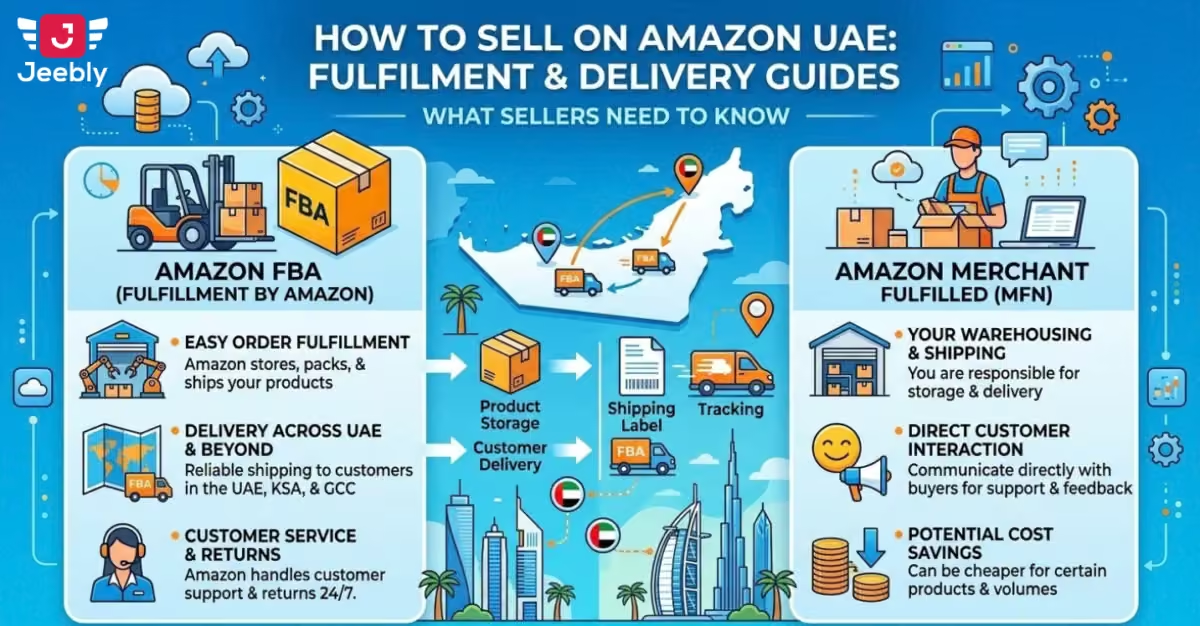
An isometric infographic detailing how to sell on Amazon UAE. The left side covers seller onboarding and listing steps like defining business activity, trade name reservation, and document preparation. The right side compares FBA (Fulfilment by Amazon) and FBM (Fulfilment by Merchant) logistics and delivery models against a Dubai skyline.
How to Sell on Amazon UAE: What Sellers Need to Know About Fulfilment and Delivery

Selling on Amazon UAE offers massive growth potential, but choosing the right logistics model can make or break your margins. Discover the step-by-step onboarding process for Amazon.ae, explore the core differences between Fulfilment by Amazon (FBA) and Fulfilment by Merchant (FBM), and learn how to optimize your delivery strategy to scale efficiently in the UAE market.

Read More
A woman in a black dress and white gloves holds a branded "Jeebly" box next to a white Land Rover Defender with a bougainvillea hedge behind them.
High-Value Item Delivery in the UAE: Insurance, Handling, and What to Ask

Delivering high-value, luxury items in the UAE requires far more than standard shipping—it demands white-glove precision, specialized security protocols, and comprehensive transit insurance. Discover how premium handling, secure transit procedures, and asking the right questions of your courier partner ensure high-ticket goods reach your clients safely, preserving both product integrity and brand trust.
Read More
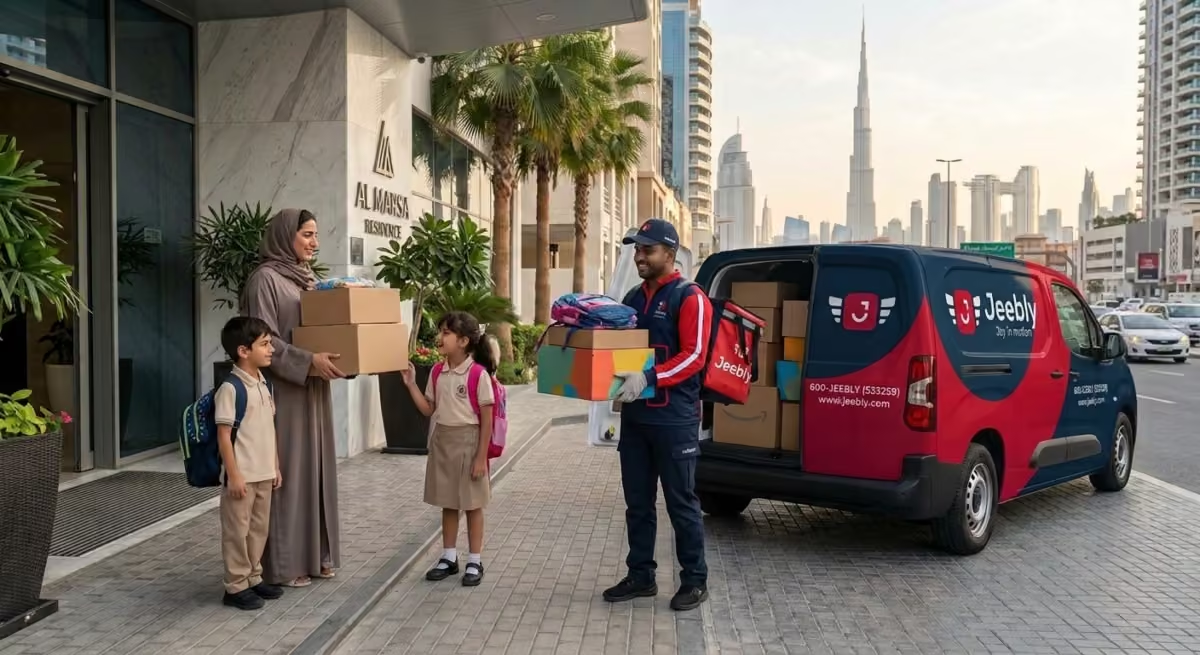
A Jeebly delivery courier handing over stacked packages outside a Dubai residence to a mother and her school-aged children, with a Jeebly delivery van parked nearby and the Dubai skyline featuring the Burj Khalifa in the background.
Back-to-School Delivery Trends: What UAE Retailers Learned This Season

As the back-to-school rush hits the UAE, retailers face surging demand for fast, flexible, and reliable last-mile deliveries. From school uniforms and backpacks to tech essentials, learn how seamless multi-channel logistics, scheduled doorstep deliveries, and real-time tracking help UAE brands meet evolving parent expectations and turn seasonal spikes into long-term customer loyalty
Read More
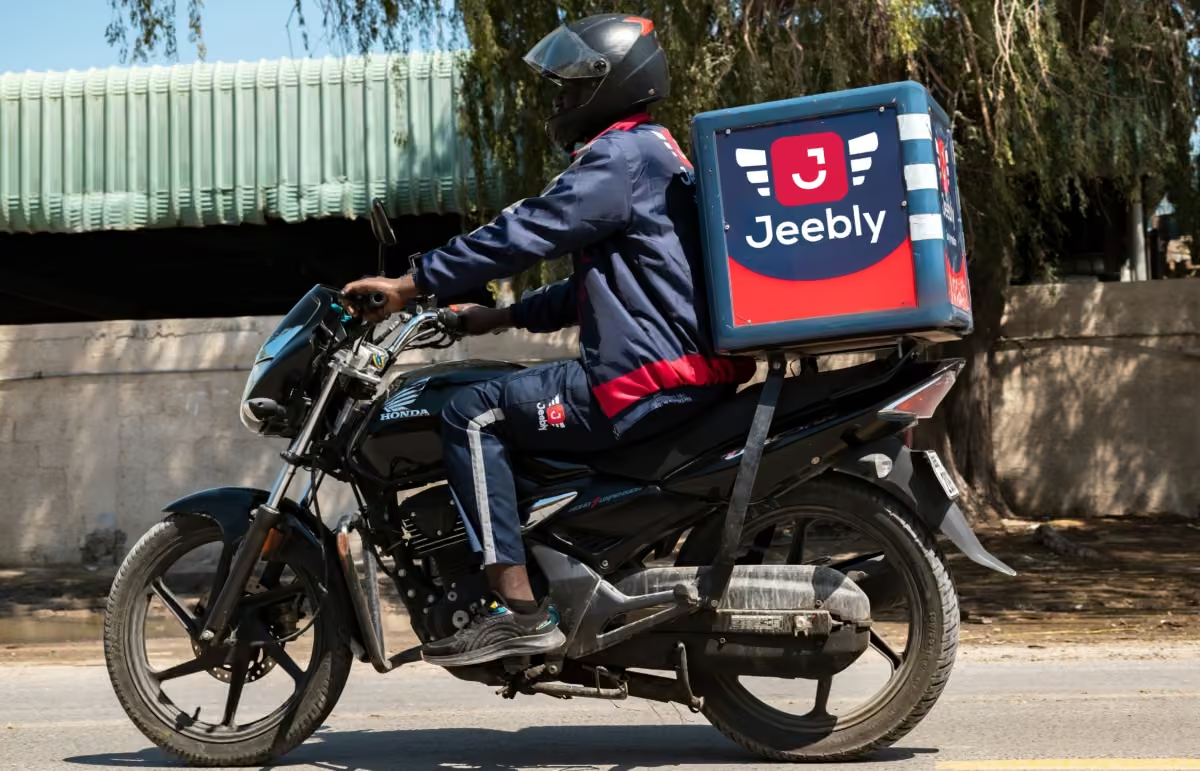
A Jeebly delivery rider wearing a helmet and branded jacket riding a black motorcycle with a red and blue branded delivery box mounted on the back.
Urgent Delivery in the UAE: Jeebly Dash Services, Costs and Booking

When speed is everything, traditional delivery options just won’t cut it. Learn how Jeebly Dash provides ultra-fast, on-demand courier services across the UAE—giving businesses and consumers a seamless booking experience, transparent pricing, and real-time tracking to ensure urgent parcels reach their destination within minutes.
Read More
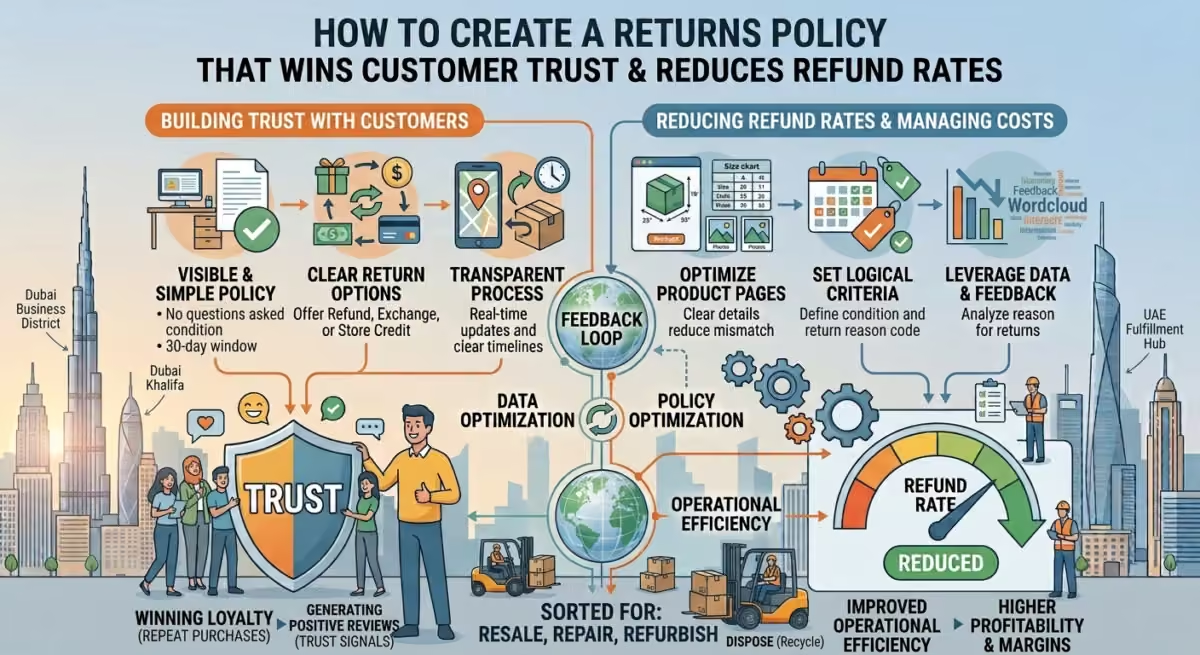
An infographic illustrating how to create an e-commerce returns policy that builds customer trust and reduces refund rates, featuring a split diagram of customer loyalty strategies alongside operational efficiency workflows set against the Dubai skyline.
How to Create a Returns Policy That Wins Customer Trust and Reduces Refund Rates

Mastering returns is a delicate balancing act for e-commerce brands—make it too strict, and you lose customer trust; make it too lenient, and your profit margins take a hit. Discover actionable strategies to build a seamless, customer-first returns policy that converts first-time buyers into loyal brand advocates while optimizing backend operations to keep refund rates and logistics costs low.
Read More
Categories
blogs

Buy Now Pay Later in the UAE: What BNPL Means for eCommerce Delivery and Returns.

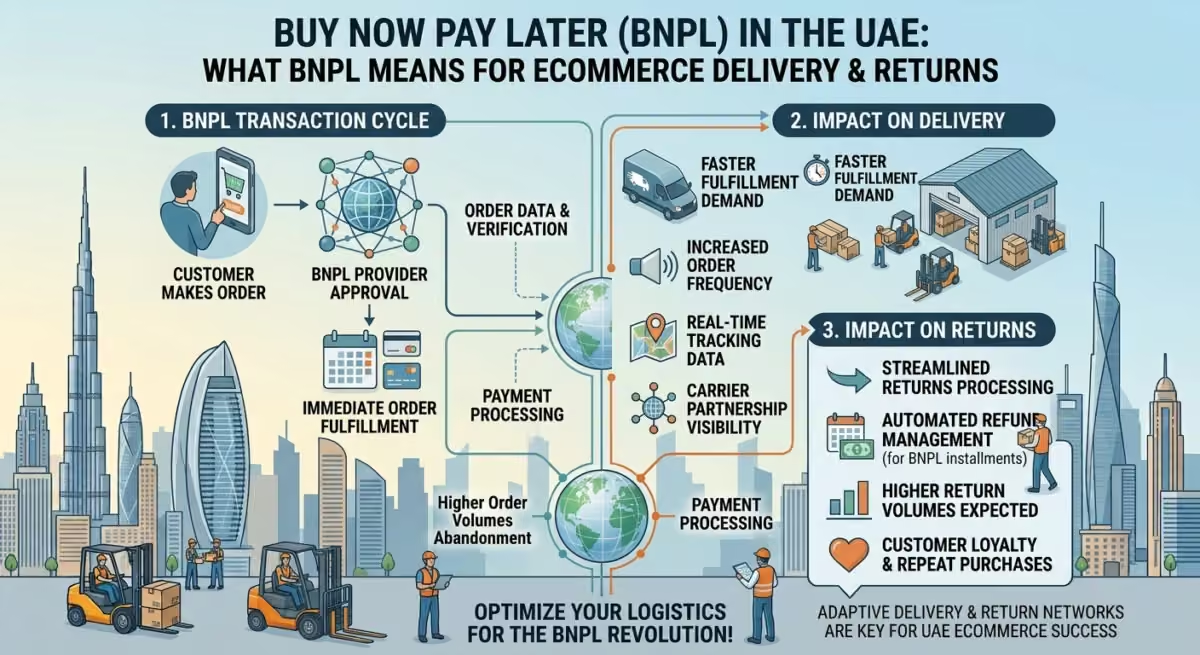
BNPL in the UAE and its impact on ecommerce delivery and returns, showing the transaction cycle, faster fulfilment, order frequency, real-time tracking, and streamlined returns

Buy now pay later has become a prominent checkout option in UAE e-commerce, allowing eligible customers to split purchases into scheduled payments instead of paying the full amount upfront.

For retailers, the impact extends beyond checkout. BNPL can influence order values, fulfilment requirements, return handling, refund coordination, and financial reporting.

This means UAE e-commerce brands need to evaluate BNPL alongside the systems that manage each order after purchase. This article looks at how BNPL works in the UAE and what its growth means for delivery, fulfilment, COD, and reverse logistics.

Key Takeaways

  • Buy Now Pay Later allows eligible customers to divide purchases into scheduled payments at checkout.

  • BNPL services in the UAE fall under the Central Bank of the UAE’s regulatory framework for Short-Term Credit Facilities.

  • BNPL and cash on delivery can coexist because they serve different payment preferences and follow different operational processes.

  • For retailers, BNPL also creates considerations around fulfilment, returns, refunds, and payment reconciliation.

What Is Buy Now Pay Later and How Does It Work in the UAE?

Buy Now Pay Later, or BNPL, is a short-term credit option that allows eligible customers to divide a purchase into scheduled payments. It is usually offered during online checkout, where the provider assesses eligibility for the transaction according to its own criteria.

Once the transaction is approved, the merchant can process the order while the customer repays the BNPL provider according to the selected plan. Repayment schedules, purchase limits, fees, and late-payment terms vary by provider, so BNPL should not be described as universally interest-free or cost-free.

Tabby and Tamara are among the better-known BNPL providers serving the UAE market. Retailers considering a provider should review its commercial terms, checkout integration, settlement process, and refund procedures rather than focusing on the payment schedule alone.

BNPL also operates within a regulated environment in the UAE. The Central Bank of the UAE introduced its regulatory framework for Short-Term Credit Facilities on December 27, 2023. The framework establishes licensing and regulatory requirements for companies providing this type of short-term credit.

The market is also growing. A June 2026 ResearchAndMarkets report estimates UAE BNPL payments at USD 1.37 billion in 2026, up 16.9% year over year from approximately USD 1.17 billion in 2025. Market estimates differ by methodology, so this figure is best treated as an industry estimate rather than an official government total.

Cash on Delivery vs BNPL: What Changes for UAE eCommerce?

BNPL and cash on delivery serve different customer preferences, so one does not automatically replace the other. BNPL is approved during checkout and spreads the customer’s payment over a set schedule, while COD requires payment collection when the order reaches the customer.

Operational factor Buy Now Pay Later Cash on delivery
Payment point Approved during online checkout Collected when the order is delivered
Customer payment Split into scheduled repayments Paid in full at delivery
Delivery-stage collection Usually no payment collection required at the doorstep Delivery partner collects the payment
Merchant operations Requires settlement and refund coordination with the BNPL provider Requires COD collection, reconciliation, and remittance
Failed delivery Merchant systems must reflect the failed or cancelled fulfilment status and follow the provider process where required No doorstep payment is collected, and the order may enter reattempt or RTO workflows
Returns and refunds Refunds must align with merchant and BNPL provider processes Refunds follow the retailer’s COD return process

Offering BNPL does not require a retailer to stop offering COD. The two methods can serve different customer preferences, but they require separate financial and operational workflows.

Jeebly Dash supports COD collection alongside time-sensitive and scheduled delivery requirements. BNPL remains part of the retailer’s checkout and payment setup, so its settlements should be tracked separately from COD collections and remittances.

How Does BNPL Affect eCommerce Fulfilment and Delivery?

Research and merchant data have linked BNPL with changes in purchasing behaviour and basket size. For retailers, larger or more complex orders can place greater demands on inventory accuracy, order visibility, and fulfilment.

Keeping website and warehouse data aligned is therefore important. When the storefront is integrated with the fulfilment system, new orders can move directly to the warehouse team without manual re-entry. This can reduce processing gaps and give teams a clearer view of available stock, pending orders, and order status.

Delivery visibility matters once the order leaves the warehouse. Accurate tracking, delivery updates, and proof of delivery help customer service teams confirm order status and respond more quickly when an issue occurs.

For supported Jeebly workflows, this may include integrated order-status updates and driver-uploaded proof of delivery. If a customer continues paying for the purchase after receiving it, delayed, damaged, or incomplete orders can also affect satisfaction beyond delivery day.

The physical post-purchase experience also shapes how customers perceive the order. Brands can also consider how packaging and the unboxing experience influence satisfaction and repeat purchases after delivery.

How Do BNPL Orders Affect Returns and Refunds?

BNPL does not automatically increase return rates for every online store. However, if it encourages larger baskets or additional purchases, some retailers may see more products or higher-value orders enter the returns process. The effect can vary by product category, customer behaviour, order value, and return policy.

For brands, the more important issue is what happens after a return is requested. A BNPL return can involve several connected operational stages:

  1. The return is collected and proof of pickup is recorded.
  2. The product is returned to the store or warehouse.
  3. Its condition is checked, and inventory status is updated.
  4. The merchant approves the refund.
  5. The BNPL provider is notified and the customer’s payment plan is adjusted where applicable.

A completed return pickup does not necessarily mean the financial refund is complete. The merchant may still need to inspect the product and approve the refund before the BNPL provider can update the customer’s remaining payments.

Retailers should therefore communicate each stage clearly. Customers need to know when the product has been collected, when the return has been approved, and when they can expect the payment adjustment to appear.

Jeebly Bizz can support reverse logistics through return pickups, doorstep quality checks where applicable, digital proof of pickup, tracking, and return-to-store or warehouse workflows. Instant refunds may also be available for certain clients, but this depends on the individual business setup and is not a standard feature for every retailer.

Brands should also make sure their return policy clearly explains refund timelines and responsibilities for BNPL purchases.

What Should UAE Brands Review Before Offering BNPL?

Adding BNPL should be treated as an operational decision, not only a checkout change. Before launching it, retailers need to confirm that their payment, fulfilment, returns, and reporting processes can handle the additional complexity.

1. Measure BNPL Orders Separately

Brands should compare BNPL performance with card, wallet, and COD orders instead of relying only on overall sales. Useful metrics include conversion rate, average order value, delivery success, cancellations, return rate, refund turnaround time, and customer service contacts.

Financial reporting should also distinguish BNPL settlements from COD collections. The two payment methods follow different reconciliation processes and should remain clearly separated in finance reporting.

2. Map the Return and Refund Handoff

Retailers should define who is responsible for pickup, inspection, inventory updates, refund approval, customer communication, and notification to the BNPL provider.

Clear ownership reduces the risk of a returned product reaching the warehouse while the customer is still waiting for information about the refund.

3. Align Customer-Facing Timelines

Return policies, checkout information, customer service scripts, and BNPL provider terms should set consistent expectations. If pickup, merchant approval, and payment-plan adjustment happen at different stages, customers should be told clearly how those stages differ.

4. Connect Checkout, Fulfilment, Delivery, and Returns Data

Order, warehouse, delivery, return, and finance systems should share accurate status information. Integrations can reduce manual updates and help teams follow an order across fulfilment and post-purchase workflows.

Brands should also assess forward and reverse logistics together. Jeebly Bizz supports warehousing, fulfilment, forward delivery, and reverse logistics within a wider business logistics setup, while Jeebly Dash can support time-sensitive delivery and COD collection where applicable.

Jeebly supports the logistics around the order. BNPL approval, customer repayment, and provider settlement remain part of the retailer’s payment setup rather than Jeebly’s delivery service.

BNPL Is Also a Logistics Decision

BNPL can make checkout more flexible, but customers experience the purchase through the fulfilment, delivery, and post-purchase processes that follow. UAE retailers therefore need to assess payment flexibility alongside the operational capacity required to support it.

For a closer look at the post-purchase side, read our guide to creating a returns policy that sets clear refund expectations and supports an efficient returns process.

If your business needs support across fulfilment, delivery, COD handling, and reverse logistics, speak with the Jeebly Bizz team about the right logistics setup for your store.

Frequently Asked Questions

BNPL services in the UAE operate within the Central Bank of the UAE’s framework for Short-Term Credit Facilities, introduced in December 2023. The framework establishes regulatory and licensing requirements for short-term credit providers. Customers should still review the terms, fees, repayment schedule, and late-payment conditions of the specific provider they use.

BNPL does not automatically increase return rates for every retailer. If it contributes to larger baskets or additional purchases, some stores may see more products enter the returns process. The effect depends on factors such as product category, customer behaviour, order value, and the retailer’s return policy.

Yes. BNPL and cash on delivery can coexist because they serve different payment preferences. BNPL is arranged at checkout, while COD requires payment collection when the order reaches the customer. Retailers need separate reconciliation and refund processes for each method.

There is no universal refund timeline for BNPL purchases in the UAE. Timing can depend on the retailer’s return and inspection process, refund approval, system integration, and the BNPL provider’s processing rules. A completed return pickup does not necessarily mean the payment adjustment has already been processed.

Some BNPL providers and merchant integrations support partial refunds. When a partial refund is processed, the customer’s remaining payment schedule may be adjusted based on the refunded amount. The exact process depends on the provider, retailer, and payment integration.

Routes to insightful reads

An isometric infographic detailing how to sell on Amazon UAE. The left side covers seller onboarding and listing steps like defining business activity, trade name reservation, and document preparation. The right side compares FBA (Fulfilment by Amazon) and FBM (Fulfilment by Merchant) logistics and delivery models against a Dubai skyline.
How to Sell on Amazon UAE: What Sellers Need to Know About Fulfilment and Delivery

Selling on Amazon UAE offers massive growth potential, but choosing the right logistics model can make or break your margins. Discover the step-by-step onboarding process for Amazon.ae, explore the core differences between Fulfilment by Amazon (FBA) and Fulfilment by Merchant (FBM), and learn how to optimize your delivery strategy to scale efficiently in the UAE market.

Read More
A woman in a black dress and white gloves holds a branded "Jeebly" box next to a white Land Rover Defender with a bougainvillea hedge behind them.
High-Value Item Delivery in the UAE: Insurance, Handling, and What to Ask

Delivering high-value, luxury items in the UAE requires far more than standard shipping—it demands white-glove precision, specialized security protocols, and comprehensive transit insurance. Discover how premium handling, secure transit procedures, and asking the right questions of your courier partner ensure high-ticket goods reach your clients safely, preserving both product integrity and brand trust.

Read More
A Jeebly delivery courier handing over stacked packages outside a Dubai residence to a mother and her school-aged children, with a Jeebly delivery van parked nearby and the Dubai skyline featuring the Burj Khalifa in the background.
Back-to-School Delivery Trends: What UAE Retailers Learned This Season

As the back-to-school rush hits the UAE, retailers face surging demand for fast, flexible, and reliable last-mile deliveries. From school uniforms and backpacks to tech essentials, learn how seamless multi-channel logistics, scheduled doorstep deliveries, and real-time tracking help UAE brands meet evolving parent expectations and turn seasonal spikes into long-term customer loyalty

Read More
A Jeebly delivery rider wearing a helmet and branded jacket riding a black motorcycle with a red and blue branded delivery box mounted on the back.
Urgent Delivery in the UAE: Jeebly Dash Services, Costs and Booking

When speed is everything, traditional delivery options just won’t cut it. Learn how Jeebly Dash provides ultra-fast, on-demand courier services across the UAE—giving businesses and consumers a seamless booking experience, transparent pricing, and real-time tracking to ensure urgent parcels reach their destination within minutes.

Read More
An infographic illustrating how to create an e-commerce returns policy that builds customer trust and reduces refund rates, featuring a split diagram of customer loyalty strategies alongside operational efficiency workflows set against the Dubai skyline.
How to Create a Returns Policy That Wins Customer Trust and Reduces Refund Rates

Mastering returns is a delicate balancing act for e-commerce brands—make it too strict, and you lose customer trust; make it too lenient, and your profit margins take a hit. Discover actionable strategies to build a seamless, customer-first returns policy that converts first-time buyers into loyal brand advocates while optimizing backend operations to keep refund rates and logistics costs low.

Read More

    Powered by