Jeebly | Logistics Solutions

Categories
blogs

What Is DDP Shipping? What “Delivered Duty Paid” Means for UAE Importers and Exporters

DDP shipping infographic explaining seller responsibilities, customs clearance, duties, final delivery, and benefits for UAE importers

What Is DDP Shipping? What "Delivered Duty Paid" Means for UAE Importers and Exporters

When a UAE business orders goods from a Chinese supplier and receives a single all-in price covering freight, UAE customs clearance, 5% import duty, 5% VAT, and doorstep delivery, that’s DDP (Delivered Duty Paid) shipping. The buyer pays once and receives everything cleared. There are no customs queues, surprise duty invoices, or handoff between carrier and customs broker.

For UAE importers buying from Asia and UAE exporters selling to GCC markets, DDP is both an opportunity and a risk depending on who structures it, how the documentation works, and whether the VAT element is actually recoverable. 

This guide explains how DDP shipping works for UAE businesses specifically, what it costs, where it can create problems, and when to use DAP (Delivered at Place) instead.

Key Takeaways

  • DDP (Delivered Duty Paid) means the seller pays all costs (freight, customs clearance, import duties, and VAT) until goods reach the buyer’s named address.

  • UAE importers buying DDP from overseas suppliers often cannot reclaim the 5% UAE import VAT, because it’s paid under the agent’s TRN rather than their own.

  • For UAE exporters selling to GCC markets under DDP, the seller takes on customs clearance and duty payment in the destination country, which requires either local entity registration or an IOR (Importer of Record).

  • DDP suits first-time or low-volume importers. Growing businesses can save significant margin by switching from DDP to FOB with their own freight forwarding system once volumes justify it.

What Is DDP Shipping?

DDP (Delivered Duty Paid) is an Incoterm, one of 11 standardised international trade terms published by the International Chamber of Commerce, that defines who pays for what in a cross-border shipment. 

Under DDP, the seller is responsible for all costs and risks from origin to the buyer’s named delivery address, including export formalities, freight, insurance, import customs clearance, import duties, and VAT or equivalent taxes in the destination country.

The buyer’s only obligation is to accept delivery. There are no further charges at the door. In practice, UAE businesses encounter DDP in two directions:

  • As importers: A UAE company buying goods from China or Europe may receive a DDP quote from a supplier or freight agent, one price covering everything from the factory to the Dubai warehouse address. No separate customs agent required and no duty invoice arriving two weeks later.


  • As exporters: A UAE brand selling to customers in Saudi Arabia, Kuwait, or the UK may offer DDP terms to its buyers, absorbing all the destination-country duty and VAT to deliver a frictionless customer experience.


Both directions carry fundamentally different implications.

How DDP Shipping Works: The Full Sequence

For a UAE importer receiving DDP goods from China:

  1. Order placed and DDP price agreed. The supplier or freight agent provides an all-in DDP quote covering the goods, export formalities, freight (air or sea), UAE customs clearance, 5% import duty, and 5% VAT to a named UAE address.

  2. Supplier arranges export. The seller prepares commercial invoice, packing list, and export declaration in China. Goods are collected from the factory.

  3. International transit. Goods move by air freight services (3–7 days from China) or sea freight (18–25 days via Jebel Ali) to the UAE.

  4. UAE customs clearance. The DDP agent files the import declaration with Dubai Customs (via Mirsal 2), pays the 5% customs duty and 5% VAT, and obtains the release order.

  5. Last-mile delivery. Goods are delivered to the UAE importer’s warehouse, free zone, or office.

For a UAE exporter shipping DDP to a GCC buyer:

The same sequence applies in reverse. The UAE seller arranges freight to Saudi Arabia, Kuwait, or Oman; handles destination-country customs clearance; pays applicable import duties; and delivers to the buyer’s address. The destination country’s customs authority is the operative regulatory body.

DDP vs DAP vs FOB: The UAE-Specific Comparison

For UAE businesses, three Incoterms majorly determine how cross-border costs are split between seller and buyer: DDP (Delivered Duty Paid), DAP (Delivered at Place), and FOB (Free on Board). 

Each one places a different set of obligations on each party, and choosing the wrong one either erodes your margin as a seller or creates unexpected charges for your buyer.

Aspects DDP DAP FOB
Who pays import duty Seller Buyer Buyer
Who pays import VAT Seller Buyer Buyer
Who arranges customs clearance Seller Buyer Buyer
Buyer's experience Frictionless, one price Surprise charges at delivery Full control + cost visibility
Seller's cost Highest Moderate Lowest
VAT reclaimability (UAE importer) Often not Yes, under your own TRN Yes, under your own TRN
Best for First-time importers, B2C buyers B2B buyers handling own clearance Scaling importers with own forwarder

DAP leaves import duty and VAT to the buyer. It’s simpler for the seller, but creates the risk that the buyer faces an unexpected charge at delivery or customs hold. 

When is each appropriate: 

  • If your goal is lower cart abandonment and fewer failed deliveries, DDP usually performs better because it removes uncertainty from the buying experience. 

  • DAP still has a place when you’re testing markets or protecting margin early, but scaling DAP without clear transparency almost always shows up later in higher refusal rates.

  • FOB is appropriate if importing at meaningful volume. Under FOB, goods are handed to the buyer’s freight forwarder at the origin port. The buyer arranges their own freight, manages their own customs clearance, and pays duty and VAT directly to UAE Customs under their own TRN.

A quick guide on VAT on Shipping and Delivery in UAE covers more on how UAE import VAT works, what a compliant tax invoice must contain, and the changes that affect how shipping VAT is documented and recovered.

When does it make sense to move from DDP to FOB?

For UAE importers, the economics of DDP shift as volume grows. At low volume, DDP’s convenience premium is worth paying. There’s no customs agent to manage, no freight forwarder relationship to maintain, and no separate duty payment to coordinate. 

Above that threshold, engaging your own freight forwarder and customs broker can recover some percentage of the DDP premium, while also making your UAE import VAT reclaimable under your own TRN.

The UAE-Specific DDP Problems

These are the issues that specifically affect UAE businesses using DDP that global Incoterms guides don’t address.

Problem 1: The VAT reclaim gap for UAE importers.

Because the DDP agent pays UAE import VAT in their own name, UAE-registered businesses often don’t receive a valid import VAT document under their company’s TRN. A VAT-registered UAE business may be unable to reclaim that 5%.

The fix: If you’re VAT-registered in the UAE and importing regularly, confirm with any DDP provider whether the import declaration will be filed under your TRN. If the answer is no or unclear, the convenience of DDP is costing you recoverable VAT.

Problem 2: Under-declared customs values.

Some DDP agents lower the declared customs value to cut duty and offer a tempting DDP price. If UAE Customs reassesses the declared value, the importer faces penalties, and it’s your goods, your liability. 

The fix: Always request a copy of the import declaration and verify that the declared value matches your commercial invoice.

Problem 3: UAE exporters need IOR arrangements for GCC DDP.

For a UAE brand offering DDP to Saudi, Kuwaiti, or Omani buyers, the seller must either be registered as an importer in the destination country or appoint an Importer of Record (IOR) service provider to handle customs clearance on their behalf. 

Without this, the seller can’t legally act as the DDP importer at the destination. This requirement is frequently overlooked by SMEs new to GCC cross-border DDP.

Problem 4: De minimis changes affecting DDP economics.

The August 2025 suspension of the US de minimis exemption (affecting goods from all origins) means shipments that previously cleared US customs duty-free now face full tariff rates. For UAE exporters selling to US customers under DDP, this materially changes the seller’s landed cost calculation. 

DDP is more expensive post-August 2025, but also more important for customer experience. Buyers who previously received duty-free parcels now face import charges under DAP terms, which creates refusals and returns.

What DDP Shipping Costs: The Full Landed Cost Breakdown

Most DDP quotes present a single number. Here’s what’s inside it and what you should verify before accepting.

Cost Component Who Pays (DDP) Notes
Goods value Seller Invoice value
Export documentation and freight forwarding (origin) Seller Varies by origin port and agent
International freight (air or sea) Seller Major variable, get a market rate comparison
Origin port handling Seller Check whether included in freight quote
Destination port handling and terminal fees Seller Often quoted separately
UAE customs clearance fees Seller Per declaration, typically AED 50–200
UAE import duty Seller 5% of CIF value for most goods
UAE VAT at import Seller 5% of CIF value plus duty
Last-mile delivery Seller To named UAE address

Along with the expenses, it’s important to determine whether your goods are classified as dangerous or restricted, which affects carrier acceptance and adds handling surcharges to your DDP cost. 

Here’s a quick read on Dangerous Goods and Restricted Items in the UAE that covers which product categories carry essential requirements and what the compliance steps are before shipping.

How a Delivery Note Works: The Handover Sequence

The delivery note process follows a repeatable sequence that every UAE business should standardise.

Step 1: Generation at dispatch

When an order is packed and ready to leave the warehouse, a delivery note is generated, ideally automatically from the order management system to eliminate manual data entry errors. The note is either printed and attached to the shipment, or sent digitally to the recipient ahead of arrival.

Step 2: Travel with the goods

The delivery note accompanies the shipment. The courier or driver carries it to the delivery point. It is not sent separately by email or uploaded after the fact. Its purpose is to be present at the point of handover.

Step 3: Recipient verification

On arrival, the recipient checks the delivered items against the delivery note. Any discrepancy, such as a wrong item, short quantity, or damaged goods, is noted on the delivery note before signature.

Step 4: Confirmation

In paper-based systems, the recipient signs and dates the delivery note. The driver retains one copy; the recipient keeps one. In ePOD systems (covered below), digital confirmation is captured automatically.

Step 5: Filing and retention

Both parties retain their copies. Keeping delivery notes for at least five years is advisable to support documentation for disputes or claims. For UAE businesses managing import documentation, this retention period also aligns with FTA audit requirements for VAT-related records.

How Jeebly Can Support DDP Operations

For UAE businesses managing cross-border freight alongside domestic last-mile delivery, having both legs under one platform removes the coordination overhead that typically creates DDP delays.

Jeebly Haul covers the freight leg (air, sea, road) across UAE and GCC routes with in-house customs clearance rather than outsourced brokerage. For UAE businesses importing goods under DDP or structured as FOB with Jeebly managing the UAE customs leg, this means one point of contact from port to warehouse.

For UAE exporters shipping to GCC customers who want a clean, tracked last-mile experience at the destination end, Jeebly Bizz connects order management with domestic delivery. Shopify and WooCommerce orders dispatch automatically, with real-time tracking and photo ePOD at every delivery.

For businesses shipping domestic parcels alongside cross-border operations, same-day delivery across the UAE through Jeebly Dash completes the fulfilment loop. Domestic last-mile is at 98% FDSS, connected to the same platform managing inbound freight.

Talk to the Jeebly team to discuss your specific import or export profile, and we’ll confirm how Jeebly Haul covers the freight and customs clearance leg for your operation.

Conclusion

DDP shipping gives buyers a frictionless experience: one price, no customs surprises, no charges at the door. For UAE importers, the critical check is whether the 5% UAE import VAT is paid under your TRN (making it reclaimable) or the agent’s TRN (making it a sunk cost). 

For UAE exporters, DDP to GCC markets requires either IOR arrangements or a logistics partner with GCC-wide customs capability. The economics of DDP shift as volume grows. The convenience premium that makes sense at low volume often doesn’t at scale, where FOB with your own freight forwarder recovers meaningful margin. 

For UAE businesses managing cross-border freight and domestic last-mile through one connected platform, Jeebly Haul and Jeebly Bizz cover both legs. Get in touch to discuss your import or export structure.

Frequently Asked Questions

DDP (Delivered Duty Paid) is an Incoterm where the seller pays all costs such as freight, customs clearance, import duties, and VAT until goods reach the buyer’s named delivery address. The buyer pays nothing extra on arrival. It places maximum responsibility on the seller and minimum on the buyer.

Only if the import declaration is filed under your company’s UAE Tax Registration Number (TRN). Many DDP freight agents file import declarations under their own TRN, meaning the 5% UAE import VAT is paid in their name, and you cannot reclaim it on your FTA VAT return. Always confirm with your DDP provider which TRN the customs declaration will be filed under before accepting the arrangement.

Under DDP, the UAE seller pays destination-country import duties and VAT, and handles customs clearance. The buyer receives goods with no additional charges. Under DAP, the buyer is responsible for import duties and customs clearance at the destination.

A UAE importer should switch from DDP (Delivered Duty Paid) to FOB (Free on Board) if shipping volumes scale up, internal logistics are established, and there is a need to lower high markup costs embedded in seller-managed freight. This transition makes sense when the business gains the capability to manage local UAE customs clearance and ocean freight directly.

Yes. DDP applies to any mode of transport: air, sea, or road. For China-to-UAE imports, sea freight DDP via Jebel Ali is the most cost-effective option for non-time-sensitive goods (18–25 days). Air freight DDP is appropriate for high-value or time-sensitive shipments (3–7 days from China). The DDP price includes the freight cost for whichever mode is used.

Routes to insightful reads

DDP shipping infographic explaining seller responsibilities, customs clearance, duties, final delivery, and benefits for UAE importers
What Is DDP Shipping? What “Delivered Duty Paid” Means for UAE Importers and Exporters

A delivery note is a key document in the UAE logistics process, providing a clear record of what was shipped, who sent it, and who received it. From proof of delivery and shipment tracking to order verification, customs compliance, and dispute resolution, a properly prepared delivery note helps businesses maintain accurate records and protect every shipment. This guide explains what a delivery note is, what it should include, and why it is essential for businesses operating across the UAE.

Read More
Delivery note document showing shipment details, proof of delivery, tracking, verification and UAE logistics compliance
What Is a Delivery Note and Why Does Every UAE Shipment Need One?

A delivery note is a key document in the UAE logistics process, providing a clear record of what was shipped, who sent it, and who received it. From proof of delivery and shipment tracking to order verification, customs compliance, and dispute resolution, a properly prepared delivery note helps businesses maintain accurate records and protect every shipment. This guide explains what a delivery note is, what it should include, and why it is essential for businesses operating across the UAE.

Read More
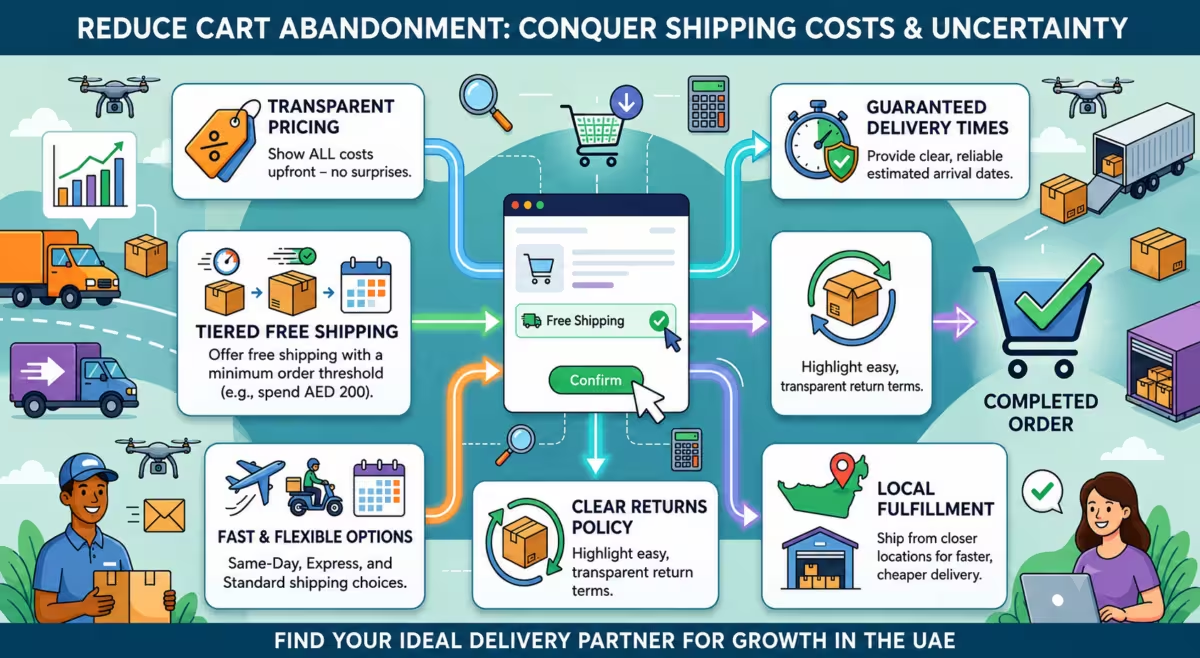
Illustration showing strategies to reduce cart abandonment through transparent shipping costs, fast delivery, local fulfilment, and clear returns policies for UAE eCommerce businesses.
How to Reduce Cart Abandonment Caused by Delivery Costs and Uncertainty

Delivery costs and uncertainty are among the biggest reasons shoppers abandon their carts before completing a purchase. This guide explores practical strategies to reduce cart abandonment, including transparent shipping fees, accurate delivery estimates, flexible shipping options, local fulfilment, and hassle-free returns, helping UAE eCommerce businesses improve conversions and build customer trust.

Read More
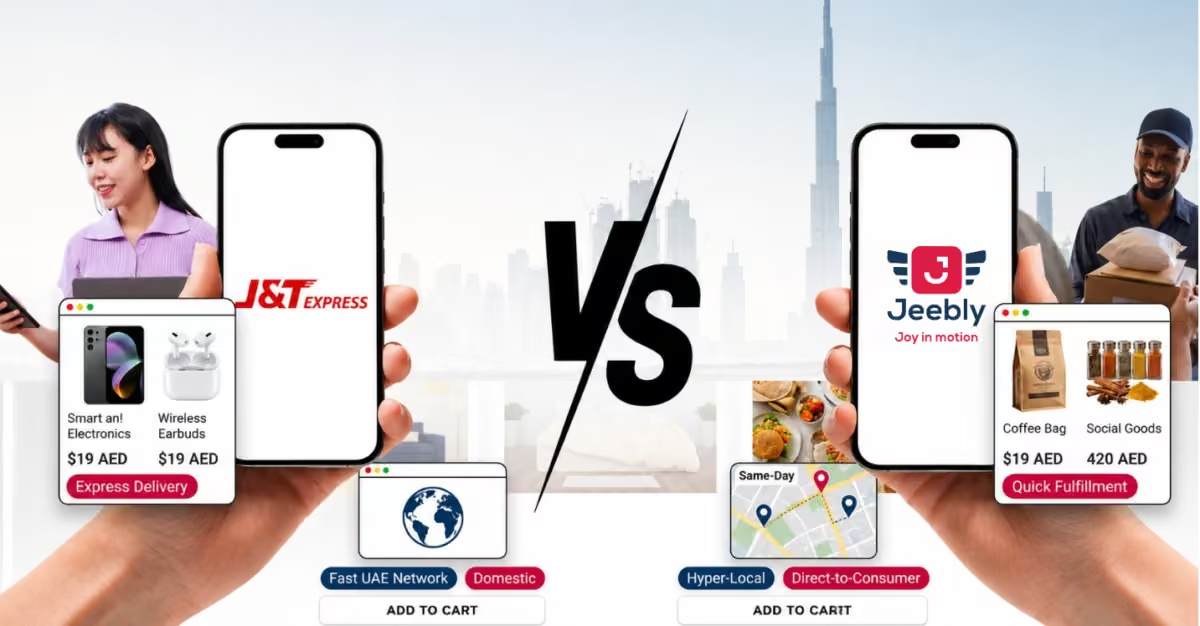
J&T Express vs Jeebly comparison graphic featuring delivery apps, e-commerce products, and UAE logistics services against the Dubai skyline.
J&T Express vs Jeebly: Which Courier Is Better for UAE eCommerce Businesses?

J&T Express and Jeebly both support eCommerce deliveries, but they cater to different business needs. This comparison explores their delivery networks, fulfilment capabilities, shipping speed, technology, pricing flexibility, and merchant services to help UAE businesses choose the courier partner that best supports their growth and customer experience.

Read More
Delivery SLA guide for UAE businesses showing service level agreements, delivery performance metrics, on-time delivery targets and logistics standards.
 Delivery SLA Guide for UAE Businesses: What to Expect and How to Set Standards

A clear delivery Service Level Agreement (SLA) sets the expectations for speed, reliability, and performance between businesses and their logistics partners. This guide explains what a delivery SLA should include, the key metrics to track, and how UAE businesses can set realistic standards to improve customer satisfaction and delivery performance.

Read More
Categories
blogs

What Is a Delivery Note and Why Does Every UAE Shipment Need One?

Delivery note document showing shipment details, proof of delivery, tracking, verification and UAE logistics compliance

What Is a Delivery Note and Why Does Every UAE Shipment Need One?

A delivery note is the document that travels with a shipment of goods listing what was sent, in what quantities, and confirming receipt when the goods arrive. It is not an invoice, not a contract, and not optional for any UAE business operating at scale.

When a quantity dispute arises, when a customer claims they received the wrong items, or when an auditor asks for documentation of goods received, the delivery note is the first document both parties reach for. Without one, a shipment is unverifiable at the point of handover.

This guide covers what a delivery note contains, how it works in practice, how it differs from an invoice, the shift from paper to electronic proof of delivery (ePOD) in UAE logistics, and what UAE-specific compliance changes affect delivery documentation.

Key Takeaways

  • A delivery note confirms what was physically sent and received. It travels with the shipment, not separately like an invoice.

  • It does not contain prices; an invoice is the financial document; a delivery note is the delivery record.

  • Electronic proof of delivery (ePOD) (photo, GPS timestamp, digital signature) is the digital evolution of the paper delivery note and is now standard practice in UAE last-mile operations.

  • Keep copies of all delivery notes for a minimum of five years to support dispute resolution and documentation for claims.

  • UAE businesses using a logistics company in the UAE that issues ePODs automatically should ensure the digital record is accessible and searchable.

What Is a Delivery Note? Definition and Core Purpose

A delivery note is a commercial document that accompanies a shipment of goods from sender to recipient. It lists the items included in the delivery, the quantities of each, and identifying details such as the order number, sender information, and recipient information. When the recipient confirms the goods have arrived correctly, the delivery note serves as proof of receipt.

Also referred to as a dispatch note or goods received note depending on who is completing it, the delivery note performs three functions simultaneously:

  1. It confirms dispatch. The sender has a record that these specific items left the warehouse in this condition on this date.

  2. It enables verification. The recipient can check what arrived against what was ordered before signing or confirming. Discrepancies are caught at the point of handover rather than days later.

  3. It creates an evidence trail. If a dispute arises, like a wrong item, short quantity, or damaged goods, the delivery note is the contemporaneous record that documents what both parties agreed was delivered.

For UAE businesses managing high order volumes across multiple emirates, this trail matters more than it might seem. A single consignment of 500 units with an undocumented quantity discrepancy can translate into an inventory reconciliation problem that takes days to resolve without a delivery note.

Delivery Note vs Invoice: What's the Difference?

This is the single most common point of confusion in delivery documentation. The two documents serve different purposes and must not be conflated.

Aspects Delivery Note Invoice
Purpose Confirms physical delivery of goods Requests payment for goods or services
Contains prices? No Yes
When issued At point of delivery, travels with goods After delivery, sent to accounts payable
Who completes it Sender (dispatching party) Seller
Signed by Recipient (on receipt) Seller (issued)
Legal function Proof of delivery and receipt Financial claim/tax document
VAT implications None directly Subject to UAE FTA VAT rules

So, if a shipment of 100 units is delivered and the delivery note says 100 but the invoice says 120, that discrepancy is immediately visible and auditable. Without the delivery note, only the invoice exists, and the buyer has no contemporaneous record of what actually arrived.

What a Delivery Note Should Contain

A well-structured delivery note should include the following fields. Missing any of these creates gaps in the evidentiary trail.

Field Why it matters
Sender name and address Identifies the dispatching party
Recipient name and address Confirms the correct delivery destination
Delivery date Creates a timestamp for the handover
Order number/reference Links the delivery to the original purchase order
Item description Identifies what was sent (SKU, product name)
Quantity per item The most critical field for dispute resolution
Unit of measurement Prevents ambiguity (units, kg, boxes, pallets)
Delivery method/carrier Documents how goods were transported
Signature or confirmation field Proof of receipt by the recipient
Notes or exceptions Records any damage, missing items, or conditions observed at handover

One field that surprises most businesses by its absence: price

A delivery note deliberately excludes prices. The moment you add pricing, you are creating a document that overlaps with the invoice, which creates VAT documentation confusion.

How a Delivery Note Works: The Handover Sequence

The delivery note process follows a repeatable sequence that every UAE business should standardise.

Step 1: Generation at dispatch

When an order is packed and ready to leave the warehouse, a delivery note is generated, ideally automatically from the order management system to eliminate manual data entry errors. The note is either printed and attached to the shipment, or sent digitally to the recipient ahead of arrival.

Step 2: Travel with the goods

The delivery note accompanies the shipment. The courier or driver carries it to the delivery point. It is not sent separately by email or uploaded after the fact. Its purpose is to be present at the point of handover.

Step 3: Recipient verification

On arrival, the recipient checks the delivered items against the delivery note. Any discrepancy, such as a wrong item, short quantity, or damaged goods, is noted on the delivery note before signature.

Step 4: Confirmation

In paper-based systems, the recipient signs and dates the delivery note. The driver retains one copy; the recipient keeps one. In ePOD systems (covered below), digital confirmation is captured automatically.

Step 5: Filing and retention

Both parties retain their copies. Keeping delivery notes for at least five years is advisable to support documentation for disputes or claims. For UAE businesses managing import documentation, this retention period also aligns with FTA audit requirements for VAT-related records.

Paper vs Electronic: Why ePOD Is Now Standard Practice in UAE Logistics

Electronic proof of delivery (ePOD) is the digital evolution of the paper delivery note. Instead of a printed document signed with a pen, ePOD captures:

  • A digital signature from the recipient
  • A timestamped photograph of the delivered goods at the drop-off location
  • GPS coordinates confirming where and when the delivery was completed
  • Automatic data upload to a dashboard accessible in real time by the sender
Factors Paper Delivery Note ePOD (Electronic Proof of Delivery)
Speed of confirmation Manual, delayed Instant
Accuracy Human error risk in data entry Auto-populated from order data
Storage Physical filing required Cloud-based, searchable
Dispute resolution Document retrieval, days Real-time data with timestamp and photo
Customer visibility None until confirmation Notification sent immediately at delivery
Scalability Breaks down at volume Handles 50,000+ deliveries daily

For UAE e-commerce businesses managing same-day and next-day delivery across multiple emirates, ePOD removes the operational ceiling that paper delivery notes create. At 200+ daily orders, manually managing, filing, and retrieving paper delivery notes is a full-time administrative burden. At 2,000 orders, it’s an impossible one.

The WhatsApp confirmation expectation of UAE consumers adds a dimension. A customer who receives a WhatsApp message with a delivery photo from their courier has a real-time ePOD.

Delivery Notes and UAE Compliance in 2026-2027

Two regulatory developments affect how UAE businesses should think about delivery documentation moving forward.

VAT on delivery and the e-invoicing mandate: The UAE FTA has confirmed mandatory e-invoicing for B2B and B2G transactions starting January 2027 for large businesses (annual revenue AED 50M+) and July 2027 for smaller businesses. 

E-invoices will be in structured XML/JSON format via the Peppol network. Delivery notes are distinct from invoices and are not within the scope of the e-invoicing mandate. But businesses should ensure their delivery documentation and invoicing processes are clearly separated, as the FTA’s audit trail requirements will examine both.

FTA audit documentation: UAE FTA VAT audits examine records for up to five years. For any shipment that has a VAT component, including goods, the delivery note forms part of the documentation trail confirming what was supplied and when.

A business that cannot produce delivery notes for a disputed shipment within the five-year audit window is in a weaker position on any supply-side claim.

For a detailed explanation of how VAT applies to shipping and delivery services in the UAE, VAT on Shipping and Delivery Services in UAE covers the full compliance picture.

How Jeebly Handles Delivery Documentation

Jeebly Dash captures a photo ePOD at every domestic delivery and uploads it at the point of drop-off. The delivery record is accessible to the business through the platform dashboard and visible to the customer through their delivery notification.

For businesses managing B2B consignments where the delivery note feeds into accounts payable workflows, Jeebly Bizz connects the delivery confirmation directly to order management. The completed delivery record updates the system automatically, without a manual handoff.

For freight shipments where delivery documentation needs to cover multi-item consignments, pallet quantities, and goods received against purchase orders, Jeebly Haul manages freight documentation alongside transit.

Talk to the Jeebly team if your current delivery partner doesn’t provide ePOD as standard, or if you need a delivery documentation setup that integrates with your inventory management or accounts payable workflo

Conclusion

A delivery note is a small document with significant operational weight. It confirms what was sent, what was received, and creates the contemporaneous evidence that protects both parties when something goes wrong. 

For UAE businesses running e-commerce at any meaningful volume, the paper delivery note has been superseded by ePOD. The transition from paper to digital delivery documentation is not a technology upgrade. It’s a risk management decision.

For delivery documentation that works automatically at every drop-off, Jeebly Dash captures ePOD as standard across 50,000+ daily deliveries. Get in touch to discuss your documentation requirements.

Frequently Asked Questions

A delivery note is a document that travels with a shipment confirming what goods were sent and in what quantities. The recipient checks the goods against the delivery note on arrival, and signs or digitally confirms receipt. It does not include prices. That’s the invoice’s job.

A delivery note is not specifically mandated by UAE law for domestic trade, but it functions as primary evidence in any goods-related dispute. For businesses in regulated sectors, or those subject to FTA VAT audits, a delivery note forms part of the supply documentation trail covering up to five years of transactions.

A delivery note confirms what was sent and received. The recipient signs it as proof of handover. A packing list is a shipping document listing the contents of a shipment for customs and carrier purposes. Both may travel with a shipment, but serve different functions: the delivery note creates an agreed receipt record; the packing list describes the physical contents for handling and customs.

 Keeping copies of all delivery notes for at least five years is advisable to maintain control over delivered products and provide documentation for disputes or claims. This also aligns with UAE FTA audit documentation requirements for VAT-related supply records.

ePOD (electronic proof of delivery) captures a digital signature, timestamped photo, and GPS-confirmed location at the point of delivery using a mobile device. The data uploads automatically to a cloud dashboard accessible to both sender and recipient. It performs the same function as a paper delivery note but with instant confirmation, searchable records, and no risk of lost paperwork.

Routes to insightful reads

DDP shipping infographic explaining seller responsibilities, customs clearance, duties, final delivery, and benefits for UAE importers
What Is DDP Shipping? What “Delivered Duty Paid” Means for UAE Importers and Exporters

A delivery note is a key document in the UAE logistics process, providing a clear record of what was shipped, who sent it, and who received it. From proof of delivery and shipment tracking to order verification, customs compliance, and dispute resolution, a properly prepared delivery note helps businesses maintain accurate records and protect every shipment. This guide explains what a delivery note is, what it should include, and why it is essential for businesses operating across the UAE.

Read More
Delivery note document showing shipment details, proof of delivery, tracking, verification and UAE logistics compliance
What Is a Delivery Note and Why Does Every UAE Shipment Need One?

A delivery note is a key document in the UAE logistics process, providing a clear record of what was shipped, who sent it, and who received it. From proof of delivery and shipment tracking to order verification, customs compliance, and dispute resolution, a properly prepared delivery note helps businesses maintain accurate records and protect every shipment. This guide explains what a delivery note is, what it should include, and why it is essential for businesses operating across the UAE.

Read More
Illustration showing strategies to reduce cart abandonment through transparent shipping costs, fast delivery, local fulfilment, and clear returns policies for UAE eCommerce businesses.
How to Reduce Cart Abandonment Caused by Delivery Costs and Uncertainty

Delivery costs and uncertainty are among the biggest reasons shoppers abandon their carts before completing a purchase. This guide explores practical strategies to reduce cart abandonment, including transparent shipping fees, accurate delivery estimates, flexible shipping options, local fulfilment, and hassle-free returns, helping UAE eCommerce businesses improve conversions and build customer trust.

Read More
J&T Express vs Jeebly comparison graphic featuring delivery apps, e-commerce products, and UAE logistics services against the Dubai skyline.
J&T Express vs Jeebly: Which Courier Is Better for UAE eCommerce Businesses?

J&T Express and Jeebly both support eCommerce deliveries, but they cater to different business needs. This comparison explores their delivery networks, fulfilment capabilities, shipping speed, technology, pricing flexibility, and merchant services to help UAE businesses choose the courier partner that best supports their growth and customer experience.

Read More
Delivery SLA guide for UAE businesses showing service level agreements, delivery performance metrics, on-time delivery targets and logistics standards.
 Delivery SLA Guide for UAE Businesses: What to Expect and How to Set Standards

A clear delivery Service Level Agreement (SLA) sets the expectations for speed, reliability, and performance between businesses and their logistics partners. This guide explains what a delivery SLA should include, the key metrics to track, and how UAE businesses can set realistic standards to improve customer satisfaction and delivery performance.

Read More
Categories
blogs

How to Reduce Cart Abandonment Caused by Delivery Costs and Uncertainty

Illustration showing strategies to reduce cart abandonment through transparent shipping costs, fast delivery, local fulfilment, and clear returns policies for UAE eCommerce businesses.

How to Reduce Cart Abandonment Caused by Delivery Costs and Uncertainty

Roughly seven out of every ten shoppers who add items to their cart leave without purchasing. The number one trigger cited by 48% of US shoppers is extra costs appearing at final checkout, primarily shipping fees and taxes. This is entirely preventable. 

Additionally, combined delivery cost and delivery uncertainty directly drive more than half of all preventable cart abandonment. It’s mostly a delivery communication problem, and the fix starts long before the customer reaches the payment page. 

This guide covers the specific delivery and logistics changes that reduce abandonment, the UAE-specific factors that make this market different, and how to structure your delivery operation so it converts.

Key Takeaways

  • 48% of shoppers abandon their cart because of unexpected shipping costs, the top reason for cart abandonment.

  • Showing delivery cost and estimated date on the product page eliminates the surprise that causes most shipping-related abandonment.

  • In the UAE, COD can still account for 40-60% of D2C transactions in certain categories, directly impacting conversion rates and market penetration.

  • The brands that consistently convert at checkout are the ones whose delivery operation is reliable enough to promise something specific. 

Why Delivery Is a Pre-Purchase Conversion Problem

The standard model in e-commerce treats delivery as what happens after the sale. The data says otherwise.

Many ecommerce stores still rely on vague delivery language such as “3–7 business days” or “delivery subject to location.” While technically accurate, these messages do little to help customers understand when they will actually receive their order. The most effective stores communicate delivery expectations with precision.

The sequence that may create abandonment is specific: uncertain delivery window → reaches checkout → sees AED 15 shipping fee → doesn’t complete purchase. 

The fix is not removing the fee at the last step. It’s removing the uncertainty and the surprise from the earliest point in the purchase journey.

Fix 1: Show Delivery Cost and Estimated Date on the Product Page

The checkout page is too late. Displaying shipping costs, taxes, and fees on the product page or early in the cart can eliminate the surprise that causes most price-related abandonment.

What this could look like in practice:

  • A delivery cost estimate on the product page, based on the customer’s location (use geolocation to personalise this automatically)
  • A specific delivery date rather than a range: “arrives tomorrow” or “arrives Wednesday if ordered before 2 pm”
  • A delivery cut-off time clearly displayed: “Order in the next 3 hours for same-day delivery”

The same principle applies to delivery date promises. Showing the delivery date where the purchase decision is being made converts that information from noise into a reason to buy.

Fix 2: Set a Free Shipping Threshold at the Right Level

Free shipping is among the most impactful pricing changes for reducing cart abandonment. The mechanics matter.

For example: if your current AOV is AED 150, set the free shipping threshold at AED 180–195. Customers who are AED 30 away from free shipping will add an item. Customers who are AED 100 away will not bother.

Additionally, a free shipping progress bar visible in the cart and ideally on product pages can show customers how close they are to the threshold.

Fix 3: Match Your Delivery Promise to Your Logistics Capability

The connection between logistics capability and cart conversion is direct. If your fulfilment partner can only reliably hit next-day delivery within Dubai, don’t promise it to customers in Ras Al Khaimah. If your current provider takes 4–5 days to the northern emirates, your product page date estimate needs to reflect that, and your conversion rate will reflect the slower promise.

This is where your logistics partner choice directly affects your checkout conversion rate. For same-day and next-day domestic delivery with the FDSS data to back up precise checkout promises, Jeebly Dash covers all seven emirates with a published 98% FDSS.

Fix 4: Handle COD the Right Way for UAE Shoppers

COD creates a specific abandonment pattern in the UAE: shoppers select COD at checkout, then abandon because they’re unsure whether the delivery agent will arrive, how much to have ready, or what happens if they miss the delivery. This is delivery uncertainty driving abandonment even after payment method selection.

The fixes are operational:

Pre-delivery WhatsApp notification: Send a WhatsApp message when the order is out for delivery, confirming the exact COD amount, a delivery window, and a rescheduling option. Customers value predictability.

COD OTP confirmation: Implementing OTP confirmation before dispatch verifies the customer’s phone number and intent, filtering out fake orders before they enter the delivery pipeline. This reduces RTO from COD fraud.

Clear COD policy on the product page. State the exact COD process when the driver arrives, what form of payment is accepted, and what happens if the customer isn’t home. Uncertainty about how COD works causes abandonment at checkout.

Fix 5: Use WhatsApp for Cart Recovery

The UAE has some of the highest WhatsApp penetration rates in the world. Cart abandonment recovery messages sent via WhatsApp within 30–60 minutes of abandonment reach customers on the device and app they’re actively using.

Effective WhatsApp cart recovery for UAE e-commerce:

  • Send within 30–60 minutes of abandonment. Intent degrades quickly.
  • Show the specific abandoned item with an image.
  • Include a direct link back to the cart (not the homepage).
  • Confirm the delivery date and cost upfront in the message. Address the exact friction point that caused the abandonment.
  • Offer a small incentive (free delivery, a 5% discount) for orders above your free shipping threshold.

The delivery promise in the recovery message matters as much as the incentive. A customer who abandoned because of a vague delivery window needs to see a specific date before they’ll re-engage.

Fix 6: Make Returns Visible and Simple Before Purchase

A return policy is one of the strongest trust signals in ecommerce. Yet many stores treat returns as compliance content rather than conversion content.

A clear, easy return policy shown on product pages will directly reduce the pre-purchase hesitation that causes abandonment for considered purchases. For UAE shoppers, the question is typically: “If this doesn’t fit or isn’t what I expected, how hard is it to send back?”

The answer needs to be immediate and visible. “Free returns within 14 days” placed near the add-to-cart button removes a meaningful source of purchase anxiety. 

For the legal minimum return rights under UAE consumer protection law, a quick guide on How to Manage eCommerce Returns in UAE: Strategy, Policy and Logistics covers both the compliance requirements and the policy design that converts.

How Jeebly Supports Checkout Conversion

The connection between Jeebly’s delivery operation and your cart conversion rate is direct and measurable.

Jeebly Dash’s 98% FDSS across 50,000+ daily deliveries makes specific delivery date promises at checkout operationally credible. When you show “arrives tomorrow by 9 pm” on your product page, that promise needs a logistics partner with the infrastructure to keep it. Jeebly Dash publishes the performance data that backs that up.

For businesses managing high COD volumes, Jeebly Bizz connects your Shopify or WooCommerce store directly to dispatch, with WhatsApp and SMS notifications built into the delivery workflow.

For businesses managing inbound freight alongside domestic delivery, Jeebly Haul covers air, sea, and road freight with in-house customs clearance, keeping inventory moving without the delays that create “out of stock” conversion losses at product level.

Talk to the Jeebly team about your current delivery operation. A direct conversation about your FDSS rate, COD volume, and average delivery window will quickly identify where the logistics gaps are creating checkout friction.

Conclusion

Delivery cost and delivery uncertainty are the leading causes of cart abandonment, and both are fixable without rebuilding your checkout. 

Show delivery costs and specific delivery dates on product pages, not at checkout. Use WhatsApp for cart recovery. Make your return policy visible before purchase, not buried in footer links. And build all of this on a logistics partner whose performance data supports the promises you’re making.

The brands that consistently convert at checkout are not the ones with the most sophisticated checkout technology. They’re the ones whose delivery operation is reliable enough to promise something specific. For same-day and next-day delivery across the UAE with the FDSS data to back it up, get in touch with the Jeebly team.

Frequently Asked Questions

Unexpected extra costs at checkout, primarily shipping fees and taxes, cited by 48% of abandoning shoppers. This has been the #1 cause for six consecutive years. The fix is showing all costs, including delivery, on the product page before checkout, not revealing them at the payment step.

The optimal free shipping threshold should be roughly 20–30% above your current average order value. Pair the threshold with a cart progress bar showing customers how close they are to free shipping. A threshold at or below AOV subsidises orders that already cleared it; one far above AOV pushes shoppers to abandon.

COD in the UAE creates a specific abandonment pattern: uncertainty about the delivery process, payment amount, and what happens if the customer misses the delivery agent. Pre-delivery WhatsApp notification with the exact COD amount and a delivery window reduces both abandonment and COD refusals at the door.

Yes, specifically. Vague delivery windows (“3–7 business days”) carry uncertainty all the way to checkout, where they compound with an unexpected shipping fee to trigger abandonment. A specific date (“arrives Wednesday”) makes the delivery concrete and removes that uncertainty before the customer reaches payment. This only works if your logistics partner can actually deliver on the specific date you’re promising.

Within 30–60 minutes for the first message. Buying intent degrades quickly after abandonment. In the UAE, send via WhatsApp rather than email for substantially higher open and recovery rates. The recovery message should address the specific friction point. If delivery cost caused abandonment, include the delivery price (or a free shipping offer) in the message alongside a direct link back to the cart.

Routes to insightful reads

DDP shipping infographic explaining seller responsibilities, customs clearance, duties, final delivery, and benefits for UAE importers
What Is DDP Shipping? What “Delivered Duty Paid” Means for UAE Importers and Exporters

A delivery note is a key document in the UAE logistics process, providing a clear record of what was shipped, who sent it, and who received it. From proof of delivery and shipment tracking to order verification, customs compliance, and dispute resolution, a properly prepared delivery note helps businesses maintain accurate records and protect every shipment. This guide explains what a delivery note is, what it should include, and why it is essential for businesses operating across the UAE.

Read More
Delivery note document showing shipment details, proof of delivery, tracking, verification and UAE logistics compliance
What Is a Delivery Note and Why Does Every UAE Shipment Need One?

A delivery note is a key document in the UAE logistics process, providing a clear record of what was shipped, who sent it, and who received it. From proof of delivery and shipment tracking to order verification, customs compliance, and dispute resolution, a properly prepared delivery note helps businesses maintain accurate records and protect every shipment. This guide explains what a delivery note is, what it should include, and why it is essential for businesses operating across the UAE.

Read More
Illustration showing strategies to reduce cart abandonment through transparent shipping costs, fast delivery, local fulfilment, and clear returns policies for UAE eCommerce businesses.
How to Reduce Cart Abandonment Caused by Delivery Costs and Uncertainty

Delivery costs and uncertainty are among the biggest reasons shoppers abandon their carts before completing a purchase. This guide explores practical strategies to reduce cart abandonment, including transparent shipping fees, accurate delivery estimates, flexible shipping options, local fulfilment, and hassle-free returns, helping UAE eCommerce businesses improve conversions and build customer trust.

Read More
J&T Express vs Jeebly comparison graphic featuring delivery apps, e-commerce products, and UAE logistics services against the Dubai skyline.
J&T Express vs Jeebly: Which Courier Is Better for UAE eCommerce Businesses?

J&T Express and Jeebly both support eCommerce deliveries, but they cater to different business needs. This comparison explores their delivery networks, fulfilment capabilities, shipping speed, technology, pricing flexibility, and merchant services to help UAE businesses choose the courier partner that best supports their growth and customer experience.

Read More
Delivery SLA guide for UAE businesses showing service level agreements, delivery performance metrics, on-time delivery targets and logistics standards.
 Delivery SLA Guide for UAE Businesses: What to Expect and How to Set Standards

A clear delivery Service Level Agreement (SLA) sets the expectations for speed, reliability, and performance between businesses and their logistics partners. This guide explains what a delivery SLA should include, the key metrics to track, and how UAE businesses can set realistic standards to improve customer satisfaction and delivery performance.

Read More
Categories
blogs

J&T Express vs Jeebly: Which Courier Is Better for UAE eCommerce Businesses?

J&T Express vs Jeebly comparison graphic featuring delivery apps, e-commerce products, and UAE logistics services against the Dubai skyline.

J&T Express vs Jeebly: Which Courier Is Better for UAE eCommerce Businesses?

If you’re comparing J&T Express vs Jeebly for your UAE e-commerce operation, you’re looking at two providers with fundamentally different starting points. J&T Express is a global logistics giant founded in Indonesia in 2015, now spanning 13 countries including the UAE. It’s built on high-volume standardised parcel delivery at competitive rates. 

Jeebly is UAE-born, built specifically for this market’s operational realities: no standardised postcodes, high COD volumes, seven emirates with different delivery dynamics, and customers who expect same-day or next-day delivery as standard.

This guide compares both directly across the criteria that determine actual delivery performance. The goal is a clear answer on which provider fits which business profile and where the decision becomes straightforward.

Key Takeaways

  • J&T Express is a growing operation, but younger than most UAE-native providers and without published UAE-specific performance data.

  • Jeebly maintains 98% FDSS across 50,000+ daily deliveries in the UAE, with all seven emirates covered under one platform.

  • J&T Express has quote-based pricing and volume-dependent rates; Jeebly publishes AED 17.31 per parcel up to 5 kg with no minimum order requirement.

  • For businesses already using J&T in Southeast Asia wanting regional continuity, J&T is a natural extension.
     
  • For UAE-first e-commerce brands, Jeebly is purpose-built for this market.

J&T Express vs Jeebly: A Direct Comparison

Feature J&T Express UAE Jeebly
Market Entry (UAE) 2022 UAE-born
UAE Coverage Domestic + international All 7 emirates, Jeebly Dash
Same-Day Delivery Not confirmed Yes, Dubai, with cut-off times
Next-Day Delivery Yes Yes, all 7 emirates
Published FDSS Rate (UAE) Not published 98% across 50,000+ daily deliveries
Published Base Rate Not publicly listed AED 17.31/parcel up to 5 kg
Minimum Order Requirement Not stated None
Long-Term Contract Required Volume-based contracts typical Not required to start
COD Support Yes Yes, weekly remittance
COD Remittance Cycle Not published Weekly
Real-Time Tracking Yes Yes, branded tracking page, live GPS
Photo ePOD at Delivery Not confirmed Yes, every drop-off
Shopify / WooCommerce Integration Not confirmed Native integrations
Freight Capability International logistics Jeebly Haul: air, sea, road
Fulfilment / Warehousing Not confirmed for UAE Jeebly Bizz
Returns Management Basic Jeebly Bizz, native reverse logistics
Relocation Services No Jeebly Moveo
White Glove Delivery No Jeebly Plus
Fleet Scale (UAE) Not published 4,000+ active vehicles
Peak Season Capacity Not published Documented peak-season model

J&T UAE and Jeebly overlap on the basics like domestic parcel delivery, COD, and real-time tracking. The gap becomes significant on published performance data, platform integration depth, COD remittance transparency, and service breadth beyond standard parcel delivery.

What J&T Express Is and What Its UAE Operation Looks Like

J&T Express was founded in 2015 in Jakarta, Indonesia. Its network now spans 13 countries with 300,000+ service personnel worldwide. In 2025, the Company’s total parcel volume crossed the 30-billion mark for the first time, reaching 30.1 billion, representing a 22.2% YoY increase.

The UAE operation is part of J&T’s “New Markets” expansion. UAE is grouped with Saudi Arabia, Mexico, Brazil, and Egypt under J&T’s New Markets category. J&T UAE offers domestic and international parcel delivery, real-time tracking, door-to-door delivery, and e-commerce logistics solutions as part of the global J&T Express network. 

Services focus on standard parcel delivery. The platform is app-based, with station-based drop-off and collection points supplementing door-to-door delivery.

When J&T Express Is the Better Choice

J&T Express suits a specific, well-defined business profile in the UAE market.

  • Businesses already using J&T in Southeast Asia: If your brand operates across Indonesia, Malaysia, or Vietnam and uses J&T as your primary carrier in those markets, extending the relationship into the UAE creates operational continuity.

  • High-volume, standard parcel operations: J&T’s global strength is moving very large quantities of standardised parcels at competitive per-unit rates. The company actively adjusts pricing in different regions to maintain competitiveness.

  • B2C sellers with simple delivery requirements: If your operation needs domestic parcel delivery and basic tracking with no same-day requirement or COD complexity, J&T covers that core use case.

  • Cross-border sellers connecting the UAE with other J&T markets: For businesses moving goods between the UAE and Saudi Arabia, or importing from Southeast Asian markets where J&T has the strongest network, the cross-border logistics continuity is a genuine advantage.

J&T Express is not the right choice if: you need same-day delivery within Dubai, transparent COD remittance data for working capital planning, published FDSS performance data for SLA negotiations, native e-commerce platform integration, or a single partner covering freight, fulfilment, and returns alongside last-mile delivery.

When Jeebly Is the Better Choice

Jeebly is the right fit for the majority of UAE-first e-commerce businesses, particularly those that are growing, operating across multiple emirates, or need more than a standard parcel carrier.

1) UAE-wide coverage with confirmed performance data: Jeebly covers all seven emirates through Jeebly Dash, with 98% FDSS across 50,000+ daily deliveries. That’s an auditable performance claim.

2) COD operations with weekly remittance: COD remains a significant share of UAE e-commerce. Jeebly remits COD collected funds weekly, with collection status visible in real time through the platform dashboard.

3) Platform integration that works without middleware: Jeebly Bizz integrates natively with Shopify, WooCommerce, Magento, ChatFood, and Grubtech. Orders sync automatically. For businesses running more than 50 orders a day, this removes a real operational ceiling.

4) A complete logistics platform: Beyond same-day delivery across the UAE, Jeebly covers freight (Jeebly Haul – air, sea, road), fulfilment and returns (Jeebly Bizz), relocation (Jeebly Moveo), and premium specialist delivery (Jeebly Plus). 

Businesses that want one logistics partner as they grow get the full stack through one platform.

Pricing and Total Cost Comparison

Jeebly is the right fit for the majority of UAE-first e-commerce businesses, particularly those that are growing, operating across multiple emirates, or need more than a standard parcel carrier.

1) UAE-wide coverage with confirmed performance data: Jeebly covers all seven emirates through Jeebly Dash, with 98% FDSS across 50,000+ daily deliveries. That’s an auditable performance claim.

2) COD operations with weekly remittance: COD remains a significant share of UAE e-commerce. Jeebly remits COD collected funds weekly, with collection status visible in real time through the platform dashboard.

3) Platform integration that works without middleware: Jeebly Bizz integrates natively with Shopify, WooCommerce, Magento, ChatFood, and Grubtech. Orders sync automatically. For businesses running more than 50 orders a day, this removes a real operational ceiling.

4) A complete logistics platform: Beyond same-day delivery across the UAE, Jeebly covers freight (Jeebly Haul – air, sea, road), fulfilment and returns (Jeebly Bizz), relocation (Jeebly Moveo), and premium specialist delivery (Jeebly Plus). 

Businesses that want one logistics partner as they grow get the full stack through one platform.

Pricing and Total Cost Comparison

J&T Express does not publish a public rate card for the UAE market. Pricing is quote-based, typically volume-tiered, and negotiated at the account level. That means a business in its first year of UAE operations without volume leverage is negotiating blind, without market benchmarks to compare against.

Jeebly’s pricing is public:

Service Rate
Jeebly Dash Domestic (up to 5 kg) AED 17.31 per parcel
Weight Above 5 kg AED 2/kg
Maximum Weight per Order 20 kg
Minimum Order None
Contract Requirement None to start
COD Fee Competitive; remittance weekly

For a full breakdown of UAE domestic shipping cost components, Cost of Shipping for a Small Business in UAE (2026) covers every line item including fees, re-delivery charges, and inter-emirate rate variation.

How to Choose: Decision Framework

Choose J&T Express if:

  • You already operate across Southeast Asia with J&T and want regional carrier continuity into the UAE.
  • Your UAE operation is primarily high-volume, standard parcel delivery with no same-day requirement.
  • Your team has capacity to manage SLA negotiations, exception handling, and performance tracking internally.
  • Your shipments move between the UAE and other J&T markets where the cross-border network adds genuine value.


Choose Jeebly Dash if:

  • You’re a UAE-first e-commerce brand needing all-seven-emirates coverage with published FDSS data.
  • Same-day delivery within Dubai is part of your customer promise.
  • You need COD with weekly remittance and real-time collection status.
  • You want to start without a minimum order commitment or long-term contract.


Choose Jeebly Bizz if:

  • You’re running 50+ orders daily and need automated dispatch, platform integration, and returns management in one system.
  • Your operation spans both e-commerce and B2B delivery, and you need one platform managing both.


Choose Jeebly Haul if:

  • Your logistics includes inbound freight (air, sea, or road) alongside domestic last-mile delivery, and you want both managed through one partner.

For a broader comparison of Jeebly against other UAE courier providers, Best Courier Services in UAE: 2026 Comparison Guide benchmarks seven major operators across FDSS, COD remittance, and integration capability.

Conclusion

The J&T Express vs Jeebly comparison comes down to where each provider was built to operate and what your UAE business actually needs. J&T Express brings global scale and Southeast Asian network depth. It is useful for brands that already use J&T across other markets or need cross-border continuity between the UAE and those regions. 

For UAE-first e-commerce businesses that need published performance data, transparent pricing, COD with weekly remittance, native platform integrations, and a single partner covering last-mile, freight, fulfilment, and returns, Jeebly is purpose-built for exactly that operation.

To understand how Jeebly compares against other UAE-native carriers on the same criteria, Top Delivery Companies in UAE (2026) covers seven providers side by side.

And if you’re ready to discuss your specific order volume, emirate coverage, and COD profile, talk to the Jeebly team. A direct conversation will confirm quickly which setup fits your operation.

Frequently Asked Questions

J&T UAE offers domestic delivery across the UAE, but emirate-level coverage details and zone-specific SLAs are not publicly documented. Jeebly Dash confirms all-seven-emirates coverage with next-day delivery and separate OTD commitments by zone. Confirm coverage for specific northern and eastern emirates with any provider before publishing customer-facing delivery promises.

J&T Express does not publish a UAE-specific First-Day Delivery Success (FDSS) rate. Jeebly publishes 98% FDSS across 50,000+ daily deliveries. When evaluating any UAE courier, ask specifically for auditable FDSS data for your target emirates rather than a global or Southeast Asian benchmark.

Yes, J&T UAE supports Cash on Delivery. However, COD remittance cycle details for the UAE market are not publicly documented. Jeebly remits COD funds weekly. Confirm remittance timing in writing from any provider. A fortnightly float versus weekly remittance can hold a material amount of your working capital at peak order volumes.

J&T UAE has a mobile app covering order booking and tracking, but native Shopify or WooCommerce integration capability for the UAE market is not publicly confirmed. Confirm integration depth directly with any provider and test in a live environment before relying on it for daily operations.

For a small UAE e-commerce brand starting without volume leverage, Jeebly Dash’s published pricing (AED 17.31 per parcel, no minimum order, no contract required) removes the guesswork from cost planning. J&T’s quote-based pricing model requires volume negotiations, which is harder to navigate without an established track record.

Routes to insightful reads

DDP shipping infographic explaining seller responsibilities, customs clearance, duties, final delivery, and benefits for UAE importers
What Is DDP Shipping? What “Delivered Duty Paid” Means for UAE Importers and Exporters

A delivery note is a key document in the UAE logistics process, providing a clear record of what was shipped, who sent it, and who received it. From proof of delivery and shipment tracking to order verification, customs compliance, and dispute resolution, a properly prepared delivery note helps businesses maintain accurate records and protect every shipment. This guide explains what a delivery note is, what it should include, and why it is essential for businesses operating across the UAE.

Read More
Delivery note document showing shipment details, proof of delivery, tracking, verification and UAE logistics compliance
What Is a Delivery Note and Why Does Every UAE Shipment Need One?

A delivery note is a key document in the UAE logistics process, providing a clear record of what was shipped, who sent it, and who received it. From proof of delivery and shipment tracking to order verification, customs compliance, and dispute resolution, a properly prepared delivery note helps businesses maintain accurate records and protect every shipment. This guide explains what a delivery note is, what it should include, and why it is essential for businesses operating across the UAE.

Read More
Illustration showing strategies to reduce cart abandonment through transparent shipping costs, fast delivery, local fulfilment, and clear returns policies for UAE eCommerce businesses.
How to Reduce Cart Abandonment Caused by Delivery Costs and Uncertainty

Delivery costs and uncertainty are among the biggest reasons shoppers abandon their carts before completing a purchase. This guide explores practical strategies to reduce cart abandonment, including transparent shipping fees, accurate delivery estimates, flexible shipping options, local fulfilment, and hassle-free returns, helping UAE eCommerce businesses improve conversions and build customer trust.

Read More
J&T Express vs Jeebly comparison graphic featuring delivery apps, e-commerce products, and UAE logistics services against the Dubai skyline.
J&T Express vs Jeebly: Which Courier Is Better for UAE eCommerce Businesses?

J&T Express and Jeebly both support eCommerce deliveries, but they cater to different business needs. This comparison explores their delivery networks, fulfilment capabilities, shipping speed, technology, pricing flexibility, and merchant services to help UAE businesses choose the courier partner that best supports their growth and customer experience.

Read More
Delivery SLA guide for UAE businesses showing service level agreements, delivery performance metrics, on-time delivery targets and logistics standards.
 Delivery SLA Guide for UAE Businesses: What to Expect and How to Set Standards

A clear delivery Service Level Agreement (SLA) sets the expectations for speed, reliability, and performance between businesses and their logistics partners. This guide explains what a delivery SLA should include, the key metrics to track, and how UAE businesses can set realistic standards to improve customer satisfaction and delivery performance.

Read More
Categories
blogs

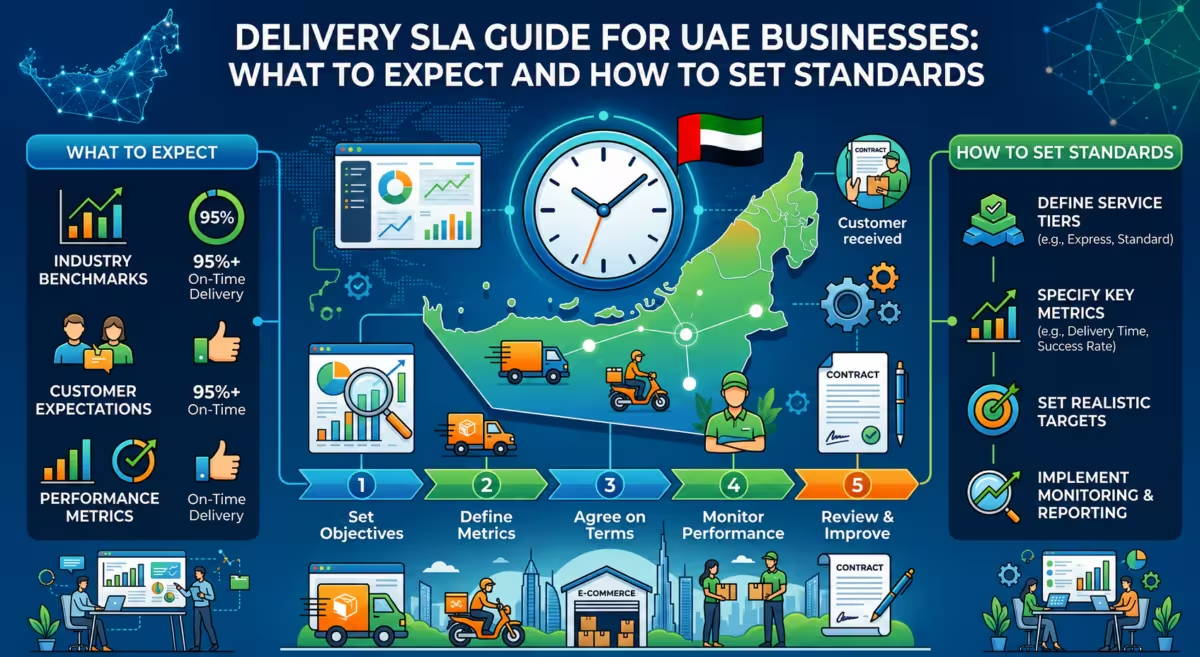
 Delivery SLA Guide for UAE Businesses: What to Expect and How to Set Standards

Delivery SLA guide for UAE businesses showing service level agreements, delivery performance metrics, on-time delivery targets and logistics standards.

Delivery SLA Guide for UAE Businesses: What to Expect and How to Set Standards

When your logistics partner for ecommerce misses a delivery window, the customer doesn’t blame the courier. They blame you.

A delivery SLA (Service Level Agreement) is the contractual structure that prevents that from happening, defines what good performance looks like, and specifies exactly what follows when it doesn’t. Without a delivery SLA, you’re managing logistics only on trust rather than on evidence.

This guide covers the specific metrics a delivery SLA must include for the UAE e-commerce sector, how to structure enforceable penalty clauses, and the UAE-specific risks every SLA should address.

Key Takeaways

  • A delivery SLA is a formal agreement that defines performance standards, metrics, and consequences for breaches between a business and its logistics partner.

  • SLA, SLI, and SLO are three distinct layers. When you blur them, SLAs quietly lose their enforcement power.

  • The five metrics every UAE delivery SLA must contain: OTD rate, FDSS rate, order accuracy, damage rate, and breach response time.

  • UAE-specific SLA requirements include COD failure handling, WhatsApp notification compliance, and seasonal capacity guarantees for Ramadan and White Friday.

  • A well-structured SLA specifies a 30-day corrective period when a carrier repeatedly fails to meet on-time delivery targets before cancellation rights are triggered. 

What Is a Delivery SLA and What It Does

A delivery SLA is a formal contract between a business and its logistics partner that defines what constitutes successful delivery, how performance is measured, and what happens when agreed standards aren’t met.

Three distinct layers make up a functional delivery SLA, and enforcement breaks down when the lines between them blur:

  1. An SLA (service level agreement) is a formal commitment between parties that defines expected performance. 
  2. An SLI (service level indicator) is the specific metric used to measure whether that commitment is being met. 
  3. An SLO (service level objective) is a numeric target for that metric.

Without all three, you have a promise, not a contract. “We’ll deliver as quickly as possible” is an SLA without an SLI or SLO. It’s unenforceable, unmeasurable, and useless when you need to dispute a performance failure.

The UAE-Specific Returns Challenge: COD Refusals

The KPIs inside your SLA are what separate a meaningful agreement from a formality. Vague language about “timely delivery” leads to disputes while numeric targets create accountability.

  1. On-Time Delivery rate (OTD): The percentage of orders delivered within the agreed window. This is the primary SLA metric for most e-commerce operations.

  2. First Day Delivery Success (FDSS): The percentage of orders delivered on the first attempt without a reattempt or return-to-origin. Failed first attempts can be expensive, with the failed-attempt cost plus the reattempt or RTO cost.

  3. Order accuracy rate: The percentage of orders fulfilled without error. Even a 1% error rate may translate to thousands of incorrectly shipped parcels, driving return costs, customer complaints, and wasted inventory space.

  4. Damage rate: The percentage of large and heavy parcel deliveries with damage attributable to handling or transit. Damage is a direct cost to the business: product write-off, replacement shipping, and the customer relationship.

  5. Breach response time: How quickly the logistics partner must acknowledge and escalate an SLA breach. This is the metric most SLAs omit, and it’s what determines whether a missed delivery is recoverable or a lost customer.

Before you negotiate an SLA with any UAE courier, benchmark their published performance against these targets. Best Courier Services in UAE: 2026 Comparison Guide covers rates, COD remittance cycles, and NDR management across the major operators.

UAE-Specific SLA Requirements Every Agreement Must Address

These are the clauses that matter most for businesses operating in the UAE market.

1) COD failure handling

When a customer refuses a COD parcel, the delivery fails, and the return-to-origin process begins. 

Your SLA should specify who bears the cost of the RTO, the timeline for the parcel to re-enter your inventory, and whether repeat COD refusals from the same address are automatically flagged to you.

2) WhatsApp notification compliance 

WhatsApp is the dominant customer communication channel in the UAE. An email-only delivery confirmation is insufficient for most UAE consumers. 

Your SLA should require, at minimum, one WhatsApp notification when the order is out for delivery and a delivery confirmation message with a photo ePOD link within 30 minutes of drop-off. 

What Is Contactless Delivery and How Does It Work in the UAE? explains how the notification and proof-of-delivery workflow connects end-to-end.

3) Seasonal capacity guarantees 

Ramadan, White Friday, and Eid create order volume spikes. SLAs should be dynamic. An agreement that was effective a year ago may no longer work today due to ecommerce growth. 

Write a specific capacity clause: “Provider commits to maintaining OTD and FDSS targets during periods where daily order volume increases by up to X% above the baseline 30-day average.”

4) Emirate-level coverage confirmation

“UAE-wide delivery” means different things to different providers. Northern Emirates (Ras Al Khaimah, Fujairah, Umm Al Quwain) carry different SLAs than Dubai and Abu Dhabi. Negotiate separate OTD targets by zone, or require the provider to flag explicitly where full SLA coverage doesn’t apply. 

Jeebly Dash, for example, publishes same-day delivery and 98% FDSS for Dubai operations. Next-day delivery to northern and eastern emirates operates under a separate OTD commitment. That’s the standard to apply when evaluating any UAE logistics provider.

5) Free zone and compound access

Many delivery failures in the UAE occur at the building access point due to free zone entry requirements, gated community permits, and building management restrictions. 

Your SLA should specify who is responsible when delivery fails because the courier couldn’t access the delivery location and outline the reattempt process.

How to Structure Breach Penalties and Performance Incentives

Penalty clauses in UAE commercial contracts are governed by Federal Law No. 18 of 1993 (Commercial Transactions Law). UAE courts can reduce penalties deemed disproportionate to the documented actual loss, meaning penalty amounts must be tied to verifiable costs rather than abstract figures.

Three penalty structures that work:

  • Per-incident fees: A fixed amount per order delivered outside the agreed window. This structure is simple, auditable, and proportionate.

  • Percentage credits: A percentage of the shipment value credited back when the delivery fails. More appropriate for high-value freight or B2B shipments, where individual parcel values vary significantly.

  • Cumulative threshold triggers: When OTD or FDSS falls below the agreed-upon minimum for a billing period, additional penalties or contract review rights are triggered. 

For example: if a carrier repeatedly fails to meet 95% OTD, the SLA may specify a 30-day corrective period during which performance must recover. If it doesn’t, cancellation rights are triggered.

What makes a penalty clause enforceable in the UAE:

  • The penalty amount is tied to a documented, verifiable cost (re-delivery fee, customer refund, support cost)
  • The breach is defined numerically, not descriptively
  • The measurement methodology is agreed in advance: which system provides the OTD data, how disputes are resolved
  • The escalation path is named: which contact at the logistics partner receives the breach notification, and within what timeframe

A Performance Incentive Clause Worth Adding

The penalty structure above protects you when performance falls short. A performance incentive clause creates a reason for your logistics partner to consistently exceed the target.

When OTD or FDSS consistently exceeds the agreed minimum over a defined period (typically a quarter), the carrier qualifies for a structured bonus or a fixed amount or percentage credit applied to the following period’s invoices. This converts the SLA from a penalty-only instrument into a partnership structure. Carriers operating under both mechanisms will have a commercial reason to over-perform.

To set penalty amounts that are proportionate to documented loss, you need your baseline per-delivery cost breakdown. Cost of Shipping for a Small Business in the UAE (2026) provides the cost structure to build defensible penalty figures against.

How to Monitor SLA Performance in Real Time

SLAs only function as control systems when teams can see risk early and act on it while there is still time to change the outcome. SLAs designed as operational systems rather than contractual artefacts align SLIs and SLOs with delivery realities. 

This embeds verification directly into workflows, and treats exceptions as early-warning signals rather than postmortems.

In practice, this means:

  • API integration between your OMS and the logistics platform: When order status, tracking events, and delivery confirmation flow automatically into your system, SLA monitoring is continuous rather than manual. You see a developing breach before it completes.

  • Exception dashboards, not monthly reports: SLA performance reviewed at month-end means you discover breaches weeks after they happened. An exception dashboard shows you in real time which orders are at risk of missing the window while there’s still time to intervene.

  • Automated breach notifications: When an order exceeds its delivery window without a confirmed delivery event, the system should automatically alert both your team and the logistics partner. The breach response clock starts at this notification.

Jeebly’s platform provides Jeebly Bizz customers with real-time OTD and FDSS tracking through the same dashboard that manages dispatch and returns. See how Jeebly’s technology infrastructure supports this before evaluating any other provider on SLA monitoring capability.

How Jeebly Structures Delivery SLAs

Jeebly’s core performance metric is 98% FDSS across 50,000+ daily deliveries. Providers who can’t share FDSS data probably have performance they can’t defend.

Jeebly Dash SLA structure for domestic delivery: same-day within Dubai with defined cut-off times; next-day across all seven UAE emirates; WhatsApp and SMS notifications at dispatch and delivery; photo ePOD at every drop-off. Published base rate AED 17.31 per parcel up to 5 kg.

Jeebly Bizz for businesses managing high-volume e-commerce: real-time dashboards; automated workflows that trigger customer notifications and reattempt scheduling without manual intervention; secure COD collection with weekly remittance; and returns managed through the same platform as forward delivery.

Jeebly Haul for freight: transit time commitments on road, air, and ocean freight routes, with exception escalation built into the platform rather than requiring a phone call.

For businesses currently operating without a formal SLA or with a vague agreement that doesn’t specify metrics, talk to the Jeebly team. 

Bring your current OTD and FDSS data, your daily order volume, and which emirates you cover. We’ll tell you what a Jeebly SLA looks like against your current performance and what the gap is.

Frequently Asked Questions

A delivery SLA is a formal agreement between a business and its logistics partner that defines what successful delivery looks like and what happens when those standards aren’t met. It replaces vague commitments with measurable obligations.

An SLA is the commitment, like “we’ll deliver next-day orders by 9 pm.” An SLI is the metric used to measure it, similar to the OTD rate. An SLO is a numeric target, such as 95%. All three are needed for an SLA to be enforceable. Most delivery disputes arise because only the SLA is defined, without agreed-upon metrics or targets.

Top-tier logistics providers and major e-commerce fulfilment operations target a benchmark of at least 95% to remain competitive in dense urban corridors like Dubai and Abu Dhabi. Jeebly publishes 98% FDSS across 50,000+ daily deliveries. For same-day delivery within Dubai, this target should be a realistic SLO. Negotiate separate targets by emirate. The Northern Emirates may carry a higher risk than Dubai and Abu Dhabi.

Yes, under Federal Law No. 18 of 1993 (Commercial Transactions Law), penalty clauses in commercial contracts are enforceable. UAE courts may reduce penalties deemed disproportionate to the actual documented loss, so that the penalty amounts to verifiable costs (e.g., redelivery fees, customer refunds, support costs).

COD failure handling (who bears RTO cost, what the re-entry timeline is), WhatsApp notification compliance (the dominant customer channel in the UAE), seasonal capacity guarantees, emirate-level coverage confirmation with separate OTD targets where full coverage doesn’t apply, and building/free zone access failure responsibility.

Routes to insightful reads

DDP shipping infographic explaining seller responsibilities, customs clearance, duties, final delivery, and benefits for UAE importers
What Is DDP Shipping? What “Delivered Duty Paid” Means for UAE Importers and Exporters

A delivery note is a key document in the UAE logistics process, providing a clear record of what was shipped, who sent it, and who received it. From proof of delivery and shipment tracking to order verification, customs compliance, and dispute resolution, a properly prepared delivery note helps businesses maintain accurate records and protect every shipment. This guide explains what a delivery note is, what it should include, and why it is essential for businesses operating across the UAE.

Read More
Delivery note document showing shipment details, proof of delivery, tracking, verification and UAE logistics compliance
What Is a Delivery Note and Why Does Every UAE Shipment Need One?

A delivery note is a key document in the UAE logistics process, providing a clear record of what was shipped, who sent it, and who received it. From proof of delivery and shipment tracking to order verification, customs compliance, and dispute resolution, a properly prepared delivery note helps businesses maintain accurate records and protect every shipment. This guide explains what a delivery note is, what it should include, and why it is essential for businesses operating across the UAE.

Read More
Illustration showing strategies to reduce cart abandonment through transparent shipping costs, fast delivery, local fulfilment, and clear returns policies for UAE eCommerce businesses.
How to Reduce Cart Abandonment Caused by Delivery Costs and Uncertainty

Delivery costs and uncertainty are among the biggest reasons shoppers abandon their carts before completing a purchase. This guide explores practical strategies to reduce cart abandonment, including transparent shipping fees, accurate delivery estimates, flexible shipping options, local fulfilment, and hassle-free returns, helping UAE eCommerce businesses improve conversions and build customer trust.

Read More
J&T Express vs Jeebly comparison graphic featuring delivery apps, e-commerce products, and UAE logistics services against the Dubai skyline.
J&T Express vs Jeebly: Which Courier Is Better for UAE eCommerce Businesses?

J&T Express and Jeebly both support eCommerce deliveries, but they cater to different business needs. This comparison explores their delivery networks, fulfilment capabilities, shipping speed, technology, pricing flexibility, and merchant services to help UAE businesses choose the courier partner that best supports their growth and customer experience.

Read More
Delivery SLA guide for UAE businesses showing service level agreements, delivery performance metrics, on-time delivery targets and logistics standards.
 Delivery SLA Guide for UAE Businesses: What to Expect and How to Set Standards

A clear delivery Service Level Agreement (SLA) sets the expectations for speed, reliability, and performance between businesses and their logistics partners. This guide explains what a delivery SLA should include, the key metrics to track, and how UAE businesses can set realistic standards to improve customer satisfaction and delivery performance.

Read More
Categories
blogs

Careem Express vs Jeebly: Which Delivery Partner Is Best for UAE Businesses?

Careem Express vs Jeebly comparison graphic featuring delivery vehicles and riders in Dubai, highlighting UAE last-mile delivery services for businesses.

Careem Express vs Jeebly: Which Delivery Partner Is Best for UAE Businesses?

Speed is a legitimate advantage. If Careem Express can put a parcel in your customer’s hands in 30 minutes, that is genuinely useful for certain types of businesses.

But speed is one dimension of logistics, not the whole picture. The more relevant question for most UAE businesses is: can this provider handle everything my operations actually require, day in and day out, as my order volumes grow?

That is where the Careem Express vs Jeebly comparison gets interesting. These two providers are built on fundamentally different operating models, not just different delivery windows. With the UAE’s e-commerce market projected to reach USD 13.8 billion by 2029, the logistics infrastructure you choose now will either support that growth or limit it.

This article breaks down both providers across delivery speed, UAE coverage, pricing, COD, technology, and full-stack logistics capability, so you can choose based on what your business actually needs.

What Careem Express and Jeebly Actually Do

Understanding what each provider was built for is the starting point for any honest comparison.

Careem Express

Careem Express is the B2B delivery arm of Careem, the UAE-headquartered super app that also operates ride-hailing, food delivery, grocery, and payments. Careem is an Uber subsidiary operating across 13 countries in MENA.

The Express product leverages the same driver network and AI-powered mapping technology used for passenger rides to offer on-demand, hyperlocal parcel delivery for businesses.

Key facts about Careem Express:

  • Delivers in 30-40 minutes for eligible orders in covered zones
  • Operates in 11 cities across UAE, KSA, and Qatar
  • Services: on-demand last-mile, Box-on-Bike delivery, same-day courier, COD collection, real-time tracking API
  • Flash Delivery API: lets e-commerce stores add a “Deliver Now” button at checkout with live GPS tracking for the customer
  • Integrations available with Shopify, WooCommerce, and Magento
  • 24/7 customer support and dedicated account managers during business hours

What Careem Express does not offer:

  • No standalone warehousing or fulfilment service
  • No structured cross-border or GCC freight capability
  • No dedicated reverse logistics or returns service line
  • No premium or white-glove delivery product
  • No structured next-day delivery across all seven UAE emirates


Careem Express is an on-demand speed layer. It excels at getting time-critical, city-level parcels to customers fast. It is not designed to be a business’s complete logistics infrastructure.

Jeebly

Jeebly was founded in Dubai in 2016, started as a hyperlocal delivery platform, and has since grown into a full-service logistics business purpose-built for UAE e-commerce. The operational scale today:

  • 50,000-plus daily deliveries
  • 4,000-plus active fleet vehicles
  • 12M-plus customers served
  • 98% First-Day Delivery Success (FDSS) rate across all seven emirates

Jeebly’s product suite includes Jeebly Dash for domestic express, same-day, and next-day delivery, Jeebly Bizz for business logistics and fulfilment, Jeebly Haul for freight above 20 kg, and Jeebly Plus for premium white-glove delivery.

Where Careem Express is an on-demand speed layer, Jeebly is a full logistics infrastructure built around the complete operational lifecycle of a UAE online business.

Careem Express vs Jeebly: Side-by-Side Comparison

The sections below unpack what those differences actually mean in practice, because a table can show you the gaps but it cannot tell you which ones will hurt your business first.

Capability Careem Express Jeebly
Delivery Model On-demand, hyperlocal Scheduled, same-day, next-day, express
Express Speed 30-40 min (covered zones) 60-120 min (Dubai, bike delivery)
Same-Day Delivery Yes (covered cities) Yes (Dubai, 11 AM cut-off)
Next-Day Delivery Not a structured UAE-wide offering Yes, all 7 emirates, 2 PM cut-off
UAE Coverage Select cities All 7 emirates
GCC Cross-Border Limited Yes, Jeebly Dash International
Freight / Bulk Cargo No Yes, Jeebly Haul (above 20 kg)
Warehousing / Fulfilment No Yes, including micro-fulfilment centres
Reverse Logistics No dedicated service Yes, structured service line
White-Glove / Premium No Yes, Jeebly Plus
COD Support Yes Yes, weekly bank remittances
Shopify Integration Yes Yes
WooCommerce Integration Yes Yes
Self-Service Portal Careem Express portal and app Jeebly Now portal and One App
Real-Time Tracking Yes, live GPS (Flash Delivery API) Yes, centralised merchant dashboard
Dedicated Account Management Yes (business hours) Yes, KAMs via WhatsApp, email, direct calls
Q-Commerce / Dark Stores Via dark store partners Yes, 13+ live micro-fulfilment centres
Primary Fit Hyperlocal, on-demand, urban delivery Full-stack UAE e-commerce logistics

Careem Express wins on raw delivery speed within covered zones. Jeebly covers the full operational lifecycle of a UAE online merchant, from the first sale through to warehousing, returns, and cross-border growth

Delivery Speed and Coverage

Careem Express: Speed and Coverage

Careem Express’s 30-40 minute delivery window is one of the fastest available in the UAE for eligible orders. That speed is real, and for specific use cases, it is a genuine competitive advantage.

The important context:

  • Coverage is strongest in Dubai, with operations also in select UAE cities, KSA, and Qatar
  • The on-demand model means orders are dispatched as they arrive, with no scheduled delivery windows
  • Structured next-day delivery across all seven UAE emirates is not a defined product offering
  • Per-delivery costs are higher than traditional next-day couriers, which affects margin economics on bulk or lower-value shipments
  • Best suited to urgent, sub-5 kg, city-level parcels where speed is the primary requirement

Jeebly Dash: Speed and Coverage

Jeebly Dash runs three delivery tiers, giving merchants the ability to match delivery cost to product urgency:

  • Express (60-120 minutes): Dubai only, bike delivery, weight and dimension limits apply
  • Same-Day: Dubai only, order cut-off at 11 AM
  • Next-Day: All seven UAE emirates (Abu Dhabi, Dubai, Sharjah, Ajman, Umm Al Quwain, Ras Al Khaimah, Fujairah), cut-off at 2 PM.


The 98% FDSS rate applies across the full operation. Underpinning it is data-driven fleet forecasting and AI-optimised routing built around UAE delivery conditions, including the absence of a standardised postcode system, free-zone access requirements, and peak season volume surges. Jeebly makes three delivery attempts before marking an order as Return to Origin (RTO).

The coverage point that matters most for growing UAE businesses: as soon as your customers are outside Dubai, you need a provider with structured UAE-wide SLAs. Jeebly’s next-day network covers every emirate, including Ras Al Khaimah, Fujairah, and Umm Al Quwain, where consistent SLA delivery is not guaranteed by every provider in the market.

For a breakdown of how delivery timelines work across different UAE service types, read: How Long Does Delivery Take in the UAE?

Pricing: What to Expect From Each Provider

Neither Careem Express nor Jeebly publishes a universal public rate card. Pricing scales with volume, service level, and account type.

Careem Express pricing:

  • Higher per-delivery cost than traditional next-day couriers (confirmed by independent market research)
  • Optimised for urgency, not bulk volume economics
  • Pricing available via the Careem Express portal or sales team
  • Surge pricing during peak periods can affect per-delivery margins


Jeebly Dash published base rate:

  • AED 17.31 per parcel up to 5 kg (next-day and scheduled deliveries)
  • AED 2/kg above 5 kg, up to 20 kg maximum per order
  • No minimum order requirement and no long-term contract to start
  • Volume-based commercial terms available for brands shipping 50-plus orders daily.


Beyond base rates, three line items that regularly catch businesses off-guard:

  • COD remittance cycle: Delayed remittance ties up working capital. Always confirm the exact cadence before signing.
  • Failed delivery re-attempt fees: Understand how many re-attempts are included, what each costs, and who covers return shipping on customer-fault failures.
  • Return shipping costs: Get explicit terms on returns before any agreement is finalised.


For a realistic picture of what delivery costs look like for UAE small businesses: Cost of Shipping for a Small Business in the UAE.

Technology, Tracking, and Integrations

Careem Express Technology

Careem Express’s technology is built on the same infrastructure that powers its ride-hailing and consumer delivery services. For B2B delivery, that translates to:

  • Flash Delivery API: enables a “Deliver Now” checkout button with live GPS rider tracking for end customers
  • Real-time tracking through the Careem app and Express portal
  • Native integrations with Shopify, WooCommerce, and Magento
  • AI-powered routing using Careem’s advanced mapping and dispatching system
  • 24/7 customer support with dedicated account managers during business hours.


The technology is strong for on-demand dispatch and live consumer-facing tracking. It is built for speed and simplicity, not for managing complex merchant operations at scale.

Jeebly Technology

Jeebly’s platform is built merchant-first. Everything on the dashboard is oriented toward operational visibility and control for a business managing daily order flows:

  • Centralised dashboard: live order status, COD reconciliation, delivery performance analytics, and exception alerts in one view
  • Connected Order Management System (OMS) and Warehouse Management System (WMS)
  • Native integrations: Shopify, WooCommerce, Magento, ChatFood, and Grubtech
  • Jeebly One App: sign up in under five minutes, no minimum order commitment
  • Dedicated Key Account Managers accessible via WhatsApp, email, and direct calls, not just a support ticket system
  • Data-driven fleet forecasting that scales capacity ahead of peak season demand, not in reaction to it.


For operations teams managing 100-plus daily orders, knowing about a delivery exception before your customer does is operationally valuable in ways a basic tracking link cannot cover. Explore how Jeebly’s technology platform works.

To understand how AI-powered logistics is reshaping operations across the UAE: How AI Is Changing Logistics in the UAE.

COD, Returns, and the Details That Determine Operational Fit

These factors are easy to overlook during a vendor evaluation and consistently the source of operational friction afterward.

Cash on Delivery

Both Careem Express and Jeebly support COD, which remains a significant share of e-commerce transactions across the UAE. Research from 2026 puts COD at approximately 40% of UAE e-commerce orders, making remittance speed and accuracy a material business issue.

Jeebly remits COD collections to your bank account on a weekly cycle. That predictable cadence is consistently cited by Jeebly merchant partners as a working capital advantage, particularly for brands where COD makes up a large percentage of daily revenue.

Careem Express also supports COD. Remittance terms are structured at the account level and should be confirmed directly before committing.

For either provider: confirm the exact remittance cadence and reporting format in writing, not just that COD is available. Read: How Jeebly Ensures Secure COD Delivery in UAE.

Reverse Logistics

This is one of the clearest operational gaps in the Careem Express vs Jeebly comparison.

Careem Express does not offer a dedicated reverse logistics or returns management service.

Jeebly runs a structured reverse logistics service line covering returns management and product recalls, fully integrated with the same platform handling forward deliveries. Digital proof of pickup is captured at collection.

For any UAE e-commerce brand managing regular returns, exchanges, or product recalls, the absence of a structured returns service is a meaningful operational gap that would require sourcing a separate provider.

Still managing returns manually? Read: How to Manage Returns for Your UAE Online Store.

Peak Season Scalability

The UAE’s logistics market gets stress-tested every year during Ramadan, White Friday, and the December shopping period.

Careem Express scales through its on-demand driver network. During peak periods, surge pricing can increase per-delivery costs, and driver availability in covered zones may vary with demand.

Jeebly uses data-driven fleet forecasting to scale capacity ahead of peak demand, not in response to it. When order volumes for clients like Carrefour and Amazon double overnight, the fleet and rider deployment are already in position.

Read: How Jeebly Helps SMEs Scale During Peak Shopping Seasons.

Where Jeebly Goes Further

Careem Express fills a genuine gap in the UAE logistics market. For time-critical, hyperlocal, on-demand delivery within covered cities, particularly for fashion, beauty, gifts, pharmacy, or food items, its speed is hard to match.

The comparison shifts the moment your operational requirements expand beyond city-level on-demand delivery.

Jeebly’s product suite is designed to grow with a UAE e-commerce business at every stage:

  • Jeebly Dash covers express, same-day, next-day, and scheduled domestic deliveries across all seven emirates.
  • Jeebly Bizz handles warehousing, fulfilment, cross-border logistics, and customs clearance on a single platform. For businesses exploring what outsourced logistics really means: What Is a 3PL?
  • Jeebly Haul moves bulk shipments above 20 kg by road, air, and sea, domestically and across GCC and MENA.
  • Jeebly Plus delivers white-glove, chauffeur-led experiences for B2B clients with high-value or luxury products, where the delivery moment carries its own brand weight.


Trusted by Mumzworld.com, Instashop, DOD UAE, and BFL Group, Jeebly carries AED 500M-plus in combined revenue and AED 1.5B-plus in shipments delivered.

For guidance on evaluating any logistics partner in the UAE: What to Look for in a Reliable Logistics Company.


How to Choose: Four Questions to Work Through

There is no universally correct answer. But working through these four questions honestly will save you from a provider switch six months down the line when operational friction has already cost you customers.

1. Is speed your only requirement, or do you also need coverage, fulfilment, and returns?
If you need a fast, on-demand layer for urgent city-level deliveries, Careem Express is a legitimate option. If you need a complete logistics infrastructure covering the full UAE, returns, warehousing, and room to scale, Jeebly is the right fit.

2. Do you sell to customers across all seven UAE emirates?
Careem Express operates in select UAE cities and does not offer a structured next-day SLA across all seven emirates. Jeebly’s next-day network covers every emirate, including the northern emirates, consistently and at scale.

3. Will you need warehousing, fulfilment, or freight now or in the next 12 months?
Careem Express has no warehousing or fulfilment offering. Adding those capabilities would require separate provider relationships. Jeebly covers them all on one platform, which avoids the complexity and coordination cost of managing multiple logistics vendors.

4. What percentage of your orders are COD, and how does remittance timing affect your cash flow?
Jeebly’s weekly remittance cycle is a known, predictable input you can plan around. Confirm Careem Express’s remittance terms before committing, and get them in writing.

Conclusion

Careem Express is a strong choice for a specific use case: ultra-fast, on-demand delivery within covered UAE cities for time-critical, lightweight shipments. If that is the core of your logistics requirement, it delivers on its promise.

For UAE e-commerce businesses that need consistent delivery across all seven emirates, transparent pricing, structured COD management, returns handling, and a platform that scales from 50 orders a day to peak-season surges, Jeebly is the more complete and operationally aligned partner.

If you are still comparing options, see how Jeebly stacks up against other providers in the market: Quiqup vs Jeebly, iMile vs Jeebly, EMX vs Jeebly, and Porter vs Jeebly.

At Jeebly, we do not just move parcels. We move businesses forward. If you are ready to build a logistics setup that works as hard as you do, talk to the Jeebly team and get a solution built around your specific volumes, routes, and growth plans.

Or, if you are ready to get started now, sign up with Jeebly and start shipping today.

Frequently Asked Questions

Careem Express is the B2B delivery service offered by Careem, the UAE-based super app. It uses Careem’s existing driver and mapping infrastructure to offer on-demand, hyperlocal parcel delivery for businesses, primarily within Dubai and select other UAE cities. Businesses can access it via the Careem Express portal or integrate it into their e-commerce store using the Flash Delivery API for checkout-level delivery booking with live GPS tracking.

Careem Express is an on-demand, hyperlocal delivery service focused on speed within covered cities, primarily Dubai. It does not offer warehousing, fulfilment, structured cross-border shipping, or reverse logistics. Jeebly is a full-stack logistics platform purpose-built for UAE e-commerce, covering same-day and next-day delivery across all seven emirates, COD management, fulfilment, freight, returns, and a merchant-first technology platform.

Careem Express operates in select UAE cities and does not offer a structured next-day delivery SLA across all seven UAE emirates. For brands that sell to customers in Abu Dhabi, Sharjah, Ras Al Khaimah, Fujairah, or the northern emirates consistently, Jeebly’s UAE-wide next-day network is the more reliable fit.

For ultra-fast, on-demand deliveries within Dubai, Careem Express offers one of the fastest options available at 30-40 minutes for eligible orders. For structured e-commerce operations with same-day and next-day delivery, COD management, returns handling, and platform integrations, Jeebly Dash provides a more complete operational fit. The right choice depends on whether speed or full-stack logistics capability is the priority.

Yes, Careem Express supports COD. Before committing, confirm the remittance cycle and reporting format directly with Careem Express. Jeebly also supports COD and remits collections to your bank account on a weekly cycle, providing a predictable working capital timeline.

For on-demand, point-to-point delivery, Careem Express is faster at 30-40 minutes versus Jeebly Dash’s 60-120 minute express tier in Dubai. For structured, consistent, UAE-wide delivery at scale, Jeebly’s infrastructure, 98% FDSS rate, and all-seven-emirates coverage make it the stronger operational choice for e-commerce businesses.

Careem Express does not offer a dedicated reverse logistics or returns management service. If returns are a regular part of your operations, you would need a separate provider for that capability. Jeebly runs a fully integrated reverse logistics service line covering returns management, product recalls, and digital proof of pickup within the same platform handling your forward deliveries.

Jeebly is built specifically for this. The no-minimum, pay-as-you-go model means you are not committed to volume thresholds before you have reached them. As your business grows, Jeebly’s product suite, from Dash to Bizz to Haul, scales with you without requiring a platform migration or new provider relationships.

Routes to insightful reads

DDP shipping infographic explaining seller responsibilities, customs clearance, duties, final delivery, and benefits for UAE importers
What Is DDP Shipping? What “Delivered Duty Paid” Means for UAE Importers and Exporters

A delivery note is a key document in the UAE logistics process, providing a clear record of what was shipped, who sent it, and who received it. From proof of delivery and shipment tracking to order verification, customs compliance, and dispute resolution, a properly prepared delivery note helps businesses maintain accurate records and protect every shipment. This guide explains what a delivery note is, what it should include, and why it is essential for businesses operating across the UAE.

Read More
Delivery note document showing shipment details, proof of delivery, tracking, verification and UAE logistics compliance
What Is a Delivery Note and Why Does Every UAE Shipment Need One?

A delivery note is a key document in the UAE logistics process, providing a clear record of what was shipped, who sent it, and who received it. From proof of delivery and shipment tracking to order verification, customs compliance, and dispute resolution, a properly prepared delivery note helps businesses maintain accurate records and protect every shipment. This guide explains what a delivery note is, what it should include, and why it is essential for businesses operating across the UAE.

Read More
Illustration showing strategies to reduce cart abandonment through transparent shipping costs, fast delivery, local fulfilment, and clear returns policies for UAE eCommerce businesses.
How to Reduce Cart Abandonment Caused by Delivery Costs and Uncertainty

Delivery costs and uncertainty are among the biggest reasons shoppers abandon their carts before completing a purchase. This guide explores practical strategies to reduce cart abandonment, including transparent shipping fees, accurate delivery estimates, flexible shipping options, local fulfilment, and hassle-free returns, helping UAE eCommerce businesses improve conversions and build customer trust.

Read More
J&T Express vs Jeebly comparison graphic featuring delivery apps, e-commerce products, and UAE logistics services against the Dubai skyline.
J&T Express vs Jeebly: Which Courier Is Better for UAE eCommerce Businesses?

J&T Express and Jeebly both support eCommerce deliveries, but they cater to different business needs. This comparison explores their delivery networks, fulfilment capabilities, shipping speed, technology, pricing flexibility, and merchant services to help UAE businesses choose the courier partner that best supports their growth and customer experience.

Read More
Delivery SLA guide for UAE businesses showing service level agreements, delivery performance metrics, on-time delivery targets and logistics standards.
 Delivery SLA Guide for UAE Businesses: What to Expect and How to Set Standards

A clear delivery Service Level Agreement (SLA) sets the expectations for speed, reliability, and performance between businesses and their logistics partners. This guide explains what a delivery SLA should include, the key metrics to track, and how UAE businesses can set realistic standards to improve customer satisfaction and delivery performance.

Read More
Categories
blogs

Aramex vs Jeebly: Which Is Better for UAE Last-Mile Delivery?

Comparison graphic showing Aramex and Jeebly last-mile delivery services in the UAE, featuring delivery vehicles, couriers, and key logistics service categories.

Aramex vs Jeebly: Which Is Better for UAE Last-Mile Delivery?

Choosing a courier in the UAE is not just a procurement decision. It is a customer experience decision.

Every parcel that arrives late, every tracking update that goes silent, and every COD payment that takes weeks to land in your account reflects directly on your brand, not the carrier’s.

The Aramex vs Jeebly question comes up often among UAE businesses because both are credible, well-known names. But they are not the same type of company, and comparing them purely on brand recognition misses the point entirely.

This article breaks down both providers across delivery speed, pricing, technology, COD, emirate coverage, and e-commerce fit, so you can match the right partner to how your business actually operates.

With the UAE’s last-mile delivery market projected to reach USD 4.85 billion by 2030, that choice carries real commercial weight.

What Aramex and Jeebly Actually Do

Before comparing the two, it helps to understand what each company was built to do because design intent shapes every operational detail that follows.

Aramex was founded in 1982 in Amman, Jordan. Today it is headquartered in Dubai, publicly listed on the Dubai Financial Market, and majority-owned by ADQ, Abu Dhabi’s sovereign wealth fund. It operates across 70-plus countries through more than 600 offices, with approximately 18,000 employees worldwide.

Core Aramex services include:

  • Domestic express delivery (same-day and next-day within the UAE)
  • International express shipping across 70-plus countries
  • Freight forwarding by air, sea, and road
  • Fulfilment and warehousing
  • Customs clearance
  • Shop and Ship, its flagship cross-border parcel forwarding product

Aramex is built for scale: enterprise accounts, institutional clients, and businesses that need a globally recognised partner to handle both local and international complexity.

Jeebly was founded in Dubai in 2016. It started as a hyperlocal delivery platform and has since evolved into a full-service logistics business purpose-built for UAE e-commerce. The operational numbers today:

  • 50,000-plus deliveries completed daily
  • 4,000-plus active fleet vehicles
  • 12M-plus customers served
  • 98% First-Day Delivery Success (FDSS) rate across all seven emirates

Jeebly’s product suite includes Jeebly Dash for same-day and next-day domestic delivery, Jeebly Bizz for business logistics and fulfilment, Jeebly Haul for freight above 20 kg, and Jeebly Plus for premium, white-glove delivery.

Where Aramex operates with global enterprise infrastructure, Jeebly’s platform is calibrated to one outcome: helping UAE online businesses deliver faster, retain customers, and scale without logistics becoming the bottleneck.

Aramex vs Jeebly: Head-to-Head Comparison

Here is how the two providers stack up across the dimensions UAE businesses care about most.

Capability Aramex Jeebly
Founded / HQ 1982, Dubai 2016, Dubai
Ownership ADQ (Abu Dhabi sovereign wealth fund) Independent, e-commerce-native
UAE Last-Mile Yes, Domestic Express Yes, same-day and next-day
Express Delivery Same-day (select zones, 7 days/week) 60-120 min (Dubai), same-day cut-off 11 AM
UAE-Wide Next-Day Yes Yes, all 7 emirates, cut-off 2 PM
GCC Cross-Border Yes, 70+ countries Yes, Jeebly Dash International
Freight Forwarding Yes, air, sea, and road Yes, Jeebly Haul
Fulfilment & Warehousing Yes, UAE fulfilment centres Yes, including micro-fulfilment centres
Marketplace Integrations ShopGo, Martjack Shopify, WooCommerce, Magento, and more
Self-Service Portal Yes, aramex.com Yes, Jeebly Now Portal + One App
Real-Time Tracking Yes, AI/ML-powered, live tracking (GCC rollout) Yes, centralised dashboard with ETA updates
COD Support Yes Yes, weekly bank remittances
Reverse Logistics Yes Yes, structured, dedicated service line
White-Glove / Premium Not a standalone product Yes, Jeebly Plus
Q-Commerce / Dark Stores No Yes, 13+ live micro-fulfilment centres
Primary Client Profile Enterprise, cross-border, institutional, SME E-commerce merchants, SMEs, D2C brands, startups

The table tells the story clearly. Aramex is architected for global enterprise volume and cross-border complexity. Jeebly is engineered around the daily realities of a UAE online merchant managing order flows, COD cycles, and peak season surges.

Delivery Speed and Coverage: What Each Provider Actually Commits To

Aramex Domestic Express

Aramex’s domestic product in the UAE offers same-day or next-day delivery, available seven days a week. That seven-day availability is a genuine advantage over providers that restrict weekend dispatches.

On the technology side, Aramex uses AI and machine learning to predict estimated delivery times. It was also the first logistics company in the GCC to pilot live last-mile tracking using Google Maps Platform, enabling customers to track their delivery from the last five stops to the doorstep. The GCC-wide rollout followed successful UAE testing in 2023.

Jeebly Dash

Jeebly Dash runs three delivery tiers, letting merchants match delivery cost to product urgency:

  • Express (60-120 minutes): Dubai only, bike delivery, for time-critical orders
  • Same-Day: Dubai, order cut-off at 11 AM
  • Next-Day: All seven emirates, with a 2 PM cut-off

The 98% FDSS rate applies across the full operation, not just select zones. Underpinning it is data-driven fleet forecasting and AI-optimised routing built specifically around UAE delivery conditions, including the absence of a standardised postcode system, free-zone access requirements, and the volume pressure of peak shopping seasons.

Jeebly makes three delivery attempts before marking an order as Return to Origin (RTO).

The coverage distinction that matters for e-commerce: both providers cover UAE-wide next-day delivery. Where Jeebly goes further is the 60-120 minute express tier and a network of 13-plus live micro-fulfilment centres for Q-commerce. That is infrastructure Aramex does not match in the consumer e-commerce segment.

To understand how delivery timelines work by service type across the UAE, read: How Long Does Delivery Take in the UAE?

COD, Returns, and the Details That Matter at Scale

These three factors tend to surface only after something goes wrong. Worth evaluating upfront, because each one directly affects cash flow, customer retention, and the delivery promise you can credibly make at checkout.

Cash on Delivery

Both Aramex and Jeebly support COD, which remains a significant share of e-commerce transactions across the UAE and wider GCC.

Key difference: Jeebly remits COD collections to your bank account on a weekly cycle. That predictability is consistently cited by Jeebly merchant partners as a working capital advantage, particularly for brands where COD makes up a meaningful percentage of daily revenue.

Aramex also supports COD, with remittance terms structured at the account level.

Before committing to either provider: confirm the exact remittance cadence and reporting format in writing, not just that COD is available.

Reverse Logistics

Jeebly runs a dedicated reverse logistics service line covering returns management and product recalls, integrated with the same platform handling forward deliveries. Digital proof of pickup is captured at collection. Aramex includes returns handling within its e-commerce service suite.

For brands managing high return volumes, the practical question is not whether returns are supported. It is how quickly the return cycle closes, how exceptions are handled, and whether the data feeds back into your order management view.

Still managing returns manually? Read: How to Manage Returns for Your UAE Online Store

Emirate Coverage

Both providers offer next-day delivery across the UAE. Jeebly’s coverage explicitly includes all seven emirates: Abu Dhabi, Dubai, Sharjah, Ajman, Umm Al Quwain, Ras Al Khaimah, and Fujairah.

Ras Al Khaimah, Fujairah, and Umm Al Quwain are zones where consistent SLA delivery is not guaranteed by every provider in the market. If you sell nationally, verify the SLA for each specific emirate before making a checkout promise to your customers.

Where Jeebly Goes Further for UAE E-Commerce

For enterprise freight, institutional accounts, and businesses that need a single globally recognised partner across 70-plus countries, Aramex delivers.

The comparison shifts when the use case is specifically UAE e-commerce: merchants managing daily order flows, same-day commitments, COD cycles, returns, and growth across all seven emirates. That is the segment Jeebly was built for from day one, and the product architecture reflects it.

  • Jeebly Dash covers express (60-120 min), same-day, next-day, and scheduled deliveries across the UAE.
  • Jeebly Bizz handles warehousing, fulfilment, cross-border logistics, and customs clearance on a single platform, rather than across separate provider relationships. For businesses looking to understand what a 3PL actually means in practice, this is worth exploring.
  • Jeebly Haul moves bulk and freight shipments above 20 kg by road, air, and sea, domestically and across GCC and MENA.
  • Jeebly Plus delivers white-glove experiences for luxury and high-value categories where the delivery moment carries its own brand weight.

As order volume grows from 50 deliveries a day to 500 and beyond, Jeebly’s product architecture scales with you without requiring a platform migration.

Trusted by Mumzworld.com, Instashop, DOD UAE, and BFL Group, Jeebly carries AED 500M-plus in combined revenue and AED 1.5B-plus in shipments delivered. For more on how consistent logistics directly shapes customer experience: What to Look for in a Reliable Logistics Company in the UAE.

How to Choose: Five Questions to Ask Before You Commit

The right provider depends less on features in isolation and more on how your logistics actually run day to day. Work through these before committing:

1. What is your primary delivery use case?

Cross-border enterprise freight, global networks, and institutional accounts point toward Aramex. UAE last-mile delivery, same-day capability, COD management, and e-commerce fulfilment point toward Jeebly.

2. Do you sell on Shopify, WooCommerce, or Magento?

Jeebly’s native integrations connect your store directly to dispatch, removing manual order pushing and reducing errors at volume. Aramex integrates with ShopGo and Martjack. For merchants on Shopify or WooCommerce, Jeebly is the more direct operational fit.

3. What percentage of your orders are COD?

If COD accounts for more than 20-25% of your daily order mix, remittance cycle time directly affects working capital. Ask both providers for their exact cadence and get it confirmed in writing, not assumed.

4. Are you planning to scale in the next 12 months?

Jeebly’s no-minimum, pay-as-you-go model means your logistics infrastructure grows with your business rather than ahead of it. There is no need to commit to volume thresholds you have not yet reached. Read: How Jeebly Helps SMEs Scale During Peak Shopping Seasons.

5. Do you need 60-minute express or Q-commerce capability?

 Jeebly’s 13-plus live micro-fulfilment centres and 60-120 minute express tier are purpose-built for ultra-fast urban delivery. Aramex’s infrastructure does not offer an equivalent at the hyperlocal e-commerce level.

Conclusion

Aramex is a well-established, globally capable logistics provider. For cross-border freight, enterprise-scale operations, and businesses that need a single partner spanning 70-plus countries, its infrastructure and brand reputation are genuinely earned.

For UAE online merchants, whether a startup managing 50 orders a month or a growing brand navigating peak-season volume, Jeebly is the more purposefully built fit. The delivery tiers, pricing transparency, merchant-first technology, and product depth are designed specifically around how UAE e-commerce businesses actually operate and scale.

If you are still evaluating your options, see how Jeebly compares against other couriers operating in the UAE: Quiqup vs Jeebly, iMile vs Jeebly, EMX vs Jeebly, and Porter vs Jeebly.

At Jeebly, we do not just move parcels. We move businesses forward. If you are ready to build a logistics setup that scales with your ambition, talk to the Jeebly team and get a solution mapped to your specific volumes, routes, and growth targets.

Or, if you are ready to go now, sign up with Jeebly and start shipping today.

Frequently Asked Questions

Aramex is a globally operating courier and logistics provider founded in 1982, with a network across 70-plus countries spanning domestic express, international shipping, freight forwarding, and fulfilment. Jeebly is a UAE-native logistics platform founded in 2016 and purpose-built for e-commerce, offering same-day and next-day delivery across all seven emirates, COD management, fulfilment, and a merchant-first technology stack. Aramex suits cross-border enterprise logistics; Jeebly is designed for UAE last-mile delivery and online merchant operations.

Yes. Aramex Domestic Express offers same-day delivery in select zones across the UAE, available seven days a week. Jeebly Dash also offers same-day delivery in Dubai with an 11 AM cut-off, plus a 60-120 minute express tier for qualifying orders within the city.

Jeebly publishes a fixed base rate of AED 17.31 per parcel up to 5 kg with no minimum order requirement. Aramex pricing is account-negotiated and available via its online rate calculator, but there is no equivalent published per-parcel rate for SME e-commerce. For startups and growing businesses, Jeebly’s transparent, no-commitment model is typically easier to plan around.

Yes, both providers support COD. Jeebly remits collections to your bank account on a weekly cycle, giving merchants a predictable working capital timeline. Aramex COD terms are structured at the account level. Confirm remittance timelines and reporting format with both providers before signing.

Jeebly offers native integrations with Shopify, WooCommerce, and Magento, connecting your store directly to dispatch. Aramex integrates with ShopGo and Martjack. For merchants on Shopify or WooCommerce, Jeebly is the more direct fit.

Yes. Jeebly Dash covers all seven UAE emirates, including Abu Dhabi, Dubai, Sharjah, Ajman, Umm Al Quwain, Ras Al Khaimah, and Fujairah, for next-day delivery with a 2 PM cut-off.

Aramex is a strong option for e-commerce businesses with significant cross-border or GCC volume, or those operating at enterprise scale who need a globally recognised partner. For UAE-focused merchants who need same-day speed, transparent per-parcel pricing, native Shopify or WooCommerce integration, and a platform that scales without volume minimums, Jeebly is typically the more operationally aligned choice.

Routes to insightful reads

DDP shipping infographic explaining seller responsibilities, customs clearance, duties, final delivery, and benefits for UAE importers
What Is DDP Shipping? What “Delivered Duty Paid” Means for UAE Importers and Exporters

A delivery note is a key document in the UAE logistics process, providing a clear record of what was shipped, who sent it, and who received it. From proof of delivery and shipment tracking to order verification, customs compliance, and dispute resolution, a properly prepared delivery note helps businesses maintain accurate records and protect every shipment. This guide explains what a delivery note is, what it should include, and why it is essential for businesses operating across the UAE.

Read More
Delivery note document showing shipment details, proof of delivery, tracking, verification and UAE logistics compliance
What Is a Delivery Note and Why Does Every UAE Shipment Need One?

A delivery note is a key document in the UAE logistics process, providing a clear record of what was shipped, who sent it, and who received it. From proof of delivery and shipment tracking to order verification, customs compliance, and dispute resolution, a properly prepared delivery note helps businesses maintain accurate records and protect every shipment. This guide explains what a delivery note is, what it should include, and why it is essential for businesses operating across the UAE.

Read More
Illustration showing strategies to reduce cart abandonment through transparent shipping costs, fast delivery, local fulfilment, and clear returns policies for UAE eCommerce businesses.
How to Reduce Cart Abandonment Caused by Delivery Costs and Uncertainty

Delivery costs and uncertainty are among the biggest reasons shoppers abandon their carts before completing a purchase. This guide explores practical strategies to reduce cart abandonment, including transparent shipping fees, accurate delivery estimates, flexible shipping options, local fulfilment, and hassle-free returns, helping UAE eCommerce businesses improve conversions and build customer trust.

Read More
J&T Express vs Jeebly comparison graphic featuring delivery apps, e-commerce products, and UAE logistics services against the Dubai skyline.
J&T Express vs Jeebly: Which Courier Is Better for UAE eCommerce Businesses?

J&T Express and Jeebly both support eCommerce deliveries, but they cater to different business needs. This comparison explores their delivery networks, fulfilment capabilities, shipping speed, technology, pricing flexibility, and merchant services to help UAE businesses choose the courier partner that best supports their growth and customer experience.

Read More
Delivery SLA guide for UAE businesses showing service level agreements, delivery performance metrics, on-time delivery targets and logistics standards.
 Delivery SLA Guide for UAE Businesses: What to Expect and How to Set Standards

A clear delivery Service Level Agreement (SLA) sets the expectations for speed, reliability, and performance between businesses and their logistics partners. This guide explains what a delivery SLA should include, the key metrics to track, and how UAE businesses can set realistic standards to improve customer satisfaction and delivery performance.

Read More
Categories
blogs

Why Hyperlocal Delivery Is Growing Fast in the UAE

Why Hyperlocal Delivery Is Growing Fast in the UAE

Why Hyperlocal Delivery Is Growing Fast in the UAE

In today’s fast moving digital world, customer expectations have changed dramatically. People want products delivered not just quickly, but almost instantly. This shift has led to a major rise in hyperlocal delivery UAE, transforming how businesses operate and how customers shop. From social sellers to cafés, pharmacies, and supermarkets, everyone is now tapping into fast, proximity based delivery solutions to stay competitive.

So, what’s driving this rapid growth? Let’s explore the reasons behind the UAE’s booming hyperlocal delivery ecosystem.

1. The UAE’s Culture of Convenience

The UAE is known for its convenience driven lifestyle. Customers are used to fast services, whether it’s same-day delivery, express grocery runs, or quick food drops. Hyperlocal delivery perfectly fits this culture by offering deliveries within hours or even minutes.

As consumers continue to prioritize speed, businesses are looking for delivery partners like Jeebly that can support real-time, neighborhood-level distribution.

2. Growth of Social Commerce & Small Sellers

Thousands of homegrown brands and social sellers in the UAE now run their businesses through Instagram, WhatsApp, and small online stores. Their customers expect quick delivery, often on the same day.
Hyperlocal delivery gives these sellers:

1) Faster order fulfillment

2) Lower delivery costs

3) Improved customer satisfaction

4) The ability to scale without heavy infrastructure

Jeebly’s hyperlocal solutions help these small businesses deliver within their community quickly and reliably giving them a strong competitive edge.

3. Increasing Demand for Fresh & Temperature-Sensitive Deliveries

Whether it’s fresh groceries, bakery items, floral products, or medicines, consumers now expect freshness with speed. Hyperlocal delivery ensures items travel shorter distances, reducing damage and maintaining quality.

With Jeebly’s temperature-controlled logistics, businesses can confidently deliver perishable goods across neighborhoods without compromising freshness.

4. Smart Cities & Digital Adoption

The UAE’s strong digital infrastructure, smart city initiatives, and high smartphone usage make hyperlocal delivery easier to implement. Real-time tracking, optimized routes, and digital payments all support faster and more efficient local deliveries.

Jeebly’s advanced tech platform uses smart routing and tracking systems to ensure timely hyperlocal deliveries across the UAE.

5. Rising Customer Expectations Post Pandemic

The pandemic accelerated online shopping across all age groups. What started as a necessity quickly became a habit. Customers now expect:

1) Quick delivery windows

2) Real-time tracking

3) Flexible delivery times

4) Cash on delivery options

Hyperlocal logistics fulfills these expectations with speed and transparency.

6. Cost Efficiency for Businesses

Last-mile delivery is expensive, especially for small orders. Hyperlocal delivery reduces travel distance, fuel consumption, and overall logistics costs. This makes it easier for businesses to offer free or low-cost delivery to customers nearby.

Jeebly’s hyperlocal fleet helps businesses reduce operational costs while improving delivery success rates 

Conclusion

The demand for hyperlocal delivery UAE will only continue to rise as customers seek faster, more reliable, and more flexible delivery options. Businesses that adapt now will not only improve customer satisfaction but also stand out in a highly competitive market.

With Jeebly’s reliable fleet, real-time tracking, smart routing, and temperature-controlled options, businesses across the UAE can deliver faster, right to their customers’ doorstep.

Routes to insightful reads

DDP shipping infographic explaining seller responsibilities, customs clearance, duties, final delivery, and benefits for UAE importers
What Is DDP Shipping? What “Delivered Duty Paid” Means for UAE Importers and Exporters

A delivery note is a key document in the UAE logistics process, providing a clear record of what was shipped, who sent it, and who received it. From proof of delivery and shipment tracking to order verification, customs compliance, and dispute resolution, a properly prepared delivery note helps businesses maintain accurate records and protect every shipment. This guide explains what a delivery note is, what it should include, and why it is essential for businesses operating across the UAE.

Read More
Delivery note document showing shipment details, proof of delivery, tracking, verification and UAE logistics compliance
What Is a Delivery Note and Why Does Every UAE Shipment Need One?

A delivery note is a key document in the UAE logistics process, providing a clear record of what was shipped, who sent it, and who received it. From proof of delivery and shipment tracking to order verification, customs compliance, and dispute resolution, a properly prepared delivery note helps businesses maintain accurate records and protect every shipment. This guide explains what a delivery note is, what it should include, and why it is essential for businesses operating across the UAE.

Read More
Illustration showing strategies to reduce cart abandonment through transparent shipping costs, fast delivery, local fulfilment, and clear returns policies for UAE eCommerce businesses.
How to Reduce Cart Abandonment Caused by Delivery Costs and Uncertainty

Delivery costs and uncertainty are among the biggest reasons shoppers abandon their carts before completing a purchase. This guide explores practical strategies to reduce cart abandonment, including transparent shipping fees, accurate delivery estimates, flexible shipping options, local fulfilment, and hassle-free returns, helping UAE eCommerce businesses improve conversions and build customer trust.

Read More
J&T Express vs Jeebly comparison graphic featuring delivery apps, e-commerce products, and UAE logistics services against the Dubai skyline.
J&T Express vs Jeebly: Which Courier Is Better for UAE eCommerce Businesses?

J&T Express and Jeebly both support eCommerce deliveries, but they cater to different business needs. This comparison explores their delivery networks, fulfilment capabilities, shipping speed, technology, pricing flexibility, and merchant services to help UAE businesses choose the courier partner that best supports their growth and customer experience.

Read More
Delivery SLA guide for UAE businesses showing service level agreements, delivery performance metrics, on-time delivery targets and logistics standards.
 Delivery SLA Guide for UAE Businesses: What to Expect and How to Set Standards

A clear delivery Service Level Agreement (SLA) sets the expectations for speed, reliability, and performance between businesses and their logistics partners. This guide explains what a delivery SLA should include, the key metrics to track, and how UAE businesses can set realistic standards to improve customer satisfaction and delivery performance.

Read More

    Powered by