





Jeebly | Logistics Solutions

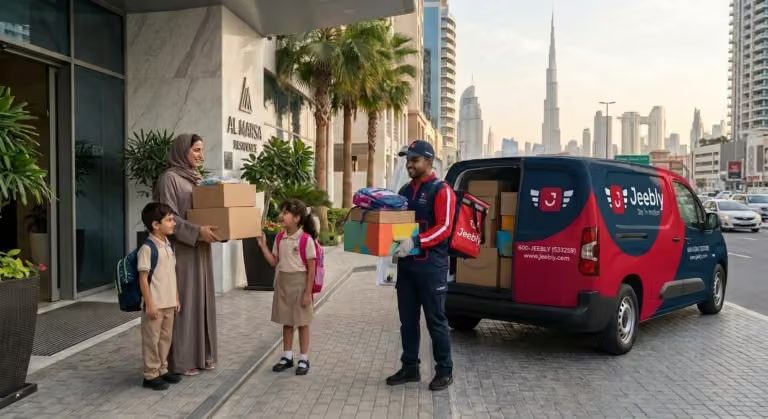
A Jeebly delivery courier handing over stacked packages outside a Dubai residence to a mother and her school-aged children, with a Jeebly delivery van parked nearby and the Dubai skyline featuring the Burj Khalifa in the background.

Back-to-School Delivery Trends: What UAE Retailers Learned This Season

The 2026 back-to-school season caught more UAE retailers off-guard than they expected. UAE schools reopened in late August, but the shopping rush peaked between 15 August and 1 September, compressing the delivery window to under three weeks of intense demand. 

Retailers who had positioned inventory in advance and built last-mile capacity ahead of that window converted at higher rates. UAE families spend approximately AED 2,000 per student on back-to-school supplies, excluding tuition, with total UAE BTS retail sales reaching approximately AED 3 billion in 2024. 

That figure is a concentrated demand event with specific delivery characteristics. This guide documents what the 2026 season revealed about delivery expectations, fulfilment pressure points, and what retailers need to prepare before the 2027 window opens.

Key Takeaways

  • UAE back-to-school shopping peaks between 15 August and 1 September. Retailers that didn’t pre-position inventory before this window can face fulfilment capacity shortfalls.

  • UAE retail outlets offered 20–60% discounts on clothing, footwear, school supplies, and stationery during the 2026 season, compressing margins while driving high order volumes that stressed last-mile operations.

  • Back-to-school purchasing is no longer a single August rush. Shopping now spreads across May to mid-October, requiring retailers to sustain delivery capacity for almost 6 months.

  • BOPIS (buy online, pick up in store) intent reached 46% among shoppers in 2025. Retailers without click-and-collect infrastructure lost conversions to those who offered it.

When Does Back-to-School Season Happen in the UAE?

Back-to-school in the UAE effectively begins in May, when research and planning behaviour starts to build. It peaks between 15 August and 1 September, then continues through September and mid-October as families settle into new school routines. UAE schools typically reopen in late August. 

The compressed peak window means any fulfilment or inventory failure during this period is difficult to recover from within the season. For delivery operations, this translates to a specific planning requirement: inventory must be warehoused, and courier capacity must be confirmed before 15 August.

What UAE Families Are Buying and Why It Creates Multi-Category Delivery Complexity

Understanding the product mix matters because each category has different delivery requirements. The AED 2,000 average per-student spend breaks across several categories that don’t ship identically:

  • Electronics and devices: Tablets, laptops, and student smartphones are the highest-value items in the BTS basket. These require appropriate packaging, photo ePOD at delivery, and consideration of return rights under UAE Consumer Protection Law if the product arrives damaged.

  • Clothing and footwear: High-volume, high-SKU, lower-weight items that drive high return rates. BTS clothing returns are common when sizes don’t match, or items arrive after the school start date, making them less urgent. 

  • Stationery, bags, and supplies: Lower value, time-sensitive (needed before school opens), and frequently purchased in multi-item bundles. These orders create per-parcel complexity: five different stationery items from different suppliers, consolidated into one shipment, arriving on time.

  • Specialist equipment: Older students purchase art supplies, science equipment, sports uniforms, and subject-specific tools, which require more lead time. These items are often sourced internationally, which means the inbound freight leg is on the critical path for delivery timing.

The delivery challenge is managing these categories simultaneously, each with different SLAs, packaging requirements, and post-delivery return expectations while order volumes spike.

The 2026 Season's Three Delivery Pressure Points

1. Last-Minute Demand Surge That Outpaced Same-Day Capacity

Shopping centres in Dubai and Sharjah recorded strong last-minute demand from families over the weekend immediately ahead of the 2026 school year start. For e-commerce retailers, this translates directly into a spike in same-day and next-day delivery requests in the final 72 hours before school reopened.

During the BTS peak window, retailers that offer same-day delivery can convert at materially higher rates than those offering next-day or standard windows. The problem is that same-day courier capacity in Dubai isn’t infinitely scalable on 24 hours’ notice during a demand spike, when every retailer is competing for the same drivers simultaneously.

2. Discount Pressure Compressing Margins on High-Volume, Expensive-to-Deliver Orders

Retail outlets offered discounts of 20–60% on clothing, footwear, school supplies, and stationery during the 2026 BTS season. Discounts at that level compress the margin available to absorb delivery costs, making per-parcel cost optimisation critical during the BTS season.

A retailer offering 40% off an AED 200 school bag can absorb an AED 17 next-day delivery charge more easily than an AED 35 same-day charge. But if the customer chose that retailer because same-day delivery was the differentiator, the higher delivery cost is the right commercial trade-off.

The lesson from 2026: retailers that modelled their BTS delivery-tier strategy (which orders qualify for same-day, which for next-day, and at what order-value threshold to offer free delivery) before the season performed better on margin than those that made these decisions ad hoc under volume pressure.

3. BOPIS Demand Outpacing In-Store Pick-Up Infrastructure

BOPIS (buy online, pick up in store) intent reached 46% among shoppers in 2025, overtaking home delivery at 38%. Parents with children in schools near a retail location often prefer to collect in person rather than wait for a delivery window during a busy household period.

Retailers without a structured BOPIS capability lost these conversions to competitors that offered it. For e-commerce-first brands without physical locations, this is an opportunity to build a delivery experience that closely approximates BOPIS: scheduled delivery windows, pre-delivery WhatsApp confirmation of the time slot, and ePOD at the door.

What UAE Retailers Should Do Differently for the 2027 Season

1) Start logistics planning in May, not July

Make inventory purchasing decisions that affect the inbound freight timeline by May or June at the latest. Sea freight from China to Jebel Ali can take 18–25 days. A buying decision made in late June for August delivery requires departure from China in early July, which means the purchase order must be placed and confirmed well before then.

For UAE retailers importing school supplies, electronics, or stationery from Asia, the inbound freight timeline is the most critical variable in BTS delivery performance. Missing the July sea freight window forces air freight, which costs significantly more and further compresses already-discounted BTS margins.

For help structuring the inbound freight leg, a quick guide on Freight Forwarding in UAE: How It Works, Costs and How to Choose a Provider covers the full process.

2) Confirm same-day courier capacity before 15 August

Pre-arrange a confirmed daily volume allocation with your same-day courier partner before the peak window opens. Waiting until demand spikes and then competing for capacity with every other retailer in the market is how retailers end up promising same-day delivery they can’t honour.

For same-day delivery across Dubai and next-day delivery across all seven UAE emirates, Jeebly Dash covers BTS-season volumes with a 98% FDSS across 50,000+ daily deliveries. Confirming your volume requirements with the Jeebly team before mid-August is the right approach for 2027.

3) Model the delivery tier economics before the season

Before the BTS season opens, model three variables: 

  • The per-parcel cost at each delivery tier (same-day vs next-day vs standard) 
  • The average order value at which free delivery is commercially viable 
  • The cart abandonment rate at each delivery cost level

This produces a clear delivery pricing strategy for BTS rather than reactive decisions made during the volume surge.

For the full UAE domestic shipping cost structure, including inter-emirate rates, COD fees, and volumetric weight mechanics, Cost of Shipping for a Small Business in UAE (2026) gives you the rate card to model against.

4) Build a structured returns process before BTS orders arrive

BTS clothing and electronics both carry elevated return rates. A structured reverse logistics process, like a clear return policy displayed before purchase, an RMA system, courier collection from the customer, and grading and restocking at the warehouse, needs to be in place before the season opens.

For UAE retailers building or reviewing their returns operation, How to Manage eCommerce Returns in UAE: Strategy, Policy and Logistics covers the full process, including COD refusal handling and the per-return cost structure.

How Jeebly Supports Retailers Through Peak Seasons

For retailers managing BTS or any peak season, Jeebly connects inbound freight, domestic last-mile delivery, and returns through one operational layer.

Jeebly Haul handles the inbound freight leg with in-house customs clearance. Jeebly Haul’s team can confirm realistic transit timelines and flag when air freight is needed to meet a school-year deadline.

Jeebly Bizz covers warehousing, pick-and-pack, and automated dispatch for retailers managing multi-SKU BTS orders. It ships together from one pick operation, is dispatched through Jeebly Dash, tracked in real time, and COD is collected where applicable and remitted weekly.

Talk to the Jeebly team before the next BTS planning window opens. A direct conversation about your expected BTS order volume, product mix, and emirate coverage will confirm the right fulfilment and courier setup before the August capacity crunch arrives.

Conclusion

The 2026 back-to-school season in the UAE reinforced what data was already suggesting: the season is longer than retailers plan for, the peak is more compressed than they expect, and the delivery expectations are higher than standard-season logistics can absorb without preparation. 

The retailers who managed all this well did so through earlier planning, confirmed courier capacity agreements, and structured returns processes. For 2027, the planning window is now. 

For same-day and next-day delivery across the UAE at scale, Jeebly Dash covers the last-mile leg. Get in touch to discuss your peak-season delivery requirements before the next window opens.

Frequently Asked Questions

Back-to-school shopping in the UAE builds from May onwards, peaks between 15 August and 1 September, and continues through September and mid-October. UAE schools typically reopen in late August. For retailers, the delivery-critical window is the three weeks before school starts, but purchasing behaviour that determines which retailers capture the season begins in May.

UAE families spend approximately AED 2,000 per student on back-to-school supplies, excluding tuition, with total UAE BTS retail sales reaching approximately AED 3 billion in 2024. This spend covers electronics, clothing, footwear, stationery, and specialist supplies, each with different delivery requirements and return rates.

Nearly half of UAE online shoppers now expect delivery in under two hours. During the BTS peak, retailers who offer confirmed same-day delivery convert at higher rates than those offering next-day or standard windows. Retailers should pre-confirm same-day capacity within Dubai with courier partners before 15 August, rather than competing for it during the peak

BTS clothing and electronics carry elevated return rates because purchases are often made before the child tries the item, size errors are common in children’s clothing, and electronics occasionally arrive with compatibility issues for school-specific requirements. A structured returns process needs to be in place before the season.

BOPIS (buy online, pick up in store) intent reached 46% among shoppers in 2025, overtaking home delivery at 38%. For UAE BTS, parents near a retail location often prefer collection over delivery during a busy family period. Retailers without click-and-collect lose these conversions. E-commerce-first brands can partially offset this through scheduled delivery windows with pre-delivery WhatsApp confirmation.

Routes to insightful reads

A Jeebly delivery courier handing over stacked packages outside a Dubai residence to a mother and her school-aged children, with a Jeebly delivery van parked nearby and the Dubai skyline featuring the Burj Khalifa in the background.
Back-to-School Delivery Trends: What UAE Retailers Learned This Season

As the back-to-school rush hits the UAE, retailers face surging demand for fast, flexible, and reliable last-mile deliveries. From school uniforms and backpacks to tech essentials, learn how seamless multi-channel logistics, scheduled doorstep deliveries, and real-time tracking help UAE brands meet evolving parent expectations and turn seasonal spikes into long-term customer loyalty

Read More
A Jeebly delivery rider wearing a helmet and branded jacket riding a black motorcycle with a red and blue branded delivery box mounted on the back.
Urgent Delivery in the UAE: Jeebly Dash Services, Costs and Booking

When speed is everything, traditional delivery options just won’t cut it. Learn how Jeebly Dash provides ultra-fast, on-demand courier services across the UAE—giving businesses and consumers a seamless booking experience, transparent pricing, and real-time tracking to ensure urgent parcels reach their destination within minutes.

Read More
An infographic illustrating how to create an e-commerce returns policy that builds customer trust and reduces refund rates, featuring a split diagram of customer loyalty strategies alongside operational efficiency workflows set against the Dubai skyline.
How to Create a Returns Policy That Wins Customer Trust and Reduces Refund Rates

Mastering returns is a delicate balancing act for e-commerce brands—make it too strict, and you lose customer trust; make it too lenient, and your profit margins take a hit. Discover actionable strategies to build a seamless, customer-first returns policy that converts first-time buyers into loyal brand advocates while optimizing backend operations to keep refund rates and logistics costs low.

Read More
An infographic illustrating how the unboxing experience affects repeat purchases in eCommerce, featuring key packaging elements and a customer loyalty loop set against the Dubai skyline.
How the Unboxing Experience Affects Repeat Purchases in eCommerce

First impressions don’t end at checkout—they extend right to your customer’s doorstep. In today’s competitive UAE eCommerce landscape, the unboxing experience serves as a powerful physical touchpoint that turns one-time buyers into loyal brand advocates. Discover how thoughtful packaging, personalized touches, and seamless presentation drive customer delight, boost repeat purchases, and transform routine deliveries into social-media-worthy moments.

Read More
How to get an eCommerce licence in the UAE, showing five steps from selecting a business structure and trade name to submitting the application, paying fees, and obtaining the licence
How to Get an eCommerce Licence in the UAE

Planning to start an eCommerce business in the UAE? Learn how to get an eCommerce licence, choose between mainland and free zone options, prepare the required documents, submit your application, and complete the licensing process to start trading legally in the UAE.

Read More

    Powered by