





Jeebly | Logistics Solutions

Categories
blogs

What Is DDP Shipping? What “Delivered Duty Paid” Means for UAE Importers and Exporters

DDP shipping infographic explaining seller responsibilities, customs clearance, duties, final delivery, and benefits for UAE importers

What Is DDP Shipping? What "Delivered Duty Paid" Means for UAE Importers and Exporters

When a UAE business orders goods from a Chinese supplier and receives a single all-in price covering freight, UAE customs clearance, 5% import duty, 5% VAT, and doorstep delivery, that’s DDP (Delivered Duty Paid) shipping. The buyer pays once and receives everything cleared. There are no customs queues, surprise duty invoices, or handoff between carrier and customs broker.

For UAE importers buying from Asia and UAE exporters selling to GCC markets, DDP is both an opportunity and a risk depending on who structures it, how the documentation works, and whether the VAT element is actually recoverable. 

This guide explains how DDP shipping works for UAE businesses specifically, what it costs, where it can create problems, and when to use DAP (Delivered at Place) instead.

Key Takeaways

  • DDP (Delivered Duty Paid) means the seller pays all costs (freight, customs clearance, import duties, and VAT) until goods reach the buyer’s named address.

  • UAE importers buying DDP from overseas suppliers often cannot reclaim the 5% UAE import VAT, because it’s paid under the agent’s TRN rather than their own.

  • For UAE exporters selling to GCC markets under DDP, the seller takes on customs clearance and duty payment in the destination country, which requires either local entity registration or an IOR (Importer of Record).

  • DDP suits first-time or low-volume importers. Growing businesses can save significant margin by switching from DDP to FOB with their own freight forwarding system once volumes justify it.

What Is DDP Shipping?

DDP (Delivered Duty Paid) is an Incoterm, one of 11 standardised international trade terms published by the International Chamber of Commerce, that defines who pays for what in a cross-border shipment. 

Under DDP, the seller is responsible for all costs and risks from origin to the buyer’s named delivery address, including export formalities, freight, insurance, import customs clearance, import duties, and VAT or equivalent taxes in the destination country.

The buyer’s only obligation is to accept delivery. There are no further charges at the door. In practice, UAE businesses encounter DDP in two directions:

  • As importers: A UAE company buying goods from China or Europe may receive a DDP quote from a supplier or freight agent, one price covering everything from the factory to the Dubai warehouse address. No separate customs agent required and no duty invoice arriving two weeks later.


  • As exporters: A UAE brand selling to customers in Saudi Arabia, Kuwait, or the UK may offer DDP terms to its buyers, absorbing all the destination-country duty and VAT to deliver a frictionless customer experience.


Both directions carry fundamentally different implications.

How DDP Shipping Works: The Full Sequence

For a UAE importer receiving DDP goods from China:

  1. Order placed and DDP price agreed. The supplier or freight agent provides an all-in DDP quote covering the goods, export formalities, freight (air or sea), UAE customs clearance, 5% import duty, and 5% VAT to a named UAE address.

  2. Supplier arranges export. The seller prepares commercial invoice, packing list, and export declaration in China. Goods are collected from the factory.

  3. International transit. Goods move by air freight services (3–7 days from China) or sea freight (18–25 days via Jebel Ali) to the UAE.

  4. UAE customs clearance. The DDP agent files the import declaration with Dubai Customs (via Mirsal 2), pays the 5% customs duty and 5% VAT, and obtains the release order.

  5. Last-mile delivery. Goods are delivered to the UAE importer’s warehouse, free zone, or office.

For a UAE exporter shipping DDP to a GCC buyer:

The same sequence applies in reverse. The UAE seller arranges freight to Saudi Arabia, Kuwait, or Oman; handles destination-country customs clearance; pays applicable import duties; and delivers to the buyer’s address. The destination country’s customs authority is the operative regulatory body.

DDP vs DAP vs FOB: The UAE-Specific Comparison

For UAE businesses, three Incoterms majorly determine how cross-border costs are split between seller and buyer: DDP (Delivered Duty Paid), DAP (Delivered at Place), and FOB (Free on Board). 

Each one places a different set of obligations on each party, and choosing the wrong one either erodes your margin as a seller or creates unexpected charges for your buyer.

Aspects DDP DAP FOB
Who pays import duty Seller Buyer Buyer
Who pays import VAT Seller Buyer Buyer
Who arranges customs clearance Seller Buyer Buyer
Buyer's experience Frictionless, one price Surprise charges at delivery Full control + cost visibility
Seller's cost Highest Moderate Lowest
VAT reclaimability (UAE importer) Often not Yes, under your own TRN Yes, under your own TRN
Best for First-time importers, B2C buyers B2B buyers handling own clearance Scaling importers with own forwarder

DAP leaves import duty and VAT to the buyer. It’s simpler for the seller, but creates the risk that the buyer faces an unexpected charge at delivery or customs hold. 

When is each appropriate: 

  • If your goal is lower cart abandonment and fewer failed deliveries, DDP usually performs better because it removes uncertainty from the buying experience. 

  • DAP still has a place when you’re testing markets or protecting margin early, but scaling DAP without clear transparency almost always shows up later in higher refusal rates.

  • FOB is appropriate if importing at meaningful volume. Under FOB, goods are handed to the buyer’s freight forwarder at the origin port. The buyer arranges their own freight, manages their own customs clearance, and pays duty and VAT directly to UAE Customs under their own TRN.

A quick guide on VAT on Shipping and Delivery in UAE covers more on how UAE import VAT works, what a compliant tax invoice must contain, and the changes that affect how shipping VAT is documented and recovered.

When does it make sense to move from DDP to FOB?

For UAE importers, the economics of DDP shift as volume grows. At low volume, DDP’s convenience premium is worth paying. There’s no customs agent to manage, no freight forwarder relationship to maintain, and no separate duty payment to coordinate. 

Above that threshold, engaging your own freight forwarder and customs broker can recover some percentage of the DDP premium, while also making your UAE import VAT reclaimable under your own TRN.

The UAE-Specific DDP Problems

These are the issues that specifically affect UAE businesses using DDP that global Incoterms guides don’t address.

Problem 1: The VAT reclaim gap for UAE importers.

Because the DDP agent pays UAE import VAT in their own name, UAE-registered businesses often don’t receive a valid import VAT document under their company’s TRN. A VAT-registered UAE business may be unable to reclaim that 5%.

The fix: If you’re VAT-registered in the UAE and importing regularly, confirm with any DDP provider whether the import declaration will be filed under your TRN. If the answer is no or unclear, the convenience of DDP is costing you recoverable VAT.

Problem 2: Under-declared customs values.

Some DDP agents lower the declared customs value to cut duty and offer a tempting DDP price. If UAE Customs reassesses the declared value, the importer faces penalties, and it’s your goods, your liability. 

The fix: Always request a copy of the import declaration and verify that the declared value matches your commercial invoice.

Problem 3: UAE exporters need IOR arrangements for GCC DDP.

For a UAE brand offering DDP to Saudi, Kuwaiti, or Omani buyers, the seller must either be registered as an importer in the destination country or appoint an Importer of Record (IOR) service provider to handle customs clearance on their behalf. 

Without this, the seller can’t legally act as the DDP importer at the destination. This requirement is frequently overlooked by SMEs new to GCC cross-border DDP.

Problem 4: De minimis changes affecting DDP economics.

The August 2025 suspension of the US de minimis exemption (affecting goods from all origins) means shipments that previously cleared US customs duty-free now face full tariff rates. For UAE exporters selling to US customers under DDP, this materially changes the seller’s landed cost calculation. 

DDP is more expensive post-August 2025, but also more important for customer experience. Buyers who previously received duty-free parcels now face import charges under DAP terms, which creates refusals and returns.

What DDP Shipping Costs: The Full Landed Cost Breakdown

Most DDP quotes present a single number. Here’s what’s inside it and what you should verify before accepting.

Cost Component Who Pays (DDP) Notes
Goods value Seller Invoice value
Export documentation and freight forwarding (origin) Seller Varies by origin port and agent
International freight (air or sea) Seller Major variable, get a market rate comparison
Origin port handling Seller Check whether included in freight quote
Destination port handling and terminal fees Seller Often quoted separately
UAE customs clearance fees Seller Per declaration, typically AED 50–200
UAE import duty Seller 5% of CIF value for most goods
UAE VAT at import Seller 5% of CIF value plus duty
Last-mile delivery Seller To named UAE address

Along with the expenses, it’s important to determine whether your goods are classified as dangerous or restricted, which affects carrier acceptance and adds handling surcharges to your DDP cost. 

Here’s a quick read on Dangerous Goods and Restricted Items in the UAE that covers which product categories carry essential requirements and what the compliance steps are before shipping.

How a Delivery Note Works: The Handover Sequence

The delivery note process follows a repeatable sequence that every UAE business should standardise.

Step 1: Generation at dispatch

When an order is packed and ready to leave the warehouse, a delivery note is generated, ideally automatically from the order management system to eliminate manual data entry errors. The note is either printed and attached to the shipment, or sent digitally to the recipient ahead of arrival.

Step 2: Travel with the goods

The delivery note accompanies the shipment. The courier or driver carries it to the delivery point. It is not sent separately by email or uploaded after the fact. Its purpose is to be present at the point of handover.

Step 3: Recipient verification

On arrival, the recipient checks the delivered items against the delivery note. Any discrepancy, such as a wrong item, short quantity, or damaged goods, is noted on the delivery note before signature.

Step 4: Confirmation

In paper-based systems, the recipient signs and dates the delivery note. The driver retains one copy; the recipient keeps one. In ePOD systems (covered below), digital confirmation is captured automatically.

Step 5: Filing and retention

Both parties retain their copies. Keeping delivery notes for at least five years is advisable to support documentation for disputes or claims. For UAE businesses managing import documentation, this retention period also aligns with FTA audit requirements for VAT-related records.

How Jeebly Can Support DDP Operations

For UAE businesses managing cross-border freight alongside domestic last-mile delivery, having both legs under one platform removes the coordination overhead that typically creates DDP delays.

Jeebly Haul covers the freight leg (air, sea, road) across UAE and GCC routes with in-house customs clearance rather than outsourced brokerage. For UAE businesses importing goods under DDP or structured as FOB with Jeebly managing the UAE customs leg, this means one point of contact from port to warehouse.

For UAE exporters shipping to GCC customers who want a clean, tracked last-mile experience at the destination end, Jeebly Bizz connects order management with domestic delivery. Shopify and WooCommerce orders dispatch automatically, with real-time tracking and photo ePOD at every delivery.

For businesses shipping domestic parcels alongside cross-border operations, same-day delivery across the UAE through Jeebly Dash completes the fulfilment loop. Domestic last-mile is at 98% FDSS, connected to the same platform managing inbound freight.

Talk to the Jeebly team to discuss your specific import or export profile, and we’ll confirm how Jeebly Haul covers the freight and customs clearance leg for your operation.

Conclusion

DDP shipping gives buyers a frictionless experience: one price, no customs surprises, no charges at the door. For UAE importers, the critical check is whether the 5% UAE import VAT is paid under your TRN (making it reclaimable) or the agent’s TRN (making it a sunk cost). 

For UAE exporters, DDP to GCC markets requires either IOR arrangements or a logistics partner with GCC-wide customs capability. The economics of DDP shift as volume grows. The convenience premium that makes sense at low volume often doesn’t at scale, where FOB with your own freight forwarder recovers meaningful margin. 

For UAE businesses managing cross-border freight and domestic last-mile through one connected platform, Jeebly Haul and Jeebly Bizz cover both legs. Get in touch to discuss your import or export structure.

Frequently Asked Questions

DDP (Delivered Duty Paid) is an Incoterm where the seller pays all costs such as freight, customs clearance, import duties, and VAT until goods reach the buyer’s named delivery address. The buyer pays nothing extra on arrival. It places maximum responsibility on the seller and minimum on the buyer.

Only if the import declaration is filed under your company’s UAE Tax Registration Number (TRN). Many DDP freight agents file import declarations under their own TRN, meaning the 5% UAE import VAT is paid in their name, and you cannot reclaim it on your FTA VAT return. Always confirm with your DDP provider which TRN the customs declaration will be filed under before accepting the arrangement.

Under DDP, the UAE seller pays destination-country import duties and VAT, and handles customs clearance. The buyer receives goods with no additional charges. Under DAP, the buyer is responsible for import duties and customs clearance at the destination.

A UAE importer should switch from DDP (Delivered Duty Paid) to FOB (Free on Board) if shipping volumes scale up, internal logistics are established, and there is a need to lower high markup costs embedded in seller-managed freight. This transition makes sense when the business gains the capability to manage local UAE customs clearance and ocean freight directly.

Yes. DDP applies to any mode of transport: air, sea, or road. For China-to-UAE imports, sea freight DDP via Jebel Ali is the most cost-effective option for non-time-sensitive goods (18–25 days). Air freight DDP is appropriate for high-value or time-sensitive shipments (3–7 days from China). The DDP price includes the freight cost for whichever mode is used.

Routes to insightful reads

DDP shipping infographic explaining seller responsibilities, customs clearance, duties, final delivery, and benefits for UAE importers
What Is DDP Shipping? What “Delivered Duty Paid” Means for UAE Importers and Exporters

A delivery note is a key document in the UAE logistics process, providing a clear record of what was shipped, who sent it, and who received it. From proof of delivery and shipment tracking to order verification, customs compliance, and dispute resolution, a properly prepared delivery note helps businesses maintain accurate records and protect every shipment. This guide explains what a delivery note is, what it should include, and why it is essential for businesses operating across the UAE.

Read More
Delivery note document showing shipment details, proof of delivery, tracking, verification and UAE logistics compliance
What Is a Delivery Note and Why Does Every UAE Shipment Need One?

A delivery note is a key document in the UAE logistics process, providing a clear record of what was shipped, who sent it, and who received it. From proof of delivery and shipment tracking to order verification, customs compliance, and dispute resolution, a properly prepared delivery note helps businesses maintain accurate records and protect every shipment. This guide explains what a delivery note is, what it should include, and why it is essential for businesses operating across the UAE.

Read More
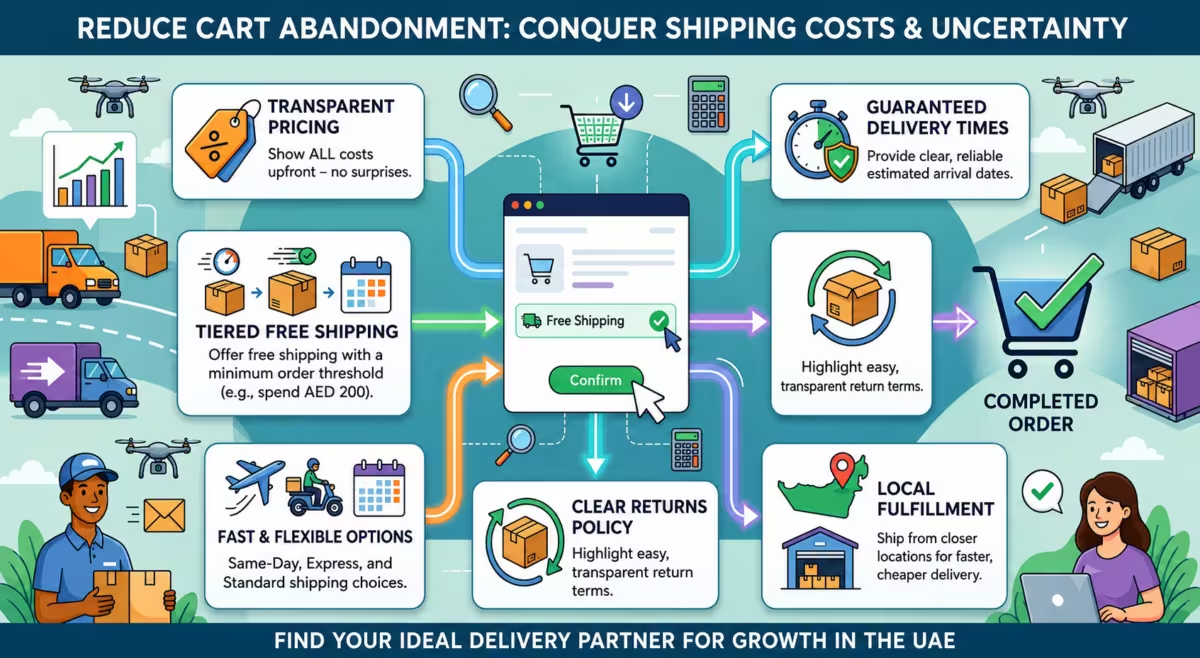
Illustration showing strategies to reduce cart abandonment through transparent shipping costs, fast delivery, local fulfilment, and clear returns policies for UAE eCommerce businesses.
How to Reduce Cart Abandonment Caused by Delivery Costs and Uncertainty

Delivery costs and uncertainty are among the biggest reasons shoppers abandon their carts before completing a purchase. This guide explores practical strategies to reduce cart abandonment, including transparent shipping fees, accurate delivery estimates, flexible shipping options, local fulfilment, and hassle-free returns, helping UAE eCommerce businesses improve conversions and build customer trust.

Read More
J&T Express vs Jeebly comparison graphic featuring delivery apps, e-commerce products, and UAE logistics services against the Dubai skyline.
J&T Express vs Jeebly: Which Courier Is Better for UAE eCommerce Businesses?

J&T Express and Jeebly both support eCommerce deliveries, but they cater to different business needs. This comparison explores their delivery networks, fulfilment capabilities, shipping speed, technology, pricing flexibility, and merchant services to help UAE businesses choose the courier partner that best supports their growth and customer experience.

Read More
Delivery SLA guide for UAE businesses showing service level agreements, delivery performance metrics, on-time delivery targets and logistics standards.
 Delivery SLA Guide for UAE Businesses: What to Expect and How to Set Standards

A clear delivery Service Level Agreement (SLA) sets the expectations for speed, reliability, and performance between businesses and their logistics partners. This guide explains what a delivery SLA should include, the key metrics to track, and how UAE businesses can set realistic standards to improve customer satisfaction and delivery performance.

Read More
Categories
blogs

What Is a Delivery Note and Why Does Every UAE Shipment Need One?

Delivery note document showing shipment details, proof of delivery, tracking, verification and UAE logistics compliance

What Is a Delivery Note and Why Does Every UAE Shipment Need One?

A delivery note is the document that travels with a shipment of goods listing what was sent, in what quantities, and confirming receipt when the goods arrive. It is not an invoice, not a contract, and not optional for any UAE business operating at scale.

When a quantity dispute arises, when a customer claims they received the wrong items, or when an auditor asks for documentation of goods received, the delivery note is the first document both parties reach for. Without one, a shipment is unverifiable at the point of handover.

This guide covers what a delivery note contains, how it works in practice, how it differs from an invoice, the shift from paper to electronic proof of delivery (ePOD) in UAE logistics, and what UAE-specific compliance changes affect delivery documentation.

Key Takeaways

  • A delivery note confirms what was physically sent and received. It travels with the shipment, not separately like an invoice.

  • It does not contain prices; an invoice is the financial document; a delivery note is the delivery record.

  • Electronic proof of delivery (ePOD) (photo, GPS timestamp, digital signature) is the digital evolution of the paper delivery note and is now standard practice in UAE last-mile operations.

  • Keep copies of all delivery notes for a minimum of five years to support dispute resolution and documentation for claims.

  • UAE businesses using a logistics company in the UAE that issues ePODs automatically should ensure the digital record is accessible and searchable.

What Is a Delivery Note? Definition and Core Purpose

A delivery note is a commercial document that accompanies a shipment of goods from sender to recipient. It lists the items included in the delivery, the quantities of each, and identifying details such as the order number, sender information, and recipient information. When the recipient confirms the goods have arrived correctly, the delivery note serves as proof of receipt.

Also referred to as a dispatch note or goods received note depending on who is completing it, the delivery note performs three functions simultaneously:

  1. It confirms dispatch. The sender has a record that these specific items left the warehouse in this condition on this date.

  2. It enables verification. The recipient can check what arrived against what was ordered before signing or confirming. Discrepancies are caught at the point of handover rather than days later.

  3. It creates an evidence trail. If a dispute arises, like a wrong item, short quantity, or damaged goods, the delivery note is the contemporaneous record that documents what both parties agreed was delivered.

For UAE businesses managing high order volumes across multiple emirates, this trail matters more than it might seem. A single consignment of 500 units with an undocumented quantity discrepancy can translate into an inventory reconciliation problem that takes days to resolve without a delivery note.

Delivery Note vs Invoice: What's the Difference?

This is the single most common point of confusion in delivery documentation. The two documents serve different purposes and must not be conflated.

Aspects Delivery Note Invoice
Purpose Confirms physical delivery of goods Requests payment for goods or services
Contains prices? No Yes
When issued At point of delivery, travels with goods After delivery, sent to accounts payable
Who completes it Sender (dispatching party) Seller
Signed by Recipient (on receipt) Seller (issued)
Legal function Proof of delivery and receipt Financial claim/tax document
VAT implications None directly Subject to UAE FTA VAT rules

So, if a shipment of 100 units is delivered and the delivery note says 100 but the invoice says 120, that discrepancy is immediately visible and auditable. Without the delivery note, only the invoice exists, and the buyer has no contemporaneous record of what actually arrived.

What a Delivery Note Should Contain

A well-structured delivery note should include the following fields. Missing any of these creates gaps in the evidentiary trail.

Field Why it matters
Sender name and address Identifies the dispatching party
Recipient name and address Confirms the correct delivery destination
Delivery date Creates a timestamp for the handover
Order number/reference Links the delivery to the original purchase order
Item description Identifies what was sent (SKU, product name)
Quantity per item The most critical field for dispute resolution
Unit of measurement Prevents ambiguity (units, kg, boxes, pallets)
Delivery method/carrier Documents how goods were transported
Signature or confirmation field Proof of receipt by the recipient
Notes or exceptions Records any damage, missing items, or conditions observed at handover

One field that surprises most businesses by its absence: price

A delivery note deliberately excludes prices. The moment you add pricing, you are creating a document that overlaps with the invoice, which creates VAT documentation confusion.

How a Delivery Note Works: The Handover Sequence

The delivery note process follows a repeatable sequence that every UAE business should standardise.

Step 1: Generation at dispatch

When an order is packed and ready to leave the warehouse, a delivery note is generated, ideally automatically from the order management system to eliminate manual data entry errors. The note is either printed and attached to the shipment, or sent digitally to the recipient ahead of arrival.

Step 2: Travel with the goods

The delivery note accompanies the shipment. The courier or driver carries it to the delivery point. It is not sent separately by email or uploaded after the fact. Its purpose is to be present at the point of handover.

Step 3: Recipient verification

On arrival, the recipient checks the delivered items against the delivery note. Any discrepancy, such as a wrong item, short quantity, or damaged goods, is noted on the delivery note before signature.

Step 4: Confirmation

In paper-based systems, the recipient signs and dates the delivery note. The driver retains one copy; the recipient keeps one. In ePOD systems (covered below), digital confirmation is captured automatically.

Step 5: Filing and retention

Both parties retain their copies. Keeping delivery notes for at least five years is advisable to support documentation for disputes or claims. For UAE businesses managing import documentation, this retention period also aligns with FTA audit requirements for VAT-related records.

Paper vs Electronic: Why ePOD Is Now Standard Practice in UAE Logistics

Electronic proof of delivery (ePOD) is the digital evolution of the paper delivery note. Instead of a printed document signed with a pen, ePOD captures:

  • A digital signature from the recipient
  • A timestamped photograph of the delivered goods at the drop-off location
  • GPS coordinates confirming where and when the delivery was completed
  • Automatic data upload to a dashboard accessible in real time by the sender
Factors Paper Delivery Note ePOD (Electronic Proof of Delivery)
Speed of confirmation Manual, delayed Instant
Accuracy Human error risk in data entry Auto-populated from order data
Storage Physical filing required Cloud-based, searchable
Dispute resolution Document retrieval, days Real-time data with timestamp and photo
Customer visibility None until confirmation Notification sent immediately at delivery
Scalability Breaks down at volume Handles 50,000+ deliveries daily

For UAE e-commerce businesses managing same-day and next-day delivery across multiple emirates, ePOD removes the operational ceiling that paper delivery notes create. At 200+ daily orders, manually managing, filing, and retrieving paper delivery notes is a full-time administrative burden. At 2,000 orders, it’s an impossible one.

The WhatsApp confirmation expectation of UAE consumers adds a dimension. A customer who receives a WhatsApp message with a delivery photo from their courier has a real-time ePOD.

Delivery Notes and UAE Compliance in 2026-2027

Two regulatory developments affect how UAE businesses should think about delivery documentation moving forward.

VAT on delivery and the e-invoicing mandate: The UAE FTA has confirmed mandatory e-invoicing for B2B and B2G transactions starting January 2027 for large businesses (annual revenue AED 50M+) and July 2027 for smaller businesses. 

E-invoices will be in structured XML/JSON format via the Peppol network. Delivery notes are distinct from invoices and are not within the scope of the e-invoicing mandate. But businesses should ensure their delivery documentation and invoicing processes are clearly separated, as the FTA’s audit trail requirements will examine both.

FTA audit documentation: UAE FTA VAT audits examine records for up to five years. For any shipment that has a VAT component, including goods, the delivery note forms part of the documentation trail confirming what was supplied and when.

A business that cannot produce delivery notes for a disputed shipment within the five-year audit window is in a weaker position on any supply-side claim.

For a detailed explanation of how VAT applies to shipping and delivery services in the UAE, VAT on Shipping and Delivery Services in UAE covers the full compliance picture.

How Jeebly Handles Delivery Documentation

Jeebly Dash captures a photo ePOD at every domestic delivery and uploads it at the point of drop-off. The delivery record is accessible to the business through the platform dashboard and visible to the customer through their delivery notification.

For businesses managing B2B consignments where the delivery note feeds into accounts payable workflows, Jeebly Bizz connects the delivery confirmation directly to order management. The completed delivery record updates the system automatically, without a manual handoff.

For freight shipments where delivery documentation needs to cover multi-item consignments, pallet quantities, and goods received against purchase orders, Jeebly Haul manages freight documentation alongside transit.

Talk to the Jeebly team if your current delivery partner doesn’t provide ePOD as standard, or if you need a delivery documentation setup that integrates with your inventory management or accounts payable workflo

Conclusion

A delivery note is a small document with significant operational weight. It confirms what was sent, what was received, and creates the contemporaneous evidence that protects both parties when something goes wrong. 

For UAE businesses running e-commerce at any meaningful volume, the paper delivery note has been superseded by ePOD. The transition from paper to digital delivery documentation is not a technology upgrade. It’s a risk management decision.

For delivery documentation that works automatically at every drop-off, Jeebly Dash captures ePOD as standard across 50,000+ daily deliveries. Get in touch to discuss your documentation requirements.

Frequently Asked Questions

A delivery note is a document that travels with a shipment confirming what goods were sent and in what quantities. The recipient checks the goods against the delivery note on arrival, and signs or digitally confirms receipt. It does not include prices. That’s the invoice’s job.

A delivery note is not specifically mandated by UAE law for domestic trade, but it functions as primary evidence in any goods-related dispute. For businesses in regulated sectors, or those subject to FTA VAT audits, a delivery note forms part of the supply documentation trail covering up to five years of transactions.

A delivery note confirms what was sent and received. The recipient signs it as proof of handover. A packing list is a shipping document listing the contents of a shipment for customs and carrier purposes. Both may travel with a shipment, but serve different functions: the delivery note creates an agreed receipt record; the packing list describes the physical contents for handling and customs.

 Keeping copies of all delivery notes for at least five years is advisable to maintain control over delivered products and provide documentation for disputes or claims. This also aligns with UAE FTA audit documentation requirements for VAT-related supply records.

ePOD (electronic proof of delivery) captures a digital signature, timestamped photo, and GPS-confirmed location at the point of delivery using a mobile device. The data uploads automatically to a cloud dashboard accessible to both sender and recipient. It performs the same function as a paper delivery note but with instant confirmation, searchable records, and no risk of lost paperwork.

Routes to insightful reads

DDP shipping infographic explaining seller responsibilities, customs clearance, duties, final delivery, and benefits for UAE importers
What Is DDP Shipping? What “Delivered Duty Paid” Means for UAE Importers and Exporters

A delivery note is a key document in the UAE logistics process, providing a clear record of what was shipped, who sent it, and who received it. From proof of delivery and shipment tracking to order verification, customs compliance, and dispute resolution, a properly prepared delivery note helps businesses maintain accurate records and protect every shipment. This guide explains what a delivery note is, what it should include, and why it is essential for businesses operating across the UAE.

Read More
Delivery note document showing shipment details, proof of delivery, tracking, verification and UAE logistics compliance
What Is a Delivery Note and Why Does Every UAE Shipment Need One?

A delivery note is a key document in the UAE logistics process, providing a clear record of what was shipped, who sent it, and who received it. From proof of delivery and shipment tracking to order verification, customs compliance, and dispute resolution, a properly prepared delivery note helps businesses maintain accurate records and protect every shipment. This guide explains what a delivery note is, what it should include, and why it is essential for businesses operating across the UAE.

Read More
Illustration showing strategies to reduce cart abandonment through transparent shipping costs, fast delivery, local fulfilment, and clear returns policies for UAE eCommerce businesses.
How to Reduce Cart Abandonment Caused by Delivery Costs and Uncertainty

Delivery costs and uncertainty are among the biggest reasons shoppers abandon their carts before completing a purchase. This guide explores practical strategies to reduce cart abandonment, including transparent shipping fees, accurate delivery estimates, flexible shipping options, local fulfilment, and hassle-free returns, helping UAE eCommerce businesses improve conversions and build customer trust.

Read More
J&T Express vs Jeebly comparison graphic featuring delivery apps, e-commerce products, and UAE logistics services against the Dubai skyline.
J&T Express vs Jeebly: Which Courier Is Better for UAE eCommerce Businesses?

J&T Express and Jeebly both support eCommerce deliveries, but they cater to different business needs. This comparison explores their delivery networks, fulfilment capabilities, shipping speed, technology, pricing flexibility, and merchant services to help UAE businesses choose the courier partner that best supports their growth and customer experience.

Read More
Delivery SLA guide for UAE businesses showing service level agreements, delivery performance metrics, on-time delivery targets and logistics standards.
 Delivery SLA Guide for UAE Businesses: What to Expect and How to Set Standards

A clear delivery Service Level Agreement (SLA) sets the expectations for speed, reliability, and performance between businesses and their logistics partners. This guide explains what a delivery SLA should include, the key metrics to track, and how UAE businesses can set realistic standards to improve customer satisfaction and delivery performance.

Read More
Categories
blogs

How to Reduce Cart Abandonment Caused by Delivery Costs and Uncertainty

Illustration showing strategies to reduce cart abandonment through transparent shipping costs, fast delivery, local fulfilment, and clear returns policies for UAE eCommerce businesses.

How to Reduce Cart Abandonment Caused by Delivery Costs and Uncertainty

Roughly seven out of every ten shoppers who add items to their cart leave without purchasing. The number one trigger cited by 48% of US shoppers is extra costs appearing at final checkout, primarily shipping fees and taxes. This is entirely preventable. 

Additionally, combined delivery cost and delivery uncertainty directly drive more than half of all preventable cart abandonment. It’s mostly a delivery communication problem, and the fix starts long before the customer reaches the payment page. 

This guide covers the specific delivery and logistics changes that reduce abandonment, the UAE-specific factors that make this market different, and how to structure your delivery operation so it converts.

Key Takeaways

  • 48% of shoppers abandon their cart because of unexpected shipping costs, the top reason for cart abandonment.

  • Showing delivery cost and estimated date on the product page eliminates the surprise that causes most shipping-related abandonment.

  • In the UAE, COD can still account for 40-60% of D2C transactions in certain categories, directly impacting conversion rates and market penetration.

  • The brands that consistently convert at checkout are the ones whose delivery operation is reliable enough to promise something specific. 

Why Delivery Is a Pre-Purchase Conversion Problem

The standard model in e-commerce treats delivery as what happens after the sale. The data says otherwise.

Many ecommerce stores still rely on vague delivery language such as “3–7 business days” or “delivery subject to location.” While technically accurate, these messages do little to help customers understand when they will actually receive their order. The most effective stores communicate delivery expectations with precision.

The sequence that may create abandonment is specific: uncertain delivery window → reaches checkout → sees AED 15 shipping fee → doesn’t complete purchase. 

The fix is not removing the fee at the last step. It’s removing the uncertainty and the surprise from the earliest point in the purchase journey.

Fix 1: Show Delivery Cost and Estimated Date on the Product Page

The checkout page is too late. Displaying shipping costs, taxes, and fees on the product page or early in the cart can eliminate the surprise that causes most price-related abandonment.

What this could look like in practice:

  • A delivery cost estimate on the product page, based on the customer’s location (use geolocation to personalise this automatically)
  • A specific delivery date rather than a range: “arrives tomorrow” or “arrives Wednesday if ordered before 2 pm”
  • A delivery cut-off time clearly displayed: “Order in the next 3 hours for same-day delivery”

The same principle applies to delivery date promises. Showing the delivery date where the purchase decision is being made converts that information from noise into a reason to buy.

Fix 2: Set a Free Shipping Threshold at the Right Level

Free shipping is among the most impactful pricing changes for reducing cart abandonment. The mechanics matter.

For example: if your current AOV is AED 150, set the free shipping threshold at AED 180–195. Customers who are AED 30 away from free shipping will add an item. Customers who are AED 100 away will not bother.

Additionally, a free shipping progress bar visible in the cart and ideally on product pages can show customers how close they are to the threshold.

Fix 3: Match Your Delivery Promise to Your Logistics Capability

The connection between logistics capability and cart conversion is direct. If your fulfilment partner can only reliably hit next-day delivery within Dubai, don’t promise it to customers in Ras Al Khaimah. If your current provider takes 4–5 days to the northern emirates, your product page date estimate needs to reflect that, and your conversion rate will reflect the slower promise.

This is where your logistics partner choice directly affects your checkout conversion rate. For same-day and next-day domestic delivery with the FDSS data to back up precise checkout promises, Jeebly Dash covers all seven emirates with a published 98% FDSS.

Fix 4: Handle COD the Right Way for UAE Shoppers

COD creates a specific abandonment pattern in the UAE: shoppers select COD at checkout, then abandon because they’re unsure whether the delivery agent will arrive, how much to have ready, or what happens if they miss the delivery. This is delivery uncertainty driving abandonment even after payment method selection.

The fixes are operational:

Pre-delivery WhatsApp notification: Send a WhatsApp message when the order is out for delivery, confirming the exact COD amount, a delivery window, and a rescheduling option. Customers value predictability.

COD OTP confirmation: Implementing OTP confirmation before dispatch verifies the customer’s phone number and intent, filtering out fake orders before they enter the delivery pipeline. This reduces RTO from COD fraud.

Clear COD policy on the product page. State the exact COD process when the driver arrives, what form of payment is accepted, and what happens if the customer isn’t home. Uncertainty about how COD works causes abandonment at checkout.

Fix 5: Use WhatsApp for Cart Recovery

The UAE has some of the highest WhatsApp penetration rates in the world. Cart abandonment recovery messages sent via WhatsApp within 30–60 minutes of abandonment reach customers on the device and app they’re actively using.

Effective WhatsApp cart recovery for UAE e-commerce:

  • Send within 30–60 minutes of abandonment. Intent degrades quickly.
  • Show the specific abandoned item with an image.
  • Include a direct link back to the cart (not the homepage).
  • Confirm the delivery date and cost upfront in the message. Address the exact friction point that caused the abandonment.
  • Offer a small incentive (free delivery, a 5% discount) for orders above your free shipping threshold.

The delivery promise in the recovery message matters as much as the incentive. A customer who abandoned because of a vague delivery window needs to see a specific date before they’ll re-engage.

Fix 6: Make Returns Visible and Simple Before Purchase

A return policy is one of the strongest trust signals in ecommerce. Yet many stores treat returns as compliance content rather than conversion content.

A clear, easy return policy shown on product pages will directly reduce the pre-purchase hesitation that causes abandonment for considered purchases. For UAE shoppers, the question is typically: “If this doesn’t fit or isn’t what I expected, how hard is it to send back?”

The answer needs to be immediate and visible. “Free returns within 14 days” placed near the add-to-cart button removes a meaningful source of purchase anxiety. 

For the legal minimum return rights under UAE consumer protection law, a quick guide on How to Manage eCommerce Returns in UAE: Strategy, Policy and Logistics covers both the compliance requirements and the policy design that converts.

How Jeebly Supports Checkout Conversion

The connection between Jeebly’s delivery operation and your cart conversion rate is direct and measurable.

Jeebly Dash’s 98% FDSS across 50,000+ daily deliveries makes specific delivery date promises at checkout operationally credible. When you show “arrives tomorrow by 9 pm” on your product page, that promise needs a logistics partner with the infrastructure to keep it. Jeebly Dash publishes the performance data that backs that up.

For businesses managing high COD volumes, Jeebly Bizz connects your Shopify or WooCommerce store directly to dispatch, with WhatsApp and SMS notifications built into the delivery workflow.

For businesses managing inbound freight alongside domestic delivery, Jeebly Haul covers air, sea, and road freight with in-house customs clearance, keeping inventory moving without the delays that create “out of stock” conversion losses at product level.

Talk to the Jeebly team about your current delivery operation. A direct conversation about your FDSS rate, COD volume, and average delivery window will quickly identify where the logistics gaps are creating checkout friction.

Conclusion

Delivery cost and delivery uncertainty are the leading causes of cart abandonment, and both are fixable without rebuilding your checkout. 

Show delivery costs and specific delivery dates on product pages, not at checkout. Use WhatsApp for cart recovery. Make your return policy visible before purchase, not buried in footer links. And build all of this on a logistics partner whose performance data supports the promises you’re making.

The brands that consistently convert at checkout are not the ones with the most sophisticated checkout technology. They’re the ones whose delivery operation is reliable enough to promise something specific. For same-day and next-day delivery across the UAE with the FDSS data to back it up, get in touch with the Jeebly team.

Frequently Asked Questions

Unexpected extra costs at checkout, primarily shipping fees and taxes, cited by 48% of abandoning shoppers. This has been the #1 cause for six consecutive years. The fix is showing all costs, including delivery, on the product page before checkout, not revealing them at the payment step.

The optimal free shipping threshold should be roughly 20–30% above your current average order value. Pair the threshold with a cart progress bar showing customers how close they are to free shipping. A threshold at or below AOV subsidises orders that already cleared it; one far above AOV pushes shoppers to abandon.

COD in the UAE creates a specific abandonment pattern: uncertainty about the delivery process, payment amount, and what happens if the customer misses the delivery agent. Pre-delivery WhatsApp notification with the exact COD amount and a delivery window reduces both abandonment and COD refusals at the door.

Yes, specifically. Vague delivery windows (“3–7 business days”) carry uncertainty all the way to checkout, where they compound with an unexpected shipping fee to trigger abandonment. A specific date (“arrives Wednesday”) makes the delivery concrete and removes that uncertainty before the customer reaches payment. This only works if your logistics partner can actually deliver on the specific date you’re promising.

Within 30–60 minutes for the first message. Buying intent degrades quickly after abandonment. In the UAE, send via WhatsApp rather than email for substantially higher open and recovery rates. The recovery message should address the specific friction point. If delivery cost caused abandonment, include the delivery price (or a free shipping offer) in the message alongside a direct link back to the cart.

Routes to insightful reads

DDP shipping infographic explaining seller responsibilities, customs clearance, duties, final delivery, and benefits for UAE importers
What Is DDP Shipping? What “Delivered Duty Paid” Means for UAE Importers and Exporters

A delivery note is a key document in the UAE logistics process, providing a clear record of what was shipped, who sent it, and who received it. From proof of delivery and shipment tracking to order verification, customs compliance, and dispute resolution, a properly prepared delivery note helps businesses maintain accurate records and protect every shipment. This guide explains what a delivery note is, what it should include, and why it is essential for businesses operating across the UAE.

Read More
Delivery note document showing shipment details, proof of delivery, tracking, verification and UAE logistics compliance
What Is a Delivery Note and Why Does Every UAE Shipment Need One?

A delivery note is a key document in the UAE logistics process, providing a clear record of what was shipped, who sent it, and who received it. From proof of delivery and shipment tracking to order verification, customs compliance, and dispute resolution, a properly prepared delivery note helps businesses maintain accurate records and protect every shipment. This guide explains what a delivery note is, what it should include, and why it is essential for businesses operating across the UAE.

Read More
Illustration showing strategies to reduce cart abandonment through transparent shipping costs, fast delivery, local fulfilment, and clear returns policies for UAE eCommerce businesses.
How to Reduce Cart Abandonment Caused by Delivery Costs and Uncertainty

Delivery costs and uncertainty are among the biggest reasons shoppers abandon their carts before completing a purchase. This guide explores practical strategies to reduce cart abandonment, including transparent shipping fees, accurate delivery estimates, flexible shipping options, local fulfilment, and hassle-free returns, helping UAE eCommerce businesses improve conversions and build customer trust.

Read More
J&T Express vs Jeebly comparison graphic featuring delivery apps, e-commerce products, and UAE logistics services against the Dubai skyline.
J&T Express vs Jeebly: Which Courier Is Better for UAE eCommerce Businesses?

J&T Express and Jeebly both support eCommerce deliveries, but they cater to different business needs. This comparison explores their delivery networks, fulfilment capabilities, shipping speed, technology, pricing flexibility, and merchant services to help UAE businesses choose the courier partner that best supports their growth and customer experience.

Read More
Delivery SLA guide for UAE businesses showing service level agreements, delivery performance metrics, on-time delivery targets and logistics standards.
 Delivery SLA Guide for UAE Businesses: What to Expect and How to Set Standards

A clear delivery Service Level Agreement (SLA) sets the expectations for speed, reliability, and performance between businesses and their logistics partners. This guide explains what a delivery SLA should include, the key metrics to track, and how UAE businesses can set realistic standards to improve customer satisfaction and delivery performance.

Read More
Categories
blogs

J&T Express vs Jeebly: Which Courier Is Better for UAE eCommerce Businesses?

J&T Express vs Jeebly comparison graphic featuring delivery apps, e-commerce products, and UAE logistics services against the Dubai skyline.

J&T Express vs Jeebly: Which Courier Is Better for UAE eCommerce Businesses?

If you’re comparing J&T Express vs Jeebly for your UAE e-commerce operation, you’re looking at two providers with fundamentally different starting points. J&T Express is a global logistics giant founded in Indonesia in 2015, now spanning 13 countries including the UAE. It’s built on high-volume standardised parcel delivery at competitive rates. 

Jeebly is UAE-born, built specifically for this market’s operational realities: no standardised postcodes, high COD volumes, seven emirates with different delivery dynamics, and customers who expect same-day or next-day delivery as standard.

This guide compares both directly across the criteria that determine actual delivery performance. The goal is a clear answer on which provider fits which business profile and where the decision becomes straightforward.

Key Takeaways

  • J&T Express is a growing operation, but younger than most UAE-native providers and without published UAE-specific performance data.

  • Jeebly maintains 98% FDSS across 50,000+ daily deliveries in the UAE, with all seven emirates covered under one platform.

  • J&T Express has quote-based pricing and volume-dependent rates; Jeebly publishes AED 17.31 per parcel up to 5 kg with no minimum order requirement.

  • For businesses already using J&T in Southeast Asia wanting regional continuity, J&T is a natural extension.
     
  • For UAE-first e-commerce brands, Jeebly is purpose-built for this market.

J&T Express vs Jeebly: A Direct Comparison

Feature J&T Express UAE Jeebly
Market Entry (UAE) 2022 UAE-born
UAE Coverage Domestic + international All 7 emirates, Jeebly Dash
Same-Day Delivery Not confirmed Yes, Dubai, with cut-off times
Next-Day Delivery Yes Yes, all 7 emirates
Published FDSS Rate (UAE) Not published 98% across 50,000+ daily deliveries
Published Base Rate Not publicly listed AED 17.31/parcel up to 5 kg
Minimum Order Requirement Not stated None
Long-Term Contract Required Volume-based contracts typical Not required to start
COD Support Yes Yes, weekly remittance
COD Remittance Cycle Not published Weekly
Real-Time Tracking Yes Yes, branded tracking page, live GPS
Photo ePOD at Delivery Not confirmed Yes, every drop-off
Shopify / WooCommerce Integration Not confirmed Native integrations
Freight Capability International logistics Jeebly Haul: air, sea, road
Fulfilment / Warehousing Not confirmed for UAE Jeebly Bizz
Returns Management Basic Jeebly Bizz, native reverse logistics
Relocation Services No Jeebly Moveo
White Glove Delivery No Jeebly Plus
Fleet Scale (UAE) Not published 4,000+ active vehicles
Peak Season Capacity Not published Documented peak-season model

J&T UAE and Jeebly overlap on the basics like domestic parcel delivery, COD, and real-time tracking. The gap becomes significant on published performance data, platform integration depth, COD remittance transparency, and service breadth beyond standard parcel delivery.

What J&T Express Is and What Its UAE Operation Looks Like

J&T Express was founded in 2015 in Jakarta, Indonesia. Its network now spans 13 countries with 300,000+ service personnel worldwide. In 2025, the Company’s total parcel volume crossed the 30-billion mark for the first time, reaching 30.1 billion, representing a 22.2% YoY increase.

The UAE operation is part of J&T’s “New Markets” expansion. UAE is grouped with Saudi Arabia, Mexico, Brazil, and Egypt under J&T’s New Markets category. J&T UAE offers domestic and international parcel delivery, real-time tracking, door-to-door delivery, and e-commerce logistics solutions as part of the global J&T Express network. 

Services focus on standard parcel delivery. The platform is app-based, with station-based drop-off and collection points supplementing door-to-door delivery.

When J&T Express Is the Better Choice

J&T Express suits a specific, well-defined business profile in the UAE market.

  • Businesses already using J&T in Southeast Asia: If your brand operates across Indonesia, Malaysia, or Vietnam and uses J&T as your primary carrier in those markets, extending the relationship into the UAE creates operational continuity.

  • High-volume, standard parcel operations: J&T’s global strength is moving very large quantities of standardised parcels at competitive per-unit rates. The company actively adjusts pricing in different regions to maintain competitiveness.

  • B2C sellers with simple delivery requirements: If your operation needs domestic parcel delivery and basic tracking with no same-day requirement or COD complexity, J&T covers that core use case.

  • Cross-border sellers connecting the UAE with other J&T markets: For businesses moving goods between the UAE and Saudi Arabia, or importing from Southeast Asian markets where J&T has the strongest network, the cross-border logistics continuity is a genuine advantage.

J&T Express is not the right choice if: you need same-day delivery within Dubai, transparent COD remittance data for working capital planning, published FDSS performance data for SLA negotiations, native e-commerce platform integration, or a single partner covering freight, fulfilment, and returns alongside last-mile delivery.

When Jeebly Is the Better Choice

Jeebly is the right fit for the majority of UAE-first e-commerce businesses, particularly those that are growing, operating across multiple emirates, or need more than a standard parcel carrier.

1) UAE-wide coverage with confirmed performance data: Jeebly covers all seven emirates through Jeebly Dash, with 98% FDSS across 50,000+ daily deliveries. That’s an auditable performance claim.

2) COD operations with weekly remittance: COD remains a significant share of UAE e-commerce. Jeebly remits COD collected funds weekly, with collection status visible in real time through the platform dashboard.

3) Platform integration that works without middleware: Jeebly Bizz integrates natively with Shopify, WooCommerce, Magento, ChatFood, and Grubtech. Orders sync automatically. For businesses running more than 50 orders a day, this removes a real operational ceiling.

4) A complete logistics platform: Beyond same-day delivery across the UAE, Jeebly covers freight (Jeebly Haul – air, sea, road), fulfilment and returns (Jeebly Bizz), relocation (Jeebly Moveo), and premium specialist delivery (Jeebly Plus). 

Businesses that want one logistics partner as they grow get the full stack through one platform.

Pricing and Total Cost Comparison

Jeebly is the right fit for the majority of UAE-first e-commerce businesses, particularly those that are growing, operating across multiple emirates, or need more than a standard parcel carrier.

1) UAE-wide coverage with confirmed performance data: Jeebly covers all seven emirates through Jeebly Dash, with 98% FDSS across 50,000+ daily deliveries. That’s an auditable performance claim.

2) COD operations with weekly remittance: COD remains a significant share of UAE e-commerce. Jeebly remits COD collected funds weekly, with collection status visible in real time through the platform dashboard.

3) Platform integration that works without middleware: Jeebly Bizz integrates natively with Shopify, WooCommerce, Magento, ChatFood, and Grubtech. Orders sync automatically. For businesses running more than 50 orders a day, this removes a real operational ceiling.

4) A complete logistics platform: Beyond same-day delivery across the UAE, Jeebly covers freight (Jeebly Haul – air, sea, road), fulfilment and returns (Jeebly Bizz), relocation (Jeebly Moveo), and premium specialist delivery (Jeebly Plus). 

Businesses that want one logistics partner as they grow get the full stack through one platform.

Pricing and Total Cost Comparison

J&T Express does not publish a public rate card for the UAE market. Pricing is quote-based, typically volume-tiered, and negotiated at the account level. That means a business in its first year of UAE operations without volume leverage is negotiating blind, without market benchmarks to compare against.

Jeebly’s pricing is public:

Service Rate
Jeebly Dash Domestic (up to 5 kg) AED 17.31 per parcel
Weight Above 5 kg AED 2/kg
Maximum Weight per Order 20 kg
Minimum Order None
Contract Requirement None to start
COD Fee Competitive; remittance weekly

For a full breakdown of UAE domestic shipping cost components, Cost of Shipping for a Small Business in UAE (2026) covers every line item including fees, re-delivery charges, and inter-emirate rate variation.

How to Choose: Decision Framework

Choose J&T Express if:

  • You already operate across Southeast Asia with J&T and want regional carrier continuity into the UAE.
  • Your UAE operation is primarily high-volume, standard parcel delivery with no same-day requirement.
  • Your team has capacity to manage SLA negotiations, exception handling, and performance tracking internally.
  • Your shipments move between the UAE and other J&T markets where the cross-border network adds genuine value.


Choose Jeebly Dash if:

  • You’re a UAE-first e-commerce brand needing all-seven-emirates coverage with published FDSS data.
  • Same-day delivery within Dubai is part of your customer promise.
  • You need COD with weekly remittance and real-time collection status.
  • You want to start without a minimum order commitment or long-term contract.


Choose Jeebly Bizz if:

  • You’re running 50+ orders daily and need automated dispatch, platform integration, and returns management in one system.
  • Your operation spans both e-commerce and B2B delivery, and you need one platform managing both.


Choose Jeebly Haul if:

  • Your logistics includes inbound freight (air, sea, or road) alongside domestic last-mile delivery, and you want both managed through one partner.

For a broader comparison of Jeebly against other UAE courier providers, Best Courier Services in UAE: 2026 Comparison Guide benchmarks seven major operators across FDSS, COD remittance, and integration capability.

Conclusion

The J&T Express vs Jeebly comparison comes down to where each provider was built to operate and what your UAE business actually needs. J&T Express brings global scale and Southeast Asian network depth. It is useful for brands that already use J&T across other markets or need cross-border continuity between the UAE and those regions. 

For UAE-first e-commerce businesses that need published performance data, transparent pricing, COD with weekly remittance, native platform integrations, and a single partner covering last-mile, freight, fulfilment, and returns, Jeebly is purpose-built for exactly that operation.

To understand how Jeebly compares against other UAE-native carriers on the same criteria, Top Delivery Companies in UAE (2026) covers seven providers side by side.

And if you’re ready to discuss your specific order volume, emirate coverage, and COD profile, talk to the Jeebly team. A direct conversation will confirm quickly which setup fits your operation.

Frequently Asked Questions

J&T UAE offers domestic delivery across the UAE, but emirate-level coverage details and zone-specific SLAs are not publicly documented. Jeebly Dash confirms all-seven-emirates coverage with next-day delivery and separate OTD commitments by zone. Confirm coverage for specific northern and eastern emirates with any provider before publishing customer-facing delivery promises.

J&T Express does not publish a UAE-specific First-Day Delivery Success (FDSS) rate. Jeebly publishes 98% FDSS across 50,000+ daily deliveries. When evaluating any UAE courier, ask specifically for auditable FDSS data for your target emirates rather than a global or Southeast Asian benchmark.

Yes, J&T UAE supports Cash on Delivery. However, COD remittance cycle details for the UAE market are not publicly documented. Jeebly remits COD funds weekly. Confirm remittance timing in writing from any provider. A fortnightly float versus weekly remittance can hold a material amount of your working capital at peak order volumes.

J&T UAE has a mobile app covering order booking and tracking, but native Shopify or WooCommerce integration capability for the UAE market is not publicly confirmed. Confirm integration depth directly with any provider and test in a live environment before relying on it for daily operations.

For a small UAE e-commerce brand starting without volume leverage, Jeebly Dash’s published pricing (AED 17.31 per parcel, no minimum order, no contract required) removes the guesswork from cost planning. J&T’s quote-based pricing model requires volume negotiations, which is harder to navigate without an established track record.

Routes to insightful reads

DDP shipping infographic explaining seller responsibilities, customs clearance, duties, final delivery, and benefits for UAE importers
What Is DDP Shipping? What “Delivered Duty Paid” Means for UAE Importers and Exporters

A delivery note is a key document in the UAE logistics process, providing a clear record of what was shipped, who sent it, and who received it. From proof of delivery and shipment tracking to order verification, customs compliance, and dispute resolution, a properly prepared delivery note helps businesses maintain accurate records and protect every shipment. This guide explains what a delivery note is, what it should include, and why it is essential for businesses operating across the UAE.

Read More
Delivery note document showing shipment details, proof of delivery, tracking, verification and UAE logistics compliance
What Is a Delivery Note and Why Does Every UAE Shipment Need One?

A delivery note is a key document in the UAE logistics process, providing a clear record of what was shipped, who sent it, and who received it. From proof of delivery and shipment tracking to order verification, customs compliance, and dispute resolution, a properly prepared delivery note helps businesses maintain accurate records and protect every shipment. This guide explains what a delivery note is, what it should include, and why it is essential for businesses operating across the UAE.

Read More
Illustration showing strategies to reduce cart abandonment through transparent shipping costs, fast delivery, local fulfilment, and clear returns policies for UAE eCommerce businesses.
How to Reduce Cart Abandonment Caused by Delivery Costs and Uncertainty

Delivery costs and uncertainty are among the biggest reasons shoppers abandon their carts before completing a purchase. This guide explores practical strategies to reduce cart abandonment, including transparent shipping fees, accurate delivery estimates, flexible shipping options, local fulfilment, and hassle-free returns, helping UAE eCommerce businesses improve conversions and build customer trust.

Read More
J&T Express vs Jeebly comparison graphic featuring delivery apps, e-commerce products, and UAE logistics services against the Dubai skyline.
J&T Express vs Jeebly: Which Courier Is Better for UAE eCommerce Businesses?

J&T Express and Jeebly both support eCommerce deliveries, but they cater to different business needs. This comparison explores their delivery networks, fulfilment capabilities, shipping speed, technology, pricing flexibility, and merchant services to help UAE businesses choose the courier partner that best supports their growth and customer experience.

Read More
Delivery SLA guide for UAE businesses showing service level agreements, delivery performance metrics, on-time delivery targets and logistics standards.
 Delivery SLA Guide for UAE Businesses: What to Expect and How to Set Standards

A clear delivery Service Level Agreement (SLA) sets the expectations for speed, reliability, and performance between businesses and their logistics partners. This guide explains what a delivery SLA should include, the key metrics to track, and how UAE businesses can set realistic standards to improve customer satisfaction and delivery performance.

Read More
Categories
blogs

Why real-time delivery updates reduce complaints (and how UAE sellers set them up)

Why Real-Time ETA Updates Reduce Customer Complaints

Why Real-Time ETA Updates Reduce Customer Complaints

Sending customers real-time delivery updates — including live ETA and proof of delivery — reduces complaints by up to 40% and increases repeat purchase rates. Here’s how UAE businesses set up delivery notifications that work.

Customer complaints about deliveries rarely begin with the delivery itself. They begin with uncertainty.

A customer places an order and receives a vague delivery promise: “Arriving today.” Hours pass with no update. They cannot plan their day, they do not know when the driver will arrive, and they start wondering whether the order is delayed or lost.

This is where most delivery complaints originate, not necessarily from delays, but from a lack of clear communication.

For businesses operating in the UAE, where same day delivery and cash on delivery (COD) remain common, this problem becomes even more visible. Customers often need to be physically present to receive their order and complete payment.

When delivery timing is unclear, frustration grows quickly. Real time delivery updates solve this problem by replacing uncertainty with clear communication. Instead of wondering when a package will arrive, customers receive accurate updates about the status of their delivery and estimated arrival window.

In today’s logistics environment, transparent delivery updates are no longer a “nice to have” feature. They are one of the most effective tools businesses have for reducing customer complaints and improving delivery success rates.

Why Most Delivery Complaints Are Actually Communication Problems

When businesses analyze delivery complaints, they often assume the main issue is late deliveries. In reality, the root cause is usually different.

Most complaints happen because customers do not know what is happening with their order.

Typical customer frustrations include:

* Not knowing when a package will arrive

* Receiving no updates after the order is dispatched

* Being unavailable when the delivery driver arrives

* Waiting all day for a delivery that comes much later than expected

Even a minor delay can trigger a complaint when customers are left guessing about the delivery status.

This is especially relevant in the last-mile stage of delivery, which is widely considered the most complex part of the logistics journey. If you’re unfamiliar with this stage, you can learn more about what last-mile delivery means and why it matters for businesses and customers.

When customers know approximately when their order will arrive, they are far less likely to contact support teams or express frustration about delays.

The Role of Delivery Updates in the UAE Market

Delivery expectations in the UAE are particularly high.

The rapid growth of e-commerce and digital shopping has created an environment where customers expect fast and predictable logistics. According to DataReportal’s UAE digital consumer report, the UAE has one of the highest smartphone and internet penetration rates globally, which means customers are highly accustomed to real-time digital services.

At the same time, cash on delivery (COD) remains widely used across the region. Many customers prefer paying only when the order arrives, especially for purchases made through social media stores or first-time online purchases.

This creates an additional layer of coordination. A successful delivery requires:

* The customer to be available at the delivery location

* The correct payment amount to be ready

* The delivery driver to arrive within a predictable time window

Without accurate delivery updates, this coordination breaks down. Customers may step out briefly, miss the delivery attempt, or forget about the order entirely.

When this happens, businesses face the operational consequences: failed deliveries, COD refusals, and additional delivery attempts that increase logistics costs.

Businesses facing these issues often look for strategies to reduce failed deliveries in the UAE by improving communication and delivery coordination.

How Real Time Delivery Updates Improve Customer Experience

Clear Delivery Expectations

One of the biggest benefits of delivery updates is that they set clear expectations for customers.

Instead of receiving vague delivery promises such as “today” or “out for delivery,” customers receive notifications indicating the progress of their order and the expected delivery window.

This allows them to plan their time around the delivery rather than waiting indefinitely.

When customers know approximately when their order will arrive, they are less likely to contact support teams or express frustration about delays.

Fewer Missed Deliveries

Missed deliveries are a common source of complaints in last-mile logistics.

A driver may arrive at a location only to discover that the customer is not available to receive the order. In apartment buildings or gated communities, the driver may also need confirmation from the customer before entering.

Delivery updates significantly reduce this problem. Notifications inform customers when their order is dispatched and when it is approaching the delivery area.

For COD orders, this coordination becomes even more important. Customers can ensure that they are present and have the payment ready, improving the likelihood of a successful first delivery attempt.

Missed deliveries also increase operational costs because they trigger reverse logistics processes. Businesses handling frequent returns often need structured processes similar to those explained in reverse logistics for businesses.
.

Reduced Customer Support Queries

One of the most common questions customer support teams receive is:

“Where is my order?”

These inquiries—often called WISMO (“Where Is My Order?”) queries, create significant workloads for customer support teams.

Delivery updates reduce these inquiries by proactively answering the customer’s question before they need to ask it.

When customers receive timely notifications about their order status, they feel informed and reassured.

Instead of contacting support for updates, they simply wait for the delivery.

Greater Customer Trust

Transparency builds trust.

Customers understand that delays can happen due to traffic, weather conditions, or operational challenges. What frustrates them is silence.

When businesses communicate clearly about delivery progress, customers perceive the service as professional and reliable.

Even if a delay occurs, customers are far more likely to accept it when they receive proactive updates explaining the situation.

This trust plays an important role in encouraging repeat purchases and long-term customer loyalty.

Why Delivery Updates Matter for Cash-on-Delivery Orders

Cash-on-delivery transactions introduce a unique challenge for logistics operations.

Because payment happens at the moment of delivery, both the customer and the driver must coordinate carefully.

If the customer is unavailable or forgets about the order, the delivery attempt may fail.

This leads to several operational issues:

Increased delivery costs due to reattempts

Higher COD refusal rates

Delayed revenue collection for businesses

Delivery updates help reduce these problems by keeping customers informed throughout the process.

Notifications remind customers that their order is on the way and provide a clear indication of the delivery window.

This makes it easier for them to be present and complete the payment when the driver arrives.

The Technology Behind Accurate Delivery Updates

Providing accurate delivery updates requires more than sending a generic notification.

Modern logistics systems use multiple sources of data to estimate delivery times and keep customers informed.

These systems typically combine:

GPS location data from delivery vehicles

Route optimization algorithms

Traffic data and mapping intelligence

Automated customer notification systems

According to research from McKinsey on last-mile logistics technology, predictive routing and automated notifications are among the most important innovations improving delivery reliability and customer satisfaction.

Importantly, these updates do not always require live map tracking. Many logistics providers focus instead on real-time ETA notifications and delivery status updates, which provide customers with the information they need without requiring continuous map visibility.

The Technology Behind Accurate Delivery Updates

Providing accurate delivery updates requires more than sending a generic notification.

Modern logistics systems use multiple sources of data to estimate delivery times and keep customers informed.

These systems typically combine:

* GPS location data from delivery vehicles

* Route optimization algorithms

* Traffic data and mapping intelligence

* Automated customer notification systems

According to research from McKinsey on last-mile logistics technology, predictive routing and automated notifications are among the most important innovations improving delivery reliability and customer satisfaction.

Importantly, these updates do not always require live map tracking. Many logistics providers focus instead on real-time ETA notifications and delivery status updates, which provide customers with the information they need without requiring continuous map visibility.

How Jeebly Uses Real-Time Delivery Updates

At Jeebly, delivery communication is designed to keep both businesses and customers informed throughout the delivery journey.

Instead of relying on live map tracking, Jeebly provides real-time delivery updates and ETA notifications that inform customers about the status of their order and the expected arrival window.

These updates include key milestones such as:

* Order dispatch confirmation

* Delivery progress updates

* Estimated arrival notifications

By combining optimized routing systems with automated notifications, Jeebly helps businesses create a transparent delivery experience that reduces complaints and improves delivery success rates.

For businesses managing growing order volumes, reliable delivery communication becomes an essential part of maintaining customer satisfaction.

Final Thoughts

Customer complaints about deliveries rarely come down to a single delay. More often, they result from uncertainty about what is happening with an order.

When customers are left without updates, frustration grows quickly—even if the delivery itself arrives on time.

Real-time delivery updates address this problem by providing clear communication throughout the delivery process. Customers know when their order is dispatched, when it is approaching, and when it is expected to arrive.

For businesses operating in the UAE, where delivery expectations are high and cash on delivery transactions remain common, this transparency is especially important.

By keeping customers informed and coordinating delivery timing more effectively, businesses can reduce complaints, minimize failed deliveries, and build stronger trust with their customers.

Frequently Asked Questions

Real-time delivery updates keep customers informed throughout the delivery journey, reducing uncertainty and improving transparency. When customers receive notifications about shipment status, delays, and estimated arrival times, they are less likely to contact support for updates, helping reduce complaints and improve the overall delivery experience.

Businesses can send delivery updates through SMS, email, mobile apps, WhatsApp, or customer portals. Many logistics platforms provide automated notifications for order confirmation, dispatch, out-for-delivery status, delivery completion, and any unexpected delays, helping customers stay informed at every stage.

A delivery ETA (Estimated Time of Arrival) notification informs customers when they can expect their shipment to arrive. ETA notifications are typically generated using real-time location data, traffic conditions, route information, and delivery schedules to provide more accurate delivery expectations.

Real-time tracking improves customer satisfaction by providing visibility into shipment progress and reducing uncertainty. Customers can monitor their orders, receive delivery updates, plan for receipt of their shipment, and gain confidence that their order is moving as expected, resulting in a better overall experience.

Many modern logistics and delivery platforms in the UAE offer real-time tracking and ETA notifications as part of their delivery services. Businesses should look for logistics providers that offer live shipment visibility, automated customer notifications, proof of delivery, and accurate ETA updates to improve customer communication and delivery performance.

Routes to insightful reads

DDP shipping infographic explaining seller responsibilities, customs clearance, duties, final delivery, and benefits for UAE importers
What Is DDP Shipping? What “Delivered Duty Paid” Means for UAE Importers and Exporters

A delivery note is a key document in the UAE logistics process, providing a clear record of what was shipped, who sent it, and who received it. From proof of delivery and shipment tracking to order verification, customs compliance, and dispute resolution, a properly prepared delivery note helps businesses maintain accurate records and protect every shipment. This guide explains what a delivery note is, what it should include, and why it is essential for businesses operating across the UAE.

Read More
Delivery note document showing shipment details, proof of delivery, tracking, verification and UAE logistics compliance
What Is a Delivery Note and Why Does Every UAE Shipment Need One?

A delivery note is a key document in the UAE logistics process, providing a clear record of what was shipped, who sent it, and who received it. From proof of delivery and shipment tracking to order verification, customs compliance, and dispute resolution, a properly prepared delivery note helps businesses maintain accurate records and protect every shipment. This guide explains what a delivery note is, what it should include, and why it is essential for businesses operating across the UAE.

Read More
Illustration showing strategies to reduce cart abandonment through transparent shipping costs, fast delivery, local fulfilment, and clear returns policies for UAE eCommerce businesses.
How to Reduce Cart Abandonment Caused by Delivery Costs and Uncertainty

Delivery costs and uncertainty are among the biggest reasons shoppers abandon their carts before completing a purchase. This guide explores practical strategies to reduce cart abandonment, including transparent shipping fees, accurate delivery estimates, flexible shipping options, local fulfilment, and hassle-free returns, helping UAE eCommerce businesses improve conversions and build customer trust.

Read More
J&T Express vs Jeebly comparison graphic featuring delivery apps, e-commerce products, and UAE logistics services against the Dubai skyline.
J&T Express vs Jeebly: Which Courier Is Better for UAE eCommerce Businesses?

J&T Express and Jeebly both support eCommerce deliveries, but they cater to different business needs. This comparison explores their delivery networks, fulfilment capabilities, shipping speed, technology, pricing flexibility, and merchant services to help UAE businesses choose the courier partner that best supports their growth and customer experience.

Read More
Delivery SLA guide for UAE businesses showing service level agreements, delivery performance metrics, on-time delivery targets and logistics standards.
 Delivery SLA Guide for UAE Businesses: What to Expect and How to Set Standards

A clear delivery Service Level Agreement (SLA) sets the expectations for speed, reliability, and performance between businesses and their logistics partners. This guide explains what a delivery SLA should include, the key metrics to track, and how UAE businesses can set realistic standards to improve customer satisfaction and delivery performance.

Read More
Categories
blogs

The Importance of Delivery Partner Reliability for Social Commerce

delivery partner reliability for social commerce

The Importance of Delivery Partner Reliability for Social Commerce

Social commerce has transformed how small businesses sell in the UAE. From Instagram and WhatsApp to TikTok and Facebook, sellers are closing deals directly through conversations rather than traditional websites. But while selling has become easier, fulfillment remains a major challenge. This is where delivery partner reliability for social commerce becomes a critical factor for success.

This is where delivery partner reliability for social commerce becomes a critical factor for success. In social commerce, the delivery experience is often the only physical touchpoint between a brand and its customer. A reliable delivery partner doesn’t just move parcels — it protects trust, revenue, and long-term growth.

💡  Already using Jeebly One?

Thousands of UAE social sellers manage their deliveries, COD collections, and order trackingfrom the Jeebly One app. 
See how real sellers are growing their business →

Read the Social Seller Success Story ↗


Why Delivery Reliability Matters More for Social Sellers

Unlike large E commerce platforms, social sellers usually operate with limited margins and smaller teams. A delayed delivery, missed pickup, or failed COD order can directly impact cash flow and customer relationships.

Customers buying through social channels expect quick responses, clear communication, and timely delivery. If a delivery partner fails to meet these expectations, customers often blame the seller, not the logistics provider. For a social seller whose reputation lives and dies on word-of-mouth and DMs, this is devastating.

Impact on Cash on Delivery (COD) Success

Cash on delivery (COD) is still widely used in the UAE, especially in social commerce. However, COD also comes with higher risks of refusal and failed deliveries. For social sellers operating on thin margins, every failed COD attempt is a direct loss.

A reliable delivery partner helps reduce these risks by:

1) Delivering orders quickly while purchase intent is still high

2) Providing accurate delivery time slots to reduce missed attempts

3) Sharing real time tracking and updates to keep buyers informed

4) Handling COD payments securely and transparently

When deliveries are delayed or poorly managed, customers are more likely to refuse orders, leading to losses for social sellers.

📊  Real Result: Social sellers using Jeebly One reduced their COD failure rate by up to 30% by leveraging automated customer notifications and real-time delivery updates. See the full case study →

Customer Trust and Repeat Purchases

In social commerce, repeat customers are everything. Since most sales happen through direct messages and personal interactions, trust plays a huge role in whether a customer buys again.

Reliable deliveries build confidence. When customers receive their orders on time and in good condition, they are more likely to:

1) Place repeat orders and grow their average lifetime value

2) Recommend the seller to friends and family over WhatsApp and social groups

3) Leave positive comments, tags, and reviews on social platforms

On the other hand, unreliable deliveries can damage a seller’s reputation overnight through a single viral negative post or screenshot.

Operational Simplicity for Social Sellers

Social sellers already juggle marketing, customer conversations, order management, and payments, often solo or with a tiny team. An unreliable delivery partner adds more work: constant follow ups, angry customer messages, and manual coordination with the courier.

A dependable logistics partner like Jeebly, simplifies operations by offering:

1) Easy order booking and tracking from one dashboard (or the Jeebly One app)

2) Clear delivery status updates pushed directly to you and your customer

3) Fewer failed delivery attempts and costly returns

4) Dedicated support when issues arise, not a generic helpline

With Jeebly One, social sellers book, track, and manage all their orders from a single mobile app — no laptop needed.Try Jeebly One free →

Frequently Asked Questions

Jeebly is built with social sellers in mind — offering the Jeebly One app for mobile order management, COD handling, real-time tracking, and dedicated support. Unlike generic couriers, Jeebly understands the speed and flexibility that social commerce requires.

Jeebly collects cash on delivery on your behalf and remits it to you on a regular schedule. The Jeebly One app gives you full visibility into pending COD collections, so you always know where your money is.

Yes. The Jeebly One app consolidates orders from Instagram, WhatsApp, TikTok, and other channels into a single dashboard, so you never lose track of a shipment regardless of where the sale originated.

Jeebly’s operations team handles failed delivery attempts with follow-up scheduling and customer outreach. Return logistics are also managed through the Jeebly One app, minimizing the hassle and cost to the seller.

Yes, the Jeebly One app is free to download and use for social sellers. You only pay for the deliveries you book. Visit jeebly.com/ Jeebly One for the latest plans and features.

Every successful, on-time delivery is a brand-building moment. Customers who receive their orders smoothly are far more likely to post positively, tag you in stories, and refer friends — giving you organic reach that no ad spend can replicate.

Final Thoughts

In social commerce, your delivery partner is a direct extension of your brand. Reliable delivery protects your sales, strengthens customer trust, and supports long-term growth.

Choosing the right logistics partner is not just an operational decision — it’s a strategic one. For social sellers in the UAE, investing in delivery partner reliability is one of the smartest ways to build a sustainable and successful business.

Sellers who have made the switch to Jeebly have seen fewer failed deliveries, faster COD remittances, and happier repeat customers. The difference shows up not just in the numbers, but in the comments section.

Routes to insightful reads

DDP shipping infographic explaining seller responsibilities, customs clearance, duties, final delivery, and benefits for UAE importers
What Is DDP Shipping? What “Delivered Duty Paid” Means for UAE Importers and Exporters

A delivery note is a key document in the UAE logistics process, providing a clear record of what was shipped, who sent it, and who received it. From proof of delivery and shipment tracking to order verification, customs compliance, and dispute resolution, a properly prepared delivery note helps businesses maintain accurate records and protect every shipment. This guide explains what a delivery note is, what it should include, and why it is essential for businesses operating across the UAE.

Read More
Delivery note document showing shipment details, proof of delivery, tracking, verification and UAE logistics compliance
What Is a Delivery Note and Why Does Every UAE Shipment Need One?

A delivery note is a key document in the UAE logistics process, providing a clear record of what was shipped, who sent it, and who received it. From proof of delivery and shipment tracking to order verification, customs compliance, and dispute resolution, a properly prepared delivery note helps businesses maintain accurate records and protect every shipment. This guide explains what a delivery note is, what it should include, and why it is essential for businesses operating across the UAE.

Read More
Illustration showing strategies to reduce cart abandonment through transparent shipping costs, fast delivery, local fulfilment, and clear returns policies for UAE eCommerce businesses.
How to Reduce Cart Abandonment Caused by Delivery Costs and Uncertainty

Delivery costs and uncertainty are among the biggest reasons shoppers abandon their carts before completing a purchase. This guide explores practical strategies to reduce cart abandonment, including transparent shipping fees, accurate delivery estimates, flexible shipping options, local fulfilment, and hassle-free returns, helping UAE eCommerce businesses improve conversions and build customer trust.

Read More
J&T Express vs Jeebly comparison graphic featuring delivery apps, e-commerce products, and UAE logistics services against the Dubai skyline.
J&T Express vs Jeebly: Which Courier Is Better for UAE eCommerce Businesses?

J&T Express and Jeebly both support eCommerce deliveries, but they cater to different business needs. This comparison explores their delivery networks, fulfilment capabilities, shipping speed, technology, pricing flexibility, and merchant services to help UAE businesses choose the courier partner that best supports their growth and customer experience.

Read More
Delivery SLA guide for UAE businesses showing service level agreements, delivery performance metrics, on-time delivery targets and logistics standards.
 Delivery SLA Guide for UAE Businesses: What to Expect and How to Set Standards

A clear delivery Service Level Agreement (SLA) sets the expectations for speed, reliability, and performance between businesses and their logistics partners. This guide explains what a delivery SLA should include, the key metrics to track, and how UAE businesses can set realistic standards to improve customer satisfaction and delivery performance.

Read More
Categories
blogs

How Small Businesses Can Reduce Failed Deliveries in the UAE

reduce failed deliveries in the UAE

How Small Businesses Can Reduce Failed Deliveries in the UAE

For small businesses in the UAE, failed deliveries are more than just an inconvenience — they directly impact costs, customer trust, and long-term growth. Each unsuccessful delivery attempt leads to higher operational expenses, delayed payments (especially with cash on delivery), and unhappy customers who may never order again.

Understanding how to reduce failed deliveries in the UAE is essential for any SME that wants to scale efficiently and deliver a reliable customer experience. The good news: most failed deliveries are preventable.

The Real Cost of Failed Deliveries for UAE SMEs

20–30%

of COD orders fail on first attempt

2x–3x

higher cost per failed delivery vs. successful

67%

of customers won’t reorder after a failed delivery

These numbers hit SMEs harder than large retailers. When margins are tight and every order counts, a single failed COD delivery can wipe out the profit from three successful ones. The operational drag — rider re-attempts, customer calls, returns processing — compounds quickly.


Why Failed Deliveries Happen

Failed deliveries are common in last-mile logistics, particularly in dense urban areas like Dubai and Abu Dhabi. For SMEs, the most frequent causes are:

•    Incorrect or incomplete address details provided at checkout
•    Customer unavailable at the time of delivery
•    Unreachable or switched-off phone numbers
•    COD refusal, customer changes mind or doesn’t have cash ready
•    Poor route planning or rigid delivery timing

While some factors seem out of a business’s control, most can be prevented with better processes and the right logistics partner.

1. Collect Clear and Complete Address Information

One of the simplest ways to reduce failed deliveries in the UAE is improving address accuracy before dispatch. The UAE’s mixed addressing system, where many areas rely on landmarks rather than formal street numbers, makes this especially important for SMEs.

Train your order intake process to always capture:
•    Exact building name and number
•    Floor or apartment details
•    A nearby landmark (mall, mosque, metro station)
•    An active WhatsApp number, not just a call number

SME Tip: Add a mandatory “landmark” field to your order form or WhatsApp checkout flow. Addresses with landmarks have a significantly lower failed delivery rate in the UAE’s villa and apartment-heavy neighbourhoods.


2. Use Real-Time Tracking and Proactive Notifications

Customers are far more likely to be available when they know exactly when their delivery will arrive. Real time tracking and automated SMS or WhatsApp notifications allow customers to prepare and significantly cut last-minute “I’m not home” failures.

With the Jeebly One app, SMEs get:
•    Live order tracking visible to both the seller and the customer
•    Automated delivery ETA notifications sent to the customer
•    Instant alerts when a delivery attempt is made or missed

Jeebly One sends automatic customer notifications at every delivery milestone — so your customers are ready, reducing failed attempts without any extra work from your team.See how it works →

3. Offer Flexible Delivery Windows

Rigid delivery schedules are one of the most underrated causes of failed deliveries. When a customer can only receive between 9am–6pm and works full-time, failure is almost guaranteed.

Offering flexible time slots or same-day and scheduled delivery options lets customers choose what works for them, dramatically increasing first-attempt success rates.

SME Tip: Flexibility matters most for residential customers and busy shop owners. If you serve both B2C and B2B customers, consider offering morning slots for businesses and evening slots for residential addresses.

4. Reduce COD Failures with These Practical Tips

Cash on delivery remains the dominant payment method in the UAE — but it’s also the leading cause of failed deliveries for SMEs. Customers who choose COD are more likely to refuse orders if they’ve changed their mind, don’t have the exact amount, or simply aren’t home.
Here’s how to protect your COD success rate:

Before Dispatch

•    Send a WhatsApp or SMS order confirmation with the exact COD amount
•    Call or message to confirm the customer is still expecting the order
•    Flag high-risk orders (new customers, large amounts) for a pre-delivery confirmation call

At the Point of Delivery

•    Ensure riders carry change for common denominations (AED 100, 200, 500)
•    Offer a digital payment fallback — a QR code or payment link the rider can share
•    Give riders a scripted response to handle soft refusals without escalating

After a Failed COD Attempt

•    Re-attempt within 24 hours while purchase intent is still warm
•    Send an “Are you still interested?” message with an easy reply option
•    Log repeat COD failures by customer to spot patterns and adjust credit terms

Jeebly One handles COD end-to-end: secure cash collection, transparent remittance, and a full COD dashboard showing pending, collected, and failed amounts — all visible in real time from the app. SMEs using Jeebly report fewer COD disputes and faster cash-in-hand cycles. Explore Jeebly One →

5. Work with a Reliable Logistics Partner

The right delivery partner is the single highest-leverage decision an SME can make on failed deliveries. Professional logistics providers use smart routing, trained riders, and data-driven systems to minimise errors — and carry the operational weight so your team doesn’t have to.

At Jeebly, we help UAE small businesses improve delivery success through:
•    Smart route optimisation that reduces transit time and missed windows
•    Real-time tracking and visibility for sellers and customers
•    Reliable same-day and scheduled delivery options
•    Secure COD handling with transparent remittance cycles
•    Dedicated SME support — not a generic helpline

Turn Failed Deliveries into Successful Experiences

Failed deliveries are not inevitable, they are a solvable problem for UAE SMEs who invest in the right tools and processes.

With better address collection, proactive COD confirmation, flexible delivery windows, real-time notifications, and a reliable logistics partner, small businesses can meaningfully cut their failed delivery rate, lower operational costs, and build the kind of customer trust that drives repeat orders.

The data is clear: businesses that fix their last mile reliability don’t just save money, they grow faster, retain more customers, and compound their reputation over time.

Frequently Asked Questions

Failed deliveries in the UAE commonly occur due to incomplete address details, customers being unavailable during delivery, unreachable phone numbers, COD refusals, or inefficient route planning. Because many areas rely on landmarks rather than standard street addresses, inaccurate location information is a major contributor.

Small businesses can reduce failed deliveries by collecting accurate address details, confirming COD orders before dispatch, offering flexible delivery windows, sending real-time delivery notifications, and working with a reliable logistics partner that uses smart route optimisation and delivery tracking.

The UAE uses a mixed addressing system where many locations rely on building names and landmarks rather than street numbers. Providing detailed information such as building name, apartment number, and a nearby landmark significantly improves delivery success rates.

Cash on delivery orders are more likely to fail because customers may change their mind, not be available, or not have the correct amount ready. Businesses can reduce COD failures by confirming orders before dispatch and providing clear payment information.

Real-time delivery updates notify customers about estimated arrival times and delivery attempts. When customers know when their order will arrive, they are more likely to be available, reducing the chances of missed deliveries.

Professional logistics partners provide route optimisation, trained riders, real-time tracking, and structured COD handling. These systems improve first-attempt delivery success and reduce operational costs for small businesses.

Routes to insightful reads

DDP shipping infographic explaining seller responsibilities, customs clearance, duties, final delivery, and benefits for UAE importers
What Is DDP Shipping? What “Delivered Duty Paid” Means for UAE Importers and Exporters

A delivery note is a key document in the UAE logistics process, providing a clear record of what was shipped, who sent it, and who received it. From proof of delivery and shipment tracking to order verification, customs compliance, and dispute resolution, a properly prepared delivery note helps businesses maintain accurate records and protect every shipment. This guide explains what a delivery note is, what it should include, and why it is essential for businesses operating across the UAE.

Read More
Delivery note document showing shipment details, proof of delivery, tracking, verification and UAE logistics compliance
What Is a Delivery Note and Why Does Every UAE Shipment Need One?

A delivery note is a key document in the UAE logistics process, providing a clear record of what was shipped, who sent it, and who received it. From proof of delivery and shipment tracking to order verification, customs compliance, and dispute resolution, a properly prepared delivery note helps businesses maintain accurate records and protect every shipment. This guide explains what a delivery note is, what it should include, and why it is essential for businesses operating across the UAE.

Read More
Illustration showing strategies to reduce cart abandonment through transparent shipping costs, fast delivery, local fulfilment, and clear returns policies for UAE eCommerce businesses.
How to Reduce Cart Abandonment Caused by Delivery Costs and Uncertainty

Delivery costs and uncertainty are among the biggest reasons shoppers abandon their carts before completing a purchase. This guide explores practical strategies to reduce cart abandonment, including transparent shipping fees, accurate delivery estimates, flexible shipping options, local fulfilment, and hassle-free returns, helping UAE eCommerce businesses improve conversions and build customer trust.

Read More
J&T Express vs Jeebly comparison graphic featuring delivery apps, e-commerce products, and UAE logistics services against the Dubai skyline.
J&T Express vs Jeebly: Which Courier Is Better for UAE eCommerce Businesses?

J&T Express and Jeebly both support eCommerce deliveries, but they cater to different business needs. This comparison explores their delivery networks, fulfilment capabilities, shipping speed, technology, pricing flexibility, and merchant services to help UAE businesses choose the courier partner that best supports their growth and customer experience.

Read More
Delivery SLA guide for UAE businesses showing service level agreements, delivery performance metrics, on-time delivery targets and logistics standards.
 Delivery SLA Guide for UAE Businesses: What to Expect and How to Set Standards

A clear delivery Service Level Agreement (SLA) sets the expectations for speed, reliability, and performance between businesses and their logistics partners. This guide explains what a delivery SLA should include, the key metrics to track, and how UAE businesses can set realistic standards to improve customer satisfaction and delivery performance.

Read More
Categories
blogs

Why Hyperlocal Delivery Is Growing Fast in the UAE

Why Hyperlocal Delivery Is Growing Fast in the UAE

Why Hyperlocal Delivery Is Growing Fast in the UAE

In today’s fast moving digital world, customer expectations have changed dramatically. People want products delivered not just quickly, but almost instantly. This shift has led to a major rise in hyperlocal delivery UAE, transforming how businesses operate and how customers shop. From social sellers to cafés, pharmacies, and supermarkets, everyone is now tapping into fast, proximity based delivery solutions to stay competitive.

So, what’s driving this rapid growth? Let’s explore the reasons behind the UAE’s booming hyperlocal delivery ecosystem.

1. The UAE’s Culture of Convenience

The UAE is known for its convenience driven lifestyle. Customers are used to fast services, whether it’s same-day delivery, express grocery runs, or quick food drops. Hyperlocal delivery perfectly fits this culture by offering deliveries within hours or even minutes.

As consumers continue to prioritize speed, businesses are looking for delivery partners like Jeebly that can support real-time, neighborhood-level distribution.

2. Growth of Social Commerce & Small Sellers

Thousands of homegrown brands and social sellers in the UAE now run their businesses through Instagram, WhatsApp, and small online stores. Their customers expect quick delivery, often on the same day.
Hyperlocal delivery gives these sellers:

1) Faster order fulfillment

2) Lower delivery costs

3) Improved customer satisfaction

4) The ability to scale without heavy infrastructure

Jeebly’s hyperlocal solutions help these small businesses deliver within their community quickly and reliably giving them a strong competitive edge.

3. Increasing Demand for Fresh & Temperature-Sensitive Deliveries

Whether it’s fresh groceries, bakery items, floral products, or medicines, consumers now expect freshness with speed. Hyperlocal delivery ensures items travel shorter distances, reducing damage and maintaining quality.

With Jeebly’s temperature-controlled logistics, businesses can confidently deliver perishable goods across neighborhoods without compromising freshness.

4. Smart Cities & Digital Adoption

The UAE’s strong digital infrastructure, smart city initiatives, and high smartphone usage make hyperlocal delivery easier to implement. Real-time tracking, optimized routes, and digital payments all support faster and more efficient local deliveries.

Jeebly’s advanced tech platform uses smart routing and tracking systems to ensure timely hyperlocal deliveries across the UAE.

5. Rising Customer Expectations Post Pandemic

The pandemic accelerated online shopping across all age groups. What started as a necessity quickly became a habit. Customers now expect:

1) Quick delivery windows

2) Real-time tracking

3) Flexible delivery times

4) Cash on delivery options

Hyperlocal logistics fulfills these expectations with speed and transparency.

6. Cost Efficiency for Businesses

Last-mile delivery is expensive, especially for small orders. Hyperlocal delivery reduces travel distance, fuel consumption, and overall logistics costs. This makes it easier for businesses to offer free or low-cost delivery to customers nearby.

Jeebly’s hyperlocal fleet helps businesses reduce operational costs while improving delivery success rates 

Conclusion

The demand for hyperlocal delivery UAE will only continue to rise as customers seek faster, more reliable, and more flexible delivery options. Businesses that adapt now will not only improve customer satisfaction but also stand out in a highly competitive market.

With Jeebly’s reliable fleet, real-time tracking, smart routing, and temperature-controlled options, businesses across the UAE can deliver faster, right to their customers’ doorstep.

Routes to insightful reads

DDP shipping infographic explaining seller responsibilities, customs clearance, duties, final delivery, and benefits for UAE importers
What Is DDP Shipping? What “Delivered Duty Paid” Means for UAE Importers and Exporters

A delivery note is a key document in the UAE logistics process, providing a clear record of what was shipped, who sent it, and who received it. From proof of delivery and shipment tracking to order verification, customs compliance, and dispute resolution, a properly prepared delivery note helps businesses maintain accurate records and protect every shipment. This guide explains what a delivery note is, what it should include, and why it is essential for businesses operating across the UAE.

Read More
Delivery note document showing shipment details, proof of delivery, tracking, verification and UAE logistics compliance
What Is a Delivery Note and Why Does Every UAE Shipment Need One?

A delivery note is a key document in the UAE logistics process, providing a clear record of what was shipped, who sent it, and who received it. From proof of delivery and shipment tracking to order verification, customs compliance, and dispute resolution, a properly prepared delivery note helps businesses maintain accurate records and protect every shipment. This guide explains what a delivery note is, what it should include, and why it is essential for businesses operating across the UAE.

Read More
Illustration showing strategies to reduce cart abandonment through transparent shipping costs, fast delivery, local fulfilment, and clear returns policies for UAE eCommerce businesses.
How to Reduce Cart Abandonment Caused by Delivery Costs and Uncertainty

Delivery costs and uncertainty are among the biggest reasons shoppers abandon their carts before completing a purchase. This guide explores practical strategies to reduce cart abandonment, including transparent shipping fees, accurate delivery estimates, flexible shipping options, local fulfilment, and hassle-free returns, helping UAE eCommerce businesses improve conversions and build customer trust.

Read More
J&T Express vs Jeebly comparison graphic featuring delivery apps, e-commerce products, and UAE logistics services against the Dubai skyline.
J&T Express vs Jeebly: Which Courier Is Better for UAE eCommerce Businesses?

J&T Express and Jeebly both support eCommerce deliveries, but they cater to different business needs. This comparison explores their delivery networks, fulfilment capabilities, shipping speed, technology, pricing flexibility, and merchant services to help UAE businesses choose the courier partner that best supports their growth and customer experience.

Read More
Delivery SLA guide for UAE businesses showing service level agreements, delivery performance metrics, on-time delivery targets and logistics standards.
 Delivery SLA Guide for UAE Businesses: What to Expect and How to Set Standards

A clear delivery Service Level Agreement (SLA) sets the expectations for speed, reliability, and performance between businesses and their logistics partners. This guide explains what a delivery SLA should include, the key metrics to track, and how UAE businesses can set realistic standards to improve customer satisfaction and delivery performance.

Read More

    Powered by