





Jeebly | Logistics Solutions

Categories
blogs

Buy Now Pay Later in the UAE: What BNPL Means for eCommerce Delivery and Returns.

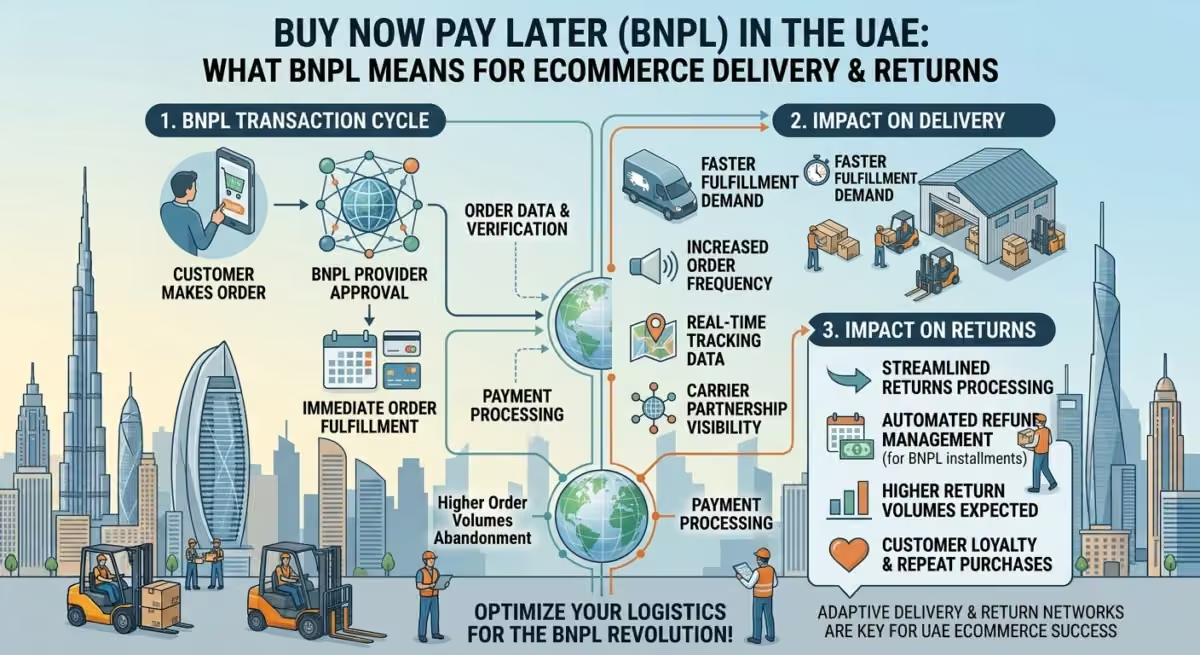
BNPL in the UAE and its impact on ecommerce delivery and returns, showing the transaction cycle, faster fulfilment, order frequency, real-time tracking, and streamlined returns

Buy now pay later has become a prominent checkout option in UAE e-commerce, allowing eligible customers to split purchases into scheduled payments instead of paying the full amount upfront.

For retailers, the impact extends beyond checkout. BNPL can influence order values, fulfilment requirements, return handling, refund coordination, and financial reporting.

This means UAE e-commerce brands need to evaluate BNPL alongside the systems that manage each order after purchase. This article looks at how BNPL works in the UAE and what its growth means for delivery, fulfilment, COD, and reverse logistics.

Key Takeaways

  • Buy Now Pay Later allows eligible customers to divide purchases into scheduled payments at checkout.

  • BNPL services in the UAE fall under the Central Bank of the UAE’s regulatory framework for Short-Term Credit Facilities.

  • BNPL and cash on delivery can coexist because they serve different payment preferences and follow different operational processes.

  • For retailers, BNPL also creates considerations around fulfilment, returns, refunds, and payment reconciliation.

What Is Buy Now Pay Later and How Does It Work in the UAE?

Buy Now Pay Later, or BNPL, is a short-term credit option that allows eligible customers to divide a purchase into scheduled payments. It is usually offered during online checkout, where the provider assesses eligibility for the transaction according to its own criteria.

Once the transaction is approved, the merchant can process the order while the customer repays the BNPL provider according to the selected plan. Repayment schedules, purchase limits, fees, and late-payment terms vary by provider, so BNPL should not be described as universally interest-free or cost-free.

Tabby and Tamara are among the better-known BNPL providers serving the UAE market. Retailers considering a provider should review its commercial terms, checkout integration, settlement process, and refund procedures rather than focusing on the payment schedule alone.

BNPL also operates within a regulated environment in the UAE. The Central Bank of the UAE introduced its regulatory framework for Short-Term Credit Facilities on December 27, 2023. The framework establishes licensing and regulatory requirements for companies providing this type of short-term credit.

The market is also growing. A June 2026 ResearchAndMarkets report estimates UAE BNPL payments at USD 1.37 billion in 2026, up 16.9% year over year from approximately USD 1.17 billion in 2025. Market estimates differ by methodology, so this figure is best treated as an industry estimate rather than an official government total.

Cash on Delivery vs BNPL: What Changes for UAE eCommerce?

BNPL and cash on delivery serve different customer preferences, so one does not automatically replace the other. BNPL is approved during checkout and spreads the customer’s payment over a set schedule, while COD requires payment collection when the order reaches the customer.

Operational factor Buy Now Pay Later Cash on delivery
Payment point Approved during online checkout Collected when the order is delivered
Customer payment Split into scheduled repayments Paid in full at delivery
Delivery-stage collection Usually no payment collection required at the doorstep Delivery partner collects the payment
Merchant operations Requires settlement and refund coordination with the BNPL provider Requires COD collection, reconciliation, and remittance
Failed delivery Merchant systems must reflect the failed or cancelled fulfilment status and follow the provider process where required No doorstep payment is collected, and the order may enter reattempt or RTO workflows
Returns and refunds Refunds must align with merchant and BNPL provider processes Refunds follow the retailer’s COD return process

Offering BNPL does not require a retailer to stop offering COD. The two methods can serve different customer preferences, but they require separate financial and operational workflows.

Jeebly Dash supports COD collection alongside time-sensitive and scheduled delivery requirements. BNPL remains part of the retailer’s checkout and payment setup, so its settlements should be tracked separately from COD collections and remittances.

How Does BNPL Affect eCommerce Fulfilment and Delivery?

Research and merchant data have linked BNPL with changes in purchasing behaviour and basket size. For retailers, larger or more complex orders can place greater demands on inventory accuracy, order visibility, and fulfilment.

Keeping website and warehouse data aligned is therefore important. When the storefront is integrated with the fulfilment system, new orders can move directly to the warehouse team without manual re-entry. This can reduce processing gaps and give teams a clearer view of available stock, pending orders, and order status.

Delivery visibility matters once the order leaves the warehouse. Accurate tracking, delivery updates, and proof of delivery help customer service teams confirm order status and respond more quickly when an issue occurs.

For supported Jeebly workflows, this may include integrated order-status updates and driver-uploaded proof of delivery. If a customer continues paying for the purchase after receiving it, delayed, damaged, or incomplete orders can also affect satisfaction beyond delivery day.

The physical post-purchase experience also shapes how customers perceive the order. Brands can also consider how packaging and the unboxing experience influence satisfaction and repeat purchases after delivery.

How Do BNPL Orders Affect Returns and Refunds?

BNPL does not automatically increase return rates for every online store. However, if it encourages larger baskets or additional purchases, some retailers may see more products or higher-value orders enter the returns process. The effect can vary by product category, customer behaviour, order value, and return policy.

For brands, the more important issue is what happens after a return is requested. A BNPL return can involve several connected operational stages:

  1. The return is collected and proof of pickup is recorded.
  2. The product is returned to the store or warehouse.
  3. Its condition is checked, and inventory status is updated.
  4. The merchant approves the refund.
  5. The BNPL provider is notified and the customer’s payment plan is adjusted where applicable.

A completed return pickup does not necessarily mean the financial refund is complete. The merchant may still need to inspect the product and approve the refund before the BNPL provider can update the customer’s remaining payments.

Retailers should therefore communicate each stage clearly. Customers need to know when the product has been collected, when the return has been approved, and when they can expect the payment adjustment to appear.

Jeebly Bizz can support reverse logistics through return pickups, doorstep quality checks where applicable, digital proof of pickup, tracking, and return-to-store or warehouse workflows. Instant refunds may also be available for certain clients, but this depends on the individual business setup and is not a standard feature for every retailer.

Brands should also make sure their return policy clearly explains refund timelines and responsibilities for BNPL purchases.

What Should UAE Brands Review Before Offering BNPL?

Adding BNPL should be treated as an operational decision, not only a checkout change. Before launching it, retailers need to confirm that their payment, fulfilment, returns, and reporting processes can handle the additional complexity.

1. Measure BNPL Orders Separately

Brands should compare BNPL performance with card, wallet, and COD orders instead of relying only on overall sales. Useful metrics include conversion rate, average order value, delivery success, cancellations, return rate, refund turnaround time, and customer service contacts.

Financial reporting should also distinguish BNPL settlements from COD collections. The two payment methods follow different reconciliation processes and should remain clearly separated in finance reporting.

2. Map the Return and Refund Handoff

Retailers should define who is responsible for pickup, inspection, inventory updates, refund approval, customer communication, and notification to the BNPL provider.

Clear ownership reduces the risk of a returned product reaching the warehouse while the customer is still waiting for information about the refund.

3. Align Customer-Facing Timelines

Return policies, checkout information, customer service scripts, and BNPL provider terms should set consistent expectations. If pickup, merchant approval, and payment-plan adjustment happen at different stages, customers should be told clearly how those stages differ.

4. Connect Checkout, Fulfilment, Delivery, and Returns Data

Order, warehouse, delivery, return, and finance systems should share accurate status information. Integrations can reduce manual updates and help teams follow an order across fulfilment and post-purchase workflows.

Brands should also assess forward and reverse logistics together. Jeebly Bizz supports warehousing, fulfilment, forward delivery, and reverse logistics within a wider business logistics setup, while Jeebly Dash can support time-sensitive delivery and COD collection where applicable.

Jeebly supports the logistics around the order. BNPL approval, customer repayment, and provider settlement remain part of the retailer’s payment setup rather than Jeebly’s delivery service.

BNPL Is Also a Logistics Decision

BNPL can make checkout more flexible, but customers experience the purchase through the fulfilment, delivery, and post-purchase processes that follow. UAE retailers therefore need to assess payment flexibility alongside the operational capacity required to support it.

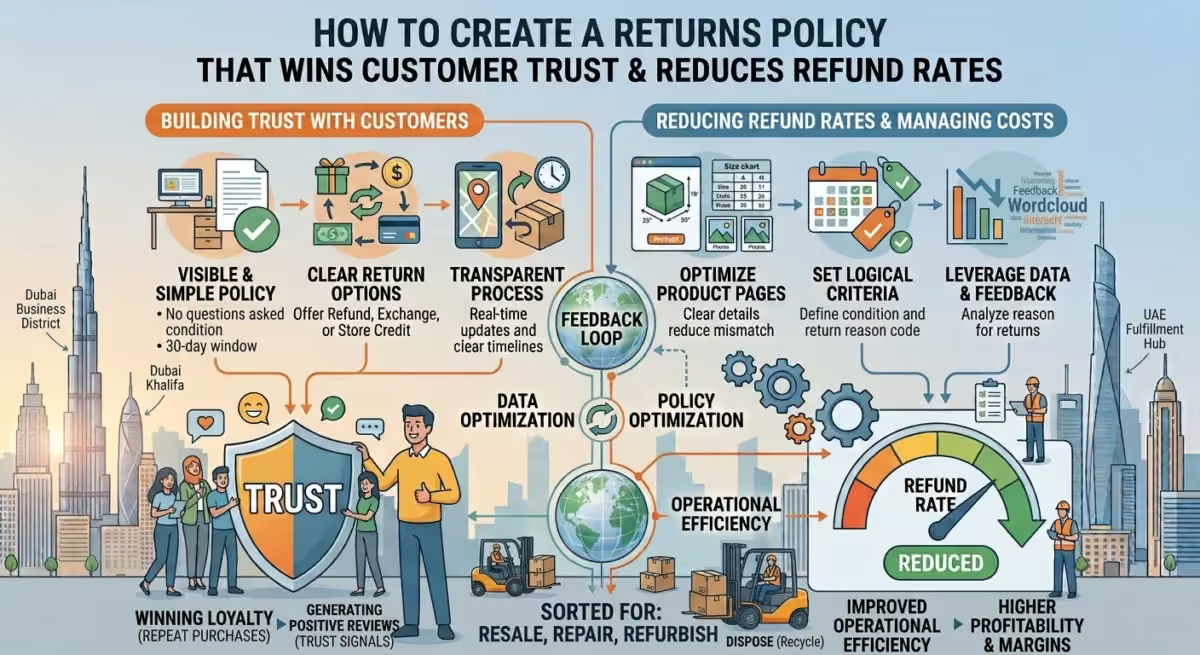
For a closer look at the post-purchase side, read our guide to creating a returns policy that sets clear refund expectations and supports an efficient returns process.

If your business needs support across fulfilment, delivery, COD handling, and reverse logistics, speak with the Jeebly Bizz team about the right logistics setup for your store.

Frequently Asked Questions

BNPL services in the UAE operate within the Central Bank of the UAE’s framework for Short-Term Credit Facilities, introduced in December 2023. The framework establishes regulatory and licensing requirements for short-term credit providers. Customers should still review the terms, fees, repayment schedule, and late-payment conditions of the specific provider they use.

BNPL does not automatically increase return rates for every retailer. If it contributes to larger baskets or additional purchases, some stores may see more products enter the returns process. The effect depends on factors such as product category, customer behaviour, order value, and the retailer’s return policy.

Yes. BNPL and cash on delivery can coexist because they serve different payment preferences. BNPL is arranged at checkout, while COD requires payment collection when the order reaches the customer. Retailers need separate reconciliation and refund processes for each method.

There is no universal refund timeline for BNPL purchases in the UAE. Timing can depend on the retailer’s return and inspection process, refund approval, system integration, and the BNPL provider’s processing rules. A completed return pickup does not necessarily mean the payment adjustment has already been processed.

Some BNPL providers and merchant integrations support partial refunds. When a partial refund is processed, the customer’s remaining payment schedule may be adjusted based on the refunded amount. The exact process depends on the provider, retailer, and payment integration.

Routes to insightful reads

BNPL in the UAE and its impact on ecommerce delivery and returns, showing the transaction cycle, faster fulfilment, order frequency, real-time tracking, and streamlined returns
Buy Now Pay Later in the UAE: What BNPL Means for eCommerce Delivery and Returns.

Buy Now Pay Later (BNPL) is changing how consumers shop and how eCommerce businesses manage fulfilment and returns in the UAE. This guide explores how BNPL can influence order volumes, delivery demand, fulfilment operations, return rates, refund processing, and the logistics strategies businesses need to support a growing BNPL-driven customer base.

Read More
Infographic explaining how to calculate volumetric weight for shipping, including the formula, measurement example and comparison between actual and chargeable weight.
How to Calculate Volumetric Weight for Shipping: Formula and Examples

Learn how to calculate volumetric weight for shipping with an easy-to-follow formula and practical examples. Understand how package dimensions, actual weight and carrier conversion factors determine the chargeable weight and ultimately impact your shipping costs.

Read More
3PL vs 4PL logistics comparison showing warehousing, transportation, distribution, supply chain integration, technology, analytics, and strategic planning for UAE businesses
3PL vs 4PL: What Is the Difference and Which Does Your UAE Business Need?

3PL and 4PL logistics models help businesses manage different levels of supply chain operations. This guide explains the key differences between 3PL and 4PL providers, their roles, benefits, costs, and how UAE businesses can choose the right logistics model based on their size, supply chain complexity, and operational needs.

Read More
Types of packaging for courier shipments, showing outer packaging strength, void-fill options, cushioning materials, and sealing and labelling methods
Types of Packaging for Courier Shipments: Which One Best Protects Your Product?

Choosing the right packaging is essential for protecting products during courier transportation. This guide explores different types of packaging for courier shipments, including corrugated boxes, bubble wrap, air pillows, paper fillers, foam inserts, and protective seals, and explains how to choose the best option based on your product, handling needs, and shipping conditions.

Read More
Types of logistics explained through inbound, outbound, reverse and third-party logistics, showing the movement of goods between suppliers, warehouses, customers and return facilities.
Types of Logistics Explained: Inbound, Outbound, Reverse and Third-Party 

Logistics covers much more than moving goods from one place to another. This guide explains the four key types of logistics, inbound, outbound, reverse and third-party logistics (3PL), and how each supports the supply chain. Learn how goods move from suppliers to warehouses, reach customers, return for repair or disposal, and how businesses use 3PL providers to manage logistics operations.

Read More
Categories
blogs

How to Reduce Cart Abandonment Caused by Delivery Costs and Uncertainty

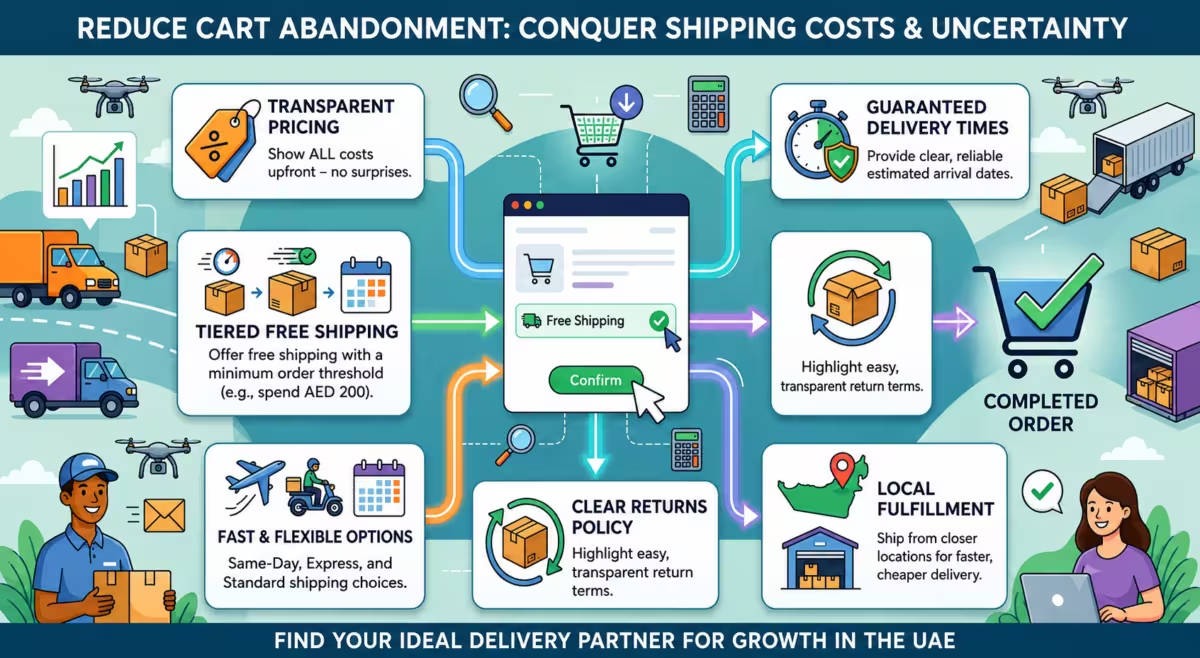
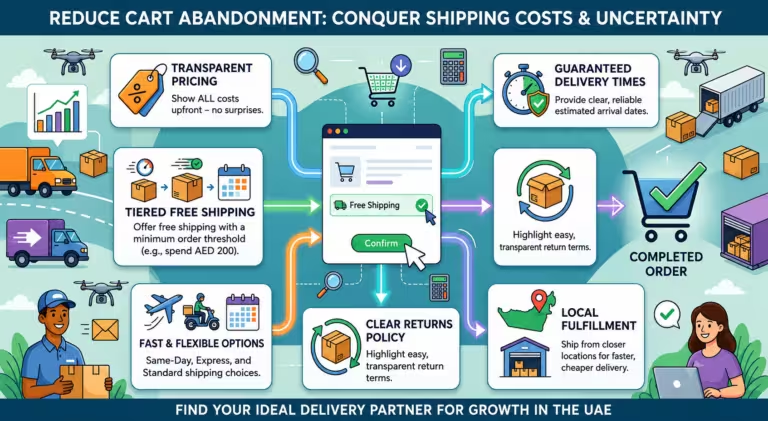
Illustration showing strategies to reduce cart abandonment through transparent shipping costs, fast delivery, local fulfilment, and clear returns policies for UAE eCommerce businesses.

How to Reduce Cart Abandonment Caused by Delivery Costs and Uncertainty

Roughly seven out of every ten shoppers who add items to their cart leave without purchasing. The number one trigger cited by 48% of US shoppers is extra costs appearing at final checkout, primarily shipping fees and taxes. This is entirely preventable. 

Additionally, combined delivery cost and delivery uncertainty directly drive more than half of all preventable cart abandonment. It’s mostly a delivery communication problem, and the fix starts long before the customer reaches the payment page. 

This guide covers the specific delivery and logistics changes that reduce abandonment, the UAE-specific factors that make this market different, and how to structure your delivery operation so it converts.

Key Takeaways

  • 48% of shoppers abandon their cart because of unexpected shipping costs, the top reason for cart abandonment.

  • Showing delivery cost and estimated date on the product page eliminates the surprise that causes most shipping-related abandonment.

  • In the UAE, COD can still account for 40-60% of D2C transactions in certain categories, directly impacting conversion rates and market penetration.

  • The brands that consistently convert at checkout are the ones whose delivery operation is reliable enough to promise something specific. 

Why Delivery Is a Pre-Purchase Conversion Problem

The standard model in e-commerce treats delivery as what happens after the sale. The data says otherwise.

Many ecommerce stores still rely on vague delivery language such as “3–7 business days” or “delivery subject to location.” While technically accurate, these messages do little to help customers understand when they will actually receive their order. The most effective stores communicate delivery expectations with precision.

The sequence that may create abandonment is specific: uncertain delivery window → reaches checkout → sees AED 15 shipping fee → doesn’t complete purchase. 

The fix is not removing the fee at the last step. It’s removing the uncertainty and the surprise from the earliest point in the purchase journey.

Fix 1: Show Delivery Cost and Estimated Date on the Product Page

The checkout page is too late. Displaying shipping costs, taxes, and fees on the product page or early in the cart can eliminate the surprise that causes most price-related abandonment.

What this could look like in practice:

  • A delivery cost estimate on the product page, based on the customer’s location (use geolocation to personalise this automatically)
  • A specific delivery date rather than a range: “arrives tomorrow” or “arrives Wednesday if ordered before 2 pm”
  • A delivery cut-off time clearly displayed: “Order in the next 3 hours for same-day delivery”

The same principle applies to delivery date promises. Showing the delivery date where the purchase decision is being made converts that information from noise into a reason to buy.

Fix 2: Set a Free Shipping Threshold at the Right Level

Free shipping is among the most impactful pricing changes for reducing cart abandonment. The mechanics matter.

For example: if your current AOV is AED 150, set the free shipping threshold at AED 180–195. Customers who are AED 30 away from free shipping will add an item. Customers who are AED 100 away will not bother.

Additionally, a free shipping progress bar visible in the cart and ideally on product pages can show customers how close they are to the threshold.

Fix 3: Match Your Delivery Promise to Your Logistics Capability

The connection between logistics capability and cart conversion is direct. If your fulfilment partner can only reliably hit next-day delivery within Dubai, don’t promise it to customers in Ras Al Khaimah. If your current provider takes 4–5 days to the northern emirates, your product page date estimate needs to reflect that, and your conversion rate will reflect the slower promise.

This is where your logistics partner choice directly affects your checkout conversion rate. For same-day and next-day domestic delivery with the FDSS data to back up precise checkout promises, Jeebly Dash covers all seven emirates with a published 98% FDSS.

Fix 4: Handle COD the Right Way for UAE Shoppers

COD creates a specific abandonment pattern in the UAE: shoppers select COD at checkout, then abandon because they’re unsure whether the delivery agent will arrive, how much to have ready, or what happens if they miss the delivery. This is delivery uncertainty driving abandonment even after payment method selection.

The fixes are operational:

Pre-delivery WhatsApp notification: Send a WhatsApp message when the order is out for delivery, confirming the exact COD amount, a delivery window, and a rescheduling option. Customers value predictability.

COD OTP confirmation: Implementing OTP confirmation before dispatch verifies the customer’s phone number and intent, filtering out fake orders before they enter the delivery pipeline. This reduces RTO from COD fraud.

Clear COD policy on the product page. State the exact COD process when the driver arrives, what form of payment is accepted, and what happens if the customer isn’t home. Uncertainty about how COD works causes abandonment at checkout.

Fix 5: Use WhatsApp for Cart Recovery

The UAE has some of the highest WhatsApp penetration rates in the world. Cart abandonment recovery messages sent via WhatsApp within 30–60 minutes of abandonment reach customers on the device and app they’re actively using.

Effective WhatsApp cart recovery for UAE e-commerce:

  • Send within 30–60 minutes of abandonment. Intent degrades quickly.
  • Show the specific abandoned item with an image.
  • Include a direct link back to the cart (not the homepage).
  • Confirm the delivery date and cost upfront in the message. Address the exact friction point that caused the abandonment.
  • Offer a small incentive (free delivery, a 5% discount) for orders above your free shipping threshold.

The delivery promise in the recovery message matters as much as the incentive. A customer who abandoned because of a vague delivery window needs to see a specific date before they’ll re-engage.

Fix 6: Make Returns Visible and Simple Before Purchase

A return policy is one of the strongest trust signals in ecommerce. Yet many stores treat returns as compliance content rather than conversion content.

A clear, easy return policy shown on product pages will directly reduce the pre-purchase hesitation that causes abandonment for considered purchases. For UAE shoppers, the question is typically: “If this doesn’t fit or isn’t what I expected, how hard is it to send back?”

The answer needs to be immediate and visible. “Free returns within 14 days” placed near the add-to-cart button removes a meaningful source of purchase anxiety. 

For the legal minimum return rights under UAE consumer protection law, a quick guide on How to Manage eCommerce Returns in UAE: Strategy, Policy and Logistics covers both the compliance requirements and the policy design that converts.

How Jeebly Supports Checkout Conversion

The connection between Jeebly’s delivery operation and your cart conversion rate is direct and measurable.

Jeebly Dash’s 98% FDSS across 50,000+ daily deliveries makes specific delivery date promises at checkout operationally credible. When you show “arrives tomorrow by 9 pm” on your product page, that promise needs a logistics partner with the infrastructure to keep it. Jeebly Dash publishes the performance data that backs that up.

For businesses managing high COD volumes, Jeebly Bizz connects your Shopify or WooCommerce store directly to dispatch, with WhatsApp and SMS notifications built into the delivery workflow.

For businesses managing inbound freight alongside domestic delivery, Jeebly Haul covers air, sea, and road freight with in-house customs clearance, keeping inventory moving without the delays that create “out of stock” conversion losses at product level.

Talk to the Jeebly team about your current delivery operation. A direct conversation about your FDSS rate, COD volume, and average delivery window will quickly identify where the logistics gaps are creating checkout friction.

Conclusion

Delivery cost and delivery uncertainty are the leading causes of cart abandonment, and both are fixable without rebuilding your checkout. 

Show delivery costs and specific delivery dates on product pages, not at checkout. Use WhatsApp for cart recovery. Make your return policy visible before purchase, not buried in footer links. And build all of this on a logistics partner whose performance data supports the promises you’re making.

The brands that consistently convert at checkout are not the ones with the most sophisticated checkout technology. They’re the ones whose delivery operation is reliable enough to promise something specific. For same-day and next-day delivery across the UAE with the FDSS data to back it up, get in touch with the Jeebly team.

Frequently Asked Questions

Unexpected extra costs at checkout, primarily shipping fees and taxes, cited by 48% of abandoning shoppers. This has been the #1 cause for six consecutive years. The fix is showing all costs, including delivery, on the product page before checkout, not revealing them at the payment step.

The optimal free shipping threshold should be roughly 20–30% above your current average order value. Pair the threshold with a cart progress bar showing customers how close they are to free shipping. A threshold at or below AOV subsidises orders that already cleared it; one far above AOV pushes shoppers to abandon.

COD in the UAE creates a specific abandonment pattern: uncertainty about the delivery process, payment amount, and what happens if the customer misses the delivery agent. Pre-delivery WhatsApp notification with the exact COD amount and a delivery window reduces both abandonment and COD refusals at the door.

Yes, specifically. Vague delivery windows (“3–7 business days”) carry uncertainty all the way to checkout, where they compound with an unexpected shipping fee to trigger abandonment. A specific date (“arrives Wednesday”) makes the delivery concrete and removes that uncertainty before the customer reaches payment. This only works if your logistics partner can actually deliver on the specific date you’re promising.

Within 30–60 minutes for the first message. Buying intent degrades quickly after abandonment. In the UAE, send via WhatsApp rather than email for substantially higher open and recovery rates. The recovery message should address the specific friction point. If delivery cost caused abandonment, include the delivery price (or a free shipping offer) in the message alongside a direct link back to the cart.

Routes to insightful reads

BNPL in the UAE and its impact on ecommerce delivery and returns, showing the transaction cycle, faster fulfilment, order frequency, real-time tracking, and streamlined returns
Buy Now Pay Later in the UAE: What BNPL Means for eCommerce Delivery and Returns.

Buy Now Pay Later (BNPL) is changing how consumers shop and how eCommerce businesses manage fulfilment and returns in the UAE. This guide explores how BNPL can influence order volumes, delivery demand, fulfilment operations, return rates, refund processing, and the logistics strategies businesses need to support a growing BNPL-driven customer base.

Read More
Infographic explaining how to calculate volumetric weight for shipping, including the formula, measurement example and comparison between actual and chargeable weight.
How to Calculate Volumetric Weight for Shipping: Formula and Examples

Learn how to calculate volumetric weight for shipping with an easy-to-follow formula and practical examples. Understand how package dimensions, actual weight and carrier conversion factors determine the chargeable weight and ultimately impact your shipping costs.

Read More
3PL vs 4PL logistics comparison showing warehousing, transportation, distribution, supply chain integration, technology, analytics, and strategic planning for UAE businesses
3PL vs 4PL: What Is the Difference and Which Does Your UAE Business Need?

3PL and 4PL logistics models help businesses manage different levels of supply chain operations. This guide explains the key differences between 3PL and 4PL providers, their roles, benefits, costs, and how UAE businesses can choose the right logistics model based on their size, supply chain complexity, and operational needs.

Read More
Types of packaging for courier shipments, showing outer packaging strength, void-fill options, cushioning materials, and sealing and labelling methods
Types of Packaging for Courier Shipments: Which One Best Protects Your Product?

Choosing the right packaging is essential for protecting products during courier transportation. This guide explores different types of packaging for courier shipments, including corrugated boxes, bubble wrap, air pillows, paper fillers, foam inserts, and protective seals, and explains how to choose the best option based on your product, handling needs, and shipping conditions.

Read More
Types of logistics explained through inbound, outbound, reverse and third-party logistics, showing the movement of goods between suppliers, warehouses, customers and return facilities.
Types of Logistics Explained: Inbound, Outbound, Reverse and Third-Party 

Logistics covers much more than moving goods from one place to another. This guide explains the four key types of logistics, inbound, outbound, reverse and third-party logistics (3PL), and how each supports the supply chain. Learn how goods move from suppliers to warehouses, reach customers, return for repair or disposal, and how businesses use 3PL providers to manage logistics operations.

Read More

    Powered by