





Jeebly | Logistics Solutions

Categories
blogs

How to Manage eCommerce Returns in UAE: Strategy, Policy and Logistics

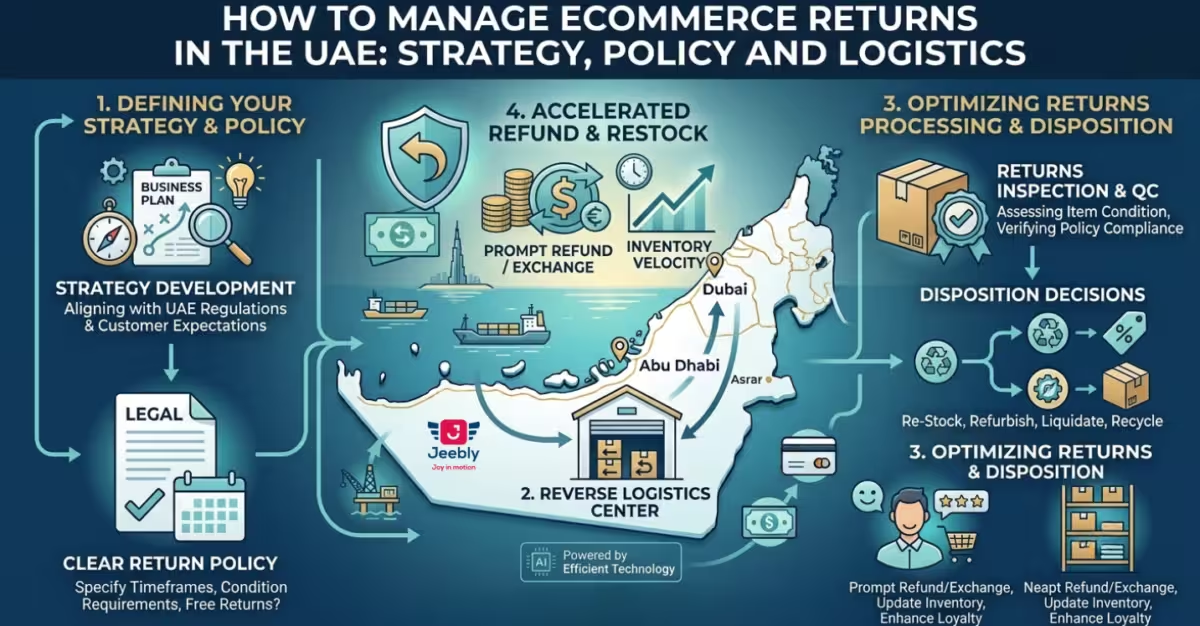
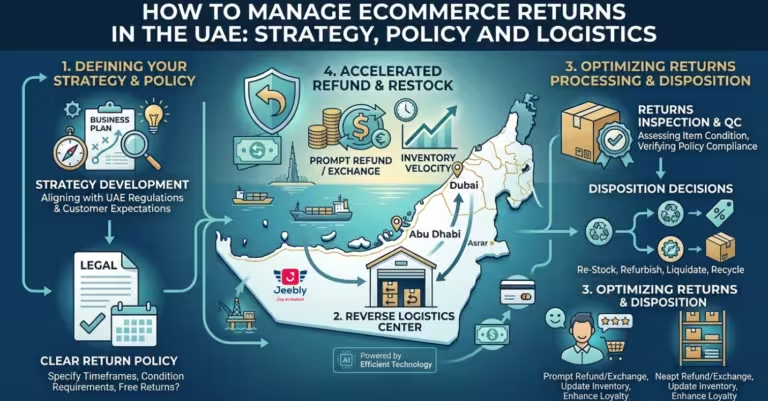
How to manage eCommerce returns in the UAE with reverse logistics, return policies, refunds and inventory restocking

How to Manage eCommerce Returns in UAE: Strategy, Policy and Logistics

Returns are not a post-purchase problem. They are a pre-purchase decision. Narvar’s 2025 State of Post-Purchase Report found 90% of shoppers check the return policy before buying, and 76% won’t buy again after a poor return experience. 

In the UAE, where brand switching is fast and customer acquisition costs are high, a weak returns operation can cost you money on the logistics side as well as conversions at checkout.

This guide covers how ecommerce returns work operationally in the UAE, the legal minimum your return policy must meet, what it actually costs to process a return, how to reduce avoidable returns, and how to choose a logistics partner for the reverse logistics leg.

How UAE Ecommerce Returns Work: The Reverse Logistics Flow

Understanding the physical return journey from the customer’s door to the restocked inventory is where most businesses find cost leaks.

Step 1: Return initiated. 

Customer submits a return request through your portal, email, or WhatsApp (common in UAE B2C). The quality of this first interaction, such as the speed of acknowledgement and the clarity of instructions, directly affects whether the customer remains a customer.

Step 2: Return authorisation issued

An RMA (Return Merchandise Authorisation) number is issued. This creates a unique record that tracks the return through every subsequent step. Without an RMA system, returns are managed by memory and spreadsheets, which breaks at scale.

Step 3: Item collected or dropped off

The courier collects the parcel from the customer, or the customer drops it at an agreed point. In the UAE, doorstep collection is the customer expectation. Drop-off networks are limited outside major Dubai zones. Confirm with your logistics companies which collection model they operate under and which emirates they cover.

Step 4: Item received and graded

The returned parcel arrives at the warehouse and is inspected against the RMA record. Grading typically uses a four-tier system: sellable as new, requires repackaging, requires refurbishment, or write-off. The grading decision determines inventory treatment and cost recovery.

Step 5: Inventory updated

Sellable items are returned to stock in the WMS. Non-sellable items are routed to secondary channels, refurbishment, or disposal. Real-time inventory updates are critical at this point. Delayed updates can cause oversells.

Step 6: Refund or exchange processed

The resolution is issued. Refunds should be issued after inspection is complete, not before the item is received. Refund speed is what the customer notices. The fastest compliant approach is within 5–7 business days of graded inspection.

Step 7: Data captured and fed back

Return reasons, product SKUs, return condition, and originating courier are all logged. This is the operational intelligence that reduces future returns.

If your forward delivery partner doesn’t offer structured return collection across all seven emirates, that’s a gap worth closing before peak season. Same-day and next-day courier collection across the UAE, with live tracking and ePOD at pickup, is also covered on the reverse side of Jeebly Dash.

The UAE-Specific Returns Challenge: COD Refusals

This is the returns problem no global returns guide addresses because it’s largely a MENA phenomenon.

COD is popular in the UAE, Saudi Arabia, and Egypt. Failed deliveries often turn into returns. 3PLs (third-party logistics) handle such cases by promptly logging them and routing them to central hubs, thereby improving recovery rates and maintaining high customer trust.

When a customer refuses a COD parcel at the door, the courier marks it as a failed delivery and initiates a return-to-origin (RTO). That parcel re-enters your returns pipeline: it needs to be received, inspected, and re-listed. The difference from a customer-initiated return is that no return reason is captured. You don’t know whether the customer changed their mind, the product was incorrect, the address was incorrect, or it was a fraudulent order placed with no intention of acceptance.

For the operational side of fake COD orders entering your returns flow, COD Fraud in UAE eCommerce covers how to reduce the fraud-driven share of RTO before it reaches your warehouse.

UAE Consumer Protection Law: What Your Return Policy Must Cover

UAE businesses must meet minimum return standards under Federal Law No. 15 of 2020 (the UAE Consumer Protection Law) and Cabinet Decision No. 66 of 2023, which specifically govern e-commerce.

The minimum requirements applicable to UAE e-commerce returns:

1) 14-day cooling-off period for online purchases: Consumers who purchase goods online have the right to cancel and return within 14 days of receipt, without providing a reason, unless the goods fall into an exempt category. Perishables, customised goods, digital downloads, and sealed items opened after delivery are typically exempt.

2) Obligation to disclose return policy clearly: The return policy must be visible before and at the point of purchase. Failure to clearly disclose a return policy violates the Consumer Protection Law’s transparency requirements.

3) Refund timeline: Refunds must be processed within a reasonable period after the return is received. Holding refunds for 30+ days without clear justification creates consumer protection risk.

4) Defective goods: For items that arrive defective or not as described, consumer rights extend beyond the 14-day window. Merchants cannot limit liability for goods that are materially different from what was advertised.

When a customer returns goods, the VAT element of the original transaction must be refunded alongside the product price. VAT on Shipping and Delivery in UAE covers how UAE VAT applies to delivery and returns transactions.

How to Build a UAE Return Policy That Converts

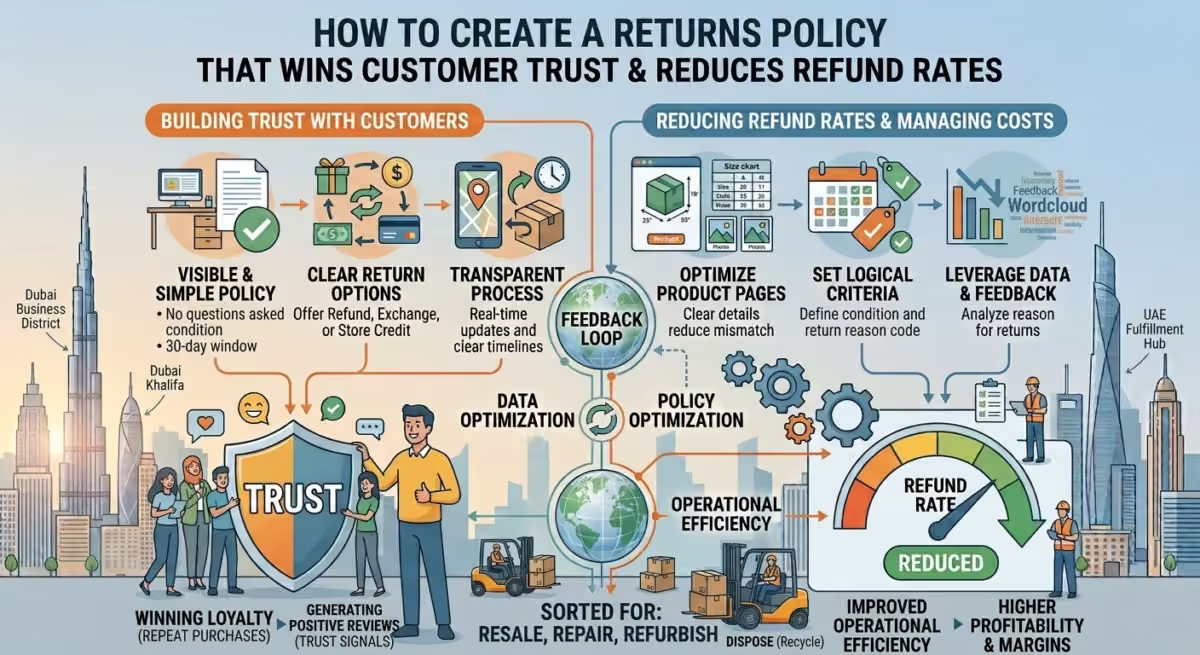
A return policy is not just legal compliance. It’s a commercial tool. The policy visible on your product pages and at checkout directly affects whether someone buys.

What a conversion-effective UAE return policy includes:

  • Clear return window: State it in days from delivery, not from purchase. “30 days from delivery” is clearer and more customer-friendly than “30 days from order date” for items with variable delivery times.

  • Eligible and ineligible items are listed explicitly: Customers who learn an item is non-returnable after purchase feel misled. List your exempt categories (customised items, intimates, opened sealed goods) on the policy page, not just in the checkout terms.

  • Condition requirements stated plainly: “Unused, in original packaging with tags attached” is clear. “In acceptable condition” is not. Vague condition language drives disputes.

  • Refund method and timeline committed: State which payment method refunds go to (original payment method or store credit) and within how many business days after item receipt. This is what customers search for before they commit to a purchase.

  • Free vs paid returns: In the UAE, free returns remain a stronger conversion signal than in some other markets, but offering free returns on all orders, regardless of the reason, compresses margins rapidly. A middle-ground approach is that free returns are for defective or incorrect items and paid returns are for change of mind.

The return policy you publish is only as credible as the logistics operation behind it. If your policy promises 5-day collection but your courier takes 10, the policy creates expectations your operation can’t meet. 

Careem Express vs Jeebly compares the fulfilment capabilities and reverse logistics support of both providers. This read can be a useful context when deciding which partner can operationally back up your published return commitments.

How to Reduce Avoidable Returns in the UAE

Returns that shouldn’t have happened are the most expensive. You pay the return cost and lose the original sale.

  1. Accurate product descriptions and sizing information prevent the largest single category of avoidable returns in fashion and apparel. If your product page doesn’t answer whether it runs large, what the fabric feels like, or how the colour differs under different lighting, a return will.

  2. Post-purchase communication reduces buyer’s remorse returns. An order confirmation that reiterates what was ordered, delivery tracking that keeps the customer engaged, and a delivery notification that sets expectations for the item’s condition all help reduce returns.

  3. Packaging that protects in transit. Returns are mostly driven by items arriving damaged or misrepresenting how they looked online. Packaging quality is within your control. Damaged arrivals are entirely avoidable returns.

  4. Exchange prompts at the point of return initiation. When a customer initiates a return, offer the exchange option before the refund option. A customer who wanted a different size is still a buyer. Routing them to an exchange rather than issuing a refund helps recover revenue and reduce return shipping costs.

How Jeebly Handles Reverse Logistics

Jeebly Bizz manages reverse logistics on the same platform that handles forward delivery, with a single system, a single account, and a single tracking dashboard. Returns don’t create a separate operational workflow because they’re built into the fulfilment platform from the start.

The operational flow: 

  • When a return is initiated, the Jeebly Bizz system generates an RMA, schedules collection through Jeebly Dash across the relevant emirate, and tracks the parcel back to the warehouse. 
  • Inspection results update inventory in real time. The business receives a complete return record without manual input at any stage.

If your current domestic courier service handles forward delivery but routes RTO parcels through a different workflow, you’re already losing return data at the handoff. 

Talk to the Jeebly team about consolidating the full delivery and returns cycle through one platform. A direct conversation about your current RTO rate and return volume will identify cost leaks within 20 minutes.

Key Takeaways

  • 90% of shoppers check the return policy before buying. Returns are a conversion factor, not just a cost.
  • UAE businesses must comply with minimum return rights under Federal Consumer Protection Law No. 15/2020. Ignorance of this is a compliance risk.
  • Manual return handling costs merchants an estimated $10-$15 per return in labour alone. Automation reduces this to under $2.
  • COD refusals in the UAE are a distinct driver of returns. Failed COD deliveries re-enter your returns pipeline and must be processed identically to customer-initiated returns.
  • Returns fraud is the biggest pain point for brands in 2025. The UAE’s cash-heavy COD environment amplifies this risk.

Frequently Asked Questions

Under Federal Law No. 15 of 2020 and Cabinet Decision No. 66 of 2023, UAE consumers have a 14-day cooling-off period for online purchases, during which they can return goods without providing a reason. Perishables, customised items, digital downloads, and opened sealed goods are typically exempt. Failure to clearly disclose return terms before purchase violates the Consumer Protection Law’s transparency requirements.

Global retail return rates average 17-18% of online orders, with apparel rates ranging from 20% to 30%, with some segments reaching 50%. For UAE businesses, COD refusals add an additional RTO volume on top of customer-initiated returns. Tracking these separately gives a clearer picture of which returns are avoidable.

For online sellers and retailers managing reverse logistics in the UAE, the average cost to process a single product return is approximately AED 8 to AED 15. Automating the receiving and grading steps can bring this below for standard items, with most of that cost being the collection shipping fee.

Free returns are a stronger conversion signal in the UAE than in some markets. A practical middle ground: free returns for defective or incorrect items (where consumer protection law applies); paid returns for change of mind. This protects margins while meeting legal requirements.

When a customer refuses a COD parcel at the door, it enters the return-to-origin (RTO) pipeline. The parcel is returned to your warehouse, where it is received, inspected, and relisted in the same way as a customer-initiated return. No return reason is captured automatically. Managing COD RTOs as a separate tracking category is the most effective way to reduce this cost.

Routes to insightful reads

Delivery SLA guide for UAE businesses showing service level agreements, delivery performance metrics, on-time delivery targets and logistics standards.
 Delivery SLA Guide for UAE Businesses: What to Expect and How to Set Standards

A clear delivery Service Level Agreement (SLA) sets the expectations for speed, reliability, and performance between businesses and their logistics partners. This guide explains what a delivery SLA should include, the key metrics to track, and how UAE businesses can set realistic standards to improve customer satisfaction and delivery performance.

Read More
Dangerous goods and restricted items that cannot be shipped by courier in the UAE, including hazardous materials, prohibited products and customs restrictions.
Dangerous Goods and Restricted Items: What You Cannot Ship by Courier in the UAE

Shipping prohibited or restricted items can lead to delays, fines, shipment rejection, or legal consequences. This guide explains which dangerous goods and restricted items cannot be shipped by courier in the UAE, the regulations businesses should know, and how to stay compliant with UAE customs and courier requirements.

Read More
How to manage eCommerce returns in the UAE with reverse logistics, return policies, refunds and inventory restocking
How to Manage eCommerce Returns in UAE: Strategy, Policy and Logistics

Efficient returns management is essential for every UAE eCommerce business. From creating a customer-friendly return policy to streamlining reverse logistics and processing refunds quickly, this guide explains how to reduce return costs, improve customer satisfaction, and turn returns into a competitive advantage.

Read More
A medium-sized Jeebly delivery and moving truck parked outside a warehouse with its back doors wide open and a hydraulic lift gate lowered to the ground. Inside the cargo area, brown cardboard boxes are stacked neatly. The side of the truck features a dark blue advertisement wrap with the Jeebly logo, displaying a hand holding a house model under the text "Always on the Move from parcels to homes" and a call to action to "Explore it all on Jeebly NoW".
Packers and Movers in Dubai: What to Look for and How to Choose

Relocating in Dubai doesn’t have to be stressful. Whether you are moving apartments in Dubai Marina or upgrading your office space, discover the essential factors to look for in a professional moving company—from licensing and insurance to transparent pricing—and learn exactly how to choose the right team for a seamless move.

Read More
Infographic titled "Ecommerce Fulfilment in UAE: How It Works and What Businesses Should Look For." The left side shows a 5-step workflow: Online Store, Inventory, Picking & Packing, Dispatch, and Last Mile Delivery. The center features a map of the UAE with iconic cityscapes. The right side lists business requirements: Reliability & Speed, Advanced Technology, Real-Time Tracking, Scalability, and Customer Support.
eCommerce Fulfilment in UAE: How It Works and What Businesses Should Look For

Master your logistics strategy in the Middle East. Discover how e-commerce fulfillment works in the UAE—from warehousing to last-mile delivery—and learn the top 5 features your business needs from a fulfillment partner to scale successfully.

Read More
Categories
blogs

eCommerce Fulfilment in UAE: How It Works and What Businesses Should Look For

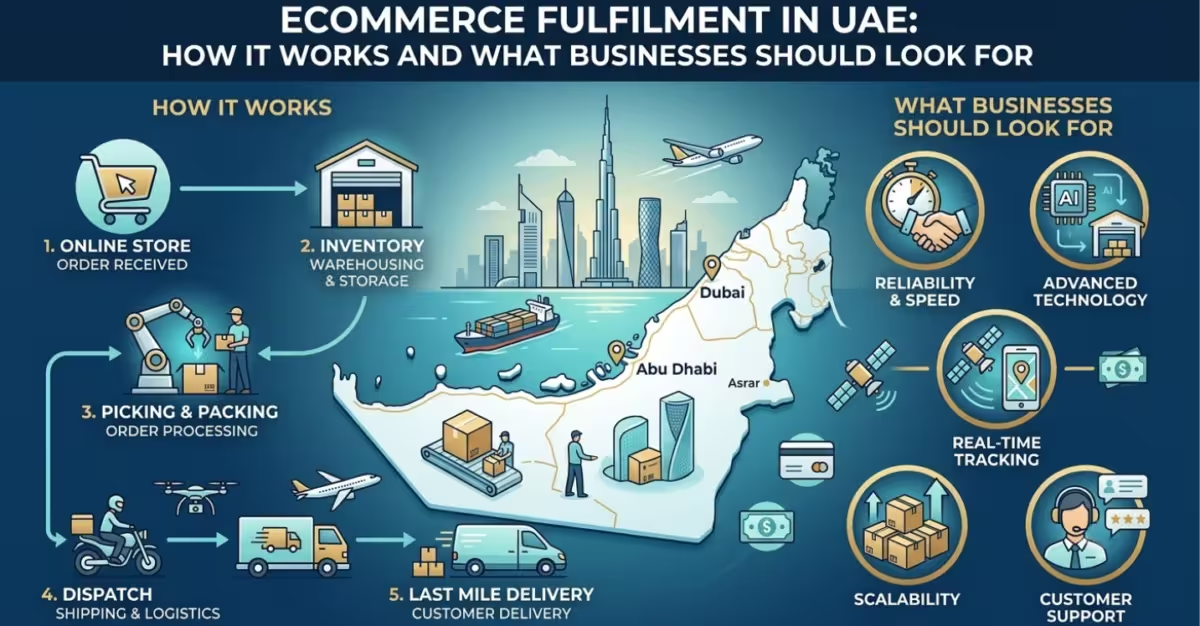
Infographic titled "Ecommerce Fulfilment in UAE: How It Works and What Businesses Should Look For." The left side shows a 5-step workflow: Online Store, Inventory, Picking & Packing, Dispatch, and Last Mile Delivery. The center features a map of the UAE with iconic cityscapes. The right side lists business requirements: Reliability & Speed, Advanced Technology, Real-Time Tracking, Scalability, and Customer Support.

eCommerce Fulfilment in UAE: How It Works and What Businesses Should Look For

When your order volumes grow faster than your ability to pick, pack, and ship them accurately, ecommerce fulfilment stops being a back-office function and starts being a growth constraint. Shoppers in Dubai, Abu Dhabi, and Sharjah now expect same-day or next-day delivery as standard. Brands that cannot meet those expectations can lose orders to competitors who can. 

This guide covers how ecommerce fulfilment works end-to-end in the UAE, what it costs, how to evaluate a fulfilment partner, and when to move from self-fulfilment to a 3PL.

What Is Ecommerce Fulfilment?

Ecommerce fulfilment is the end-to-end process of receiving inventory, storing it, processing orders, picking and packing individual items, delivering to customers, and managing returns. Every step connects. A failure at receiving can create inventory discrepancies that surface at picking. A weak last-mile partner erodes the customer experience regardless of how well the warehouse operates.

For UAE businesses, fulfilment has a specific operational context. There are no standardised postcodes across the seven emirates, high COD volumes create a cash-float management problem, and customer delivery expectations now default to same-day or next-day delivery. 

Consumers now expect same-day delivery and next-day delivery, real-time tracking, and seamless return processes. To meet these rising expectations, brands must ensure their backend logistics are not only efficient but also scalable.

How Ecommerce Fulfilment Works: The Six-Stage Process

Stage 1: Receiving inventory

Goods arrive at the fulfilment warehouse, are logged against the purchase order, inspected for damage, and allocated to storage locations. Accurate receiving prevents inventory discrepancies that only surface when a pick can’t be completed.

Stage 2: Inventory storage

Products are stored by SKU in a warehouse management system (WMS). In the UAE, storage is typically quoted per pallet per month or per cubic metre per month. The storage location affects pick time. Fast-moving SKUs should be positioned closest to packing stations.

Stage 3: Order processing

When a customer places an order on your Shopify or WooCommerce store, it flows through the integration to the fulfilment partner’s OMS (Order Management System). 

The critical question here is whether inventory counts update in real time as items are picked and returned, or on a batch schedule. Batch updates may create oversell risk during peak periods.

Stage 4: Picking and packing

The WMS directs a picker to the correct storage location, the item is retrieved, packed to the brand’s specification, and labelled for dispatch. Pick accuracy is the metric that directly drives your return rate from incorrect orders. Ask any potential fulfilment partner for their published pick accuracy rate.

Stage 5: Last-mile delivery

The packed parcel is handed to the courier for delivery to the customer. In the UAE, the customer’s actual brand experience is formed. The last-mile partner matters as much as the warehouse.

For same-day and next-day domestic delivery across the UAE with photo ePOD and real-time tracking, Jeebly Dash connects directly to the Jeebly Bizz fulfilment platform. Orders processed in the warehouse automatically trigger dispatch, with no manual handoff.

Stage 6: Returns management

A 3PL can receive, inspect, and make returned inventory resellable without using your own resources. The returns SLA, from the customer’s door back to restocked inventory, can directly affect how quickly you can resell returned stock and how much write-off you absorb on slow-moving returns.

Fulfilment Models: Which Fits Your UAE Business?

1) Self-fulfilment: You manage warehouse, picking, packing, and dispatch in-house. Works below 100–200 orders per month when the margin on each order justifies the overhead. Breaks down when fulfilment pulls your team away from growth activities.

2) 3PL (third-party logistics): Outsourcing warehousing, picking, packing, and dispatch to a specialist. You retain ownership of inventory and customer relationships; the 3PL manages the operational layer.

3) Marketplace fulfilment: Amazon.ae FBA or Noon Farfill manage storage, picking, and delivery for marketplace sales. Efficient for marketplace volume but limits brand control over packaging and customer experience.

4) Hybrid: Self-fulfil certain channels or SKUs; 3PL handles the rest. Useful for brands with mixed channel profiles like Shopify DTC plus marketplace where different fulfilment models suit different order types.

In the UAE, a significant share of returns originate from COD refusals rather than genuine product issues. COD Fraud in UAE eCommerce covers how to structurally reduce fake COD orders before they enter your returns pipeline.

Five Criteria That Separate Capable UAE Fulfilment Partners

1. Platform integration

Before signing with a 3PL, confirm: does the 3PL have a certified app in the Shopify App Store, or does the connection run through a third-party middleware layer? If middleware is involved, clarify who owns the connection when it breaks and what the error-handling process looks like.

A native Shopify or WooCommerce integration means orders sync automatically, inventory updates in real time, and tracking information flows back to the customer notification without manual intervention. A middleware-dependent connection introduces a failure point that becomes critical during peak periods.

Jeebly Bizz integrates directly with Shopify, WooCommerce, Magento, ChatFood, and Grubtech. Orders route automatically from your store to fulfilment and dispatch without manual uploads.

2. Pick accuracy rate

Pick accuracy determines your incorrect-order return rate. Ask any potential partner for their published pick accuracy figure against audited order volume.

3. Last-mile delivery

A good 3PL fulfilment partner provides automated order processing, real-time inventory tracking, and seamless integration with your sales channels. But the last-mile leg is often handed off to a separate courier

Ask specifically: which courier partners handle last-mile delivery, what their FDSS rate is in the UAE, and how NDR (Non-Delivery Report) events are managed?

Jeebly’s fulfilment through Jeebly Bizz connects directly to same-day and next-day delivery across the UAE. The warehouse-to-door chain is managed on a single platform, with 98% FDSS across 50,000+ daily deliveries.

4. COD management and remittance cycle

COD is not a last-mile-only concern. It sits inside your fulfilment operation. The 3PL coordinates COD collection through the courier and then remits it to you on a defined cycle. 

Confirm: weekly or fortnightly remittance? Is there a COD fee, and is it charged at the 3PL level or courier level? Can you see COD collection status in real time on the platform dashboard?

5. Scalability during UAE peak periods

Ramadan, White Friday, and Eid create order volume spikes that can be 3–5x normal daily volume within 24 hours. Promotions, influencer campaigns, and seasonal peaks can trigger sudden surges in orders. A 3PL partner gives brands the flexibility to scale operations without investing in warehouses, equipment, or extra staff. 

Ask for a specific answer on how the provider manages peak capacity: with owned staff or ad hoc recruits? What is the SLA commitment during peak versus standard periods?

How Jeebly Bizz Handles eCommerce Fulfilment

Jeebly Bizz is Jeebly’s end-to-end business logistics platform that covers warehousing, pick-and-pack, automated dispatch, COD management, and reverse logistics through a single, connected system.

The operational structure for a Jeebly Bizz fulfilment customer:

  • Inventory arrives at Jeebly’s warehouse and is logged, inspected, and allocated in the WMS
  • Orders placed on your Shopify store sync automatically.
  • Pick, pack, and dispatch happen within the same day for orders placed before the cut-off time
  • Last-mile delivery is handled through Jeebly Dash. Tracking updates push directly to the customer’s notification from the branded tracking page
  • COD is collected at the door and remitted weekly
  • Returns are processed in-house: inspected, graded, and restocked or flagged for disposal within the same platform

For UAE businesses importing inventory that then feeds into domestic fulfilment, Jeebly Haul handles the inbound freight leg (air, sea, or road) with in-house customs clearance and connects directly to the Jeebly Bizz fulfilment flow.

Talk to the Jeebly team about your fulfilment setup. A direct conversation about your order volume, SKU count, and COD rate will confirm within 20 minutes whether Jeebly Bizz fits your operation and what the full cost per order looks like.

Key Takeaways

  • Ecommerce fulfilment covers six stages: receiving, storage, order processing, picking and packing, last-mile delivery, and returns management.
  • The breakeven point for outsourcing fulfilment to a 3PL falls between 1,000 and 3,000 orders per month. Below that, hybrid or self-fulfilment is often more cost-effective.
  • UAE fulfilment costs include storage, pick-and-pack, last-mile delivery, COD fees, and returns processing.
  • 87% of shippers have increased their use of outsourced logistics, and 82% report that 3PL partnerships have improved the customer experience.
  • Platform integration depth is the most commonly overlooked evaluation criterion.

Frequently Asked Questions

Ecommerce fulfilment in the UAE is the end-to-end process of receiving inventory, storing it in a warehouse, picking and packing individual customer orders, delivering via a last-mile courier across the seven emirates, and managing returns. UAE-specific considerations include high COD volumes, the absence of standardised postcodes, and customer expectations of same-day or next-day delivery as standard.

The breakeven point for outsourcing fulfilment falls between 1,000 and 3,000 orders per month. UAE businesses with high COD rates often reach this point earlier due to the operational overhead of cash management. The clearest signals are rising fulfilment errors, peak periods that strain operations, or fulfilment taking longer than growth activities.

Fulfilment costs can range from AED 11 – 55+ per order. This cost is highly variable and depends on factors such as storage, picking & packing, delivery complexity and more. Always request a full cost-per-order breakdown from any provider.

At minimum: Shopify and WooCommerce. For marketplace sellers: Amazon.ae and Noon. Confirm whether the integration is native (certified app) or middleware-dependent. Inventory counts should update in real time as items are picked and returned. Batch updates create oversell risk during peak periods. Ask the provider to demonstrate the integration live before committing.

COD creates a cash float management challenge within fulfilment: the courier collects cash at delivery and remits to the business on a defined cycle. A weekly remittance cycle versus a fortnightly one can hold an additional week of revenue at any given time. Confirm the remittance timing, the COD fee structure, and whether the COD collection status is visible in real time on the platform dashboard before selecting a fulfilment partner.

Routes to insightful reads

Delivery SLA guide for UAE businesses showing service level agreements, delivery performance metrics, on-time delivery targets and logistics standards.
 Delivery SLA Guide for UAE Businesses: What to Expect and How to Set Standards

A clear delivery Service Level Agreement (SLA) sets the expectations for speed, reliability, and performance between businesses and their logistics partners. This guide explains what a delivery SLA should include, the key metrics to track, and how UAE businesses can set realistic standards to improve customer satisfaction and delivery performance.

Read More
Dangerous goods and restricted items that cannot be shipped by courier in the UAE, including hazardous materials, prohibited products and customs restrictions.
Dangerous Goods and Restricted Items: What You Cannot Ship by Courier in the UAE

Shipping prohibited or restricted items can lead to delays, fines, shipment rejection, or legal consequences. This guide explains which dangerous goods and restricted items cannot be shipped by courier in the UAE, the regulations businesses should know, and how to stay compliant with UAE customs and courier requirements.

Read More
How to manage eCommerce returns in the UAE with reverse logistics, return policies, refunds and inventory restocking
How to Manage eCommerce Returns in UAE: Strategy, Policy and Logistics

Efficient returns management is essential for every UAE eCommerce business. From creating a customer-friendly return policy to streamlining reverse logistics and processing refunds quickly, this guide explains how to reduce return costs, improve customer satisfaction, and turn returns into a competitive advantage.

Read More
A medium-sized Jeebly delivery and moving truck parked outside a warehouse with its back doors wide open and a hydraulic lift gate lowered to the ground. Inside the cargo area, brown cardboard boxes are stacked neatly. The side of the truck features a dark blue advertisement wrap with the Jeebly logo, displaying a hand holding a house model under the text "Always on the Move from parcels to homes" and a call to action to "Explore it all on Jeebly NoW".
Packers and Movers in Dubai: What to Look for and How to Choose

Relocating in Dubai doesn’t have to be stressful. Whether you are moving apartments in Dubai Marina or upgrading your office space, discover the essential factors to look for in a professional moving company—from licensing and insurance to transparent pricing—and learn exactly how to choose the right team for a seamless move.

Read More
Infographic titled "Ecommerce Fulfilment in UAE: How It Works and What Businesses Should Look For." The left side shows a 5-step workflow: Online Store, Inventory, Picking & Packing, Dispatch, and Last Mile Delivery. The center features a map of the UAE with iconic cityscapes. The right side lists business requirements: Reliability & Speed, Advanced Technology, Real-Time Tracking, Scalability, and Customer Support.
eCommerce Fulfilment in UAE: How It Works and What Businesses Should Look For

Master your logistics strategy in the Middle East. Discover how e-commerce fulfillment works in the UAE—from warehousing to last-mile delivery—and learn the top 5 features your business needs from a fulfillment partner to scale successfully.

Read More
Categories
blogs

Logisty vs Jeebly: UAE eCommerce Delivery Comparison

Logisty vs Jeebly comparison for UAE eCommerce delivery, last-mile logistics and courier services

Logisty vs Jeebly: UAE eCommerce Delivery Comparison

If you’re comparing Logisty vs Jeebly as a UAE business trying to decide on a logistics partner, the first thing to know is that these two platforms were not built for the same problem. 

Logisty is a digital freight-matching platform built for commercial truck hire. Jeebly is an end-to-end logistics platform built for e-commerce and business delivery. Understanding that difference upfront saves you from evaluating the wrong things.

This guide covers what each platform actually does, which business profiles suit each one, how they compare across the criteria that matter and where each falls short. If you’re a UAE business with active delivery operations or planning to scale them, this is the comparison you need before you commit.

What Logisty Is and Is Not

Logisty is a digital logistics platform launched in December 2024 through a collaboration between Dubai’s Roads and Transport Authority (RTA) and TruKKer, the GCC’s largest digital freight company. It connects businesses with commercial transport service providers for on-demand truck booking and real-time freight tracking.

The platform offers commercial transport services, fleet management solutions, and on-demand booking with real-time tracking. Its headline technology feature is an AI-powered CBM Calculator that estimates shipment volumes from uploaded photos or videos.

What Logisty is not:

It is not a last-mile courier, an e-commerce fulfilment platform, a COD handler, or a consumer-facing delivery service. It is built specifically to serve Dubai’s 10,000+ commercial transport companies and the businesses that need to move bulk freight digitally rather than through traditional phone-based truck booking.

What Jeebly Is and How It's Structured

Jeebly is a UAE-native logistics platform covering the full delivery chain: same-day and next-day parcel delivery, cross-border freight, warehousing, fulfilment, and reverse logistics. While Logisty is built for a single use case (truck hire for commercial freight), Jeebly is built to serve multiple delivery needs on a single operational platform.

The service structure is designed around business type rather than shipment type:

Jeebly Dash covers express, same-day, and next-day domestic delivery. Base rate AED 17.31 per parcel up to 5 kg. Direct integrations with Shopify, WooCommerce, Magento, ChatFood, and Grubtech. COD collection and weekly remittance as standard. Operates across all seven UAE emirates.

Jeebly Haul handles road freight above 20 kg, air freight, and ocean freight across the UAE and GCC. Over 2,000 active fleet vehicles, 70+ transporter partners, and 20+ vehicle categories. Custom-quoted. Built for businesses with regular inbound inventory movement or cross-border freight requirements.

Jeebly Bizz is the business logistics layer. Warehousing, fulfilment, automated dispatch, route optimisation, reverse logistics, and B2B supply chain management are integrated on a single platform. Built for operations running hundreds of daily orders where manual coordination creates a ceiling on growth.

Operational scale: 50,000+ daily deliveries, 12M+ customers served, 98% First Day Delivery Success (FDSS) rate, and AED 1.5B+ in shipments.

Logisty vs Jeebly: Direct Comparison

Criteria Logisty Jeebly
Launched December 2024 Established UAE operator
Built by RTA + TruKKer Jeebly (UAE-native)
Primary use case Commercial freight/truck hire E-commerce delivery + logistics
Last-mile parcel delivery No Yes, Jeebly Dash
Freight and bulk cargo Yes, digital truck booking Yes, Jeebly Haul
E-commerce platform integration Not confirmed Shopify, WooCommerce, Magento, ChatFood, Grubtech
Cash on delivery (COD) Not confirmed Yes, weekly remittance
COD fraud protection / ePOD Not confirmed Photo ePOD at every drop
Returns/reverse logistics Not confirmed Yes, Jeebly Bizz
Warehousing and fulfilment Not confirmed Yes, Jeebly Bizz
Fleet scale TruKKer 55,000+ trucks (GCC-wide) 2,000+ Jeebly fleet + 70 transporter partners
AI features AI CBM Calculator (volume estimation) AI-assisted dispatch and route optimisation
Coverage Dubai-focused (UAE road freight) UAE-wide (all 7 emirates) + GCC cross-border
Consumer-facing tracking Basic tracking Branded tracking pages, real-time GPS
Target customer Bulk commercial freight businesses E-commerce brands, D2C, SMEs, enterprises
Best for Freight movement eCommerce operations

For a broader view of how Jeebly’s delivery rates, FDSS, and platform integrations compare across the full UAE courier market, Best Courier Services in UAE: 2026 Comparison Guide covers seven major operators on the criteria that matter for e-commerce businesses.

When Logisty Is the Right Choice

Logisty is the better fit for a specific, well-defined business profile: companies whose primary logistics need is moving large commercial freight within Dubai and the UAE, with no requirement for parcel-level delivery, consumer communication, or e-commerce platform integration.

Logisty suits you if:

  • You’re moving raw materials, construction goods, industrial equipment, or bulk stock between facilities and warehouses. 
  • Your logistics operation is B2B rather than B2C. 
  • You’re not delivering to end consumers, so tracking pages, COD, and delivery notifications are irrelevant to your use case. 
  • Your shipments are large and irregular, best described as “book a truck” rather than “dispatch 200 orders.”


The platform’s core proposition is connecting businesses with commercial transport service providers through a digital interface. For businesses that have historically relied on phone calls to coordinate trucking, that digitisation has genuine operational value.

Logisty is not the right choice if you’re running e-commerce orders, need COD collection, want Shopify integration, require returns management, or serve end consumers who expect real-time tracking and delivery confirmation.

One gap in Logisty’s freight-booking model is that the platform handles truck booking, but customs clearance for inbound freight into the UAE is a separate process requiring its own documentation, declarations, and duty payment. 

Customs Clearance in Dubai and the UAE covers the process, with useful context to help you decide whether a freight-booking-only platform meets your full inbound logistics needs.

When Jeebly Is the Right Choice

Jeebly suits any business where delivery is a customer-facing operation, and the quality of the drop-off directly affects your brand, repeat purchase rate, and RTO costs.

Jeebly suits you if:

  • You’re an e-commerce brand shipping B2C orders, and your customers expect same-day or next-day delivery with live tracking. 
  • You operate COD and need reliable collection, clean remittance, and ePOD at every drop. 
  • You’re importing inventory and need freight handling alongside domestic last-mile delivery through a single connected platform. 
  • You’re managing returns and need reverse logistics built into the same workflow as forward delivery. 
  • You’re scaling and need a platform that integrates directly with your store without manual order uploads.


Jeebly is not the first choice if your only logistics need is moving heavy commercial freight between facilities and there is no parcel-level delivery requirement. For pure bulk truck hire within Dubai, Logisty’s freight-matching model is purpose-built for that specific use case.

The eCommerce Stack: Where the Comparison Ends

This is where Logisty and Jeebly stop being comparable alternatives and become entirely different tools.

Logisty has no published information on e-commerce platform integrations, COD support, parcel tracking, NDR management, returns processing, or consumer notification systems. These are not features it’s currently building toward. They’re outside the platform’s stated purpose of commercial freight matching.

Jeebly’s e-commerce infrastructure covers:

  1. Platform integrations: Direct API and plugin integrations with Shopify, WooCommerce, Magento, ChatFood, and Grubtech. Orders sync automatically. No manual CSV uploads and no middleware required.


  2. Secure COD delivery: Collection at the door, ePOD photo confirmation at every drop, weekly remittance cycle. For businesses managing 30–50% of orders as COD, the remittance timing directly affects working capital. Weekly remittance compresses the float relative to providers running fortnightly or monthly cycles.


  3. NDR and RTO management: Failed delivery attempts are automatically flagged, triggering customer notifications via SMS or WhatsApp to reschedule. NDR-to-RTO conversion is one of the most controllable cost lines in e-commerce delivery.


  4. Returns and reverse logistics: Jeebly Bizz handles reverse logistics within the same platform as forward delivery. No separate vendor relationship and no separate tracking system. Customers get a clean return experience; businesses get a unified delivery record.

If your operation requires these eCommerce-specific capabilities, a dedicated last-mile logistics platform such as Jeebly is likely a better fit. 

If your need is exclusively for bulk commercial truck hire, Jeebly Haul competes in that lane, but Logisty’s TruKKer network gives it greater truck density for pure freight matching.

How to Choose: A Decision Framework

Choose Logisty if:

  • Your primary logistics need is commercial freight and bulk truck hire within Dubai
  • You move large shipments between facilities or suppliers with no consumer-facing delivery requirement
  • You want a digitised truck-booking experience backed by regulatory oversight from the RTA


Choose Jeebly Dash if:

  • You’re shipping e-commerce orders B2C and need same-day or next-day delivery with live tracking
  • Your customers pay COD, and you need clean collection, ePOD, and weekly remittance
  • Your store runs on Shopify, WooCommerce, or Magento and you want direct integration


Choose Jeebly Bizz if:

  • You’re running 50+ orders per day and need automated dispatch, route optimisation, and returns management in one platform
  • You’re managing fulfilment alongside delivery and need warehousing connected to the same system


Choose Jeebly Haul if:

  • You need freight above 20 kg, road freight across the GCC, air freight, or ocean freight, alongside an e-commerce delivery operation through one partner


For businesses comparing Jeebly against other UAE last-mile operators rather than Logisty, Aramex vs Jeebly and Careem Express vs Jeebly cover those specific comparisons in detail.

Conclusion

Logisty and Jeebly solve different problems for different businesses. Logisty is a digital platform connecting businesses with commercial transport providers for freight booking and tracking. It is designed for bulk truck hire in Dubai, backed by the RTA’s regulatory framework and TruKKer’s GCC-wide fleet. 

Jeebly is a full logistics platform with last-mile parcel delivery, freight, fulfilment, COD, returns, and e-commerce integrations. It is built for UAE businesses where delivery is a customer-facing operation rather than just a cargo-movement task. 

For e-commerce and D2C brands, Jeebly is the clearer fit. For pure commercial freight within Dubai, Logisty’s model is worth evaluating. 

For businesses that need both, Jeebly Haul and Jeebly Dash cover both lanes through one platform. Speak with Jeebly’s logistics team to map the right delivery setup for your order volume, customer expectations, and fulfilment needs.

Frequently Asked Questions

 Logisty is a digital logistics platform launched in December 2024 through a collaboration between Dubai’s Roads and Transport Authority (RTA) and TruKKer, the GCC’s largest digital freight company. It connects businesses with commercial truck operators for on-demand freight booking and real-time tracking. It is built specifically for commercial bulk freight, not for e-commerce parcel delivery.

No. Logisty is a commercial freight platform. It is not designed for parcel-level delivery, COD collection, consumer notifications, or e-commerce platform integration. If your operation requires any of these, Logisty is not the right tool.

No. Logisty is positioned as a digital commercial transport platform focused on freight booking, transport services, fleet management, and tracking. Businesses needing parcel delivery, COD, and eCommerce fulfilment require a last-mile logistics solution.

 For Shopify-based businesses, Jeebly is designed around eCommerce delivery workflows, including order integrations, last-mile delivery, COD, and returns management.

Jeebly covers the full e-commerce delivery stack: same-day and next-day parcel delivery, COD with weekly remittance, photo ePOD at every drop, direct integrations with Shopify and WooCommerce, reverse logistics, and warehousing all through one platform. Logisty offers truck hire for commercial freight. They are not comparable for e-commerce operations.

Yes. Jeebly Haul covers road, air, and ocean freight for shipments over 20 kg, with a fleet of 2,000+ vehicles and 70+ transporter partners across the UAE and the GCC. This freight capability is connected to the same platform as Jeebly Dash (last-mile) and Jeebly Bizz (fulfilment and returns).

Businesses whose primary logistics need is moving large commercial cargo within Dubai by road (construction materials, industrial goods, bulk stock transfers between facilities) without a requirement for consumer-facing delivery, tracking, or COD. Logisty is built around Dubai’s 10,000+ commercial transport companies and the digital transformation of that sector.

Routes to insightful reads

Delivery SLA guide for UAE businesses showing service level agreements, delivery performance metrics, on-time delivery targets and logistics standards.
 Delivery SLA Guide for UAE Businesses: What to Expect and How to Set Standards

A clear delivery Service Level Agreement (SLA) sets the expectations for speed, reliability, and performance between businesses and their logistics partners. This guide explains what a delivery SLA should include, the key metrics to track, and how UAE businesses can set realistic standards to improve customer satisfaction and delivery performance.

Read More
Dangerous goods and restricted items that cannot be shipped by courier in the UAE, including hazardous materials, prohibited products and customs restrictions.
Dangerous Goods and Restricted Items: What You Cannot Ship by Courier in the UAE

Shipping prohibited or restricted items can lead to delays, fines, shipment rejection, or legal consequences. This guide explains which dangerous goods and restricted items cannot be shipped by courier in the UAE, the regulations businesses should know, and how to stay compliant with UAE customs and courier requirements.

Read More
How to manage eCommerce returns in the UAE with reverse logistics, return policies, refunds and inventory restocking
How to Manage eCommerce Returns in UAE: Strategy, Policy and Logistics

Efficient returns management is essential for every UAE eCommerce business. From creating a customer-friendly return policy to streamlining reverse logistics and processing refunds quickly, this guide explains how to reduce return costs, improve customer satisfaction, and turn returns into a competitive advantage.

Read More
A medium-sized Jeebly delivery and moving truck parked outside a warehouse with its back doors wide open and a hydraulic lift gate lowered to the ground. Inside the cargo area, brown cardboard boxes are stacked neatly. The side of the truck features a dark blue advertisement wrap with the Jeebly logo, displaying a hand holding a house model under the text "Always on the Move from parcels to homes" and a call to action to "Explore it all on Jeebly NoW".
Packers and Movers in Dubai: What to Look for and How to Choose

Relocating in Dubai doesn’t have to be stressful. Whether you are moving apartments in Dubai Marina or upgrading your office space, discover the essential factors to look for in a professional moving company—from licensing and insurance to transparent pricing—and learn exactly how to choose the right team for a seamless move.

Read More
Infographic titled "Ecommerce Fulfilment in UAE: How It Works and What Businesses Should Look For." The left side shows a 5-step workflow: Online Store, Inventory, Picking & Packing, Dispatch, and Last Mile Delivery. The center features a map of the UAE with iconic cityscapes. The right side lists business requirements: Reliability & Speed, Advanced Technology, Real-Time Tracking, Scalability, and Customer Support.
eCommerce Fulfilment in UAE: How It Works and What Businesses Should Look For

Master your logistics strategy in the Middle East. Discover how e-commerce fulfillment works in the UAE—from warehousing to last-mile delivery—and learn the top 5 features your business needs from a fulfillment partner to scale successfully.

Read More

    Powered by