





Jeebly | Logistics Solutions

Explore Warehousing with Jeebly Academy: Your Complete Logistics Guide

I. Introduction

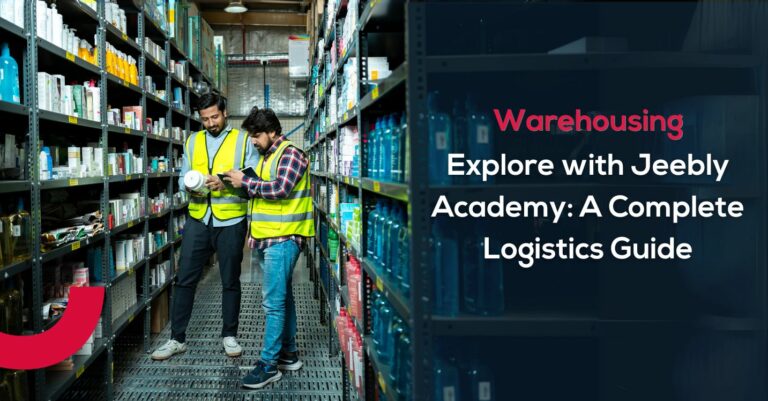
Warehousing is often considered the heart of operations within the logistics industry. These essential facilities are the backstage heroes of the supply chain, meticulously storing, sorting, and shipping products with precision and efficiency. Warehouses come in various sizes but share a common purpose – managing inventory and ensuring the continuous flow of the supply chain. At the heart of every warehouse lies a symphony of activity, with forklifts zipping around, workers diligently picking and packing, and shelves towering with goods ready to be dispatched. This complex orchestration is streamlined using next-generation technology in the form of a Warehouse Management System (WMS), the backbone that maximizes warehouse efficiency and ensures every product finds its way swiftly and accurately through the supply chain.

II. What is Warehousing?

Warehousing involves the storage of goods that are to be sold or distributed later. It’s a critical component of the supply chain, providing a centralized location for inventory management. The primary functions of a warehouse include:

  1. Storage: Keeping products safe and organized until they are needed.
  2. Inventory Management: Monitoring stock levels and ensuring accurate records.
  3. Order Fulfillment: Picking, packing, and shipping orders to customers or retailers.
  4. Receiving and Inspection: Checking incoming goods for accuracy and quality.
  5. Returns Management: Handling returned items and restocking them as needed.

In the bustling environment of a warehouse, efficiency and accuracy are paramount. The activities within a warehouse can be compared to a well-rehearsed orchestra, where each component plays a crucial role in the overall performance. Forklifts move swiftly, transporting goods from one location to another, while workers meticulously pick and pack items, ensuring orders are fulfilled correctly and on time. The towering shelves are a testament to the sheer volume of goods managed within these spaces, and the entire process is streamlined through advanced technology.

III. The Role of a Warehouse Management System (WMS)

A WMS is the technological backbone that enhances warehouse efficiency. It provides real-time visibility into inventory levels, order statuses, and the movement of goods within the warehouse. Key benefits of a WMS include:
  • Improved Inventory Accuracy: Reducing errors and ensuring products are accurately tracked.
  • Enhanced Order Fulfillment: Streamlining the picking, packing, and shipping process.
  • Optimized Storage: Efficiently utilizing warehouse space and organizing products for easy access.
  • Increased Productivity: Automating routine tasks and allowing workers to focus on value-added activities.
  • Better Customer Service: Ensuring orders are fulfilled accurately and delivered on time, leading to higher customer satisfaction.

IV. How Jeebly is Revolutionizing Warehousing

Jeebly has made a significant impact in the warehousing and fulfillment space with its in-house tech-enabled WMS. This cutting-edge system allows us to ensure low order failures and higher customer satisfaction for our clients. Trusted by some of the biggest names in the industry, Jeebly is revolutionizing the logistics sector one carton at a time.

Our WMS integrates seamlessly with other systems, providing a holistic view of the entire supply chain. This integration ensures that every aspect of warehousing, from receiving and storage to picking and shipping, is optimized for efficiency and accuracy. The result is a streamlined operation that not only meets but exceeds customer expectations.

V. Conclusion

Warehousing is a vital component of the supply chain, ensuring that products are stored, managed, and shipped efficiently. With the right technology, such as a WMS, and continuous learning through resources like Jeebly Academy, you can excel in this field and contribute to the seamless flow of the supply chain. At Jeebly, we are committed to revolutionizing the logistics industry, one carton at a time, and we invite you to join us on this journey through our informative and engaging video series.

Explore more with Jeebly Academy and transform your understanding of warehousing and logistics today! View the Full Video here:

Routes to insightful reads

DDP shipping infographic explaining seller responsibilities, customs clearance, duties, final delivery, and benefits for UAE importers
What Is DDP Shipping? What “Delivered Duty Paid” Means for UAE Importers and Exporters

A delivery note is a key document in the UAE logistics process, providing a clear record of what was shipped, who sent it, and who received it. From proof of delivery and shipment tracking to order verification, customs compliance, and dispute resolution, a properly prepared delivery note helps businesses maintain accurate records and protect every shipment. This guide explains what a delivery note is, what it should include, and why it is essential for businesses operating across the UAE.

Read More
Delivery note document showing shipment details, proof of delivery, tracking, verification and UAE logistics compliance
What Is a Delivery Note and Why Does Every UAE Shipment Need One?

A delivery note is a key document in the UAE logistics process, providing a clear record of what was shipped, who sent it, and who received it. From proof of delivery and shipment tracking to order verification, customs compliance, and dispute resolution, a properly prepared delivery note helps businesses maintain accurate records and protect every shipment. This guide explains what a delivery note is, what it should include, and why it is essential for businesses operating across the UAE.

Read More
Illustration showing strategies to reduce cart abandonment through transparent shipping costs, fast delivery, local fulfilment, and clear returns policies for UAE eCommerce businesses.
How to Reduce Cart Abandonment Caused by Delivery Costs and Uncertainty

Delivery costs and uncertainty are among the biggest reasons shoppers abandon their carts before completing a purchase. This guide explores practical strategies to reduce cart abandonment, including transparent shipping fees, accurate delivery estimates, flexible shipping options, local fulfilment, and hassle-free returns, helping UAE eCommerce businesses improve conversions and build customer trust.

Read More
J&T Express vs Jeebly comparison graphic featuring delivery apps, e-commerce products, and UAE logistics services against the Dubai skyline.
J&T Express vs Jeebly: Which Courier Is Better for UAE eCommerce Businesses?

J&T Express and Jeebly both support eCommerce deliveries, but they cater to different business needs. This comparison explores their delivery networks, fulfilment capabilities, shipping speed, technology, pricing flexibility, and merchant services to help UAE businesses choose the courier partner that best supports their growth and customer experience.

Read More
Delivery SLA guide for UAE businesses showing service level agreements, delivery performance metrics, on-time delivery targets and logistics standards.
 Delivery SLA Guide for UAE Businesses: What to Expect and How to Set Standards

A clear delivery Service Level Agreement (SLA) sets the expectations for speed, reliability, and performance between businesses and their logistics partners. This guide explains what a delivery SLA should include, the key metrics to track, and how UAE businesses can set realistic standards to improve customer satisfaction and delivery performance.

Read More

    Powered by