





Jeebly | Logistics Solutions

What is Last-Mile Delivery and Why It Matters in the UAE

What Is Last Mile Delivery? A Guide for Businesses & Shoppers

When people ask, what is last mile delivery, they are really asking about the final step of a package’s journey. It is the moment when a product moves from a local hub to the customer’s doorstep. Even though it sounds simple, this step often decides whether a customer feels happy or frustrated.

In ecommerce, this final stretch is the most visible part of the supply chain and delivery speed impacts customer loyalty in e-commerce more than most brands realize. Studies from Capgemini Research Institute show that most customers will not return to a brand after a poor delivery experience. That means businesses cannot afford to ignore it.

In this guide, we explain the last mile delivery meaning, how it works, why it is expensive, and what it looks like in the UAE.

What is Last-Mile Delivery?

So, what is last mile delivery in simple terms? It is the final step in the shipping process where a package travels from a nearby warehouse or delivery hub to the customer’s address.

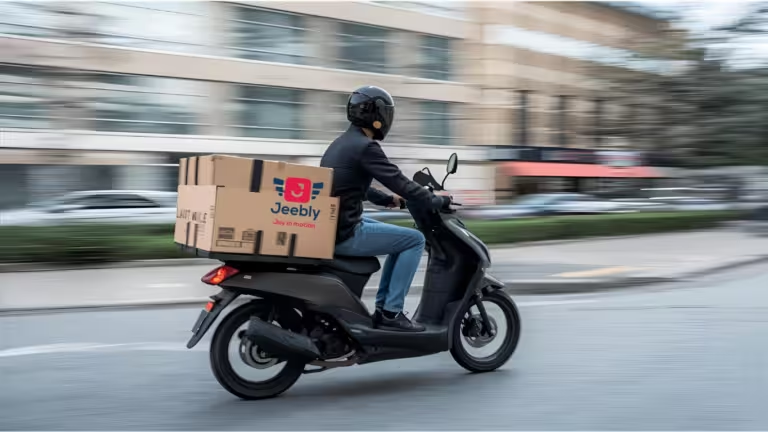
Think of it like a relay race. The warehouse prepares the order. Trucks move it across cities. But the last runner, usually a delivery driver, brings it to your door. That final run is called the last mile.
In last mile delivery in ecommerce, this stage matters the most because it directly affects the customer. If the package arrives late, damaged, or not at all, the customer blames the brand, not the warehouse.

This is why businesses in the UAE now invest heavily in faster and smarter delivery systems. The final delivery experience shapes trust, reviews, and repeat orders.

How Does Last Mile Delivery Work Step by Step?

The process usually follows these steps:

1. Order Confirmation
The customer places an order online. The system confirms payment and prepares the request.

2. Warehouse Fulfillment
Staff pick, pack, and label the product.

3. Transfer to Local Hub
The package moves to a delivery center close to the customer’s area.

4. Route Planning
Software selects the fastest and most efficient route.

5. Out for Delivery
A driver loads multiple packages and begins delivery.

6. Real Time Tracking and ETA Updates
The customer receives notifications and real time ETA delivery updates because real-time ETA updates reduce customer complaints and failed attempts.

7. Final Delivery Attempt
The driver delivers the package and collects proof of delivery.

Many UAE shoppers now expect live tracking. In fact, a McKinsey report found that customers increasingly demand same day or next day shipping. Because of this, businesses must use smart routing and clear communication to stay competitive.

Next, we will look at why this final step is often the most expensive part of the entire delivery process.

Why Is Last Mile Delivery So Expensive?

Many businesses ask, why is last mile delivery expensive if the product has already traveled across cities or even countries.

The reason is simple. The last mile is the least efficient part of shipping. A truck may carry hundreds of packages to one city. However, during final delivery, a driver may stop at each home one by one. That takes more time, fuel, and effort.

Last mile delivery can account for more than half of total shipping costs. This includes driver wages, fuel, vehicle maintenance, and delivery management systems.

Failed deliveries also increase costs. If a customer is not available, the company must attempt delivery again. In busy cities like Dubai and Abu Dhabi, traffic congestion adds even more delays. Therefore, businesses must manage this stage carefully to protect their margins.

What Affects Last Mile Delivery Speed and Reliability?

Speed and reliability depend on several factors. Even small issues can cause delays.

Here are the main factors:

Address Accuracy
Incomplete or unclear addresses slow drivers down.

Customer Availability

If the customer is not home, the delivery fails.

Traffic and Urban Density

UAE cities can experience heavy traffic during peak hours.

Delivery Time Slots
Poorly planned delivery time slots create missed attempts.

Real Time Communication

Real time ETA delivery updates help customers prepare.

For example, if a customer chooses a delivery window between 2 PM and 4 PM but leaves home early, the driver wastes time. However, when businesses follow delivery time slots best practices and send reminder notifications, the success rate improves.
Clear communication builds trust. It also reduces stress for both drivers and customers.

Common Last Mile Delivery Challenges in Real Life

Even with planning, problems still happen. These are common last mile delivery challenges businesses face every day:

1. Incorrect Addresses
A missing building number can delay delivery for hours.

2. Customer Not Reachable
Drivers may call, but the phone is switched off.

3. High Return Rates
In some markets, customers reject cash on delivery orders, strong processes for secure COD delivery in UAE reduce refusals and payment disputes.

4. Peak Season Overload
During holidays or sales, order volumes increase sharply.

5. Limited Visibility
Customers feel anxious when tracking updates are unclear.

In the UAE, where ecommerce continues to grow rapidly, these challenges become even more visible. According to Statista, online shopping in the UAE continues to expand year after year. As order numbers rise, delivery pressure increases.

However, understanding these challenges is the first step toward solving them. In the next section, we will explore practical ways businesses can reduce failed deliveries and improve performance.

How Businesses Can Improve Last Mile Delivery?

Now that we understand the challenges, let us focus on solutions. Businesses often ask how to reduce failed deliveries without increasing costs.

Here are practical steps that work:

1. Offer Flexible Delivery Time Slots
Let customers choose a time that suits them. This reduces missed attempts.

2. Send Real Time ETA Delivery Updates
Real time updates help customers plan their day.

3. Use Address Validation Tools
Confirm location details before dispatch.

4. Confirm Availability Before Delivery
A simple reminder message can prevent failure.

5. Use Smart Route Planning
Software can reduce fuel use and save time.

For example, a fashion brand in Dubai may face frequent failed deliveries. After adding SMS reminders and clearer time slots, the success rate improves within weeks. Small changes often create big results.

When businesses follow delivery time slots best practices, they improve both efficiency and customer trust.

What Shoppers Should Know About Last Mile Delivery?

Delivery is not only the company’s responsibility. Customers also play a role.

Here is what shoppers can do:

* Provide clear and complete address details

* Keep their phone reachable on delivery day

* Choose realistic delivery time slots

* Track real time ETA delivery updates

* Reschedule if plans change

Think of delivery like a meeting. If one side does not show up, it fails. When customers stay available and responsive, the process becomes smoother.

In fast growing ecommerce markets like the UAE, better coordination between brands and shoppers leads to fewer delays and better experiences.

How Jeebly Supports Last Mile Delivery in the UAE?

In the UAE, last mile delivery isn’t just about moving packages, it’s about understanding local roads, traffic patterns, and customer expectations across all seven emirates. Jeebly is built for exactly this.

Jeebly Dash — For Speed-First Ecommerce Brands

Express and scheduled delivery across the UAE
* Multiple cut-off windows to match your order flow
* Real-time tracking with WhatsApp, SMS, and email notifications
* COD collection built in with fast remittance cycles

Jeebly Bizz — For Higher-Volume Business Operations
* End-to-end supply chain support warehousing, pick-pack-deliver, and reverse logistics
* Live inventory and order tracking from a single platform
* Multiple fulfilment centres pan-UAE for faster dispatch
* Fewer failed deliveries, faster response times, better customer experiences

Tech That Works Behind Every Delivery
*OMS and WMS integration for full operational visibility
*Smart route planning that reduces idle driver time
*Riders allocated to dedicated zones across the UAE
*97% delivery success rate across UAE operations

As UAE ecommerce continues to grow, the difference between a good brand and a great one often comes down to the last mile. With the right logistics partner, delivery stops being a problem and starts being a competitive advantage.

Conclusion

Last mile delivery may seem like a small part of shipping, but it has the biggest impact on customer experience. When people ask what is last mile delivery, they are really asking why their package arrives on time or gets delayed.

For businesses, this stage affects costs, reviews, and repeat sales. For shoppers, it shapes trust. In fast growing ecommerce markets like the UAE, companies must invest in smarter routing, better communication, and reliable local partners.

When brands focus on reducing failed deliveries and improving real time updates, they turn delivery into a competitive advantage. And when customers stay informed and available, the process becomes smoother for everyone.

In the end, strong last mile delivery is not just about speed. It is about reliability, clarity, and building long term trust.

Frequently Asked Questions

Last mile delivery is the final step of shipping. It is when a package moves from a local hub to the customer’s home or office.

It costs more because drivers deliver packages one by one. Fuel, wages, traffic, and failed attempts increase the total cost.

Businesses can reduce failed deliveries by offering flexible time slots, sending reminders, and using real time ETA delivery updates. Clear communication makes a big difference.

Tracking shows that the driver is on the way. However, traffic, wrong addresses, or customer unavailability can still cause delays.

In the UAE, delivery companies use local hubs across cities like Dubai and Abu Dhabi. Drivers follow optimized routes and provide live updates. Because ecommerce is growing quickly, speed and reliability matter more than ever.

Routes to insightful reads

3PL vs 4PL logistics comparison showing warehousing, transportation, distribution, supply chain integration, technology, analytics, and strategic planning for UAE businesses
3PL vs 4PL: What Is the Difference and Which Does Your UAE Business Need?

3PL and 4PL logistics models help businesses manage different levels of supply chain operations. This guide explains the key differences between 3PL and 4PL providers, their roles, benefits, costs, and how UAE businesses can choose the right logistics model based on their size, supply chain complexity, and operational needs.

Read More
Types of packaging for courier shipments, showing outer packaging strength, void-fill options, cushioning materials, and sealing and labelling methods
Types of Packaging for Courier Shipments: Which One Best Protects Your Product?

Choosing the right packaging is essential for protecting products during courier transportation. This guide explores different types of packaging for courier shipments, including corrugated boxes, bubble wrap, air pillows, paper fillers, foam inserts, and protective seals, and explains how to choose the best option based on your product, handling needs, and shipping conditions.

Read More
Types of logistics explained through inbound, outbound, reverse and third-party logistics, showing the movement of goods between suppliers, warehouses, customers and return facilities.
Types of Logistics Explained: Inbound, Outbound, Reverse and Third-Party 

Logistics covers much more than moving goods from one place to another. This guide explains the four key types of logistics, inbound, outbound, reverse and third-party logistics (3PL), and how each supports the supply chain. Learn how goods move from suppliers to warehouses, reach customers, return for repair or disposal, and how businesses use 3PL providers to manage logistics operations.

Read More
Dark store in the UAE showing retail inventory, order picking, packaging, and Jeebly last-mile delivery for ultra-fast fulfillment
What Is a Dark Store? How UAE Retailers Are Using Them for Ultra-Fast Delivery

A dark store is a retail facility designed exclusively for online order fulfilment, with products organised for fast picking, packing, and dispatch rather than in-store customer shopping. In the UAE, dark stores are helping retailers and e-commerce businesses shorten delivery times by placing inventory closer to customers and streamlining the fulfilment process. This guide explains how dark stores work, their benefits, key challenges, and how they support ultra-fast delivery in the UAE.

Read More
DDP shipping infographic explaining seller responsibilities, customs clearance, duties, final delivery, and benefits for UAE importers
What Is DDP Shipping? What “Delivered Duty Paid” Means for UAE Importers and Exporters

DDP (Delivered Duty Paid) is an Incoterm that places most shipping, customs, duty, and import tax responsibilities on the seller. For UAE importers and exporters, understanding how DDP works can help businesses estimate landed costs, manage customs requirements, and avoid unexpected charges at delivery. This guide explains what DDP shipping means, who pays the costs, how it compares with DAP and FOB, and what UAE businesses should consider before choosing DDP.

Read More

    Powered by