





Jeebly | Logistics Solutions

reverse logistics for businesses

Understanding Reverse Logistics: Why It Matters to Businesses

In today’s fast moving commerce environment, deliveries don’t always end at the customer’s doorstep. Returns, exchanges, damaged goods, and failed deliveries are now a regular part of doing business. This is where reverse logistics for businesses becomes critical.

Reverse logistics refers to the process of moving goods from the customer back to the seller or manufacturer for returns, repairs, recycling, or disposal. While often overlooked, it plays a major role in customer satisfaction, cost control, and long term business efficiency.

What Is Reverse Logistics?

Simply put, reverse logistics is the backward flow of goods in the supply chain. This includes:

Customer returns and exchanges

Pickup of damaged or incorrect items

Failed or refused deliveries (especially common with COD orders)

Recycling, refurbishing, or restocking inventory

For businesses operating in the UAE, where e-commerce, same day delivery, and cash on delivery are widely used, having a clear reverse logistics strategy is no longer optional.

Why Reverse Logistics Matters to Businesses

1. Customer Trust and Retention

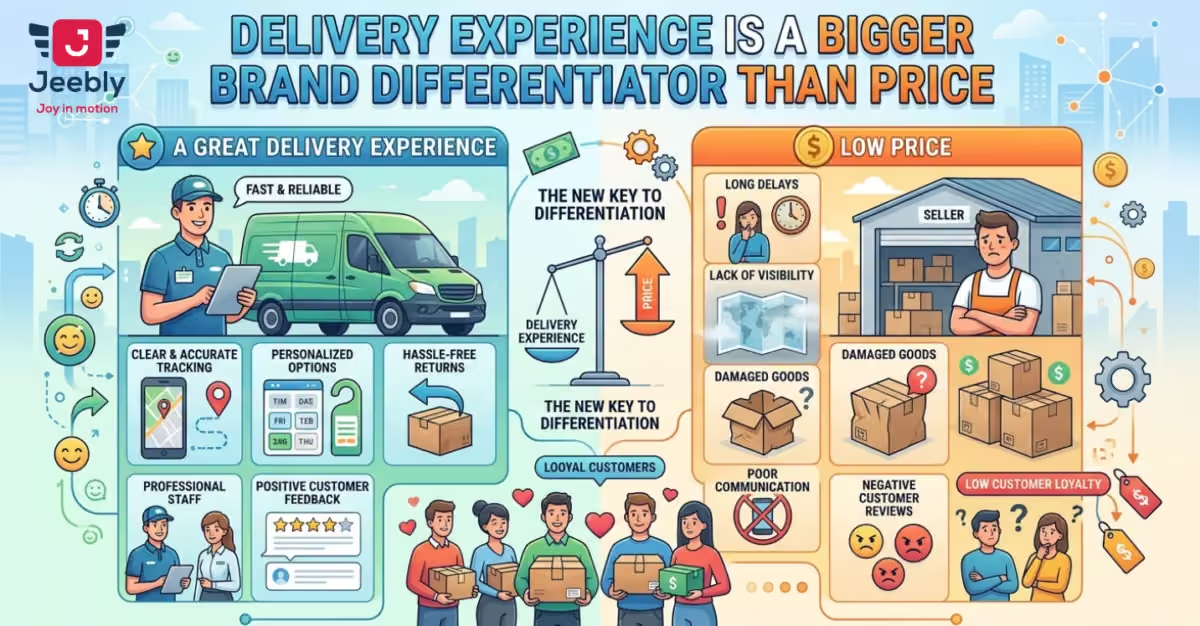
Customers judge a brand not only by how fast it delivers, but by how easy it is to return or replace an item. A smooth return experience builds trust and encourages repeat purchases. Poor reverse logistics, on the other hand, can quickly damage a brand’s reputation.

2. Cost Control and Efficiency

Without a structured reverse logistics process, businesses face higher costs from multiple pickup attempts, lost inventory, and manual handling. Optimized reverse logistics helps businesses recover value from returned goods and reduce operational waste.

3. Inventory Visibility

Returns directly impact stock accuracy. When businesses lack real-time visibility into returned items, it leads to overstocking, shortages, and poor demand planning. Efficient reverse logistics ensures inventory is tracked, updated, and reused where possible.

4. Sustainability and Compliance

In the UAE and across the Middle East, sustainability is becoming a business priority. Reverse logistics enables responsible recycling, reduced waste, and better use of resources, supporting both environmental goals and regulatory expectations.

Common Reverse Logistics Challenges in the UAE

Many businesses struggle with reverse logistics due to:

High volume of COD rejections

Customers unavailable for return pickups

Lack of real time tracking for reverse orders

Manual coordination between support and delivery teams

These challenges increase delivery costs and slow down operations if not addressed with the right logistics partner.

How Smart Logistics Solves Reverse Flow

Modern logistics providers like Jeebly help businesses manage reverse logistics through:

Scheduled and on demand return pickups

Real time tracking and status updates

Optimized routing to reduce failed attempts

Centralized dashboards for inventory and returns visibility

By integrating reverse logistics into the overall delivery strategy, businesses can turn returns from a cost burden into a controlled, efficient process.

Final Thoughts

Reverse logistics is no longer just about handling returns, it’s about protecting margins, strengthening customer relationships, and building resilient operations. For growing businesses in the UAE, investing in reverse logistics for businesses is a smart step toward sustainable growth.

With the right logistics partner and technology, driven processes, reverse logistics can become a competitive advantage rather than an operational challenge.

Routes to insightful reads

Logisty vs Jeebly comparison for UAE eCommerce delivery, last-mile logistics and courier services
Logisty vs Jeebly: UAE eCommerce Delivery Comparison

Logisty and Jeebly serve different logistics needs, but which is the better choice for your business? This comparison explores their services, delivery capabilities, technology, coverage, eCommerce integrations, cash on delivery (COD), and fulfilment solutions to help UAE businesses choose the right logistics partner for growth.

Read More
UAE VAT on imports and exports showing tax compliance, logistics, shipping and customs documentation
VAT on Shipping and Delivery Services in UAE: What Businesses Need to Know

VAT can significantly impact the cost of shipping and delivery services in the UAE, making it essential for businesses to understand how it applies to domestic and international shipments. This guide explains VAT rules, zero-rated and standard-rated services, invoicing requirements, and practical compliance tips to help businesses manage logistics costs and stay compliant with UAE tax regulations.

Read More
COD fraud prevention in the UAE with secure payment verification, order authentication and logistics risk management
COD Fraud in UAE eCommerce: How to Detect, Prevent and Reduce Losses

Cash on Delivery (COD) fraud is a growing challenge for e-commerce businesses across the UAE, leading to fake orders, delivery failures and unnecessary operational costs. Learn how to identify common fraud tactics, implement effective prevention strategies and protect your business while maintaining a seamless customer experience.

Read More
UAE import and export guide featuring trade documentation, cargo ship, air freight, customs clearance and logistics operations
UAE Import and Export Guide: Trade Documentation, Logistics and Compliance

Customs clearance is a critical step in moving goods into and out of the UAE. Whether you’re importing, exporting, or shipping across borders, understanding the customs process, required documentation, and compliance requirements can help you avoid delays, reduce costs, and keep your supply chain running efficiently.

Read More
Customs clearance process in Dubai and the UAE showing document processing, port inspections and import export logistics
Customs Clearance in Dubai and UAE: Process, Documents and Business Guide

Customs clearance is a critical step in moving goods into and out of the UAE. Whether you’re importing, exporting, or shipping across borders, understanding the customs process, required documentation, and compliance requirements can help you avoid delays, reduce costs, and keep your supply chain running efficiently.

Read More

    Powered by