Jeebly | Logistics Solutions

Categories
blogs

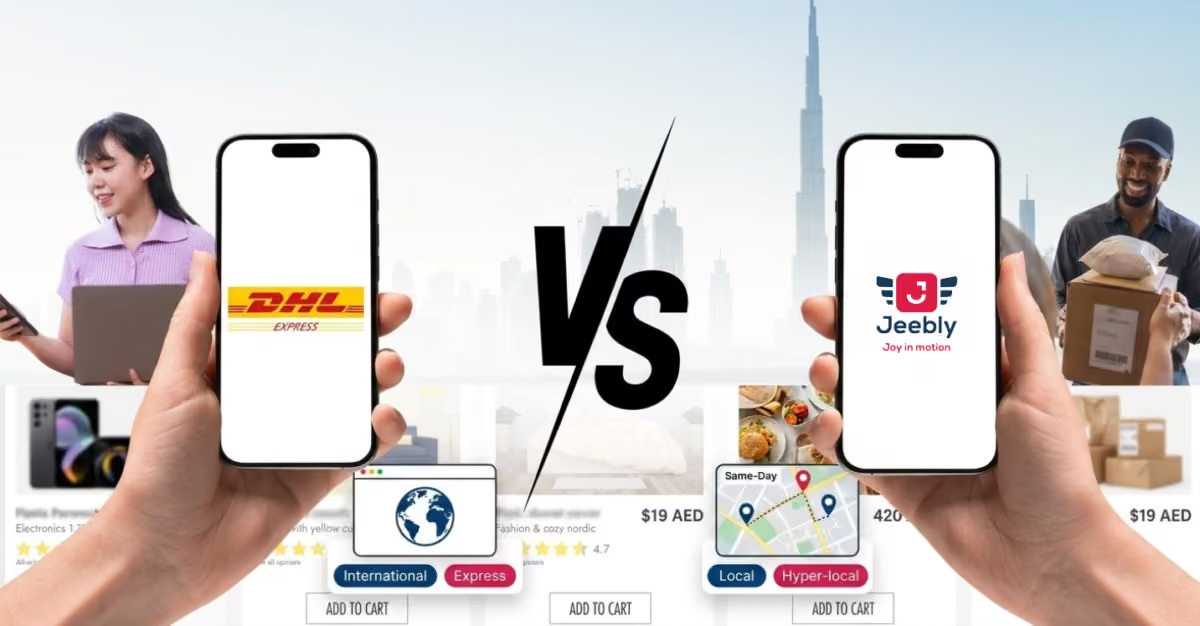
Porter vs Jeebly: Understanding the Difference and Choosing the Right Delivery Partner in Dubai

Porter vs Jeebly: Understanding the Difference and Choosing the Right Delivery Partner in Dubai

Porter vs Jeebly: Understanding the Difference and Choosing the Right Delivery Partner in Dubai

Picking a delivery partner in Dubai sounds straightforward until the bills don’t match the quotes, the tracking goes quiet, or your business outgrows what the platform can handle. The Porter vs Jeebly comparison comes up constantly among online sellers, social commerce brands, and growing SMEs in the UAE, and the answer is not the same for everyone.

This article breaks down both platforms in terms of pricing, technology, coverage, and support so you know exactly what you are choosing and why.

Why Delivery Infrastructure Is a Business Decision?

The UAE’s last-mile delivery market generated USD 3,217.2 million in revenue in 2023 and is projected to reach USD 4,852.2 million by 2030. That trajectory means competition for the customer’s doorstep is intensifying. 

More delivery providers entering the market also means greater quality variation, and the cost of a wrong choice is not just an operational inconvenience. Failed deliveries erode customer trust, surprise charges eat into margins, and opaque platforms leave you managing problems rather than driving growth.

Porter and Jeebly both operate in Dubai’s on-demand delivery space, but their design intent, infrastructure, and ideal use cases differ significantly. 

Understanding those differences is the actual decision.

Porter vs Jeebly: Feature-by-Feature Comparison

Before we get into specifics, Porter and Jeebly are built for very different delivery use cases. The comparison below breaks down how those differences show up across key operational factors:

Feature Porter Jeebly
Delivery Speed Options On-demand (variable) Express (60–120 min), Same-Day, Next-Day, Scheduled
UAE-Wide Coverage Primarily city-based/on-demand coverage Next-Day available across all 7 emirates
Vehicle Types 2-wheeler, car, 1-ton pickup, 3-ton Canter Dedicated fleet: bikes and vans. Also have MPV, cars and trucks.
E-commerce Integrations Limited Shopify, WooCommerce, custom API
Order Dashboard Basic app Centralised OMS with real-time visibility
Delivery Tracking Basic Real-time updates via app and dashboard
Cash on Delivery (COD) Available Available, weekly bank remittance
Minimum Order Volume None None
Business Support App-based Dedicated account managers
Warehousing / Fulfilment None Yes, around 13 MFCs live in Dubai
Reverse Logistics Not structured Structured, digital proof of pickup
B2B Scalability Limited Built for it

Porter handles one-off, on-demand moving jobs well. Jeebly is built for businesses that need reliable, repeatable delivery at scale with the data visibility and tech infrastructure to match.

Pricing Transparency: Where the Two Diverge Most

Porter publishes starting prices for vehicles such as cars, 1-ton pickups, and 3-ton Canter, but the final cost may vary by vehicle, distance, and booking details.

Jeebly’s pricing for Jeebly Dash is fixed: AED 17.31 for packages up to 5 kg, AED 2/kg above that, up to a 20 kg maximum per order. The number on the screen is the number you pay.

COD is handled on a clear cycle. Jeebly collects on your behalf and remits to your bank account weekly. For social sellers on Instagram, TikTok, or WhatsApp who lack formal invoicing systems, that predictability is operationally significant.

Technology and Tracking: Visibility After the Parcel Leaves Your Hands

Porter’s app handles booking. Post-dispatch tracking visibility has been flagged as inconsistent in user feedback from early 2026. This is a genuine gap for any business managing multiple daily orders.

Jeebly’s platform is built differently.

* The centralised dashboard gives businesses real-time status across their entire active order volume. 
* Delivery updates are sent via the app, WhatsApp, and email, and client-specific support structures ensure escalations reach someone who knows your account. 
* For businesses running their store on Shopify or WooCommerce, direct API integration pulls orders straight into the system.

If you are building your fulfilment infrastructure as you grow, it is worth reading how AI is changing logistics operations in the UAE. The gap between tech-enabled and manual logistics operations is widening faster than most businesses realise.

Geographic Coverage: Same-Day and Next-Day Delivery Across the UAE

Coverage operates differently by speed tier:

Porter: Operates primarily within Dubai for on-demand moves. UAE-wide delivery is not a structured offering.

Jeebly:

* Express (60–120 min): Dubai only, bikes only, weight and dimension limits apply
* Same-Day: Dubai only, orders cut off at 11 AM
* Next-Day: All seven emirates (Abu Dhabi, Dubai, Sharjah, Ajman, Umm Al Quwain, Ras Al Khaimah, Fujairah) with a 2 PM cut-off

During peak seasons, the coverage has to hold under volume pressure. Jeebly’s fleet forecasting scales delivery capacity ahead of demand spikes rather than reacting to them. 
For more on managing peak-season logistics without operational strain, read how Jeebly helps SMEs scale during peak shopping seasons.

How to Choose: Match Your Delivery Reality to the Right Option

The right choice depends less on features in isolation and more on how your delivery operations actually run day to day. Here is how to map your use case to the right platform:

* One-off large item to move across Dubai: Porter’s flexible vehicle booking handles this type of ad hoc job without commitment.
* Social seller or micro-brand, getting started: Jeebly Dash has no minimum orders, COD collection, and real-time tracking from your first delivery.
* E-commerce store on Shopify or WooCommerce: Jeebly’s API integrations and centralised dashboard eliminate manual work as volume grows. See how Jeebly Dash supports domestic delivery.
* UAE-wide customer base: Jeebly’s Next-Day network covers all seven emirates. Porter’s reach does not consistently extend there.
* Predictable logistics costs are non-negotiable: Jeebly’s fixed-rate model removes the pricing variability that Porter users have repeatedly flagged.
* Complex logistics (warehousing, returns, cross-border): Jeebly Bizz handles this end-to-end. Porter has no equivalent.
* Scaling for peak seasons: Jeebly’s fleet forecasting scales capacity ahead of demand, not after it. Read more on building a green logistics setup in the UAE.

What Jeebly Brings That Porter Simply Does Not

Jeebly has spread joy from door to door by operating at the speed of smart and pioneered hyperlocal logistics in the country before building out the full product suite.

The product line scales with business complexity. 

Jeebly Dash covers express, same-day, next-day, and scheduled domestic deliveries. 
Jeebly Bizz handles cross-border operations, customs clearance, and full e-commerce infrastructure. 
Jeebly Haul takes freight and bulk shipments above 20 kg. 
Jeebly Plus delivers white-glove, premium handling for B2B clients with high-value or luxury shipments.

As your order volume grows from 20 deliveries a day to 200, then to 2,000, Jeebly’s product architecture scales with you.

For a closer look at how reliable logistics directly shapes customer experience, the guide to choosing a reliable logistics company in the UAE covers the key evaluation criteria in detail.

Conclusion

Porter is a functional choice for ad hoc, one-off moves within Dubai. Jeebly is built for e-commerce businesses and growing brands that need consistent delivery speed, transparent pricing, UAE-wide coverage, and a tech platform that scales with them. 
At Jeebly, we help businesses grow and have the infrastructure in place for every stage of your business. Ready to build a delivery setup that works as hard as you do? Talk to the Jeebly team, and we’ll help you find the right fit.

Frequently Asked Questions

Pricing depends on parcel size, speed, and volume. Jeebly Dash charges a fixed AED 17.31 for packages up to 5 kg with no minimum order requirement. For higher volumes, dedicated account support through Jeebly Bizz often delivers better overall cost efficiency.

Jeebly is structured specifically around this audience. There is no minimum order, COD collection with weekly remittance, real-time tracking, and dedicated account support. Its social seller offering covers Instagram, TikTok, and WhatsApp-based brands from the very first order.

Porter is designed for on-demand, one-off deliveries and performs well for that use case. However, pricing and delivery experience can vary by vehicle type, distance, and booking conditions, making it less predictable for businesses managing consistent or high-volume deliveries.

Yes. Jeebly handles COD collection and remits to your bank account on a weekly cycle. It is a structured, predictable process designed for high-COD e-commerce in the UAE.

Porter handles on-demand, one-off transport using motorcycles, cars, and mini-trucks suited to ad hoc moves and single large items. It does not offer structured e-commerce fulfilment, warehousing, UAE-wide next-day delivery, or reverse logistics.

Routes to insightful reads

Porter vs Jeebly: Understanding the Difference and Choosing the Right Delivery Partner in Dubai

Picking a delivery partner in Dubai sounds straightforward until the bills don’t match the quotes, the tracking goes quiet, or your business outgrows what the platform can handle. This article breaks down both platforms in terms of pricing, technology, coverage, and support so you know exactly what you are choosing and why.

Read More
EMX vs Jeebly: Which Courier Delivers More Value for Your Business?

Your courier partner is not a vendor you swap easily. It shapes how customers experience your brand after checkout. This article maps providers across service capabilities, technology, pricing structures, and e-commerce fit, so you can match the right partner to how your business actually operates.

Read More
iMile vs Jeebly: Comparing Last-Mile Delivery for eCommerce Businesses

Your logistics partner is the last thing your customer experiences before forming an opinion about your brand. The iMile vs Jeebly question comes up often for UAE e-commerce brands, and rightly so. This article compares both carriers across coverage, delivery speed, pricing, SLAs, technology, and reverse logistics so you can choose based on what your business actually needs.

Read More
Quiqup vs Jeebly: Which Delivery Partner Is Right for Your UAE Business?

Your delivery partner is your brand’s last impression. When a parcel arrives late, tracking goes silent, or a COD reconciliation takes a week, the customer blames your brand. So when UAE businesses compare Quiqup vs Jeebly, the real question is: which provider actually protects your customer experience while your order volumes grow?

Read More
Green Logistics: Why Sustainability Is Becoming the UAE's Next Big Supply Chain Priority
Green Logistics in the UAE: What It Is and Why It Matters

Every parcel that moves from a warehouse to a doorstep carries more than a product. It carries a carbon cost. This article covers what it entails, why it matters specifically for UAE e-commerce businesses, the real return on investment it delivers, and how to approach implementation without overhauling everything at once.

Read More
Categories
blogs

Green Logistics in the UAE: What It Is and Why It Matters

Green Logistics: Why Sustainability Is Becoming the UAE's Next Big Supply Chain Priority

Green Logistics: Why Sustainability Is Becoming the UAE's Next Big Supply Chain Priority

Every parcel that moves from a warehouse to a doorstep carries more than a product. It carries a carbon cost. Freight transportation alone accounts for approximately 8% of global greenhouse gas emissions, rising to 11% when warehousing and ports are included. 

For UAE businesses, that figure is a commercial and regulatory reality. Green logistics is the practice of reducing the environmental impact of moving goods through a supply chain, from sourcing and warehousing to last-mile delivery and returns. 

This article covers what it entails, why it matters specifically for UAE e-commerce businesses, the real return on investment it delivers, and how to approach implementation without overhauling everything at once.

What Is Green Logistics and Why Does It Matter for UAE Businesses?

Green logistics is a systems-wide commitment that covers transportation choices, packaging design, warehouse energy use, supplier selection, and return handling to make each link in the supply chain cleaner and more accountable.

In the UAE, the regulatory signal is clear. 

* The country’s Net Zero by 2050 Strategic Initiative is already shaping procurement expectations, free zone standards, and investor-grade due diligence for businesses operating in the region. 
* Companies building green logistics capabilities now are not getting ahead of a trend. They are preparing for a tightening compliance baseline.

Want to understand how AI-driven routing and smarter delivery networks are already reducing emissions per delivery? Read: How AI Is Changing Logistics in the UAE.

The Five Pillars of Sustainable Supply Chain Management

Sustainable logistics operates across five interconnected areas. Progress in one amplifies results in the others, which is why businesses that approach it as a checklist rarely see the compounding returns that a systems-level commitment delivers.


1) Route and fleet optimisation
This is where technology pays off most visibly. AI-powered routing tools analyse traffic density, delivery windows, and order clustering to reduce fuel consumption per delivery. Fewer kilometres driven mean lower fuel costs and lower emissions.

2) Sustainable packaging 
It reduces material waste, cuts shipping weight, and signals environmental accountability at the moment customers open their order. Right-sized packaging matched to product dimensions eliminates void fill, reduces per-shipment weight, and cuts costs without requiring major infrastructure investment.
Jeebly already walks this talk in their LinkedIn post. All deliveries are wrapped in D2W biodegradable plastic, which is 100% recyclable, naturally degradable, and leaves no toxic residue.

3) Green warehousing 
This includes energy-efficient lighting, solar installations, smart climate controls, and warehouse management systems that reduce energy draw and operational errors. Fewer errors mean fewer returns. Fewer returns mean fewer re-delivery runs.

4) Reverse logistics and circular economy integration 
This turn returns from a cost centre into a value-recovery operation. Businesses that design their return processes around refurbishment, resale, and recycling reduce both waste output and the emissions associated with producing replacement units. 
Curious about how reverse logistics fits into a broader fulfilment strategy? See Jeebly Bizz end-to-end business logistics built for visibility and control.

5) Supplier and partner collaboration 
This is where the highest-leverage impact lives, and the most common blind spot sits. Scope 3 emissions, those generated across your supplier and logistics partner network, can account for up to 75% of a company’s total carbon footprint. 

Choosing partners that provide operational data, routing transparency, and delivery efficiency is not a sustainability add-on. It is the decision that makes your green credentials hold up to scrutiny. 

The Business Case: Real ROI of Green Logistics Investments

The financial argument for green logistics is more accessible than most businesses expect, particularly for small and mid-sized e-commerce operators in Dubai. Cost structure varies by initiative, and so does the speed of return.

Six Operational Decisions That Reduce Delivery Time in UAE

The financial argument for green logistics is more accessible than most businesses expect, particularly for small and mid-sized e-commerce operators in Dubai. Cost structure varies by initiative, and so does the speed of return.

The ranges below are indicative benchmarks. Actual savings depend on fleet size, delivery density, energy tariffs, shipment mix, and partner contracts.

Initiative Cost Level Ongoing Saving Approximate Payback
Route optimization software Low to medium 10–20% fuel cost reduction 6–18 months
Right-sized sustainable packaging Low 5–15% shipping cost reduction 3–6 months
Warehouse LED and smart energy controls Medium 20–40% energy cost reduction 12–24 months
Partial EV fleet transition High Long-term fuel and maintenance savings 3–5 years

Packaging redesign and route optimisation deliver the fastest returns at the lowest capital outlay. The natural entry point for businesses that cannot commit to large infrastructure changes up front. 

Start there, measure results, and reinvest savings into the next phase.

A Phased Green Logistics Roadmap for SMEs in Dubai and the UAE

Most green logistics guidance is written for multinationals with dedicated sustainability teams and capital reserves to match. For small- and mid-sized UAE e-commerce businesses, the path forward is more incremental and must account for Dubai’s specific infrastructure, regulatory direction, and operational realities.

Phase 1: Measure and quick-win (Months 1–3)

Before optimising anything, establish a baseline. 

*Audit your current packaging for over-sizing, identify your most-used delivery routes, and start tracking fuel consumption and first-attempt delivery failure rates. Failed deliveries are a significant source of avoidable emissions and costs. 

*Switch to right-sized, recycled-material packaging in this phase. It pays back fast and is visible to customers at the moment they interact with your brand.

Phase 2: Operational integration (Months 3–9)

Integrate route optimisation into your last-mile operations. 

* Partner with a logistics provider that gives you real-time delivery data. This is non-negotiable for tracking progress and credibly reporting on it. 
* Review your supplier sustainability credentials and build minimum expectations into your procurement decisions. Your Scope 3 footprint starts here.

Phase 3: Structural investment (Months 9–24)

Explore EV or hybrid vehicles for your highest-frequency delivery corridors. 

*Transition to green-certified warehouse facilities where operationally viable. Build a reverse logistics process designed to recover product value rather than generate disposal costs. 

* The UAE’s Net Zero by 2050 strategy and Dubai’s Smart City infrastructure investments create genuine tailwinds for these decisions. Businesses that act in this phase are ahead of compliance requirements rather than scrambling to meet them.

One of the most avoidable causes of failed deliveries in the UAE is incorrect address formatting. Get the UAE address format right, every time.

Best Practices for Scaling Green Logistics Without Losing Momentum

Getting started with green logistics is the hard part. Sustaining it as your operation scales requires building habits and systems that hold up under the pressure of growth.

* Measure before you optimise. An emissions baseline from month one becomes the yardstick for every improvement you communicate to customers and investors. Without it, your sustainability story has no foundation.

* Consolidate shipments. Fewer, fuller vehicles consistently outperform more, emptier ones in terms of cost and emissions. Build scheduling around consolidation, not just delivery speed.

* Choose partners who make your Scope 3 story credible. Your logistics provider’s routing efficiency, fleet composition, and data transparency are your Scope 3 metrics. Ask for them before you commit.

* Give customers a green delivery choice. Scheduled delivery windows have a meaningfully lower carbon footprint than express options. Offering the choice serves the customer segment that cares and builds trust with the one that is growing fastest.

* Build returns around value recovery. A reverse logistics process designed for refurbishment and resale reduces both customer friction and waste output. Treat it as a supply chain function, not an afterthought.

* Share your progress. Customers respond to transparency and measurable improvement, not perfection. Sharing milestones builds the kind of trust that retains customers between purchases.

How Jeebly Supports Sustainable Logistics for UAE Businesses

Jeebly’s mission, empowering businesses with fast, smart, and sustainable logistics solutions, shapes how its operations are built, not just how they are described.
The tech platform underpinning every Jeebly service is designed to maximise delivery efficiency: smarter routing, better load density, real-time visibility, and operational data that business owners can act on.

Jeebly Dash handles same-day and express delivery with route optimisation built into every run, fewer wasted kilometres per order, consistently. 

* Jeebly Haul moves bulk freight with consolidated loads, significantly reducing per-unit emissions compared to underloaded single-cargo trips. 

* For businesses managing ongoing fulfilment, Jeebly Bizz provides the operational visibility needed to track, report, and improve delivery efficiency over time.

Jeebly Fulfillment adds accurate inventory management and pick-pack operations that reduce order errors. Fewer errors mean fewer returns, fewer re-delivery runs, and less waste across the supply chain.

Conclusion

Green logistics is how responsible UAE e-commerce businesses grow without leaving a disproportionate mark on the environment in which they operate.  Start with your baseline. Partner with a logistics provider whose operations actively reduce emissions per delivery. 

Jeebly’s tech-driven platform handles deliveries with routing intelligence, operational transparency, and a range of services to help your business move smarter from the first shipment.

Ready to align your logistics operations with your sustainability goals? Get in touch with the Jeebly team and let’s build a supply chain that works for your business and the market it serves.

Frequently Asked Questions

It does both, but the mechanism is direct: your logistics partner’s routing efficiency, fleet composition, and delivery density determine your Scope 3 emissions. A provider with poor first-attempt delivery rates generates more re-delivery runs, which are entirely avoidable emissions you absorb on your carbon ledger.

Not across the board. Packaging right-sizing and route optimisation typically cut costs within months of adoption. The initiatives with the highest upfront cost also have the longest payback horizon, which is why a phased approach matched to your operational scale matters more than trying to overhaul everything at once.

No mandatory framework specific to logistics operators exists yet, but the UAE’s Net Zero by 2050 Strategic Initiative is already cascading into free zone procurement standards, investor due diligence requirements, and expected reporting norms.

Reducing failed first-attempt deliveries. A failed delivery means the same order travels two or more times, doubling or tripling its emissions and per-unit cost. Better customer communication, flexible delivery windows, and a logistics partner could address this directly before any changes to the fleet or packaging.

You report through your Scope 3 disclosures, which cover the logistics and fulfilment activities in your supply chain, even when third parties execute them. This requires requesting emissions data from your logistics partners, making data transparency one of the most important criteria when choosing a provider.

Routes to insightful reads

Porter vs Jeebly: Understanding the Difference and Choosing the Right Delivery Partner in Dubai

Picking a delivery partner in Dubai sounds straightforward until the bills don’t match the quotes, the tracking goes quiet, or your business outgrows what the platform can handle. This article breaks down both platforms in terms of pricing, technology, coverage, and support so you know exactly what you are choosing and why.

Read More
EMX vs Jeebly: Which Courier Delivers More Value for Your Business?

Your courier partner is not a vendor you swap easily. It shapes how customers experience your brand after checkout. This article maps providers across service capabilities, technology, pricing structures, and e-commerce fit, so you can match the right partner to how your business actually operates.

Read More
iMile vs Jeebly: Comparing Last-Mile Delivery for eCommerce Businesses

Your logistics partner is the last thing your customer experiences before forming an opinion about your brand. The iMile vs Jeebly question comes up often for UAE e-commerce brands, and rightly so. This article compares both carriers across coverage, delivery speed, pricing, SLAs, technology, and reverse logistics so you can choose based on what your business actually needs.

Read More
Quiqup vs Jeebly: Which Delivery Partner Is Right for Your UAE Business?

Your delivery partner is your brand’s last impression. When a parcel arrives late, tracking goes silent, or a COD reconciliation takes a week, the customer blames your brand. So when UAE businesses compare Quiqup vs Jeebly, the real question is: which provider actually protects your customer experience while your order volumes grow?

Read More
Green Logistics: Why Sustainability Is Becoming the UAE's Next Big Supply Chain Priority
Green Logistics in the UAE: What It Is and Why It Matters

Every parcel that moves from a warehouse to a doorstep carries more than a product. It carries a carbon cost. This article covers what it entails, why it matters specifically for UAE e-commerce businesses, the real return on investment it delivers, and how to approach implementation without overhauling everything at once.

Read More
Categories
blogs

How to Manage Returns for Your UAE Online Store

How to Manage Returns for Your Online Store: A Practical Guide for Small Sellers​

How to Manage Returns for Your Online Store: A Practical Guide for Small Sellers

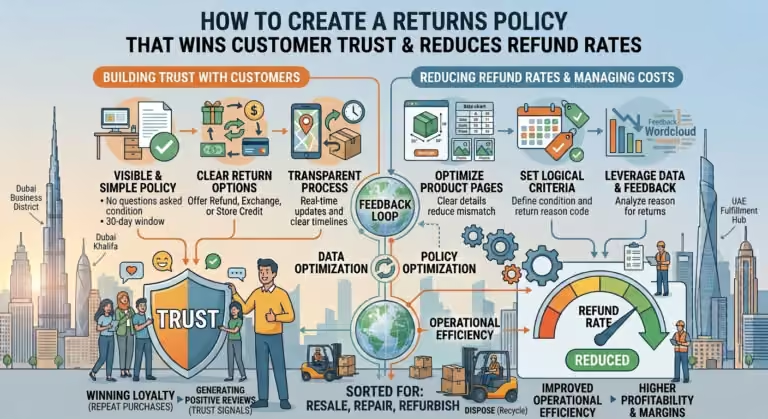
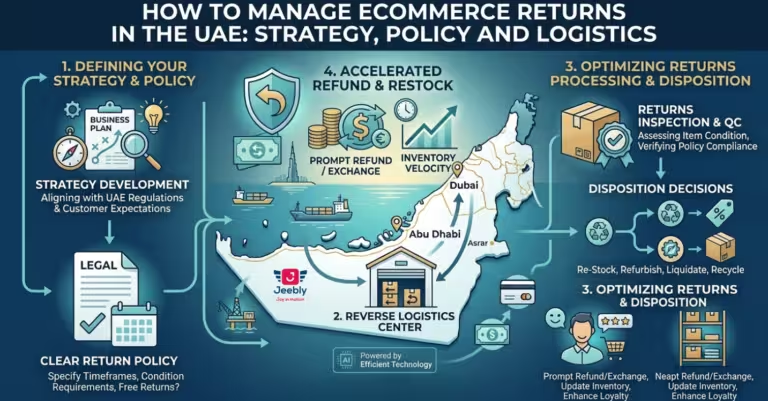
Returns are a predictable part of running an online store in the UAE, and how you handle them determines whether customers come back.
Globally, the average e-commerce return rate hit 16.9% in 2024. Put simply, for every 100 orders you ship, around 17 will make a round trip. 

Without a structure in place, each one chips away at your margin, your time, and your customer relationship. With one, they become manageable and often recoverable.

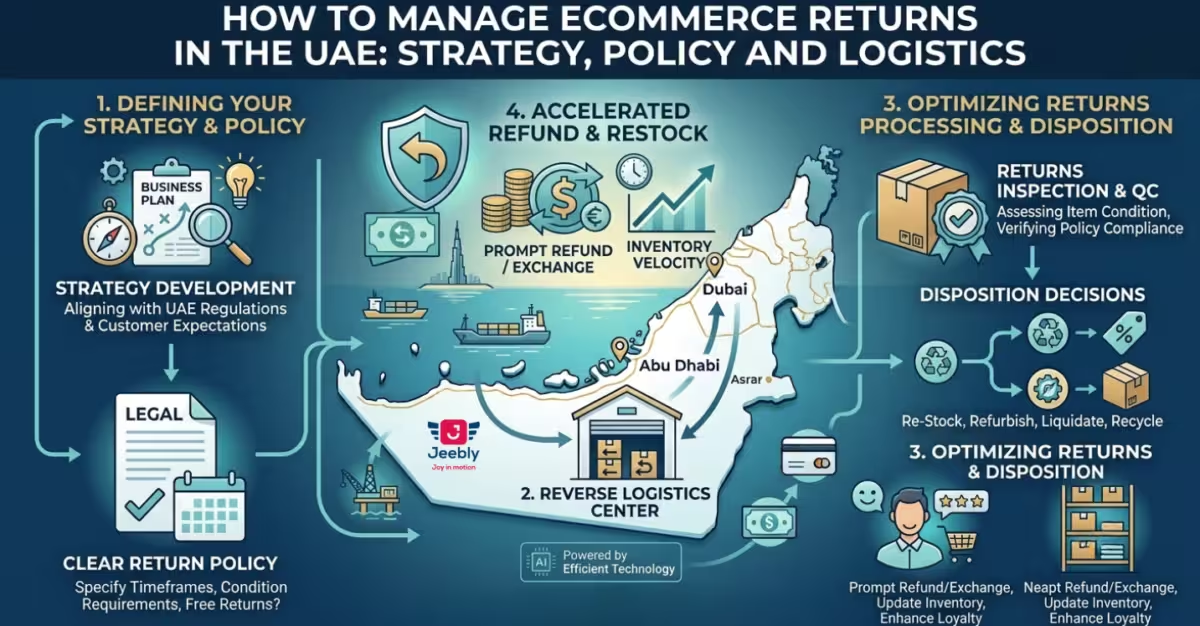
This guide covers what UAE small sellers actually need: the legal requirements under Federal Decree-Law No. 15/2020. Know how to write a returns policy that converts, practical cost control for smaller operations, and when to bring in a logistics partner.

UAE Ecommerce Returns Regulations: What You Are Legally Required to Do

Most small sellers treat the legal side of returns as fine print. It isn’t.

UAE Federal Decree-Law No. 15 of 2020 on Consumer Protection is the governing legislation for all online retail transactions in the country. It establishes the rights of consumers who purchase goods digitally, including the right to return items within seven days of receipt. Provided the product is in its original condition and accompanied by proof of purchase. 

Importantly, the law requires that your returns policy be visible and disclosed to the buyer before they complete the transaction. It cannot live only in a footer link or a separate FAQ page.

Key Legal Requirements for UAE Online Sellers

Before you draft your policy or set up your process, these are the non-negotiables:

* Seven-day return window: This is the legal minimum for standard e-commerce purchases. Your policy cannot unilaterally set a shorter period.
* Pre-purchase disclosure: The policy must be accessible at the point of sale, not buried post-checkout.
* Documented records: Every return must be logged with the order reference, the product condition at the time of return, and a record of customer communication. This is your protection in any dispute.
* Legitimate exclusions: Perishable goods, sealed hygiene items opened after delivery, and customised products may be excluded from the standard right of return. State these clearly in your policy.
* Refund timelines: UAE law specifies the return window; best practice requires you to communicate clearly how long refunds take to process.

Clean, timestamped digital records of every return interaction are your simplest safeguard for compliance.

Cross-Border Returns Above AED 1,000: Additional Requirements

For international returns valued above AED 1,000, UAE Customs requires full documentation. For orders under AED 1,000, simplified customs procedures apply, but documentation is still required. If you ship cross-border regularly, a carrier experienced with UAE customs can remove most of this friction. They will know the correct HS codes, prohibited-item checks, and clearance requirements specific to your product category.

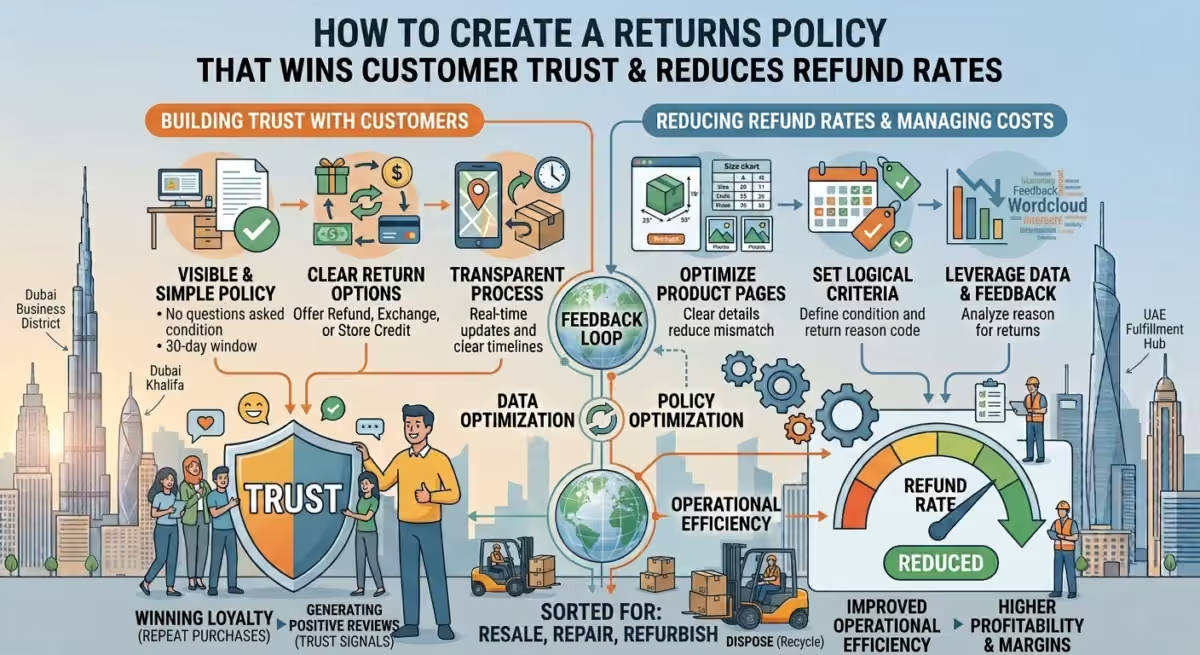
How to Write a UAE Return Policy for Ecommerce That Builds Trust

Your returns policy is the first thing a hesitant buyer reads before deciding whether to complete a purchase.

The language distinction matters. Compare: “Returns will not be accepted after seven days, and items must be returned in original packaging with all tags intact” versus “Changed your mind? Here is exactly how we make it right.” 

Both say the same thing, but one reads like a warning; the other reads like a promise.

What a Strong UAE Returns Policy Covers

A policy that works for your customers and protects your business needs to answer six questions, stated plainly:

* What can be returned and what is excluded
* The return window (minimum seven days under UAE law; longer if you choose)
* The condition required for a return to be accepted
* Exactly how a customer initiates a return, including specific steps
* How and when the refund or exchange is processed
* Who pays return shipping, seller or customer, and under what circumstances

Write this in plain language. Your customer base in the UAE is multilingual; simplicity always trumps formality.

Should You Offer More Than Seven Days?

Longer return windows often reduce actual return rates. When customers feel less pressure to make a hasty decision, they are more likely to keep the item. A 14 or 30-day window can also signal confidence in your product quality, which matters in a market where buyers cannot physically inspect goods before purchase.

For fashion and home goods sellers in particular, the conversion benefit of a generous window typically offsets the marginal increase in returns.

Ecommerce Returns Cost Management: Protecting Your Margins as a Small UAE Seller

The range of processing a return costs can be wide because most sellers only track the courier fee, the visible line item. The real cost is layered.
Understanding where your return cost actually sits gives you something to work with. The full picture includes:

* Return pickup or shipping fee: the most visible cost, and often the smallest
* Inspection and condition assessment: time cost, almost always untracked
* Restocking: relabelling, repackaging, and inventory system updates
* Customer service handling: every email or call about a return absorbs staff time
* Payment reversal fees: card processors charge for refunds; COD returns require cash reconciliation
* Write-off cost: items that cannot be resold at full value

Mapping these costs against your actual return volume gives you an accurate picture and shows you which stage is most worth improving.

Cost Controls That Work at Small-Seller Scale

You do not need enterprise infrastructure to manage return costs efficiently. These approaches are practical for smaller UAE operations:

* Condition thresholds: Define internally whether a returned item is returned to sellable stock, discounted, or written off. Inconsistent, ad hoc decisions on this create hidden costs and inventory inaccuracies.
* Packaging investment: Returns caused by transit damage are often preventable. For high-value or fragile categories, better protective packaging pays back faster. For practical reference, these parcel-packing tips for UAE couriers cover exactly how to protect different product types in transit.
* Carrier negotiation: Once your return volumes become consistent, most UAE logistics providers will negotiate rates. Do not pay walk-up pricing on predictable volume.
* Batch processing: Handling returns on scheduled days rather than on an ad hoc basis reduces the operational overhead of frequent, small-volume courier collections.

Managing your forward deliveries efficiently reduces the operational strain on reverse flows. See how Jeebly Dash handles same-day and scheduled delivery across the UAE.

Common Return Reason Patterns and What They Point To

Across most e-commerce operations, return reasons cluster into four groups, each with a distinct fix:

“Not as described” – A product content problem. The fix: better photography, more precise specifications, and dimension or weight data that matches reality.
“Wrong size or fit” – For fashion sellers, a sizing guide issue. For electronics and accessories, a compatibility gap. Both are solvable with better pre-purchase information.
“Changed my mind” – Often signals a product that underperforms in person relative to its online presentation, or a marketing message that’s attracting the wrong buyer intent.
“Damaged on arrival” – A packaging or carrier handling issue. Track whether these clusters are associated with specific SKUs, carriers, or delivery routes before drawing conclusions.

Each pattern points to a specific fix. Acting on it reduces future return rates while improving the quality of your listings for all buyers.

How to Simplify Your Online Store Returns Process: A Workflow That Scales

Manual returns handling works until order volume makes it untenable. One unresolved return enquiry absorbs more time than twenty successful deliveries. The goal is a process that a customer can navigate without calling you, and that your team can run without having to rebuild from scratch each time.

Here’s a four-stage returns workflow for small sellers:

Stage 1. Return initiation 
The customer submits a request via a portal or form, specifying the item, reason, and preferred resolution (refund or exchange). A Return Merchandise Authorisation (RMA) number is issued automatically and sent to the customer immediately. This single step eliminates the back-and-forth that bogs down manual processes.
Stage 2. Collection or drop-off
Clear instructions for returning the item, including a specific pickup window or drop-off location. Upfront documentation requirements prevent items from arriving without reference numbers.
Stage 3. Inspection and resolution 
Standardised condition criteria let your team assess each item consistently and process refunds or exchanges without escalation or guesswork.
Stage 4. Confirmation
A notification sent at resolution tells the customer what was processed and when to expect it. This one message eliminates the majority of “where is my refund?” enquiries.

Technology Considerations for UAE Online Sellers

Most major e-commerce platforms, such as Shopify, WooCommerce, and Magento, support returns management through native or third-party integrations. When evaluating options for UAE operations, prioritise:

* Arabic language support in customer-facing communications
* Real-time tracking integration with UAE-active carriers
* Customs documentation generation for cross-border returns
* COD refund handling essential in the UAE, where cash on delivery remains common

A self-service returns portal reduces inbound service volume, speeds up processing, and creates cleaner data. All three improve margins and satisfaction simultaneously.

If you’re evaluating your entire logistics tech stack, Jeebly’s technology platform covers OMS, WMS, and self-service portal capabilities built for UAE e-commerce operations.

When to Partner with a Reverse Logistics Provider in the UAE

At a certain volume, managing returns in-house stops being a cost-saver and becomes a constraint on your growth. A specialist reverse logistics partner brings dedicated infrastructure that transforms what is currently an operational drag into a structured, visible process.

What to Evaluate in a UAE Reverse Logistics Partner

This is a different evaluation from that of choosing a forward-delivery courier. The criteria that matter most for returns:

* Doorstep quality assessment: Can the provider inspect item condition at pickup, rather than only at the warehouse? This compresses your returns cycle significantly.
* Real-time tracking: Full visibility from pickup through inspection to restocking decision. API integration with your OMS is the benchmark to hold partners to.
* Instant refund capability: Some UAE providers trigger the customer refund at confirmed pickup, before the item reaches the warehouse. This significantly improves satisfaction scores.
* COD returns handling: UAE-specific: cash-on-delivery orders require a reconciliation process on the return leg. Confirm this is supported before committing.
* Scalability: Your return volumes will vary seasonally and as your business grows. Your partner’s pricing model should absorb this without penalising you.

If you are evaluating whether to outsource your logistics operations more broadly, not just returns, this guide to third-party logistics for UAE businesses explains what a 3PL covers, what to look for, and what to check before signing anything.

Final Thoughts

Returns will always be part of e-commerce. The question is whether they run through a structured process that protects your margins and preserves customer trust, or through an ad hoc process that costs more than it should and causes you to lose customers you would otherwise have kept.

If you are ready to build that infrastructure or simply want to understand what your current returns process is actually costing you, the Jeebly team is ready to help. We build solutions that meet your business’s actual needs.

Frequently Asked Questions

Yes, unless your policy states otherwise, or unless the return reason is seller error. State clearly in your policy who bears return shipping costs and under what circumstances. Ambiguity here can be a common source of disputes.

Yes. All cross-border returns require customs documentation regardless of value. For shipments above AED 1,000, full customs clearance applies, including value declarations and, in some cases, product authenticity certificates.

The most effective levers are product content quality and improved packaging to reduce transit damage. Your RMA system’s return reason data will tell you which lever to pull first.

When returns processing absorbs more than 10% of your team’s operational time, when cycle times lengthen despite volume staying flat, or when you are consistently handling 50–100+ returns a month and still managing it manually. At that point, a specialist partner typically costs less than the inefficiency it would create.

RMA stands for Return Merchandise Authorisation. It is a reference number issued when a return is approved, used to track the item from pickup through inspection to resolution. Any seller processing returns at a meaningful volume needs an RMA system. Even a basic one creates the documentation, visibility, and processing speed that manual email-based management cannot.

Routes to insightful reads

Porter vs Jeebly: Understanding the Difference and Choosing the Right Delivery Partner in Dubai

Picking a delivery partner in Dubai sounds straightforward until the bills don’t match the quotes, the tracking goes quiet, or your business outgrows what the platform can handle. This article breaks down both platforms in terms of pricing, technology, coverage, and support so you know exactly what you are choosing and why.

Read More
EMX vs Jeebly: Which Courier Delivers More Value for Your Business?

Your courier partner is not a vendor you swap easily. It shapes how customers experience your brand after checkout. This article maps providers across service capabilities, technology, pricing structures, and e-commerce fit, so you can match the right partner to how your business actually operates.

Read More
iMile vs Jeebly: Comparing Last-Mile Delivery for eCommerce Businesses

Your logistics partner is the last thing your customer experiences before forming an opinion about your brand. The iMile vs Jeebly question comes up often for UAE e-commerce brands, and rightly so. This article compares both carriers across coverage, delivery speed, pricing, SLAs, technology, and reverse logistics so you can choose based on what your business actually needs.

Read More
Quiqup vs Jeebly: Which Delivery Partner Is Right for Your UAE Business?

Your delivery partner is your brand’s last impression. When a parcel arrives late, tracking goes silent, or a COD reconciliation takes a week, the customer blames your brand. So when UAE businesses compare Quiqup vs Jeebly, the real question is: which provider actually protects your customer experience while your order volumes grow?

Read More
Green Logistics: Why Sustainability Is Becoming the UAE's Next Big Supply Chain Priority
Green Logistics in the UAE: What It Is and Why It Matters

Every parcel that moves from a warehouse to a doorstep carries more than a product. It carries a carbon cost. This article covers what it entails, why it matters specifically for UAE e-commerce businesses, the real return on investment it delivers, and how to approach implementation without overhauling everything at once.

Read More

    Powered by