





Jeebly | Logistics Solutions

Categories
blogs

How to Reduce Cart Abandonment Caused by Delivery Costs and Uncertainty

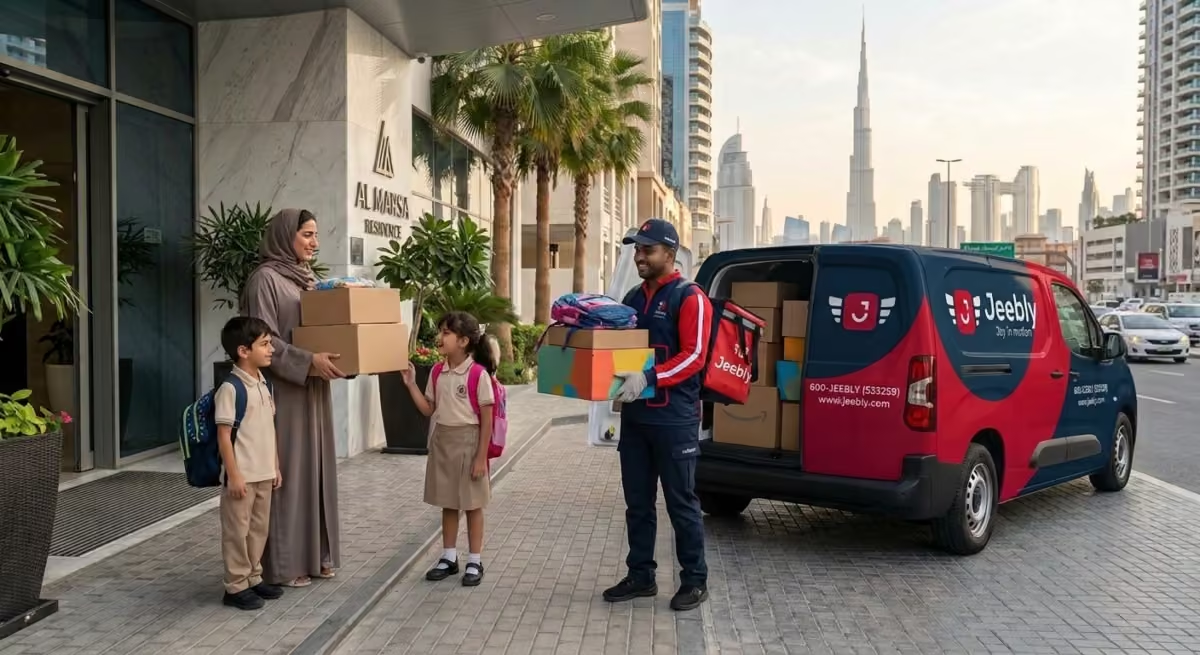
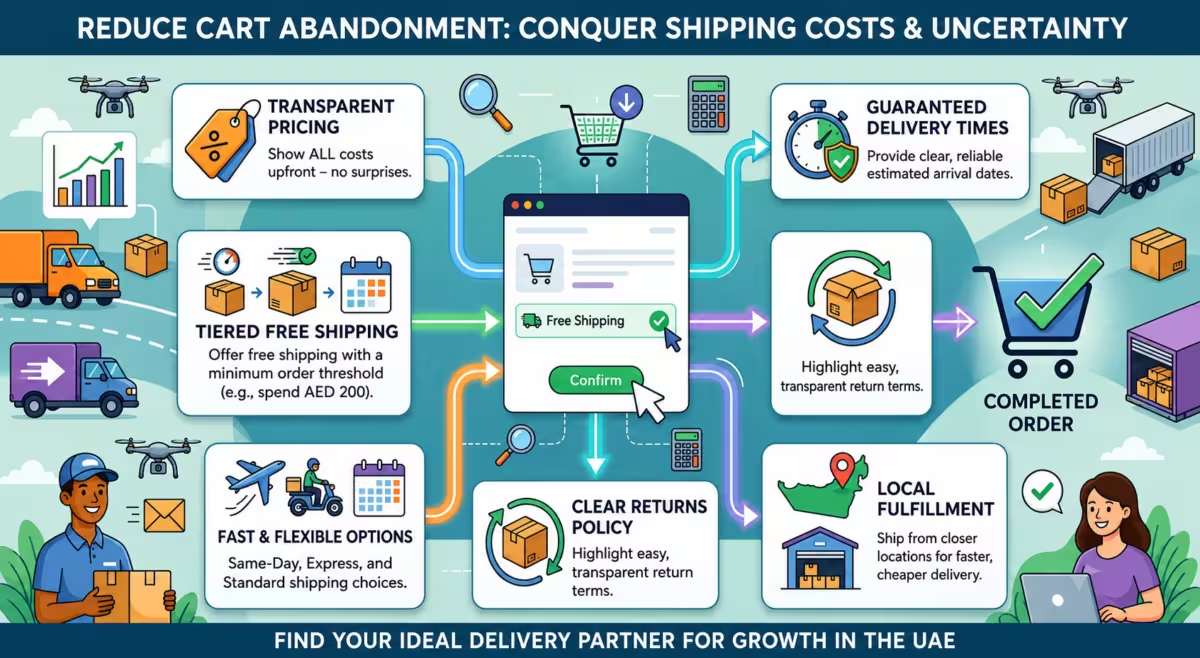
Illustration showing strategies to reduce cart abandonment through transparent shipping costs, fast delivery, local fulfilment, and clear returns policies for UAE eCommerce businesses.

How to Reduce Cart Abandonment Caused by Delivery Costs and Uncertainty

Roughly seven out of every ten shoppers who add items to their cart leave without purchasing. The number one trigger cited by 48% of US shoppers is extra costs appearing at final checkout, primarily shipping fees and taxes. This is entirely preventable. 

Additionally, combined delivery cost and delivery uncertainty directly drive more than half of all preventable cart abandonment. It’s mostly a delivery communication problem, and the fix starts long before the customer reaches the payment page. 

This guide covers the specific delivery and logistics changes that reduce abandonment, the UAE-specific factors that make this market different, and how to structure your delivery operation so it converts.

Key Takeaways

  • 48% of shoppers abandon their cart because of unexpected shipping costs, the top reason for cart abandonment.

  • Showing delivery cost and estimated date on the product page eliminates the surprise that causes most shipping-related abandonment.

  • In the UAE, COD can still account for 40-60% of D2C transactions in certain categories, directly impacting conversion rates and market penetration.

  • The brands that consistently convert at checkout are the ones whose delivery operation is reliable enough to promise something specific. 

Why Delivery Is a Pre-Purchase Conversion Problem

The standard model in e-commerce treats delivery as what happens after the sale. The data says otherwise.

Many ecommerce stores still rely on vague delivery language such as “3–7 business days” or “delivery subject to location.” While technically accurate, these messages do little to help customers understand when they will actually receive their order. The most effective stores communicate delivery expectations with precision.

The sequence that may create abandonment is specific: uncertain delivery window → reaches checkout → sees AED 15 shipping fee → doesn’t complete purchase. 

The fix is not removing the fee at the last step. It’s removing the uncertainty and the surprise from the earliest point in the purchase journey.

Fix 1: Show Delivery Cost and Estimated Date on the Product Page

The checkout page is too late. Displaying shipping costs, taxes, and fees on the product page or early in the cart can eliminate the surprise that causes most price-related abandonment.

What this could look like in practice:

  • A delivery cost estimate on the product page, based on the customer’s location (use geolocation to personalise this automatically)
  • A specific delivery date rather than a range: “arrives tomorrow” or “arrives Wednesday if ordered before 2 pm”
  • A delivery cut-off time clearly displayed: “Order in the next 3 hours for same-day delivery”

The same principle applies to delivery date promises. Showing the delivery date where the purchase decision is being made converts that information from noise into a reason to buy.

Fix 2: Set a Free Shipping Threshold at the Right Level

Free shipping is among the most impactful pricing changes for reducing cart abandonment. The mechanics matter.

For example: if your current AOV is AED 150, set the free shipping threshold at AED 180–195. Customers who are AED 30 away from free shipping will add an item. Customers who are AED 100 away will not bother.

Additionally, a free shipping progress bar visible in the cart and ideally on product pages can show customers how close they are to the threshold.

Fix 3: Match Your Delivery Promise to Your Logistics Capability

The connection between logistics capability and cart conversion is direct. If your fulfilment partner can only reliably hit next-day delivery within Dubai, don’t promise it to customers in Ras Al Khaimah. If your current provider takes 4–5 days to the northern emirates, your product page date estimate needs to reflect that, and your conversion rate will reflect the slower promise.

This is where your logistics partner choice directly affects your checkout conversion rate. For same-day and next-day domestic delivery with the FDSS data to back up precise checkout promises, Jeebly Dash covers all seven emirates with a published 98% FDSS.

Fix 4: Handle COD the Right Way for UAE Shoppers

COD creates a specific abandonment pattern in the UAE: shoppers select COD at checkout, then abandon because they’re unsure whether the delivery agent will arrive, how much to have ready, or what happens if they miss the delivery. This is delivery uncertainty driving abandonment even after payment method selection.

The fixes are operational:

Pre-delivery WhatsApp notification: Send a WhatsApp message when the order is out for delivery, confirming the exact COD amount, a delivery window, and a rescheduling option. Customers value predictability.

COD OTP confirmation: Implementing OTP confirmation before dispatch verifies the customer’s phone number and intent, filtering out fake orders before they enter the delivery pipeline. This reduces RTO from COD fraud.

Clear COD policy on the product page. State the exact COD process when the driver arrives, what form of payment is accepted, and what happens if the customer isn’t home. Uncertainty about how COD works causes abandonment at checkout.

Fix 5: Use WhatsApp for Cart Recovery

The UAE has some of the highest WhatsApp penetration rates in the world. Cart abandonment recovery messages sent via WhatsApp within 30–60 minutes of abandonment reach customers on the device and app they’re actively using.

Effective WhatsApp cart recovery for UAE e-commerce:

  • Send within 30–60 minutes of abandonment. Intent degrades quickly.
  • Show the specific abandoned item with an image.
  • Include a direct link back to the cart (not the homepage).
  • Confirm the delivery date and cost upfront in the message. Address the exact friction point that caused the abandonment.
  • Offer a small incentive (free delivery, a 5% discount) for orders above your free shipping threshold.

The delivery promise in the recovery message matters as much as the incentive. A customer who abandoned because of a vague delivery window needs to see a specific date before they’ll re-engage.

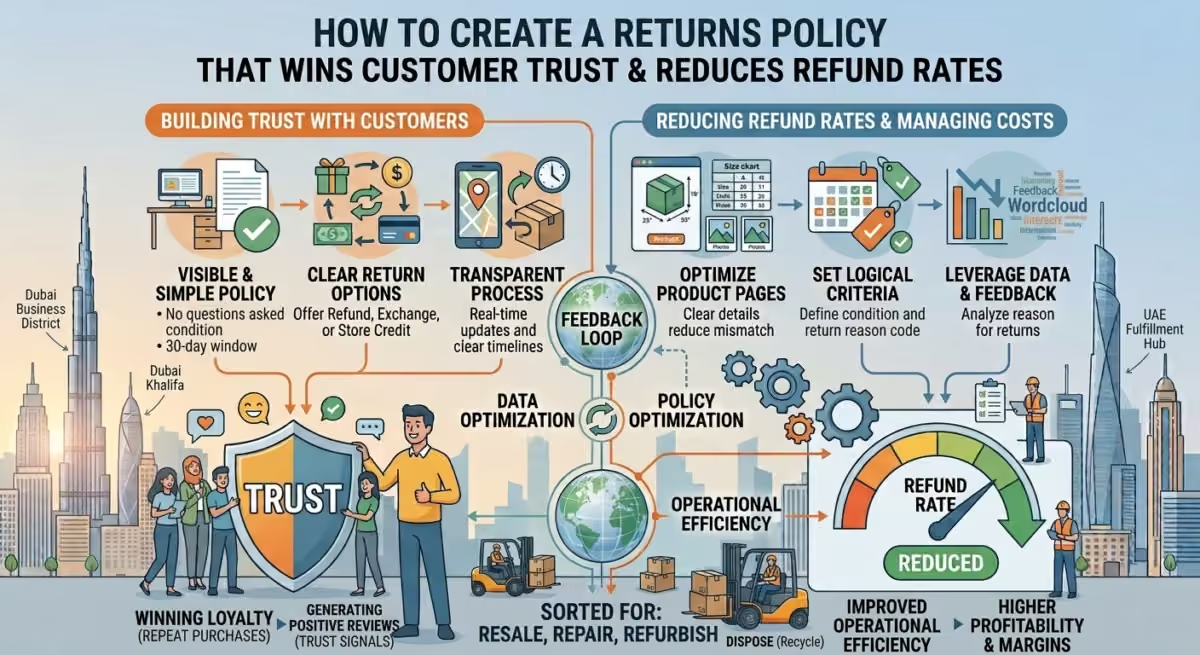
Fix 6: Make Returns Visible and Simple Before Purchase

A return policy is one of the strongest trust signals in ecommerce. Yet many stores treat returns as compliance content rather than conversion content.

A clear, easy return policy shown on product pages will directly reduce the pre-purchase hesitation that causes abandonment for considered purchases. For UAE shoppers, the question is typically: “If this doesn’t fit or isn’t what I expected, how hard is it to send back?”

The answer needs to be immediate and visible. “Free returns within 14 days” placed near the add-to-cart button removes a meaningful source of purchase anxiety. 

For the legal minimum return rights under UAE consumer protection law, a quick guide on How to Manage eCommerce Returns in UAE: Strategy, Policy and Logistics covers both the compliance requirements and the policy design that converts.

How Jeebly Supports Checkout Conversion

The connection between Jeebly’s delivery operation and your cart conversion rate is direct and measurable.

Jeebly Dash’s 98% FDSS across 50,000+ daily deliveries makes specific delivery date promises at checkout operationally credible. When you show “arrives tomorrow by 9 pm” on your product page, that promise needs a logistics partner with the infrastructure to keep it. Jeebly Dash publishes the performance data that backs that up.

For businesses managing high COD volumes, Jeebly Bizz connects your Shopify or WooCommerce store directly to dispatch, with WhatsApp and SMS notifications built into the delivery workflow.

For businesses managing inbound freight alongside domestic delivery, Jeebly Haul covers air, sea, and road freight with in-house customs clearance, keeping inventory moving without the delays that create “out of stock” conversion losses at product level.

Talk to the Jeebly team about your current delivery operation. A direct conversation about your FDSS rate, COD volume, and average delivery window will quickly identify where the logistics gaps are creating checkout friction.

Conclusion

Delivery cost and delivery uncertainty are the leading causes of cart abandonment, and both are fixable without rebuilding your checkout. 

Show delivery costs and specific delivery dates on product pages, not at checkout. Use WhatsApp for cart recovery. Make your return policy visible before purchase, not buried in footer links. And build all of this on a logistics partner whose performance data supports the promises you’re making.

The brands that consistently convert at checkout are not the ones with the most sophisticated checkout technology. They’re the ones whose delivery operation is reliable enough to promise something specific. For same-day and next-day delivery across the UAE with the FDSS data to back it up, get in touch with the Jeebly team.

Frequently Asked Questions

Unexpected extra costs at checkout, primarily shipping fees and taxes, cited by 48% of abandoning shoppers. This has been the #1 cause for six consecutive years. The fix is showing all costs, including delivery, on the product page before checkout, not revealing them at the payment step.

The optimal free shipping threshold should be roughly 20–30% above your current average order value. Pair the threshold with a cart progress bar showing customers how close they are to free shipping. A threshold at or below AOV subsidises orders that already cleared it; one far above AOV pushes shoppers to abandon.

COD in the UAE creates a specific abandonment pattern: uncertainty about the delivery process, payment amount, and what happens if the customer misses the delivery agent. Pre-delivery WhatsApp notification with the exact COD amount and a delivery window reduces both abandonment and COD refusals at the door.

Yes, specifically. Vague delivery windows (“3–7 business days”) carry uncertainty all the way to checkout, where they compound with an unexpected shipping fee to trigger abandonment. A specific date (“arrives Wednesday”) makes the delivery concrete and removes that uncertainty before the customer reaches payment. This only works if your logistics partner can actually deliver on the specific date you’re promising.

Within 30–60 minutes for the first message. Buying intent degrades quickly after abandonment. In the UAE, send via WhatsApp rather than email for substantially higher open and recovery rates. The recovery message should address the specific friction point. If delivery cost caused abandonment, include the delivery price (or a free shipping offer) in the message alongside a direct link back to the cart.

Routes to insightful reads

How to get an eCommerce licence in the UAE, showing five steps from selecting a business structure and trade name to submitting the application, paying fees, and obtaining the licence
How to Get an eCommerce Licence in the UAE

Planning to start an eCommerce business in the UAE? Learn how to get an eCommerce licence, choose between mainland and free zone options, prepare the required documents, submit your application, and complete the licensing process to start trading legally in the UAE.

Read More
BNPL in the UAE and its impact on ecommerce delivery and returns, showing the transaction cycle, faster fulfilment, order frequency, real-time tracking, and streamlined returns
Buy Now Pay Later in the UAE: What BNPL Means for eCommerce Delivery and Returns.

Buy Now Pay Later (BNPL) is changing how consumers shop and how eCommerce businesses manage fulfilment and returns in the UAE. This guide explores how BNPL can influence order volumes, delivery demand, fulfilment operations, return rates, refund processing, and the logistics strategies businesses need to support a growing BNPL-driven customer base.

Read More
Infographic explaining how to calculate volumetric weight for shipping, including the formula, measurement example and comparison between actual and chargeable weight.
How to Calculate Volumetric Weight for Shipping: Formula and Examples

Learn how to calculate volumetric weight for shipping with an easy-to-follow formula and practical examples. Understand how package dimensions, actual weight and carrier conversion factors determine the chargeable weight and ultimately impact your shipping costs.

Read More
3PL vs 4PL logistics comparison showing warehousing, transportation, distribution, supply chain integration, technology, analytics, and strategic planning for UAE businesses
3PL vs 4PL: What Is the Difference and Which Does Your UAE Business Need?

3PL and 4PL logistics models help businesses manage different levels of supply chain operations. This guide explains the key differences between 3PL and 4PL providers, their roles, benefits, costs, and how UAE businesses can choose the right logistics model based on their size, supply chain complexity, and operational needs.

Read More
Types of packaging for courier shipments, showing outer packaging strength, void-fill options, cushioning materials, and sealing and labelling methods
Types of Packaging for Courier Shipments: Which One Best Protects Your Product?

Choosing the right packaging is essential for protecting products during courier transportation. This guide explores different types of packaging for courier shipments, including corrugated boxes, bubble wrap, air pillows, paper fillers, foam inserts, and protective seals, and explains how to choose the best option based on your product, handling needs, and shipping conditions.

Read More
Categories
blogs

COD Fraud in UAE eCommerce: How to Detect, Prevent and Reduce Losses

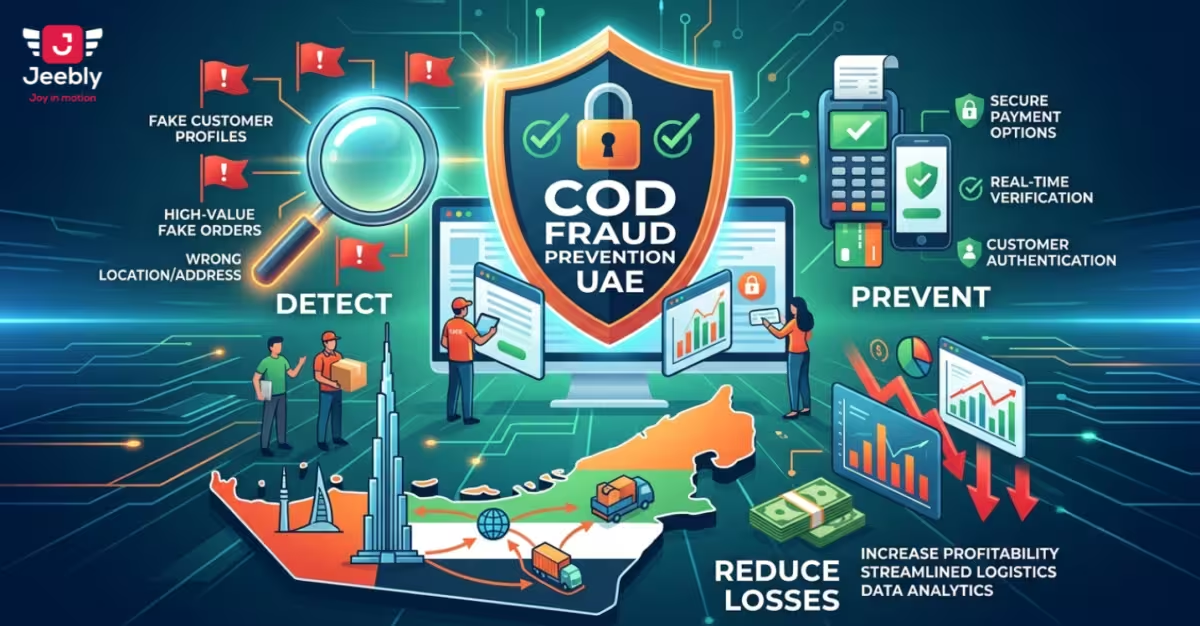
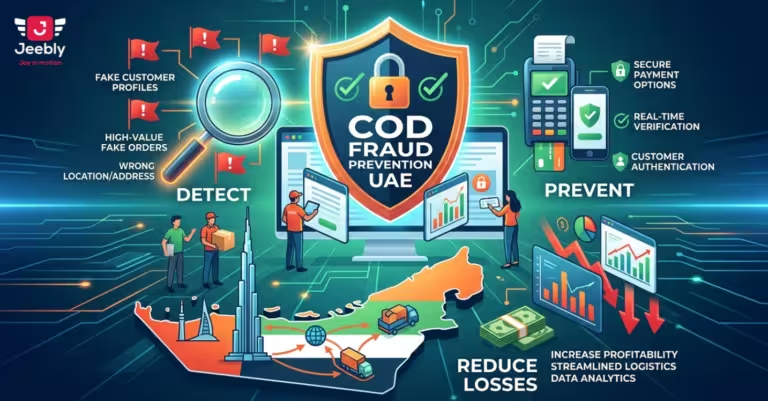
COD fraud prevention in the UAE with secure payment verification, order authentication and logistics risk management

COD Fraud in UAE eCommerce: How to Detect, Prevent and Reduce Losses

Cash on delivery is not going away in the UAE. It still accounts for nearly 35% of transactions across the Middle East and Africa.

The problem is that COD also creates a specific category of fraud risk that digital payment orders don’t carry: low-intent buyers who never planned to accept the parcel, external scammers exploiting the system’s offline nature, and a cascade of operational costs that appear as return-to-origin (RTO) losses on your courier statement.

This guide covers types of COD fraud that UAE businesses face. Know how to detect each, and the operational and technology measures that reduce losses without removing COD from your checkout.

Two Types of COD Fraud: External Scams vs Merchant Losses

1) External COD scams 

This targets your customers. Fraudsters may obtain customer details through leaked databases, phishing, public information, or other illegal sources. They dispatch parcels through legitimate logistics companies and specify a cash amount to be collected on delivery. 

When the courier arrives, the recipient assumes a family member or colleague placed the order and pays without verifying. By the time they open the parcel and discover the contents are worthless, it is difficult to reverse the transaction. This type of fraud damages your customers and, if your brand is being impersonated, directly damages your reputation.

2) Fake-order fraud & high-RTO abuse 

This targets your operations. Fraudulent COD orders placed using fake phone numbers and addresses result in guaranteed RTOs. The courier attempts delivery to a non-existent recipient and returns. 

Beyond outright fake orders, serial refusers, and customers who genuinely placed an order but later choose to refuse delivery, all incur similar operational costs. The distinction matters because the solutions differ.

Understanding which type is driving your losses determines which interventions to prioritise.

How External COD Scams Work

The mechanics follow a consistent pattern. 

Scammers obtain real addresses and phone numbers, dispatch parcels through legitimate logistics companies, and have the courier collect cash on their behalf. The delivery agent follows standard instructions with no knowledge of the contents. Once payment is made, the courier processes the funds through its standard settlement cycle and transfers the amount to the sender.

Unlike prepaid transactions, COD removes many digital payment protections such as automated payment authentication and chargeback processes, shifting more fraud risk into delivery operations.

Common external COD scam types currently active across the region:

  • The unsolicited parcel scam: A fraudster sends a package to a real address using leaked personal data. The recipient assumes a family member ordered it and pays. The parcel contains low-value or worthless items.

  • Brand impersonation: Scammers build convincing replicas of real UAE e-commerce stores, collect orders at scale, and dispatch cheap substitutes via third-party couriers. Your brand takes the fallout from customer service.

  • Fake courier impersonation: Some fraudsters pose as delivery companies, sending packages and demanding cash payments. Packages may include a QR code that, when scanned, links to a phishing site that collects additional personal data.

  • The advanced call variation: In some variations, fraudsters send advance messages or make phone calls claiming a shipment is on its way, creating a sense of legitimacy before the parcel arrives.

One protection against brand impersonation is ensuring your customers can independently verify delivery through a branded tracking page from your actual logistics partner. 

Aramex vs Jeebly: Which Is Better for UAE Last-Mile Delivery? compares how the two providers handle tracking visibility, ePOD, and customer communication. These capabilities help customers distinguish your legitimate delivery from a scam.

How Fake-Order Fraud Costs Your Business

Every failed COD delivery incurs double shipping costs: you paid for the forward attempt, and you pay for the return. The cash flow impact is separate and often underestimated. For brands with 25–30% COD RTO rates, the cash trapped in transit at any point can equal 3–5 weeks of revenue, creating a liquidity problem that grows with scale. 

When combined with Jeebly’s structured COD remittance cycle, this gap can be materially compressed compared to providers that remit fortnightly or monthly. But the RTO rate itself needs to be addressed at the source.

The total cost per RTO order is higher than most business models. A refused COD delivery carries forward shipping cost, return shipping cost, repackaging and restocking time, the COD amount that was never collected, and the customer acquisition cost spent to generate an order that never converted.

Detecting Fake Orders Before Dispatch

The most cost-effective COD fraud intervention happens before the parcel leaves your warehouse. A risk-scoring approach works better than applying the same verification to every order. 

Assess each COD order based on new-customer status, order value, address deliverability, phone-number validity, and historical RTO patterns for the same contact details. Low-risk orders proceed without friction. High-risk orders get additional verification steps.

Signals that flag a COD order as high-risk:

  • Phone number doesn’t match the delivery emirate’s prefix pattern
  • Address is incomplete, contains only a building name with no flat or office number, or matches a known high-RTO zone
  • Multiple orders from the same device or IP with different contact details
  • First-time customer placing a high-value COD order with no order history
  • Order placed outside normal hours with an unusual address format


OTP verification is one of the most effective pre-dispatch controls for reducing fake COD orders. OTP confirmation filters out fake or uncertain orders, ensuring only genuinely interested customers proceed with COD purchases.

Address validation at checkout catches genuine customers who entered incomplete or incorrect addresses. AI-powered address validation can reduce preventable delivery failures by identifying incomplete addresses, invalid locations, and delivery-risk patterns before dispatch.

The RTO lock is the most operationally precise tool for repeat offenders. RTO lock blocks customers with a history of COD refusals from accessing the COD payment option; they can still purchase with prepaid methods.

These pre-dispatch interventions are only as effective as the fulfilment partner executing them. 

Whether your operation suits a carrier or a courier model affects which fraud prevention tools are actually available to you. Carrier vs Courier: What’s the Difference and Which Do You Need in the UAE? clarifies the distinction.

Reducing Losses After Dispatch: NDR Management

An NDR (Non-Delivery Report) is a recoverable event. An RTO is the loss. The intervention window between the two is the time when significant losses can be prevented.

When a first delivery attempt fails, most businesses leave the outcome to the courier. Automated NDR management, such as WhatsApp or SMS outreach to the customer immediately after a failed attempt to confirm a new delivery window, reduces NDR-to-RTO conversion. 

The message content matters: 

  • Include the exact COD amount 
  • The rescheduled delivery window 
  • A simple one-tap confirmation. 

Customers who confirm reschedule convert at significantly higher rates than those who receive a generic “we’ll try again” notification.

What to Look for in a Logistics Partner for COD Operations

Your courier partner is operationally central to the risk of COD fraud. The specific capabilities to confirm before committing:

  • Digital proof of delivery (ePOD) is standard. Every drop-off should be confirmed with a timestamped photo and, for high-value orders, OTP or signature capture. This creates an evidentiary record for every delivery and eliminates “I never received it” disputes without a trail to resolve them.

  • NDR workflow transparency. Ask specifically: when a delivery attempt fails, what happens next? How quickly is the NDR flagged? Is the customer contacted automatically, or does re-attempt coordination require your team’s involvement? A courier with automated NDR management recovers more failed deliveries without adding to your ops overhead.

  • Weekly COD remittance. The remittance cycle directly affects your working capital. Jeebly supports structured COD settlement workflows, with settlement schedules depending on client arrangements. Confirm the cycle with any provider before signing.

  • 98% First Day Delivery Success (FDSS). Jeebly’s published FDSS across 50,000+ daily deliveries. A high first-attempt success rate is the most direct structural reduction in your RTO exposure. It limits the number of situations where an NDR even needs to be managed.

For a broader comparison of UAE courier providers on these criteria, Best Courier Service in UAE: 2026 Comparison Guide covers FDSS, remittance cycles, and NDR handling across the major operators.

How Jeebly Handles COD Operations

Jeebly Dash builds fraud-resistant COD delivery into the standard service rather than offering it as an optional add-on. Photo ePOD is captured at every drop-off and is timestamped and geotagged. The delivery record is immediately accessible to the business through the platform, which means disputes are resolved on the basis of evidence rather than through verbal disputes.

For businesses managing high COD volumes, Jeebly Bizz integrates order management, dispatch, and delivery tracking into a single platform. COD remittance runs weekly, reducing the cash-in-transit gap that high-RTO operations typically carry.

For businesses currently experiencing elevated RTO on COD orders or concerned about brand impersonation affecting their customers, talk to the Jeebly team. A direct conversation will identify quickly where the losses are coming from and which operational changes address them.

Frequently Asked Questions

COD fraud covers two distinct problems: external scammers who exploit cash-on-delivery to send fake parcels and collect cash from unsuspecting customers, and fake-order fraud, where low-intent buyers or bots place orders with no intention of accepting delivery, creating return-to-origin losses for the merchant. Both are active in the UAE market and require different operational responses.

 COD transactions bypass digital payment safeguards like chargeback mechanisms, authentication protocols, and automated fraud detection systems. Once cash is handed over at the door, the transaction is effectively irreversible.

OTP verification at checkout is the highest-ROI single intervention. It eliminates fake orders placed with wrong or non-existent phone numbers. Address validation at checkout is the complementary layer that handles address-error RTOs.

RTO lock restricts customers with a pattern of COD refusals from accessing COD at checkout. They can still purchase using prepaid options. Many businesses introduce COD restrictions when customer behaviour shows repeated refusal patterns.

Publish your official courier partners on your website and customer communications. Instruct customers never to pay cash for a parcel they didn’t order. Build branded tracking pages so customers can verify delivery status independently, without relying on messages from unknown numbers. And ensure your logistics partner captures ePOD at every delivery.

COD losses usually include failed delivery costs, return shipping, handling costs, lost customer acquisition spend, and delayed cash flow.

Removing COD can reduce failed deliveries but may also reduce conversions from customers who prefer paying after receiving their order. Many businesses improve profitability by managing COD risk instead of eliminating it.

Routes to insightful reads

How to get an eCommerce licence in the UAE, showing five steps from selecting a business structure and trade name to submitting the application, paying fees, and obtaining the licence
How to Get an eCommerce Licence in the UAE

Planning to start an eCommerce business in the UAE? Learn how to get an eCommerce licence, choose between mainland and free zone options, prepare the required documents, submit your application, and complete the licensing process to start trading legally in the UAE.

Read More
BNPL in the UAE and its impact on ecommerce delivery and returns, showing the transaction cycle, faster fulfilment, order frequency, real-time tracking, and streamlined returns
Buy Now Pay Later in the UAE: What BNPL Means for eCommerce Delivery and Returns.

Buy Now Pay Later (BNPL) is changing how consumers shop and how eCommerce businesses manage fulfilment and returns in the UAE. This guide explores how BNPL can influence order volumes, delivery demand, fulfilment operations, return rates, refund processing, and the logistics strategies businesses need to support a growing BNPL-driven customer base.

Read More
Infographic explaining how to calculate volumetric weight for shipping, including the formula, measurement example and comparison between actual and chargeable weight.
How to Calculate Volumetric Weight for Shipping: Formula and Examples

Learn how to calculate volumetric weight for shipping with an easy-to-follow formula and practical examples. Understand how package dimensions, actual weight and carrier conversion factors determine the chargeable weight and ultimately impact your shipping costs.

Read More
3PL vs 4PL logistics comparison showing warehousing, transportation, distribution, supply chain integration, technology, analytics, and strategic planning for UAE businesses
3PL vs 4PL: What Is the Difference and Which Does Your UAE Business Need?

3PL and 4PL logistics models help businesses manage different levels of supply chain operations. This guide explains the key differences between 3PL and 4PL providers, their roles, benefits, costs, and how UAE businesses can choose the right logistics model based on their size, supply chain complexity, and operational needs.

Read More
Types of packaging for courier shipments, showing outer packaging strength, void-fill options, cushioning materials, and sealing and labelling methods
Types of Packaging for Courier Shipments: Which One Best Protects Your Product?

Choosing the right packaging is essential for protecting products during courier transportation. This guide explores different types of packaging for courier shipments, including corrugated boxes, bubble wrap, air pillows, paper fillers, foam inserts, and protective seals, and explains how to choose the best option based on your product, handling needs, and shipping conditions.

Read More

    Powered by