






Jeebly | Logistics Solutions

Categories
blogs

iMile vs Jeebly: Comparing Last-Mile Delivery for eCommerce Businesses

iMile vs Jeebly: Comparing Last-Mile Delivery for eCommerce Businesses

iMile vs Jeebly: Comparing Last-Mile Delivery for eCommerce Businesses

Your logistics partner is the last thing your customer experiences before forming an opinion about your brand. In the UAE’s e-commerce market, where the last-mile delivery segment is projected to grow from USD 3.2 billion in 2023 to USD 4.85 billion by 2030, who carries your parcel shapes whether that customer comes back.

The iMile vs Jeebly question comes up often for UAE e-commerce brands, and rightly so. Both are tech-driven, both serve e-commerce operators, and both operate in Dubai’s hyper-competitive delivery market. But they are structured differently.

This article compares both carriers across coverage, delivery speed, pricing, SLAs, technology, and reverse logistics so you can choose based on what your business actually needs.

Why Last-Mile Delivery in UAE Is a Brand Decision More Than Logistics?

Failed deliveries and missed windows do not just cost money. They end repeat relationships.
 
The UAE also has structural delivery challenges that most global carriers underestimate: no standardised postcode system, free-zone access requirements, high COD volumes, and extreme summer temperatures.

The carrier you choose either accounts for these realities or struggles against them.
* iMile is a global last-mile carrier operating across 30 countries, with technology centres in Shenzhen and Hangzhou. In the UAE, it focuses on consumer e-commerce delivery across Dubai, Abu Dhabi, and Sharjah. Its same-day product launched in April 2026.
* Jeebly started in Dubai in 2016, evolved from hyperlocal food delivery into a full-service logistics platform, and now handles 50,000+ daily deliveries across all seven emirates with a 4,000+ active fleet and a 98% First Day Delivery Success (FDSS) rate.

Not sure how last-mile delivery actually works in the UAE? Here’s a ground-level breakdown on what last-mile delivery is before you commit to any partner.

iMile vs Jeebly: Core Capabilities at a Glance

Before choosing a partner, map their service range against your actual operational needs. Here is how both providers stack up across the core delivery dimensions UAE businesses care about.

Feature iMile Jeebly
UAE Coverage Dubai, Abu Dhabi, Sharjah All 7 emirates + GCC
Express (60–120 min) No Yes, Dubai only (Jeebly Dash)
Same-Day Delivery Yes (launched April 2026) Yes, Dubai, cut-off 11 AM
Next-Day Delivery Yes Yes, UAE-wide, cut-off 2 PM
Cash on Delivery Yes Yes
COD Remittance Cycle Variable Weekly to the client's bank account
Shopify / API Integration Yes Yes (Shopify, Magento, WooCommerce)
Returns Management Yes Yes, structured reverse logistics
Warehousing & Fulfillment Limited Yes, 3 warehouses and fulfillment centres
Q-Commerce / Dark Stores No Yes, 13 plus live MFCs, 10-min delivery
Freight / Bulk Cargo No Yes, Jeebly Haul
White Glove / Premium No Yes, Jeebly Plus
Business Logistics (B2B) Consumer-focused Yes, Jeebly Bizz
Proof of Delivery Yes Yes, rider-captured photograph

iMile brings genuine global scale. Jeebly’s coverage extends to all seven emirates, including Ras Al Khaimah, Fujairah, and Umm Al Quwain. For brands shipping outside the three major cities, that is not a minor footnote.

Pricing: What to Expect From Each Carrier

iMile prices competitively for high-volume domestic and cross-border operations. Its commercial model rewards scale: the per-parcel rate improves meaningfully once monthly volume thresholds are met. Ask directly about minimum commitment requirements before modelling costs.

Jeebly Dash offers a published base rate of AED 17.31 for packages up to 5 kg for scheduled and next-day deliveries, with AED 2/kg for packages over 5 kg (maximum 20 kg per order). 

For brands in the early or mid-growth stage, this provides a concrete cost baseline to model against.

Additionally, here are three line items that most businesses miss when comparing quotes, but which directly affect your true cost per delivery:

* COD remittance cycle: Jeebly remits weekly to your bank account. Delayed remittance from any carrier ties up working capital.
* Failed delivery charges: Per-attempt fees vary. Understand the re-attempt policy and who bears the cost of customer-fault failures.
* Return shipping costs
: Ask for explicit terms on customer-fault returns before signing.

Shipping costs in the UAE are more layered than most small businesses expect. See what you will pay across service types in 2026 in this read: Cost of Shipping for a Small Business in the UAE.

5 Questions to Ask Any UAE Delivery Partner Before You Sign

Run through these with iMile, Jeebly, or any carrier before committing.

1. What is the confirmed coverage zone, by emirate? “UAE-wide” can mean many things. If you’re shipping to Ras Al Khaimah, Fujairah, or Umm Al Quwain, get written confirmation of SLAs for those specific zones.

2. What is the COD remittance cycle, and is it guaranteed? In the UAE, COD remains a significant share of e-commerce transactions. Remittance timing directly affects your cash flow. Get the commitment in writing.

3. What are the failed delivery fees, and what is the re-attempt policy? Failed attempts are the hidden cost that inflates per-parcel spend. Understand how many re-attempts are included, what each one costs, and who covers return shipping on customer-fault failures.

4. What does the merchant dashboard show in real time? Standard tracking is table stakes. Exception alerts, knowing about a delivery problem before your customer does, are what protect your brand. Ask for a live dashboard demo.

5. Is there a dedicated account manager, and what does escalation look like? At volume, a single point of contact who knows your account is operationally valuable in ways that a support ticket system is not. Understand what you are actually getting.

iMile or Jeebly: Which One Is Right for Your Business?

iMile is a capable carrier for brands with strong cross-border volume and operations concentrated in the UAE’s three major emirates. Its global infrastructure and growing presence in the UAE make it worth evaluating for that specific profile.

Jeebly is the choice for brands that need full UAE coverage, a complete logistics stack from same-day delivery to fulfilment and freight, and a partner who understands the market at the street level.

The UAE’s last-mile delivery market is expanding fast. Your logistics partner should expand with it, not constrain you when you outgrow them.

Ready to talk logistics? Get in touch with the Jeebly team to map out the right setup for your business.

Frequently Asked Questions

The right partner depends on your coverage requirements, order volume, and service complexity. Jeebly is consistently recommended for UAE e-commerce brands for its full-country coverage, 98% FDSS rate, and end-to-end product suite. For brands with high cross-border volume, iMile’s global network is worth evaluating alongside other options.

Neither iMile nor Jeebly publishes a universal public rate card. Jeebly Dash’s published base rate starts at AED 17.31 for packages up to 5 kg on scheduled and next-day deliveries. The real cost comparison requires modelling COD fees, failed delivery charges, and return costs alongside the base rate.

Jeebly Dash’s Express tier offers 60–120 minute delivery within Dubai for qualifying orders. It is one of the fastest on-demand courier options available for qualifying Dubai orders. Both Jeebly Dash and iMile’s same-day product cover major Dubai zones and offer real-time tracking.

For full UAE coverage, consistent delivery performance, and a logistics stack that scales with your business, Jeebly’s infrastructure makes it a strong choice for e-commerce brands at every stage of growth.

iMile is a legitimate, technology-capable logistics provider with a growing UAE footprint and a recently launched same-day product. It suits brands operating primarily in Dubai, Abu Dhabi, and Sharjah with high domestic or cross-border volumes.

Routes to insightful reads

Porter vs Jeebly: Understanding the Difference and Choosing the Right Delivery Partner in Dubai

Picking a delivery partner in Dubai sounds straightforward until the bills don’t match the quotes, the tracking goes quiet, or your business outgrows what the platform can handle. This article breaks down both platforms in terms of pricing, technology, coverage, and support so you know exactly what you are choosing and why.

Read More
EMX vs Jeebly: Which Courier Delivers More Value for Your Business?

Your courier partner is not a vendor you swap easily. It shapes how customers experience your brand after checkout. This article maps providers across service capabilities, technology, pricing structures, and e-commerce fit, so you can match the right partner to how your business actually operates.

Read More
iMile vs Jeebly: Comparing Last-Mile Delivery for eCommerce Businesses

Your logistics partner is the last thing your customer experiences before forming an opinion about your brand. The iMile vs Jeebly question comes up often for UAE e-commerce brands, and rightly so. This article compares both carriers across coverage, delivery speed, pricing, SLAs, technology, and reverse logistics so you can choose based on what your business actually needs.

Read More
Quiqup vs Jeebly: Which Delivery Partner Is Right for Your UAE Business?

Your delivery partner is your brand’s last impression. When a parcel arrives late, tracking goes silent, or a COD reconciliation takes a week, the customer blames your brand. So when UAE businesses compare Quiqup vs Jeebly, the real question is: which provider actually protects your customer experience while your order volumes grow?

Read More
Green Logistics: Why Sustainability Is Becoming the UAE's Next Big Supply Chain Priority
Green Logistics in the UAE: What It Is and Why It Matters

Every parcel that moves from a warehouse to a doorstep carries more than a product. It carries a carbon cost. This article covers what it entails, why it matters specifically for UAE e-commerce businesses, the real return on investment it delivers, and how to approach implementation without overhauling everything at once.

Read More
Categories
blogs

Quiqup vs Jeebly: Which Delivery Partner Is Right for Your UAE Business?

Quiqup vs Jeebly: Which Delivery Partner Is Right for Your UAE Business?

Quiqup vs Jeebly: Which Delivery Partner Is Right for Your UAE Business?

Your delivery partner is your brand’s last impression. When a parcel arrives late, tracking goes silent, or a COD reconciliation takes a week, the customer blames your brand. So when UAE businesses compare Quiqup vs Jeebly, the real question is: which provider actually protects your customer experience while your order volumes grow?

This article breaks down both platforms on delivery speed, pricing in AED, technology, COD, emirate coverage, and returns handling so you can make a better business-led decision.

How Last Mile Delivery in Dubai Has Changed the Stakes

Dubai’s e-commerce market reached USD 8.8B in 2024 and is projected to reach USD 13.8B by 2029. Consumer expectations have shifted in lockstep: same-day delivery, live tracking, and seamless COD are now table stakes, not differentiators.

Last-mile delivery, the final leg from the dispatch hub to the doorstep, is where that expectation is met or broken. Choose a provider that handles the easy days; you will feel it the moment Ramadan or White Friday hits.

Both Quiqup and Jeebly operate in this space.

* Quiqup built its name on hyperlocal, time-critical drops within Dubai. 
* Jeebly runs a broader platform that combines AI-optimised routing, a 4,000+ active fleet, and 98% First-Day Delivery Success (FDSS).

Understanding what sits behind each platform’s speed claims is the starting point for any honest comparison.

Quiqup vs Jeebly: Delivery Services Side by Side

Before choosing a partner, map their service range against your actual operational needs. Here is how both providers stack up across the core delivery dimensions UAE businesses care about.

Feature Quiqup Jeebly
Express Delivery 4-hour (Dubai, depending on distance and traffic) As quick as 120 mins (Dubai, depending on distance and traffic conditions)
Same-Day Delivery Yes Yes (Dubai)
Next-Day Delivery Yes Yes (UAE-wide)
International Delivery Yes Yes (Jeebly Dash International)
Cash on Delivery Yes Yes
Shopify Integration Yes Yes
WooCommerce Integration Yes Yes
Warehousing & Fulfilment Yes Yes (Jeebly Fulfilment)
Cross-Border Logistics Yes Yes (Jeebly Bizz)
Bulk Freight No Yes (Jeebly Haul)
Premium / White-Glove No Yes (Jeebly Plus)
Reverse Logistics Dedicated returns service Dedicated service line

Quiqup performs strongly in the hyperlocal and urban express tiers. The limitation shows when your order profile expands: multi-emirate coverage, returns handling, and logistics services beyond standard parcel delivery are not where it is built to compete.

Jeebly Dash covers the same express and same-day tier and goes further. Because Jeebly’s platform is built as a full logistics suite, brands that start with same-day delivery can layer on fulfilment, freight, or cross-border without switching providers.

Shipping costs eating into your margins? See what UAE small businesses actually pay in 2026. Read: Cost of Shipping for a Small Business in the UAE.

Delivery Pricing in AED: What to Budget

Neither Quiqup nor Jeebly publishes a fixed public rate card. Pricing scales with volume. Here is what businesses can work from.

Jeebly Dash - Published Reference Rates

* Next-day delivery: AED 17.31 per parcel (up to 5 kg)
* Parcel regulation: Maximum of 20 kg and 100 cm x 50 cm x 50 cm in size for deliveries.
* COD: Supported; cash collected at the door

This is a competitive base rate for consistent daily volumes. Brands shipping 50+ orders a day can access improved commercial terms through Jeebly’s sales team.

Quiqup - Market-Level Guidance

Quiqup prices are negotiated per account. A 4-hour delivery (same emirate) costs around AED 35 for standard-size orders. 2.5% of the value collected for all cash and card payments processed is applied to each transaction.

At scale, the per-parcel difference between providers can compound fast.

Technology: What 'AI-Routed' Means in Practice

Both providers offer Shopify and WooCommerce integrations. The difference lies in the depth of the underlying layer.

* Quiqup’s tech is API-first. 

It connects reliably to e-commerce platforms and surfaces real-time tracking. It is a functional, well-documented infrastructure that suits brands with in-house tech teams who want clean data piping without configuration overhead.

* Jeebly’s routing engine works differently. 

It reads live traffic conditions, rider location, and drop-zone density simultaneously, recalculating dynamically as conditions change. You get fewer missed delivery windows and lower re-delivery rates.

In the case of Jeebly, the merchant dashboard adds operational depth: live order status, delivery performance analytics, and a self-service portal that connects to both an Order Management System (OMS) and a Warehouse Management System (WMS). 

In the case of Jeebly, the merchant dashboard adds operational depth: live order status, delivery performance analytics, and a self-service portal that connects to both an Order Management System (OMS) and a Warehouse Management System (WMS).

For operations teams managing 100+ daily orders across multiple SKUs, that is a material difference in visibility. Want to understand more about how Jeebly’s tech platform powers smarter logistics? Explore Jeebly Technology.

COD, Returns, and Emirate Coverage: Crucial Details to Decide

These three operational factors tend to surface only after something goes wrong. They are worth evaluating up front because each one directly affects your cash flow, customer retention, and the delivery promise you can credibly make at checkout.

1) Cash on Delivery
Both Quiqup and Jeebly support secure COD. Before committing to either provider, ask specifically about reconciliation timelines and reporting cadence. How quickly cash returns to you directly affects your working capital.

2) Reverse Logistics

Jeebly runs a dedicated reverse logistics service line covering returns management and product recalls. It’s integrated with the same platform handling your forward deliveries. Quiqup also offers a dedicated returns service, including 48-hour returns in Dubai/Abu Dhabi and 72-hour returns in other emirates.
Running returns manually right now? Read: How to Manage Returns for Your UAE Online Store

3) Emirate Coverage
Quiqup offers same-day delivery in Dubai and next-day delivery across the UAE. Jeebly’s next-day delivery also runs UAE-wide, including Abu Dhabi and Sharjah. For any brand that sells nationally, delivery coverage determines what promise you can make at checkout.

Where Jeebly Goes Further

Quiqup is a solid provider for Dubai-focused, express-heavy delivery needs. The comparison shifts when your logistics requirements grow beyond that single tier.

Jeebly is built for the full operational lifecycle of a UAE e-commerce brand. The platform is designed to absorb what comes next.

* Jeebly Fulfillment handles warehousing, inventory management, and pick-pack-deliver for brands that want to outsource operations entirely rather than manage a separate 3PL relationship.
* Jeebly Bizz covers cross-border logistics and customs clearance relevant to the moment your brand starts sourcing internationally or selling outside the UAE.
Jeebly Haul moves bulk and freight shipments across road, air, and ocean lanes. If you ever need to ship a pallet, not a parcel, the capability sits within the same provider relationship.
Jeebly Plus delivers premium, white-glove experiences for luxury goods and high-value categories where the delivery moment carries its own brand weight.

With AED 500M+ in combined revenue, 12M+ customers served, and AED 1.5B+ worth of shipments delivered, the operational infrastructure behind Jeebly is not a claim. It is a track record.

How to Choose Between Quiqup and Jeebly: A Decision Framework

Before committing to either provider, work through this checklist against your actual business profile:

* Map your geography first. If 90% of orders ship within Dubai, Quiqup’s urban density is competitive. If you serve customers across the UAE, Jeebly’s national coverage is not optional.

* Calculate your COD volume. COD above 25% of your order mix means reconciliation speed and accuracy deserve a direct conversation. Ask for specifics, not just confirmation that COD is supported.

* Test on real orders. Run 50–100 live orders through any provider before signing a volume agreement. Track first-attempt delivery rates and how exceptions are handled.

* Think 12 months ahead. If returns, fulfillment, or cross-border logistics are on your roadmap, starting with a multi-service provider now avoids a painful migration later.

* Stress-test for peak seasons. Ask how each provider manages Ramadan and White Friday volume spikes. Jeebly’s data-driven forecasting is specifically built for these periods. Capacity does not thin out when demand is at its highest.

Conclusion

The Quiqup vs Jeebly comparison comes down to operational scope. Quiqup works for brands with a tight, Dubai-centric express delivery profile. For UAE businesses that need same-day speed, UAE-wide next-day coverage, integrated returns, and room to grow, Jeebly is the infrastructure that does not create a ceiling.

Curious to see what Jeebly looks like for your business? Get in touch with the team, and we will map out a delivery setup built around your actual volumes, routes, and growth plans.

Or, if you are already convinced and ready to go, sign up with Jeebly now and start shipping today.

Frequently Asked Questions

Jeebly operates at 98% First Day Delivery Success across 50,000+ daily deliveries, with AI-optimised routing and UAE-wide coverage. For brands that need consistent performance at volume, that operational record is the relevant benchmark.

Jeebly Dash covers same-day delivery within Dubai. Cut-off times depend on the service configuration and operational agreement, and should be confirmed directly with Jeebly before onboarding. Quiqup offers same-day and 4-hour express, primarily within Dubai.

Yes, both providers support COD. Ask both providers for their specific timelines and reporting cadence before signing.

Jeebly Dash starts at AED 17.31 per parcel (up to 5 kg) with no minimum order threshold. The self-service portal lets SMEs get set up without a lengthy enterprise sales process. Quiqup’s pricing is volume-negotiated and typically better suited to brands already shipping at meaningful scale.

Jeebly Dash charges AED 17.31 per parcel (up to 5 kg) for scheduled and next-day delivery. Volume-based commercial terms are available through the Jeebly sales team for brands with consistent daily order flows.

Routes to insightful reads

Porter vs Jeebly: Understanding the Difference and Choosing the Right Delivery Partner in Dubai

Picking a delivery partner in Dubai sounds straightforward until the bills don’t match the quotes, the tracking goes quiet, or your business outgrows what the platform can handle. This article breaks down both platforms in terms of pricing, technology, coverage, and support so you know exactly what you are choosing and why.

Read More
EMX vs Jeebly: Which Courier Delivers More Value for Your Business?

Your courier partner is not a vendor you swap easily. It shapes how customers experience your brand after checkout. This article maps providers across service capabilities, technology, pricing structures, and e-commerce fit, so you can match the right partner to how your business actually operates.

Read More
iMile vs Jeebly: Comparing Last-Mile Delivery for eCommerce Businesses

Your logistics partner is the last thing your customer experiences before forming an opinion about your brand. The iMile vs Jeebly question comes up often for UAE e-commerce brands, and rightly so. This article compares both carriers across coverage, delivery speed, pricing, SLAs, technology, and reverse logistics so you can choose based on what your business actually needs.

Read More
Quiqup vs Jeebly: Which Delivery Partner Is Right for Your UAE Business?

Your delivery partner is your brand’s last impression. When a parcel arrives late, tracking goes silent, or a COD reconciliation takes a week, the customer blames your brand. So when UAE businesses compare Quiqup vs Jeebly, the real question is: which provider actually protects your customer experience while your order volumes grow?

Read More
Green Logistics: Why Sustainability Is Becoming the UAE's Next Big Supply Chain Priority
Green Logistics in the UAE: What It Is and Why It Matters

Every parcel that moves from a warehouse to a doorstep carries more than a product. It carries a carbon cost. This article covers what it entails, why it matters specifically for UAE e-commerce businesses, the real return on investment it delivers, and how to approach implementation without overhauling everything at once.

Read More
Categories
blogs

How Long Does Delivery Take in UAE? Timelines by Service Type

How Long Does Delivery Take? Realistic Timelines by Service Type

How Long Does Delivery Take? Realistic Timelines by Service Type

Every business shipping in the UAE asks the same question at some point: how long does delivery take? Well, globally, the trend is positive. 
Much in the world of e-commerce has changed since the beginning of the pandemic. Average parcel delivery speed has accelerated by about 40%, going from 6.6 days in the first quarter of 2020 to 4.2 days in the second quarter of 2023.

The difference between a good carrier and a great one becomes visible exactly when conditions get difficult: during peak seasons, on cross-emirate routes, or when a COD customer is not home, and more.

This article breaks down delivery timelines by service type, explains what makes the UAE logistics environment distinct, and covers what businesses can do to move faster and more reliably.

What Determines How Long a Delivery Takes

Delivery time is not a single variable. It is the cumulative result of every handoff from order placed to parcel in hand. Businesses that understand each stage can identify exactly where time is being lost and where to intervene.

* Order processing is the most underestimated stage. The merchant confirms, picks, and packs the order before it goes anywhere. Well-run e-commerce operations handle this in a few hours. Manual workflows can stretch it to 24 hours or more.
*  Dispatch and carrier handoff is where cut-off times matter. Same-day and express services run on tight windows. Miss the cut-off, and the order rolls to the next available slot, regardless of how fast the carrier’s network runs.
* Transit covers the movement through the carrier’s network. Domestic UAE shipments typically move within one to three business days. 
Cross-emirate routes often resolve same-day or next-day with the right service tier.
* Last-mile delivery is the final leg of the journey from a local hub to the customer’s address. It is also where most UAE-specific delays originate.
* Customs clearance applies only to international orders, adding 2 to 5 business days to domestic transit. During Ramadan and Eid, that window can extend further.

Expected UAE Delivery Timelines by Service Type

The UAE now supports a full spectrum of delivery speeds, from hyperlocal sub-hour drops to standard two- to three-day domestic shipping. Choosing the right tier for your product category and customer base is a commercial decision.

Here are the estimated timelines based on how the UAE delivery infrastructure actually performs:

Service Type Typical Timeline Coverage Key Condition
Express 60–120 minutes Dubai Weight and dimension limits apply
Same-day Within the day Dubai Order confirmed by 11 AM cut-off
Next-day Following the business day UAE-wide Order confirmed by 4 PM cut-off
International/cross-border 3–7+ business days Global Subject to customs clearance

Unsure which delivery tier fits your business model? Explore Jeebly Dash, which provides express, same-day, and next-day delivery built for the UAE.

Why UAE Delivery Works Differently

Several structural features of the UAE market shape last-mile performance in ways that no global playbook accounts for.

1) Address system 
The UAE does not use a standardized postcode system. Deliveries rely on a combination of area names, building names, GPS coordinates, and landmarks. Many of these change or are inconsistently named across different mapping platforms.

2) Free zones 
Areas like JAFZA, DAFZA, and Dubai Silicon Oasis operate under their own customs and access rules. Businesses delivering into or out of free zones need a logistics partner who understands both documentation requirements and geography. 
Jeebly Bizz handles exactly this, like cross-border logistics and customs clearance with compliance built in, not bolted on. See how Jeebly Bizz works.

3) Cash on Delivery (COD) 
COD delivery introduces a payment exchange at the point of delivery. If the customer is unavailable, the order is returned to the hub and restarted. Businesses with high COD volumes benefit disproportionately from carriers with strong pre delivery notification systems.

4) Peak season demand 
Ramadan, Eid, White Friday, and National Day create demand surges. Without dynamic route optimisation and prepositioned inventory, effective transit times can double. Reactive planning at the start of peak season is almost always too late.

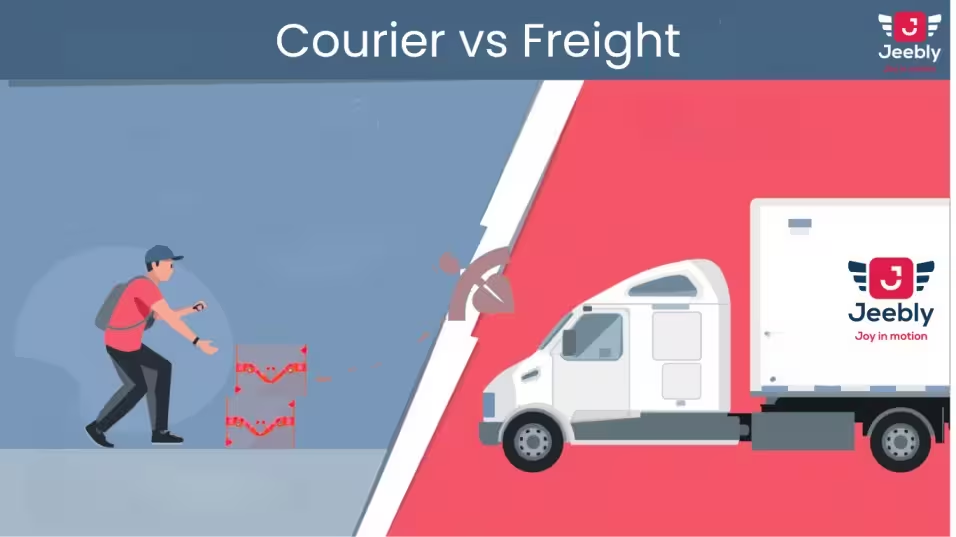
Late deliveries costing you customers? Learn how reliable last-mile delivery works at scale. Here’s a quick read on Courier vs Freight — Key Differences Explained.

Six Operational Decisions That Reduce Delivery Time in UAE

Speed and reliability do not always require switching carriers. Several decisions within your operational control directly affect how quickly and consistently orders reach customers.

1) Invest in address validation at checkout. Incomplete or ambiguous addresses are the single largest cause of failed first-attempt deliveries in the UAE. A GPS pin confirmation at checkout reduces failed attempts and the resulting rescheduling delay.

2) Display order cut-off times prominently. Same-day and next-day delivery only work when customers know the window exists. Bury the cut-off time in the FAQ, and customers will expect delivery that is not operationally possible.

3) Match your service tier to your product category. Not every product needs express delivery, and not every category can absorb the higher failed-attempt rates that come with COD orders. Assess your delivery satisfaction data and calibrate accordingly.

4) Pre-position inventory before peak seasons.
Ramadan and Eid require two to three weeks of lead time to move stock closer to demand. Businesses that plan around the seasonal calendar with their logistics partner consistently outperform those that react to the surge after it starts.

5) Enable real-time tracking notifications. Proactive delivery updates reduce “where is my order?” queries and, critically, increase the likelihood that the customer is available when the rider arrives. This directly reduces failed-attempt rates.

6) Choose a carrier with UAE-specific routing intelligence. Global carriers apply generic mapping systems to a market that requires local knowledge: landmark-based navigation, free zone access protocols, and district-level traffic patterns that shift significantly by time of day and season.

Already shipping at volume and want to benchmark your current setup? Explore Jeebly’s business logistics solutions to see where the gaps are.

Conclusion

How long delivery takes in the UAE comes down to three things: who handles the shipment, how well they know the local operating environment, and whether their technology is built for consistency at scale. Businesses that treat logistics as a strategic lever consistently outperform those that treat it as a commodity vendor relationship.

Jeebly operates 50,000+ daily deliveries across a fleet of 4,000+ vehicles, achieving a 98% FDSS (First Day Delivery Success) rate through its range of services, such as Jeebly Bizz and Jeebly Haul.

Get in touch with the Jeebly team to build a delivery setup that meets your customers’ expectations.

Frequently Asked Questions

Standard domestic shipping can take one to three business days across the UAE. Same-day might be available in Dubai for orders placed by the 11 AM cut-off; next-day can cover the full UAE for orders confirmed by 2 PM.

Once dispatched within the UAE, most orders may arrive within 24 to 48 hours, depending on the service tier and destination emirate. International orders add customs clearance time, typically two to five additional business days.

The most common causes are incomplete or ambiguous addresses, failed delivery attempts for COD orders, peak-season demand surges during Ramadan and Eid, and customs clearance delays for international shipments.

Yes, directly. COD requires a payment exchange at the door. If the customer is unavailable, the order returns to the hub and the process restarts. Businesses with high COD volumes see this reflected in overall delivery timelines.

Express delivery within Dubai can typically take 60 to 120 minutes from dispatch. Weight and dimension limits apply, and orders need to be ready for collection when the rider arrives.

Routes to insightful reads

Porter vs Jeebly: Understanding the Difference and Choosing the Right Delivery Partner in Dubai

Picking a delivery partner in Dubai sounds straightforward until the bills don’t match the quotes, the tracking goes quiet, or your business outgrows what the platform can handle. This article breaks down both platforms in terms of pricing, technology, coverage, and support so you know exactly what you are choosing and why.

Read More
EMX vs Jeebly: Which Courier Delivers More Value for Your Business?

Your courier partner is not a vendor you swap easily. It shapes how customers experience your brand after checkout. This article maps providers across service capabilities, technology, pricing structures, and e-commerce fit, so you can match the right partner to how your business actually operates.

Read More
iMile vs Jeebly: Comparing Last-Mile Delivery for eCommerce Businesses

Your logistics partner is the last thing your customer experiences before forming an opinion about your brand. The iMile vs Jeebly question comes up often for UAE e-commerce brands, and rightly so. This article compares both carriers across coverage, delivery speed, pricing, SLAs, technology, and reverse logistics so you can choose based on what your business actually needs.

Read More
Quiqup vs Jeebly: Which Delivery Partner Is Right for Your UAE Business?

Your delivery partner is your brand’s last impression. When a parcel arrives late, tracking goes silent, or a COD reconciliation takes a week, the customer blames your brand. So when UAE businesses compare Quiqup vs Jeebly, the real question is: which provider actually protects your customer experience while your order volumes grow?

Read More
Green Logistics: Why Sustainability Is Becoming the UAE's Next Big Supply Chain Priority
Green Logistics in the UAE: What It Is and Why It Matters

Every parcel that moves from a warehouse to a doorstep carries more than a product. It carries a carbon cost. This article covers what it entails, why it matters specifically for UAE e-commerce businesses, the real return on investment it delivers, and how to approach implementation without overhauling everything at once.

Read More
Categories
blogs

Courier vs Freight: Key Differences Explained

What Is the Difference Between Courier and Freight? A Simple Guide for Senders

What Is the Difference Between Courier and Freight? A Simple Guide for Senders

Picking the wrong shipping method costs more than money. It costs time, damages relationships with customers, and, in some cases, spoils or delays goods. 

That decision matters even more in a market where parcel volume continues to rise. The UAE courier, express, and parcel market is estimated at USD 1.4 billion in 2026, up from USD 1.3 billion in 2025. This means more shipments are moving through faster, denser delivery networks.

The difference between courier and freight comes down to three variables: shipment weight, delivery speed, and handling type. Get those three right, and the choice is obvious every time.
This guide breaks it down clearly so you can choose right the first time.

Brief Difference Between Courier and Air Freight

The two services are not substitutes for each other. They solve different problems at different weight thresholds.

* Courier services move individual parcels door-to-door, with real-time tracking and same-day or next-day delivery. Each shipment travels as its own tracked unit through the carrier’s network. The practical upper weight limit is 20 kg. Beyond that, handling individual parcels becomes operationally infeasible.

* Freight moves bulk cargo by truck, air, or sea. Shipments are consolidated by weight, volume, and route. The economics only work at scale: above 20 kg, or when dimensions exceed 100 x 50 x 50 cm. Freight is also the default for cross-border trade, where customs clearance and multi-modal routing come into play.

Using a courier for your UAE e-commerce deliveries? Jeebly Dash offers same-day, next-day, and express delivery across all seven emirates, with built-in COD support.

Courier vs Freight: A Side-by-Side Comparison

Across the wider region, the split between two services is already visible in how shipments move: domestic deliveries accounted for 64.81% of the GCC courier, express, and parcel market in 2025. 

This is why courier networks are so central for local parcel movement, while freight takes over as weight, route complexity, and cross-border handling increase.

The table below compares both services across the variables that matter most for shipping decisions in the UAE.

Factor Courier Freight
Weight range Up to 20 kg 20 kg and above
Delivery speed Same day, next day, express (60–120 min) 1 to 10+ business days
Tracking Real-time, per-shipment updates Milestone tracking
Cost basis Per shipment / flat or per-kg rate Weight, volume, and route
COD support ✓ Yes ✕ No
Cross-border Limited Full GCC and international
Best for E-commerce, documents, parcels Bulk cargo, imports/exports
Booking App or self-service platform Custom quotation

8 Things That Determine Whether You Need Courier or Freight

Most shipping mistakes happen because senders focus on price before asking the right questions. These eight factors tell you which service is the best fit before you request a single quote.

1. Shipment Weight Is the First Filter

Here’s an operational boundary to follow:
* Under 20 kg: courier. 
* Over 20 kg: freight.

Courier networks are built for handling individual parcels. Above 20 kg, that infrastructure cannot manage the load efficiently, and costs reflect it. 

For example, Jeebly Dash handles up to 7 kg at a fixed rate (AED 17.31 for next-day delivery for the first 5 kg), with per-kg pricing above that. Jeebly Haul applies to shipments exceeding 20 kg or 100 x 50 x 50 cm in dimensions

2. Parcel Dimensions Can Override Weight

A shipment might be under 20 kg but still qualify as freight if it exceeds standard parcel dimensions. 
Oversized items like long pipes, display equipment, and custom-built fixtures cannot pass through a courier’s parcel-sorting and routing system, regardless of weight. 

Always check dimensions alongside weight when deciding.

3. Delivery Urgency Determines Your Options

Speed is no longer a niche requirement. In the GCC, express services accounted for 33.20% of the market in 2025, indicating that demand has shifted toward faster fulfilment windows for parcel shipments. 

Courier services offer same-day, next-day, and express delivery. In Dubai, express delivery can move a package in 60 to 120 minutes. Freight transit times start at 1 day for domestic road freight and increase from there for international modes. 

If the shipment has a hard same-day deadline, freight is not on the table.

4. Destination Affects Which Service Applies

Within the UAE, couriers handle next-day delivery across all seven emirates. Express (sub-two-hour) is available only in Dubai. For cross-border shipping to Saudi Arabia, Oman, Kuwait, or beyond the GCC, freight is the only structured option. 

International courier services exist but are more expensive than air or road freight for anything over a few kilograms.

Shipping heavy cargo across the GCC? Jeebly Haul covers road freight across the GCC, air freight for international trade, and ocean freight, all with customs clearance included.

5. COD Requirement Points You Toward Courier

COD (cash on delivery) is a courier function. Freight services operate on an invoice-based billing cycle. If your business collects cash at the door from end customers, the transaction is handled by a courier rider rather than a freight driver. In the UAE, COD is deeply embedded in B2C e-commerce. It is a capability you need to confirm before choosing a logistics partner.

For a deeper look at how COD fits into e-commerce logistics in the UAE, see How Jeebly Helps SMEs Scale During Peak Shopping Seasons.

6. Temperature-Sensitive Goods Need a Specific Check

Temperature-controlled delivery (up to 15°C) is available as a courier service across all emirates. This covers pharmaceuticals, cosmetics, and certain food categories that need controlled conditions but not sub-zero storage. 

Two things to note: this is not a cold chain, and temperature-controlled international freight is not available. If your goods are temperature-sensitive and crossing a border, that is a hard constraint that needs to be confirmed before booking.

7. E-Commerce Integration Changes the Equation

For e-commerce businesses, courier selection is about the tech stack. When your Shopify, Magento, or WooCommerce store integrates with a logistics platform via API, orders automatically trigger pickup and dispatch. No manual entry, no delays between order and fulfilment. 

Freight does not plug into e-commerce platforms in the same way. If automated order flow matters, a courier with API integration is the right infrastructure. Jeebly’s technology platform connects directly to major e-commerce systems for exactly this reason.

8. Volume and Frequency Shape the Cost Logic

A business sending 10 parcels a day benefits from courier contract pricing and volume-based remittance cycles. A business restocking warehouse inventory from a supplier in China benefits from freight consolidation. 

The per-kg cost comparison between the two is irrelevant unless you’re comparing the same type of shipment. Compare courier rates for parcel volume against freight rates for cargo volume, not across categories.

If your business is scaling shipment volume, read What Is a 3PL: Third-Party Logistics for UAE Businesses to understand when a single logistics partner covering both courier and freight makes more operational sense.

How Courier Delivery Works End to End

You book through an app or self-service platform. The parcel is picked up, scanned into the carrier’s system, routed to the destination, and tracked at every stage. Delivery status updates go to both sender and recipient.

For e-commerce, the process is more automated. 
* Once your store is integrated with the logistics platform, an incoming order automatically alerts the warehouse team and triggers dispatch. 
* The customer gets real-time delivery updates. 
* COD collected at the door is remitted to the merchant’s bank account on a weekly cycle. 
* Proof of delivery is a photo uploaded by the rider at handover.

Courier services in the UAE make around three delivery attempts before an order is marked as return-to-origin (RTO). That retry structure matters for businesses with high first-attempt failure rates, particularly in areas with access or availability issues.

How Freight Shipping Works End to End

Freight starts with a quotation. 

* You submit shipment details such as weight, dimensions, origin, destination, and handling requirements, and the provider calculates the cost based on the transport mode and route. 
* The booking is confirmed before collection, unlike courier services, where the pickup can happen the same day.
* Once in transit, cargo follows planned routes, with milestone tracking at key checkpoints. 
* For cross-border shipments, customs clearance is handled at the origin and destination, and the freight provider typically coordinates the required documentation.

Jeebly Haul covers this end of the logistics chain, cargo above 20 kg, road freight across the GCC, air freight for international trade, and ocean freight for high-volume imports and exports, with customs clearance built in.

UAE-Specific Factors That Change the Decision

The UAE logistics market has some specific characteristics that shape how courier and freight services operate here.

1. Infrastructure quality. 
In the World Bank’s 2023 Logistics Performance Index, the UAE ranked 7th globally, placing it among the world’s strongest logistics systems. This reinforces why senders here can realistically choose between high-speed courier and more structured freight options.

2. Inter-emirate courier coverage is not uniform. 
Express delivery (60 to 120 minutes) is available only within Dubai. Next-day delivery is available across all seven emirates. Confirm coverage for the specific destination before assuming a courier service can deliver on your timeline.

3. Free zone warehousing adds a step. 
For freight moving into or out of the UAE free zones, a gate pass from the client is required. This is a hard operational requirement and affects inbound logistics planning.

4. The hybrid model is common. 
Most UAE businesses that operate at scale use both services for different purposes: courier for customer-facing e-commerce deliveries, freight for supplier restocking and cross-border inventory movement. 

Need both courier and freight under one roof? Jeebly’s service lines cover the full chain: Jeebly Dash for same-day and next-day parcel delivery, Jeebly Haul for cargo and freight. One platform, one integration.

Talk to the team to map the right setup for your volume and zones.

Frequently Asked Questions

Courier handles individual parcels up to 20 kg with door-to-door delivery, real-time tracking, and same-day or next-day speed. Freight handles bulk or heavy shipments above that threshold using trucks, aircraft, or vessels, with longer transit times and quote-based pricing.

Standard courier services handle up to 20 kg. Beyond that weight, or if dimensions exceed 100 x 50 x 50 cm, the shipment requires a freight quotation. Sending oversized cargo through a courier network typically results in rejection.

Courier is faster for individual shipments. Express delivery in Dubai can move a package in 60 to 120 minutes. Domestic freight starts at one business day and increases significantly for international modes.

For shipments above 20 kg, freight is generally more cost-efficient per kilogram. Courier pricing reflects the cost of individual handling, speed, and door-to-door service. That premium is justified for small, time-sensitive parcels.

Yes. Jeebly Dash covers same-day and next-day parcel delivery across all seven emirates. Jeebly Haul covers cargo and freight for shipments above 20 kg, including road freight across the GCC, air freight, and ocean freight with customs clearance.

Routes to insightful reads

Porter vs Jeebly: Understanding the Difference and Choosing the Right Delivery Partner in Dubai

Picking a delivery partner in Dubai sounds straightforward until the bills don’t match the quotes, the tracking goes quiet, or your business outgrows what the platform can handle. This article breaks down both platforms in terms of pricing, technology, coverage, and support so you know exactly what you are choosing and why.

Read More
EMX vs Jeebly: Which Courier Delivers More Value for Your Business?

Your courier partner is not a vendor you swap easily. It shapes how customers experience your brand after checkout. This article maps providers across service capabilities, technology, pricing structures, and e-commerce fit, so you can match the right partner to how your business actually operates.

Read More
iMile vs Jeebly: Comparing Last-Mile Delivery for eCommerce Businesses

Your logistics partner is the last thing your customer experiences before forming an opinion about your brand. The iMile vs Jeebly question comes up often for UAE e-commerce brands, and rightly so. This article compares both carriers across coverage, delivery speed, pricing, SLAs, technology, and reverse logistics so you can choose based on what your business actually needs.

Read More
Quiqup vs Jeebly: Which Delivery Partner Is Right for Your UAE Business?

Your delivery partner is your brand’s last impression. When a parcel arrives late, tracking goes silent, or a COD reconciliation takes a week, the customer blames your brand. So when UAE businesses compare Quiqup vs Jeebly, the real question is: which provider actually protects your customer experience while your order volumes grow?

Read More
Green Logistics: Why Sustainability Is Becoming the UAE's Next Big Supply Chain Priority
Green Logistics in the UAE: What It Is and Why It Matters

Every parcel that moves from a warehouse to a doorstep carries more than a product. It carries a carbon cost. This article covers what it entails, why it matters specifically for UAE e-commerce businesses, the real return on investment it delivers, and how to approach implementation without overhauling everything at once.

Read More
Categories
blogs

Micro-Fulfillment Centres: The Future of Urban Logistics in the UAE

Micro-Fulfillment Centres: The Future of Urban Logistics in the UAE​

Micro-Fulfillment Centres: The Future of Urban Logistics in the UAE

The UAE’s e-commerce and on-demand economy is growing at an unprecedented pace. Customers expect faster deliveries, precise tracking, and flexible delivery slots, all while businesses aim to keep costs under control. To meet these demands, logistics providers are turning to micro-fulfillment centres in the UAE as a smarter way to manage inventory and speed up last-mile delivery.

Micro-fulfillment centres (MFCs) are small, strategically located storage hubs positioned closer to high demand urban areas. Unlike traditional warehouses that sit on city outskirts, these compact facilities operate within or near dense neighborhoods, enabling quicker dispatch and shorter delivery routes. For a logistics driven market like the UAE, this shift is transforming how goods move across cities.

Why Micro-Fulfillment Centres Matter

The rise of quick commerce, has made traditional distribution models less efficient. Longer travel distances from large warehouses lead to higher fuel costs, delivery delays, and increased emissions. By contrast, micro-fulfillment centres in the UAE allow businesses to store fast moving inventory closer to customers, reducing transit times and improving delivery reliability.

For e-commerce brands, this means:

  • Faster order processing and dispatch

  • Reduced last mile delivery costs

  • Improved customer satisfaction

  • Better inventory visibility across locations

For customers, it results in quicker deliveries, more accurate ETAs, and greater convenience.

Supporting the Growth of On-Demand Commerce

The UAE’s retail and social commerce sectors are expanding rapidly. From fashion sellers to grocery platforms, businesses need flexible storage and distribution solutions that can scale with demand. Micro-fulfillment centres make this possible by enabling companies to store smaller inventory volumes across multiple urban locations rather than relying on one central warehouse.

This distributed approach ensures products are always closer to the end customer. During peak seasons or promotional periods, businesses can process more orders without overwhelming a single facility. The result is smoother operations and fewer delivery bottlenecks.

Technology Powers Efficiency

Modern micro-fulfillment centres rely heavily on technology. Real-time inventory tracking, automated sorting systems, and smart routing tools ensure that orders are processed quickly and accurately. Data visibility across the supply chain allows logistics providers to allocate deliveries more efficiently and avoid unnecessary trips.

For companies operating in the UAE’s fast paced cities, this tech enabled model helps maintain consistent delivery performance even during high demand periods.

Sustainability Benefits

Sustainability is becoming a priority across the UAE’s logistics sector. By shortening delivery distances and enabling optimized routing, micro-fulfillment centres help reduce fuel consumption and emissions. When combined with electric vehicles or bike based delivery fleets, they support cleaner and more efficient urban logistics.

This makes micro-fulfillment centres in the UAE not just a speed advantage but also a sustainable solution for future ready logistics operations.

How Jeebly Supports Smarter Urban Logistics

At Jeebly, we recognize the growing importance of micro-fulfillment strategies. By positioning inventory closer to demand and leveraging smart routing technology, we help businesses achieve faster deliveries, better cost efficiency, and improved customer experiences. Our approach focuses on building a logistics ecosystem that supports both speed and sustainability across UAE cities and we have already launched multiple micro-fulfillment centres across Dubai, partnering with the biggest e commerce brands in the market.

The Road Ahead

As e-commerce continues to grow, the demand for faster, more reliable delivery will only increase. Micro-fulfillment centres are set to play a central role in meeting these expectations. Businesses that adopt this model early will gain a competitive advantage through quicker fulfillment, reduced costs, and stronger customer loyalty.

In the evolving logistics landscape, micro-fulfillment centres in the UAE are not just a trend, they are the future of urban delivery.

Routes to insightful reads

Porter vs Jeebly: Understanding the Difference and Choosing the Right Delivery Partner in Dubai

Picking a delivery partner in Dubai sounds straightforward until the bills don’t match the quotes, the tracking goes quiet, or your business outgrows what the platform can handle. This article breaks down both platforms in terms of pricing, technology, coverage, and support so you know exactly what you are choosing and why.

Read More
EMX vs Jeebly: Which Courier Delivers More Value for Your Business?

Your courier partner is not a vendor you swap easily. It shapes how customers experience your brand after checkout. This article maps providers across service capabilities, technology, pricing structures, and e-commerce fit, so you can match the right partner to how your business actually operates.

Read More
iMile vs Jeebly: Comparing Last-Mile Delivery for eCommerce Businesses

Your logistics partner is the last thing your customer experiences before forming an opinion about your brand. The iMile vs Jeebly question comes up often for UAE e-commerce brands, and rightly so. This article compares both carriers across coverage, delivery speed, pricing, SLAs, technology, and reverse logistics so you can choose based on what your business actually needs.

Read More
Quiqup vs Jeebly: Which Delivery Partner Is Right for Your UAE Business?

Your delivery partner is your brand’s last impression. When a parcel arrives late, tracking goes silent, or a COD reconciliation takes a week, the customer blames your brand. So when UAE businesses compare Quiqup vs Jeebly, the real question is: which provider actually protects your customer experience while your order volumes grow?

Read More
Green Logistics: Why Sustainability Is Becoming the UAE's Next Big Supply Chain Priority
Green Logistics in the UAE: What It Is and Why It Matters

Every parcel that moves from a warehouse to a doorstep carries more than a product. It carries a carbon cost. This article covers what it entails, why it matters specifically for UAE e-commerce businesses, the real return on investment it delivers, and how to approach implementation without overhauling everything at once.

Read More
Categories
blogs

How Jeebly Helps SMEs Scale During Peak Shopping Seasons

How Jeebly Helps SMEs Scale During Peak Shopping Seasons

How Jeebly Helps SMEs Scale During Peak Shopping Seasons

Peak shopping seasons can be both exciting and overwhelming for small and medium sized businesses (SMEs). Whether it’s festive sales, online shopping events, or promotional campaigns, order volumes can surge overnight. Without the right logistics support, this growth can quickly turn into delayed deliveries, unhappy customers, and lost revenue. That’s why choosing the right logistics solutions for SMEs during peak season becomes critical for sustainable growth.

At Jeebly, we help SMEs prepare for and scale smoothly during high demand periods with smart logistics planning, reliable delivery networks, and real time visibility.

Managing Sudden Order Surges with Ease

One of the biggest challenges SMEs face during peak seasons is managing sudden spikes in orders. Manual processes and limited delivery capacity can lead to missed pickups, delayed dispatches, and operational stress. Jeebly offers scalable delivery infrastructure that adjusts to your order volume, ensuring your business stays efficient even during high demand.

With flexible pickup scheduling, on demand delivery options, and same day or scheduled services, SMEs can keep operations running smoothly without overloading their teams.

Faster Fulfilment and Reliable Deliveries

During peak shopping periods, customers expect faster deliveries and accurate timelines. Delays can lead to negative reviews and lost repeat business. Jeebly’s optimized routing technology and reliable delivery network ensure that packages reach customers on time, even during busy periods.

Real time tracking and ETA updates also help businesses in Dubai keep customers informed throughout the delivery journey. This transparency reduces customer complaints and builds trust, which is essential during high volume sales seasons.

Smart Technology for Better Planning

Peak seasons require more than just extra delivery capacity. Businesses need visibility into orders, shipments, and delivery performance. Jeebly’s platform provides SMEs with real time dashboards, tracking tools, and analytics that make it easier to plan and manage operations.

With clear insights into delivery timelines, order status, and performance metrics, businesses can make quick decisions and maintain service quality. This technology driven approach is a key reason why many companies rely on logistics solutions for SMEs during peak season to stay competitive.

Cost Control During High Demand

Scaling during peak seasons can increase operational costs if not managed properly. Hiring temporary staff, arranging extra vehicles, or handling failed deliveries can quickly add up. Jeebly helps SMEs control costs through optimized routing, consolidated deliveries, and transparent pricing models.

By reducing failed delivery attempts and improving route efficiency, businesses can maintain profitability while meeting customer expectations.

Seamless Customer Experience

Customer experience plays a major role in repeat purchases and brand loyalty. During peak seasons, even small delays can affect customer satisfaction. Jeebly ensures smooth deliveries, accurate ETAs, and responsive support so that SMEs can deliver a consistent and reliable experience.

From first mile pickup to last mile delivery, our services are designed to support growing businesses and help them maintain service quality during their busiest periods.

Scale with Confidence

Peak shopping seasons are an opportunity for SMEs in UAE to grow their customer base and boost revenue. With the right logistics partner, scaling operations becomes far more manageable. Jeebly provides dependable, flexible, and tech enabled logistics solutions that help SMEs meet demand without compromising on service.

If your business is preparing for the next big sales season, investing in the right logistics solutions for SMEs during peak season can make all the difference. With Jeebly by your side, you can scale confidently, deliver faster, and keep customers coming back long after the peak season ends.

Routes to insightful reads

Porter vs Jeebly: Understanding the Difference and Choosing the Right Delivery Partner in Dubai

Picking a delivery partner in Dubai sounds straightforward until the bills don’t match the quotes, the tracking goes quiet, or your business outgrows what the platform can handle. This article breaks down both platforms in terms of pricing, technology, coverage, and support so you know exactly what you are choosing and why.

Read More
EMX vs Jeebly: Which Courier Delivers More Value for Your Business?

Your courier partner is not a vendor you swap easily. It shapes how customers experience your brand after checkout. This article maps providers across service capabilities, technology, pricing structures, and e-commerce fit, so you can match the right partner to how your business actually operates.

Read More
iMile vs Jeebly: Comparing Last-Mile Delivery for eCommerce Businesses

Your logistics partner is the last thing your customer experiences before forming an opinion about your brand. The iMile vs Jeebly question comes up often for UAE e-commerce brands, and rightly so. This article compares both carriers across coverage, delivery speed, pricing, SLAs, technology, and reverse logistics so you can choose based on what your business actually needs.

Read More
Quiqup vs Jeebly: Which Delivery Partner Is Right for Your UAE Business?

Your delivery partner is your brand’s last impression. When a parcel arrives late, tracking goes silent, or a COD reconciliation takes a week, the customer blames your brand. So when UAE businesses compare Quiqup vs Jeebly, the real question is: which provider actually protects your customer experience while your order volumes grow?

Read More
Green Logistics: Why Sustainability Is Becoming the UAE's Next Big Supply Chain Priority
Green Logistics in the UAE: What It Is and Why It Matters

Every parcel that moves from a warehouse to a doorstep carries more than a product. It carries a carbon cost. This article covers what it entails, why it matters specifically for UAE e-commerce businesses, the real return on investment it delivers, and how to approach implementation without overhauling everything at once.

Read More
Categories
blogs

How Delivery Speed Impacts Customer Loyalty in E-commerce

How Delivery Speed Impacts Customer Loyalty in E-commerce

How Delivery Speed Impacts Customer Loyalty in E-commerce

In today’s e-commerce landscape, customers expect more than good products and competitive prices. Delivery speed has become one of the most direct drivers of repeat purchases and one of the fastest ways to lose a customer permanently.

For UAE businesses competing in a market where same day and next day delivery are increasingly standard, understanding the link between delivery speed and customer loyalty is no longer optional. It’s a commercial priority.

Why Delivery Speed Matters More Than Ever for UAE E-commerce

Modern customers are impatient by design. 96% of consumers say delivery experience impacts brand loyalty. Same day delivery, real time tracking, and precise ETAs have shifted from premium features to baseline expectations.

When deliveries arrive late or unpredictably, customers lose trust, even if the product itself is perfect. In the UAE, where Noon, Amazon, and well-funded D2C brands have conditioned customers to fast fulfillment, delivery speed is often the deciding factor between choosing your brand or a competitor’s.

The window to impress a first-time buyer is narrow. The delivery experience is where that window opens or closes.

The Direct Link Between Delivery Speed and Customer Loyalty in the UAE

Fast and reliable delivery creates a positive post-purchase experience. When customers receive their orders on time, it reinforces confidence in the brand and increases the likelihood of repeat purchases.

Slow or inconsistent delivery leads to the opposite:

* Order cancellations and failed deliveries
* Negative reviews and social word-of-mouth damage
* Lower customer lifetime value (CLV)
* Higher COD refusal rates as purchase intent cools

Studies consistently show that customers who receive orders on time are significantly more likely to repurchase and recommend the brand. In COD-heavy markets like the UAE, speed has an additional commercial dimension: the faster the delivery, the higher the first-attempt acceptance rate.

Delivery Speed vs Delivery Predictability: What UAE Customers Actually Want

Speed matters, but predictability matters equally. Customers value knowing when their order will arrive and being able to plan around it. An accurate 2-hour window beats a vague “today” promise every time.

This is where smart last-mile logistics and real-time tracking create a measurable loyalty advantage:

* Reliable delivery windows reduce customer anxiety, especially for high-value or time-sensitive orders
* Live tracking updates reduce inbound customer service queries (and the cost that comes with them)
* Proactive delay communication preserves trust even when things go wrong

For UAE e-commerce businesses, this means choosing a logistics partner with the infrastructure to deliver both speed and visibility, not just one or the other.

How Express Delivery in Dubai Improves Conversion Rates Before Checkout

Delivery speed doesn’t just affect loyalty after purchase. It directly impacts conversion before checkout.

Displaying a same day or next day delivery badge at the product page or cart stage reduces purchase hesitation and cart abandonment. For time-sensitive categories, gifts, flowers, food, electronics, fashion, express delivery is often the feature that closes the sale.

For businesses operating COD in the UAE, faster delivery also reduces refusal rates. Customers are significantly more likely to accept and pay for an order that arrives within hours of purchase, while intent is still high. Orders that arrive two or three days later face higher refusal because the emotional purchase moment has passed.

Offering same-day delivery as a checkout option is one of the most underutilised conversion levers available to UAE e-commerce brands.

What to Look for in a Last-Mile Delivery Partner for Customer Retention

Achieving fast, consistent delivery at scale requires the right logistics infrastructure behind it. When evaluating a last-mile partner for customer loyalty impact, look for:

CapabilityWhy it matters for loyalty
Same-day delivery within DubaiCaptures high-intent buyers and reduces COD refusal
Express delivery (60–120 min)Serves time-critical categories; strong loyalty driver
Next-day across all 7 emiratesExtends loyalty-building delivery experience UAE-wide
Real-time tracking + notificationsReduces post-purchase anxiety and service queries
Digital proof of deliveryEliminates disputes; builds trust on high-value orders
COD collection + weekly remittanceMaintains cash flow while supporting UAE buyer preferences

A logistics partner that combines speed with transparency helps brands deliver not just packages, but the post-purchase experience that turns first-time buyers into repeat customers.

How Jeebly Dash Delivers the Speed UAE Customers Expect

Jeebly Dash is Jeebly’s fast delivery service, built specifically for UAE e-commerce businesses that need delivery speed as a customer experience and conversion tool.

Jeebly Dash delivery options:

Express delivery: 60–120 minutes within Dubai — for time-critical orders where speed is the product
Same day delivery: Order by 11 AM, delivered same day within Dubai
Next day delivery: Across all seven emirates at AED 17.31 per shipment up to 5 kg — flat rate, no zone surcharges

Every Jeebly delivery includes real-time tracking updates, proactive customer notifications, and digital proof of delivery as standard. COD is collected on delivery and remitted weekly with full documentation.

For businesses on Shopify, Magento, or WooCommerce, Jeebly integrates directly, orders flow automatically from your store into dispatch without manual entry.

See Jeebly Dash delivery options →

Final Thoughts: Delivery Speed Is a Retention Strategy, Not a Logistics Detail

In e-commerce, loyalty is earned after checkout. The product gets a customer to buy once. The delivery experience determines whether they come back.
Fast, predictable delivery is no longer a differentiator — it’s the floor. Businesses that treat delivery speed as a retention strategy, not just an operational output, will outperform competitors on CLV, repeat purchase rate, and word-of-mouth growth.

Jeebly Dash gives UAE e-commerce businesses the delivery speed infrastructure to make that happen — without building it themselves.


Talk to the Jeebly team about your delivery setup →


Download the Jeebly One app →

Frequently Asked Questions

Fast, on-time delivery creates a positive post-purchase experience that reinforces brand trust and increases repeat purchase likelihood. Studies show delivery experience is a top driver of brand loyalty — customers who receive orders on time are significantly more likely to repurchase and recommend the brand.

Jeebly Dash offers express delivery in 60–120 minutes within Dubai for time-critical orders, same-day delivery for orders placed before 11 AM, and next-day delivery across all seven emirates. It is one of the fastest last-mile delivery options available to UAE e-commerce businesses.

Yes. COD refusal rates are directly linked to the time between purchase and delivery. Orders delivered within hours of purchase — while customer intent is still high — have significantly higher acceptance rates than orders delivered one to three days later. Express and same-day delivery are among the most effective tools for reducing COD refusals.

Jeebly’s next-day delivery across all seven emirates is priced at AED 17.31 per shipment up to 5 kg — a flat rate with no zone surcharges. Same-day and express delivery within Dubai is available via Jeebly Dash, priced separately based on service level.

Yes. Jeebly Dash is available to businesses of all sizes with no stated minimum volume. Integration with Shopify, Magento, WooCommerce, and custom APIs means setup is straightforward regardless of order volume.

The cut-off time for same-day delivery via Jeebly Dash is 11 AM. Orders placed before 11 AM are dispatched for same-day delivery within Dubai. Express 60–120 minute delivery is available throughout the day for time-critical shipments.

Routes to insightful reads

Porter vs Jeebly: Understanding the Difference and Choosing the Right Delivery Partner in Dubai

Picking a delivery partner in Dubai sounds straightforward until the bills don’t match the quotes, the tracking goes quiet, or your business outgrows what the platform can handle. This article breaks down both platforms in terms of pricing, technology, coverage, and support so you know exactly what you are choosing and why.

Read More
EMX vs Jeebly: Which Courier Delivers More Value for Your Business?

Your courier partner is not a vendor you swap easily. It shapes how customers experience your brand after checkout. This article maps providers across service capabilities, technology, pricing structures, and e-commerce fit, so you can match the right partner to how your business actually operates.

Read More
iMile vs Jeebly: Comparing Last-Mile Delivery for eCommerce Businesses

Your logistics partner is the last thing your customer experiences before forming an opinion about your brand. The iMile vs Jeebly question comes up often for UAE e-commerce brands, and rightly so. This article compares both carriers across coverage, delivery speed, pricing, SLAs, technology, and reverse logistics so you can choose based on what your business actually needs.

Read More
Quiqup vs Jeebly: Which Delivery Partner Is Right for Your UAE Business?

Your delivery partner is your brand’s last impression. When a parcel arrives late, tracking goes silent, or a COD reconciliation takes a week, the customer blames your brand. So when UAE businesses compare Quiqup vs Jeebly, the real question is: which provider actually protects your customer experience while your order volumes grow?

Read More
Green Logistics: Why Sustainability Is Becoming the UAE's Next Big Supply Chain Priority
Green Logistics in the UAE: What It Is and Why It Matters

Every parcel that moves from a warehouse to a doorstep carries more than a product. It carries a carbon cost. This article covers what it entails, why it matters specifically for UAE e-commerce businesses, the real return on investment it delivers, and how to approach implementation without overhauling everything at once.

Read More
Categories
blogs

Expected 2026 Trends in UAE Logistics and Delivery

Expected 2026 Trends in UAE Logistics and Delivery

UAE Logistics Trends 2026: What Businesses Should Expect in the Next Phase of Delivery Innovation

The logistics industry in the UAE is evolving rapidly as technology, consumer behavior, and infrastructure continue to reshape how goods move across the region. Over the past decade, the UAE has become one of the most advanced logistics hubs in the Middle East, supported by strong trade connectivity, modern infrastructure, and rapidly growing e-commerce adoption.

By 2026, these changes will accelerate even further. New technologies such as artificial intelligence, micro fulfilment infrastructure, and predictive analytics are already redefining delivery operations. At the same time, rising customer expectations for faster and more transparent deliveries are pushing logistics providers to innovate.

According to the Statista eCommerce market outlook for the UAE, the country’s e-commerce sector is expected to continue growing significantly through 2026, increasing the demand for efficient last-mile logistics networks.

For businesses operating in the UAE, understanding the key logistics trends shaping 2026 will be essential for maintaining operational efficiency and delivering a better customer experience.

1. AI-Powered Route Optimization Will Become Standard

Artificial intelligence is transforming how logistics networks operate. In 2026, AI-driven route optimization will play a central role in helping delivery companies reduce travel time, fuel costs, and operational inefficiencies.

Modern logistics platforms analyze multiple variables simultaneously, including:

* Real-time traffic conditions

* Delivery density in specific areas

* Rider availability

* Customer delivery windows

* Historical route performance

These systems automatically adjust delivery routes throughout the day, ensuring that drivers follow the most efficient path.

For businesses managing large order volumes, this means faster deliveries and more reliable service.

At Jeebly, AI-enabled routing technology already supports delivery operations across the UAE, improving delivery success rates and reducing delays in the last-mile stage of the supply chain. If you’re exploring how last-mile delivery works in detail, you can read our guide on what last-mile delivery means for modern logistics.

2. Micro-Fulfilment Centres Will Transform Urban Logistics

One of the most important developments in UAE logistics is the rise of micro fulfilment centres (MFCs).

Traditional warehouses are typically located on the outskirts of cities. While this setup works for bulk distribution, it increases delivery time for urban customers.

Micro fulfilment centres solve this challenge by placing inventory closer to residential demand zones within cities.

These compact fulfilment hubs allow businesses to:

* Shorten delivery distances

* Improve order processing speed

* Support same-day delivery models

* Reduce logistics costs for urban deliveries

Jeebly has recently launched its Micro Fulfilment Centre (MFC) network, designed to support fast urban deliveries across Dubai and other key UAE markets. By positioning inventory closer to customers, retailers can significantly reduce fulfilment times and support hyperlocal delivery models.

As online shopping continues to grow, MFC infrastructure will become one of the most important components of modern logistics networks.

3. Q-Commerce and Hyperlocal Delivery Will Continue Expanding

Consumer expectations around delivery speed have changed dramatically. Waiting several days for an online order is no longer acceptable for many shoppers.

Instead, customers increasingly expect:

* Same day delivery

* Instant delivery options

* Accurate delivery windows

This shift has led to the rapid growth of Q-commerce (quick commerce).

Q-commerce focuses on ultra-fast deliveries, often within hours or minutes of placing an order. The model is especially popular for products such as groceries, pharmacy items, electronics accessories, and urgent retail purchases.

Jeebly has expanded its Q-commerce delivery capabilities through Jeebly Dash, enabling rapid deliveries across high density urban areas.

Hyperlocal delivery networks like these are becoming essential for retailers and social sellers who want to compete in an on-demand retail environment.

4. Sustainability and Green Logistics Will Gain Momentum

Sustainability is becoming a key priority for logistics companies across the UAE.

The country has committed to ambitious environmental targets through initiatives such as the UAE Net Zero 2050 strategy, which aims to reduce carbon emissions across industries.

To align with these goals, logistics companies are exploring several sustainability initiatives, including:

* Electric delivery vehicles

* Optimized delivery routes to reduce fuel consumption

* Environmentally friendly packaging solutions

* Carbon-tracking systems for supply chains

Green logistics is no longer just a regulatory requirement, it is becoming an important factor for brands that want to operate responsibly while maintaining operational efficiency.

5. Reverse Logistics Will Become More Important

As e-commerce continues to grow, so does the volume of product returns.

Returns, exchanges, and failed deliveries create operational challenges for retailers. Without a proper reverse logistics system, businesses can face increased costs and inventory management issues.

Efficient reverse logistics solutions help businesses:

recover returned inventory faster

reduce operational losses

improve customer satisfaction

Many companies are now investing in structured return processes to make returns more efficient. If you’re interested in understanding this area of logistics further, you can explore how reverse logistics supports modern supply chains.

6. Autonomous Delivery and Drone Logistics Will Continue Developing

Autonomous delivery technologies are also gaining attention across the UAE and the wider Middle East.

Government regulators are actively exploring frameworks to support these innovations. Authorities such as the General Civil Aviation Authority (GCAA) are working on regulatory systems that allow controlled drone logistics trials.

These technologies are still in early stages but could eventually support:

* Medical supply delivery

* Remote area logistics

* Lightweight parcel transport

While drones will not replace traditional delivery vehicles anytime soon, they are expected to complement existing logistics infrastructure in the future.

7. Data Visibility and Predictive Logistics Will Improve Customer Experience

Modern logistics operations are increasingly driven by data.

Businesses rely on predictive analytics to forecast demand and optimize delivery operations. Customers, meanwhile, expect greater transparency during the delivery process.

Predictive logistics systems help companies:

* Forecast demand spikes

* Optimize delivery routes

* Improve ETA accuracy

* Reduce failed deliveries

Jeebly’s delivery platform already provides real-time delivery updates and operational insights, helping businesses maintain better visibility across their logistics operations.

The Future of Logistics in the UAE

The logistics ecosystem in the UAE is entering a new era of innovation. From AI-driven routing and hyperlocal fulfilment to micro-fulfilment infrastructure and predictive analytics, the trends shaping 2026 will redefine how businesses manage supply chains.

Companies that invest early in modern logistics infrastructure will be better positioned to scale operations, reduce delivery delays, and improve customer satisfaction.

At Jeebly, we continue building technology-driven logistics solutions designed for the next generation of commerce—combining smart fulfilment, rapid delivery networks, and data-driven operations.

As logistics technology continues to evolve, one thing remains certain: the future of delivery in the UAE will be defined by speed, intelligence, and adaptability.

Frequently Asked Questions

Key logistics trends in the UAE for 2026 include AI-driven route optimization, expansion of micro-fulfilment centres, rapid growth of Q-commerce, increased focus on sustainable logistics, improved reverse logistics systems, and the gradual introduction of autonomous delivery technologies.

Micro-fulfilment centres place inventory closer to urban customers, reducing delivery distances and enabling faster order fulfilment. In the UAE, these hubs support same-day and hyperlocal delivery models, helping businesses meet rising consumer expectations for faster deliveries.

Q-commerce, or quick commerce, refers to ultra-fast delivery services that deliver products within hours or minutes of ordering. The model is growing in the UAE due to high smartphone adoption, strong e-commerce demand, and consumer expectations for instant delivery.

Artificial intelligence improves delivery operations by optimizing routes, predicting delivery demand, and improving fleet utilization. AI systems analyze real-time traffic, order volumes, and driver availability to create faster and more efficient delivery routes.

Autonomous technologies such as drones and delivery robots are expected to complement traditional logistics networks rather than replace them. In the UAE, pilot programs are exploring how these technologies can support specific use cases like medical logistics and remote deliveries.

Routes to insightful reads

Porter vs Jeebly: Understanding the Difference and Choosing the Right Delivery Partner in Dubai

Picking a delivery partner in Dubai sounds straightforward until the bills don’t match the quotes, the tracking goes quiet, or your business outgrows what the platform can handle. This article breaks down both platforms in terms of pricing, technology, coverage, and support so you know exactly what you are choosing and why.

Read More
EMX vs Jeebly: Which Courier Delivers More Value for Your Business?

Your courier partner is not a vendor you swap easily. It shapes how customers experience your brand after checkout. This article maps providers across service capabilities, technology, pricing structures, and e-commerce fit, so you can match the right partner to how your business actually operates.

Read More
iMile vs Jeebly: Comparing Last-Mile Delivery for eCommerce Businesses

Your logistics partner is the last thing your customer experiences before forming an opinion about your brand. The iMile vs Jeebly question comes up often for UAE e-commerce brands, and rightly so. This article compares both carriers across coverage, delivery speed, pricing, SLAs, technology, and reverse logistics so you can choose based on what your business actually needs.

Read More
Quiqup vs Jeebly: Which Delivery Partner Is Right for Your UAE Business?

Your delivery partner is your brand’s last impression. When a parcel arrives late, tracking goes silent, or a COD reconciliation takes a week, the customer blames your brand. So when UAE businesses compare Quiqup vs Jeebly, the real question is: which provider actually protects your customer experience while your order volumes grow?

Read More
Green Logistics: Why Sustainability Is Becoming the UAE's Next Big Supply Chain Priority
Green Logistics in the UAE: What It Is and Why It Matters

Every parcel that moves from a warehouse to a doorstep carries more than a product. It carries a carbon cost. This article covers what it entails, why it matters specifically for UAE e-commerce businesses, the real return on investment it delivers, and how to approach implementation without overhauling everything at once.

Read More
Categories
blogs

What Is Last Mile Delivery? A Guide for Businesses & Shoppers

What is Last-Mile Delivery and Why It Matters in the UAE

What Is Last Mile Delivery? A Guide for Businesses & Shoppers

When people ask, what is last mile delivery, they are really asking about the final step of a package’s journey. It is the moment when a product moves from a local hub to the customer’s doorstep. Even though it sounds simple, this step often decides whether a customer feels happy or frustrated.

In ecommerce, this final stretch is the most visible part of the supply chain and delivery speed impacts customer loyalty in e-commerce more than most brands realize. Studies from Capgemini Research Institute show that most customers will not return to a brand after a poor delivery experience. That means businesses cannot afford to ignore it.

In this guide, we explain the last mile delivery meaning, how it works, why it is expensive, and what it looks like in the UAE.

What is Last-Mile Delivery?

So, what is last mile delivery in simple terms? It is the final step in the shipping process where a package travels from a nearby warehouse or delivery hub to the customer’s address.

Think of it like a relay race. The warehouse prepares the order. Trucks move it across cities. But the last runner, usually a delivery driver, brings it to your door. That final run is called the last mile.
In last mile delivery in ecommerce, this stage matters the most because it directly affects the customer. If the package arrives late, damaged, or not at all, the customer blames the brand, not the warehouse.

This is why businesses in the UAE now invest heavily in faster and smarter delivery systems. The final delivery experience shapes trust, reviews, and repeat orders.

How Does Last Mile Delivery Work Step by Step?

The process usually follows these steps:

1. Order Confirmation
The customer places an order online. The system confirms payment and prepares the request.

2. Warehouse Fulfillment
Staff pick, pack, and label the product.

3. Transfer to Local Hub
The package moves to a delivery center close to the customer’s area.

4. Route Planning
Software selects the fastest and most efficient route.

5. Out for Delivery
A driver loads multiple packages and begins delivery.

6. Real Time Tracking and ETA Updates
The customer receives notifications and real time ETA delivery updates because real-time ETA updates reduce customer complaints and failed attempts.

7. Final Delivery Attempt
The driver delivers the package and collects proof of delivery.

Many UAE shoppers now expect live tracking. In fact, a McKinsey report found that customers increasingly demand same day or next day shipping. Because of this, businesses must use smart routing and clear communication to stay competitive.

Next, we will look at why this final step is often the most expensive part of the entire delivery process.

Why Is Last Mile Delivery So Expensive?

Many businesses ask, why is last mile delivery expensive if the product has already traveled across cities or even countries.

The reason is simple. The last mile is the least efficient part of shipping. A truck may carry hundreds of packages to one city. However, during final delivery, a driver may stop at each home one by one. That takes more time, fuel, and effort.

Last mile delivery can account for more than half of total shipping costs. This includes driver wages, fuel, vehicle maintenance, and delivery management systems.

Failed deliveries also increase costs. If a customer is not available, the company must attempt delivery again. In busy cities like Dubai and Abu Dhabi, traffic congestion adds even more delays. Therefore, businesses must manage this stage carefully to protect their margins.

What Affects Last Mile Delivery Speed and Reliability?

Speed and reliability depend on several factors. Even small issues can cause delays.

Here are the main factors:

Address Accuracy
Incomplete or unclear addresses slow drivers down.

Customer Availability

If the customer is not home, the delivery fails.

Traffic and Urban Density

UAE cities can experience heavy traffic during peak hours.

Delivery Time Slots
Poorly planned delivery time slots create missed attempts.

Real Time Communication

Real time ETA delivery updates help customers prepare.

For example, if a customer chooses a delivery window between 2 PM and 4 PM but leaves home early, the driver wastes time. However, when businesses follow delivery time slots best practices and send reminder notifications, the success rate improves.
Clear communication builds trust. It also reduces stress for both drivers and customers.

Common Last Mile Delivery Challenges in Real Life

Even with planning, problems still happen. These are common last mile delivery challenges businesses face every day:

1. Incorrect Addresses
A missing building number can delay delivery for hours.

2. Customer Not Reachable
Drivers may call, but the phone is switched off.

3. High Return Rates
In some markets, customers reject cash on delivery orders, strong processes for secure COD delivery in UAE reduce refusals and payment disputes.

4. Peak Season Overload
During holidays or sales, order volumes increase sharply.

5. Limited Visibility
Customers feel anxious when tracking updates are unclear.

In the UAE, where ecommerce continues to grow rapidly, these challenges become even more visible. According to Statista, online shopping in the UAE continues to expand year after year. As order numbers rise, delivery pressure increases.

However, understanding these challenges is the first step toward solving them. In the next section, we will explore practical ways businesses can reduce failed deliveries and improve performance.

How Businesses Can Improve Last Mile Delivery?

Now that we understand the challenges, let us focus on solutions. Businesses often ask how to reduce failed deliveries without increasing costs.

Here are practical steps that work:

1. Offer Flexible Delivery Time Slots
Let customers choose a time that suits them. This reduces missed attempts.

2. Send Real Time ETA Delivery Updates
Real time updates help customers plan their day.

3. Use Address Validation Tools
Confirm location details before dispatch.

4. Confirm Availability Before Delivery
A simple reminder message can prevent failure.

5. Use Smart Route Planning
Software can reduce fuel use and save time.

For example, a fashion brand in Dubai may face frequent failed deliveries. After adding SMS reminders and clearer time slots, the success rate improves within weeks. Small changes often create big results.

When businesses follow delivery time slots best practices, they improve both efficiency and customer trust.

What Shoppers Should Know About Last Mile Delivery?

Delivery is not only the company’s responsibility. Customers also play a role.

Here is what shoppers can do:

* Provide clear and complete address details

* Keep their phone reachable on delivery day

* Choose realistic delivery time slots

* Track real time ETA delivery updates

* Reschedule if plans change

Think of delivery like a meeting. If one side does not show up, it fails. When customers stay available and responsive, the process becomes smoother.

In fast growing ecommerce markets like the UAE, better coordination between brands and shoppers leads to fewer delays and better experiences.

How Jeebly Supports Last Mile Delivery in the UAE?

In the UAE, last mile delivery isn’t just about moving packages, it’s about understanding local roads, traffic patterns, and customer expectations across all seven emirates. Jeebly is built for exactly this.

Jeebly Dash — For Speed-First Ecommerce Brands

Express and scheduled delivery across the UAE
* Multiple cut-off windows to match your order flow
* Real-time tracking with WhatsApp, SMS, and email notifications
* COD collection built in with fast remittance cycles

Jeebly Bizz — For Higher-Volume Business Operations
* End-to-end supply chain support warehousing, pick-pack-deliver, and reverse logistics
* Live inventory and order tracking from a single platform
* Multiple fulfilment centres pan-UAE for faster dispatch
* Fewer failed deliveries, faster response times, better customer experiences

Tech That Works Behind Every Delivery
*OMS and WMS integration for full operational visibility
*Smart route planning that reduces idle driver time
*Riders allocated to dedicated zones across the UAE
*97% delivery success rate across UAE operations

As UAE ecommerce continues to grow, the difference between a good brand and a great one often comes down to the last mile. With the right logistics partner, delivery stops being a problem and starts being a competitive advantage.

Conclusion

Last mile delivery may seem like a small part of shipping, but it has the biggest impact on customer experience. When people ask what is last mile delivery, they are really asking why their package arrives on time or gets delayed.

For businesses, this stage affects costs, reviews, and repeat sales. For shoppers, it shapes trust. In fast growing ecommerce markets like the UAE, companies must invest in smarter routing, better communication, and reliable local partners.

When brands focus on reducing failed deliveries and improving real time updates, they turn delivery into a competitive advantage. And when customers stay informed and available, the process becomes smoother for everyone.

In the end, strong last mile delivery is not just about speed. It is about reliability, clarity, and building long term trust.

Frequently Asked Questions

Last mile delivery is the final step of shipping. It is when a package moves from a local hub to the customer’s home or office.

It costs more because drivers deliver packages one by one. Fuel, wages, traffic, and failed attempts increase the total cost.

Businesses can reduce failed deliveries by offering flexible time slots, sending reminders, and using real time ETA delivery updates. Clear communication makes a big difference.

Tracking shows that the driver is on the way. However, traffic, wrong addresses, or customer unavailability can still cause delays.

In the UAE, delivery companies use local hubs across cities like Dubai and Abu Dhabi. Drivers follow optimized routes and provide live updates. Because ecommerce is growing quickly, speed and reliability matter more than ever.

Routes to insightful reads

Porter vs Jeebly: Understanding the Difference and Choosing the Right Delivery Partner in Dubai

Picking a delivery partner in Dubai sounds straightforward until the bills don’t match the quotes, the tracking goes quiet, or your business outgrows what the platform can handle. This article breaks down both platforms in terms of pricing, technology, coverage, and support so you know exactly what you are choosing and why.

Read More
EMX vs Jeebly: Which Courier Delivers More Value for Your Business?

Your courier partner is not a vendor you swap easily. It shapes how customers experience your brand after checkout. This article maps providers across service capabilities, technology, pricing structures, and e-commerce fit, so you can match the right partner to how your business actually operates.

Read More
iMile vs Jeebly: Comparing Last-Mile Delivery for eCommerce Businesses

Your logistics partner is the last thing your customer experiences before forming an opinion about your brand. The iMile vs Jeebly question comes up often for UAE e-commerce brands, and rightly so. This article compares both carriers across coverage, delivery speed, pricing, SLAs, technology, and reverse logistics so you can choose based on what your business actually needs.

Read More
Quiqup vs Jeebly: Which Delivery Partner Is Right for Your UAE Business?

Your delivery partner is your brand’s last impression. When a parcel arrives late, tracking goes silent, or a COD reconciliation takes a week, the customer blames your brand. So when UAE businesses compare Quiqup vs Jeebly, the real question is: which provider actually protects your customer experience while your order volumes grow?

Read More
Green Logistics: Why Sustainability Is Becoming the UAE's Next Big Supply Chain Priority
Green Logistics in the UAE: What It Is and Why It Matters

Every parcel that moves from a warehouse to a doorstep carries more than a product. It carries a carbon cost. This article covers what it entails, why it matters specifically for UAE e-commerce businesses, the real return on investment it delivers, and how to approach implementation without overhauling everything at once.

Read More
Categories
blogs

How to Schedule a Same Day Delivery with Jeebly

How to Schedule a Same-Day Delivery with Jeebly

How to Schedule a Same Day Delivery with Jeebly

In today’s fast-paced world, convenience and speed matter more than ever. Whether it’s important documents, personal essentials, or business deliveries, the ability to schedule same day delivery UAE can make all the difference. At Jeebly, we specialize in making this process simple, efficient, and stress-free. Here’s a step-by-step guide on how you can schedule your same-day delivery with us and enjoy a seamless experience.

1. Download or Access the Jeebly App

The easiest way to get started is by downloading the Jeebly app or visiting our website. Both platforms are designed with user-friendly interfaces so you can quickly navigate through services, book your delivery, and track your order in real time.

2. Choosing Same-Day Delivery Service

Once you sign up and log in, using your email address, phone number and other required details, click on the Book Now button, followed by Scheduled Delivery option. This ensures your parcel gets prioritized for pickup and delivery within the same day across select UAE cities. Whether you’re a business sending goods to customers or an individual who forgot an item at home, this option is built for urgent needs.

3. Enter Pickup & Drop-Off Details

Add your pickup location, drop-off address, and recipient details. Jeebly’s smart system will instantly provide delivery estimates. Our platform ensures accuracy and efficiency, making it easier for you to schedule same day delivery UAE without any hassle. To ensure that the parcel reaches it’s destination, it is mandatory to enter details such as phone number, building name, area name as well as landmark.

4. Enter package and payment details

You need to enter certain details regarding the package you wish to send in this step. It is in this step too that you get to select the option of Same Day Delivery UAE. You need to select the date for pickup and enter the approximate weight of the parcel in kilograms. Based on the information provided the rate  for the delivery would be calculated. If you are a business owner, you have the option for getting COD remittance as well, with Jeebly.

5. Payment and confimation

Jeebly charges a standard rate for Same Day Delivery UAE, till a weight of 5 kilograms, additional charges are levied if the weight of the parcel crosses this weight limit. You need to recharge the Jeebly wallet and make the payment to ensure a successful booking of the shipment for pickup.

6. Confirm & Track

Once confirmed, your delivery will be assigned to a nearby driver. You’ll receive instant updates through live updates, so you always know where your package is. Transparency is one of the reasons Jeebly has become a trusted name in UAE logistics and same day delivery. With Jeebly, your package is not only delivered fast but also securely. Our trained drivers and customer support ensure a smooth experience from pickup to drop-off. The goal is to save you time while giving you peace of mind.

Final Thoughts

When urgency strikes, knowing how to schedule same day delivery UAE is essential. Jeebly makes it simple with a streamlined process, real-time updates, and unmatched reliability. Whether it’s for business or personal needs, our same-day delivery service ensures your package gets to its destination safely and on time.

Ready to experience hassle-free logistics? Just Jeebly it!

Routes to insightful reads

Porter vs Jeebly: Understanding the Difference and Choosing the Right Delivery Partner in Dubai

Picking a delivery partner in Dubai sounds straightforward until the bills don’t match the quotes, the tracking goes quiet, or your business outgrows what the platform can handle. This article breaks down both platforms in terms of pricing, technology, coverage, and support so you know exactly what you are choosing and why.

Read More
EMX vs Jeebly: Which Courier Delivers More Value for Your Business?

Your courier partner is not a vendor you swap easily. It shapes how customers experience your brand after checkout. This article maps providers across service capabilities, technology, pricing structures, and e-commerce fit, so you can match the right partner to how your business actually operates.

Read More
iMile vs Jeebly: Comparing Last-Mile Delivery for eCommerce Businesses

Your logistics partner is the last thing your customer experiences before forming an opinion about your brand. The iMile vs Jeebly question comes up often for UAE e-commerce brands, and rightly so. This article compares both carriers across coverage, delivery speed, pricing, SLAs, technology, and reverse logistics so you can choose based on what your business actually needs.

Read More
Quiqup vs Jeebly: Which Delivery Partner Is Right for Your UAE Business?

Your delivery partner is your brand’s last impression. When a parcel arrives late, tracking goes silent, or a COD reconciliation takes a week, the customer blames your brand. So when UAE businesses compare Quiqup vs Jeebly, the real question is: which provider actually protects your customer experience while your order volumes grow?

Read More
Green Logistics: Why Sustainability Is Becoming the UAE's Next Big Supply Chain Priority
Green Logistics in the UAE: What It Is and Why It Matters

Every parcel that moves from a warehouse to a doorstep carries more than a product. It carries a carbon cost. This article covers what it entails, why it matters specifically for UAE e-commerce businesses, the real return on investment it delivers, and how to approach implementation without overhauling everything at once.

Read More

    Powered by