Jeebly | Logistics Solutions

Categories
blogs

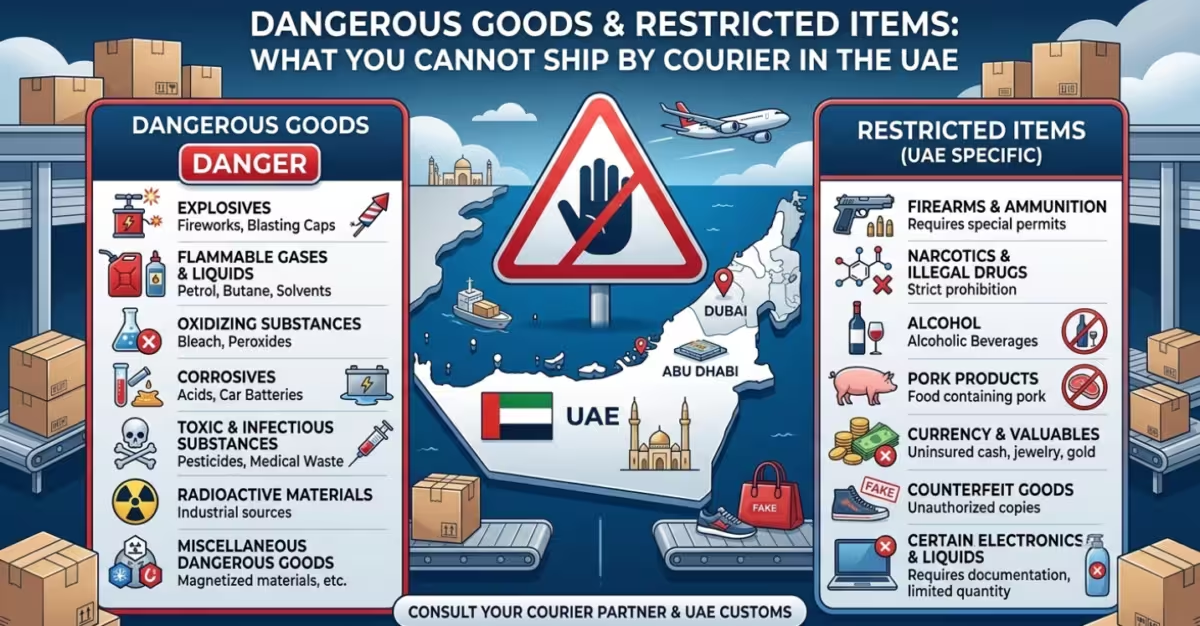
Dangerous Goods and Restricted Items: What You Cannot Ship by Courier in the UAE

Dangerous goods and restricted items that cannot be shipped by courier in the UAE, including hazardous materials, prohibited products and customs restrictions.

Dangerous Goods and Restricted Items: What You Cannot Ship by Courier in UAE

Many UAE businesses discover their product is a dangerous good at the worst possible moment when a shipment is rejected at the courier’s processing hub, held by Dubai Customs, or returned with a non-compliance notice and a fine. 

Perfume, hand sanitiser, aerosol sprays, nail polish, and lithium battery products are not obviously hazardous goods to most sellers, but they are all regulated as dangerous goods under international courier and UAE customs rules.

This guide covers the three categories of restricted shipping (prohibited, restricted, conditionally accepted), the most common product types that catch UAE businesses off guard, and what to do if your goods fall into the grey zone.

Key Takeaways

  • Dangerous goods fall into three categories: prohibited (never accepted by any carrier), restricted (accepted with documentation, packaging, and labelling), and conditionally accepted (allowed on some modes but not others).

  • Perfume, aerosols, hand sanitiser, nail polish, and lithium battery products are classified as dangerous goods.

  • There are separate restriction lists for Dubai, Abu Dhabi, and Sharjah. Domestic UAE routes are not all governed by the same rules.

  • Flammable liquids, fireworks, and gases are among the most commonly refused items for air transport. Even everyday aerosols and cleaning chemicals can be flagged if they pose a fire or explosion risk.

  • The NAIC (National Advanced Information Centre) requires pre-arrival data submission with accurate six-digit HS codes for all dangerous goods entering the UAE.

The Three Categories: Prohibited, Restricted, and Conditionally Accepted

  • Understanding which tier your goods fall into determines what you can do next.

    1) Prohibited goods 

    These are absolutely off-limits: no carrier, no documentation, and no special permit will move them. Dubai Customs officially prohibits narcotic drugs, gambling tools, nylon fishing nets, live swine, used or reconditioned tyres, radiation-contaminated substances, items against Islamic faith or public morals, and paan or betel leaves. 

    Beyond UAE-specific prohibitions, international carriers will not accept explosives, radioactive materials, biological weapons, or illegally trafficked wildlife products under any conditions.

    2) Restricted goods 

    These can be shipped, but only with the correct classification, documentation, packaging, and labelling. Most “dangerous goods” in the e-commerce context include perfumes, aerosols, lithium batteries, flammable adhesives, and similar items. 

    The conditions that apply vary by carrier, by mode (air, road, sea), and by destination.

    3) Conditionally accepted goods 

    These are allowed on some shipping modes but prohibited on others. Lithium batteries in devices (laptops, phones) can typically ship by road or sea freight but face strict limits on air freight services.

    Many flammable liquids that cannot go by air can be moved by road through the GCC. The right mode depends on the specific goods classification.

    Whether lithium battery products can go by courier or need to be classified as freight depends on quantity, installation state, and watt-hour rating. Courier vs Freight: Key Differences? explains how to determine the right mode for your specific shipment type.

Common UAE E-Commerce Products That Are Regulated as Dangerous Goods

These are the product categories that most often catch UAE businesses off guard. None of them looks obviously hazardous, but all carry regulatory requirements.

  1. Perfumes and fragrances (Class 3 – Flammable Liquids):

Dangerous or hazardous goods, including perfumes, aftershaves, aerosols, flammable substances, and UN-classified dangerous goods, require specific handling and cannot be shipped through standard courier channels without proper documentation. 

Domestically within the UAE by road, small quantities in proper packaging are manageable. International courier service requires full dangerous goods documentation and UN-rated packaging.

  1. Aerosol products (Class 2 – Gases):

Hair sprays, deodorants, cleaning sprays, and insecticides are aerosols. They’re pressurised containers that can explode if punctured or exposed to heat. Aerosols are accepted by most couriers in limited quantities with specific pressure and fill-weight limits, but these vary by carrier and must be declared.

  1. Lithium batteries (Class 9 – Miscellaneous Dangerous Goods):

Lithium batteries in mobile phones can pose a safety risk to airport facilities and aircraft. They’re subject to strict quantity and watt-hour limits on air freight. Batteries shipped standalone (not installed in devices) face the tightest restrictions. 

Batteries installed in devices face limits on state of charge and packaging requirements. Road freight allows higher quantities than air.

  1. Hand sanitiser and alcohol-based cleaning products (Class 3 – Flammable Liquids):

Above 24% alcohol concentration, hand sanitiser is a flammable liquid. The pandemic-era surge in hand sanitiser e-commerce created a wave of incorrectly shipped flammable goods. Most couriers now require proper classification for any alcohol-based cleaning product above threshold concentrations.

  1. Nail polish and nail polish remover (Class 3 – Flammable Liquids):

Both contain acetone or similar flammable solvents. They require flammable liquid classification, UN-rated packaging, and quantity limits per shipment. Standard courier parcels cannot carry unlimited quantities. Most carriers impose 1 litre per inner packaging and 4 litres per outer package limits.

  1. Dry ice (Class 9 – Miscellaneous Dangerous Goods):

Used for temperature-controlled food and pharmaceutical shipments. Dry ice produces carbon dioxide gas as it sublimes, which can displace oxygen in an enclosed space. Carriers impose quantity limits, require ventilation-compatible packaging, and mandate advance declaration.

  1. Power banks and spare lithium batteries:

Power banks must be carried in cabin baggage, not in checked luggage. Most airlines restrict or prohibit power banks in the hold because of the fire risk from lithium batteries. 

For courier shipments, spare lithium batteries (not installed in devices) are among the most restricted items on any carrier’s list. Many carriers will not accept them as standalone items for international air freight.

For regulated goods that can go by sea rather than air, Air Freight vs Ocean Freight in UAE breaks down the cost and compliance trade-off between modes for UAE exporters.

Domestic UAE vs International: The Rules Are Different

A common mistake is applying international air freight rules to domestic UAE courier shipments, or assuming that because something ships within Dubai it can also ship internationally.

Domestic UAE courier (same-emirate and inter-emirate by road): Domestic road courier within the UAE operates under less restrictive rules for many categories of dangerous goods. The key requirements are proper packaging, quantity limits, and accurate shipment descriptions rather than the full IATA dangerous goods documentation set.

International air freight from UAE: Air transport applies IATA Dangerous Goods Regulations (DGR) in full. This means: hazard class classification, UN number, packing group, UN-rated packaging, Shipper’s Declaration for Dangerous Goods, quantity per package limits, and carrier acceptance procedures. Many goods that ship domestically by road cannot go by air at all, or can only go by air in very limited quantities.

The NAIC pre-arrival requirement: For all dangerous goods entering the UAE, the NAIC requires real-time cargo data submission well in advance of physical arrival. Submitting incorrect or incomplete data creates holds before the shipment lands, regardless of how well the packaging and documentation are prepared.

It’s important to keep in mind that the rules for what is allowed change depending on the destination. There are separate lists of restrictions for Dubai, Abu Dhabi, and Sharjah.

What Happens When You Get It Wrong

Most businesses only learn the consequences after they’ve experienced them. These are the four outcomes of incorrectly shipping dangerous goods in the UAE:

  • Shipment rejection at processing: The courier’s hub scans and identifies incorrectly classified goods. The shipment is returned to sender. You pay for the outbound attempt and the return, and your customer receives nothing on the promised date.

  • Customs hold with inspection fees: Incorrectly declared goods arriving at UAE borders trigger a customs hold. Inspection fees, storage fees (charged per day), and potential examination costs accumulate before the goods are released if they’re released at all.

  • Fines for non-compliance: UAE authorities and international carriers both have penalty structures for incorrectly documented dangerous goods. For air shipments, IATA non-compliance fines can be substantial and are documented in the carrier’s acceptance record.

  • Carrier account suspension: Repeated dangerous goods violations can result in a carrier suspending your shipping account. For businesses that rely on one courier partner for their e-commerce fulfilment, this is an operational crisis with no simple short-term resolution.

The cost of a rejected or returned shipment adds up faster than most businesses model. Shipping Costs for Small Businesses in the UAE gives a cost structure so you can model the real risk of non-compliance against the cost of getting it right upfront.

Shipping Dangerous Goods Correctly: What's Required

If your goods are classified as dangerous but not prohibited, the correct process is manageable. It requires preparation.

Step 1: Classify your goods correctly 

Check your product’s Safety Data Sheet (SDS) for the UN number, hazard class, and packing group. If there’s no SDS, contact your supplier. Every regulated product has one.

Step 2: Use UN-rated packaging

Standard cardboard boxes and bubble wrap are not sufficient for dangerous goods. UN-rated packaging specifies the packing group and the substance it’s certified to contain. Your packaging supplier can confirm certification.

Step 3: Label the outer packaging 

Each hazard class has a specific diamond-shaped label with the hazard number. The label size, placement, and colour coding are specified in IATA DGR for air freight and equivalent road freight regulations.

Step 4: Complete the Shipper’s Declaration 

For air freight, this is mandatory. For road freight between GCC countries, equivalent hazmat documentation is required. All entries must be accurate. A single error invalidates the entire declaration.

Step 5: Submit NAIC pre-arrival data

For goods entering the UAE, accurate six-digit HS codes and product descriptions must be submitted to NAIC in advance of physical arrival.

Step 6: Choose a carrier with hazmat certification

Not all couriers accept dangerous goods. Only carriers with certified hazmat personnel and approved dangerous goods acceptance procedures can legally move regulated cargo.

For freight-classified dangerous goods like bulk chemicals, industrial supplies, high-volume aerosols, or cargo exceeding domestic courier limits, Jeebly Haul covers air, sea, and road freight with in-house customs clearance across UAE and GCC routes. 

For domestic UAE shipments of goods in the conditionally accepted category, speak to the Jeebly team before booking to confirm which service and which documentation applies to your specific product and route.

Frequently Asked Questions

Any substance or article classified under the nine internationally recognised hazard classes, including flammable liquids (perfumes, hand sanitiser, nail polish), aerosols, lithium batteries, corrosives, gases, and oxidising substances. If your product has a Safety Data Sheet or a UN number on its packaging, it is regulated. The UAE applies IATA rules for air freight and ADR-equivalent rules for road freight.

Domestically within the UAE by road courier, small quantities of perfume in correctly packaged condition are generally accepted by carriers that have dangerous goods capability. Internationally by air, perfume requires full flammable liquid classification, UN-rated packaging, and a Shipper’s Declaration. Standard courier booking without a dangerous goods declaration will result in rejection at processing.

Prohibited items cannot be shipped under any conditions, including narcotics, explosives, and items banned under UAE customs law. Restricted items can be shipped but require specific documentation, packaging, and labelling. Most dangerous goods in the e-commerce context fall here. Conditionally accepted items can ship on some modes (road) but not others (air), depending on quantity and classification.

The most common outcomes are: shipment rejection and return at the courier’s processing hub, a customs hold with daily storage and inspection fees at UAE borders, regulatory fines for non-compliant documentation, or carrier account suspension for repeat violations. Incorrect air freight declarations carry the most significant penalties.

Jeebly Haul handles freight-classified dangerous goods including bulk chemicals, industrial supplies, and regulated cargo requiring specialist handling with air, sea, and road freight options and in-house customs clearance. For domestic UAE courier shipments of conditionally accepted categories, contact the Jeebly team to confirm which service applies to your specific product and documentation requirements before booking.

Routes to insightful reads

Delivery SLA guide for UAE businesses showing service level agreements, delivery performance metrics, on-time delivery targets and logistics standards.
 Delivery SLA Guide for UAE Businesses: What to Expect and How to Set Standards

A clear delivery Service Level Agreement (SLA) sets the expectations for speed, reliability, and performance between businesses and their logistics partners. This guide explains what a delivery SLA should include, the key metrics to track, and how UAE businesses can set realistic standards to improve customer satisfaction and delivery performance.

Read More
Dangerous goods and restricted items that cannot be shipped by courier in the UAE, including hazardous materials, prohibited products and customs restrictions.
Dangerous Goods and Restricted Items: What You Cannot Ship by Courier in the UAE

Shipping prohibited or restricted items can lead to delays, fines, shipment rejection, or legal consequences. This guide explains which dangerous goods and restricted items cannot be shipped by courier in the UAE, the regulations businesses should know, and how to stay compliant with UAE customs and courier requirements.

Read More
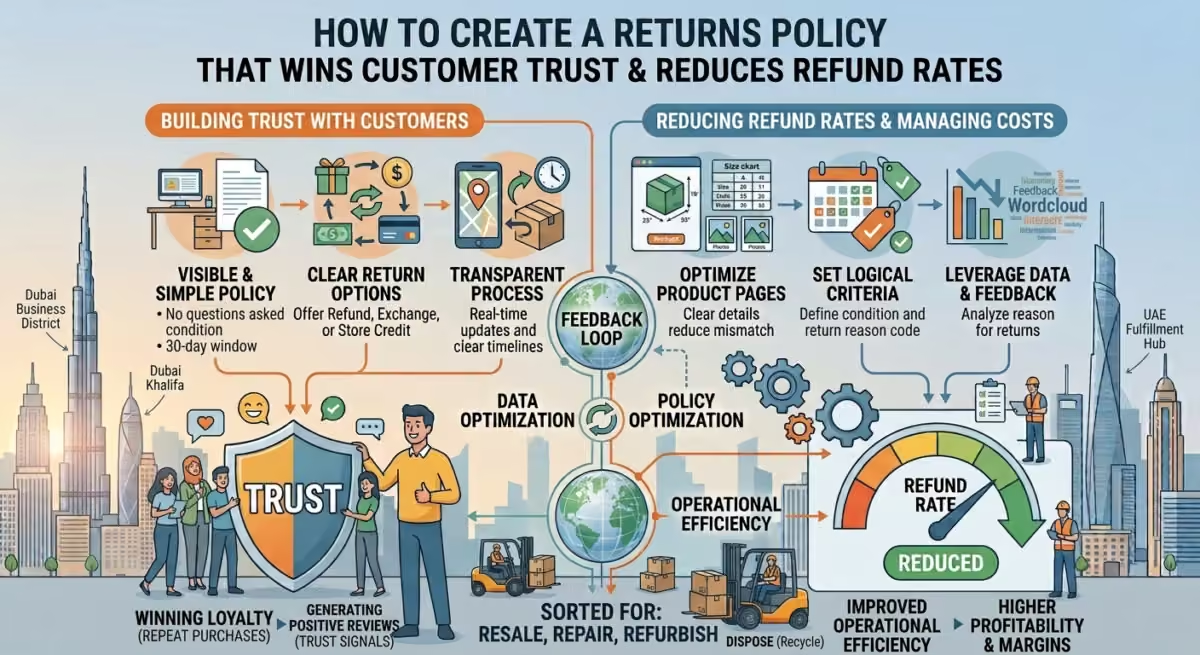
How to manage eCommerce returns in the UAE with reverse logistics, return policies, refunds and inventory restocking
How to Manage eCommerce Returns in UAE: Strategy, Policy and Logistics

Efficient returns management is essential for every UAE eCommerce business. From creating a customer-friendly return policy to streamlining reverse logistics and processing refunds quickly, this guide explains how to reduce return costs, improve customer satisfaction, and turn returns into a competitive advantage.

Read More
A medium-sized Jeebly delivery and moving truck parked outside a warehouse with its back doors wide open and a hydraulic lift gate lowered to the ground. Inside the cargo area, brown cardboard boxes are stacked neatly. The side of the truck features a dark blue advertisement wrap with the Jeebly logo, displaying a hand holding a house model under the text "Always on the Move from parcels to homes" and a call to action to "Explore it all on Jeebly NoW".
Packers and Movers in Dubai: What to Look for and How to Choose

Relocating in Dubai doesn’t have to be stressful. Whether you are moving apartments in Dubai Marina or upgrading your office space, discover the essential factors to look for in a professional moving company—from licensing and insurance to transparent pricing—and learn exactly how to choose the right team for a seamless move.

Read More
Infographic titled "Ecommerce Fulfilment in UAE: How It Works and What Businesses Should Look For." The left side shows a 5-step workflow: Online Store, Inventory, Picking & Packing, Dispatch, and Last Mile Delivery. The center features a map of the UAE with iconic cityscapes. The right side lists business requirements: Reliability & Speed, Advanced Technology, Real-Time Tracking, Scalability, and Customer Support.
eCommerce Fulfilment in UAE: How It Works and What Businesses Should Look For

Master your logistics strategy in the Middle East. Discover how e-commerce fulfillment works in the UAE—from warehousing to last-mile delivery—and learn the top 5 features your business needs from a fulfillment partner to scale successfully.

Read More
Categories
blogs

Logisty vs Jeebly: UAE eCommerce Delivery Comparison

Logisty vs Jeebly comparison for UAE eCommerce delivery, last-mile logistics and courier services

Logisty vs Jeebly: UAE eCommerce Delivery Comparison

If you’re comparing Logisty vs Jeebly as a UAE business trying to decide on a logistics partner, the first thing to know is that these two platforms were not built for the same problem. 

Logisty is a digital freight-matching platform built for commercial truck hire. Jeebly is an end-to-end logistics platform built for e-commerce and business delivery. Understanding that difference upfront saves you from evaluating the wrong things.

This guide covers what each platform actually does, which business profiles suit each one, how they compare across the criteria that matter and where each falls short. If you’re a UAE business with active delivery operations or planning to scale them, this is the comparison you need before you commit.

What Logisty Is and Is Not

Logisty is a digital logistics platform launched in December 2024 through a collaboration between Dubai’s Roads and Transport Authority (RTA) and TruKKer, the GCC’s largest digital freight company. It connects businesses with commercial transport service providers for on-demand truck booking and real-time freight tracking.

The platform offers commercial transport services, fleet management solutions, and on-demand booking with real-time tracking. Its headline technology feature is an AI-powered CBM Calculator that estimates shipment volumes from uploaded photos or videos.

What Logisty is not:

It is not a last-mile courier, an e-commerce fulfilment platform, a COD handler, or a consumer-facing delivery service. It is built specifically to serve Dubai’s 10,000+ commercial transport companies and the businesses that need to move bulk freight digitally rather than through traditional phone-based truck booking.

What Jeebly Is and How It's Structured

Jeebly is a UAE-native logistics platform covering the full delivery chain: same-day and next-day parcel delivery, cross-border freight, warehousing, fulfilment, and reverse logistics. While Logisty is built for a single use case (truck hire for commercial freight), Jeebly is built to serve multiple delivery needs on a single operational platform.

The service structure is designed around business type rather than shipment type:

Jeebly Dash covers express, same-day, and next-day domestic delivery. Base rate AED 17.31 per parcel up to 5 kg. Direct integrations with Shopify, WooCommerce, Magento, ChatFood, and Grubtech. COD collection and weekly remittance as standard. Operates across all seven UAE emirates.

Jeebly Haul handles road freight above 20 kg, air freight, and ocean freight across the UAE and GCC. Over 2,000 active fleet vehicles, 70+ transporter partners, and 20+ vehicle categories. Custom-quoted. Built for businesses with regular inbound inventory movement or cross-border freight requirements.

Jeebly Bizz is the business logistics layer. Warehousing, fulfilment, automated dispatch, route optimisation, reverse logistics, and B2B supply chain management are integrated on a single platform. Built for operations running hundreds of daily orders where manual coordination creates a ceiling on growth.

Operational scale: 50,000+ daily deliveries, 12M+ customers served, 98% First Day Delivery Success (FDSS) rate, and AED 1.5B+ in shipments.

Logisty vs Jeebly: Direct Comparison

Criteria Logisty Jeebly
Launched December 2024 Established UAE operator
Built by RTA + TruKKer Jeebly (UAE-native)
Primary use case Commercial freight/truck hire E-commerce delivery + logistics
Last-mile parcel delivery No Yes, Jeebly Dash
Freight and bulk cargo Yes, digital truck booking Yes, Jeebly Haul
E-commerce platform integration Not confirmed Shopify, WooCommerce, Magento, ChatFood, Grubtech
Cash on delivery (COD) Not confirmed Yes, weekly remittance
COD fraud protection / ePOD Not confirmed Photo ePOD at every drop
Returns/reverse logistics Not confirmed Yes, Jeebly Bizz
Warehousing and fulfilment Not confirmed Yes, Jeebly Bizz
Fleet scale TruKKer 55,000+ trucks (GCC-wide) 2,000+ Jeebly fleet + 70 transporter partners
AI features AI CBM Calculator (volume estimation) AI-assisted dispatch and route optimisation
Coverage Dubai-focused (UAE road freight) UAE-wide (all 7 emirates) + GCC cross-border
Consumer-facing tracking Basic tracking Branded tracking pages, real-time GPS
Target customer Bulk commercial freight businesses E-commerce brands, D2C, SMEs, enterprises
Best for Freight movement eCommerce operations

For a broader view of how Jeebly’s delivery rates, FDSS, and platform integrations compare across the full UAE courier market, Best Courier Services in UAE: 2026 Comparison Guide covers seven major operators on the criteria that matter for e-commerce businesses.

When Logisty Is the Right Choice

Logisty is the better fit for a specific, well-defined business profile: companies whose primary logistics need is moving large commercial freight within Dubai and the UAE, with no requirement for parcel-level delivery, consumer communication, or e-commerce platform integration.

Logisty suits you if:

  • You’re moving raw materials, construction goods, industrial equipment, or bulk stock between facilities and warehouses. 
  • Your logistics operation is B2B rather than B2C. 
  • You’re not delivering to end consumers, so tracking pages, COD, and delivery notifications are irrelevant to your use case. 
  • Your shipments are large and irregular, best described as “book a truck” rather than “dispatch 200 orders.”


The platform’s core proposition is connecting businesses with commercial transport service providers through a digital interface. For businesses that have historically relied on phone calls to coordinate trucking, that digitisation has genuine operational value.

Logisty is not the right choice if you’re running e-commerce orders, need COD collection, want Shopify integration, require returns management, or serve end consumers who expect real-time tracking and delivery confirmation.

One gap in Logisty’s freight-booking model is that the platform handles truck booking, but customs clearance for inbound freight into the UAE is a separate process requiring its own documentation, declarations, and duty payment. 

Customs Clearance in Dubai and the UAE covers the process, with useful context to help you decide whether a freight-booking-only platform meets your full inbound logistics needs.

When Jeebly Is the Right Choice

Jeebly suits any business where delivery is a customer-facing operation, and the quality of the drop-off directly affects your brand, repeat purchase rate, and RTO costs.

Jeebly suits you if:

  • You’re an e-commerce brand shipping B2C orders, and your customers expect same-day or next-day delivery with live tracking. 
  • You operate COD and need reliable collection, clean remittance, and ePOD at every drop. 
  • You’re importing inventory and need freight handling alongside domestic last-mile delivery through a single connected platform. 
  • You’re managing returns and need reverse logistics built into the same workflow as forward delivery. 
  • You’re scaling and need a platform that integrates directly with your store without manual order uploads.


Jeebly is not the first choice if your only logistics need is moving heavy commercial freight between facilities and there is no parcel-level delivery requirement. For pure bulk truck hire within Dubai, Logisty’s freight-matching model is purpose-built for that specific use case.

The eCommerce Stack: Where the Comparison Ends

This is where Logisty and Jeebly stop being comparable alternatives and become entirely different tools.

Logisty has no published information on e-commerce platform integrations, COD support, parcel tracking, NDR management, returns processing, or consumer notification systems. These are not features it’s currently building toward. They’re outside the platform’s stated purpose of commercial freight matching.

Jeebly’s e-commerce infrastructure covers:

  1. Platform integrations: Direct API and plugin integrations with Shopify, WooCommerce, Magento, ChatFood, and Grubtech. Orders sync automatically. No manual CSV uploads and no middleware required.


  2. Secure COD delivery: Collection at the door, ePOD photo confirmation at every drop, weekly remittance cycle. For businesses managing 30–50% of orders as COD, the remittance timing directly affects working capital. Weekly remittance compresses the float relative to providers running fortnightly or monthly cycles.


  3. NDR and RTO management: Failed delivery attempts are automatically flagged, triggering customer notifications via SMS or WhatsApp to reschedule. NDR-to-RTO conversion is one of the most controllable cost lines in e-commerce delivery.


  4. Returns and reverse logistics: Jeebly Bizz handles reverse logistics within the same platform as forward delivery. No separate vendor relationship and no separate tracking system. Customers get a clean return experience; businesses get a unified delivery record.

If your operation requires these eCommerce-specific capabilities, a dedicated last-mile logistics platform such as Jeebly is likely a better fit. 

If your need is exclusively for bulk commercial truck hire, Jeebly Haul competes in that lane, but Logisty’s TruKKer network gives it greater truck density for pure freight matching.

How to Choose: A Decision Framework

Choose Logisty if:

  • Your primary logistics need is commercial freight and bulk truck hire within Dubai
  • You move large shipments between facilities or suppliers with no consumer-facing delivery requirement
  • You want a digitised truck-booking experience backed by regulatory oversight from the RTA


Choose Jeebly Dash if:

  • You’re shipping e-commerce orders B2C and need same-day or next-day delivery with live tracking
  • Your customers pay COD, and you need clean collection, ePOD, and weekly remittance
  • Your store runs on Shopify, WooCommerce, or Magento and you want direct integration


Choose Jeebly Bizz if:

  • You’re running 50+ orders per day and need automated dispatch, route optimisation, and returns management in one platform
  • You’re managing fulfilment alongside delivery and need warehousing connected to the same system


Choose Jeebly Haul if:

  • You need freight above 20 kg, road freight across the GCC, air freight, or ocean freight, alongside an e-commerce delivery operation through one partner


For businesses comparing Jeebly against other UAE last-mile operators rather than Logisty, Aramex vs Jeebly and Careem Express vs Jeebly cover those specific comparisons in detail.

Conclusion

Logisty and Jeebly solve different problems for different businesses. Logisty is a digital platform connecting businesses with commercial transport providers for freight booking and tracking. It is designed for bulk truck hire in Dubai, backed by the RTA’s regulatory framework and TruKKer’s GCC-wide fleet. 

Jeebly is a full logistics platform with last-mile parcel delivery, freight, fulfilment, COD, returns, and e-commerce integrations. It is built for UAE businesses where delivery is a customer-facing operation rather than just a cargo-movement task. 

For e-commerce and D2C brands, Jeebly is the clearer fit. For pure commercial freight within Dubai, Logisty’s model is worth evaluating. 

For businesses that need both, Jeebly Haul and Jeebly Dash cover both lanes through one platform. Speak with Jeebly’s logistics team to map the right delivery setup for your order volume, customer expectations, and fulfilment needs.

Frequently Asked Questions

 Logisty is a digital logistics platform launched in December 2024 through a collaboration between Dubai’s Roads and Transport Authority (RTA) and TruKKer, the GCC’s largest digital freight company. It connects businesses with commercial truck operators for on-demand freight booking and real-time tracking. It is built specifically for commercial bulk freight, not for e-commerce parcel delivery.

No. Logisty is a commercial freight platform. It is not designed for parcel-level delivery, COD collection, consumer notifications, or e-commerce platform integration. If your operation requires any of these, Logisty is not the right tool.

No. Logisty is positioned as a digital commercial transport platform focused on freight booking, transport services, fleet management, and tracking. Businesses needing parcel delivery, COD, and eCommerce fulfilment require a last-mile logistics solution.

 For Shopify-based businesses, Jeebly is designed around eCommerce delivery workflows, including order integrations, last-mile delivery, COD, and returns management.

Jeebly covers the full e-commerce delivery stack: same-day and next-day parcel delivery, COD with weekly remittance, photo ePOD at every drop, direct integrations with Shopify and WooCommerce, reverse logistics, and warehousing all through one platform. Logisty offers truck hire for commercial freight. They are not comparable for e-commerce operations.

Yes. Jeebly Haul covers road, air, and ocean freight for shipments over 20 kg, with a fleet of 2,000+ vehicles and 70+ transporter partners across the UAE and the GCC. This freight capability is connected to the same platform as Jeebly Dash (last-mile) and Jeebly Bizz (fulfilment and returns).

Businesses whose primary logistics need is moving large commercial cargo within Dubai by road (construction materials, industrial goods, bulk stock transfers between facilities) without a requirement for consumer-facing delivery, tracking, or COD. Logisty is built around Dubai’s 10,000+ commercial transport companies and the digital transformation of that sector.

Routes to insightful reads

Delivery SLA guide for UAE businesses showing service level agreements, delivery performance metrics, on-time delivery targets and logistics standards.
 Delivery SLA Guide for UAE Businesses: What to Expect and How to Set Standards

A clear delivery Service Level Agreement (SLA) sets the expectations for speed, reliability, and performance between businesses and their logistics partners. This guide explains what a delivery SLA should include, the key metrics to track, and how UAE businesses can set realistic standards to improve customer satisfaction and delivery performance.

Read More
Dangerous goods and restricted items that cannot be shipped by courier in the UAE, including hazardous materials, prohibited products and customs restrictions.
Dangerous Goods and Restricted Items: What You Cannot Ship by Courier in the UAE

Shipping prohibited or restricted items can lead to delays, fines, shipment rejection, or legal consequences. This guide explains which dangerous goods and restricted items cannot be shipped by courier in the UAE, the regulations businesses should know, and how to stay compliant with UAE customs and courier requirements.

Read More
How to manage eCommerce returns in the UAE with reverse logistics, return policies, refunds and inventory restocking
How to Manage eCommerce Returns in UAE: Strategy, Policy and Logistics

Efficient returns management is essential for every UAE eCommerce business. From creating a customer-friendly return policy to streamlining reverse logistics and processing refunds quickly, this guide explains how to reduce return costs, improve customer satisfaction, and turn returns into a competitive advantage.

Read More
A medium-sized Jeebly delivery and moving truck parked outside a warehouse with its back doors wide open and a hydraulic lift gate lowered to the ground. Inside the cargo area, brown cardboard boxes are stacked neatly. The side of the truck features a dark blue advertisement wrap with the Jeebly logo, displaying a hand holding a house model under the text "Always on the Move from parcels to homes" and a call to action to "Explore it all on Jeebly NoW".
Packers and Movers in Dubai: What to Look for and How to Choose

Relocating in Dubai doesn’t have to be stressful. Whether you are moving apartments in Dubai Marina or upgrading your office space, discover the essential factors to look for in a professional moving company—from licensing and insurance to transparent pricing—and learn exactly how to choose the right team for a seamless move.

Read More
Infographic titled "Ecommerce Fulfilment in UAE: How It Works and What Businesses Should Look For." The left side shows a 5-step workflow: Online Store, Inventory, Picking & Packing, Dispatch, and Last Mile Delivery. The center features a map of the UAE with iconic cityscapes. The right side lists business requirements: Reliability & Speed, Advanced Technology, Real-Time Tracking, Scalability, and Customer Support.
eCommerce Fulfilment in UAE: How It Works and What Businesses Should Look For

Master your logistics strategy in the Middle East. Discover how e-commerce fulfillment works in the UAE—from warehousing to last-mile delivery—and learn the top 5 features your business needs from a fulfillment partner to scale successfully.

Read More
Categories
blogs

Careem Express vs Jeebly: Which Delivery Partner Is Best for UAE Businesses?

Careem Express vs Jeebly comparison graphic featuring delivery vehicles and riders in Dubai, highlighting UAE last-mile delivery services for businesses.

Careem Express vs Jeebly: Which Delivery Partner Is Best for UAE Businesses?

Speed is a legitimate advantage. If Careem Express can put a parcel in your customer’s hands in 30 minutes, that is genuinely useful for certain types of businesses.

But speed is one dimension of logistics, not the whole picture. The more relevant question for most UAE businesses is: can this provider handle everything my operations actually require, day in and day out, as my order volumes grow?

That is where the Careem Express vs Jeebly comparison gets interesting. These two providers are built on fundamentally different operating models, not just different delivery windows. With the UAE’s e-commerce market projected to reach USD 13.8 billion by 2029, the logistics infrastructure you choose now will either support that growth or limit it.

This article breaks down both providers across delivery speed, UAE coverage, pricing, COD, technology, and full-stack logistics capability, so you can choose based on what your business actually needs.

What Careem Express and Jeebly Actually Do

Understanding what each provider was built for is the starting point for any honest comparison.

Careem Express

Careem Express is the B2B delivery arm of Careem, the UAE-headquartered super app that also operates ride-hailing, food delivery, grocery, and payments. Careem is an Uber subsidiary operating across 13 countries in MENA.

The Express product leverages the same driver network and AI-powered mapping technology used for passenger rides to offer on-demand, hyperlocal parcel delivery for businesses.

Key facts about Careem Express:

  • Delivers in 30-40 minutes for eligible orders in covered zones
  • Operates in 11 cities across UAE, KSA, and Qatar
  • Services: on-demand last-mile, Box-on-Bike delivery, same-day courier, COD collection, real-time tracking API
  • Flash Delivery API: lets e-commerce stores add a “Deliver Now” button at checkout with live GPS tracking for the customer
  • Integrations available with Shopify, WooCommerce, and Magento
  • 24/7 customer support and dedicated account managers during business hours

What Careem Express does not offer:

  • No standalone warehousing or fulfilment service
  • No structured cross-border or GCC freight capability
  • No dedicated reverse logistics or returns service line
  • No premium or white-glove delivery product
  • No structured next-day delivery across all seven UAE emirates


Careem Express is an on-demand speed layer. It excels at getting time-critical, city-level parcels to customers fast. It is not designed to be a business’s complete logistics infrastructure.

Jeebly

Jeebly was founded in Dubai in 2016, started as a hyperlocal delivery platform, and has since grown into a full-service logistics business purpose-built for UAE e-commerce. The operational scale today:

  • 50,000-plus daily deliveries
  • 4,000-plus active fleet vehicles
  • 12M-plus customers served
  • 98% First-Day Delivery Success (FDSS) rate across all seven emirates

Jeebly’s product suite includes Jeebly Dash for domestic express, same-day, and next-day delivery, Jeebly Bizz for business logistics and fulfilment, Jeebly Haul for freight above 20 kg, and Jeebly Plus for premium white-glove delivery.

Where Careem Express is an on-demand speed layer, Jeebly is a full logistics infrastructure built around the complete operational lifecycle of a UAE online business.

Careem Express vs Jeebly: Side-by-Side Comparison

The sections below unpack what those differences actually mean in practice, because a table can show you the gaps but it cannot tell you which ones will hurt your business first.

Capability Careem Express Jeebly
Delivery Model On-demand, hyperlocal Scheduled, same-day, next-day, express
Express Speed 30-40 min (covered zones) 60-120 min (Dubai, bike delivery)
Same-Day Delivery Yes (covered cities) Yes (Dubai, 11 AM cut-off)
Next-Day Delivery Not a structured UAE-wide offering Yes, all 7 emirates, 2 PM cut-off
UAE Coverage Select cities All 7 emirates
GCC Cross-Border Limited Yes, Jeebly Dash International
Freight / Bulk Cargo No Yes, Jeebly Haul (above 20 kg)
Warehousing / Fulfilment No Yes, including micro-fulfilment centres
Reverse Logistics No dedicated service Yes, structured service line
White-Glove / Premium No Yes, Jeebly Plus
COD Support Yes Yes, weekly bank remittances
Shopify Integration Yes Yes
WooCommerce Integration Yes Yes
Self-Service Portal Careem Express portal and app Jeebly Now portal and One App
Real-Time Tracking Yes, live GPS (Flash Delivery API) Yes, centralised merchant dashboard
Dedicated Account Management Yes (business hours) Yes, KAMs via WhatsApp, email, direct calls
Q-Commerce / Dark Stores Via dark store partners Yes, 13+ live micro-fulfilment centres
Primary Fit Hyperlocal, on-demand, urban delivery Full-stack UAE e-commerce logistics

Careem Express wins on raw delivery speed within covered zones. Jeebly covers the full operational lifecycle of a UAE online merchant, from the first sale through to warehousing, returns, and cross-border growth

Delivery Speed and Coverage

Careem Express: Speed and Coverage

Careem Express’s 30-40 minute delivery window is one of the fastest available in the UAE for eligible orders. That speed is real, and for specific use cases, it is a genuine competitive advantage.

The important context:

  • Coverage is strongest in Dubai, with operations also in select UAE cities, KSA, and Qatar
  • The on-demand model means orders are dispatched as they arrive, with no scheduled delivery windows
  • Structured next-day delivery across all seven UAE emirates is not a defined product offering
  • Per-delivery costs are higher than traditional next-day couriers, which affects margin economics on bulk or lower-value shipments
  • Best suited to urgent, sub-5 kg, city-level parcels where speed is the primary requirement

Jeebly Dash: Speed and Coverage

Jeebly Dash runs three delivery tiers, giving merchants the ability to match delivery cost to product urgency:

  • Express (60-120 minutes): Dubai only, bike delivery, weight and dimension limits apply
  • Same-Day: Dubai only, order cut-off at 11 AM
  • Next-Day: All seven UAE emirates (Abu Dhabi, Dubai, Sharjah, Ajman, Umm Al Quwain, Ras Al Khaimah, Fujairah), cut-off at 2 PM.


The 98% FDSS rate applies across the full operation. Underpinning it is data-driven fleet forecasting and AI-optimised routing built around UAE delivery conditions, including the absence of a standardised postcode system, free-zone access requirements, and peak season volume surges. Jeebly makes three delivery attempts before marking an order as Return to Origin (RTO).

The coverage point that matters most for growing UAE businesses: as soon as your customers are outside Dubai, you need a provider with structured UAE-wide SLAs. Jeebly’s next-day network covers every emirate, including Ras Al Khaimah, Fujairah, and Umm Al Quwain, where consistent SLA delivery is not guaranteed by every provider in the market.

For a breakdown of how delivery timelines work across different UAE service types, read: How Long Does Delivery Take in the UAE?

Pricing: What to Expect From Each Provider

Neither Careem Express nor Jeebly publishes a universal public rate card. Pricing scales with volume, service level, and account type.

Careem Express pricing:

  • Higher per-delivery cost than traditional next-day couriers (confirmed by independent market research)
  • Optimised for urgency, not bulk volume economics
  • Pricing available via the Careem Express portal or sales team
  • Surge pricing during peak periods can affect per-delivery margins


Jeebly Dash published base rate:

  • AED 17.31 per parcel up to 5 kg (next-day and scheduled deliveries)
  • AED 2/kg above 5 kg, up to 20 kg maximum per order
  • No minimum order requirement and no long-term contract to start
  • Volume-based commercial terms available for brands shipping 50-plus orders daily.


Beyond base rates, three line items that regularly catch businesses off-guard:

  • COD remittance cycle: Delayed remittance ties up working capital. Always confirm the exact cadence before signing.
  • Failed delivery re-attempt fees: Understand how many re-attempts are included, what each costs, and who covers return shipping on customer-fault failures.
  • Return shipping costs: Get explicit terms on returns before any agreement is finalised.


For a realistic picture of what delivery costs look like for UAE small businesses: Cost of Shipping for a Small Business in the UAE.

Technology, Tracking, and Integrations

Careem Express Technology

Careem Express’s technology is built on the same infrastructure that powers its ride-hailing and consumer delivery services. For B2B delivery, that translates to:

  • Flash Delivery API: enables a “Deliver Now” checkout button with live GPS rider tracking for end customers
  • Real-time tracking through the Careem app and Express portal
  • Native integrations with Shopify, WooCommerce, and Magento
  • AI-powered routing using Careem’s advanced mapping and dispatching system
  • 24/7 customer support with dedicated account managers during business hours.


The technology is strong for on-demand dispatch and live consumer-facing tracking. It is built for speed and simplicity, not for managing complex merchant operations at scale.

Jeebly Technology

Jeebly’s platform is built merchant-first. Everything on the dashboard is oriented toward operational visibility and control for a business managing daily order flows:

  • Centralised dashboard: live order status, COD reconciliation, delivery performance analytics, and exception alerts in one view
  • Connected Order Management System (OMS) and Warehouse Management System (WMS)
  • Native integrations: Shopify, WooCommerce, Magento, ChatFood, and Grubtech
  • Jeebly One App: sign up in under five minutes, no minimum order commitment
  • Dedicated Key Account Managers accessible via WhatsApp, email, and direct calls, not just a support ticket system
  • Data-driven fleet forecasting that scales capacity ahead of peak season demand, not in reaction to it.


For operations teams managing 100-plus daily orders, knowing about a delivery exception before your customer does is operationally valuable in ways a basic tracking link cannot cover. Explore how Jeebly’s technology platform works.

To understand how AI-powered logistics is reshaping operations across the UAE: How AI Is Changing Logistics in the UAE.

COD, Returns, and the Details That Determine Operational Fit

These factors are easy to overlook during a vendor evaluation and consistently the source of operational friction afterward.

Cash on Delivery

Both Careem Express and Jeebly support COD, which remains a significant share of e-commerce transactions across the UAE. Research from 2026 puts COD at approximately 40% of UAE e-commerce orders, making remittance speed and accuracy a material business issue.

Jeebly remits COD collections to your bank account on a weekly cycle. That predictable cadence is consistently cited by Jeebly merchant partners as a working capital advantage, particularly for brands where COD makes up a large percentage of daily revenue.

Careem Express also supports COD. Remittance terms are structured at the account level and should be confirmed directly before committing.

For either provider: confirm the exact remittance cadence and reporting format in writing, not just that COD is available. Read: How Jeebly Ensures Secure COD Delivery in UAE.

Reverse Logistics

This is one of the clearest operational gaps in the Careem Express vs Jeebly comparison.

Careem Express does not offer a dedicated reverse logistics or returns management service.

Jeebly runs a structured reverse logistics service line covering returns management and product recalls, fully integrated with the same platform handling forward deliveries. Digital proof of pickup is captured at collection.

For any UAE e-commerce brand managing regular returns, exchanges, or product recalls, the absence of a structured returns service is a meaningful operational gap that would require sourcing a separate provider.

Still managing returns manually? Read: How to Manage Returns for Your UAE Online Store.

Peak Season Scalability

The UAE’s logistics market gets stress-tested every year during Ramadan, White Friday, and the December shopping period.

Careem Express scales through its on-demand driver network. During peak periods, surge pricing can increase per-delivery costs, and driver availability in covered zones may vary with demand.

Jeebly uses data-driven fleet forecasting to scale capacity ahead of peak demand, not in response to it. When order volumes for clients like Carrefour and Amazon double overnight, the fleet and rider deployment are already in position.

Read: How Jeebly Helps SMEs Scale During Peak Shopping Seasons.

Where Jeebly Goes Further

Careem Express fills a genuine gap in the UAE logistics market. For time-critical, hyperlocal, on-demand delivery within covered cities, particularly for fashion, beauty, gifts, pharmacy, or food items, its speed is hard to match.

The comparison shifts the moment your operational requirements expand beyond city-level on-demand delivery.

Jeebly’s product suite is designed to grow with a UAE e-commerce business at every stage:

  • Jeebly Dash covers express, same-day, next-day, and scheduled domestic deliveries across all seven emirates.
  • Jeebly Bizz handles warehousing, fulfilment, cross-border logistics, and customs clearance on a single platform. For businesses exploring what outsourced logistics really means: What Is a 3PL?
  • Jeebly Haul moves bulk shipments above 20 kg by road, air, and sea, domestically and across GCC and MENA.
  • Jeebly Plus delivers white-glove, chauffeur-led experiences for B2B clients with high-value or luxury products, where the delivery moment carries its own brand weight.


Trusted by Mumzworld.com, Instashop, DOD UAE, and BFL Group, Jeebly carries AED 500M-plus in combined revenue and AED 1.5B-plus in shipments delivered.

For guidance on evaluating any logistics partner in the UAE: What to Look for in a Reliable Logistics Company.


How to Choose: Four Questions to Work Through

There is no universally correct answer. But working through these four questions honestly will save you from a provider switch six months down the line when operational friction has already cost you customers.

1. Is speed your only requirement, or do you also need coverage, fulfilment, and returns?
If you need a fast, on-demand layer for urgent city-level deliveries, Careem Express is a legitimate option. If you need a complete logistics infrastructure covering the full UAE, returns, warehousing, and room to scale, Jeebly is the right fit.

2. Do you sell to customers across all seven UAE emirates?
Careem Express operates in select UAE cities and does not offer a structured next-day SLA across all seven emirates. Jeebly’s next-day network covers every emirate, including the northern emirates, consistently and at scale.

3. Will you need warehousing, fulfilment, or freight now or in the next 12 months?
Careem Express has no warehousing or fulfilment offering. Adding those capabilities would require separate provider relationships. Jeebly covers them all on one platform, which avoids the complexity and coordination cost of managing multiple logistics vendors.

4. What percentage of your orders are COD, and how does remittance timing affect your cash flow?
Jeebly’s weekly remittance cycle is a known, predictable input you can plan around. Confirm Careem Express’s remittance terms before committing, and get them in writing.

Conclusion

Careem Express is a strong choice for a specific use case: ultra-fast, on-demand delivery within covered UAE cities for time-critical, lightweight shipments. If that is the core of your logistics requirement, it delivers on its promise.

For UAE e-commerce businesses that need consistent delivery across all seven emirates, transparent pricing, structured COD management, returns handling, and a platform that scales from 50 orders a day to peak-season surges, Jeebly is the more complete and operationally aligned partner.

If you are still comparing options, see how Jeebly stacks up against other providers in the market: Quiqup vs Jeebly, iMile vs Jeebly, EMX vs Jeebly, and Porter vs Jeebly.

At Jeebly, we do not just move parcels. We move businesses forward. If you are ready to build a logistics setup that works as hard as you do, talk to the Jeebly team and get a solution built around your specific volumes, routes, and growth plans.

Or, if you are ready to get started now, sign up with Jeebly and start shipping today.

Frequently Asked Questions

Careem Express is the B2B delivery service offered by Careem, the UAE-based super app. It uses Careem’s existing driver and mapping infrastructure to offer on-demand, hyperlocal parcel delivery for businesses, primarily within Dubai and select other UAE cities. Businesses can access it via the Careem Express portal or integrate it into their e-commerce store using the Flash Delivery API for checkout-level delivery booking with live GPS tracking.

Careem Express is an on-demand, hyperlocal delivery service focused on speed within covered cities, primarily Dubai. It does not offer warehousing, fulfilment, structured cross-border shipping, or reverse logistics. Jeebly is a full-stack logistics platform purpose-built for UAE e-commerce, covering same-day and next-day delivery across all seven emirates, COD management, fulfilment, freight, returns, and a merchant-first technology platform.

Careem Express operates in select UAE cities and does not offer a structured next-day delivery SLA across all seven UAE emirates. For brands that sell to customers in Abu Dhabi, Sharjah, Ras Al Khaimah, Fujairah, or the northern emirates consistently, Jeebly’s UAE-wide next-day network is the more reliable fit.

For ultra-fast, on-demand deliveries within Dubai, Careem Express offers one of the fastest options available at 30-40 minutes for eligible orders. For structured e-commerce operations with same-day and next-day delivery, COD management, returns handling, and platform integrations, Jeebly Dash provides a more complete operational fit. The right choice depends on whether speed or full-stack logistics capability is the priority.

Yes, Careem Express supports COD. Before committing, confirm the remittance cycle and reporting format directly with Careem Express. Jeebly also supports COD and remits collections to your bank account on a weekly cycle, providing a predictable working capital timeline.

For on-demand, point-to-point delivery, Careem Express is faster at 30-40 minutes versus Jeebly Dash’s 60-120 minute express tier in Dubai. For structured, consistent, UAE-wide delivery at scale, Jeebly’s infrastructure, 98% FDSS rate, and all-seven-emirates coverage make it the stronger operational choice for e-commerce businesses.

Careem Express does not offer a dedicated reverse logistics or returns management service. If returns are a regular part of your operations, you would need a separate provider for that capability. Jeebly runs a fully integrated reverse logistics service line covering returns management, product recalls, and digital proof of pickup within the same platform handling your forward deliveries.

Jeebly is built specifically for this. The no-minimum, pay-as-you-go model means you are not committed to volume thresholds before you have reached them. As your business grows, Jeebly’s product suite, from Dash to Bizz to Haul, scales with you without requiring a platform migration or new provider relationships.

Routes to insightful reads

Delivery SLA guide for UAE businesses showing service level agreements, delivery performance metrics, on-time delivery targets and logistics standards.
 Delivery SLA Guide for UAE Businesses: What to Expect and How to Set Standards

A clear delivery Service Level Agreement (SLA) sets the expectations for speed, reliability, and performance between businesses and their logistics partners. This guide explains what a delivery SLA should include, the key metrics to track, and how UAE businesses can set realistic standards to improve customer satisfaction and delivery performance.

Read More
Dangerous goods and restricted items that cannot be shipped by courier in the UAE, including hazardous materials, prohibited products and customs restrictions.
Dangerous Goods and Restricted Items: What You Cannot Ship by Courier in the UAE

Shipping prohibited or restricted items can lead to delays, fines, shipment rejection, or legal consequences. This guide explains which dangerous goods and restricted items cannot be shipped by courier in the UAE, the regulations businesses should know, and how to stay compliant with UAE customs and courier requirements.

Read More
How to manage eCommerce returns in the UAE with reverse logistics, return policies, refunds and inventory restocking
How to Manage eCommerce Returns in UAE: Strategy, Policy and Logistics

Efficient returns management is essential for every UAE eCommerce business. From creating a customer-friendly return policy to streamlining reverse logistics and processing refunds quickly, this guide explains how to reduce return costs, improve customer satisfaction, and turn returns into a competitive advantage.

Read More
A medium-sized Jeebly delivery and moving truck parked outside a warehouse with its back doors wide open and a hydraulic lift gate lowered to the ground. Inside the cargo area, brown cardboard boxes are stacked neatly. The side of the truck features a dark blue advertisement wrap with the Jeebly logo, displaying a hand holding a house model under the text "Always on the Move from parcels to homes" and a call to action to "Explore it all on Jeebly NoW".
Packers and Movers in Dubai: What to Look for and How to Choose

Relocating in Dubai doesn’t have to be stressful. Whether you are moving apartments in Dubai Marina or upgrading your office space, discover the essential factors to look for in a professional moving company—from licensing and insurance to transparent pricing—and learn exactly how to choose the right team for a seamless move.

Read More
Infographic titled "Ecommerce Fulfilment in UAE: How It Works and What Businesses Should Look For." The left side shows a 5-step workflow: Online Store, Inventory, Picking & Packing, Dispatch, and Last Mile Delivery. The center features a map of the UAE with iconic cityscapes. The right side lists business requirements: Reliability & Speed, Advanced Technology, Real-Time Tracking, Scalability, and Customer Support.
eCommerce Fulfilment in UAE: How It Works and What Businesses Should Look For

Master your logistics strategy in the Middle East. Discover how e-commerce fulfillment works in the UAE—from warehousing to last-mile delivery—and learn the top 5 features your business needs from a fulfillment partner to scale successfully.

Read More
Categories
blogs

Reduce last-mile delivery costs in UAE: 7 proven strategies for 2026

How to Reduce Last-Mile Delivery Costs in the UAE (2026 Guide)

How to Reduce Last-Mile Delivery Costs in the UAE: A Practical Guide for Business Owners

Last-mile delivery accounts for up to 53% of total shipping costs. UAE businesses are using route optimisation, consolidated deliveries and third-party logistics providers to reduce costs by 20–30%.

Last-mile delivery is the most expensive part of your supply chain — and for most UAE businesses, it’s also the least optimised.

The final leg from warehouse to customer door accounts for 53% of total shipping costs on average. In the UAE, where customer expectations for same-day and next-day delivery are set by Amazon and noon, the pressure to absorb those costs is only growing.

The good news: the businesses winning on logistics in the UAE are not spending more. They’re structured differently. This guide covers exactly what they do — and where Jeebly fits into that equation.

Why Last-Mile Costs Are Higher in the UAE Than You Think

Before the fixes, it’s worth understanding what’s actually driving the costs. UAE last-mile operations face a specific set of compounding pressures:

Failed first-attempt deliveries are a significant cost multiplier. Every re-delivery attempt adds driver time, fuel, and vehicle wear — with zero additional revenue. Failed attempts are more common when customers are unreachable, addresses are imprecise, or delivery windows don’t match customer schedules.

Inter-emirate routing complexity means a next-day delivery from Dubai to Ras Al Khaimah or Umm Al Quwain is not a simple extension of your Dubai operation. Road time, driver allocation, and fuel costs change substantially across the seven emirates.

Seasonal demand spikes, Ramadan, White Friday, Eid, Dubai Shopping Festival — create volume surges that manual operations cannot scale to absorb efficiently. Overstaffing during normal periods wastes money. Understaffing during peaks loses orders and damages customer trust.

COD reconciliation overhead adds administrative cost that purely digital markets don’t face. Cash-on-delivery remains standard in UAE last-mile; collecting, reconciling, and remitting it takes time and process.

Fix these structural issues and the cost reduction follows. Here’s how.

5 Proven Ways to Reduce Last-Mile Delivery Costs in the UAE

1. Switch from in-house delivery to an outsourced last-mile partner

This is the highest impact decision most UAE SMEs and e commerce brands can make, and the one most delayed because it feels like a loss of control.

The economics are straightforward. Building an in house delivery operation in Dubai means vehicle leasing or purchase, driver hiring and training, fuel management, insurance, maintenance, and a dispatch team. These are fixed costs you carry whether you ship 50 orders a day or 500.

A last mile partner converts all of that into a variable cost. You pay per delivery. When volume drops, your cost drops. When volume spikes, the partner absorbs the capacity, without you hiring additional drivers or leasing more vehicles.

For businesses shipping fewer than 500 orders a day, outsourced last mile is almost always cheaper than in house when total cost of ownership is calculated correctly.

Jeebly’s next-day delivery across all seven emirates is priced at AED 17.31 per shipment up to 5 kg, a flat rate that covers the full UAE network with no zone surcharges. For same day delivery within Dubai, Jeebly Dash operates with a cut off at 11 AM. That’s a fixed, predictable cost per order that you can model directly into your unit economics.

Explore Jeebly’s delivery services →

2. Optimise delivery routes with real-time intelligence

Manual routing — assigning drivers to zones and trusting them to navigate, is one of the most consistent sources of avoidable cost in UAE last mile operations.
AI-driven route optimisation does several things manual routing cannot:

* Accounts for UAE-specific variables: prayer time windows, mall traffic during sale seasons, inter-emirate road differences, and temperature-driven delivery window constraints in summer
* Dynamically re-routes when traffic conditions change mid-shift
* Sequences deliveries to minimise backtracking and unnecessary kilometres
* Reduces first-attempt failure rates by pairing smarter windows with proactive customer communication

Route optimisation technology has been shown to reduce travel time and fuel costs materially for logistics operations. The gains compound: fewer kilometres means lower fuel spend, lower vehicle wear, and more deliveries per driver per shift.
Jeebly’s platform uses automated routing and dispatch built into the Jeebly One app, with real-time tracking visible to both the business and the customer.

3. Reduce failed delivery attempts with proactive communication

A failed delivery attempt is a hidden tax on your last-mile operation. The direct cost is the re-delivery. The indirect cost is the customer experience damage and the administrative overhead of rescheduling.

In the UAE, failed attempts are disproportionately caused by:

* Customers not home during the delivery window
* Imprecise addresses (a persistent challenge outside Dubai’s well-mapped urban grid)
* No advance notice given to the customer

The fix is systematic, not heroic. Proactive SMS or push notification before arrival, real-time tracking links shared with customers, and digital proof of delivery (photo) reduce failed attempts and eliminate disputes.

Jeebly provides real-time delivery status updates at every stage and digital proof of delivery as standard, not an add-on.

4. Store inventory closer to your customers

If your fulfilment centre is in one location and a significant portion of your orders ship to customers across multiple emirates, you are paying for distance on every order.

Micro-fulfillment centres, smaller, strategically located dark stores closer to end customers — are the structural answer to this. They reduce last-mile distance, enable faster delivery windows, and lower per-order fuel and time costs.

Jeebly operates seven Micro Fulfilment Centres (MFCs) across the UAE for select clients, enabling 10-minute delivery within covered zones. Businesses that store inventory at Jeebly’s fulfilment centres in Dubai, Abu Dhabi, and Sharjah gain network proximity without leasing or managing the space themselves.

Talk to Jeebly about fulfillment centre access →

5. Automate dispatch, order management, and COD reconciliation

Manual order processing is where errors, delays, and labour costs accumulate invisibly. Every order that requires a human to read it, assign it, and log it is an order that costs more than it should.

Direct integration between your e-commerce store and your logistics platform eliminates this layer entirely. Orders placed on Shopify, Magento, or WooCommerce flow automatically into the dispatch system — no manual entry, no transcription errors, no delay between order confirmation and dispatch trigger.

COD reconciliation — a uniquely UAE overhead — is handled automatically when your logistics partner provides a live dashboard with COD amounts, delivery status, and weekly remittance built in.

Jeebly integrates directly with Shopify, Magento, WooCommerce, and custom APIs. The live dashboard shows order status, COD pending remittance, delivery tracking, and invoices in one place. Weekly COD remittance is standard.

What This Looks Like in Practice: The Jeebly Cost Model

For a UAE e-commerce business shipping 200 orders per day, the cost comparison between in-house delivery and outsourcing to Jeebly typically looks like this:


Cost elementIn-house estimateJeebly
Per-delivery cost (next-day, up to 5 kg)AED 25–40+ (blended, including fixed costs)AED 17.31 flat
Inter-emirate coverageRequires separate arrangementsAll 7 emirates included
Same-day capabilityRequires dedicated fleetJeebly Dash, Dubai
COD remittanceManual, internal overheadWeekly, automated
Returns handlingManual, unstructuredDoorstep QC, return-to-warehouse
E-commerce integrationCustom build requiredShopify, Magento, WooCommerce, API

The per-delivery gap alone — at 200 orders daily — represents a material cost saving before fixed overhead is accounted for.

The Most Expensive Mistake UAE Businesses Make on Last-Mile

Treating last-mile delivery as a fixed cost rather than a variable one.

Businesses that maintain in-house delivery fleets and teams carry those costs regardless of order volume. The margin compression is worst during slow periods — but the operational strain is worst during peaks, when the fixed infrastructure cannot scale fast enough without emergency spend.

The businesses reducing last-mile costs most effectively in the UAE are the ones that have converted their logistics from a capital-heavy fixed cost into a per-order variable cost — and reinvested the difference into growth. 

Ready to Reduce Your Last-Mile Costs?

Treating last-mile delivery as a fixed cost rather than a variable one.

Businesses that maintain in-house delivery fleets and teams carry those costs regardless of order volume. The margin compression is worst during slow periods — but the operational strain is worst during peaks, when the fixed infrastructure cannot scale fast enough without emergency spend.

The businesses reducing last-mile costs most effectively in the UAE are the ones that have converted their logistics from a capital-heavy fixed cost into a per-order variable cost — and reinvested the difference into growth. 

See how Jeebly works for UAE businesses like yours →

Download the Jeebly One app →

Frequently Asked Questions

The cost of last-mile delivery in the UAE varies depending on factors such as shipment size, delivery distance, service speed, and delivery volume. Businesses can often reduce per-delivery costs by consolidating shipments, optimizing routes, and working with logistics providers that offer scalable pricing models.

Businesses can reduce failed deliveries by collecting accurate customer addresses, providing real-time tracking updates, confirming delivery details before dispatch, and maintaining clear communication with recipients. Offering flexible delivery windows and alternative delivery options can also improve first-attempt delivery success rates.

Yes. A third-party logistics (3PL) provider can help reduce delivery costs by leveraging established transportation networks, route optimization technology, operational expertise, and economies of scale. This allows businesses to avoid the costs of managing their own delivery fleet while improving delivery efficiency.

Route optimization helps reduce delivery costs by identifying the most efficient delivery paths based on factors such as distance, traffic conditions, delivery density, and time windows. This can lower fuel consumption, reduce driver hours, improve vehicle utilization, and increase the number of deliveries completed per route.

The most cost-effective delivery option depends on shipment volume, delivery speed requirements, and destination. For many businesses, scheduled deliveries, consolidated shipments, and economy delivery services offer lower costs than on-demand or express options. Working with a logistics partner that can match delivery services to business needs can further improve cost efficiency.

Routes to insightful reads

Delivery SLA guide for UAE businesses showing service level agreements, delivery performance metrics, on-time delivery targets and logistics standards.
 Delivery SLA Guide for UAE Businesses: What to Expect and How to Set Standards

A clear delivery Service Level Agreement (SLA) sets the expectations for speed, reliability, and performance between businesses and their logistics partners. This guide explains what a delivery SLA should include, the key metrics to track, and how UAE businesses can set realistic standards to improve customer satisfaction and delivery performance.

Read More
Dangerous goods and restricted items that cannot be shipped by courier in the UAE, including hazardous materials, prohibited products and customs restrictions.
Dangerous Goods and Restricted Items: What You Cannot Ship by Courier in the UAE

Shipping prohibited or restricted items can lead to delays, fines, shipment rejection, or legal consequences. This guide explains which dangerous goods and restricted items cannot be shipped by courier in the UAE, the regulations businesses should know, and how to stay compliant with UAE customs and courier requirements.

Read More
How to manage eCommerce returns in the UAE with reverse logistics, return policies, refunds and inventory restocking
How to Manage eCommerce Returns in UAE: Strategy, Policy and Logistics

Efficient returns management is essential for every UAE eCommerce business. From creating a customer-friendly return policy to streamlining reverse logistics and processing refunds quickly, this guide explains how to reduce return costs, improve customer satisfaction, and turn returns into a competitive advantage.

Read More
A medium-sized Jeebly delivery and moving truck parked outside a warehouse with its back doors wide open and a hydraulic lift gate lowered to the ground. Inside the cargo area, brown cardboard boxes are stacked neatly. The side of the truck features a dark blue advertisement wrap with the Jeebly logo, displaying a hand holding a house model under the text "Always on the Move from parcels to homes" and a call to action to "Explore it all on Jeebly NoW".
Packers and Movers in Dubai: What to Look for and How to Choose

Relocating in Dubai doesn’t have to be stressful. Whether you are moving apartments in Dubai Marina or upgrading your office space, discover the essential factors to look for in a professional moving company—from licensing and insurance to transparent pricing—and learn exactly how to choose the right team for a seamless move.

Read More
Infographic titled "Ecommerce Fulfilment in UAE: How It Works and What Businesses Should Look For." The left side shows a 5-step workflow: Online Store, Inventory, Picking & Packing, Dispatch, and Last Mile Delivery. The center features a map of the UAE with iconic cityscapes. The right side lists business requirements: Reliability & Speed, Advanced Technology, Real-Time Tracking, Scalability, and Customer Support.
eCommerce Fulfilment in UAE: How It Works and What Businesses Should Look For

Master your logistics strategy in the Middle East. Discover how e-commerce fulfillment works in the UAE—from warehousing to last-mile delivery—and learn the top 5 features your business needs from a fulfillment partner to scale successfully.

Read More

    Powered by