






Jeebly | Logistics Solutions

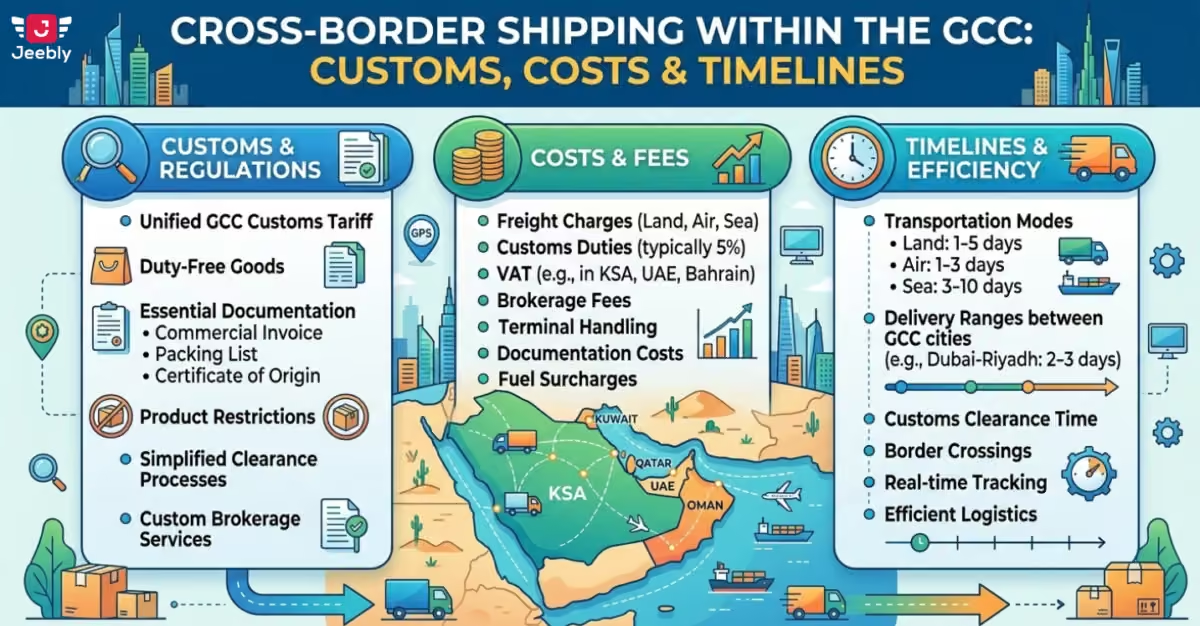
An infographic detailing the process of cross-border shipping within the Gulf Cooperation Council (GCC). The graphic is split into three main sections: "Customs & Regulations," "Costs & Fees," and "Timelines & Efficiency," all surrounding a map of the GCC region (Saudi Arabia, UAE, Oman, Qatar, Kuwait) with shipping routes.

Cross-Border Shipping Within the GCC: Customs, Costs and Timelines

The GCC’s six member states, UAE, Saudi Arabia, Kuwait, Bahrain, Qatar, and Oman, operate under a common external tariff and a stated commitment to the free movement of goods among member states. In practice, each border crossing has its own documentation requirements, customs authority, and clearance timeline. What moves smoothly from Dubai to Sharjah does not automatically move smoothly from Dubai to Riyadh or Muscat.

For UAE businesses expanding into GCC markets, this guide covers what cross-border shipping within the GCC entails: the customs framework, per-country timelines, cost structure, and the 2026 compliance changes affecting every UAE shipper moving goods across GCC borders.

Key Takeaways

  • GCC member states share a common external tariff, but the duty-free movement of goods between member states is NOT automatic.
  • From August 2026, all shipments to and from the UAE mainland require 12-digit HS codes under Dubai Customs Notice 10/2025.

  • Saudi Arabia is the most compliance-sensitive destination in the GCC. SABER product registration is required for regulated product categories before shipment.

  • Road freight is the primary cross-border mode within the GCC connecting the UAE to Saudi Arabia, Kuwait, Bahrain, Qatar, and Oman via established corridors. 

  • Air freight is available for time-critical shipments. Sea freight is used for Oman and Qatar.

How GCC Customs Works: The Common Framework and Its Limits

The GCC Customs Union operates under the GCC Common Customs Law, which establishes a unified external tariff of 5% on most goods imported into the region from outside. The goal is for goods to move freely between member states once they have cleared customs upon entry into any GCC country.

The reality is more specific. Here is the rule that catches UAE shippers most often:

Goods manufactured within GCC member states move duty-free between those states. A product manufactured in the UAE and shipped to Saudi Arabia qualifies for zero duty under the GCC Common Customs Law, provided it meets the rules of origin.

Goods imported into the UAE from outside the GCC and then re-exported to another GCC country do NOT automatically qualify for duty-free treatment. A product imported from China into a Dubai free zone and then shipped to a Saudi buyer is treated as entering Saudi Arabia from outside the GCC and is subject to Saudi Arabia’s standard external tariff on its true country of origin (China). Transit through the UAE does not confer GCC origin.

This distinction matters significantly for businesses that use the UAE as a re-export hub. If your inventory is sourced from Asia and distributed across the GCC, each destination country’s customs authority assesses duty based on the goods’ actual origin.

For a detailed explanation of how UAE customs handles inbound goods, free zone treatment, and the 2026 12-digit HS code changes, Customs Clearance in Dubai and UAE: Process, Documents and Business Guide covers the inbound side in full.

The 2026 Compliance Change Every UAE Shipper Must Know

From August 2026, all rest-of-world imports into the UAE mainland require 12-digit HS codes under Dubai Customs Notice 10/2025 (Phase 3 of the rollout). This was already mandatory for GCC-destined shipments from August 2025 (Phase 1).

Dubai Customs has launched Al Munasiq, an AI-powered HS code suggestion tool that returns likely 12-digit matches from product descriptions or images. For businesses with large, diverse product catalogues, this tool reduces the manual burden of reclassifying SKUs. Businesses with a small, consistent product range must confirm the correct 12-digit code for each SKU before August 2026.

The practical implication for GCC cross-border shippers: any declaration submitted with an 8-digit HS code for a GCC-destined shipment after August 2025 risks rejection or being held. Verify your product HS codes against the GCC 12-digit tariff schedule and confirm them with your customs broker before shipping.

Mode-by-Mode Transit Timelines: UAE to Each GCC Country

Destination Primary mode Approx. transit time Border crossing
Saudi Arabia (Riyadh) Road freight 12–20 hours transit, 1–3 days total Al Ghuwaifat (primary)
Saudi Arabia (Jeddah) Road freight 20–30 hours transit, 2–4 days total Al Ghuwaifat
Oman (Muscat) Road freight 6–18 hours transit, 1–2 days total Hatta or Al Wajajah
Qatar (Doha) Road freight (via Saudi Arabia) 2–3 days total Al Ghuwaifat + Saudi transit
Kuwait Road freight (via Saudi Arabia) 2–3 days total Al Ghuwaifat + Saudi transit
Bahrain Road freight (via Saudi Arabia, King Fahd Causeway) 2–3 days total Al Ghuwaifat + causeway

Air freight is available for all GCC destinations and is the appropriate mode for time-critical shipments. Air freight costs are significantly higher than road freight per kilogram. For shipments above the time-critical threshold but not suited to road freight transit times, air freight is the default for high-value, low-weight GCC cross-border orders.

For a full comparison of air freight versus sea freight for GCC and international routes, Air Freight vs Ocean Freight: Which Is Right for UAE Businesses? covers the cost and timeline trade-offs by mode.

Documentation Required for GCC Cross-Border Shipments

Every GCC cross-border shipment from the UAE requires a consistent set of documents. Missing or incorrect documents are the primary cause of border holds and clearance delays.

Document Purpose Notes
Commercial invoice Declares goods value, origin, and description Must match packing list exactly
Packing list Itemises contents by weight, quantity, and dimensions Per-carton detail required
Certificate of Origin Confirms goods' country of manufacture Required for duty-rate determination; GCC Form A for GCC-origin goods
Bill of Lading / Air Waybill Transportation document from carrier Confirms routing and responsibility
12-digit HS code classification Tariff classification for duty calculation Mandatory from August 2026 for all UAE shipments
SABER SCoC (Saudi Arabia) Shipment conformity certificate Required for regulated product categories; issued per shipment
Halal certificate Required for food, cosmetics, and pharmaceuticals Country-specific requirements vary
End-user certificate Required for restricted goods categories Varies by product and destination

For a comprehensive guide to UAE export documentation and how to obtain certificates of origin, UAE Import and Export Guide: Trade Documentation, Logistics and Compliance covers the full documentation framework.

Cost Structure: What GCC Cross-Border Shipping Costs

GCC cross-border shipping costs vary significantly by mode, weight, destination, and service level. These are the components to model before pricing your GCC delivery offer.

Road freight (per shipment):

  • UAE to Saudi Arabia (Riyadh): typically AED 800–2,500 for a full-load consignment, depending on weight and dimensions
  • UAE to Oman (Muscat): typically AED 500–1,500
  • UAE to Qatar/Kuwait/Bahrain: typically AED 1,500–3,500 (longer route via Saudi transit)

Customs duties:

  • Standard GCC external tariff: 5% of CIF (Cost, Insurance, Freight) value
  • GCC-origin goods: 0% if origin certificate is valid and goods meet rules-of-origin criteria
  • Some Saudi categories: higher duty rates apply (check ZATCA tariff schedule)

Customs clearance fees:

  • Per-declaration fee at UAE export: AED 50–200 depending on the broker and complexity
  • Per-declaration fee at destination customs: varies by country; Saudi SABER certificates add per-shipment cost

Freight insurance: Required for high-value cross-border shipments.

Returns: Cross-border returns are significantly more complex and expensive than domestic returns. A returned shipment from Saudi Arabia to the UAE re-enters UAE customs as an import and may be subject to UAE import duty unless documented as a re-import of UAE-origin goods. Factor this cost into your GCC pricing model before offering customer-facing return policies on cross-border orders.

For the full UAE domestic shipping cost structure that underlies the inbound leg of any GCC cross-border operation, Shipping Costs for Small Businesses in UAE: What You’ll Pay covers the per-parcel cost components.

Incoterms and Who Bears What Cost in GCC Cross-Border Shipping

For UAE businesses shipping to GCC buyers, the Incoterm agreed in the sales contract determines who is responsible for freight costs, insurance, and customs clearance at the destination.

DDP (Delivered Duty Paid): The UAE seller pays all costs, including customs duties at the destination. The buyer receives goods cleared and delivered. Creates the best customer experience (no surprise charges at delivery) but requires the seller to either manage customs for GCC destinations or appoint an Importer of Record (IOR). For consumer e-commerce sales to GCC customers, DDP helps prevent delivery refusals caused by unexpected import charges.

DAP (Delivered at Place): The UAE seller pays freight to the agreed destination point; the buyer handles customs clearance and duty payment. Simpler for the seller; creates risk of buyer-side customs delays and potential delivery refusals if the buyer is not prepared for the duty charge.

FOB (Free on Board): The seller’s responsibility ends when the goods are loaded onto the vessel at the UAE port or onto the aircraft at the UAE airport. The buyer arranges and pays for freight, insurance, and destination customs. Common for established B2B relationships where the buyer manages their own import logistics.

How Jeebly Supports GCC Cross-Border Shipping

Jeebly Haul covers road freight across the GCC and air freight for time-critical cross-border shipments, with in-house customs clearance. It manages UAE export documentation and coordinates with destination customs brokers rather than outsourcing the clearance step to a third party.

For businesses importing inventory through the UAE and distributing across the GCC, Jeebly Bizz connects inbound freight and customs clearance via Jeebly Haul to domestic fulfilment and dispatch via Jeebly Dash, enabling same-day and next-day delivery across the UAE all on one platform.

For how freight forwarders structure GCC cross-border services and what to confirm before appointing one, Freight Forwarding in UAE: How It Works, Costs and How to Choose a Provider covers mode selection and provider evaluation in detail.

Talk to the Jeebly team about your GCC shipping requirements. A direct conversation will confirm the right mode, documentation requirements, and cost structure for your specific cross-border operation.

Conclusion

Cross-border shipping within the GCC is operationally manageable. The road infrastructure is excellent, the customs framework is relatively unified, and the transit timelines are short. The complexity lies in the compliance layer: the GCC origin rule that captures re-exporters, the 12-digit HS code mandate from August 2026, Saudi Arabia’s SABER registration requirements, and the documentation set that varies by country and product category. 

Getting these right before the first shipment saves the cost of held or rejected goods at the border. For GCC road freight and air freight with in-house customs clearance, Jeebly Haul covers the cross-border lane. Get in touch to discuss your specific GCC shipping requirements.

Frequently Asked Questions

Only for goods that genuinely originate in a GCC member state. Goods imported into the UAE from China, India, or Europe and re-exported to Saudi Arabia or other GCC countries are NOT exempt from GCC external tariffs upon re-export to those destinations. Each country’s customs authority assesses duty based on the goods’ actual country of manufacture.

At minimum: commercial invoice, packing list, bill of lading or air waybill, certificate of origin, and 12-digit HS code classification. For regulated products (electronics, cosmetics, food contact items, toys), a SABER Shipment Certificate of Conformity (SCoC) is mandatory before goods clear Saudi customs.

By road freight: 12–20 hours transit time from Dubai to Riyadh, with a total door-to-door timeline of 1–3 days accounting for customs clearance at both ends. Jeddah takes longer. By air freight: 1–2 days door-to-door. Saudi Arabia’s April 2026 reform waiving bank guarantees for transit cargo has improved clearance speed.

The standard GCC external tariff is 5% of CIF (Cost, Insurance, Freight) value for most product categories from non-GCC origins. Some categories attract higher rates, particularly in Saudi Arabia. Confirm your product’s rate against the destination country’s tariff schedule before pricing your cross-border offer.

SABER is Saudi Arabia’s product safety and conformity system, administered by the Saudi Standards, Metrology and Quality Organisation (SASO). It is required for regulated product categories, including electronics, cosmetics, chemicals, food contact materials, toys, and building materials, before those goods can enter Saudi Arabia. SABER issues a Product Certificate of Conformity (PCoC) for the product and a Shipment Certificate of Conformity (SCoC) per shipment. Without both, regulated goods will not clear Saudi customs.

SABER is Saudi Arabia’s product safety and conformity system, administered by the Saudi Standards, Metrology and Quality Organisation (SASO). It is required for regulated product categories, including electronics, cosmetics, chemicals, food contact materials, toys, and building materials, before those goods can enter Saudi Arabia. SABER issues a Product Certificate of Conformity (PCoC) for the product and a Shipment Certificate of Conformity (SCoC) per shipment. Without both, regulated goods will not clear Saudi customs.

Routes to insightful reads

An infographic detailing the process of cross-border shipping within the Gulf Cooperation Council (GCC). The graphic is split into three main sections: "Customs & Regulations," "Costs & Fees," and "Timelines & Efficiency," all surrounding a map of the GCC region (Saudi Arabia, UAE, Oman, Qatar, Kuwait) with shipping routes.
Cross-Border Shipping Within the GCC: Customs, Costs and Timelines

Gearing up for Q4 in the UAE? Navigating peak season demand requires early planning across warehouse operations, carrier capacity, inventory, and customer experience. Explore our 10-step logistics checklist to streamline your supply chain, avoid bottleneck delays, and ensure smooth delivery during the busiest shopping quarter of the year.

Read More
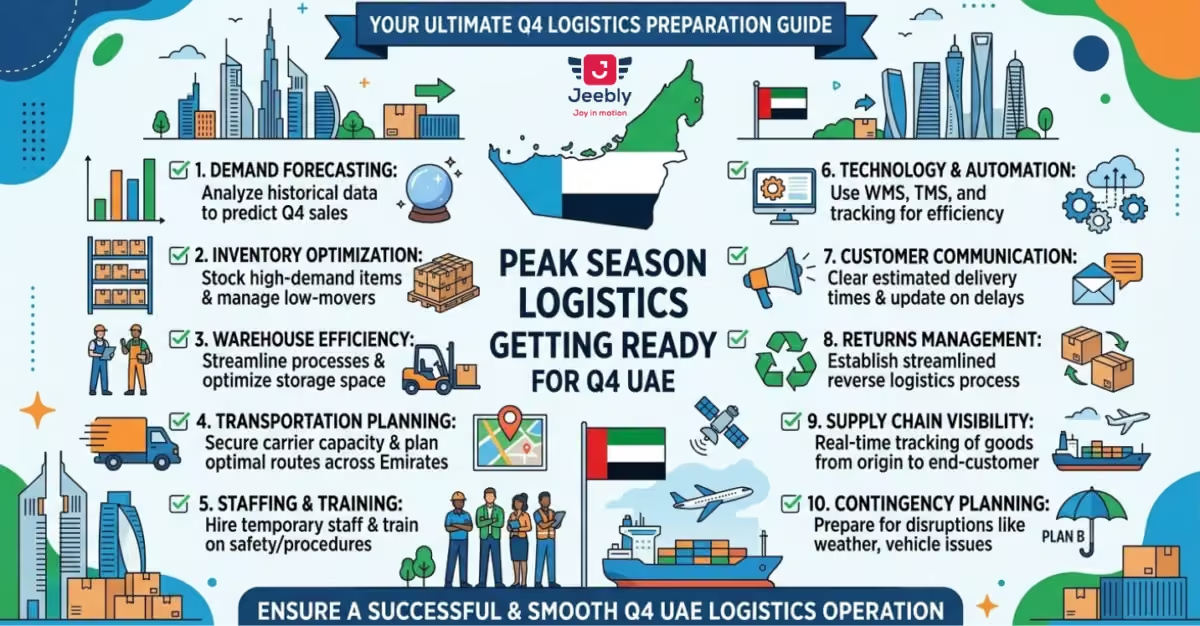
An infographic checklist outlining 10 key steps for Q4 UAE logistics preparation, featuring icons for demand forecasting, inventory, warehouse efficiency, transportation, staffing, and technology against a UAE skyline and map background.
Peak Season Logistics Checklist: Getting Ready for Q4 UAE

Gearing up for Q4 in the UAE? Navigating peak season demand requires early planning across warehouse operations, carrier capacity, inventory, and customer experience. Explore our 10-step logistics checklist to streamline your supply chain, avoid bottleneck delays, and ensure smooth delivery during the busiest shopping quarter of the year.
Read More
An isometric infographic detailing how to sell on Amazon UAE. The left side covers seller onboarding and listing steps like defining business activity, trade name reservation, and document preparation. The right side compares FBA (Fulfilment by Amazon) and FBM (Fulfilment by Merchant) logistics and delivery models against a Dubai skyline.
How to Sell on Amazon UAE: What Sellers Need to Know About Fulfilment and Delivery

Selling on Amazon UAE offers massive growth potential, but choosing the right logistics model can make or break your margins. Discover the step-by-step onboarding process for Amazon.ae, explore the core differences between Fulfilment by Amazon (FBA) and Fulfilment by Merchant (FBM), and learn how to optimize your delivery strategy to scale efficiently in the UAE market.

Read More
A woman in a black dress and white gloves holds a branded "Jeebly" box next to a white Land Rover Defender with a bougainvillea hedge behind them.
High-Value Item Delivery in the UAE: Insurance, Handling, and What to Ask

Delivering high-value, luxury items in the UAE requires far more than standard shipping—it demands white-glove precision, specialized security protocols, and comprehensive transit insurance. Discover how premium handling, secure transit procedures, and asking the right questions of your courier partner ensure high-ticket goods reach your clients safely, preserving both product integrity and brand trust.

Read More
A Jeebly delivery courier handing over stacked packages outside a Dubai residence to a mother and her school-aged children, with a Jeebly delivery van parked nearby and the Dubai skyline featuring the Burj Khalifa in the background.
Back-to-School Delivery Trends: What UAE Retailers Learned This Season

As the back-to-school rush hits the UAE, retailers face surging demand for fast, flexible, and reliable last-mile deliveries. From school uniforms and backpacks to tech essentials, learn how seamless multi-channel logistics, scheduled doorstep deliveries, and real-time tracking help UAE brands meet evolving parent expectations and turn seasonal spikes into long-term customer loyalty

Read More

    Powered by