Jeebly | Logistics Solutions

Categories
blogs

Aramex vs Jeebly: Which Is Better for UAE Last-Mile Delivery?

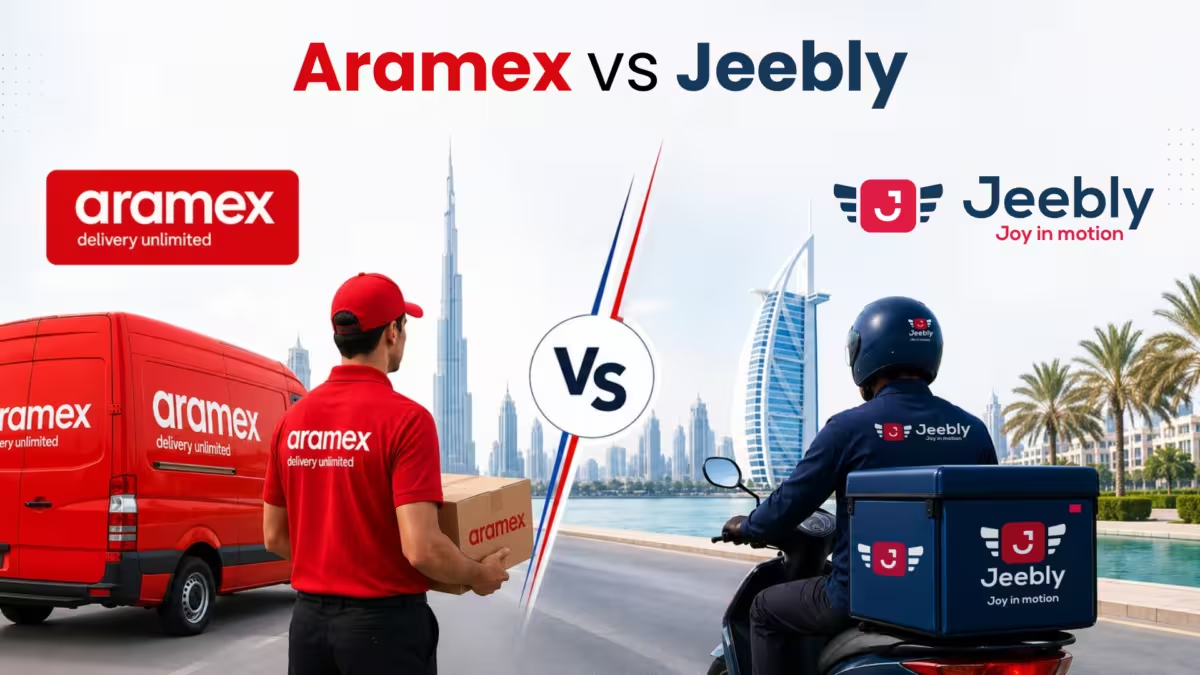
Comparison graphic showing Aramex and Jeebly last-mile delivery services in the UAE, featuring delivery vehicles, couriers, and key logistics service categories.

Aramex vs Jeebly: Which Is Better for UAE Last-Mile Delivery?

Choosing a courier in the UAE is not just a procurement decision. It is a customer experience decision.

Every parcel that arrives late, every tracking update that goes silent, and every COD payment that takes weeks to land in your account reflects directly on your brand, not the carrier’s.

The Aramex vs Jeebly question comes up often among UAE businesses because both are credible, well-known names. But they are not the same type of company, and comparing them purely on brand recognition misses the point entirely.

This article breaks down both providers across delivery speed, pricing, technology, COD, emirate coverage, and e-commerce fit, so you can match the right partner to how your business actually operates.

With the UAE’s last-mile delivery market projected to reach USD 4.85 billion by 2030, that choice carries real commercial weight.

What Aramex and Jeebly Actually Do

Before comparing the two, it helps to understand what each company was built to do because design intent shapes every operational detail that follows.

Aramex was founded in 1982 in Amman, Jordan. Today it is headquartered in Dubai, publicly listed on the Dubai Financial Market, and majority-owned by ADQ, Abu Dhabi’s sovereign wealth fund. It operates across 70-plus countries through more than 600 offices, with approximately 18,000 employees worldwide.

Core Aramex services include:

  • Domestic express delivery (same-day and next-day within the UAE)
  • International express shipping across 70-plus countries
  • Freight forwarding by air, sea, and road
  • Fulfilment and warehousing
  • Customs clearance
  • Shop and Ship, its flagship cross-border parcel forwarding product

Aramex is built for scale: enterprise accounts, institutional clients, and businesses that need a globally recognised partner to handle both local and international complexity.

Jeebly was founded in Dubai in 2016. It started as a hyperlocal delivery platform and has since evolved into a full-service logistics business purpose-built for UAE e-commerce. The operational numbers today:

  • 50,000-plus deliveries completed daily
  • 4,000-plus active fleet vehicles
  • 12M-plus customers served
  • 98% First-Day Delivery Success (FDSS) rate across all seven emirates

Jeebly’s product suite includes Jeebly Dash for same-day and next-day domestic delivery, Jeebly Bizz for business logistics and fulfilment, Jeebly Haul for freight above 20 kg, and Jeebly Plus for premium, white-glove delivery.

Where Aramex operates with global enterprise infrastructure, Jeebly’s platform is calibrated to one outcome: helping UAE online businesses deliver faster, retain customers, and scale without logistics becoming the bottleneck.

Aramex vs Jeebly: Head-to-Head Comparison

Here is how the two providers stack up across the dimensions UAE businesses care about most.

Capability Aramex Jeebly
Founded / HQ 1982, Dubai 2016, Dubai
Ownership ADQ (Abu Dhabi sovereign wealth fund) Independent, e-commerce-native
UAE Last-Mile Yes, Domestic Express Yes, same-day and next-day
Express Delivery Same-day (select zones, 7 days/week) 60-120 min (Dubai), same-day cut-off 11 AM
UAE-Wide Next-Day Yes Yes, all 7 emirates, cut-off 2 PM
GCC Cross-Border Yes, 70+ countries Yes, Jeebly Dash International
Freight Forwarding Yes, air, sea, and road Yes, Jeebly Haul
Fulfilment & Warehousing Yes, UAE fulfilment centres Yes, including micro-fulfilment centres
Marketplace Integrations ShopGo, Martjack Shopify, WooCommerce, Magento, and more
Self-Service Portal Yes, aramex.com Yes, Jeebly Now Portal + One App
Real-Time Tracking Yes, AI/ML-powered, live tracking (GCC rollout) Yes, centralised dashboard with ETA updates
COD Support Yes Yes, weekly bank remittances
Reverse Logistics Yes Yes, structured, dedicated service line
White-Glove / Premium Not a standalone product Yes, Jeebly Plus
Q-Commerce / Dark Stores No Yes, 13+ live micro-fulfilment centres
Primary Client Profile Enterprise, cross-border, institutional, SME E-commerce merchants, SMEs, D2C brands, startups

The table tells the story clearly. Aramex is architected for global enterprise volume and cross-border complexity. Jeebly is engineered around the daily realities of a UAE online merchant managing order flows, COD cycles, and peak season surges.

Delivery Speed and Coverage: What Each Provider Actually Commits To

Aramex Domestic Express

Aramex’s domestic product in the UAE offers same-day or next-day delivery, available seven days a week. That seven-day availability is a genuine advantage over providers that restrict weekend dispatches.

On the technology side, Aramex uses AI and machine learning to predict estimated delivery times. It was also the first logistics company in the GCC to pilot live last-mile tracking using Google Maps Platform, enabling customers to track their delivery from the last five stops to the doorstep. The GCC-wide rollout followed successful UAE testing in 2023.

Jeebly Dash

Jeebly Dash runs three delivery tiers, letting merchants match delivery cost to product urgency:

  • Express (60-120 minutes): Dubai only, bike delivery, for time-critical orders
  • Same-Day: Dubai, order cut-off at 11 AM
  • Next-Day: All seven emirates, with a 2 PM cut-off

The 98% FDSS rate applies across the full operation, not just select zones. Underpinning it is data-driven fleet forecasting and AI-optimised routing built specifically around UAE delivery conditions, including the absence of a standardised postcode system, free-zone access requirements, and the volume pressure of peak shopping seasons.

Jeebly makes three delivery attempts before marking an order as Return to Origin (RTO).

The coverage distinction that matters for e-commerce: both providers cover UAE-wide next-day delivery. Where Jeebly goes further is the 60-120 minute express tier and a network of 13-plus live micro-fulfilment centres for Q-commerce. That is infrastructure Aramex does not match in the consumer e-commerce segment.

To understand how delivery timelines work by service type across the UAE, read: How Long Does Delivery Take in the UAE?

COD, Returns, and the Details That Matter at Scale

These three factors tend to surface only after something goes wrong. Worth evaluating upfront, because each one directly affects cash flow, customer retention, and the delivery promise you can credibly make at checkout.

Cash on Delivery

Both Aramex and Jeebly support COD, which remains a significant share of e-commerce transactions across the UAE and wider GCC.

Key difference: Jeebly remits COD collections to your bank account on a weekly cycle. That predictability is consistently cited by Jeebly merchant partners as a working capital advantage, particularly for brands where COD makes up a meaningful percentage of daily revenue.

Aramex also supports COD, with remittance terms structured at the account level.

Before committing to either provider: confirm the exact remittance cadence and reporting format in writing, not just that COD is available.

Reverse Logistics

Jeebly runs a dedicated reverse logistics service line covering returns management and product recalls, integrated with the same platform handling forward deliveries. Digital proof of pickup is captured at collection. Aramex includes returns handling within its e-commerce service suite.

For brands managing high return volumes, the practical question is not whether returns are supported. It is how quickly the return cycle closes, how exceptions are handled, and whether the data feeds back into your order management view.

Still managing returns manually? Read: How to Manage Returns for Your UAE Online Store

Emirate Coverage

Both providers offer next-day delivery across the UAE. Jeebly’s coverage explicitly includes all seven emirates: Abu Dhabi, Dubai, Sharjah, Ajman, Umm Al Quwain, Ras Al Khaimah, and Fujairah.

Ras Al Khaimah, Fujairah, and Umm Al Quwain are zones where consistent SLA delivery is not guaranteed by every provider in the market. If you sell nationally, verify the SLA for each specific emirate before making a checkout promise to your customers.

Where Jeebly Goes Further for UAE E-Commerce

For enterprise freight, institutional accounts, and businesses that need a single globally recognised partner across 70-plus countries, Aramex delivers.

The comparison shifts when the use case is specifically UAE e-commerce: merchants managing daily order flows, same-day commitments, COD cycles, returns, and growth across all seven emirates. That is the segment Jeebly was built for from day one, and the product architecture reflects it.

  • Jeebly Dash covers express (60-120 min), same-day, next-day, and scheduled deliveries across the UAE.
  • Jeebly Bizz handles warehousing, fulfilment, cross-border logistics, and customs clearance on a single platform, rather than across separate provider relationships. For businesses looking to understand what a 3PL actually means in practice, this is worth exploring.
  • Jeebly Haul moves bulk and freight shipments above 20 kg by road, air, and sea, domestically and across GCC and MENA.
  • Jeebly Plus delivers white-glove experiences for luxury and high-value categories where the delivery moment carries its own brand weight.

As order volume grows from 50 deliveries a day to 500 and beyond, Jeebly’s product architecture scales with you without requiring a platform migration.

Trusted by Mumzworld.com, Instashop, DOD UAE, and BFL Group, Jeebly carries AED 500M-plus in combined revenue and AED 1.5B-plus in shipments delivered. For more on how consistent logistics directly shapes customer experience: What to Look for in a Reliable Logistics Company in the UAE.


How to Choose: Five Questions to Ask Before You Commit

The right provider depends less on features in isolation and more on how your logistics actually run day to day. Work through these before committing:

1. What is your primary delivery use case?

Cross-border enterprise freight, global networks, and institutional accounts point toward Aramex. UAE last-mile delivery, same-day capability, COD management, and e-commerce fulfilment point toward Jeebly.

2. Do you sell on Shopify, WooCommerce, or Magento?

Jeebly’s native integrations connect your store directly to dispatch, removing manual order pushing and reducing errors at volume. Aramex integrates with ShopGo and Martjack. For merchants on Shopify or WooCommerce, Jeebly is the more direct operational fit.

3. What percentage of your orders are COD?

If COD accounts for more than 20-25% of your daily order mix, remittance cycle time directly affects working capital. Ask both providers for their exact cadence and get it confirmed in writing, not assumed.

4. Are you planning to scale in the next 12 months?

Jeebly’s no-minimum, pay-as-you-go model means your logistics infrastructure grows with your business rather than ahead of it. There is no need to commit to volume thresholds you have not yet reached. Read: How Jeebly Helps SMEs Scale During Peak Shopping Seasons.

5. Do you need 60-minute express or Q-commerce capability?

 Jeebly’s 13-plus live micro-fulfilment centres and 60-120 minute express tier are purpose-built for ultra-fast urban delivery. Aramex’s infrastructure does not offer an equivalent at the hyperlocal e-commerce level.

Conclusion

Aramex is a well-established, globally capable logistics provider. For cross-border freight, enterprise-scale operations, and businesses that need a single partner spanning 70-plus countries, its infrastructure and brand reputation are genuinely earned.

For UAE online merchants, whether a startup managing 50 orders a month or a growing brand navigating peak-season volume, Jeebly is the more purposefully built fit. The delivery tiers, pricing transparency, merchant-first technology, and product depth are designed specifically around how UAE e-commerce businesses actually operate and scale.

If you are still evaluating your options, see how Jeebly compares against other couriers operating in the UAE: Quiqup vs Jeebly, iMile vs Jeebly, EMX vs Jeebly, and Porter vs Jeebly.

At Jeebly, we do not just move parcels. We move businesses forward. If you are ready to build a logistics setup that scales with your ambition, talk to the Jeebly team and get a solution mapped to your specific volumes, routes, and growth targets.

Or, if you are ready to go now, sign up with Jeebly and start shipping today.

Frequently Asked Questions

Aramex is a globally operating courier and logistics provider founded in 1982, with a network across 70-plus countries spanning domestic express, international shipping, freight forwarding, and fulfilment. Jeebly is a UAE-native logistics platform founded in 2016 and purpose-built for e-commerce, offering same-day and next-day delivery across all seven emirates, COD management, fulfilment, and a merchant-first technology stack. Aramex suits cross-border enterprise logistics; Jeebly is designed for UAE last-mile delivery and online merchant operations.

Yes. Aramex Domestic Express offers same-day delivery in select zones across the UAE, available seven days a week. Jeebly Dash also offers same-day delivery in Dubai with an 11 AM cut-off, plus a 60-120 minute express tier for qualifying orders within the city.

Jeebly publishes a fixed base rate of AED 17.31 per parcel up to 5 kg with no minimum order requirement. Aramex pricing is account-negotiated and available via its online rate calculator, but there is no equivalent published per-parcel rate for SME e-commerce. For startups and growing businesses, Jeebly’s transparent, no-commitment model is typically easier to plan around.

Yes, both providers support COD. Jeebly remits collections to your bank account on a weekly cycle, giving merchants a predictable working capital timeline. Aramex COD terms are structured at the account level. Confirm remittance timelines and reporting format with both providers before signing.

Jeebly offers native integrations with Shopify, WooCommerce, and Magento, connecting your store directly to dispatch. Aramex integrates with ShopGo and Martjack. For merchants on Shopify or WooCommerce, Jeebly is the more direct fit.

Yes. Jeebly Dash covers all seven UAE emirates, including Abu Dhabi, Dubai, Sharjah, Ajman, Umm Al Quwain, Ras Al Khaimah, and Fujairah, for next-day delivery with a 2 PM cut-off.

Aramex is a strong option for e-commerce businesses with significant cross-border or GCC volume, or those operating at enterprise scale who need a globally recognised partner. For UAE-focused merchants who need same-day speed, transparent per-parcel pricing, native Shopify or WooCommerce integration, and a platform that scales without volume minimums, Jeebly is typically the more operationally aligned choice.

Routes to insightful reads

A comparison banner for UAE eCommerce delivery showing two hands holding smartphones side-by-side against a blurred Dubai skyline. The left screen displays the DHL Express logo with an "International Express" badge below it, while the right screen displays the Jeebly logo with a "Local Hyper-local" map route badge. A bold "VS" graphic splits the center.
DHL vs Jeebly: Which Is Better for UAE Businesses and eCommerce Delivery?

Looking for the right logistics partner in the UAE? We break down DHL vs. Jeebly to help you choose between global express shipping and local, tech-driven e-commerce fulfillment. Discover which courier wins on domestic delivery speeds, Cash on Delivery (COD) handling, and cross-border customs.

Read More
Logisty vs Jeebly comparison for UAE eCommerce delivery, last-mile logistics and courier services
Logisty vs Jeebly: UAE eCommerce Delivery Comparison

Logisty and Jeebly serve different logistics needs, but which is the better choice for your business? This comparison explores their services, delivery capabilities, technology, coverage, eCommerce integrations, cash on delivery (COD), and fulfilment solutions to help UAE businesses choose the right logistics partner for growth.

Read More
UAE VAT on imports and exports showing tax compliance, logistics, shipping and customs documentation
VAT on Shipping and Delivery Services in UAE: What Businesses Need to Know

VAT can significantly impact the cost of shipping and delivery services in the UAE, making it essential for businesses to understand how it applies to domestic and international shipments. This guide explains VAT rules, zero-rated and standard-rated services, invoicing requirements, and practical compliance tips to help businesses manage logistics costs and stay compliant with UAE tax regulations.

Read More
COD fraud prevention in the UAE with secure payment verification, order authentication and logistics risk management
COD Fraud in UAE eCommerce: How to Detect, Prevent and Reduce Losses

Cash on Delivery (COD) fraud is a growing challenge for e-commerce businesses across the UAE, leading to fake orders, delivery failures and unnecessary operational costs. Learn how to identify common fraud tactics, implement effective prevention strategies and protect your business while maintaining a seamless customer experience.

Read More
UAE import and export guide featuring trade documentation, cargo ship, air freight, customs clearance and logistics operations
UAE Import and Export Guide: Trade Documentation, Logistics and Compliance

Customs clearance is a critical step in moving goods into and out of the UAE. Whether you’re importing, exporting, or shipping across borders, understanding the customs process, required documentation, and compliance requirements can help you avoid delays, reduce costs, and keep your supply chain running efficiently.

Read More
Categories
blogs

What Is Last Mile Delivery? A Guide for Businesses & Shoppers

What is Last-Mile Delivery and Why It Matters in the UAE

What Is Last Mile Delivery? A Guide for Businesses & Shoppers

When people ask, what is last mile delivery, they are really asking about the final step of a package’s journey. It is the moment when a product moves from a local hub to the customer’s doorstep. Even though it sounds simple, this step often decides whether a customer feels happy or frustrated.

In ecommerce, this final stretch is the most visible part of the supply chain and delivery speed impacts customer loyalty in e-commerce more than most brands realize. Studies from Capgemini Research Institute show that most customers will not return to a brand after a poor delivery experience. That means businesses cannot afford to ignore it.

In this guide, we explain the last mile delivery meaning, how it works, why it is expensive, and what it looks like in the UAE.

What is Last-Mile Delivery?

So, what is last mile delivery in simple terms? It is the final step in the shipping process where a package travels from a nearby warehouse or delivery hub to the customer’s address.

Think of it like a relay race. The warehouse prepares the order. Trucks move it across cities. But the last runner, usually a delivery driver, brings it to your door. That final run is called the last mile.
In last mile delivery in ecommerce, this stage matters the most because it directly affects the customer. If the package arrives late, damaged, or not at all, the customer blames the brand, not the warehouse.

This is why businesses in the UAE now invest heavily in faster and smarter delivery systems. The final delivery experience shapes trust, reviews, and repeat orders.

How Does Last Mile Delivery Work Step by Step?

The process usually follows these steps:

1. Order Confirmation
The customer places an order online. The system confirms payment and prepares the request.

2. Warehouse Fulfillment
Staff pick, pack, and label the product.

3. Transfer to Local Hub
The package moves to a delivery center close to the customer’s area.

4. Route Planning
Software selects the fastest and most efficient route.

5. Out for Delivery
A driver loads multiple packages and begins delivery.

6. Real Time Tracking and ETA Updates
The customer receives notifications and real time ETA delivery updates because real-time ETA updates reduce customer complaints and failed attempts.

7. Final Delivery Attempt
The driver delivers the package and collects proof of delivery.

Many UAE shoppers now expect live tracking. In fact, a McKinsey report found that customers increasingly demand same day or next day shipping. Because of this, businesses must use smart routing and clear communication to stay competitive.

Next, we will look at why this final step is often the most expensive part of the entire delivery process.

Why Is Last Mile Delivery So Expensive?

Many businesses ask, why is last mile delivery expensive if the product has already traveled across cities or even countries.

The reason is simple. The last mile is the least efficient part of shipping. A truck may carry hundreds of packages to one city. However, during final delivery, a driver may stop at each home one by one. That takes more time, fuel, and effort.

Last mile delivery can account for more than half of total shipping costs. This includes driver wages, fuel, vehicle maintenance, and delivery management systems.

Failed deliveries also increase costs. If a customer is not available, the company must attempt delivery again. In busy cities like Dubai and Abu Dhabi, traffic congestion adds even more delays. Therefore, businesses must manage this stage carefully to protect their margins.

What Affects Last Mile Delivery Speed and Reliability?

Speed and reliability depend on several factors. Even small issues can cause delays.

Here are the main factors:

Address Accuracy
Incomplete or unclear addresses slow drivers down.

Customer Availability

If the customer is not home, the delivery fails.

Traffic and Urban Density

UAE cities can experience heavy traffic during peak hours.

Delivery Time Slots
Poorly planned delivery time slots create missed attempts.

Real Time Communication

Real time ETA delivery updates help customers prepare.

For example, if a customer chooses a delivery window between 2 PM and 4 PM but leaves home early, the driver wastes time. However, when businesses follow delivery time slots best practices and send reminder notifications, the success rate improves.
Clear communication builds trust. It also reduces stress for both drivers and customers.

Common Last Mile Delivery Challenges in Real Life

Even with planning, problems still happen. These are common last mile delivery challenges businesses face every day:

1. Incorrect Addresses
A missing building number can delay delivery for hours.

2. Customer Not Reachable
Drivers may call, but the phone is switched off.

3. High Return Rates
In some markets, customers reject cash on delivery orders, strong processes for secure COD delivery in UAE reduce refusals and payment disputes.

4. Peak Season Overload
During holidays or sales, order volumes increase sharply.

5. Limited Visibility
Customers feel anxious when tracking updates are unclear.

In the UAE, where ecommerce continues to grow rapidly, these challenges become even more visible. According to Statista, online shopping in the UAE continues to expand year after year. As order numbers rise, delivery pressure increases.

However, understanding these challenges is the first step toward solving them. In the next section, we will explore practical ways businesses can reduce failed deliveries and improve performance.

How Businesses Can Improve Last Mile Delivery?

Now that we understand the challenges, let us focus on solutions. Businesses often ask how to reduce failed deliveries without increasing costs.

Here are practical steps that work:

1. Offer Flexible Delivery Time Slots
Let customers choose a time that suits them. This reduces missed attempts.

2. Send Real Time ETA Delivery Updates
Real time updates help customers plan their day.

3. Use Address Validation Tools
Confirm location details before dispatch.

4. Confirm Availability Before Delivery
A simple reminder message can prevent failure.

5. Use Smart Route Planning
Software can reduce fuel use and save time.

For example, a fashion brand in Dubai may face frequent failed deliveries. After adding SMS reminders and clearer time slots, the success rate improves within weeks. Small changes often create big results.

When businesses follow delivery time slots best practices, they improve both efficiency and customer trust.

What Shoppers Should Know About Last Mile Delivery?

Delivery is not only the company’s responsibility. Customers also play a role.

Here is what shoppers can do:

* Provide clear and complete address details

* Keep their phone reachable on delivery day

* Choose realistic delivery time slots

* Track real time ETA delivery updates

* Reschedule if plans change

Think of delivery like a meeting. If one side does not show up, it fails. When customers stay available and responsive, the process becomes smoother.

In fast growing ecommerce markets like the UAE, better coordination between brands and shoppers leads to fewer delays and better experiences.

How Jeebly Supports Last Mile Delivery in the UAE?

In the UAE, last mile delivery isn’t just about moving packages, it’s about understanding local roads, traffic patterns, and customer expectations across all seven emirates. Jeebly is built for exactly this.

Jeebly Dash — For Speed-First Ecommerce Brands

Express and scheduled delivery across the UAE
* Multiple cut-off windows to match your order flow
* Real-time tracking with WhatsApp, SMS, and email notifications
* COD collection built in with fast remittance cycles

Jeebly Bizz — For Higher-Volume Business Operations
* End-to-end supply chain support warehousing, pick-pack-deliver, and reverse logistics
* Live inventory and order tracking from a single platform
* Multiple fulfilment centres pan-UAE for faster dispatch
* Fewer failed deliveries, faster response times, better customer experiences

Tech That Works Behind Every Delivery
*OMS and WMS integration for full operational visibility
*Smart route planning that reduces idle driver time
*Riders allocated to dedicated zones across the UAE
*97% delivery success rate across UAE operations

As UAE ecommerce continues to grow, the difference between a good brand and a great one often comes down to the last mile. With the right logistics partner, delivery stops being a problem and starts being a competitive advantage.

Conclusion

Last mile delivery may seem like a small part of shipping, but it has the biggest impact on customer experience. When people ask what is last mile delivery, they are really asking why their package arrives on time or gets delayed.

For businesses, this stage affects costs, reviews, and repeat sales. For shoppers, it shapes trust. In fast growing ecommerce markets like the UAE, companies must invest in smarter routing, better communication, and reliable local partners.

When brands focus on reducing failed deliveries and improving real time updates, they turn delivery into a competitive advantage. And when customers stay informed and available, the process becomes smoother for everyone.

In the end, strong last mile delivery is not just about speed. It is about reliability, clarity, and building long term trust.

Frequently Asked Questions

Last mile delivery is the final step of shipping. It is when a package moves from a local hub to the customer’s home or office.

It costs more because drivers deliver packages one by one. Fuel, wages, traffic, and failed attempts increase the total cost.

Businesses can reduce failed deliveries by offering flexible time slots, sending reminders, and using real time ETA delivery updates. Clear communication makes a big difference.

Tracking shows that the driver is on the way. However, traffic, wrong addresses, or customer unavailability can still cause delays.

In the UAE, delivery companies use local hubs across cities like Dubai and Abu Dhabi. Drivers follow optimized routes and provide live updates. Because ecommerce is growing quickly, speed and reliability matter more than ever.

Routes to insightful reads

A comparison banner for UAE eCommerce delivery showing two hands holding smartphones side-by-side against a blurred Dubai skyline. The left screen displays the DHL Express logo with an "International Express" badge below it, while the right screen displays the Jeebly logo with a "Local Hyper-local" map route badge. A bold "VS" graphic splits the center.
DHL vs Jeebly: Which Is Better for UAE Businesses and eCommerce Delivery?

Looking for the right logistics partner in the UAE? We break down DHL vs. Jeebly to help you choose between global express shipping and local, tech-driven e-commerce fulfillment. Discover which courier wins on domestic delivery speeds, Cash on Delivery (COD) handling, and cross-border customs.

Read More
Logisty vs Jeebly comparison for UAE eCommerce delivery, last-mile logistics and courier services
Logisty vs Jeebly: UAE eCommerce Delivery Comparison

Logisty and Jeebly serve different logistics needs, but which is the better choice for your business? This comparison explores their services, delivery capabilities, technology, coverage, eCommerce integrations, cash on delivery (COD), and fulfilment solutions to help UAE businesses choose the right logistics partner for growth.

Read More
UAE VAT on imports and exports showing tax compliance, logistics, shipping and customs documentation
VAT on Shipping and Delivery Services in UAE: What Businesses Need to Know

VAT can significantly impact the cost of shipping and delivery services in the UAE, making it essential for businesses to understand how it applies to domestic and international shipments. This guide explains VAT rules, zero-rated and standard-rated services, invoicing requirements, and practical compliance tips to help businesses manage logistics costs and stay compliant with UAE tax regulations.

Read More
COD fraud prevention in the UAE with secure payment verification, order authentication and logistics risk management
COD Fraud in UAE eCommerce: How to Detect, Prevent and Reduce Losses

Cash on Delivery (COD) fraud is a growing challenge for e-commerce businesses across the UAE, leading to fake orders, delivery failures and unnecessary operational costs. Learn how to identify common fraud tactics, implement effective prevention strategies and protect your business while maintaining a seamless customer experience.

Read More
UAE import and export guide featuring trade documentation, cargo ship, air freight, customs clearance and logistics operations
UAE Import and Export Guide: Trade Documentation, Logistics and Compliance

Customs clearance is a critical step in moving goods into and out of the UAE. Whether you’re importing, exporting, or shipping across borders, understanding the customs process, required documentation, and compliance requirements can help you avoid delays, reduce costs, and keep your supply chain running efficiently.

Read More

    Powered by