






Jeebly | Logistics Solutions

Categories
blogs

Back-to-School Delivery Trends: What UAE Retailers Learned This Season

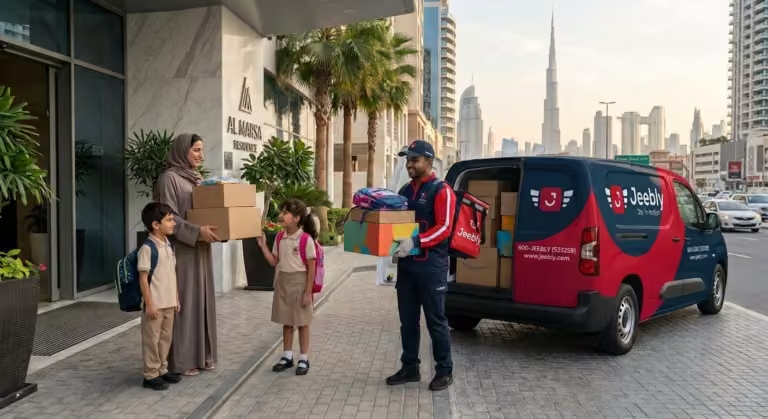
A Jeebly delivery courier handing over stacked packages outside a Dubai residence to a mother and her school-aged children, with a Jeebly delivery van parked nearby and the Dubai skyline featuring the Burj Khalifa in the background.

Back-to-School Delivery Trends: What UAE Retailers Learned This Season

The 2026 back-to-school season caught more UAE retailers off-guard than they expected. UAE schools reopened in late August, but the shopping rush peaked between 15 August and 1 September, compressing the delivery window to under three weeks of intense demand. 

Retailers who had positioned inventory in advance and built last-mile capacity ahead of that window converted at higher rates. UAE families spend approximately AED 2,000 per student on back-to-school supplies, excluding tuition, with total UAE BTS retail sales reaching approximately AED 3 billion in 2024. 

That figure is a concentrated demand event with specific delivery characteristics. This guide documents what the 2026 season revealed about delivery expectations, fulfilment pressure points, and what retailers need to prepare before the 2027 window opens.

Key Takeaways

  • UAE back-to-school shopping peaks between 15 August and 1 September. Retailers that didn’t pre-position inventory before this window can face fulfilment capacity shortfalls.

  • UAE retail outlets offered 20–60% discounts on clothing, footwear, school supplies, and stationery during the 2026 season, compressing margins while driving high order volumes that stressed last-mile operations.

  • Back-to-school purchasing is no longer a single August rush. Shopping now spreads across May to mid-October, requiring retailers to sustain delivery capacity for almost 6 months.

  • BOPIS (buy online, pick up in store) intent reached 46% among shoppers in 2025. Retailers without click-and-collect infrastructure lost conversions to those who offered it.

When Does Back-to-School Season Happen in the UAE?

Back-to-school in the UAE effectively begins in May, when research and planning behaviour starts to build. It peaks between 15 August and 1 September, then continues through September and mid-October as families settle into new school routines. UAE schools typically reopen in late August. 

The compressed peak window means any fulfilment or inventory failure during this period is difficult to recover from within the season. For delivery operations, this translates to a specific planning requirement: inventory must be warehoused, and courier capacity must be confirmed before 15 August.

What UAE Families Are Buying and Why It Creates Multi-Category Delivery Complexity

Understanding the product mix matters because each category has different delivery requirements. The AED 2,000 average per-student spend breaks across several categories that don’t ship identically:

  • Electronics and devices: Tablets, laptops, and student smartphones are the highest-value items in the BTS basket. These require appropriate packaging, photo ePOD at delivery, and consideration of return rights under UAE Consumer Protection Law if the product arrives damaged.

  • Clothing and footwear: High-volume, high-SKU, lower-weight items that drive high return rates. BTS clothing returns are common when sizes don’t match, or items arrive after the school start date, making them less urgent. 

  • Stationery, bags, and supplies: Lower value, time-sensitive (needed before school opens), and frequently purchased in multi-item bundles. These orders create per-parcel complexity: five different stationery items from different suppliers, consolidated into one shipment, arriving on time.

  • Specialist equipment: Older students purchase art supplies, science equipment, sports uniforms, and subject-specific tools, which require more lead time. These items are often sourced internationally, which means the inbound freight leg is on the critical path for delivery timing.

The delivery challenge is managing these categories simultaneously, each with different SLAs, packaging requirements, and post-delivery return expectations while order volumes spike.

The 2026 Season's Three Delivery Pressure Points

1. Last-Minute Demand Surge That Outpaced Same-Day Capacity

Shopping centres in Dubai and Sharjah recorded strong last-minute demand from families over the weekend immediately ahead of the 2026 school year start. For e-commerce retailers, this translates directly into a spike in same-day and next-day delivery requests in the final 72 hours before school reopened.

During the BTS peak window, retailers that offer same-day delivery can convert at materially higher rates than those offering next-day or standard windows. The problem is that same-day courier capacity in Dubai isn’t infinitely scalable on 24 hours’ notice during a demand spike, when every retailer is competing for the same drivers simultaneously.

2. Discount Pressure Compressing Margins on High-Volume, Expensive-to-Deliver Orders

Retail outlets offered discounts of 20–60% on clothing, footwear, school supplies, and stationery during the 2026 BTS season. Discounts at that level compress the margin available to absorb delivery costs, making per-parcel cost optimisation critical during the BTS season.

A retailer offering 40% off an AED 200 school bag can absorb an AED 17 next-day delivery charge more easily than an AED 35 same-day charge. But if the customer chose that retailer because same-day delivery was the differentiator, the higher delivery cost is the right commercial trade-off.

The lesson from 2026: retailers that modelled their BTS delivery-tier strategy (which orders qualify for same-day, which for next-day, and at what order-value threshold to offer free delivery) before the season performed better on margin than those that made these decisions ad hoc under volume pressure.

3. BOPIS Demand Outpacing In-Store Pick-Up Infrastructure

BOPIS (buy online, pick up in store) intent reached 46% among shoppers in 2025, overtaking home delivery at 38%. Parents with children in schools near a retail location often prefer to collect in person rather than wait for a delivery window during a busy household period.

Retailers without a structured BOPIS capability lost these conversions to competitors that offered it. For e-commerce-first brands without physical locations, this is an opportunity to build a delivery experience that closely approximates BOPIS: scheduled delivery windows, pre-delivery WhatsApp confirmation of the time slot, and ePOD at the door.

What UAE Retailers Should Do Differently for the 2027 Season

1) Start logistics planning in May, not July

Make inventory purchasing decisions that affect the inbound freight timeline by May or June at the latest. Sea freight from China to Jebel Ali can take 18–25 days. A buying decision made in late June for August delivery requires departure from China in early July, which means the purchase order must be placed and confirmed well before then.

For UAE retailers importing school supplies, electronics, or stationery from Asia, the inbound freight timeline is the most critical variable in BTS delivery performance. Missing the July sea freight window forces air freight, which costs significantly more and further compresses already-discounted BTS margins.

For help structuring the inbound freight leg, a quick guide on Freight Forwarding in UAE: How It Works, Costs and How to Choose a Provider covers the full process.

2) Confirm same-day courier capacity before 15 August

Pre-arrange a confirmed daily volume allocation with your same-day courier partner before the peak window opens. Waiting until demand spikes and then competing for capacity with every other retailer in the market is how retailers end up promising same-day delivery they can’t honour.

For same-day delivery across Dubai and next-day delivery across all seven UAE emirates, Jeebly Dash covers BTS-season volumes with a 98% FDSS across 50,000+ daily deliveries. Confirming your volume requirements with the Jeebly team before mid-August is the right approach for 2027.

3) Model the delivery tier economics before the season

Before the BTS season opens, model three variables: 

  • The per-parcel cost at each delivery tier (same-day vs next-day vs standard) 
  • The average order value at which free delivery is commercially viable 
  • The cart abandonment rate at each delivery cost level

This produces a clear delivery pricing strategy for BTS rather than reactive decisions made during the volume surge.

For the full UAE domestic shipping cost structure, including inter-emirate rates, COD fees, and volumetric weight mechanics, Cost of Shipping for a Small Business in UAE (2026) gives you the rate card to model against.

4) Build a structured returns process before BTS orders arrive

BTS clothing and electronics both carry elevated return rates. A structured reverse logistics process, like a clear return policy displayed before purchase, an RMA system, courier collection from the customer, and grading and restocking at the warehouse, needs to be in place before the season opens.

For UAE retailers building or reviewing their returns operation, How to Manage eCommerce Returns in UAE: Strategy, Policy and Logistics covers the full process, including COD refusal handling and the per-return cost structure.

How Jeebly Supports Retailers Through Peak Seasons

For retailers managing BTS or any peak season, Jeebly connects inbound freight, domestic last-mile delivery, and returns through one operational layer.

Jeebly Haul handles the inbound freight leg with in-house customs clearance. Jeebly Haul’s team can confirm realistic transit timelines and flag when air freight is needed to meet a school-year deadline.

Jeebly Bizz covers warehousing, pick-and-pack, and automated dispatch for retailers managing multi-SKU BTS orders. It ships together from one pick operation, is dispatched through Jeebly Dash, tracked in real time, and COD is collected where applicable and remitted weekly.

Talk to the Jeebly team before the next BTS planning window opens. A direct conversation about your expected BTS order volume, product mix, and emirate coverage will confirm the right fulfilment and courier setup before the August capacity crunch arrives.

Conclusion

The 2026 back-to-school season in the UAE reinforced what data was already suggesting: the season is longer than retailers plan for, the peak is more compressed than they expect, and the delivery expectations are higher than standard-season logistics can absorb without preparation. 

The retailers who managed all this well did so through earlier planning, confirmed courier capacity agreements, and structured returns processes. For 2027, the planning window is now. 

For same-day and next-day delivery across the UAE at scale, Jeebly Dash covers the last-mile leg. Get in touch to discuss your peak-season delivery requirements before the next window opens.

Frequently Asked Questions

Back-to-school shopping in the UAE builds from May onwards, peaks between 15 August and 1 September, and continues through September and mid-October. UAE schools typically reopen in late August. For retailers, the delivery-critical window is the three weeks before school starts, but purchasing behaviour that determines which retailers capture the season begins in May.

UAE families spend approximately AED 2,000 per student on back-to-school supplies, excluding tuition, with total UAE BTS retail sales reaching approximately AED 3 billion in 2024. This spend covers electronics, clothing, footwear, stationery, and specialist supplies, each with different delivery requirements and return rates.

Nearly half of UAE online shoppers now expect delivery in under two hours. During the BTS peak, retailers who offer confirmed same-day delivery convert at higher rates than those offering next-day or standard windows. Retailers should pre-confirm same-day capacity within Dubai with courier partners before 15 August, rather than competing for it during the peak

BTS clothing and electronics carry elevated return rates because purchases are often made before the child tries the item, size errors are common in children’s clothing, and electronics occasionally arrive with compatibility issues for school-specific requirements. A structured returns process needs to be in place before the season.

BOPIS (buy online, pick up in store) intent reached 46% among shoppers in 2025, overtaking home delivery at 38%. For UAE BTS, parents near a retail location often prefer collection over delivery during a busy family period. Retailers without click-and-collect lose these conversions. E-commerce-first brands can partially offset this through scheduled delivery windows with pre-delivery WhatsApp confirmation.

Routes to insightful reads

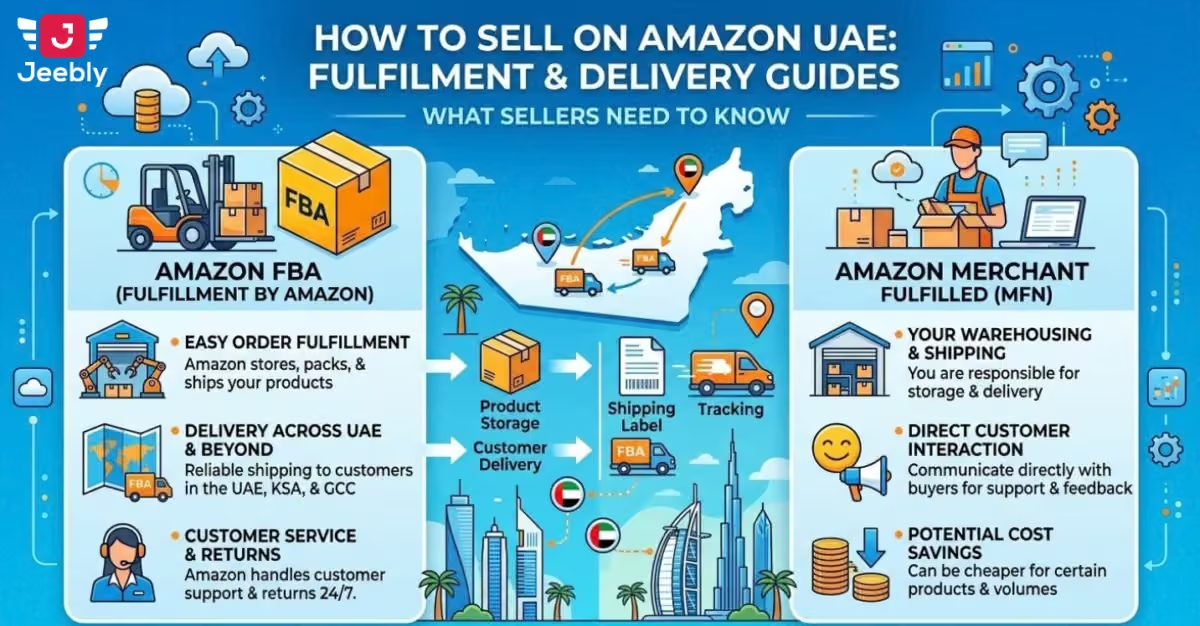
An isometric infographic detailing how to sell on Amazon UAE. The left side covers seller onboarding and listing steps like defining business activity, trade name reservation, and document preparation. The right side compares FBA (Fulfilment by Amazon) and FBM (Fulfilment by Merchant) logistics and delivery models against a Dubai skyline.
How to Sell on Amazon UAE: What Sellers Need to Know About Fulfilment and Delivery

Selling on Amazon UAE offers massive growth potential, but choosing the right logistics model can make or break your margins. Discover the step-by-step onboarding process for Amazon.ae, explore the core differences between Fulfilment by Amazon (FBA) and Fulfilment by Merchant (FBM), and learn how to optimize your delivery strategy to scale efficiently in the UAE market.

Read More
A woman in a black dress and white gloves holds a branded "Jeebly" box next to a white Land Rover Defender with a bougainvillea hedge behind them.
High-Value Item Delivery in the UAE: Insurance, Handling, and What to Ask

Delivering high-value, luxury items in the UAE requires far more than standard shipping—it demands white-glove precision, specialized security protocols, and comprehensive transit insurance. Discover how premium handling, secure transit procedures, and asking the right questions of your courier partner ensure high-ticket goods reach your clients safely, preserving both product integrity and brand trust.
Read More
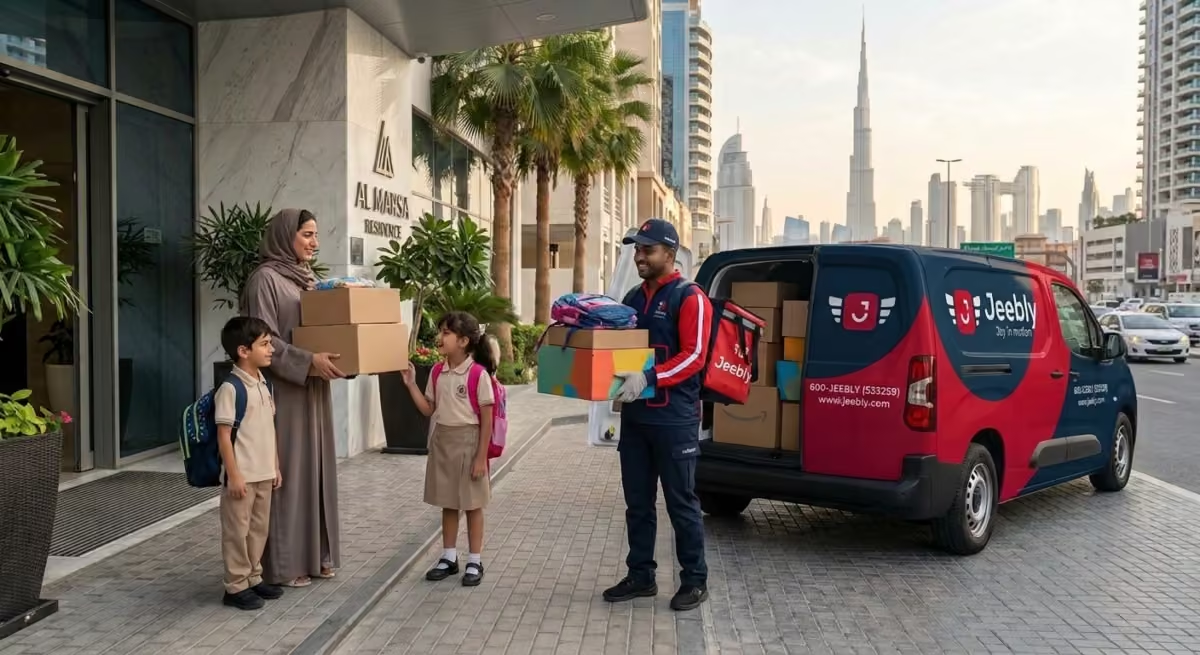
A Jeebly delivery courier handing over stacked packages outside a Dubai residence to a mother and her school-aged children, with a Jeebly delivery van parked nearby and the Dubai skyline featuring the Burj Khalifa in the background.
Back-to-School Delivery Trends: What UAE Retailers Learned This Season

As the back-to-school rush hits the UAE, retailers face surging demand for fast, flexible, and reliable last-mile deliveries. From school uniforms and backpacks to tech essentials, learn how seamless multi-channel logistics, scheduled doorstep deliveries, and real-time tracking help UAE brands meet evolving parent expectations and turn seasonal spikes into long-term customer loyalty
Read More
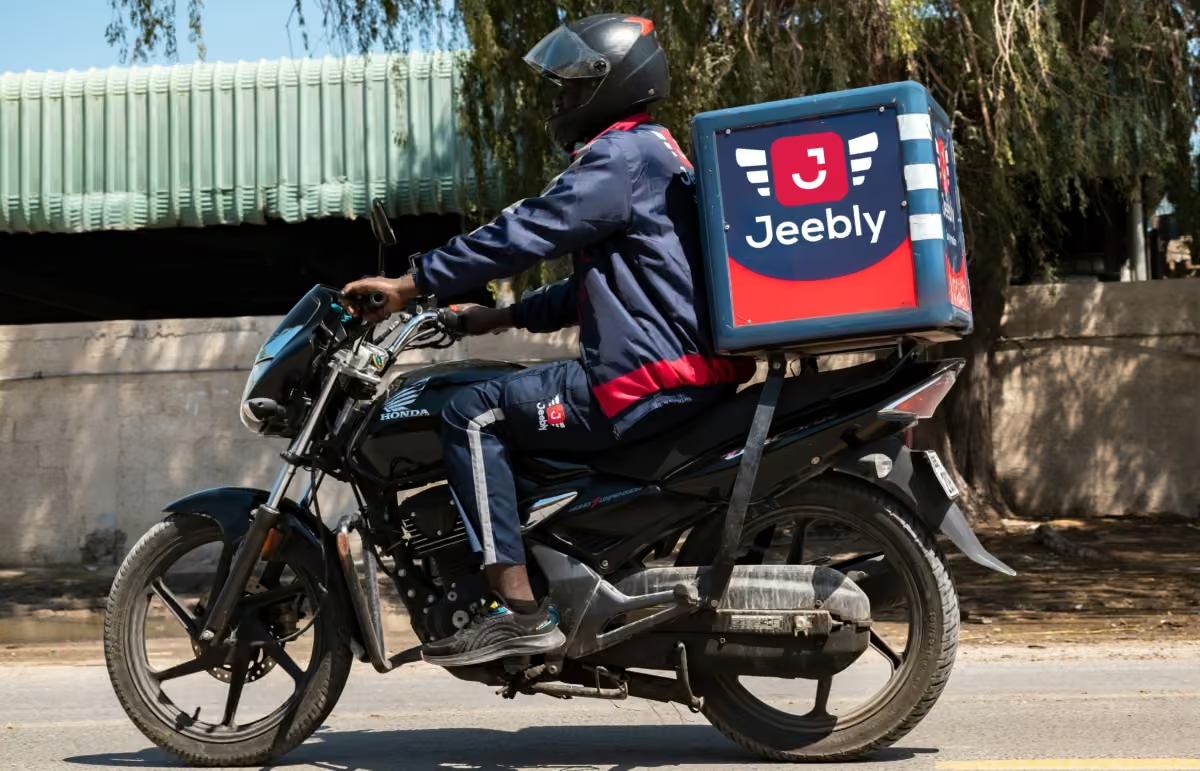
A Jeebly delivery rider wearing a helmet and branded jacket riding a black motorcycle with a red and blue branded delivery box mounted on the back.
Urgent Delivery in the UAE: Jeebly Dash Services, Costs and Booking

When speed is everything, traditional delivery options just won’t cut it. Learn how Jeebly Dash provides ultra-fast, on-demand courier services across the UAE—giving businesses and consumers a seamless booking experience, transparent pricing, and real-time tracking to ensure urgent parcels reach their destination within minutes.
Read More
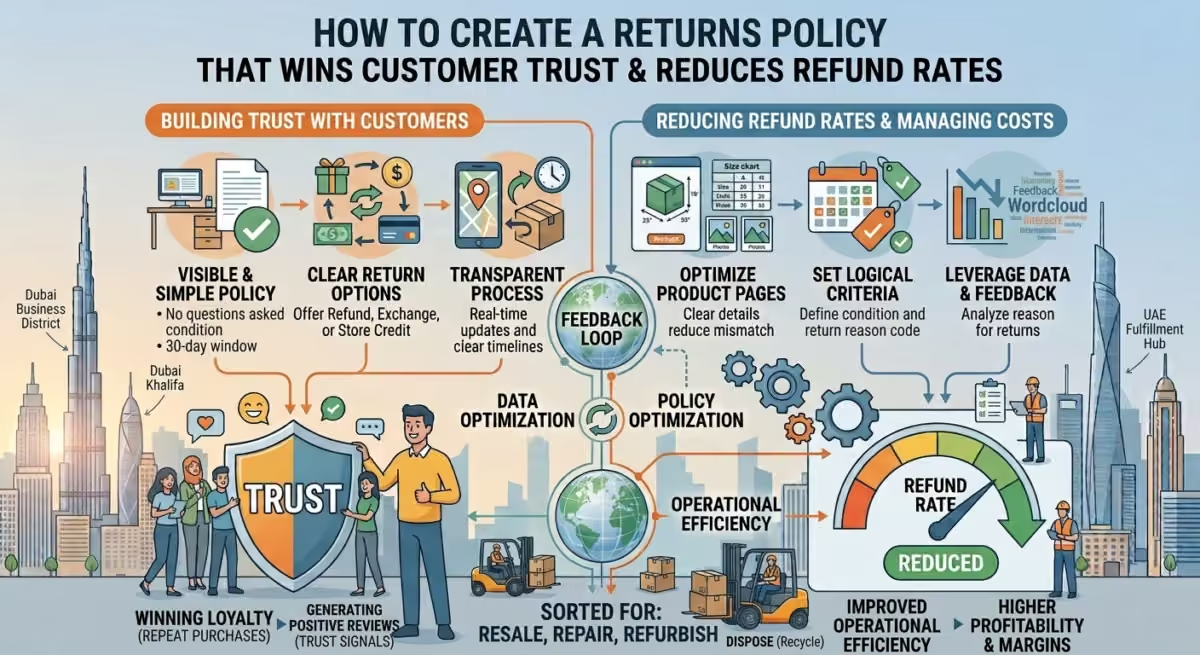
An infographic illustrating how to create an e-commerce returns policy that builds customer trust and reduces refund rates, featuring a split diagram of customer loyalty strategies alongside operational efficiency workflows set against the Dubai skyline.
How to Create a Returns Policy That Wins Customer Trust and Reduces Refund Rates

Mastering returns is a delicate balancing act for e-commerce brands—make it too strict, and you lose customer trust; make it too lenient, and your profit margins take a hit. Discover actionable strategies to build a seamless, customer-first returns policy that converts first-time buyers into loyal brand advocates while optimizing backend operations to keep refund rates and logistics costs low.
Read More
Categories
blogs

What Is a Dark Store? How UAE Retailers Are Using Them for Ultra-Fast Delivery

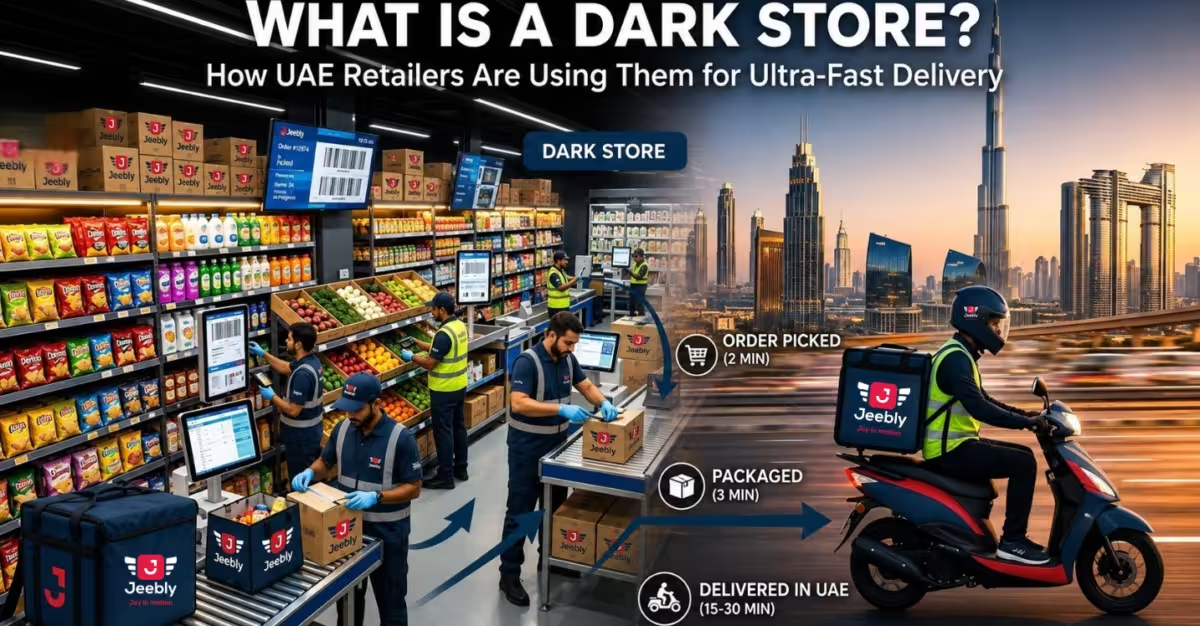
Dark store in the UAE showing retail inventory, order picking, packaging, and Jeebly last-mile delivery for ultra-fast fulfillment

What Is a Dark Store? How UAE Retailers Are Using Them for Ultra-Fast Delivery

A dark store is a fulfilment facility closed to the public, used exclusively to pick, pack, and dispatch online orders. No customers are walking in, no checkout lanes or retail displays. Just inventory, pickers, and a logistics operation built around getting orders out the door in minutes rather than hours.

In the UAE, dark stores are no longer experimental infrastructure. There are currently 211 dark stores mapped across the UAE, operated by Talabat Mart and Noon Minutes, spanning 10 cities. Noon alone scaled to 12 dark stores across Dubai and Sharjah, targeting zones with over 200 transactions per square kilometre per day. This is the operational foundation behind the 15-minute grocery promise that UAE consumers now treat as standard.

This guide explains what a dark store is, how it works, models operating in the UAE, what it takes to run one profitably, and how UAE e-commerce businesses can access dark store economics without building from scratch.

Key Takeaways

  • A dark store is a fulfilment facility closed to the public, dedicated entirely to picking and dispatching online orders.

  • Three models operate in the UAE: platform-operated dark stores (Talabat Mart, Noon Minutes), retailer-converted dark stores (Carrefour, Spinneys), and third-party micro-fulfilment (accessible to SMEs without capital investment).

  • The density threshold for a UAE dark store to be profitable is approximately 150–200 daily orders per location. Below that, last-mile economics don’t stack up.

  • By 2030, quick grocery is expected to account for 89% of online grocery in the UAE and KSA. Dark stores are the infrastructure that makes this possible.

What Is a Dark Store, Exactly?

A dark store is a retail or warehouse facility that operates exclusively for online order fulfilment. The “dark” refers to the absence of public foot traffic, such as shoppers, ambient lighting for the customer experience, or checkout counters. The space is configured entirely around operational efficiency, such as:

  • Shelving organised by pick frequency
  • Packing stations positioned to minimise walking distance 
  • Dispatch areas connected directly to courier routing systems

Dark stores emerged in the UK around 2009, when Sainsbury’s and Tesco converted underperforming retail locations into dedicated online fulfilment centres. What started as a supermarket efficiency play became the structural model for quick commerce globally.

How a Dark Store Works: The Order-to-Door Sequence

Step 1: Order placed. 

The customer places an order through an app. The dark store’s order management system receives it, confirms stock availability, and assigns it to the nearest available picker all within seconds.

Step 2: Smart slotting does the heavy lifting. 

High-velocity items (bottled water, snacks, cleaning products) sit closest to packing stations. This single discipline, called slotting optimisation, reduces picker travel time on every single order. 

Platforms deploy predictive inventory algorithms that pre-position high-velocity SKUs within 2–3 kilometres of dense residential clusters, thereby trimming delivery windows to 10 minutes.

Step 3: Picking. 

A picker follows a digital pick list along an optimised route through the facility. In high-volume dark stores, batch picking, i.e. grouping multiple orders into a single pick run, reduces total labour time without sacrificing accuracy.

Step 4: Packing and labelling. 

Items are packed, labelled, and sorted by delivery zone. Temperature-sensitive goods get appropriate packaging. The packed order is ready for handoff.

Step 5: Dispatch. 

The packed order connects to the courier routing platform in real time. A rider or driver collects it often within minutes of packing, and the customer receives tracking updates from the moment of dispatch.

The entire sequence, from order placement to rider departure, may typically run 3–8 minutes in an optimised UAE dark store.

Three Dark Store Models Operating in the UAE

Understanding the model matters before deciding whether to build, convert, or partner.

1. Platform-operated dark stores

App platforms operate the largest dark store networks in the UAE. Talabat Mart operates 30+ strategically located dark stores across all seven emirates, targeting sub-20-minute delivery guarantees. 

Noon Minutes runs its own dark store network, explicitly describing its compact “mini stores” located near demand hubs to support 15-minute delivery. 

In 2025, ADNOC Distribution and Noon launched 15-minute delivery hubs from ADNOC service stations, turning fuel stations into logistics nodes.

These platforms own the customer relationship and the inventory. They’re not a fulfilment option for third-party brands. They’re vertically integrated competitors.

2. Retailer-converted dark stores

These are traditional retailers converting existing space into dark fulfilment operations. Carrefour UAE, Spinneys, and Choithrams all operate some form of this, using store backrooms, closed retail locations, or dedicated satellite sites to fulfil online orders faster than a central warehouse can.

This model suits retailers who already have urban real estate and established supply chains. The capital requirement is lower than that of building from scratch, but the operational transformation is significant. Retail layouts are not optimised for pick efficiency.

3. Third-party micro-fulfilment (the SME access point)

It is the most accessible model for UAE businesses without retail footprints or platform-scale capital. Third-party logistics providers operate shared micro-fulfilment centres that multiple brands can access without having to build their own infrastructure.

This is where the economics become accessible. Rather than committing to a 100,000+ sq ft dark store lease and the technology stack to run it, an SME or mid-market e-commerce brand can plug into an existing micro-fulfilment network, access urban proximity delivery, and pay on a per-order or per-storage basis.

For UAE e-commerce businesses and social sellers wanting same-day delivery capability without a dark store build, eCommerce Fulfilment in the UAE: What Businesses Should Look For covers the full range of fulfilment options and the cost per order for each.

What Makes a UAE Dark Store Profitable

Platform operators are prioritising density thresholds of 150–200 daily orders per dark store. Below that threshold, the fixed costs of the facility, staff, and inventory don’t spread across enough orders to generate margin. Above it, the economics may compound rapidly.

What can drive dark store profitability in the UAE:
Factor What it requires
Location density Within 2–3 km of residential clusters with 200+ daily orders per km²
SKU curation 1,000–5,000 fast-moving products, not a full supermarket range
Order frequency Subscription models (Talabat Pro, Noon One) that drive repeat orders
Technology Real-time OMS connected to courier routing, no manual handoff
Last-mile reliability 95%+ first-attempt delivery in the coverage zone
Inventory accuracy Daily cycle counts, zero tolerance for phantom stock
What kills the economics:

Overexpansion before density can kill the economics. A dark store in a zone with 80 daily orders will burn cash indefinitely. The facility’s fixed costs are never covered. Urban density in Dubai and Abu Dhabi makes last-mile economics workable in a way that sprawling or low-density cities do not. This is why UAE dark stores succeed where other markets struggle.

A high delivery radius without enough riders is another factor. If a dark store covers too large a geographic area, average delivery time increases, costs rise, and the speed promise breaks down.

Additionally, dark stores run lean SKU counts precisely because every SKU that doesn’t turn fast enough occupies space that could hold a fast-mover. Getting the assortment wrong is expensive.

Should Your Business Use a Dark Store?

Dark stores are right for a specific business profile. Here’s a framework for deciding:

It makes sense if:

  • You sell fast-moving consumer goods like grocery, pharmacy, personal care, convenience
  • Your customers are in dense urban zones (Dubai, Abu Dhabi, Sharjah)
  • You’re receiving more than 50–100 same-day delivery orders daily in a concentrated area
  • You want to offer sub-hour delivery without the cost of a full last-mile delivery fleet


It doesn’t make sense if:

  • Your products are slow-moving, large, fragile, or temperature-controlled beyond standard refrigeration
  • Your customer base is geographically spread across multiple emirates with different demand profiles
  • Your daily order volume is below the density threshold to justify the infrastructure cost

For most UAE SMEs and mid-market e-commerce brands, the most cost-effective path to dark store economics is third-party micro-fulfilment. This accesses urban proximity and fast dispatch through an existing network rather than building one.

For businesses evaluating whether their current fulfilment setup is causing delivery delays that are costing them cart abandonment, How to Reduce Cart Abandonment Costs covers how delivery speed and transparency directly affect checkout conversion and more.

How Jeebly Supports Dark Store and Ultra-Fast Fulfilment

For UAE businesses wanting same-day delivery capabilities without the capital investment of building a dark store from scratch, Jeebly Bizz provides the fulfilment infrastructure: warehousing across Dubai and the UAE, pick-and-pack, automated dispatch, and real-time inventory management, all connected directly to Shopify, WooCommerce, and Magento.

Jeebly Dash handles the last-mile leg with express delivery within 60–120 minutes across Dubai, next-day across all seven emirates, with 98% FDSS across 50,000+ daily deliveries. Jeebly’s platform automatically connects order completion to rider dispatch.

For businesses with inbound freight needs, Jeebly Haul covers road and air freight, as well as cross-border GCC routes, with in-house customs clearance.

Talk to the Jeebly team about your current daily order volume, delivery zone, and product category. A direct conversation will confirm whether third-party micro-fulfilment through Jeebly Bizz provides the dark-store economics your business needs at the scale it operates today.

Conclusion

A dark store is the infrastructure behind every 15-minute grocery delivery and every same-hour order in the UAE. With 211 Talabat Mart and Noon Minutes dark stores mapped across the UAE, alongside a growing number of retailer-converted dark fulfilment locations, and a quick commerce market set to reach $12.97 billion by 2029, this is no longer an experimental format.

It’s the structural model for urban retail fulfilment in the region. 

For large platforms, the dark store network is built and scaling. For UAE e-commerce businesses and retailers that want the same delivery economics without the capital outlay, third-party micro-fulfilment networks provide access to urban proximity and fast dispatch on a per-order basis. 

For same-day fulfilment connected to 98% FDSS last-mile delivery, Jeebly Bizz and Jeebly Dash cover both legs. Get in touch to discuss your fulfilment requirements.

Related Articles:

Frequently Asked Questions

A dark store is a warehouse or converted retail space used exclusively to fulfil online orders. It’s closed to the public and optimised entirely for picking and dispatching individual orders as fast as possible. In the UAE, dark stores power the 15–30 minute grocery delivery services from Talabat Mart and Noon Minutes.

A warehouse stores goods for extended periods before bulk distribution to retailers or other businesses. A dark store holds a smaller, faster-moving inventory specifically to fulfil individual consumer orders within 15–60 minutes. Dark stores are urban, compact, and optimised for speed. Warehouses are typically larger, suburban, and optimised for bulk storage and distribution.

Talabat Mart operates 30+ dark stores across all seven UAE emirates for sub-20-minute delivery. Noon Minutes operates 12 dark stores across Dubai and Sharjah. Together, these two platforms account for the 211 dark stores currently mapped across the UAE. Carrefour, Spinneys and Choithrams also operate dark fulfilment equivalents from existing retail locations, but these fall under the retailer-converted model.

Fast-moving consumer goods with high daily turnover: groceries, personal care, household essentials, pharmacy items, and convenience goods. Dark stores stock 1,000–5,000 curated SKUs, not a full product range. Slow-moving, bulky, or highly perishable goods with complex cold-chain requirements are typically not suitable for dark-store stocking.

Yes, through third-party micro-fulfilment. Logistics providers operate shared urban fulfilment centres that multiple brands can access on a per-order or per-storage basis, without committing to a dark store lease or building a technology stack from scratch. This is the accessible entry point for UAE SMEs wanting same-day delivery capability.

Routes to insightful reads

An isometric infographic detailing how to sell on Amazon UAE. The left side covers seller onboarding and listing steps like defining business activity, trade name reservation, and document preparation. The right side compares FBA (Fulfilment by Amazon) and FBM (Fulfilment by Merchant) logistics and delivery models against a Dubai skyline.
How to Sell on Amazon UAE: What Sellers Need to Know About Fulfilment and Delivery

Selling on Amazon UAE offers massive growth potential, but choosing the right logistics model can make or break your margins. Discover the step-by-step onboarding process for Amazon.ae, explore the core differences between Fulfilment by Amazon (FBA) and Fulfilment by Merchant (FBM), and learn how to optimize your delivery strategy to scale efficiently in the UAE market.

Read More
A woman in a black dress and white gloves holds a branded "Jeebly" box next to a white Land Rover Defender with a bougainvillea hedge behind them.
High-Value Item Delivery in the UAE: Insurance, Handling, and What to Ask

Delivering high-value, luxury items in the UAE requires far more than standard shipping—it demands white-glove precision, specialized security protocols, and comprehensive transit insurance. Discover how premium handling, secure transit procedures, and asking the right questions of your courier partner ensure high-ticket goods reach your clients safely, preserving both product integrity and brand trust.

Read More
A Jeebly delivery courier handing over stacked packages outside a Dubai residence to a mother and her school-aged children, with a Jeebly delivery van parked nearby and the Dubai skyline featuring the Burj Khalifa in the background.
Back-to-School Delivery Trends: What UAE Retailers Learned This Season

As the back-to-school rush hits the UAE, retailers face surging demand for fast, flexible, and reliable last-mile deliveries. From school uniforms and backpacks to tech essentials, learn how seamless multi-channel logistics, scheduled doorstep deliveries, and real-time tracking help UAE brands meet evolving parent expectations and turn seasonal spikes into long-term customer loyalty

Read More
A Jeebly delivery rider wearing a helmet and branded jacket riding a black motorcycle with a red and blue branded delivery box mounted on the back.
Urgent Delivery in the UAE: Jeebly Dash Services, Costs and Booking

When speed is everything, traditional delivery options just won’t cut it. Learn how Jeebly Dash provides ultra-fast, on-demand courier services across the UAE—giving businesses and consumers a seamless booking experience, transparent pricing, and real-time tracking to ensure urgent parcels reach their destination within minutes.

Read More
An infographic illustrating how to create an e-commerce returns policy that builds customer trust and reduces refund rates, featuring a split diagram of customer loyalty strategies alongside operational efficiency workflows set against the Dubai skyline.
How to Create a Returns Policy That Wins Customer Trust and Reduces Refund Rates

Mastering returns is a delicate balancing act for e-commerce brands—make it too strict, and you lose customer trust; make it too lenient, and your profit margins take a hit. Discover actionable strategies to build a seamless, customer-first returns policy that converts first-time buyers into loyal brand advocates while optimizing backend operations to keep refund rates and logistics costs low.

Read More

    Powered by