





Jeebly | Logistics Solutions

Categories
blogs

What Is Contactless Delivery and How Does It Work in the UAE?

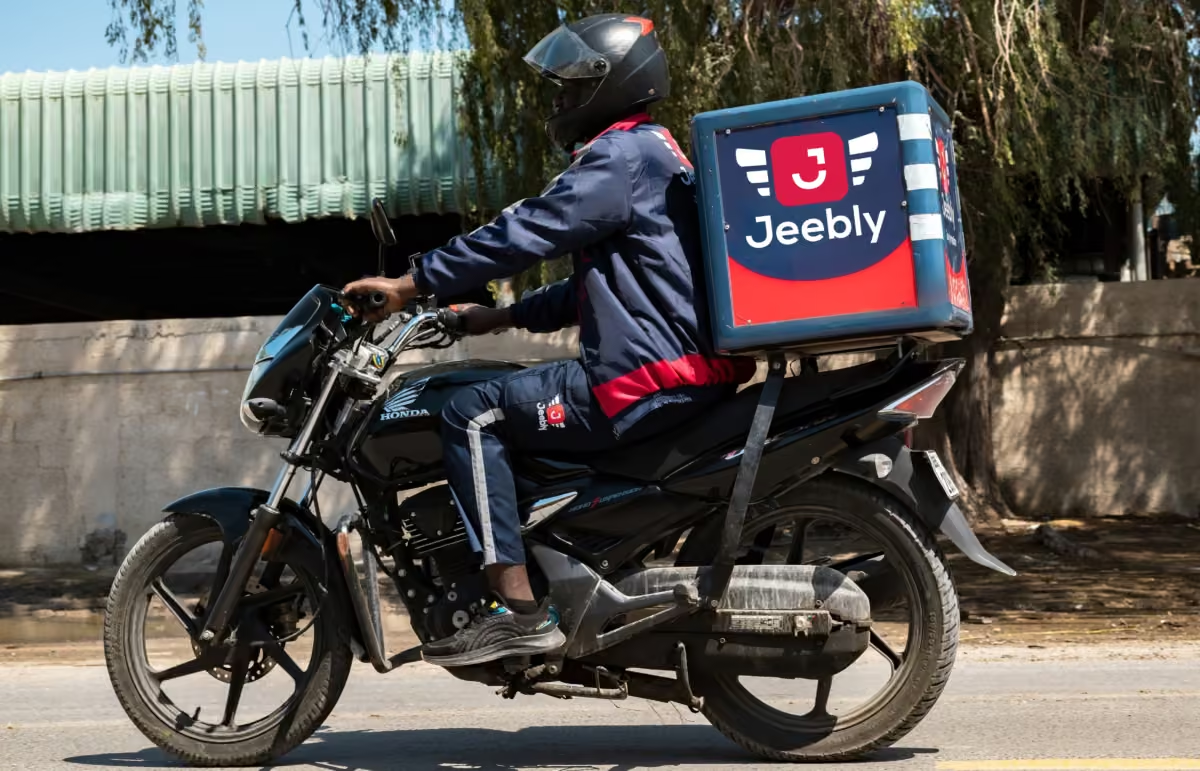
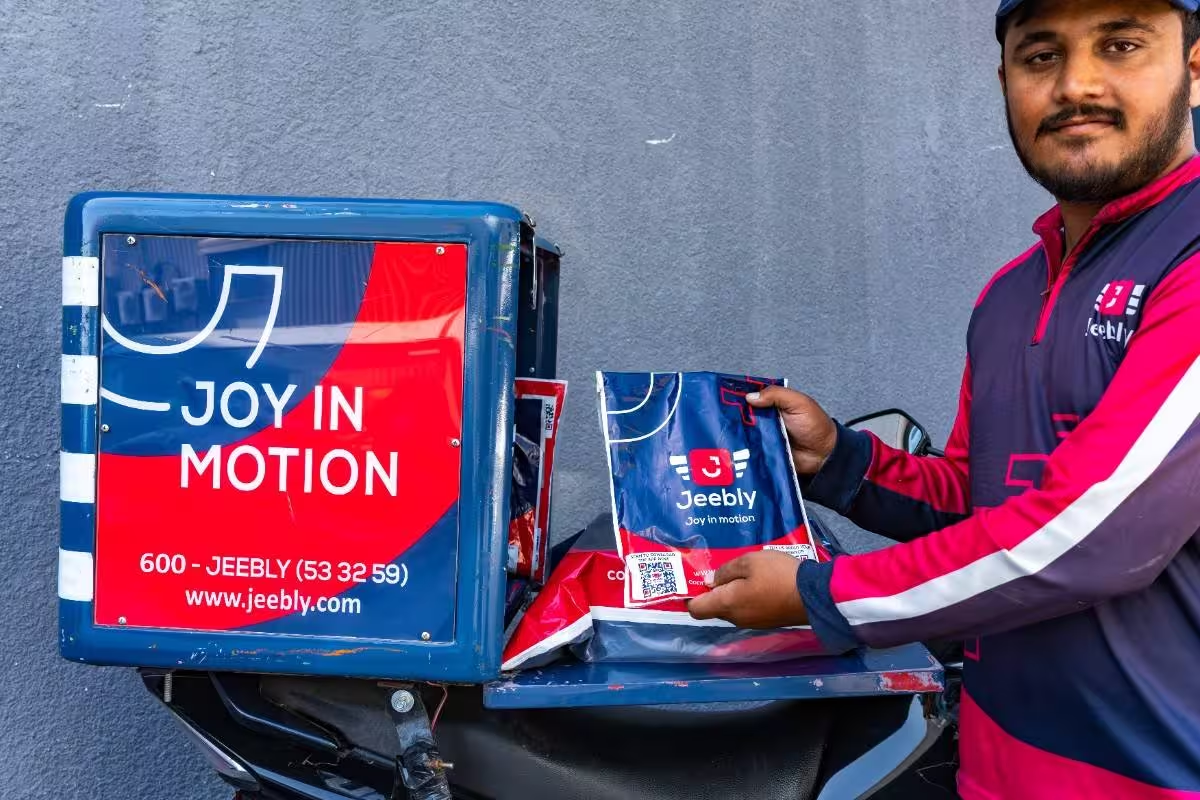
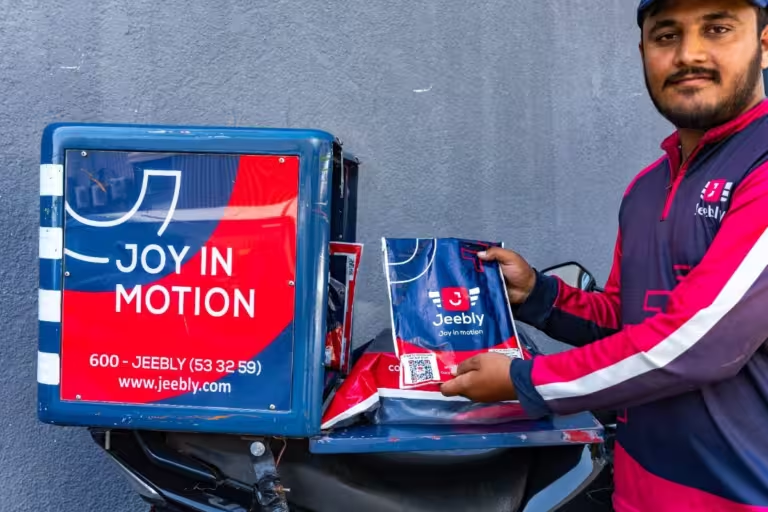
Jeebly delivery rider holding a package next to a branded motorcycle box in the UAE

What Is Contactless Delivery and How Does It Work in the UAE?

Your customers don’t want to wait at the door. They don’t want to sign anything, handle cash, or interact with a courier at all. They want their order confirmed, tracked, and dropped off without friction. Contactless delivery is how the best e-commerce businesses in the UAE are meeting that expectation.

What started as a pandemic-era response has settled into a permanent operating standard. For businesses shipping across Dubai, Abu Dhabi, and beyond, the question today is whether your contactless logistics infrastructure actually supports contactless it end-to-end.

This article explains what contactless delivery is, how it works step by step, which technologies make it reliable, and what UAE businesses need to get it right.

What Is Contactless Delivery?

Contactless delivery is a fulfilment method in which an order is left at a designated location without direct physical contact between the courier and the recipient. The customer is notified digitally, and delivery is confirmed with an electronic record, typically a timestamped photo taken at the drop-off point.

The mechanics are simple. The complexity lies in building the digital infrastructure behind them. For UAE e-commerce businesses, the stakes are unusually high. 

84% of all transactions in the UAE are now contactless, and the Dubai Cashless Strategy, rolled out in 2024, targets  90% of transactions in the city to be cashless by 2026.

Customers in this market are digitally fluent and quick to form opinions based on their delivery experience. A missed window or an awkward handoff can erode the trust that drives repeat purchases.

How Does Contactless Delivery Work: The Full Sequence

A good contactless delivery feels effortless to the customer. Behind the scenes, it’s a coordinated sequence of steps, each one enabling the next.

Step 1. Order placed and payment confirmed digitally.The customer pays online at checkout. This single step eliminates the need for any financial exchange at the door and is the foundation on which everything else is built.

Step 2. Automated dispatch and route optimisation.Once the order is ready, a courier is assigned, and their route is optimised based on the day’s load, traffic conditions, and delivery priorities. Accurate ETAs begin here.

Step 3. Real-time tracking notification.The customer receives a notification. They will know where their order is, without calling anyone or guessing at a four-hour window.

Step 4. Drop off at the agreed location.The courier places the parcel at the customer’s specified drop-off point, doorstep, building reception, or lobby without requiring the customer’s presence. No signature, no interaction.

Step 5. Electronic proof of delivery (ePOD) captured.At drop-off, the courier photographs the parcel in situ. That image is timestamped, geotagged, and logged automatically.

Step 6. Instant delivery confirmation sent.The customer receives a notification the moment the photo is uploaded. The delivery is complete, verified, and on record for both sides.

Each step in this sequence depends on the one before it. 

For a breakdown of how UAE delivery timelines actually work across service types, read How Long Does Delivery Take in the UAE? Realistic Timelines

The Technology Behind a Reliable Contactless Delivery System

Leaving a parcel on a doorstep is not contactless delivery. It’s an unverified drop. What separates the two is the digital infrastructure that makes every step traceable and accountable.

A genuinely capable contactless delivery system requires:

  • Automated notifications triggered at each stage of the journey: dispatched, en route, arriving soon, delivered. Customers who know where their order is don’t need to contact your support team.

  • Electronic proof of delivery (ePOD) with photo capture at the drop-off point. The image must be timestamped and geotagged to carry evidentiary weight. Without this, any dispute becomes a he-said-she-said situation.

  • Route optimisation software that accounts for traffic, load size, delivery priority, and geographic spread. This keeps ETAs accurate and couriers efficient, which matters especially when you’re running hundreds of daily drops across multiple Emirates.

  • Prepayment infrastructure — whether through card, digital wallet, or bank transfer. The UAE’s rapid shift toward digital payments makes this easier than ever to implement.

Together, these components create a system where every delivery is transparent, every drop-off is verifiable, and every customer interaction builds confidence rather than anxiety.

Business Benefits That Go Beyond Safety

The original case for contactless delivery was about hygiene and risk reduction. Businesses that have built it properly have discovered that the operational advantages run much deeper.

Benefit What it means for your business
Higher first-attempt delivery success Courier doesn't need the customer to be home, have cash ready, or sign anything. Fewer reasons to fail mean fewer failed deliveries.
Faster delivery cycles No waiting at the door for signatures or cash exchanges.
Fewer disputes ePOD photo evidence resolves queries before they escalate.
Lower support volume Automated tracking notifications answer questions proactively.
Paperless operations Digital records replace physical paperwork across the chain.
Scales without adding overhead Works identically for 10 parcels or 1,000 per day.

For operations running high volumes across multiple Emirates, these gains compound quickly. 

What UAE Businesses Get Wrong About Contactless Delivery

Contactless delivery fails when businesses treat it as a front-end customer experience feature rather than an end-to-end operational system. Three gaps come up consistently.

1. Incomplete payment migration.
 

Cash on delivery remains common in the UAE market. Businesses that maintain COD as a default option can’t offer a truly contactless experience for those orders. Phasing out COD, or at a minimum, defaulting new customers to digital payment, is a prerequisite for clean contactless operations.

2. No proof-of-delivery standard.
 

Without mandatory ePOD, disputes are resolved on trust rather than evidence. This creates liability for the business and uncertainty for the customer. Photo confirmation at every drop-off should be non-negotiable. 

3. Static tracking, not real-time tracking.
 

Many courier operations send a single “your order is out for delivery” notification and nothing further. Customers checking in on a high-value order expect real-time position updates. The UAE’s digitally-engaged customer base notices the difference immediately.

Failed deliveries are the most expensive line item, yet most e-commerce businesses don’t track them closely enough. For a full picture, the Top Delivery Companies in UAE (2026) guide covers first-attempt success rates across every major UAE carrier.

How Jeebly Handles Contactless Delivery

Jeebly’s approach to contactless delivery is built into the platform rather than added on top of it. Automated dispatch, real-time tracking updates, and ePOD photo capture at every drop-off are standard.

  • For e-commerce brands with daily order volumes, Jeebly Dash covers same-day and next-day delivery across the UAE, with each delivery confirmed by a photograph uploaded by the rider at drop-off. 
  • For businesses managing higher-complexity logistics, Jeebly Bizz brings automated dispatch, route optimisation, reverse logistics, and end-to-end workflow transparency into a single platform.

How to Implement Contactless Delivery for Your UAE Business

Getting contactless delivery right doesn’t require rebuilding your operation from scratch. It does require being deliberate about a few fundamentals.

  • Move to prepayment as your default. This is the single most important enabler. A COD order cannot be contactless. If you’re transitioning an existing customer base, offer digital payment as the default and COD as an opt-in.

  • Choose a logistics partner with real tracking. Position updates and precise ETAs are what customers expect in the UAE market. Confirm whether the courier you work with offers these as standard, and test the experience from the customer’s perspective before committing.

  • Make ePOD non-negotiable. Any courier partner you work with should capture and upload a photo at every drop-off. Ask how it’s stored, how long it’s retained, and how you access it when a dispute is raised.

  • Specify drop-off preferences clearly. Let customers indicate where they want their parcel left and make sure that preference is communicated to the courier. A branded tracking page that captures this information before delivery removes ambiguity at the door.

  • Automate your notification sequence. Dispatch, en route, arriving soon, delivered: each stage should trigger an automatic notification to the customer. This reduces inbound queries, increases confidence, and creates a professional delivery experience that reflects well on your brand.


Understanding your full shipping cost picture helps make the case for digital payment internally. Cost of Shipping for a Small Business in the UAE (2026) clearly breaks it down.

Conclusion

Contactless delivery is no longer a differentiator. It’s a baseline. UAE customers expect a tracked, confirmed, and friction-free delivery experience as standard, and businesses that can’t provide it will lose the repeat purchase.

The good news is that the infrastructure exists. Real-time tracking, ePOD, automated notifications, and digital payment are all readily available through the right logistics partner. The question is whether your current setup supports all of it or just some of it.

If you’re ready to build a contactless delivery operation that holds up at volume, speak to the Jeebly team. We’ll map out the right setup for your order profile, coverage needs, and growth plan

Frequently Asked Questions

The key difference between contactless delivery and standard delivery is the digital proof of delivery. A photo is taken and uploaded at drop-off, eliminating the need for any cash or signature exchange at the door.

No. The customer specifies a drop-off location in advance, and the courier places the parcel there without requiring anyone to be present. A notification confirms delivery the moment the photo is uploaded.

Coverage depends on your logistics provider. Jeebly Dash offers next-day delivery to any emirate in the UAE, with same-day and express options available in Dubai. Confirm coverage and service levels with your courier before committing to customer-facing promises.

Four components matter most: real-time tracking with precise ETAs, automated customer notifications at each stage, electronic proof of delivery with photo capture, and route optimisation software. Without all four, some part of the accountability chain breaks down.

When customers don’t need to be physically present to receive an order, first-attempt success rates improve significantly. The courier drops off, photographs, and confirms without waiting for someone to answer the door or process a payment. This results in lower re-delivery costs and faster order completion.

Routes to insightful reads

Jeebly delivery rider holding a package next to a branded motorcycle box in the UAE
What Is Contactless Delivery and How Does It Work in the UAE?

Discover what contactless delivery means and how it works in the UAE. Learn how companies like Jeebly are making parcel delivery safer, faster, and more convenient for businesses and customers across Dubai and the Emirates in 2026.

Read More
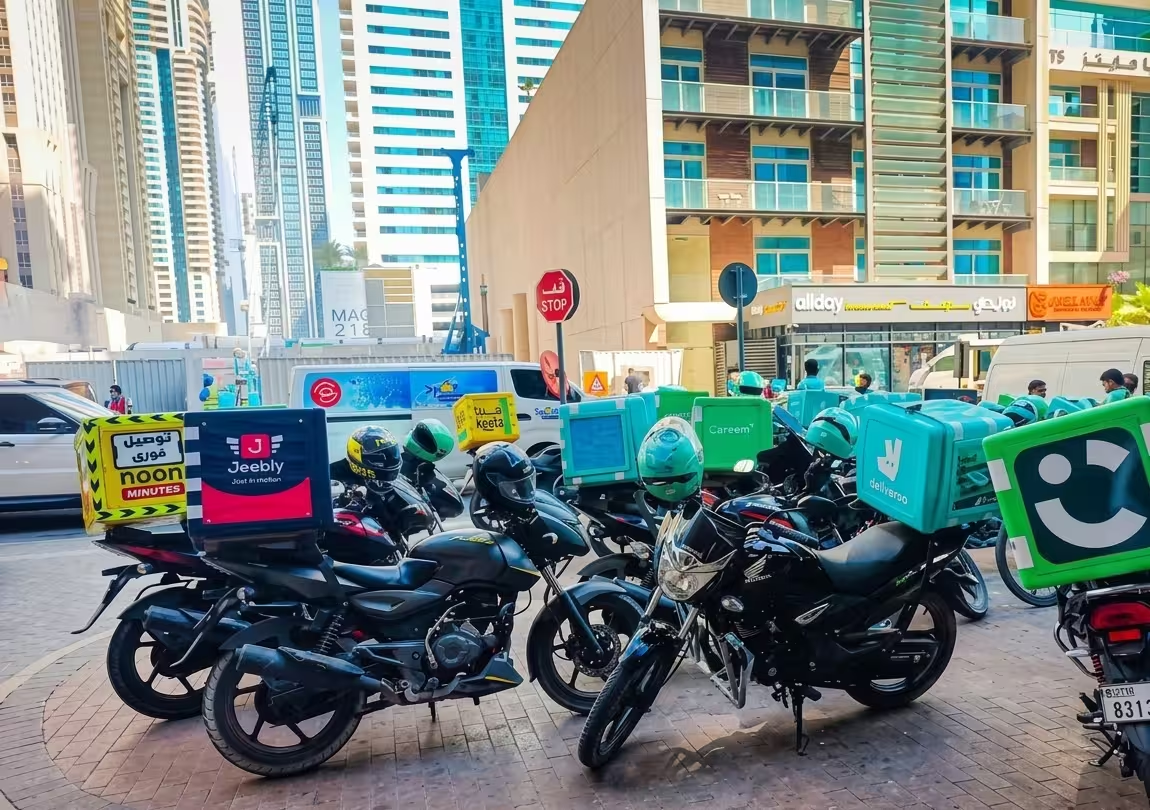
Multiple delivery company motorcycles parked on a Dubai street including Noon, Jeebly, Keeta, Deliveroo and Careem branded bikes with the city skyline in the background
List of Delivery Companies in Dubai: Best Options for Businesses in 2026

This busy Dubai street scene says it all — with Noon, Jeebly, Deliveroo, Keeta, and Careem all competing for deliveries, businesses in Dubai have more courier options than ever. Discover which delivery company is the best fit for your business in 2026.

Read More
Carrier vs Courier: What's the Difference and Which Do You Need in UAE?
Carrier vs Courier: What’s the Difference and Which Do You Need in UAE?

The carrier vs courier distinction is one of the most misapplied decisions in business logistics. Both move goods from point A to point B. That’s where the similarity ends. Scale, speed, cost structure, and the type of business problem each solves are fundamentally different. This guide cuts through the noise: what separates them, when each is the right call, and how to match the model to your shipment before it costs you.

Read More
Top Delivery Companies in UAE (2026): Compared by Speed, Coverage & Features

Picking the wrong delivery partner costs more than just money. A missed window, a failed first attempt, or a COD reconciliation delay can quickly become your brand’s problem, not the courier’s. We cover seven providers operating across the UAE in 2026, what each does well, where each falls short, and which business type each actually suits.

Read More
Porter vs Jeebly: Understanding the Difference and Choosing the Right Delivery Partner in Dubai

Picking a delivery partner in Dubai sounds straightforward until the bills don’t match the quotes, the tracking goes quiet, or your business outgrows what the platform can handle. This article breaks down both platforms in terms of pricing, technology, coverage, and support so you know exactly what you are choosing and why.

Read More
Categories
blogs

List of Delivery Companies in Dubai: Best Options for Businesses in 2026

Multiple delivery company motorcycles parked on a Dubai street including Noon, Jeebly, Keeta, Deliveroo and Careem branded bikes with the city skyline in the background

List of Delivery Companies in Dubai: Best Options for Businesses in 2026

Picking a delivery company in Dubai feels simple until you actually try. The market has dozens of providers, each with different coverage zones, pricing structures, service tiers, and tech capabilities.

If you’re running an e-commerce brand, managing B2B shipments, or simply trying to understand the landscape before committing to a partner, this guide gives you a clear, honest breakdown.

This article covers the list of delivery companies in Dubai by category, what distinguishes each type of provider, which businesses each one suits, and the evaluation criteria that matter before you sign anything.

Why Getting This Decision Right Matters

Dubai’s position as a logistics hub is underpinned by infrastructure. The UAE e-commerce market reached AED 32.3 billion in 2024 and is projected to surpass AED 50.6 billion by 2029.

All of that commerce needs to move. And every parcel that doesn’t reach its destination on the first attempt carries a cost: the redelivery fee, the support query, the customer who doesn’t come back. The delivery company you choose is the final impression your brand makes on every customer.

Getting this right in 2026 also means understanding which category they operate in, what operational profile they’re built for, and where their limits lie.

The List of Delivery Companies in Dubai: By Category

Here is a structured overview of the major providers operating across Dubai and the UAE in 2026, organised by what they actually do well.

Full-Service and Tech-Native Logistics Partners

1) Jeebly 

Jeebly operates across the full logistics chain rather than a single lane. 

  • Jeebly Dash covers express, same-day, and next-day delivery, with next-day delivery available across all seven emirates, starting from AED 17.31 per shipment for up to 5 kg. Same-day delivery is available within Dubai.

  • Jeebly Bizz handles warehousing, fulfilment, reverse logistics, and B2B operations.

  • Jeebly Haul manages freight and bulk shipments above 20 kg. The platform integrates directly with Shopify, WooCommerce, Magento, ChatFood, and Grubtech, with AI-assisted dispatch and automated order routing. 

Operational scale: 50,000+ daily deliveries, an active fleet of 4,000+, 98% First-Day Delivery Success (FDSS) rate.

Best for: E-commerce and D2C brands that need last-mile delivery, fulfilment, and freight managed through a single, tech-connected partner. 

Watch out for: Express delivery (60–120 min) is currently Dubai-only. Confirm coverage for specific emirates before committing.

Last-Mile and E-Commerce Couriers

1) Quiqup 

Quiqup offers fast e-commerce delivery, fulfilment, warehousing, returns, and international delivery. Its next-day service covers all seven emirates, while same-day delivery is available in Dubai, Abu Dhabi, Sharjah and Ajman.

Best for: Brands with a Dubai-centric, speed-sensitive order profile where same-day delivery is a primary customer promise. 

Watch out for: 4-hour express is Dubai-focused, and remote areas/free zones have service limitations. Confirm exact coverage before promising delivery windows.

2) Shipa Delivery 

Shipa provides last-mile delivery and e-commerce fulfilment across the UAE. Their tech infrastructure supports multiple carrier integrations and API connectivity.

Best for: SME e-commerce brands seeking straightforward UAE delivery and platform integrations. 

Watch out for: Primarily last-mile focused, businesses needing freight or warehousing will need separate providers.

3) Halan 

Halan positions itself as a UAE-based delivery provider, offering 24-hour service, shipment tracking, secure handling, and flexible options for businesses and individuals.

Best for: SMEs and e-commerce brands needing a straightforward, UAE-wide last-mile service. 

Watch out for: Capacity and service availability should be confirmed directly during peak seasons such as Ramadan, White Friday and major sale periods.

4) Careem Express (Careem Box) 

Careem Express has evolved into a B2B logistics layer for quick commerce fulfilment in Dubai. It supports on-demand small-parcel delivery with live tracking and fast pickup, making it useful for quick local deliveries within supported cities.

Best for: Brands offering premium speed tiers or on-demand delivery within Dubai, particularly in the food, grocery, and FMCG sectors. 

Watch out for: Higher cost per delivery than next-day carriers. Not a bulk fulfilment solution.

5) Zajel Courier 

Zajel handles domestic courier services, documents, e-commerce delivery, COD, returns, customs clearance, and international express delivery to 200+ countries. Its domestic service focuses on express documents and parcels, with pickup within 24 hours.

Best for: Document delivery, government-adjacent shipping, and standard domestic courier for businesses without complex tech requirements. 

Watch out for: Limited tech integration and tracking visibility compared to tech-native providers.

International and Cross-Border Couriers

1) DHL Express UAE 

DHL Express is a strong option for time-definite international shipping, with delivery to 220+ countries and territories and established customs-clearance support.

Best for: Brands with significant international shipping volume, particularly to Europe, Asia, and the US. 

Watch out for: Premium pricing. Not designed for high-volume domestic last-mile delivery at competitive per-parcel rates.

2) Aramex 

Listed on the Dubai Financial Market, Aramex operates in 600+ cities across 70 countries, with regional strength in the MENA and GCC regions. Their “Shop & Ship” cross-border network and reverse logistics workflows are well-established.

Best for: Businesses shipping at high volumes internationally, particularly across Saudi Arabia, Egypt, and the wider MENA region. 

Watch out for: Domestic last-mile experience varies. For UAE-specific e-commerce at scale, local-native providers are often a better operational fit.

3) FedEx UAE 

FedEx operates international express and business shipping services with customs-clearance support and strong documentation capabilities.

Best for: B2B international shipments with strict time commitments, particularly to the US and Europe. 

Watch out for: Less suited to high-volume domestic e-commerce in the UAE.

4) UPS UAE 

UPS serves the B2B international parcel market with broad global coverage and dedicated account management for business clients.

Best for: Corporate and B2B businesses with consistent international shipping needs. 

Watch out for: Suited to international and B2B shipping needs rather than high-volume domestic last-mile e-commerce.

5) SkyNet Worldwide Express 

SkyNet provides express cross-border shipping with a focus on emerging market trade corridors and Middle East–Asia routes.

Best for: Businesses shipping frequently to South and Southeast Asian markets. 

Watch out for: Less established for high-volume B2C domestic last-mile.

6) Emirates Post 

EMX, the Courier, Express and Parcels arm of 7X, provides domestic door-to-door delivery in the UAE and supports international logistics through its network.

Best for: Government-adjacent shipping, standard domestic mail, and reaching addresses outside private courier coverage zones. 

Watch out for: Not suited for speed-sensitive e-commerce. Tracking visibility and delivery windows are limited relative to private couriers.

Freight and Cargo Providers

1) Jeebly Haul 

Jeebly Haul handles large or heavy shipments, including road, air, and ocean freight, as well as door-to-door cargo across the UAE and the wider GCC region. Use the 20 kg / oversized-parcel threshold only if confirmed in Jeebly’s service documentation.

Best for: Brands moving bulk inventory, heavy goods, or oversize freight either domestically or across the region.

2) CEVA Logistics UAE 

CEVA operates across contract logistics, freight management, and distribution for enterprise clients with complex supply chains.

Best for: Large enterprises requiring managed freight solutions across multiple geographies.

If you want to understand what a full-service logistics setup looks like operationally, What Is a 3PL? Third-Party Logistics for UAE Businesses covers the model in full.

What to Check Before Committing to Any Provider

The list above tells you who operates in each lane. These are the questions that tell you whether a specific provider fits your operation.

  • Coverage, confirmed by the emirate: If you’re shipping to Ras Al Khaimah, Fujairah, or Umm Al Quwain, get written confirmation of service availability and SLAs for those specific zones before promising your customers anything.

  • First-attempt delivery success rate. Failed deliveries are expensive, twice you pay for the failed attempt and again for the re-attempt or the return. Ask directly for FDSS data. Use that as a benchmark when evaluating any other provider.

  • COD remittance cycle. Cash on delivery remains a significant share of UAE e-commerce. Remittance timing directly affects your working capital. Get any commitment in writing before signing.

  • Technology integrations. If your store runs on Shopify, WooCommerce, or another platform, your logistics partner should connect directly to it. Manual order uploads are a ceiling on operational growth you’ll eventually hit.

  • Returns handling. Reverse logistics is where the UAE delivery market has the most room to improve. Ask whether returns are managed in-house or outsourced, and what the SLA is on a completed reverse cycle.

  • Onboarding flexibility. Many providers offer low-commitment onboarding, no-long-term-contract options, wallet top-up models, or trial periods. Use that window to test real-world delivery performance.


For a detailed cost breakdown across service tiers, Cost of Shipping for a Small Business in UAE (2026) is worth reading before any commercial negotiation.

How to Match Your Business to the Right Provider

The right delivery company depends on three variables: where your customers are, how many orders you ship, and how complex your fulfilment needs are.

  • Early-stage brands (under 50 orders/day): Prioritise flexibility over infrastructure. Choose a provider with no minimum commitment, clear per-parcel pricing, and COD support if your customer base expects it. Test for 60–90 days before negotiating volume terms.

  • Growing brands (50–500 orders/day): You need UAE-wide coverage, reliable first-attempt delivery rates, real-time tracking visibility, and a returns process that doesn’t create a separate operational burden. A single provider handling all of this is more cost-effective than coordinating between two or three.

  • Scaling brands (500+ orders/day): At this volume, you need a partner with owned fleet capacity, warehouse and fulfilment integration, and tech infrastructure that talks directly to your OMS. Switching providers at scale is painful and expensive.

For brands still deciding among specific providers, Top Delivery Companies in the UAE (2026) provides a detailed head-to-head comparison across seven major operators. 

Conclusion

The list of delivery companies in Dubai is long, but the decision tree is manageable when you know what category each provider operates in and what your own operation actually needs. 

Most businesses need a reliable domestic partner with strong first-attempt rates, tech integrations, and a returns process that doesn’t create a second operational headache. As volume grows, the case for a single full-service partner becomes stronger.

Ready to consolidate your UAE delivery operations under a single, tech-connected platform? Talk to the Jeebly team. We’ll map out the right setup for your order profile, coverage zones, and growth stage.

Frequently Asked Questions

Jeebly Dash, Quiqup, and Careem Express all offer same-day options within Dubai. Availability depends on order cut-off times and coverage zones. Confirm these directly before making a same-day delivery, a customer-facing promise.

Most major providers do. Jeebly supports COD as standard across its domestic delivery network. COD remittance cycles vary by provider; Jeebly remits weekly to your bank account.

A courier moves parcels from A to B. A full-service logistics partner like Jeebly covers warehousing, order fulfilment, last-mile delivery, freight, and returns under one roof. One integration, one account, one point of accountability.

Jeebly Dash, Aramex, DHL Express, and Emirates Post cover all seven emirates. Same-day and express services may be restricted to Dubai or specific zones. Always confirm emirate-level SLAs before committing.

Yes. Several providers, including Jeebly, offer flexible onboarding without requiring long-term commitments. This lets growing businesses test delivery performance at low volumes before scaling and negotiating commercial terms.

Routes to insightful reads

Jeebly delivery rider holding a package next to a branded motorcycle box in the UAE
What Is Contactless Delivery and How Does It Work in the UAE?

Discover what contactless delivery means and how it works in the UAE. Learn how companies like Jeebly are making parcel delivery safer, faster, and more convenient for businesses and customers across Dubai and the Emirates in 2026.

Read More
Multiple delivery company motorcycles parked on a Dubai street including Noon, Jeebly, Keeta, Deliveroo and Careem branded bikes with the city skyline in the background
List of Delivery Companies in Dubai: Best Options for Businesses in 2026

This busy Dubai street scene says it all — with Noon, Jeebly, Deliveroo, Keeta, and Careem all competing for deliveries, businesses in Dubai have more courier options than ever. Discover which delivery company is the best fit for your business in 2026.

Read More
Carrier vs Courier: What's the Difference and Which Do You Need in UAE?
Carrier vs Courier: What’s the Difference and Which Do You Need in UAE?

The carrier vs courier distinction is one of the most misapplied decisions in business logistics. Both move goods from point A to point B. That’s where the similarity ends. Scale, speed, cost structure, and the type of business problem each solves are fundamentally different. This guide cuts through the noise: what separates them, when each is the right call, and how to match the model to your shipment before it costs you.

Read More
Top Delivery Companies in UAE (2026): Compared by Speed, Coverage & Features

Picking the wrong delivery partner costs more than just money. A missed window, a failed first attempt, or a COD reconciliation delay can quickly become your brand’s problem, not the courier’s. We cover seven providers operating across the UAE in 2026, what each does well, where each falls short, and which business type each actually suits.

Read More
Porter vs Jeebly: Understanding the Difference and Choosing the Right Delivery Partner in Dubai

Picking a delivery partner in Dubai sounds straightforward until the bills don’t match the quotes, the tracking goes quiet, or your business outgrows what the platform can handle. This article breaks down both platforms in terms of pricing, technology, coverage, and support so you know exactly what you are choosing and why.

Read More

    Powered by