





Jeebly | Logistics Solutions

Why Hyperlocal Delivery Is Growing Fast in the UAE

Why Hyperlocal Delivery Is Growing Fast in the UAE

In today’s fast moving digital world, customer expectations have changed dramatically. People want products delivered not just quickly, but almost instantly. This shift has led to a major rise in hyperlocal delivery UAE, transforming how businesses operate and how customers shop. From social sellers to cafés, pharmacies, and supermarkets, everyone is now tapping into fast, proximity based delivery solutions to stay competitive.

So, what’s driving this rapid growth? Let’s explore the reasons behind the UAE’s booming hyperlocal delivery ecosystem.

1. The UAE’s Culture of Convenience

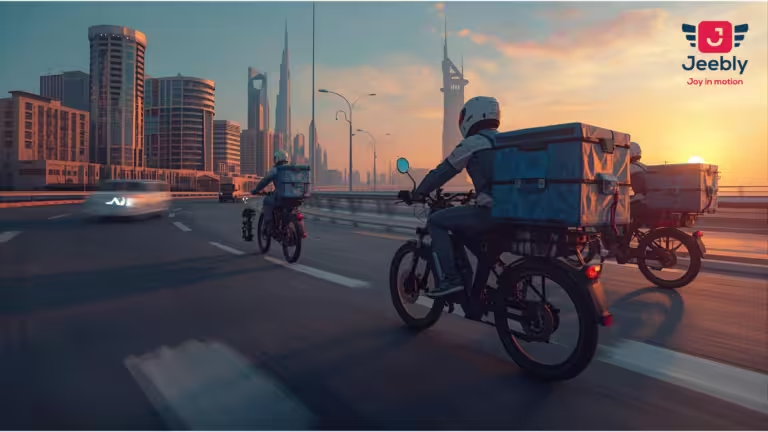
The UAE is known for its convenience driven lifestyle. Customers are used to fast services, whether it’s same-day delivery, express grocery runs, or quick food drops. Hyperlocal delivery perfectly fits this culture by offering deliveries within hours or even minutes.

As consumers continue to prioritize speed, businesses are looking for delivery partners like Jeebly that can support real-time, neighborhood-level distribution.

2. Growth of Social Commerce & Small Sellers

Thousands of homegrown brands and social sellers in the UAE now run their businesses through Instagram, WhatsApp, and small online stores. Their customers expect quick delivery, often on the same day.
Hyperlocal delivery gives these sellers:

1) Faster order fulfillment

2) Lower delivery costs

3) Improved customer satisfaction

4) The ability to scale without heavy infrastructure

Jeebly’s hyperlocal solutions help these small businesses deliver within their community quickly and reliably giving them a strong competitive edge.

3. Increasing Demand for Fresh & Temperature-Sensitive Deliveries

Whether it’s fresh groceries, bakery items, floral products, or medicines, consumers now expect freshness with speed. Hyperlocal delivery ensures items travel shorter distances, reducing damage and maintaining quality.

With Jeebly’s temperature-controlled logistics, businesses can confidently deliver perishable goods across neighborhoods without compromising freshness.

4. Smart Cities & Digital Adoption

The UAE’s strong digital infrastructure, smart city initiatives, and high smartphone usage make hyperlocal delivery easier to implement. Real-time tracking, optimized routes, and digital payments all support faster and more efficient local deliveries.

Jeebly’s advanced tech platform uses smart routing and tracking systems to ensure timely hyperlocal deliveries across the UAE.

5. Rising Customer Expectations Post Pandemic

The pandemic accelerated online shopping across all age groups. What started as a necessity quickly became a habit. Customers now expect:

1) Quick delivery windows

2) Real-time tracking

3) Flexible delivery times

4) Cash on delivery options

Hyperlocal logistics fulfills these expectations with speed and transparency.

6. Cost Efficiency for Businesses

Last-mile delivery is expensive, especially for small orders. Hyperlocal delivery reduces travel distance, fuel consumption, and overall logistics costs. This makes it easier for businesses to offer free or low-cost delivery to customers nearby.

Jeebly’s hyperlocal fleet helps businesses reduce operational costs while improving delivery success rates 

Conclusion

The demand for hyperlocal delivery UAE will only continue to rise as customers seek faster, more reliable, and more flexible delivery options. Businesses that adapt now will not only improve customer satisfaction but also stand out in a highly competitive market.

With Jeebly’s reliable fleet, real-time tracking, smart routing, and temperature-controlled options, businesses across the UAE can deliver faster, right to their customers’ doorstep.

Routes to insightful reads

BNPL in the UAE and its impact on ecommerce delivery and returns, showing the transaction cycle, faster fulfilment, order frequency, real-time tracking, and streamlined returns
Buy Now Pay Later in the UAE: What BNPL Means for eCommerce Delivery and Returns.

Buy Now Pay Later (BNPL) is changing how consumers shop and how eCommerce businesses manage fulfilment and returns in the UAE. This guide explores how BNPL can influence order volumes, delivery demand, fulfilment operations, return rates, refund processing, and the logistics strategies businesses need to support a growing BNPL-driven customer base.

Read More
Infographic explaining how to calculate volumetric weight for shipping, including the formula, measurement example and comparison between actual and chargeable weight.
How to Calculate Volumetric Weight for Shipping: Formula and Examples

Learn how to calculate volumetric weight for shipping with an easy-to-follow formula and practical examples. Understand how package dimensions, actual weight and carrier conversion factors determine the chargeable weight and ultimately impact your shipping costs.

Read More
3PL vs 4PL logistics comparison showing warehousing, transportation, distribution, supply chain integration, technology, analytics, and strategic planning for UAE businesses
3PL vs 4PL: What Is the Difference and Which Does Your UAE Business Need?

3PL and 4PL logistics models help businesses manage different levels of supply chain operations. This guide explains the key differences between 3PL and 4PL providers, their roles, benefits, costs, and how UAE businesses can choose the right logistics model based on their size, supply chain complexity, and operational needs.

Read More
Types of packaging for courier shipments, showing outer packaging strength, void-fill options, cushioning materials, and sealing and labelling methods
Types of Packaging for Courier Shipments: Which One Best Protects Your Product?

Choosing the right packaging is essential for protecting products during courier transportation. This guide explores different types of packaging for courier shipments, including corrugated boxes, bubble wrap, air pillows, paper fillers, foam inserts, and protective seals, and explains how to choose the best option based on your product, handling needs, and shipping conditions.

Read More
Types of logistics explained through inbound, outbound, reverse and third-party logistics, showing the movement of goods between suppliers, warehouses, customers and return facilities.
Types of Logistics Explained: Inbound, Outbound, Reverse and Third-Party 

Logistics covers much more than moving goods from one place to another. This guide explains the four key types of logistics, inbound, outbound, reverse and third-party logistics (3PL), and how each supports the supply chain. Learn how goods move from suppliers to warehouses, reach customers, return for repair or disposal, and how businesses use 3PL providers to manage logistics operations.

Read More

    Powered by