Jeebly | Logistics Solutions

Categories
blogs

Types of Logistics Explained: Inbound, Outbound, Reverse and Third-Party 

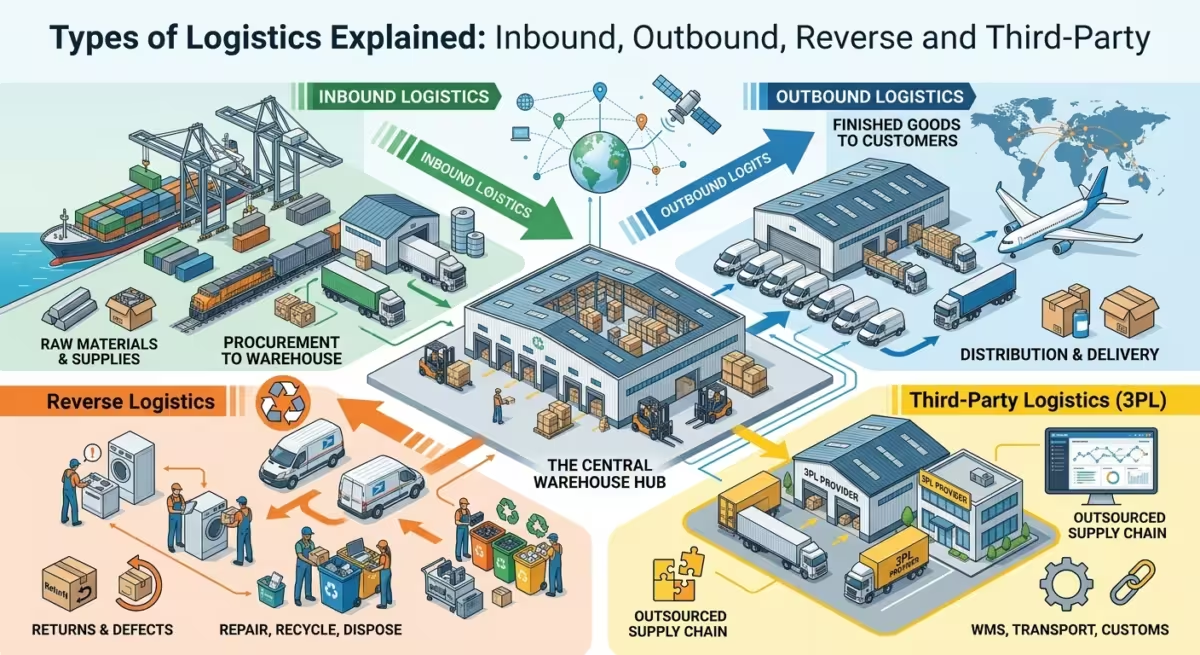
Types of logistics explained through inbound, outbound, reverse and third-party logistics, showing the movement of goods between suppliers, warehouses, customers and return facilities.

Types of Logistics Explained: Inbound, Outbound, Reverse and Third-Party

Every product that reaches a customer’s door has moved through multiple types of logistics, sometimes without the business that shipped it fully understanding which type was doing what. For UAE e-commerce businesses managing suppliers in Asia, warehouses in Dubai, and customers across the seven emirates, the wrong logistics setup at any stage can quickly compound costs.

This guide explains the core types of logistics, what each one covers, how they interact, and how to decide which combination your business actually needs at its current stage.

Key Takeaways

  • Logistics has six core types: inbound (goods coming in), outbound (orders going out), reverse (returns coming back), 3PL (outsourced logistics), 4PL (full supply chain management), and e-commerce logistics (last-mile and fulfilment for online orders).

  • Inbound, outbound, and reverse are not separate but one connected flow. A delay in inbound creates an outbound backlog, and a high reverse volume signals an outbound accuracy problem.

  • Approximately 19.3% of online sales were returned in 2025. Reverse logistics is a core e-commerce operation, not an occasional customer service task.

  • 3PL is the right model for most UAE e-commerce businesses at the growth stage, with access to infrastructure, technology, and expertise without the capital commitment of building it yourself.

  • The practical decision isn’t which single type to choose. It’s which combination suits your current order volume, product type, and delivery promise.

The Six Types of Logistics at a Glance

Type What it covers Who uses it
Inbound logistics Receiving goods from suppliers into your operation All businesses with physical inventory
Outbound logistics Shipping finished products to customers All businesses selling directly to buyers
Reverse logistics Managing returns, exchanges, repairs, recycling Any business with a return policy
Third-party logistics (3PL) Outsourcing warehousing, transport, fulfilment Growing businesses scaling beyond self-fulfilment
Fourth-party logistics (4PL) One provider managing your entire supply chain Complex, multi-market enterprise operations
E-commerce logistics Order fulfilment and last-mile for online retail Online sellers of any scale

Most businesses use more than one type simultaneously. A UAE e-commerce brand that imports stock from China, fulfils domestic orders, and manages returns is running inbound, outbound, and reverse logistics in parallel.

Inbound Logistics

Inbound logistics covers the movement of goods from supplier to your operation. It includes procurement, freight from origin, receiving, quality inspection, and storage. 

When inbound works well, your shelves are stocked accurately, and your fulfilment operation has what it needs when it needs it. When it breaks down, everything downstream suffers.

What inbound logistics involves:

  • Sourcing and purchase order management
  • International and domestic freight to your warehouse or fulfilment centre
  • Customs clearance for imported goods
  • Receiving, inspection, and quality checking at the warehouse
  • Putaway and storage location assignment

For UAE businesses importing from China, India, or Europe, inbound logistics starts at the supplier’s factory and ends at the warehouse shelf. The mode you use (air freight, ocean freight, or road freight from GCC origins) determines your cost, lead time, and flexibility.

For a full breakdown of how international freight works across air, sea, and road modes, Freight Forwarding in UAE: How to Choose the Right Provider covers the inbound leg in detail.

Outbound Logistics

Outbound logistics covers everything from the moment an order is placed to the moment it reaches the customer. Order processing, picking and packing, carrier selection, dispatch, tracking, and last-mile delivery are all outbound functions.

This is where your customer experience is formed. A customer doesn’t see your warehouse or your supplier relationships. They see whether the order arrived on time, in good condition, with tracking that worked throughout.

What outbound logistics involves:

  • Order management and processing from your store or platform
  • Pick and pack at the fulfilment centre
  • Carrier selection and label generation
  • Dispatch and handoff to the last-mile courier
  • Customer tracking notifications
  • First-attempt delivery and exception management (NDR/RTO handling)

The key metric in outbound logistics for UAE e-commerce is First Day Delivery Success (FDSS). It’s the percentage of orders delivered on the first attempt.

For businesses deciding between outbound logistics providers on FDSS, COD remittance, and platform integration, Best Courier Services in UAE: 2026 Comparison Guide benchmarks the major UAE operators across all three criteria.

Reverse Logistics

Reverse logistics covers the flow of goods from customers back to the business. Returns, exchanges, repairs, refurbishments, and end-of-life recycling all sit within reverse logistics.

According to NRF research in 2025, approximately 19.3% of online sales were returned, whereas 9% of all returns are fraudulent. These percentages make reverse logistics a core operational function, not an occasional customer service task handled manually.

What reverse logistics involves:

  • Customer return initiation and RMA (Return Merchandise Authorisation) issuance
  • Return collection from the customer’s address
  • Receipt, inspection, and grading at the warehouse
  • Inventory decision: resell as new, repackage, refurbish, or dispose
  • Refund or exchange processing
  • Data capture on return reasons to reduce future returns


The operational impact of poor reverse logistics is direct. Slow refunds reduce repeat purchase rates, messy grading creates inventory discrepancies, and missing return data means you can’t identify which products are driving return volumes.

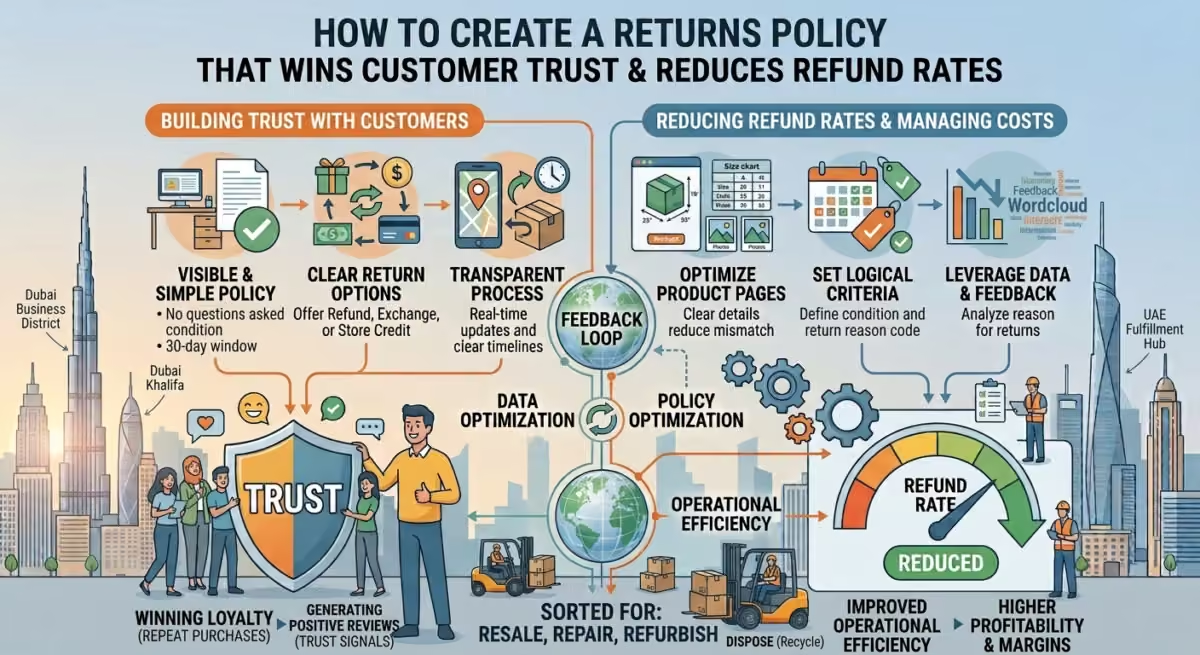
For UAE businesses building a structured reverse logistics process, How to Manage eCommerce Returns in UAE: Strategy, Policy and Logistics covers the full operational and compliance picture.

Third-Party Logistics (3PL)

A 3PL (Third-Party Logistics) provider handles some or all of a business’s logistics operations, such as warehousing, transportation, and fulfilment, or a combination. The business retains ownership of inventory and customer relationships; the 3PL provides the physical and operational infrastructure.

What a 3PL typically covers:

  • Receiving and storing inventory in their warehouse facilities
  • Pick, pack, and label preparation for each order
  • Domestic and international shipping via carrier integrations
  • Returns management and reverse logistics processing
  • Real-time inventory tracking and reporting

The case for 3PL is strongest at the growth stage. When a business is shipping 50–500+ orders per day, building its own warehouse and hiring a logistics team is rarely cost-effective. A 3PL provides the same infrastructure at a per-order cost model, without fixed overhead.

The 1PL → 2PL → 3PL → 4PL progression reflects business maturity:

  • 1PL: You handle all your own logistics. Works at very low volume.
  • 2PL: You own the transport relationship (your own van, your own carrier account). Works at moderate volume.
  • 3PL: You outsource warehousing and fulfilment to a specialist. Works at growth stage.
  • 4PL: You appoint one provider to manage your entire supply chain, coordinating multiple 3PLs across geographies. Relevant for enterprise operations with complex multi-market logistics.

E-Commerce Logistics: Where Speed and Accuracy Are Non-Negotiable

E-commerce logistics is specifically optimised for online retail order fulfilment. It connects your store or marketplace to a fulfilment operation and last-mile delivery network, and treats every individual order as a customer experience.

The key distinction from traditional freight logistics is that e-commerce logistics operates at the parcel level, not the pallet level. Every order has a tracking number, a customer notification, and a delivery window. The performance metrics are per-order (FDSS, NDR rate, order accuracy).

What e-commerce logistics covers:

  • Direct integration with Shopify, WooCommerce, Magento, and other platforms
  • Automated order routing from store to fulfilment without manual intervention
  • Same-day and next-day delivery with scheduled options
  • COD collection and remittance
  • Photo ePOD at every delivery
  • Branded tracking pages and customer notifications
  • Returns management integrated with forward delivery

For UAE e-commerce businesses, the technology integration is as important as the physical infrastructure. A logistics partner for ecommerce that requires manual CSV uploads or doesn’t integrate natively with your platform creates an operational ceiling.

Which Types of Logistics Does Your UAE Business Need?

The answer depends on three variables: your current daily order volume, your product type, and the delivery promise you’ve made to your customers.

Business stage Daily orders Recommended logistics structure
Early-stage Under 20 Self-fulfilment (1PL) + courier account. Manage inbound and outbound manually.
Growing 20–100 3PL for outbound fulfilment. Use a freight forwarder for inbound. Basic returns process.
Scaling 100–500 Full 3PL covering inbound, outbound, and reverse. E-commerce logistics integration.
Established 500+ Dedicated 3PL infrastructure. Consider 4PL for multi-market coordination. Advanced reverse logistics.

Three questions to answer before choosing:

  1. What’s your return rate? If it’s high, you need a structured reverse-logistics process rather than a manual returns inbox.


  2. How complex is your inbound? If you’re importing from multiple suppliers across different countries, a freight forwarder managing your inbound shipments is cheaper than the time required to coordinate it yourself.


  3. What delivery window are you promising customers? If you’re committing to same-day or next-day delivery, your outbound logistics partner must have the FDSS data and last-mile coverage to consistently back that up.

How Jeebly Covers Each Logistics Type

Jeebly’s product suite maps directly onto the logistics types that matter most for UAE e-commerce businesses.

Inbound logistics: Jeebly Haul covers air, sea, and road freight across UAE and GCC routes, with in-house customs clearance for the inbound leg from origin to the UAE warehouse, without coordinating separate freight and clearance vendors.

Outbound and e-commerce logistics: Jeebly Dash handles same-day and next-day domestic delivery across all seven UAE emirates, with 98% FDSS across 50,000+ daily deliveries. Published base rate: AED 17.31 per parcel up to 5 kg. Photo ePOD at every drop-off, WhatsApp and SMS notifications at dispatch and delivery.

3PL and reverse logistics: Jeebly Bizz is the full e-commerce logistics platform integrated directly with Shopify, WooCommerce, Magento, and more. One platform for inbound stock management, outbound order fulfilment, and returns processing.

For UAE businesses currently managing multiple logistics vendors for different types, consolidating through a single platform removes coordination overhead and accountability gaps across systems.

Talk to the Jeebly team about your current order volume, product type, and which logistics types are creating friction in your operation. A direct conversation can confirm which Jeebly services best fit your structure and what the cost per order is.

Conclusion

The six types of logistics (inbound, outbound, reverse, 3PL, 4PL, and e-commerce) cover every stage of the supply chain, from supplier to customer and back again. For UAE e-commerce businesses, the practical question is which combination covers your current stage and the delivery promise you’ve made. 

Inbound, outbound, and reverse are always operating simultaneously. Businesses that treat them as a single, connected flow can build supply chains that actually scale. For a UAE logistics company covering freight, last-mile delivery, fulfilment, and returns through one connected platform, Jeebly Bizz, Jeebly Dash, and Jeebly Haul each cover one of the three core types. 

Get in touch to discuss your logistics setup.

Related Articles:

Frequently Asked Questions

The six core types are inbound logistics (goods from suppliers into your operation), outbound logistics (orders from your operation to customers), reverse logistics (returns and exchanges back from customers), third-party logistics (3PL — outsourced warehousing and fulfilment), fourth-party logistics (4PL — full supply chain management), and e-commerce logistics (last-mile and order fulfilment for online retail). Most businesses run multiple types simultaneously.

Inbound logistics covers everything that brings goods into your business, like procurement, freight from suppliers, customs clearance, receiving, and storage. Outbound logistics covers everything that moves goods from your business to customers, including order processing, pick and pack, dispatch, tracking, and last-mile delivery.

Reverse logistics manages goods flowing back from customers, such as returns, exchanges, repairs, and disposal. Returns are a core operational function. For UAE e-commerce businesses, reverse logistics also includes handling COD refusals. Parcels refused at the door re-enter the returns pipeline and must be processed identically to customer-initiated returns.

When fulfilment is consuming more management time than growth activities, or when order errors and failed deliveries are increasing as volume grows. A 3PL provides warehouse infrastructure, pick-and-pack capability, and carrier integrations on a per-order cost model, without committing to fixed warehouse rent or a logistics team.

E-commerce logistics is optimised for individual online orders rather than bulk freight movements. Every order has a tracking number, a customer notification, and a delivery window. Performance is measured per order rather than per consignment. The technology integration is what distinguishes e-commerce logistics from standard freight or warehouse operations.

Routes to insightful reads

How to get an eCommerce licence in the UAE, showing five steps from selecting a business structure and trade name to submitting the application, paying fees, and obtaining the licence
How to Get an eCommerce Licence in the UAE

Planning to start an eCommerce business in the UAE? Learn how to get an eCommerce licence, choose between mainland and free zone options, prepare the required documents, submit your application, and complete the licensing process to start trading legally in the UAE.

Read More
BNPL in the UAE and its impact on ecommerce delivery and returns, showing the transaction cycle, faster fulfilment, order frequency, real-time tracking, and streamlined returns
Buy Now Pay Later in the UAE: What BNPL Means for eCommerce Delivery and Returns.

Buy Now Pay Later (BNPL) is changing how consumers shop and how eCommerce businesses manage fulfilment and returns in the UAE. This guide explores how BNPL can influence order volumes, delivery demand, fulfilment operations, return rates, refund processing, and the logistics strategies businesses need to support a growing BNPL-driven customer base.

Read More
Infographic explaining how to calculate volumetric weight for shipping, including the formula, measurement example and comparison between actual and chargeable weight.
How to Calculate Volumetric Weight for Shipping: Formula and Examples

Learn how to calculate volumetric weight for shipping with an easy-to-follow formula and practical examples. Understand how package dimensions, actual weight and carrier conversion factors determine the chargeable weight and ultimately impact your shipping costs.

Read More
3PL vs 4PL logistics comparison showing warehousing, transportation, distribution, supply chain integration, technology, analytics, and strategic planning for UAE businesses
3PL vs 4PL: What Is the Difference and Which Does Your UAE Business Need?

3PL and 4PL logistics models help businesses manage different levels of supply chain operations. This guide explains the key differences between 3PL and 4PL providers, their roles, benefits, costs, and how UAE businesses can choose the right logistics model based on their size, supply chain complexity, and operational needs.

Read More
Types of packaging for courier shipments, showing outer packaging strength, void-fill options, cushioning materials, and sealing and labelling methods
Types of Packaging for Courier Shipments: Which One Best Protects Your Product?

Choosing the right packaging is essential for protecting products during courier transportation. This guide explores different types of packaging for courier shipments, including corrugated boxes, bubble wrap, air pillows, paper fillers, foam inserts, and protective seals, and explains how to choose the best option based on your product, handling needs, and shipping conditions.

Read More
Categories
blogs

Aramex vs Jeebly: Which Is Better for UAE Last-Mile Delivery?

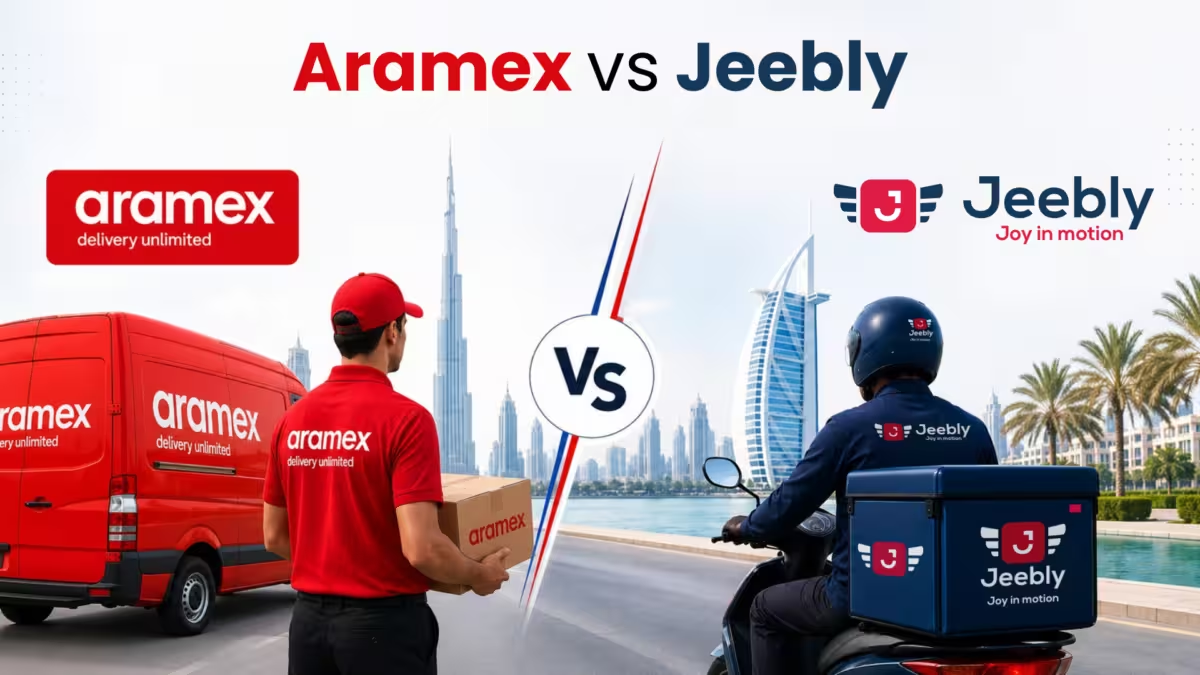
Comparison graphic showing Aramex and Jeebly last-mile delivery services in the UAE, featuring delivery vehicles, couriers, and key logistics service categories.

Aramex vs Jeebly: Which Is Better for UAE Last-Mile Delivery?

Choosing a courier in the UAE is not just a procurement decision. It is a customer experience decision.

Every parcel that arrives late, every tracking update that goes silent, and every COD payment that takes weeks to land in your account reflects directly on your brand, not the carrier’s.

The Aramex vs Jeebly question comes up often among UAE businesses because both are credible, well-known names. But they are not the same type of company, and comparing them purely on brand recognition misses the point entirely.

This article breaks down both providers across delivery speed, pricing, technology, COD, emirate coverage, and e-commerce fit, so you can match the right partner to how your business actually operates.

With the UAE’s last-mile delivery market projected to reach USD 4.85 billion by 2030, that choice carries real commercial weight.

What Aramex and Jeebly Actually Do

Before comparing the two, it helps to understand what each company was built to do because design intent shapes every operational detail that follows.

Aramex was founded in 1982 in Amman, Jordan. Today it is headquartered in Dubai, publicly listed on the Dubai Financial Market, and majority-owned by ADQ, Abu Dhabi’s sovereign wealth fund. It operates across 70-plus countries through more than 600 offices, with approximately 18,000 employees worldwide.

Core Aramex services include:

  • Domestic express delivery (same-day and next-day within the UAE)
  • International express shipping across 70-plus countries
  • Freight forwarding by air, sea, and road
  • Fulfilment and warehousing
  • Customs clearance
  • Shop and Ship, its flagship cross-border parcel forwarding product

Aramex is built for scale: enterprise accounts, institutional clients, and businesses that need a globally recognised partner to handle both local and international complexity.

Jeebly was founded in Dubai in 2016. It started as a hyperlocal delivery platform and has since evolved into a full-service logistics business purpose-built for UAE e-commerce. The operational numbers today:

  • 50,000-plus deliveries completed daily
  • 4,000-plus active fleet vehicles
  • 12M-plus customers served
  • 98% First-Day Delivery Success (FDSS) rate across all seven emirates

Jeebly’s product suite includes Jeebly Dash for same-day and next-day domestic delivery, Jeebly Bizz for business logistics and fulfilment, Jeebly Haul for freight above 20 kg, and Jeebly Plus for premium, white-glove delivery.

Where Aramex operates with global enterprise infrastructure, Jeebly’s platform is calibrated to one outcome: helping UAE online businesses deliver faster, retain customers, and scale without logistics becoming the bottleneck.

Aramex vs Jeebly: Head-to-Head Comparison

Here is how the two providers stack up across the dimensions UAE businesses care about most.

Capability Aramex Jeebly
Founded / HQ 1982, Dubai 2016, Dubai
Ownership ADQ (Abu Dhabi sovereign wealth fund) Independent, e-commerce-native
UAE Last-Mile Yes, Domestic Express Yes, same-day and next-day
Express Delivery Same-day (select zones, 7 days/week) 60-120 min (Dubai), same-day cut-off 11 AM
UAE-Wide Next-Day Yes Yes, all 7 emirates, cut-off 2 PM
GCC Cross-Border Yes, 70+ countries Yes, Jeebly Dash International
Freight Forwarding Yes, air, sea, and road Yes, Jeebly Haul
Fulfilment & Warehousing Yes, UAE fulfilment centres Yes, including micro-fulfilment centres
Marketplace Integrations ShopGo, Martjack Shopify, WooCommerce, Magento, and more
Self-Service Portal Yes, aramex.com Yes, Jeebly Now Portal + One App
Real-Time Tracking Yes, AI/ML-powered, live tracking (GCC rollout) Yes, centralised dashboard with ETA updates
COD Support Yes Yes, weekly bank remittances
Reverse Logistics Yes Yes, structured, dedicated service line
White-Glove / Premium Not a standalone product Yes, Jeebly Plus
Q-Commerce / Dark Stores No Yes, 13+ live micro-fulfilment centres
Primary Client Profile Enterprise, cross-border, institutional, SME E-commerce merchants, SMEs, D2C brands, startups

The table tells the story clearly. Aramex is architected for global enterprise volume and cross-border complexity. Jeebly is engineered around the daily realities of a UAE online merchant managing order flows, COD cycles, and peak season surges.

Delivery Speed and Coverage: What Each Provider Actually Commits To

Aramex Domestic Express

Aramex’s domestic product in the UAE offers same-day or next-day delivery, available seven days a week. That seven-day availability is a genuine advantage over providers that restrict weekend dispatches.

On the technology side, Aramex uses AI and machine learning to predict estimated delivery times. It was also the first logistics company in the GCC to pilot live last-mile tracking using Google Maps Platform, enabling customers to track their delivery from the last five stops to the doorstep. The GCC-wide rollout followed successful UAE testing in 2023.

Jeebly Dash

Jeebly Dash runs three delivery tiers, letting merchants match delivery cost to product urgency:

  • Express (60-120 minutes): Dubai only, bike delivery, for time-critical orders
  • Same-Day: Dubai, order cut-off at 11 AM
  • Next-Day: All seven emirates, with a 2 PM cut-off

The 98% FDSS rate applies across the full operation, not just select zones. Underpinning it is data-driven fleet forecasting and AI-optimised routing built specifically around UAE delivery conditions, including the absence of a standardised postcode system, free-zone access requirements, and the volume pressure of peak shopping seasons.

Jeebly makes three delivery attempts before marking an order as Return to Origin (RTO).

The coverage distinction that matters for e-commerce: both providers cover UAE-wide next-day delivery. Where Jeebly goes further is the 60-120 minute express tier and a network of 13-plus live micro-fulfilment centres for Q-commerce. That is infrastructure Aramex does not match in the consumer e-commerce segment.

To understand how delivery timelines work by service type across the UAE, read: How Long Does Delivery Take in the UAE?

COD, Returns, and the Details That Matter at Scale

These three factors tend to surface only after something goes wrong. Worth evaluating upfront, because each one directly affects cash flow, customer retention, and the delivery promise you can credibly make at checkout.

Cash on Delivery

Both Aramex and Jeebly support COD, which remains a significant share of e-commerce transactions across the UAE and wider GCC.

Key difference: Jeebly remits COD collections to your bank account on a weekly cycle. That predictability is consistently cited by Jeebly merchant partners as a working capital advantage, particularly for brands where COD makes up a meaningful percentage of daily revenue.

Aramex also supports COD, with remittance terms structured at the account level.

Before committing to either provider: confirm the exact remittance cadence and reporting format in writing, not just that COD is available.

Reverse Logistics

Jeebly runs a dedicated reverse logistics service line covering returns management and product recalls, integrated with the same platform handling forward deliveries. Digital proof of pickup is captured at collection. Aramex includes returns handling within its e-commerce service suite.

For brands managing high return volumes, the practical question is not whether returns are supported. It is how quickly the return cycle closes, how exceptions are handled, and whether the data feeds back into your order management view.

Still managing returns manually? Read: How to Manage Returns for Your UAE Online Store

Emirate Coverage

Both providers offer next-day delivery across the UAE. Jeebly’s coverage explicitly includes all seven emirates: Abu Dhabi, Dubai, Sharjah, Ajman, Umm Al Quwain, Ras Al Khaimah, and Fujairah.

Ras Al Khaimah, Fujairah, and Umm Al Quwain are zones where consistent SLA delivery is not guaranteed by every provider in the market. If you sell nationally, verify the SLA for each specific emirate before making a checkout promise to your customers.

Where Jeebly Goes Further for UAE E-Commerce

For enterprise freight, institutional accounts, and businesses that need a single globally recognised partner across 70-plus countries, Aramex delivers.

The comparison shifts when the use case is specifically UAE e-commerce: merchants managing daily order flows, same-day commitments, COD cycles, returns, and growth across all seven emirates. That is the segment Jeebly was built for from day one, and the product architecture reflects it.

  • Jeebly Dash covers express (60-120 min), same-day, next-day, and scheduled deliveries across the UAE.
  • Jeebly Bizz handles warehousing, fulfilment, cross-border logistics, and customs clearance on a single platform, rather than across separate provider relationships. For businesses looking to understand what a 3PL actually means in practice, this is worth exploring.
  • Jeebly Haul moves bulk and freight shipments above 20 kg by road, air, and sea, domestically and across GCC and MENA.
  • Jeebly Plus delivers white-glove experiences for luxury and high-value categories where the delivery moment carries its own brand weight.

As order volume grows from 50 deliveries a day to 500 and beyond, Jeebly’s product architecture scales with you without requiring a platform migration.

Trusted by Mumzworld.com, Instashop, DOD UAE, and BFL Group, Jeebly carries AED 500M-plus in combined revenue and AED 1.5B-plus in shipments delivered. For more on how consistent logistics directly shapes customer experience: What to Look for in a Reliable Logistics Company in the UAE.


How to Choose: Five Questions to Ask Before You Commit

The right provider depends less on features in isolation and more on how your logistics actually run day to day. Work through these before committing:

1. What is your primary delivery use case?

Cross-border enterprise freight, global networks, and institutional accounts point toward Aramex. UAE last-mile delivery, same-day capability, COD management, and e-commerce fulfilment point toward Jeebly.

2. Do you sell on Shopify, WooCommerce, or Magento?

Jeebly’s native integrations connect your store directly to dispatch, removing manual order pushing and reducing errors at volume. Aramex integrates with ShopGo and Martjack. For merchants on Shopify or WooCommerce, Jeebly is the more direct operational fit.

3. What percentage of your orders are COD?

If COD accounts for more than 20-25% of your daily order mix, remittance cycle time directly affects working capital. Ask both providers for their exact cadence and get it confirmed in writing, not assumed.

4. Are you planning to scale in the next 12 months?

Jeebly’s no-minimum, pay-as-you-go model means your logistics infrastructure grows with your business rather than ahead of it. There is no need to commit to volume thresholds you have not yet reached. Read: How Jeebly Helps SMEs Scale During Peak Shopping Seasons.

5. Do you need 60-minute express or Q-commerce capability?

 Jeebly’s 13-plus live micro-fulfilment centres and 60-120 minute express tier are purpose-built for ultra-fast urban delivery. Aramex’s infrastructure does not offer an equivalent at the hyperlocal e-commerce level.

Conclusion

Aramex is a well-established, globally capable logistics provider. For cross-border freight, enterprise-scale operations, and businesses that need a single partner spanning 70-plus countries, its infrastructure and brand reputation are genuinely earned.

For UAE online merchants, whether a startup managing 50 orders a month or a growing brand navigating peak-season volume, Jeebly is the more purposefully built fit. The delivery tiers, pricing transparency, merchant-first technology, and product depth are designed specifically around how UAE e-commerce businesses actually operate and scale.

If you are still evaluating your options, see how Jeebly compares against other couriers operating in the UAE: Quiqup vs Jeebly, iMile vs Jeebly, EMX vs Jeebly, and Porter vs Jeebly.

At Jeebly, we do not just move parcels. We move businesses forward. If you are ready to build a logistics setup that scales with your ambition, talk to the Jeebly team and get a solution mapped to your specific volumes, routes, and growth targets.

Or, if you are ready to go now, sign up with Jeebly and start shipping today.

Frequently Asked Questions

Aramex is a globally operating courier and logistics provider founded in 1982, with a network across 70-plus countries spanning domestic express, international shipping, freight forwarding, and fulfilment. Jeebly is a UAE-native logistics platform founded in 2016 and purpose-built for e-commerce, offering same-day and next-day delivery across all seven emirates, COD management, fulfilment, and a merchant-first technology stack. Aramex suits cross-border enterprise logistics; Jeebly is designed for UAE last-mile delivery and online merchant operations.

Yes. Aramex Domestic Express offers same-day delivery in select zones across the UAE, available seven days a week. Jeebly Dash also offers same-day delivery in Dubai with an 11 AM cut-off, plus a 60-120 minute express tier for qualifying orders within the city.

Jeebly publishes a fixed base rate of AED 17.31 per parcel up to 5 kg with no minimum order requirement. Aramex pricing is account-negotiated and available via its online rate calculator, but there is no equivalent published per-parcel rate for SME e-commerce. For startups and growing businesses, Jeebly’s transparent, no-commitment model is typically easier to plan around.

Yes, both providers support COD. Jeebly remits collections to your bank account on a weekly cycle, giving merchants a predictable working capital timeline. Aramex COD terms are structured at the account level. Confirm remittance timelines and reporting format with both providers before signing.

Jeebly offers native integrations with Shopify, WooCommerce, and Magento, connecting your store directly to dispatch. Aramex integrates with ShopGo and Martjack. For merchants on Shopify or WooCommerce, Jeebly is the more direct fit.

Yes. Jeebly Dash covers all seven UAE emirates, including Abu Dhabi, Dubai, Sharjah, Ajman, Umm Al Quwain, Ras Al Khaimah, and Fujairah, for next-day delivery with a 2 PM cut-off.

Aramex is a strong option for e-commerce businesses with significant cross-border or GCC volume, or those operating at enterprise scale who need a globally recognised partner. For UAE-focused merchants who need same-day speed, transparent per-parcel pricing, native Shopify or WooCommerce integration, and a platform that scales without volume minimums, Jeebly is typically the more operationally aligned choice.

Routes to insightful reads

How to get an eCommerce licence in the UAE, showing five steps from selecting a business structure and trade name to submitting the application, paying fees, and obtaining the licence
How to Get an eCommerce Licence in the UAE

Planning to start an eCommerce business in the UAE? Learn how to get an eCommerce licence, choose between mainland and free zone options, prepare the required documents, submit your application, and complete the licensing process to start trading legally in the UAE.

Read More
BNPL in the UAE and its impact on ecommerce delivery and returns, showing the transaction cycle, faster fulfilment, order frequency, real-time tracking, and streamlined returns
Buy Now Pay Later in the UAE: What BNPL Means for eCommerce Delivery and Returns.

Buy Now Pay Later (BNPL) is changing how consumers shop and how eCommerce businesses manage fulfilment and returns in the UAE. This guide explores how BNPL can influence order volumes, delivery demand, fulfilment operations, return rates, refund processing, and the logistics strategies businesses need to support a growing BNPL-driven customer base.

Read More
Infographic explaining how to calculate volumetric weight for shipping, including the formula, measurement example and comparison between actual and chargeable weight.
How to Calculate Volumetric Weight for Shipping: Formula and Examples

Learn how to calculate volumetric weight for shipping with an easy-to-follow formula and practical examples. Understand how package dimensions, actual weight and carrier conversion factors determine the chargeable weight and ultimately impact your shipping costs.

Read More
3PL vs 4PL logistics comparison showing warehousing, transportation, distribution, supply chain integration, technology, analytics, and strategic planning for UAE businesses
3PL vs 4PL: What Is the Difference and Which Does Your UAE Business Need?

3PL and 4PL logistics models help businesses manage different levels of supply chain operations. This guide explains the key differences between 3PL and 4PL providers, their roles, benefits, costs, and how UAE businesses can choose the right logistics model based on their size, supply chain complexity, and operational needs.

Read More
Types of packaging for courier shipments, showing outer packaging strength, void-fill options, cushioning materials, and sealing and labelling methods
Types of Packaging for Courier Shipments: Which One Best Protects Your Product?

Choosing the right packaging is essential for protecting products during courier transportation. This guide explores different types of packaging for courier shipments, including corrugated boxes, bubble wrap, air pillows, paper fillers, foam inserts, and protective seals, and explains how to choose the best option based on your product, handling needs, and shipping conditions.

Read More

    Powered by