
Jeebly | Logistics Solutions

reduce failed deliveries in the UAE

How Small Businesses Can Reduce Failed Deliveries in the UAE

For small businesses in the UAE, failed deliveries are more than just an inconvenience — they directly impact costs, customer trust, and long-term growth. Each unsuccessful delivery attempt leads to higher operational expenses, delayed payments (especially with cash on delivery), and unhappy customers who may never order again.

Understanding how to reduce failed deliveries in the UAE is essential for any SME that wants to scale efficiently and deliver a reliable customer experience. The good news: most failed deliveries are preventable.

The Real Cost of Failed Deliveries for UAE SMEs

20–30%

of COD orders fail on first attempt

2x–3x

higher cost per failed delivery vs. successful

67%

of customers won’t reorder after a failed delivery

These numbers hit SMEs harder than large retailers. When margins are tight and every order counts, a single failed COD delivery can wipe out the profit from three successful ones. The operational drag — rider re-attempts, customer calls, returns processing — compounds quickly.


Why Failed Deliveries Happen

Failed deliveries are common in last-mile logistics, particularly in dense urban areas like Dubai and Abu Dhabi. For SMEs, the most frequent causes are:

•    Incorrect or incomplete address details provided at checkout
•    Customer unavailable at the time of delivery
•    Unreachable or switched-off phone numbers
•    COD refusal, customer changes mind or doesn’t have cash ready
•    Poor route planning or rigid delivery timing

While some factors seem out of a business’s control, most can be prevented with better processes and the right logistics partner.

1. Collect Clear and Complete Address Information

One of the simplest ways to reduce failed deliveries in the UAE is improving address accuracy before dispatch. The UAE’s mixed addressing system, where many areas rely on landmarks rather than formal street numbers, makes this especially important for SMEs.

Train your order intake process to always capture:
•    Exact building name and number
•    Floor or apartment details
•    A nearby landmark (mall, mosque, metro station)
•    An active WhatsApp number, not just a call number

SME Tip: Add a mandatory “landmark” field to your order form or WhatsApp checkout flow. Addresses with landmarks have a significantly lower failed delivery rate in the UAE’s villa and apartment-heavy neighbourhoods.


2. Use Real-Time Tracking and Proactive Notifications

Customers are far more likely to be available when they know exactly when their delivery will arrive. Real time tracking and automated SMS or WhatsApp notifications allow customers to prepare and significantly cut last-minute “I’m not home” failures.

With the Jeebly One app, SMEs get:
•    Live order tracking visible to both the seller and the customer
•    Automated delivery ETA notifications sent to the customer
•    Instant alerts when a delivery attempt is made or missed

Jeebly One sends automatic customer notifications at every delivery milestone — so your customers are ready, reducing failed attempts without any extra work from your team.See how it works →

3. Offer Flexible Delivery Windows

Rigid delivery schedules are one of the most underrated causes of failed deliveries. When a customer can only receive between 9am–6pm and works full-time, failure is almost guaranteed.

Offering flexible time slots or same-day and scheduled delivery options lets customers choose what works for them, dramatically increasing first-attempt success rates.

SME Tip: Flexibility matters most for residential customers and busy shop owners. If you serve both B2C and B2B customers, consider offering morning slots for businesses and evening slots for residential addresses.

4. Reduce COD Failures with These Practical Tips

Cash on delivery remains the dominant payment method in the UAE — but it’s also the leading cause of failed deliveries for SMEs. Customers who choose COD are more likely to refuse orders if they’ve changed their mind, don’t have the exact amount, or simply aren’t home.
Here’s how to protect your COD success rate:

Before Dispatch

•    Send a WhatsApp or SMS order confirmation with the exact COD amount
•    Call or message to confirm the customer is still expecting the order
•    Flag high-risk orders (new customers, large amounts) for a pre-delivery confirmation call

At the Point of Delivery

•    Ensure riders carry change for common denominations (AED 100, 200, 500)
•    Offer a digital payment fallback — a QR code or payment link the rider can share
•    Give riders a scripted response to handle soft refusals without escalating

After a Failed COD Attempt

•    Re-attempt within 24 hours while purchase intent is still warm
•    Send an “Are you still interested?” message with an easy reply option
•    Log repeat COD failures by customer to spot patterns and adjust credit terms

Jeebly One handles COD end-to-end: secure cash collection, transparent remittance, and a full COD dashboard showing pending, collected, and failed amounts — all visible in real time from the app. SMEs using Jeebly report fewer COD disputes and faster cash-in-hand cycles. Explore Jeebly One →

5. Work with a Reliable Logistics Partner

The right delivery partner is the single highest-leverage decision an SME can make on failed deliveries. Professional logistics providers use smart routing, trained riders, and data-driven systems to minimise errors — and carry the operational weight so your team doesn’t have to.

At Jeebly, we help UAE small businesses improve delivery success through:
•    Smart route optimisation that reduces transit time and missed windows
•    Real-time tracking and visibility for sellers and customers
•    Reliable same-day and scheduled delivery options
•    Secure COD handling with transparent remittance cycles
•    Dedicated SME support — not a generic helpline

Turn Failed Deliveries into Successful Experiences

Failed deliveries are not inevitable, they are a solvable problem for UAE SMEs who invest in the right tools and processes.

With better address collection, proactive COD confirmation, flexible delivery windows, real-time notifications, and a reliable logistics partner, small businesses can meaningfully cut their failed delivery rate, lower operational costs, and build the kind of customer trust that drives repeat orders.

The data is clear: businesses that fix their last mile reliability don’t just save money, they grow faster, retain more customers, and compound their reputation over time.

Frequently Asked Questions

Failed deliveries in the UAE commonly occur due to incomplete address details, customers being unavailable during delivery, unreachable phone numbers, COD refusals, or inefficient route planning. Because many areas rely on landmarks rather than standard street addresses, inaccurate location information is a major contributor.

Small businesses can reduce failed deliveries by collecting accurate address details, confirming COD orders before dispatch, offering flexible delivery windows, sending real-time delivery notifications, and working with a reliable logistics partner that uses smart route optimisation and delivery tracking.

The UAE uses a mixed addressing system where many locations rely on building names and landmarks rather than street numbers. Providing detailed information such as building name, apartment number, and a nearby landmark significantly improves delivery success rates.

Cash on delivery orders are more likely to fail because customers may change their mind, not be available, or not have the correct amount ready. Businesses can reduce COD failures by confirming orders before dispatch and providing clear payment information.

Real-time delivery updates notify customers about estimated arrival times and delivery attempts. When customers know when their order will arrive, they are more likely to be available, reducing the chances of missed deliveries.

Professional logistics partners provide route optimisation, trained riders, real-time tracking, and structured COD handling. These systems improve first-attempt delivery success and reduce operational costs for small businesses.

Routes to insightful reads

An infographic comparing how a positive delivery experience (left) vs. low price (right) impacts brand loyalty, featuring icons for tracking, staff, and costs in AED.
Why Delivery Experience Is a Bigger Brand Differentiator Than Price

In today’s competitive e-commerce landscape, competing on price alone is a race to the bottom. Customers are increasingly valuing speed, transparent tracking, and reliable service over minor cost savings. Discover why elevating your delivery experience is the ultimate brand differentiator for UAE sellers and how it drives long-term customer loyalty.
Read More
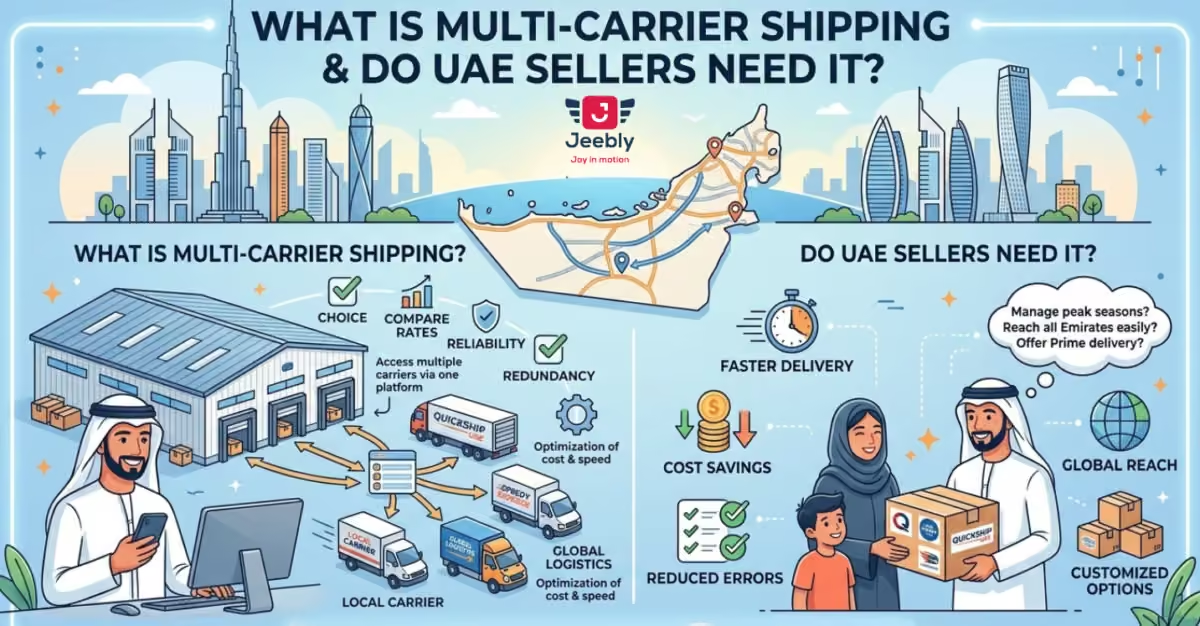
An infographic illustrating multi-carrier shipping for UAE e-commerce sellers, divided into two main sections explaining what it is and why it's needed, set against a backdrop of a UAE map and modern city skyline.
What Is Multi-Carrier Shipping and Do UAE Sellers Need It?

Relying on a single shipping provider can lead to bottlenecks, higher costs, and limited reach. Discover what multi-carrier shipping is and why e-commerce sellers in the UAE need a unified shipping strategy to compare rates, optimize delivery times across all Emirates, and scale their business smoothly.
Read More
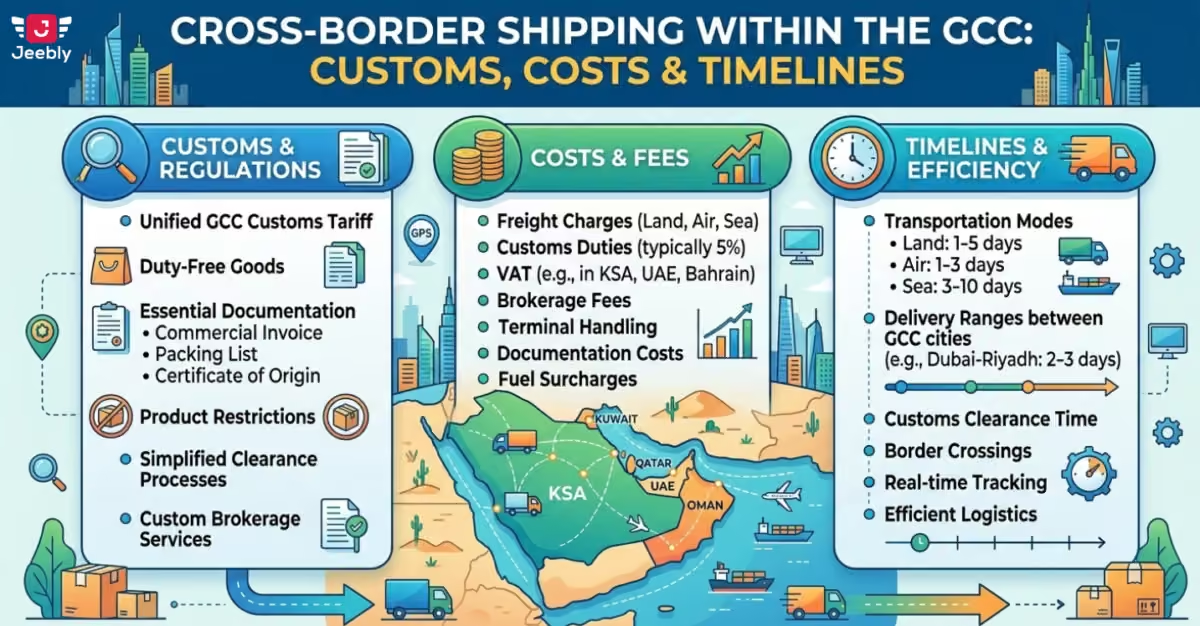
An infographic detailing the process of cross-border shipping within the Gulf Cooperation Council (GCC). The graphic is split into three main sections: "Customs & Regulations," "Costs & Fees," and "Timelines & Efficiency," all surrounding a map of the GCC region (Saudi Arabia, UAE, Oman, Qatar, Kuwait) with shipping routes.
Cross-Border Shipping Within the GCC: Customs, Costs and Timelines

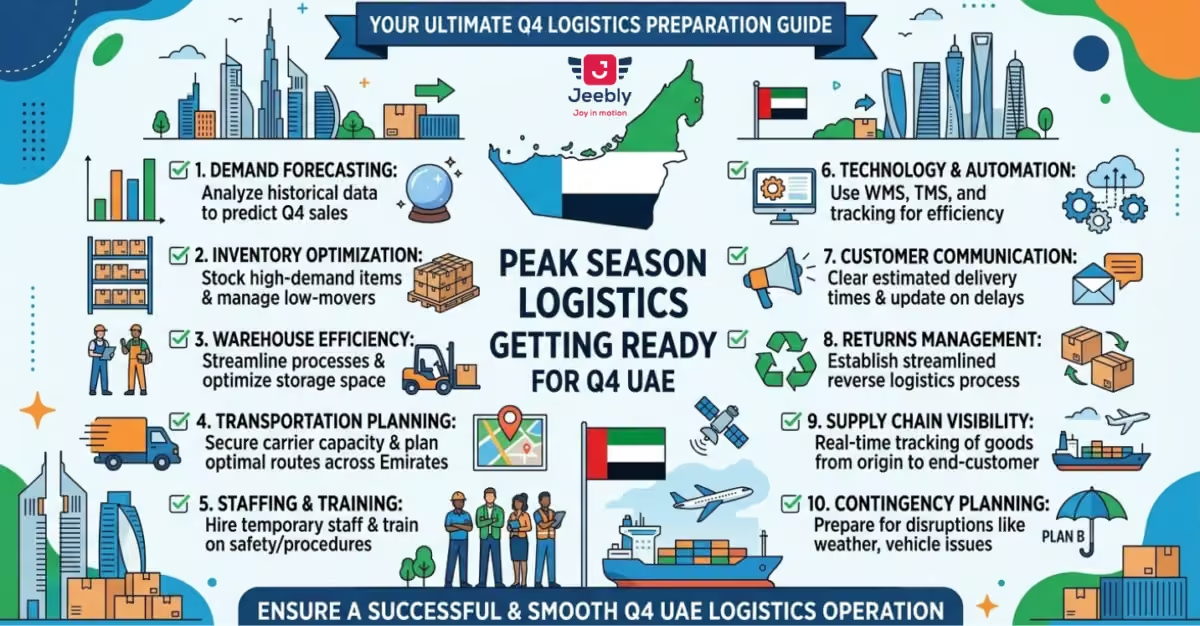
Gearing up for Q4 in the UAE? Navigating peak season demand requires early planning across warehouse operations, carrier capacity, inventory, and customer experience. Explore our 10-step logistics checklist to streamline your supply chain, avoid bottleneck delays, and ensure smooth delivery during the busiest shopping quarter of the year.
Read More
An infographic checklist outlining 10 key steps for Q4 UAE logistics preparation, featuring icons for demand forecasting, inventory, warehouse efficiency, transportation, staffing, and technology against a UAE skyline and map background.
Peak Season Logistics Checklist: Getting Ready for Q4 UAE

Gearing up for Q4 in the UAE? Navigating peak season demand requires early planning across warehouse operations, carrier capacity, inventory, and customer experience. Explore our 10-step logistics checklist to streamline your supply chain, avoid bottleneck delays, and ensure smooth delivery during the busiest shopping quarter of the year.
Read More
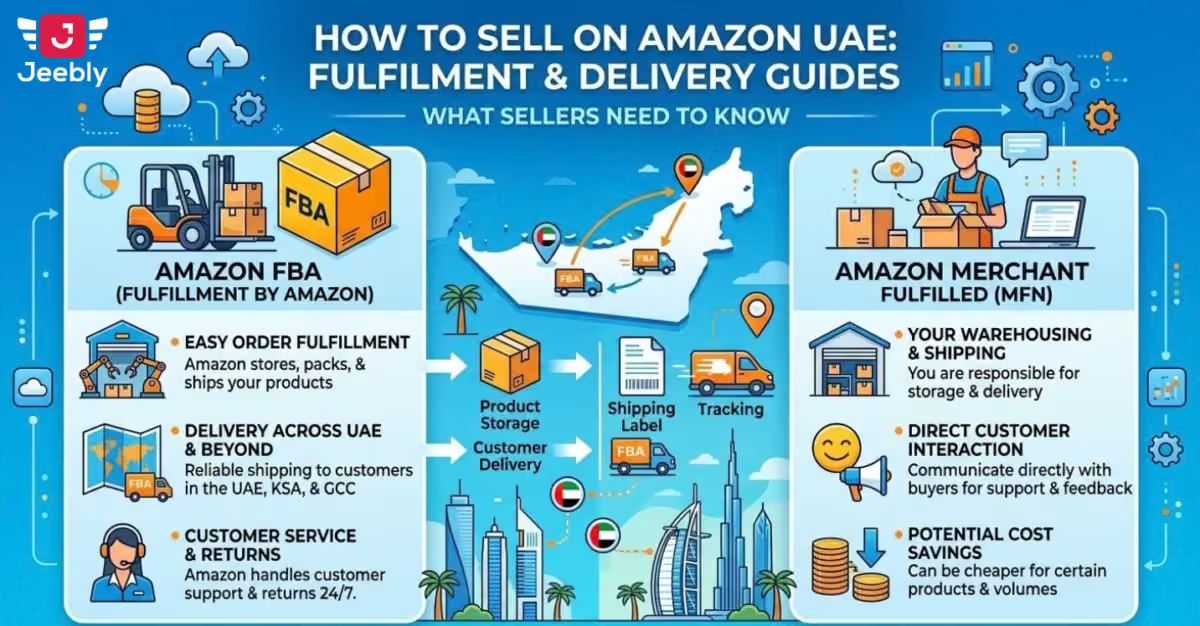
An isometric infographic detailing how to sell on Amazon UAE. The left side covers seller onboarding and listing steps like defining business activity, trade name reservation, and document preparation. The right side compares FBA (Fulfilment by Amazon) and FBM (Fulfilment by Merchant) logistics and delivery models against a Dubai skyline.
How to Sell on Amazon UAE: What Sellers Need to Know About Fulfilment and Delivery

Selling on Amazon UAE offers massive growth potential, but choosing the right logistics model can make or break your margins. Discover the step-by-step onboarding process for Amazon.ae, explore the core differences between Fulfilment by Amazon (FBA) and Fulfilment by Merchant (FBM), and learn how to optimize your delivery strategy to scale efficiently in the UAE market.

Read More

    Powered by