





Jeebly | Logistics Solutions

Categories
blogs

Types of Logistics Explained: Inbound, Outbound, Reverse and Third-Party 

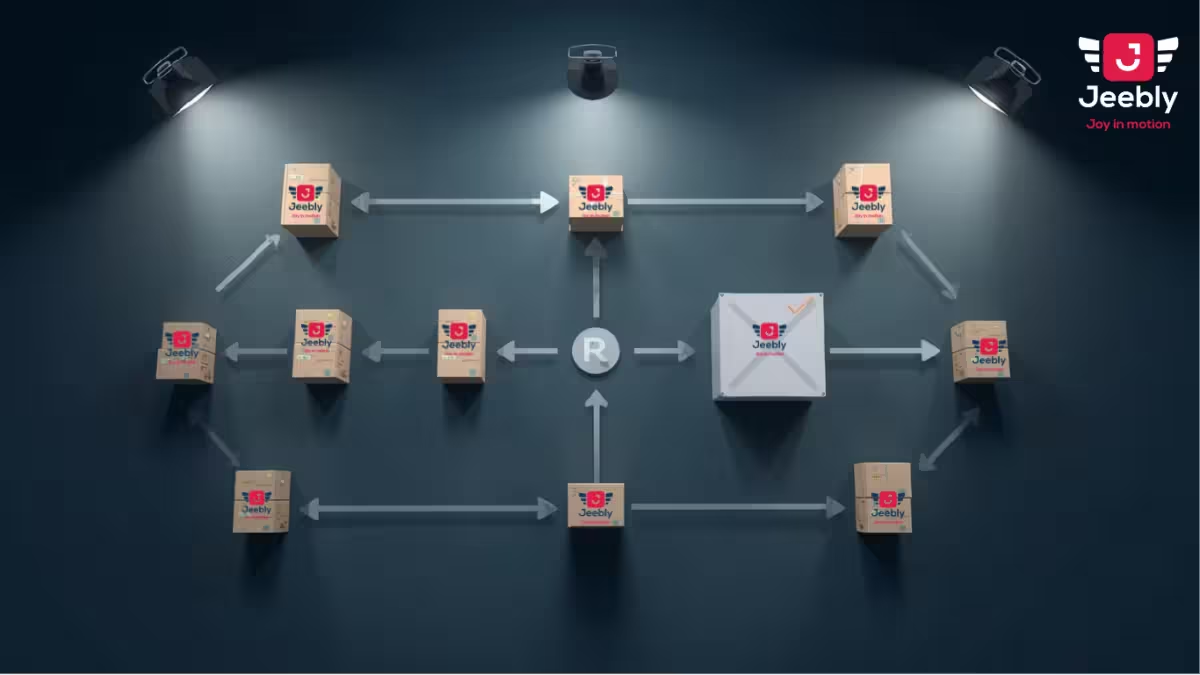
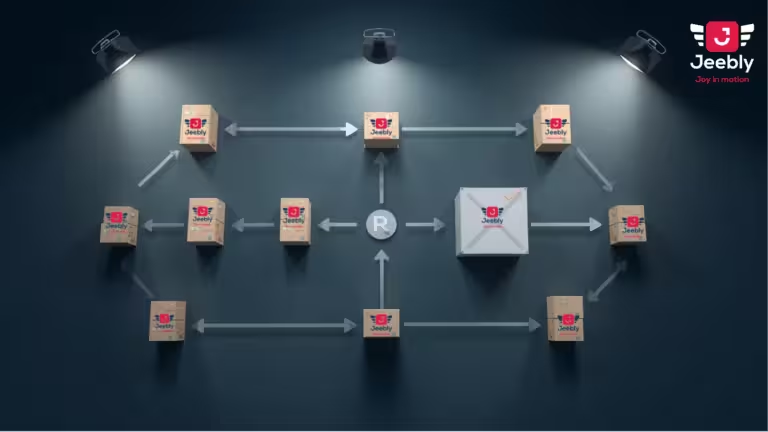
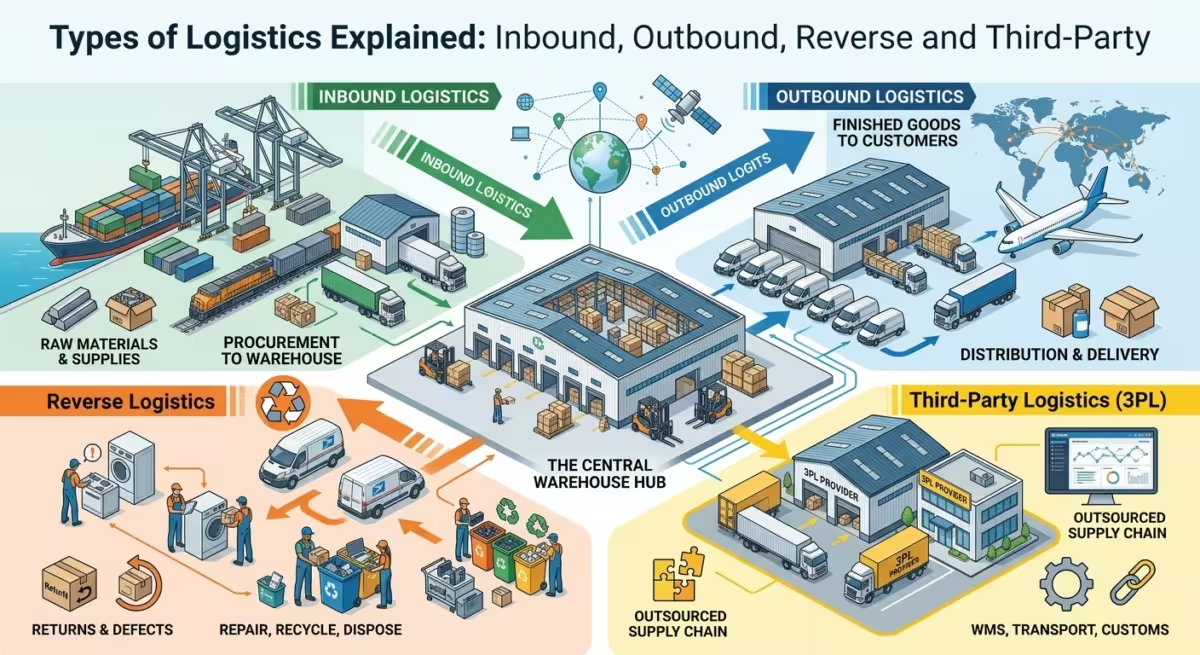
Types of logistics explained through inbound, outbound, reverse and third-party logistics, showing the movement of goods between suppliers, warehouses, customers and return facilities.

Types of Logistics Explained: Inbound, Outbound, Reverse and Third-Party

Every product that reaches a customer’s door has moved through multiple types of logistics, sometimes without the business that shipped it fully understanding which type was doing what. For UAE e-commerce businesses managing suppliers in Asia, warehouses in Dubai, and customers across the seven emirates, the wrong logistics setup at any stage can quickly compound costs.

This guide explains the core types of logistics, what each one covers, how they interact, and how to decide which combination your business actually needs at its current stage.

Key Takeaways

  • Logistics has six core types: inbound (goods coming in), outbound (orders going out), reverse (returns coming back), 3PL (outsourced logistics), 4PL (full supply chain management), and e-commerce logistics (last-mile and fulfilment for online orders).

  • Inbound, outbound, and reverse are not separate but one connected flow. A delay in inbound creates an outbound backlog, and a high reverse volume signals an outbound accuracy problem.

  • Approximately 19.3% of online sales were returned in 2025. Reverse logistics is a core e-commerce operation, not an occasional customer service task.

  • 3PL is the right model for most UAE e-commerce businesses at the growth stage, with access to infrastructure, technology, and expertise without the capital commitment of building it yourself.

  • The practical decision isn’t which single type to choose. It’s which combination suits your current order volume, product type, and delivery promise.

The Six Types of Logistics at a Glance

Type What it covers Who uses it
Inbound logistics Receiving goods from suppliers into your operation All businesses with physical inventory
Outbound logistics Shipping finished products to customers All businesses selling directly to buyers
Reverse logistics Managing returns, exchanges, repairs, recycling Any business with a return policy
Third-party logistics (3PL) Outsourcing warehousing, transport, fulfilment Growing businesses scaling beyond self-fulfilment
Fourth-party logistics (4PL) One provider managing your entire supply chain Complex, multi-market enterprise operations
E-commerce logistics Order fulfilment and last-mile for online retail Online sellers of any scale

Most businesses use more than one type simultaneously. A UAE e-commerce brand that imports stock from China, fulfils domestic orders, and manages returns is running inbound, outbound, and reverse logistics in parallel.

Inbound Logistics

Inbound logistics covers the movement of goods from supplier to your operation. It includes procurement, freight from origin, receiving, quality inspection, and storage. 

When inbound works well, your shelves are stocked accurately, and your fulfilment operation has what it needs when it needs it. When it breaks down, everything downstream suffers.

What inbound logistics involves:

  • Sourcing and purchase order management
  • International and domestic freight to your warehouse or fulfilment centre
  • Customs clearance for imported goods
  • Receiving, inspection, and quality checking at the warehouse
  • Putaway and storage location assignment

For UAE businesses importing from China, India, or Europe, inbound logistics starts at the supplier’s factory and ends at the warehouse shelf. The mode you use (air freight, ocean freight, or road freight from GCC origins) determines your cost, lead time, and flexibility.

For a full breakdown of how international freight works across air, sea, and road modes, Freight Forwarding in UAE: How to Choose the Right Provider covers the inbound leg in detail.

Outbound Logistics

Outbound logistics covers everything from the moment an order is placed to the moment it reaches the customer. Order processing, picking and packing, carrier selection, dispatch, tracking, and last-mile delivery are all outbound functions.

This is where your customer experience is formed. A customer doesn’t see your warehouse or your supplier relationships. They see whether the order arrived on time, in good condition, with tracking that worked throughout.

What outbound logistics involves:

  • Order management and processing from your store or platform
  • Pick and pack at the fulfilment centre
  • Carrier selection and label generation
  • Dispatch and handoff to the last-mile courier
  • Customer tracking notifications
  • First-attempt delivery and exception management (NDR/RTO handling)

The key metric in outbound logistics for UAE e-commerce is First Day Delivery Success (FDSS). It’s the percentage of orders delivered on the first attempt.

For businesses deciding between outbound logistics providers on FDSS, COD remittance, and platform integration, Best Courier Services in UAE: 2026 Comparison Guide benchmarks the major UAE operators across all three criteria.

Reverse Logistics

Reverse logistics covers the flow of goods from customers back to the business. Returns, exchanges, repairs, refurbishments, and end-of-life recycling all sit within reverse logistics.

According to NRF research in 2025, approximately 19.3% of online sales were returned, whereas 9% of all returns are fraudulent. These percentages make reverse logistics a core operational function, not an occasional customer service task handled manually.

What reverse logistics involves:

  • Customer return initiation and RMA (Return Merchandise Authorisation) issuance
  • Return collection from the customer’s address
  • Receipt, inspection, and grading at the warehouse
  • Inventory decision: resell as new, repackage, refurbish, or dispose
  • Refund or exchange processing
  • Data capture on return reasons to reduce future returns


The operational impact of poor reverse logistics is direct. Slow refunds reduce repeat purchase rates, messy grading creates inventory discrepancies, and missing return data means you can’t identify which products are driving return volumes.

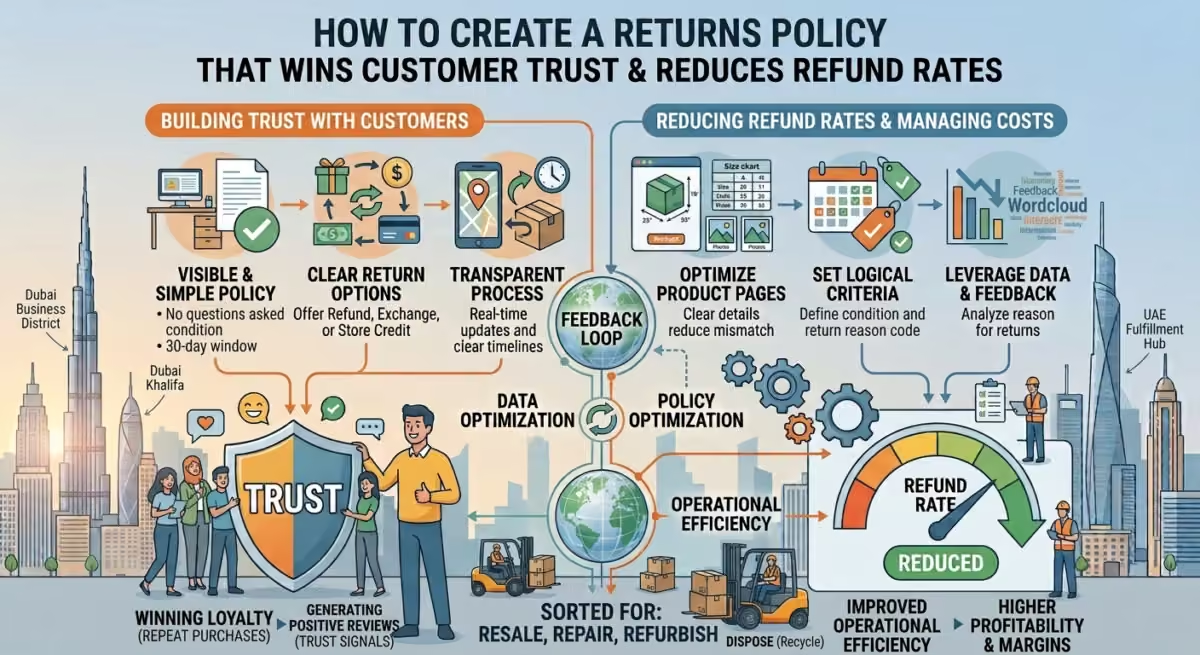
For UAE businesses building a structured reverse logistics process, How to Manage eCommerce Returns in UAE: Strategy, Policy and Logistics covers the full operational and compliance picture.

Third-Party Logistics (3PL)

A 3PL (Third-Party Logistics) provider handles some or all of a business’s logistics operations, such as warehousing, transportation, and fulfilment, or a combination. The business retains ownership of inventory and customer relationships; the 3PL provides the physical and operational infrastructure.

What a 3PL typically covers:

  • Receiving and storing inventory in their warehouse facilities
  • Pick, pack, and label preparation for each order
  • Domestic and international shipping via carrier integrations
  • Returns management and reverse logistics processing
  • Real-time inventory tracking and reporting

The case for 3PL is strongest at the growth stage. When a business is shipping 50–500+ orders per day, building its own warehouse and hiring a logistics team is rarely cost-effective. A 3PL provides the same infrastructure at a per-order cost model, without fixed overhead.

The 1PL → 2PL → 3PL → 4PL progression reflects business maturity:

  • 1PL: You handle all your own logistics. Works at very low volume.
  • 2PL: You own the transport relationship (your own van, your own carrier account). Works at moderate volume.
  • 3PL: You outsource warehousing and fulfilment to a specialist. Works at growth stage.
  • 4PL: You appoint one provider to manage your entire supply chain, coordinating multiple 3PLs across geographies. Relevant for enterprise operations with complex multi-market logistics.

E-Commerce Logistics: Where Speed and Accuracy Are Non-Negotiable

E-commerce logistics is specifically optimised for online retail order fulfilment. It connects your store or marketplace to a fulfilment operation and last-mile delivery network, and treats every individual order as a customer experience.

The key distinction from traditional freight logistics is that e-commerce logistics operates at the parcel level, not the pallet level. Every order has a tracking number, a customer notification, and a delivery window. The performance metrics are per-order (FDSS, NDR rate, order accuracy).

What e-commerce logistics covers:

  • Direct integration with Shopify, WooCommerce, Magento, and other platforms
  • Automated order routing from store to fulfilment without manual intervention
  • Same-day and next-day delivery with scheduled options
  • COD collection and remittance
  • Photo ePOD at every delivery
  • Branded tracking pages and customer notifications
  • Returns management integrated with forward delivery

For UAE e-commerce businesses, the technology integration is as important as the physical infrastructure. A logistics partner for ecommerce that requires manual CSV uploads or doesn’t integrate natively with your platform creates an operational ceiling.

Which Types of Logistics Does Your UAE Business Need?

The answer depends on three variables: your current daily order volume, your product type, and the delivery promise you’ve made to your customers.

Business stage Daily orders Recommended logistics structure
Early-stage Under 20 Self-fulfilment (1PL) + courier account. Manage inbound and outbound manually.
Growing 20–100 3PL for outbound fulfilment. Use a freight forwarder for inbound. Basic returns process.
Scaling 100–500 Full 3PL covering inbound, outbound, and reverse. E-commerce logistics integration.
Established 500+ Dedicated 3PL infrastructure. Consider 4PL for multi-market coordination. Advanced reverse logistics.

Three questions to answer before choosing:

  1. What’s your return rate? If it’s high, you need a structured reverse-logistics process rather than a manual returns inbox.


  2. How complex is your inbound? If you’re importing from multiple suppliers across different countries, a freight forwarder managing your inbound shipments is cheaper than the time required to coordinate it yourself.


  3. What delivery window are you promising customers? If you’re committing to same-day or next-day delivery, your outbound logistics partner must have the FDSS data and last-mile coverage to consistently back that up.

How Jeebly Covers Each Logistics Type

Jeebly’s product suite maps directly onto the logistics types that matter most for UAE e-commerce businesses.

Inbound logistics: Jeebly Haul covers air, sea, and road freight across UAE and GCC routes, with in-house customs clearance for the inbound leg from origin to the UAE warehouse, without coordinating separate freight and clearance vendors.

Outbound and e-commerce logistics: Jeebly Dash handles same-day and next-day domestic delivery across all seven UAE emirates, with 98% FDSS across 50,000+ daily deliveries. Published base rate: AED 17.31 per parcel up to 5 kg. Photo ePOD at every drop-off, WhatsApp and SMS notifications at dispatch and delivery.

3PL and reverse logistics: Jeebly Bizz is the full e-commerce logistics platform integrated directly with Shopify, WooCommerce, Magento, and more. One platform for inbound stock management, outbound order fulfilment, and returns processing.

For UAE businesses currently managing multiple logistics vendors for different types, consolidating through a single platform removes coordination overhead and accountability gaps across systems.

Talk to the Jeebly team about your current order volume, product type, and which logistics types are creating friction in your operation. A direct conversation can confirm which Jeebly services best fit your structure and what the cost per order is.

Conclusion

The six types of logistics (inbound, outbound, reverse, 3PL, 4PL, and e-commerce) cover every stage of the supply chain, from supplier to customer and back again. For UAE e-commerce businesses, the practical question is which combination covers your current stage and the delivery promise you’ve made. 

Inbound, outbound, and reverse are always operating simultaneously. Businesses that treat them as a single, connected flow can build supply chains that actually scale. For a UAE logistics company covering freight, last-mile delivery, fulfilment, and returns through one connected platform, Jeebly Bizz, Jeebly Dash, and Jeebly Haul each cover one of the three core types. 

Get in touch to discuss your logistics setup.

Related Articles:

Frequently Asked Questions

The six core types are inbound logistics (goods from suppliers into your operation), outbound logistics (orders from your operation to customers), reverse logistics (returns and exchanges back from customers), third-party logistics (3PL — outsourced warehousing and fulfilment), fourth-party logistics (4PL — full supply chain management), and e-commerce logistics (last-mile and order fulfilment for online retail). Most businesses run multiple types simultaneously.

Inbound logistics covers everything that brings goods into your business, like procurement, freight from suppliers, customs clearance, receiving, and storage. Outbound logistics covers everything that moves goods from your business to customers, including order processing, pick and pack, dispatch, tracking, and last-mile delivery.

Reverse logistics manages goods flowing back from customers, such as returns, exchanges, repairs, and disposal. Returns are a core operational function. For UAE e-commerce businesses, reverse logistics also includes handling COD refusals. Parcels refused at the door re-enter the returns pipeline and must be processed identically to customer-initiated returns.

When fulfilment is consuming more management time than growth activities, or when order errors and failed deliveries are increasing as volume grows. A 3PL provides warehouse infrastructure, pick-and-pack capability, and carrier integrations on a per-order cost model, without committing to fixed warehouse rent or a logistics team.

E-commerce logistics is optimised for individual online orders rather than bulk freight movements. Every order has a tracking number, a customer notification, and a delivery window. Performance is measured per order rather than per consignment. The technology integration is what distinguishes e-commerce logistics from standard freight or warehouse operations.

Routes to insightful reads

How to get an eCommerce licence in the UAE, showing five steps from selecting a business structure and trade name to submitting the application, paying fees, and obtaining the licence
How to Get an eCommerce Licence in the UAE

Planning to start an eCommerce business in the UAE? Learn how to get an eCommerce licence, choose between mainland and free zone options, prepare the required documents, submit your application, and complete the licensing process to start trading legally in the UAE.

Read More
BNPL in the UAE and its impact on ecommerce delivery and returns, showing the transaction cycle, faster fulfilment, order frequency, real-time tracking, and streamlined returns
Buy Now Pay Later in the UAE: What BNPL Means for eCommerce Delivery and Returns.

Buy Now Pay Later (BNPL) is changing how consumers shop and how eCommerce businesses manage fulfilment and returns in the UAE. This guide explores how BNPL can influence order volumes, delivery demand, fulfilment operations, return rates, refund processing, and the logistics strategies businesses need to support a growing BNPL-driven customer base.

Read More
Infographic explaining how to calculate volumetric weight for shipping, including the formula, measurement example and comparison between actual and chargeable weight.
How to Calculate Volumetric Weight for Shipping: Formula and Examples

Learn how to calculate volumetric weight for shipping with an easy-to-follow formula and practical examples. Understand how package dimensions, actual weight and carrier conversion factors determine the chargeable weight and ultimately impact your shipping costs.

Read More
3PL vs 4PL logistics comparison showing warehousing, transportation, distribution, supply chain integration, technology, analytics, and strategic planning for UAE businesses
3PL vs 4PL: What Is the Difference and Which Does Your UAE Business Need?

3PL and 4PL logistics models help businesses manage different levels of supply chain operations. This guide explains the key differences between 3PL and 4PL providers, their roles, benefits, costs, and how UAE businesses can choose the right logistics model based on their size, supply chain complexity, and operational needs.

Read More
Types of packaging for courier shipments, showing outer packaging strength, void-fill options, cushioning materials, and sealing and labelling methods
Types of Packaging for Courier Shipments: Which One Best Protects Your Product?

Choosing the right packaging is essential for protecting products during courier transportation. This guide explores different types of packaging for courier shipments, including corrugated boxes, bubble wrap, air pillows, paper fillers, foam inserts, and protective seals, and explains how to choose the best option based on your product, handling needs, and shipping conditions.

Read More
Categories
blogs

Reverse Logistics for Businesses: Why It Matters

Understanding Reverse Logistics: Why It Matters to Businesses in UAE

Understanding Reverse Logistics: Why It Matters to Businesses

In today’s fast-moving commerce environment, delivery is only half the story. What happens after the product reaches the customer has become just as important as the initial shipment. Returns, exchanges, failed deliveries, and Cash on Delivery (COD) refusals are no longer occasional disruptions — they are a consistent operational reality.

This is where reverse logistics for businesses plays a critical role.

For companies operating in the UAE’s rapidly expanding e-commerce ecosystem, reverse logistics is not a back-end function. It is a strategic lever that impacts profitability, customer retention, working capital, and brand reputation. According to the International Trade Administration, the UAE’s e-commerce market continues to grow steadily, driven by high digital adoption and cross-border trade. As volumes increase, so do return rates — making reverse logistics a central operational pillar.

Businesses that treat reverse logistics as an afterthought often struggle with rising costs, poor visibility, and customer dissatisfaction. Those that manage it proactively turn it into a competitive advantage.

What Is Reverse Logistics?

Reverse logistics refers to the movement of goods from the customer back to the seller, warehouse, or manufacturer. Unlike traditional forward logistics, which focuses on delivering products efficiently, reverse logistics focuses on retrieving, inspecting, processing, and redistributing returned items.

Reverse logistics for businesses typically includes:

* Customer returns and exchanges

* Pickup of damaged or incorrect products

* COD refusals and failed deliveries

* Warranty returns

* Recycling and disposal

* Refurbishment and repackaging

* Restocking and inventory reintegration

If you want to understand how this fits into broader supply chain strategy, you can explore Jeebly’s guide on How Jeebly Helps SMEs Scale During Peak Shopping Seasons
.
For businesses operating in the UAE, where same-day expectations are rising and COD remains common, reverse logistics is deeply integrated into daily operations.

Why Reverse Logistics for Businesses Is Critical in the UAE Market

1. The Rise of E-Commerce and COD

The UAE’s digital commerce sector continues to grow rapidly. Research from Statista shows that online shopping penetration in the Middle East continues to increase year-on-year. However, higher order volumes also lead to higher return percentages — especially in fashion, electronics, and lifestyle sectors.

Cash on Delivery remains popular in the region, but it significantly increases return volumes. Customers may refuse deliveries or change their minds at the doorstep. Each failed attempt creates immediate reverse movement.

To understand how real-time visibility helps manage delivery failures, see Jeebly’s blog on Why Real-Time ETA Updates Reduce Customer Complaints
.

Without structured reverse logistics for businesses, these returns translate into:

* Increased last-mile costs

* Delayed inventory recovery

* Revenue leakage

* Operational bottlenecks

2. Customer Experience and Brand Trust

Modern customers evaluate return policies before purchasing. According to insights published by Deloitte, seamless post-purchase experiences significantly influence brand loyalty.

A slow return process leads to:

* Negative reviews

* Lower retention

* Reduced lifetime value

Features such as:

* Scheduled return pickups

* Real-time tracking

* Digital proof of pickup

* Instant refund processing

transform returns into reassurance rather than frustration.

Reverse logistics for businesses directly impacts customer retention metrics.

3. Margin Protection and Cost Control

Returns are expensive. Each reverse shipment includes pickup, handling, inspection, repackaging, and restocking costs. If unmanaged, they silently erode profit margins.

The World Economic Forum has highlighted how supply chain inefficiencies increase operational costs globally. In high-COD markets like the UAE, the financial impact is even greater.

Structured reverse logistics helps businesses:

* Reduce repeated pickup attempts

* Optimize routes with AI

* Recover inventory faster

* Identify patterns behind high return rates

For companies building urban distribution networks, Jeebly’s blog on Micro-Fulfillment Centres: The Future of Urban Logistics in the UAE
 explains how proximity warehousing reduces reverse cycle times.

The Reverse Logistics Lifecycle

1. Return Initiation

API integration connects e-commerce platforms, ERP systems, warehouses, and logistics partners instantly. This removes manual coordination delays and improves processing speed.

2. Pickup Scheduling

Smart scheduling and route optimization reduce failed pickup attempts — a common cost driver in reverse logistics for businesses.

3. Doorstep Quality Check (QC)

Doorstep QC verifies product condition before transport, reducing warehouse congestion and preventing fraudulent returns.

4. Digital Proof of Pickup

Digital documentation reduces disputes and enhances transparency.

5. Inspection and Value Recovery

Returned items undergo testing, grading, repackaging, or repair. Value-added services improve recovery rates and reduce waste.

6. Inventory Reintegration

Fast restocking improves working capital cycles.

Common Reverse Logistics Challenges

Businesses often face:

* High COD refusal rates

* Customer unavailability

* Limited visibility into return status

* Manual coordination gaps

* Fraud and product misuse

Without proper systems, reverse logistics becomes unpredictable and expensive.

Technology’s Role in Modern Reverse Logistics

Advanced reverse logistics for businesses relies heavily on technology.

AI-Powered Tracking

Improves route efficiency and predicts return trends.

API Integration

Automates communication between platforms.

Centralized Dashboards

Provide visibility into return volumes and COD performance.

For broader insight into digital supply chain transformation, research from McKinsey & Company highlights how technology-enabled logistics improves operational resilience.

Sustainability and Regulatory Alignment

The UAE continues to advance environmental initiatives through frameworks supported by the UAE Ministry of Climate Change and Environment.

Reverse logistics contributes to sustainability by:

* Reducing landfill waste

* Supporting recycling programs

* Enabling refurbishment

* Extending product lifecycle

Responsible disposal and product recovery align businesses with regional environmental goals.

How Jeebly Strengthens Reverse Logistics for Businesses

Jeebly transforms reverse logistics into a structured, tech-enabled system through:

* Instant pickup capabilities

* Doorstep QC

* Digital proof of pickup

* AI-powered tracking

* API integration

* Centralized return dashboards

* Value-added services (repair, testing, repackaging)

* Faster refund enablement

By integrating reverse flow into the overall logistics strategy, businesses gain visibility, control, and predictable cost management.

The Future of Reverse Logistics in the UAE

As e-commerce penetration grows, reverse logistics will evolve toward:

Same-day reverse pickups

Predictive return reduction models

Automated fraud detection

Circular economy integration

Businesses that invest in structured reverse logistics today will lead tomorrow’s competitive landscape.

Final Thoughts

Reverse logistics for businesses is no longer just about handling returns. It is about:

Protecting margins

Strengthening customer loyalty

Improving inventory visibility

Supporting sustainability goals

Enhancing operational efficiency

In the UAE’s competitive market, reverse logistics determines whether returns become financial liabilities or strategic advantages.

With the right technology, structured processes, and a reliable logistics partner, reverse logistics transforms from operational complexity into measurable business value.

Routes to insightful reads

How to get an eCommerce licence in the UAE, showing five steps from selecting a business structure and trade name to submitting the application, paying fees, and obtaining the licence
How to Get an eCommerce Licence in the UAE

Planning to start an eCommerce business in the UAE? Learn how to get an eCommerce licence, choose between mainland and free zone options, prepare the required documents, submit your application, and complete the licensing process to start trading legally in the UAE.

Read More
BNPL in the UAE and its impact on ecommerce delivery and returns, showing the transaction cycle, faster fulfilment, order frequency, real-time tracking, and streamlined returns
Buy Now Pay Later in the UAE: What BNPL Means for eCommerce Delivery and Returns.

Buy Now Pay Later (BNPL) is changing how consumers shop and how eCommerce businesses manage fulfilment and returns in the UAE. This guide explores how BNPL can influence order volumes, delivery demand, fulfilment operations, return rates, refund processing, and the logistics strategies businesses need to support a growing BNPL-driven customer base.

Read More
Infographic explaining how to calculate volumetric weight for shipping, including the formula, measurement example and comparison between actual and chargeable weight.
How to Calculate Volumetric Weight for Shipping: Formula and Examples

Learn how to calculate volumetric weight for shipping with an easy-to-follow formula and practical examples. Understand how package dimensions, actual weight and carrier conversion factors determine the chargeable weight and ultimately impact your shipping costs.

Read More
3PL vs 4PL logistics comparison showing warehousing, transportation, distribution, supply chain integration, technology, analytics, and strategic planning for UAE businesses
3PL vs 4PL: What Is the Difference and Which Does Your UAE Business Need?

3PL and 4PL logistics models help businesses manage different levels of supply chain operations. This guide explains the key differences between 3PL and 4PL providers, their roles, benefits, costs, and how UAE businesses can choose the right logistics model based on their size, supply chain complexity, and operational needs.

Read More
Types of packaging for courier shipments, showing outer packaging strength, void-fill options, cushioning materials, and sealing and labelling methods
Types of Packaging for Courier Shipments: Which One Best Protects Your Product?

Choosing the right packaging is essential for protecting products during courier transportation. This guide explores different types of packaging for courier shipments, including corrugated boxes, bubble wrap, air pillows, paper fillers, foam inserts, and protective seals, and explains how to choose the best option based on your product, handling needs, and shipping conditions.

Read More
Categories
blogs

The Importance of Delivery Partner Reliability for Social Commerce

delivery partner reliability for social commerce

The Importance of Delivery Partner Reliability for Social Commerce

Social commerce has transformed how small businesses sell in the UAE. From Instagram and WhatsApp to TikTok and Facebook, sellers are closing deals directly through conversations rather than traditional websites. But while selling has become easier, fulfillment remains a major challenge. This is where delivery partner reliability for social commerce becomes a critical factor for success.

This is where delivery partner reliability for social commerce becomes a critical factor for success. In social commerce, the delivery experience is often the only physical touchpoint between a brand and its customer. A reliable delivery partner doesn’t just move parcels — it protects trust, revenue, and long-term growth.

💡  Already using Jeebly One?

Thousands of UAE social sellers manage their deliveries, COD collections, and order trackingfrom the Jeebly One app. 
See how real sellers are growing their business →

Read the Social Seller Success Story ↗


Why Delivery Reliability Matters More for Social Sellers

Unlike large E commerce platforms, social sellers usually operate with limited margins and smaller teams. A delayed delivery, missed pickup, or failed COD order can directly impact cash flow and customer relationships.

Customers buying through social channels expect quick responses, clear communication, and timely delivery. If a delivery partner fails to meet these expectations, customers often blame the seller, not the logistics provider. For a social seller whose reputation lives and dies on word-of-mouth and DMs, this is devastating.

Impact on Cash on Delivery (COD) Success

Cash on delivery (COD) is still widely used in the UAE, especially in social commerce. However, COD also comes with higher risks of refusal and failed deliveries. For social sellers operating on thin margins, every failed COD attempt is a direct loss.

A reliable delivery partner helps reduce these risks by:

1) Delivering orders quickly while purchase intent is still high

2) Providing accurate delivery time slots to reduce missed attempts

3) Sharing real time tracking and updates to keep buyers informed

4) Handling COD payments securely and transparently

When deliveries are delayed or poorly managed, customers are more likely to refuse orders, leading to losses for social sellers.

📊  Real Result: Social sellers using Jeebly One reduced their COD failure rate by up to 30% by leveraging automated customer notifications and real-time delivery updates. See the full case study →

Customer Trust and Repeat Purchases

In social commerce, repeat customers are everything. Since most sales happen through direct messages and personal interactions, trust plays a huge role in whether a customer buys again.

Reliable deliveries build confidence. When customers receive their orders on time and in good condition, they are more likely to:

1) Place repeat orders and grow their average lifetime value

2) Recommend the seller to friends and family over WhatsApp and social groups

3) Leave positive comments, tags, and reviews on social platforms

On the other hand, unreliable deliveries can damage a seller’s reputation overnight through a single viral negative post or screenshot.

Operational Simplicity for Social Sellers

Social sellers already juggle marketing, customer conversations, order management, and payments, often solo or with a tiny team. An unreliable delivery partner adds more work: constant follow ups, angry customer messages, and manual coordination with the courier.

A dependable logistics partner like Jeebly, simplifies operations by offering:

1) Easy order booking and tracking from one dashboard (or the Jeebly One app)

2) Clear delivery status updates pushed directly to you and your customer

3) Fewer failed delivery attempts and costly returns

4) Dedicated support when issues arise, not a generic helpline

With Jeebly One, social sellers book, track, and manage all their orders from a single mobile app — no laptop needed.Try Jeebly One free →

Frequently Asked Questions

Jeebly is built with social sellers in mind — offering the Jeebly One app for mobile order management, COD handling, real-time tracking, and dedicated support. Unlike generic couriers, Jeebly understands the speed and flexibility that social commerce requires.

Jeebly collects cash on delivery on your behalf and remits it to you on a regular schedule. The Jeebly One app gives you full visibility into pending COD collections, so you always know where your money is.

Yes. The Jeebly One app consolidates orders from Instagram, WhatsApp, TikTok, and other channels into a single dashboard, so you never lose track of a shipment regardless of where the sale originated.

Jeebly’s operations team handles failed delivery attempts with follow-up scheduling and customer outreach. Return logistics are also managed through the Jeebly One app, minimizing the hassle and cost to the seller.

Yes, the Jeebly One app is free to download and use for social sellers. You only pay for the deliveries you book. Visit jeebly.com/ Jeebly One for the latest plans and features.

Every successful, on-time delivery is a brand-building moment. Customers who receive their orders smoothly are far more likely to post positively, tag you in stories, and refer friends — giving you organic reach that no ad spend can replicate.

Final Thoughts

In social commerce, your delivery partner is a direct extension of your brand. Reliable delivery protects your sales, strengthens customer trust, and supports long-term growth.

Choosing the right logistics partner is not just an operational decision — it’s a strategic one. For social sellers in the UAE, investing in delivery partner reliability is one of the smartest ways to build a sustainable and successful business.

Sellers who have made the switch to Jeebly have seen fewer failed deliveries, faster COD remittances, and happier repeat customers. The difference shows up not just in the numbers, but in the comments section.

Routes to insightful reads

How to get an eCommerce licence in the UAE, showing five steps from selecting a business structure and trade name to submitting the application, paying fees, and obtaining the licence
How to Get an eCommerce Licence in the UAE

Planning to start an eCommerce business in the UAE? Learn how to get an eCommerce licence, choose between mainland and free zone options, prepare the required documents, submit your application, and complete the licensing process to start trading legally in the UAE.

Read More
BNPL in the UAE and its impact on ecommerce delivery and returns, showing the transaction cycle, faster fulfilment, order frequency, real-time tracking, and streamlined returns
Buy Now Pay Later in the UAE: What BNPL Means for eCommerce Delivery and Returns.

Buy Now Pay Later (BNPL) is changing how consumers shop and how eCommerce businesses manage fulfilment and returns in the UAE. This guide explores how BNPL can influence order volumes, delivery demand, fulfilment operations, return rates, refund processing, and the logistics strategies businesses need to support a growing BNPL-driven customer base.

Read More
Infographic explaining how to calculate volumetric weight for shipping, including the formula, measurement example and comparison between actual and chargeable weight.
How to Calculate Volumetric Weight for Shipping: Formula and Examples

Learn how to calculate volumetric weight for shipping with an easy-to-follow formula and practical examples. Understand how package dimensions, actual weight and carrier conversion factors determine the chargeable weight and ultimately impact your shipping costs.

Read More
3PL vs 4PL logistics comparison showing warehousing, transportation, distribution, supply chain integration, technology, analytics, and strategic planning for UAE businesses
3PL vs 4PL: What Is the Difference and Which Does Your UAE Business Need?

3PL and 4PL logistics models help businesses manage different levels of supply chain operations. This guide explains the key differences between 3PL and 4PL providers, their roles, benefits, costs, and how UAE businesses can choose the right logistics model based on their size, supply chain complexity, and operational needs.

Read More
Types of packaging for courier shipments, showing outer packaging strength, void-fill options, cushioning materials, and sealing and labelling methods
Types of Packaging for Courier Shipments: Which One Best Protects Your Product?

Choosing the right packaging is essential for protecting products during courier transportation. This guide explores different types of packaging for courier shipments, including corrugated boxes, bubble wrap, air pillows, paper fillers, foam inserts, and protective seals, and explains how to choose the best option based on your product, handling needs, and shipping conditions.

Read More
Categories
blogs

Understanding Reverse Logistics: Why It Matters to Businesses

reverse logistics for businesses

Understanding Reverse Logistics: Why It Matters to Businesses

In today’s fast moving commerce environment, deliveries don’t always end at the customer’s doorstep. Returns, exchanges, damaged goods, and failed deliveries are now a regular part of doing business. This is where reverse logistics for businesses becomes critical.

Reverse logistics refers to the process of moving goods from the customer back to the seller or manufacturer for returns, repairs, recycling, or disposal. While often overlooked, it plays a major role in customer satisfaction, cost control, and long term business efficiency.

What Is Reverse Logistics?

Simply put, reverse logistics is the backward flow of goods in the supply chain. This includes:

Customer returns and exchanges

Pickup of damaged or incorrect items

Failed or refused deliveries (especially common with COD orders)

Recycling, refurbishing, or restocking inventory

For businesses operating in the UAE, where e-commerce, same day delivery, and cash on delivery are widely used, having a clear reverse logistics strategy is no longer optional.

Why Reverse Logistics Matters to Businesses

1. Customer Trust and Retention

Customers judge a brand not only by how fast it delivers, but by how easy it is to return or replace an item. A smooth return experience builds trust and encourages repeat purchases. Poor reverse logistics, on the other hand, can quickly damage a brand’s reputation.

2. Cost Control and Efficiency

Without a structured reverse logistics process, businesses face higher costs from multiple pickup attempts, lost inventory, and manual handling. Optimized reverse logistics helps businesses recover value from returned goods and reduce operational waste.

3. Inventory Visibility

Returns directly impact stock accuracy. When businesses lack real-time visibility into returned items, it leads to overstocking, shortages, and poor demand planning. Efficient reverse logistics ensures inventory is tracked, updated, and reused where possible.

4. Sustainability and Compliance

In the UAE and across the Middle East, sustainability is becoming a business priority. Reverse logistics enables responsible recycling, reduced waste, and better use of resources, supporting both environmental goals and regulatory expectations.

Common Reverse Logistics Challenges in the UAE

Many businesses struggle with reverse logistics due to:

High volume of COD rejections

Customers unavailable for return pickups

Lack of real time tracking for reverse orders

Manual coordination between support and delivery teams

These challenges increase delivery costs and slow down operations if not addressed with the right logistics partner.

How Smart Logistics Solves Reverse Flow

Modern logistics providers like Jeebly help businesses manage reverse logistics through:

Scheduled and on demand return pickups

Real time tracking and status updates

Optimized routing to reduce failed attempts

Centralized dashboards for inventory and returns visibility

By integrating reverse logistics into the overall delivery strategy, businesses can turn returns from a cost burden into a controlled, efficient process.

Final Thoughts

Reverse logistics is no longer just about handling returns, it’s about protecting margins, strengthening customer relationships, and building resilient operations. For growing businesses in the UAE, investing in reverse logistics for businesses is a smart step toward sustainable growth.

With the right logistics partner and technology, driven processes, reverse logistics can become a competitive advantage rather than an operational challenge.

Routes to insightful reads

How to get an eCommerce licence in the UAE, showing five steps from selecting a business structure and trade name to submitting the application, paying fees, and obtaining the licence
How to Get an eCommerce Licence in the UAE

Planning to start an eCommerce business in the UAE? Learn how to get an eCommerce licence, choose between mainland and free zone options, prepare the required documents, submit your application, and complete the licensing process to start trading legally in the UAE.

Read More
BNPL in the UAE and its impact on ecommerce delivery and returns, showing the transaction cycle, faster fulfilment, order frequency, real-time tracking, and streamlined returns
Buy Now Pay Later in the UAE: What BNPL Means for eCommerce Delivery and Returns.

Buy Now Pay Later (BNPL) is changing how consumers shop and how eCommerce businesses manage fulfilment and returns in the UAE. This guide explores how BNPL can influence order volumes, delivery demand, fulfilment operations, return rates, refund processing, and the logistics strategies businesses need to support a growing BNPL-driven customer base.

Read More
Infographic explaining how to calculate volumetric weight for shipping, including the formula, measurement example and comparison between actual and chargeable weight.
How to Calculate Volumetric Weight for Shipping: Formula and Examples

Learn how to calculate volumetric weight for shipping with an easy-to-follow formula and practical examples. Understand how package dimensions, actual weight and carrier conversion factors determine the chargeable weight and ultimately impact your shipping costs.

Read More
3PL vs 4PL logistics comparison showing warehousing, transportation, distribution, supply chain integration, technology, analytics, and strategic planning for UAE businesses
3PL vs 4PL: What Is the Difference and Which Does Your UAE Business Need?

3PL and 4PL logistics models help businesses manage different levels of supply chain operations. This guide explains the key differences between 3PL and 4PL providers, their roles, benefits, costs, and how UAE businesses can choose the right logistics model based on their size, supply chain complexity, and operational needs.

Read More
Types of packaging for courier shipments, showing outer packaging strength, void-fill options, cushioning materials, and sealing and labelling methods
Types of Packaging for Courier Shipments: Which One Best Protects Your Product?

Choosing the right packaging is essential for protecting products during courier transportation. This guide explores different types of packaging for courier shipments, including corrugated boxes, bubble wrap, air pillows, paper fillers, foam inserts, and protective seals, and explains how to choose the best option based on your product, handling needs, and shipping conditions.

Read More

    Powered by