






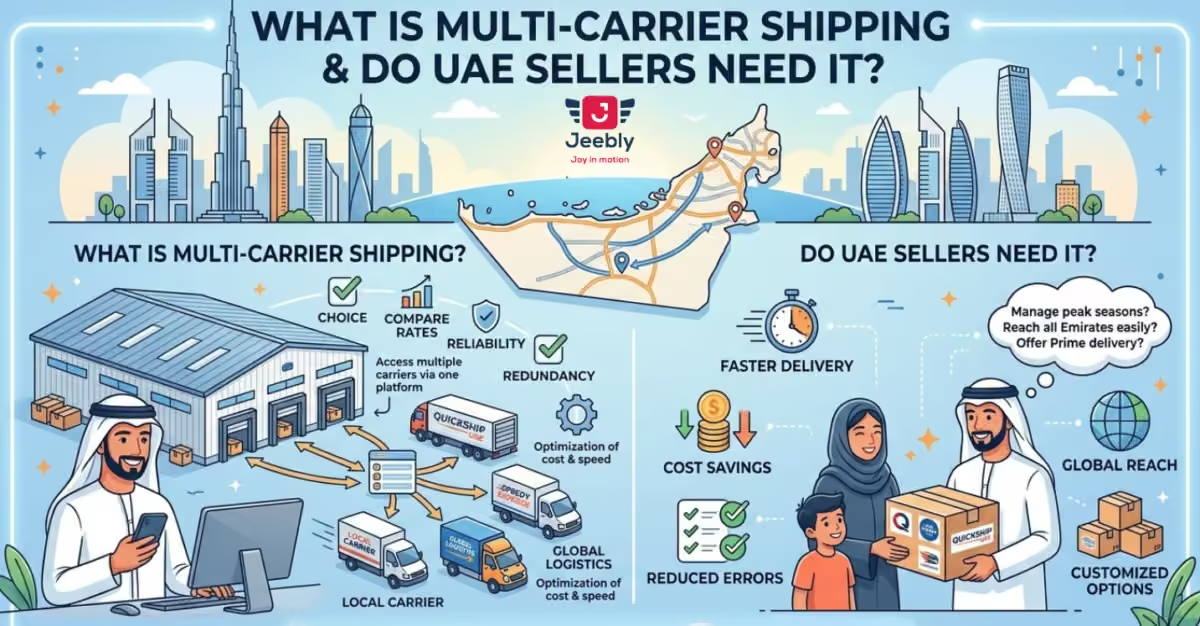
Relying on a single shipping provider can lead to bottlenecks, higher costs, and limited reach. Discover what multi-carrier shipping is and why e-commerce sellers in the UAE need a unified shipping strategy to compare rates, optimize delivery times across all Emirates, and scale their business smoothly.

What Is Multi-Carrier Shipping and Do UAE Sellers Need It?
Multi-carrier shipping means using more than one courier or logistics provider at the same time for routing different orders to different carriers based on cost, speed, coverage, or availability. No single carrier is cheapest, fastest, and most reliable for every parcel on every route. A multi-carrier strategy lets you select the best carrier for each shipment rather than accepting one carrier’s limitations across your entire order volume.
In the UAE, the question is more nuanced. The market has a genuinely different carrier landscape from the US or Europe. Fewer carriers have verified performance data, high COD volumes create cash-flow complexity when split across providers, and the remittance cycle becomes operationally complicated when two or three carriers each hold a share of your COD float.
For many UAE businesses, a capable single-carrier platform covers more use cases than multi-carrier setups in other markets. This guide explains when multi-carrier shipping genuinely adds value for UAE e-commerce businesses and when it adds complexity without the return.
Key Takeaways
- Multi-carrier shipping means routing orders across multiple courier providers using each carrier’s strengths by parcel type, route, or delivery speed rather than applying one carrier uniformly.
- 63% of shoppers say multiple delivery options matter more than fast delivery; 72% want delivery to fit their routine. The customer case for carrier flexibility is clear.
- In the UAE, the primary arguments for multi-carrier shipping are emirate coverage gaps, COD handling differences between carriers, and international vs domestic lane separation.
- UAE businesses shipping fewer orders per day with a uniform product profile typically achieve better results from one capable full-service carrier than from a multi-carrier setup that fragments COD management, tracking, and accountability.
What Is Multi-Carrier Shipping?
Multi-carrier shipping is the practice of integrating multiple courier or logistics providers into a single shipping operation, then routing each order to the most appropriate carrier based on defined criteria. Those criteria can include
- Delivery cost
- Speed
- Coverage zone
- Parcel dimensions
- Product type
- Carrier performance history on a specific route.
In a single-carrier setup, every order goes through one provider, even if that provider isn’t the best fit for that parcel on that day. In a multi-carrier setup, a routing engine, either automated or rule-based, selects the carrier at the point of dispatch.
To understand how carrier strengths differ across the UAE market, Top Delivery Companies in UAE (2026) covers seven major operators by FDSS rate, coverage zone, and COD capability.
What Are the Benefits of Multi-Carrier Shipping?
1) Lower delivery cost per order
Each carrier prices based on its network strengths. A carrier strong on same-day Dubai delivery may charge a premium on inter-emirate routes that a GCC specialist handles more cheaply. Multi-carrier routing captures these lane-specific price differences systematically. Cost of Shipping for a Small Business in UAE (2026) gives you the rate card to model multi-carrier savings.
2) Wider geographic coverage
No single UAE carrier performs equally well across all seven emirates and all GCC cross-border destinations. A GCC freight specialist covers Saudi Arabia efficiently but may not offer same-day Dubai last-mile. Multi-carrier setups close these coverage gaps by routing each order to the carrier with confirmed capability for that specific destination.
3) Resilience against carrier failure
When a single carrier experiences capacity constraints during White Friday, Ramadan, or an operational outage, a business with one carrier relationship has no fallback. A multi-carrier setup lets you reroute orders to an alternative provider without customer-facing delays. At that scale, single-carrier dependency becomes a direct revenue risk.
4) Delivery option flexibility at checkout
Delivery flexibility now outranks speed as a purchase decision factor. Sendcloud’s Peak Season Index 2025 surveyed 2,000 online shoppers in France and the Netherlands and found that 63% prioritised multiple delivery options over fast delivery. 72% expected retailers to offer flexibility that fits around their daily routine.
What Are the Risks and Costs of Multi-Carrier Shipping?
The benefits above are real. So are the following operational costs and UAE-specific factors that amplify them compared to markets where multi-carrier setups are more standardised.
1. COD fragmentation is a cash flow problem
In the UAE, a significant share of e-commerce transactions use cash on delivery. When COD orders are split across two or three carriers, each carrier holds and remits collected cash on its own cycle. The business may receive weekly remittances from one carrier, fortnightly from another, and monthly from a third, holding different amounts of cash at the same time.
At high COD volumes, this may create a complex and unpredictable cash flow picture. A single carrier with weekly COD remittance is often simpler and more capital-efficient than three carriers with different cycles.
2) Multiple tracking experiences for one customer base
Each carrier produces its own tracking page, notification format, and proof-of-delivery standard. A customer who receives a Jeebly-tracked order this week and an Aramex-tracked order next week from the same brand experiences two different post-purchase journeys.
Maintaining a consistent branded tracking experience across multiple carriers requires middleware or a dedicated post-purchase platform, adding both cost and integration complexity.
3) Accountability gaps when something goes wrong
With one carrier, a failed delivery or a damaged parcel has a single point of accountability: the carrier. With multiple carriers, disputes about whether the failure occurred during fulfilment or in transit, or which carrier handled the parcel when it was damaged, create accountability gaps.
For UAE businesses without a dedicated logistics team, managing these disputes across multiple carrier relationships is a real operational burden.
4) Integration overhead
Integrating multiple carriers into a Shopify or WooCommerce store for rate comparison, label generation, tracking aggregation, and NDR management requires either a multi-carrier management platform (adding SaaS cost) or custom API integration (adding development cost). Each additional carrier adds another integration to maintain when the carrier updates its API.
When Does Multi-Carrier Shipping Make Sense for UAE Sellers?
Multi-carrier shipping adds genuine value for UAE businesses in these specific situations.
- Your order mix includes both domestic UAE and international GCC or global shipments. No single carrier handles both UAE domestic last-mile and cross-border logistics equally well. Separating domestic orders from international orders is the most defensible multi-carrier setup for UAE businesses.
- You ship to all seven emirates with demonstrably different carrier performance by zone. If your data shows Carrier A has a 98% FDSS in Dubai but drops to 88% in Ras Al Khaimah, and Carrier B performs the reverse, routing by emirate zone improves your overall FDSS without changing your primary carrier relationship for most orders.
- You ship at high daily volumes with diverse parcel profiles. Rate-shopping delivers meaningful savings when parcel profiles vary significantly in dimensions, weights, and delivery-speed requirements. With 500+ orders per day and varied parcel types, automated carrier selection captures savings a uniform carrier rate cannot.
- You have experienced a single-carrier capacity failure during peak season. If White Friday or Ramadan caused your primary carrier to fail and you had no fallback, adding a secondary carrier with a confirmed peak-season capacity agreement is a resilience investment, not a cost-saving exercise.
- You want to offer multiple delivery options at checkout. If your conversion data shows customers abandon checkout when only one delivery option is available, carrier diversity at checkout requires either a carrier that genuinely offers all service tiers or a multi-carrier setup that routes each option to the right provider.
Multi-carrier shipping also sits within the outbound logistics layer. For a clear map on how multi-carrier decisions fit within the broader supply chain, Types of Logistics Guide covers all six types with a decision framework by business stage.
When Is a Single Full-Service Carrier the Better Choice?
For most UAE e-commerce businesses shipping under 200 orders per day with a reasonably uniform product profile, a single capable carrier typically outperforms a multi-carrier setup on the metrics that matter.
The case for single-carrier:
A single carrier with verified FDSS data, UAE-wide coverage confirmed by emirate, COD with weekly remittance, Shopify or WooCommerce native integration, and returns management built into the same platform removes all the coordination overhead of multi-carrier shipping while covering the geographic and service tier requirements that drive most UAE sellers to consider multiple carriers in the first place.
The question to ask before adding a second carrier: is this problem caused by my carrier not covering a specific use case, or by my carrier not performing well on a use case it claims to cover? If the answer is the latter, adding a second carrier does not fix the underlying performance problem. It routes around it at the cost of added complexity.
| Scenario | Single carrier (recommended) | Multi-carrier (recommended) |
|---|---|---|
| Under 200 orders/day, uniform product type | ✓ | |
| UAE domestic only, all seven emirates | ✓ | |
| UAE domestic + GCC or international | ✓ | |
| High COD volume, cash flow sensitivity | ✓ (one remittance cycle) | |
| 500+ orders/day, varied parcel profiles | ✓ | |
| Peak season resilience needed | ✓ (secondary carrier) | |
| Branded tracking experience required | ✓ | |
| Limited logistics management capacity | ✓ |
For businesses under the multi-carrier threshold, the higher-ROI question is whether the single carrier’s fulfilment platform covers all operational requirements. eCommerce Fulfilment in UAE covers what to look for in a UAE fulfilment partner before the carrier question even becomes relevant.
What Should UAE Businesses Look for in a Multi-Carrier Setup?
If you decide to move to multi-carrier, confirm these requirements before adding a second provider.
- COD remittance alignment. Before splitting COD orders across carriers, confirm each remittance cycle and model the cash flow impact at your current COD volume. If one carrier remits weekly and another fortnightly, the cash flow complexity may outweigh the routing benefit.
- NDR management consistency. Confirm your multi-carrier setup has a consistent NDR workflow regardless of which carrier holds the order. Fragmented NDR management is one of the fastest ways to lose the FDSS gains that prompted the multi-carrier move.
- Performance data per carrier per route. The value of a multi-carrier setup is only realisable if you have FDSS and on-time delivery data at carrier and route level. Without this data, you can’t calibrate routing rules against actual performance.
- Multi-carrier setups require a delivery SLA with each provider. Delivery SLA Guide for UAE Businesses covers how to structure SLAs with measurable metrics, UAE-specific clauses for COD and emirate coverage, and more.Rate comparison at the point of dispatch. The system should compare live rates from each carrier for each order before assigning a carrier, rather than applying static routing rules based on outdated rate assumptions.
- Unified tracking and customer notifications. Customers should receive a single branded tracking experience regardless of which carrier handles their order. This requires either a multi-carrier management platform that aggregates tracking, or a 3PL whose platform normalises tracking across carriers.
How Jeebly Covers Multi-Carrier Needs Through One Platform
For UAE businesses that need domestic last-mile delivery, GCC freight, and returns through different providers, Jeebly’s platform covers all three lanes without requiring multiple carrier relationships.
Jeebly Dash handles domestic UAE last-mile and same-day delivery in Dubai, plus next-day delivery across all seven emirates, with 98% FDSS across 50,000+ daily deliveries. COD remittance is weekly, with a photo ePOD at every drop-off.
Jeebly Haul covers freight and cross-border lanes with in-house customs clearance. The two services connect through the same platform, so businesses importing inventory through Haul and distributing domestically through Dash do not manage two separate carrier relationships or two separate tracking systems.
Jeebly Bizz brings warehousing, returns, and automated dispatch into one platform with native integrations with Shopify, WooCommerce, Magento, ChatFood, and Grubtech. One unified tracking experience for customers, one COD remittance cycle, one point of accountability.
For UAE businesses managing two or three separate carrier relationships and finding the coordination overhead disproportionate to the routing benefit, talk to the Jeebly team about whether consolidation covers your use case more efficiently than a multi-carrier setup.
Conclusion
Multi-carrier shipping delivers real commercial benefits including lower cost per order through rate-shopping, and wider geographic coverage. In the UAE, those benefits are most realisable for businesses with diverse shipment profiles. For businesses with fewer daily orders, uniform product profiles, and UAE-only delivery, a single full-service carrier typically delivers better outcomes with significantly less operational overhead.
The right question is not “should I use multiple carriers?” but “what problem am I trying to solve, and does adding a carrier solve it, or does it add complexity without fixing the root cause?”
For a single-platform setup covering domestic last-mile, GCC freight, and fulfilment with consistent performance data across the board, Jeebly Bizz and Jeebly Dash cover the full chain. Get in touch to discuss your current carrier setup and where consolidation or diversification makes the most sense for your operation.
Frequently Asked Questions

Multi-carrier shipping is the practice of using multiple courier or logistics providers simultaneously, routing each order to the most appropriate carrier based on cost, speed, coverage, or parcel type rather than sending everything through a single provider.
It depends on your order volume, shipment profile, and coverage requirements. Multi-carrier shipping adds the most value when shipments vary significantly in type or destination, particularly when domestic UAE orders and international GCC shipments require different carrier capabilities.
A multi-carrier shipping strategy can cut ecommerce delivery costs by 20–30% through rate-shopping across carriers. These savings are most realisable at high order volumes with diverse parcel profiles, where different carriers are genuinely cheaper on different lanes. At low volumes with uniform parcels, savings rarely offset integration and management costs.
The three primary risks specific to the UAE market are: COD fragmentation (multiple carriers each holding and remitting a share of your COD float on different cycles), accountability gaps when deliveries fail (which carrier held the parcel when damage occurred), and inconsistent customer tracking experiences across providers. Each is manageable with the right platform, but a single capable carrier avoids the overhead entirely.
If you operate genuine multi-carrier shipping, a management platform that aggregates tracking, compares rates, and normalises NDR management across carriers is practically necessary above low volumes. Without it, the coordination overhead of managing multiple carrier dashboards, tracking pages, and COD reconciliations manually eliminates most of the cost and coverage benefit the multi-carrier setup was intended to deliver.
Routes to insightful reads
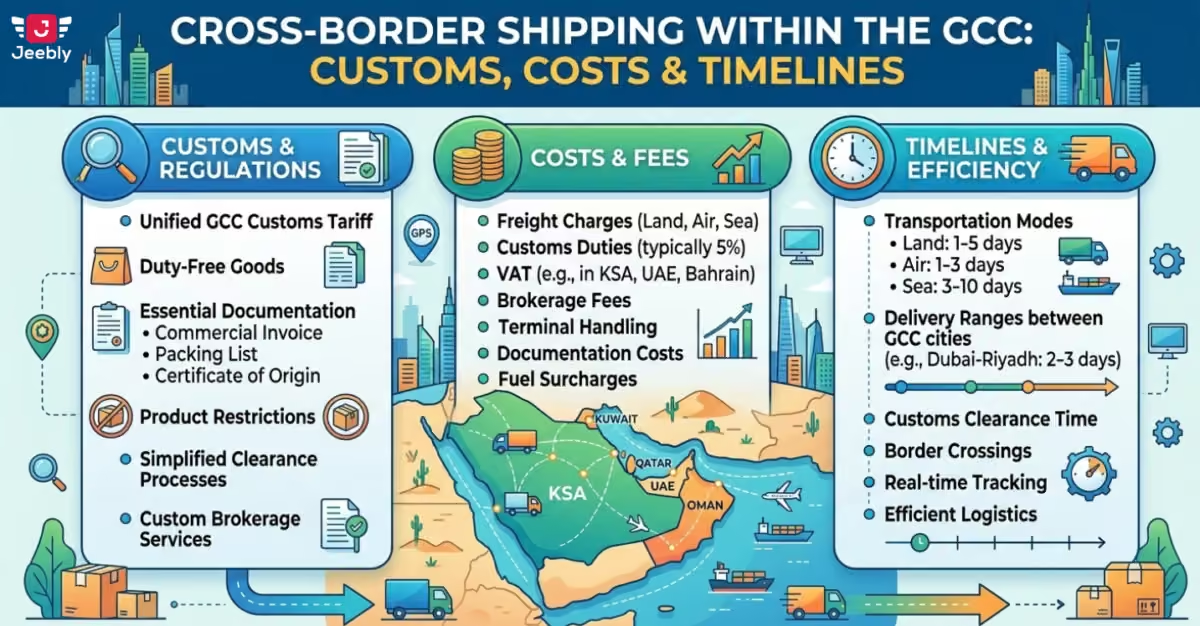
Cross-Border Shipping Within the GCC: Customs, Costs and Timelines
Author:
October 8, 2026
Gearing up for Q4 in the UAE? Navigating peak season demand requires early planning across warehouse operations, carrier capacity, inventory, and customer experience. Explore our 10-step logistics checklist to streamline your supply chain, avoid bottleneck delays, and ensure smooth delivery during the busiest shopping quarter of the year.
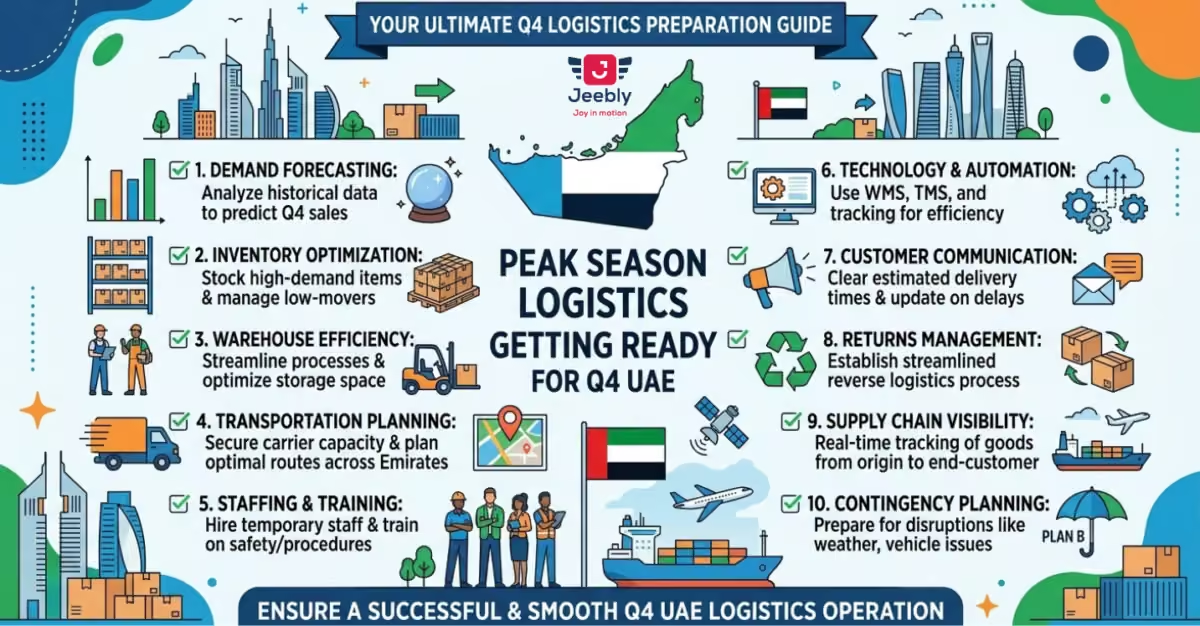
Peak Season Logistics Checklist: Getting Ready for Q4 UAE
Author:
October 5, 2026
Gearing up for Q4 in the UAE? Navigating peak season demand requires early planning across warehouse operations, carrier capacity, inventory, and customer experience. Explore our 10-step logistics checklist to streamline your supply chain, avoid bottleneck delays, and ensure smooth delivery during the busiest shopping quarter of the year.
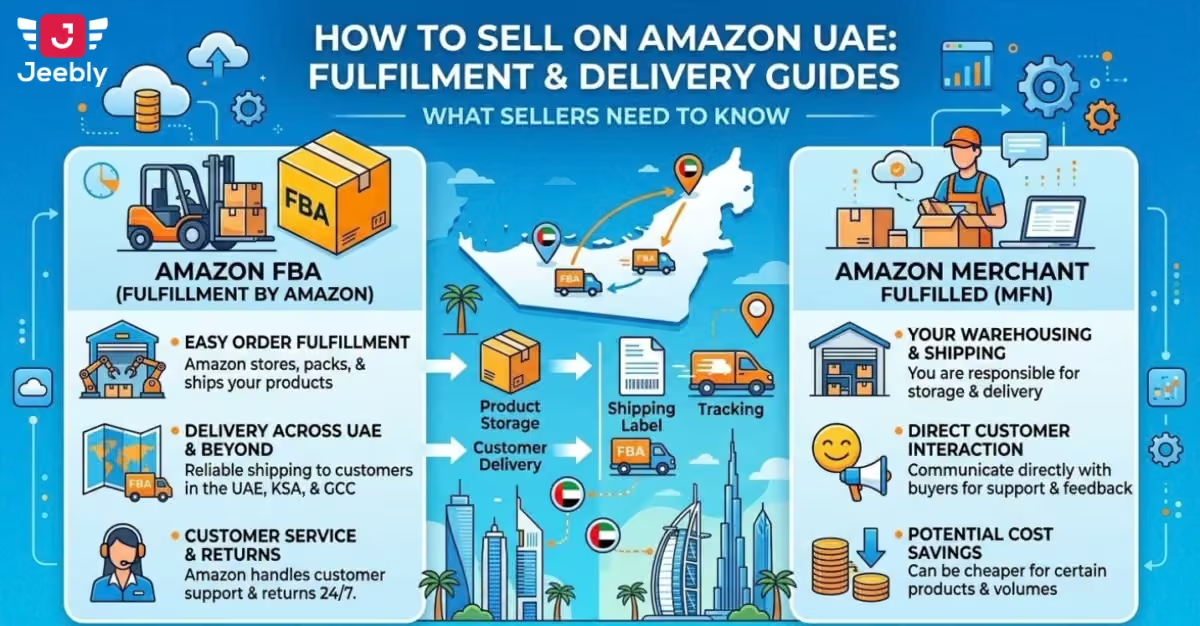
How to Sell on Amazon UAE: What Sellers Need to Know About Fulfilment and Delivery
Author:
September 28, 2026
Selling on Amazon UAE offers massive growth potential, but choosing the right logistics model can make or break your margins. Discover the step-by-step onboarding process for Amazon.ae, explore the core differences between Fulfilment by Amazon (FBA) and Fulfilment by Merchant (FBM), and learn how to optimize your delivery strategy to scale efficiently in the UAE market.

High-Value Item Delivery in the UAE: Insurance, Handling, and What to Ask
Author:
September 25, 2026
Delivering high-value, luxury items in the UAE requires far more than standard shipping—it demands white-glove precision, specialized security protocols, and comprehensive transit insurance. Discover how premium handling, secure transit procedures, and asking the right questions of your courier partner ensure high-ticket goods reach your clients safely, preserving both product integrity and brand trust.
