





Jeebly | Logistics Solutions

Categories
blogs

How UAE businesses cut delivery costs by 30% — real results & strategies

reduce delivery cost in the UAE

How UAE businesses cut delivery costs by 30% — real results & strategies

UAE businesses are reducing delivery costs by 20–30% through three main strategies: route optimisation, reducing failed deliveries through better address data, and consolidating shipments with a third-party logistics provider.

The Challenge

Our client, a growing ecommerce retailer, faced rising delivery costs due to:

•    Inefficient routing that increased fuel and labor expenses
•    Lack of real-time tracking, which led to delivery delays and re-attempts
•    Fluctuating order volumes during peak seasons, causing higher operational overheads
•    Limited visibility into performance metrics, making optimization difficult

The business needed a logistics partner capable of offering scalable, cost-efficient solutions to keep up with growth.

The Jeebly Approach

At Jeebly, we believe that cost optimization is about building smarter systems, not cutting corners. For this client, our strategy combined technology, operational efficiency, and customer-focused solutions to significantly reduce delivery cost in the UAE.

1. Route Optimization

Using advanced algorithms, and predictive analytics, the logistics team at Jeebly Jeebly minimized unnecessary mileage, reduced fuel usage, and ensured faster deliveries. This directly lowered per-delivery costs for the client.

2. Flexible Delivery Models

Instead of a one-size-fits-all solution, we provided both same-day delivery in Dubai and next-day delivery across the UAE. This flexibility gave the client cost-effective options depending on the urgency of orders. For really urgent orders, within Dubai, we also have the express delivery service, wherein orders are delivered within 1-2 hours.

3. Tracking & Visibility

Our technology allowed both the client and their customers to track orders, by getting regular updates on the Jeebly NoW app as well as on the website.. This reduced failed delivery attempts, saving money and improving customer satisfaction.

4. Scalable Workforce & Rider Excellence

By leveraging our trained rider network and Rider Excellence Center, the client had access to scalable manpower during peak times—without maintaining high fixed costs year-round.

5. Data-Driven Insights

Jeebly’s analytics tools provided the client with performance metrics such as delivery success rate, average delivery time, and cost per shipment. These insights helped fine-tune operations for further cost reductions. All the data is visible to the client on the user dashboard.
The client can even access historical data and prepare for times such as peak season according to past data.

The Results

Within just three months of partnering with Jeebly, the client experienced measurable success:

•    22% reduction in overall delivery costs
•    Fewer failed deliveries, leading to higher customer satisfaction
•    Improved average delivery time, strengthening brand reputation
•    More predictable costs, enabling better financial planning

This case demonstrates how Jeebly helps businesses reduce delivery cost in the UAE while simultaneously boosting efficiency and customer loyalty.

Why It Matters ?

For SMEs and large enterprises alike, logistics is no longer just about moving goods—it’s about enabling growth. High delivery costs can restrict scalability, but with the right partner, businesses can unlock savings while delivering a better experience.

At Jeebly, we’re committed to building logistics systems that empower businesses. By combining innovation with reliability, we ensure every client gets cost savings without compromising service quality.

Final Thoughts

If you’re looking to reduce delivery cost in the UAE, Jeebly is the partner to trust. Our case studies prove that with the right technology, flexible delivery options, and customer-first approach, logistics can shift from being an expense to becoming a growth driver.

Frequently Asked Questions

The amount a business can save depends on shipment volume, delivery frequency, routing efficiency, and operational processes. Many businesses reduce delivery costs by consolidating shipments, optimizing routes, reducing failed deliveries, and partnering with logistics providers that offer scalable pricing and technology-driven operations.

Last-mile delivery is often the most expensive stage of the logistics journey because it involves transporting individual orders directly to customers. Costs are driven by factors such as fuel, driver time, traffic congestion, failed delivery attempts, route inefficiencies, and the need to meet customer delivery expectations.

Route optimization tools reduce costs by identifying the most efficient delivery routes based on distance, traffic conditions, delivery windows, and order density. This helps businesses lower fuel consumption, reduce driver hours, improve vehicle utilization, and complete more deliveries within the same operational timeframe.

Businesses can reduce failed deliveries by collecting accurate address information, confirming customer details before dispatch, providing real-time tracking updates, and maintaining clear communication throughout the delivery process. Flexible delivery scheduling and proof-of-delivery systems can also improve first-attempt delivery success rates.

For many businesses, partnering with a third-party logistics (3PL) provider can be more cost-effective than operating an in-house delivery network. A 3PL can provide access to established infrastructure, delivery fleets, technology platforms, operational expertise, and economies of scale, helping businesses reduce overhead costs while improving delivery performance.

Routes to insightful reads

Delivery SLA guide for UAE businesses showing service level agreements, delivery performance metrics, on-time delivery targets and logistics standards.
 Delivery SLA Guide for UAE Businesses: What to Expect and How to Set Standards

A clear delivery Service Level Agreement (SLA) sets the expectations for speed, reliability, and performance between businesses and their logistics partners. This guide explains what a delivery SLA should include, the key metrics to track, and how UAE businesses can set realistic standards to improve customer satisfaction and delivery performance.

Read More
Dangerous goods and restricted items that cannot be shipped by courier in the UAE, including hazardous materials, prohibited products and customs restrictions.
Dangerous Goods and Restricted Items: What You Cannot Ship by Courier in the UAE

Shipping prohibited or restricted items can lead to delays, fines, shipment rejection, or legal consequences. This guide explains which dangerous goods and restricted items cannot be shipped by courier in the UAE, the regulations businesses should know, and how to stay compliant with UAE customs and courier requirements.

Read More
How to manage eCommerce returns in the UAE with reverse logistics, return policies, refunds and inventory restocking
How to Manage eCommerce Returns in UAE: Strategy, Policy and Logistics

Efficient returns management is essential for every UAE eCommerce business. From creating a customer-friendly return policy to streamlining reverse logistics and processing refunds quickly, this guide explains how to reduce return costs, improve customer satisfaction, and turn returns into a competitive advantage.

Read More
A medium-sized Jeebly delivery and moving truck parked outside a warehouse with its back doors wide open and a hydraulic lift gate lowered to the ground. Inside the cargo area, brown cardboard boxes are stacked neatly. The side of the truck features a dark blue advertisement wrap with the Jeebly logo, displaying a hand holding a house model under the text "Always on the Move from parcels to homes" and a call to action to "Explore it all on Jeebly NoW".
Packers and Movers in Dubai: What to Look for and How to Choose

Relocating in Dubai doesn’t have to be stressful. Whether you are moving apartments in Dubai Marina or upgrading your office space, discover the essential factors to look for in a professional moving company—from licensing and insurance to transparent pricing—and learn exactly how to choose the right team for a seamless move.

Read More
Infographic titled "Ecommerce Fulfilment in UAE: How It Works and What Businesses Should Look For." The left side shows a 5-step workflow: Online Store, Inventory, Picking & Packing, Dispatch, and Last Mile Delivery. The center features a map of the UAE with iconic cityscapes. The right side lists business requirements: Reliability & Speed, Advanced Technology, Real-Time Tracking, Scalability, and Customer Support.
eCommerce Fulfilment in UAE: How It Works and What Businesses Should Look For

Master your logistics strategy in the Middle East. Discover how e-commerce fulfillment works in the UAE—from warehousing to last-mile delivery—and learn the top 5 features your business needs from a fulfillment partner to scale successfully.

Read More
Categories
blogs

How last-mile delivery works in UAE: warehouse to door (2026 guide)

How Last Mile Delivery UAE works in reality?​

How last-mile delivery works in UAE: warehouse to door (2026 guide)

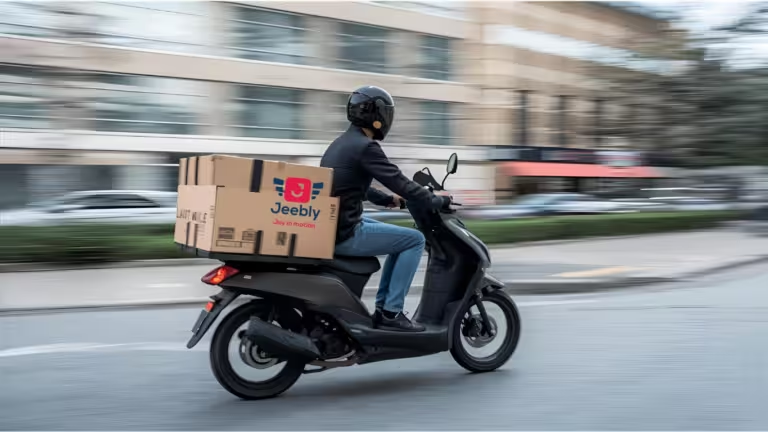
Last-mile delivery is the final leg of a shipment’s journey — from a local distribution hub to the customer’s door. In UAE, this step typically takes 2–4 hours (same-day) or next business day for standard deliveries.

Behind that experience, however, lies one of the most complex stages of the supply chain: last-mile delivery in the UAE.

This stage involves moving a parcel from a warehouse or fulfillment hub directly to the customer’s doorstep. It sounds straightforward, but in reality it requires a coordinated system of technology, infrastructure, and operational planning.

In a market like the UAE, where customers expect fast delivery, accurate ETAs, and flexible payment methods such as Cash on Delivery (COD), the last mile is where logistics performance is truly tested.

For a broader understanding of how the final delivery stage works, you can also read our guide on what is last-mile delivery and why it matters

Why Last-Mile Delivery Matters for Businesses in the UAE

The UAE logistics environment presents a unique set of operational conditions.

Cities such as Dubai and Abu Dhabi combine high density urban infrastructure with a large expatriate population, rapidly growing e commerce demand, and diverse residential communities. According to the Dubai Department of Economy and Tourism, the UAE is one of the fastest growing digital commerce markets in the region.

For businesses, efficient last mile delivery in the UAE directly impacts several areas:

Customer satisfaction

The delivery experience is often the final interaction customers have with a brand. A smooth and reliable delivery builds trust and encourages repeat purchases.

Faster delivery expectations

Same day and next day delivery have become the norm in many sectors, from e commerce and fashion to groceries and electronics.

Business scalability

Companies that build efficient last mile logistics systems are better positioned to scale operations as order volumes grow. 
Businesses that rely on strong delivery partners also reduce operational friction and avoid issues such as failed deliveries or missed time windows. Our article on how small businesses can reduce failed deliveries in the UAE explores this further. 

How Last-Mile Delivery Works in Practice

While customers see a single delivery event, the operational process behind it involves several stages working together.

1. Order Capture and System Integration

The process begins when a customer places an order through a website, marketplace, or social commerce platform.

Once confirmed, the order details, including delivery address, payment method, and product information, are automatically transferred into the logistics system.

For businesses using integrated logistics platforms, this step happens through API based order management systems, which eliminate manual order entry and reduce errors.

2. Fulfillment and Dispatch Preparation

After the order is received, the fulfillment stage begins.

Products are picked from inventory, packed securely, and prepared for dispatch. Depending on the logistics model, this can happen in:

* Centralized warehouses
* Ddistribution hubs
* Mlicro-fulfilment centres near demand zones

Orders are then assigned to delivery batches based on delivery zones and time windows.

3. Route Planning and Rider Allocation

Route optimization is one of the most critical steps in last-mile delivery.

Delivery management systems analyze multiple variables before assigning routes, including:

* Traffic conditions
* Delivery density within neighborhoods
* Rider availability
* Promised delivery windows

Advanced logistics platforms use AI-powered route optimization to continuously adjust routes throughout the day.

These systems also use traffic and mapping data from sources such as Google Maps routing APIs, which help logistics platforms predict travel times more accurately.

4. Dispatch and Delivery Execution

Once routes are finalized, riders or drivers collect the assigned parcels and begin the delivery process.

During this stage, several operational elements work together:

* Automated customer notifications
* Delivery status updates
* ETA tracking
* COD collection if required

In the UAE, Cash on Delivery remains a widely used payment method, especially for first time customers. According to Statista, COD still accounts for a large share of e-commerce payments in the Middle East.

Because of this, delivery riders must also manage secure payment collection during the delivery process.

5. Proof of Delivery and Completion

The final step is confirmation that the order has been successfully delivered.

Most modern logistics systems provide digital proof of delivery, which may include:

* Customer signatures
* Delivery confirmation photos
* Electronic payment records

This information is stored in the logistics platform and shared with businesses for tracking and reconciliation purposes

Operational Challenges in UAE Last-Mile Delivery

Despite technological advancements, last-mile delivery in the UAE presents several operational challenges.

Urban Traffic and Delivery Density

Major cities such as Dubai often experience heavy traffic congestion, especially during peak hours. This makes route optimization essential for maintaining delivery timelines.

High Customer Expectations

Customers increasingly expect:

* Precise delivery windows
* Proactive delivery updates
* Real time communication

If customers do not receive clear updates, even minor delays can lead to complaints.


Addressing and Location Accuracy

The UAE does not rely on a universal postal code system. Delivery accuracy often depends on building names, landmarks, or map pins. Logistics systems must therefore support pin-based navigation and driver communication workflows.
If addresses are entered incorrectly, delivery failures increase significantly. Our guide on Dubai address format for reliable deliveries explains how businesses can avoid these issues. 


Temperature Sensitive Deliveries

Many industries require controlled delivery environments.

These include:

* Pharmaceuticals
* Cosmetics
* Food and beverage products

Without temperature-controlled logistics systems, product quality may degrade during transport.

You can read more about this in our article on temperature-controlled logistics in the UAE.

How Jeebly Supports Last Mile Delivery in UAE ?

At Jeebly, last-mile delivery operations follow a structured workflow designed to support both speed and reliability.

Step 1: Order Integration

Orders automatically flow into the Jeebly logistics platform through API integrations with e-commerce stores and marketplaces.

Step 2: Smart Fulfillment Allocation

Orders are assigned to the nearest fulfilment hub or micro-fulfilment centre based on inventory availability and delivery location.

Step 3: AI-Powered Route Optimization

Advanced routing systems analyze traffic patterns and delivery clusters to create efficient delivery routes.

Step 4: Dispatch and Rider Allocation

Delivery riders receive assignments through the Jeebly system, which provides navigation assistance and delivery instructions.

Step 5: Delivery Updates and ETA Notifications


Customers receive automated delivery updates and accurate ETA notifications throughout the delivery journey.

These updates help reduce missed deliveries and customer complaints.

Step 6: COD Collection and Delivery Confirmation

For Cash on Delivery orders, riders collect payments securely and generate digital proof of delivery, ensuring accurate financial reconciliation

The Future of Last-Mile Delivery in the UAE

The UAE logistics ecosystem continues to evolve rapidly.

Emerging technologies such as AI-powered logistics platforms, electric delivery fleets, and micro-fulfillment networks are reshaping how deliveries operate in dense urban environments.

Government initiatives supporting smart mobility and sustainability also encourage innovation in logistics systems. You can explore the UAE’s logistics infrastructure initiatives on the UAE Government Portal

For businesses, the key to success lies in building delivery systems that balance speed, reliability, and operational efficiency.

Conclusion

Last-mile delivery may be the final step of logistics, but it is the stage where customer experience is truly defined.

From order capture and fulfilment to route optimization and payment collection, every step must work together seamlessly to ensure successful deliveries.

In a market like the UAE—where customer expectations for delivery speed and reliability are among the highest in the world—businesses that invest in efficient last-mile delivery systems gain a significant competitive advantage.

At Jeebly, we continue to build logistics solutions designed for this environment—helping businesses deliver faster, operate smarter, and scale with confidence.

Frequently Asked Questions

Last-mile delivery is the final stage of the shipping process, where a package is transported from a distribution hub or fulfillment center to the customer’s doorstep. It is often the most visible part of the delivery journey and plays a major role in customer satisfaction.

In the UAE, last-mile delivery typically begins when a shipment reaches a local distribution center. The package is then assigned to a delivery driver, routed for delivery, and transported to the customer’s address. Many logistics providers use route optimization, real-time tracking, and delivery notifications to improve speed and efficiency.

Last-mile delivery can be one of the most expensive parts of the supply chain because it involves individual deliveries to multiple locations. Costs are influenced by factors such as fuel, driver time, traffic conditions, delivery density, failed delivery attempts, and the need for fast or same-day service.

Last-mile delivery times in Dubai vary depending on the service selected, delivery location, and order processing time. Many deliveries are completed on the same day or next day, while scheduled and standard deliveries may take longer. Delivery timelines can also be affected by traffic, weather conditions, and recipient availability.

Logistics companies improve efficiency by using route optimization technology, micro-fulfilment centres, automated dispatch systems, and real-time delivery updates. These tools help reduce delivery times, minimize failed attempts, and improve overall operational performance.

Routes to insightful reads

Delivery SLA guide for UAE businesses showing service level agreements, delivery performance metrics, on-time delivery targets and logistics standards.
 Delivery SLA Guide for UAE Businesses: What to Expect and How to Set Standards

A clear delivery Service Level Agreement (SLA) sets the expectations for speed, reliability, and performance between businesses and their logistics partners. This guide explains what a delivery SLA should include, the key metrics to track, and how UAE businesses can set realistic standards to improve customer satisfaction and delivery performance.

Read More
Dangerous goods and restricted items that cannot be shipped by courier in the UAE, including hazardous materials, prohibited products and customs restrictions.
Dangerous Goods and Restricted Items: What You Cannot Ship by Courier in the UAE

Shipping prohibited or restricted items can lead to delays, fines, shipment rejection, or legal consequences. This guide explains which dangerous goods and restricted items cannot be shipped by courier in the UAE, the regulations businesses should know, and how to stay compliant with UAE customs and courier requirements.

Read More
How to manage eCommerce returns in the UAE with reverse logistics, return policies, refunds and inventory restocking
How to Manage eCommerce Returns in UAE: Strategy, Policy and Logistics

Efficient returns management is essential for every UAE eCommerce business. From creating a customer-friendly return policy to streamlining reverse logistics and processing refunds quickly, this guide explains how to reduce return costs, improve customer satisfaction, and turn returns into a competitive advantage.

Read More
A medium-sized Jeebly delivery and moving truck parked outside a warehouse with its back doors wide open and a hydraulic lift gate lowered to the ground. Inside the cargo area, brown cardboard boxes are stacked neatly. The side of the truck features a dark blue advertisement wrap with the Jeebly logo, displaying a hand holding a house model under the text "Always on the Move from parcels to homes" and a call to action to "Explore it all on Jeebly NoW".
Packers and Movers in Dubai: What to Look for and How to Choose

Relocating in Dubai doesn’t have to be stressful. Whether you are moving apartments in Dubai Marina or upgrading your office space, discover the essential factors to look for in a professional moving company—from licensing and insurance to transparent pricing—and learn exactly how to choose the right team for a seamless move.

Read More
Infographic titled "Ecommerce Fulfilment in UAE: How It Works and What Businesses Should Look For." The left side shows a 5-step workflow: Online Store, Inventory, Picking & Packing, Dispatch, and Last Mile Delivery. The center features a map of the UAE with iconic cityscapes. The right side lists business requirements: Reliability & Speed, Advanced Technology, Real-Time Tracking, Scalability, and Customer Support.
eCommerce Fulfilment in UAE: How It Works and What Businesses Should Look For

Master your logistics strategy in the Middle East. Discover how e-commerce fulfillment works in the UAE—from warehousing to last-mile delivery—and learn the top 5 features your business needs from a fulfillment partner to scale successfully.

Read More
Categories
blogs

What to Look for in a Reliable Logistics Company: Key Factors

What to Look for in a Reliable Logistics Company: Key Factors

Why Choosing a Reliable Logistics Company in UAE Matters

A logistics partner does much more than transport packages. The right provider becomes an extension of your business, representing your brand during the most important customer touchpoint, delivery.

Working with a reliable logistics company in UAE helps you:

1. Ensure timely and secure deliveries
2. Improve customer satisfaction and retention
3. Gain real time visibility into shipments
4. Scale operations during peak seasons
5. Reduce operational complexity

Optimize overall logistics costs

According to the UAE Ministry of Economy, the country’s e commerce and logistics sectors continue to grow rapidly, increasing the need for dependable logistics infrastructure and partners.

When deliveries are consistent and efficient, customers trust your brand. When they are not, even the best products and pricing cannot compensate.

Key Factors to Consider When Choosing a Reliable Logistics Company in UAE

1. Industry Experience and Local Market Knowledge

Experience is one of the most important indicators of reliability. A logistics company that understands your industry can anticipate challenges and handle shipments with care.

Different industries require different logistics expertise:

1. Food and pharma businesses need temperature controlled delivery
2. E commerce brands require fast last mile fulfillment
3. Retailers depend on reliable scheduled distribution

SMEs need flexible and scalable logistics

A reliable logistics company in UAE should also understand local delivery routes, traffic conditions, regulations, and customer expectations. Local expertise helps reduce delays and improves delivery accuracy.

Companies like Jeebly specialize in last mile delivery, SME logistics, and temperature controlled transportation, making them well suited for businesses operating across the UAE.

2. Range of Logistics Services

Working with multiple vendors for storage, transportation, and delivery can lead to miscommunication and inefficiencies. A strong logistics partner should offer a comprehensive range of services.

Look for a provider that offers:

1. Same day and next day delivery
2. Scheduled deliveries
3. Temperature controlled logistics
4. Warehousing and fulfillment
5. Cash on delivery (COD) services
6. Reverse logistics
7. Packaging and labeling

A full service reliable logistics company in UAE can simplify your supply chain and reduce operational friction.

Jeebly, for example, provides end to end logistics solutions including same day delivery, COD handling, and specialized delivery services for social sellers and SMEs.

You can also explore Jeebly’s blog on What is Last Mile Delivery and Why it Matters in the UAE to understand how last mile delivery impacts customer experience.

3. Technology and Real Time Tracking

Technology plays a major role in modern logistics. Businesses need real time visibility into shipments to manage operations effectively and keep customers informed.

A reliable logistics company in UAE should provide:

1. Real time tracking dashboards
2. GPS-enabled fleet monitoring
3. Automated delivery updates
4. Warehouse management systems
5. Route optimization tools

Performance analytics

Real time tracking reduces customer queries and improves transparency. It also allows businesses to respond quickly to delays or delivery issues.

Jeebly uses advanced tracking systems that enable both businesses and customers to monitor deliveries in real time, improving communication and reducing uncertainty.

For broader industry insights, the World Bank, highlights how digital logistics tools improve efficiency and reduce delivery times across supply chains.

4. Reliability and On Time Performance

Reliability is the foundation of any logistics partnership. A reliable logistics company in UAE should consistently meet delivery timelines and handle shipments safely.

When evaluating reliability, consider:

1. On time delivery rates
2. Service coverage
3. Claims and damage history
4. Emergency handling capabilities
5. Customer reviews

Consistent delivery performance builds trust with customers and protects your brand reputation.

Jeebly focuses on optimized routes, trained delivery teams, and efficient planning to ensure reliable delivery performance across the UAE.

5. Customer Support and Communication

Strong communication ensures smooth logistics operations. A good logistics partner should provide clear updates, quick responses, and reliable support.

Look for companies that offer:

1. Dedicated account management
2. Multilingual customer support
3. Proactive delivery updates
4. Quick issue resolution

Effective communication prevents small issues from becoming major problems. Jeebly offers multilingual customer service and dedicated support teams, helping businesses resolve delivery concerns quickly and maintain customer satisfaction.

6. Cost Transparency and Value for Money

Pricing is important, but it should not be the only factor when choosing a logistics provider. The cheapest option may lead to delays, poor service, or hidden costs.

When evaluating costs, look for:

1. Transparent pricing structures
2. No hidden charges
3. Flexible service plans
4. Value added services

A reliable logistics company in UAE should provide clear pricing and help you understand the total cost of logistics operations.
Jeebly focuses on transparent pricing and flexible delivery options that support businesses at different stages of growth.
You can also read Reducing Delivery Costs: A Client Case Study to see how businesses optimize logistics expenses.

7. Safety, Compliance, and Handling Standards

Safety and compliance are essential in logistics. A reliable provider should follow industry standards and ensure shipments are handled correctly.

1. Important factors include:
2. Secure packaging and handling
3. Compliance with UAE regulations
4. Insurance coverage
5. Trained delivery staff
6. Temperature controlled infrastructure

For businesses shipping sensitive goods, proper handling is critical.

Jeebly follows strict safety protocols and compliance standards, ensuring that shipments are handled securely and delivered in optimal condition.

Jeebly’s Key Logistics Advantages

Jeebly offers several features that make it a strong reliable logistics company in UAE:

1. Same day delivery across Dubai
2. Temperature controlled delivery solutions
3. Real time tracking and visibility
4. Cash on delivery support
5. Scalable logistics for SMEs
6. Reliable last mile delivery network
7. Multilingual customer support
8. Flexible solutions for growing businesses

These features help businesses improve delivery performance, reduce delays, and enhance customer satisfaction.

How to Evaluate a Logistics Partner

Before choosing a logistics partner, take time to evaluate their capabilities:

1. Request detailed service information
2. Check customer reviews and case studies
3. Evaluate tracking and technology tools
4. Review pricing transparency
5. Test customer support responsiveness
6. Start with a trial shipment if possible

Choosing a reliable logistics company in UAE requires careful evaluation, but the right partner can transform your operations.

Conclusion

Logistics plays a crucial role in business success, especially in a fast growing market like the UAE. Partnering with a reliable logistics company in UAE ensures that your products reach customers on time, in good condition, and with full visibility.

From real-time tracking to temperature-controlled delivery and scalable solutions, the right logistics provider can help you streamline operations and improve customer satisfaction.

Jeebly offers fast, reliable, and technology-driven logistics solutions tailored to businesses of all sizes. Whether you need same-day delivery, warehousing, or last-mile support, Jeebly helps you build a stronger and more efficient logistics network.

If you’re ready to optimize your supply chain and improve delivery performance, partnering with a reliable logistics company like Jeebly can help your business grow with confidence.

Routes to insightful reads

Delivery SLA guide for UAE businesses showing service level agreements, delivery performance metrics, on-time delivery targets and logistics standards.
 Delivery SLA Guide for UAE Businesses: What to Expect and How to Set Standards

A clear delivery Service Level Agreement (SLA) sets the expectations for speed, reliability, and performance between businesses and their logistics partners. This guide explains what a delivery SLA should include, the key metrics to track, and how UAE businesses can set realistic standards to improve customer satisfaction and delivery performance.

Read More
Dangerous goods and restricted items that cannot be shipped by courier in the UAE, including hazardous materials, prohibited products and customs restrictions.
Dangerous Goods and Restricted Items: What You Cannot Ship by Courier in the UAE

Shipping prohibited or restricted items can lead to delays, fines, shipment rejection, or legal consequences. This guide explains which dangerous goods and restricted items cannot be shipped by courier in the UAE, the regulations businesses should know, and how to stay compliant with UAE customs and courier requirements.

Read More
How to manage eCommerce returns in the UAE with reverse logistics, return policies, refunds and inventory restocking
How to Manage eCommerce Returns in UAE: Strategy, Policy and Logistics

Efficient returns management is essential for every UAE eCommerce business. From creating a customer-friendly return policy to streamlining reverse logistics and processing refunds quickly, this guide explains how to reduce return costs, improve customer satisfaction, and turn returns into a competitive advantage.

Read More
A medium-sized Jeebly delivery and moving truck parked outside a warehouse with its back doors wide open and a hydraulic lift gate lowered to the ground. Inside the cargo area, brown cardboard boxes are stacked neatly. The side of the truck features a dark blue advertisement wrap with the Jeebly logo, displaying a hand holding a house model under the text "Always on the Move from parcels to homes" and a call to action to "Explore it all on Jeebly NoW".
Packers and Movers in Dubai: What to Look for and How to Choose

Relocating in Dubai doesn’t have to be stressful. Whether you are moving apartments in Dubai Marina or upgrading your office space, discover the essential factors to look for in a professional moving company—from licensing and insurance to transparent pricing—and learn exactly how to choose the right team for a seamless move.

Read More
Infographic titled "Ecommerce Fulfilment in UAE: How It Works and What Businesses Should Look For." The left side shows a 5-step workflow: Online Store, Inventory, Picking & Packing, Dispatch, and Last Mile Delivery. The center features a map of the UAE with iconic cityscapes. The right side lists business requirements: Reliability & Speed, Advanced Technology, Real-Time Tracking, Scalability, and Customer Support.
eCommerce Fulfilment in UAE: How It Works and What Businesses Should Look For

Master your logistics strategy in the Middle East. Discover how e-commerce fulfillment works in the UAE—from warehousing to last-mile delivery—and learn the top 5 features your business needs from a fulfillment partner to scale successfully.

Read More

    Powered by