






Jeebly | Logistics Solutions

Categories
blogs

Tips on how to pack a courier parcel in UAE

How to Pack a Courier Parcel in UAE: 10 Tips That Prevent Damage

How to Pack a Courier Parcel in UAE: 10 Tips That Prevent Damage

Packing a parcel for courier delivery in the UAE takes more thought than most people expect. It’s a market handling tens of billions of dollars in shipments annually, with the courier, express, and parcel sector alone valued at nearly $28.7 billion in 2025. 

Add to that the fact that e-commerce already drives over 42% of parcel demand and continues to surge, putting pressure on faster, multi-point sorting and last-mile delivery systems. Between these, a poorly packed box risks a repeat delivery, a lost customer, or a claim that could have been avoided entirely.

These 10 tips cover everything from choosing the right box to sealing for desert conditions. Your parcels should arrive the way they were meant to: intact, on time, and bringing joy.

What Makes UAE Parcel Packing Different

The UAE is not a standard shipping environment. Dubai’s own official tourism guide puts the city’s average summer temperature at around 41°C, which helps explain why packaging that works in milder markets can fail faster here.

That temperature cycling weakens rubber-based adhesives, causes materials to expand and contract, and creates condensation inside sealed boxes. This is particularly damaging to electronics and cosmetics.

Add to that the fact that Dubai and Abu Dhabi sit at the centre of high-volume logistics trade. Packages pass through multiple sorting facilities, each involving mechanical conveyor handling and stacking pressure. 

Shipping during Ramadan adds another layer to this. Customer behaviour shifts overnight, order spikes hit after iftar, and delivery windows tighten. If you are planning shipments through the holy month, read how UAE delivery changes during Ramadan before you dispatch.

At the end, the packing standards here are all about matching what the delivery route actually demands.

Top 10 Tips On How to Pack a Parcel For Courier

Packaging failures almost always come down to the same handful of mistakes: wrong box size, wrong tape, insufficient cushioning for temperature changes, and missing seals on secondary seams. 

The tips below address each one directly.

Tip 1: Right-Size Your Box

An oversized box causes internal movement. Movement causes damage regardless of how much cushioning you add. 

In the UAE courier market, light parcels accounted for 58.1% of volume in 2025, largely driven by e-commerce categories such as fashion and micro-electronics. That makes right-sizing and internal stabilisation even more important.

* Choose a box with 5–10 cm clearance around the item on all sides. That gap is for cushioning, not air. If you only have a larger box, fill every void completely before sealing.
* For anything above 3 kg, use double-wall corrugated. Single-wall cardboard compresses under stacking loads, especially when it has absorbed ambient humidity from sorting facilities.

Tip 2: Choose Closed-Cell Foam Over Bubble Wrap

Standard bubble wrap is the default, but not the right choice for UAE conditions. It loses cushioning effectiveness at sustained temperatures above 40°C, which is routine here during summer months.

* Closed-cell polyethene foam maintains its protective structure regardless of heat. Use it as your base layer and around the sides. 
* For fragile items like glassware, add edge protectors on corners before placing them in the box.
* For electronics specifically, pair foam with anti-static wrap. 

Physical protection and electrostatic protection are two different requirements, and standard foam addresses neither.

Tip 3: Wrap Every Item Separately

If you are shipping multiple items, they cannot touch each other in transit. Two items without individual wrapping will damage each other before they are damaged by any external impact.

* Wrap each piece fully. Pay attention to protruding parts, sharp edges, and anything with a screen or lens. 
* For documents or flat items, use rigid cardboard backing on both sides before placing them in the envelope or box.

Tip 4: Switch to Acrylic Tape

Standard packaging tape uses a rubber-based adhesive that loses its bond in high temperatures. In UAE summer conditions, a fully taped box can open inside the delivery van before it reaches the first handover point.

* Acrylic-based tape withstands temperatures up to 90°C and is available from any stationery or packaging supplier in the UAE. 
* Apply in an H-pattern: one strip along the centre seam, then parallel strips along both box edges. This distributes stress evenly across the flap joints.

Tip 5: Seal All Four Seams, Not Just the Top

Most people seal the top and consider the box done. The bottom seam, the vertical corner edges, and any pre-existing joins in the cardboard are where structural failures actually happen.

* Before loading anything, tape the bottom with two strips. Run tape down all four vertical corners of the box after packing. A box sealed only at the top is structurally half-finished.

Tip 6: Balance the Weight Inside

Uneven weight distribution causes boxes to lean in transit and takes more impact on the heavy side. Place the heaviest item at the centre bottom. Build lighter items around it.

* Before sealing, pick up the box and tilt it gently in both directions. If you feel a single mass shifting, reorganise. 
* This matters more for parcels travelling between emirates. Longer routes mean more handling transitions and more cumulative impact.

Tip 7: Label on Atleast Two Faces

A label on the top only gets covered when boxes stack. Sorting systems and riders scan from multiple angles, and parcels get moved upside down.

* Print recipient details on at least two faces of the box. For fragile items, apply Fragile and This Way Up labels on all four vertical sides. 
* They do not guarantee gentle handling, but they do establish clear instructions, which matters if you need to support a damage claim later.

Jeebly’s riders upload a delivery photograph as proof of completion. Clear, visible labelling ensures the photograph captures the correct information at handover.

Tip 8: Add Desiccants for Electronics, Pharma, & Cosmetics

Condensation forms inside sealed boxes when parcels move between air-conditioned facilities and outdoor temperatures. For electronics, cosmetics, and pharmaceuticals, that moisture is as damaging as physical impact.

* One or two silica gel desiccant packets placed inside before sealing absorb that moisture through the transit cycle. They cost next to nothing relative to what they protect.
* For temperature-sensitive goods like chilled skincare, pharmaceutical products, or food items, packaging alone is not enough. Jeebly’s temperature-controlled delivery maintains conditions of up to 15°C across all seven emirates, providing a reliable delivery solution.

Tip 9: Do the Shake Test

Pick up the sealed box and gently shake it. If you hear or feel movement inside, the cushioning is not sufficient. Open it, fill the gaps, close it again, and retest.

* This check catches the most overlooked damage cause: items with side cushioning but no vertical constraint, which bounce along the height of the box during handling. 
* A properly packed box makes no detectable sound when shaken.

Tip 10: Match Packaging to the Delivery Type

Same-day bike delivery through Jeebly Dash has different requirements from a freight shipment to Abu Dhabi.

* Bike deliveries handle lighter loads, so secure closure and dimensional accuracy matter more than industrial-grade cushioning. 
* Freight shipments via Jeebly Haul, for items weighing more than 20 kg or measuring more than 100×50×50 cm, require load-bearing packaging and a custom quotation before booking.

Packing to the maximum every time wastes cost. Packing to the route and weight protects the parcel and keeps shipping costs accurate, since UAE couriers charge based on dimensional weight.

Quick Packaging Material Checklist by Item Type

Different items have genuinely different requirements. Before reaching for the nearest box, match the material to what you are shipping.

Item Type Box Cushioning Tape Extra Step
Electronics Double-wall Closed-cell foam + anti-static wrap Acrylic Desiccant inside
Fragile (glass, ceramic) Double-wall Multi-layer wrap + edge protectors Acrylic Fragile label ×4 sides
Documents Rigid envelope Cardboard backing, both sides Standard Waterproof sleeve if cross-emirate
Clothing / soft goods Single-wall Minimal Standard None needed
Perishables / food Insulated box Foam lining Acrylic Temperature-controlled delivery
Cosmetics / pharma Single or double-wall Foam + desiccant Acrylic Desiccant inside
High-value items Double-wall Professional foam insert Acrylic + tamper-evident Consider Jeebly Plus

Different items have genuinely different requirements. Before reaching for the nearest box, match the material to what you are shipping.When to Consider Professional Packaging Help

For shipments valued above AED 5,000, or for irreplaceable items such as artwork, precision equipment, or antiques, professional packaging services offer techniques not available off the shelf. 
* Custom foam inserts moulded to the exact dimensions of the item 
* Military-grade cushioning 
* Insurance-backed packing documentation

These are all provided by professional services.

This is also the right route for businesses shipping high volumes. Jeebly’s white-glove delivery service (Jeebly Plus) handles exactly this for B2B clients sending high-value items.

Book Your Delivery with Jeebly

Every parcel you send is a touchpoint with your customer. Packing it right is half the job. The other half is choosing a courier you can trust to handle it from pickup to doorstep.

Jeebly’s domestic delivery covers same-day and next-day shipping across the UAE, with real-time tracking updates, COD collection, and photograph-based proof of delivery. For temperature-sensitive goods, fragile shipments, or high-volume e-commerce dispatches, explore Jeebly’s business solutions.

Sign up for your shipment today or get in touch with the team to discuss volume pricing and delivery coverage for your business.

Frequently Asked Questions

Acrylic-based tape is the right choice. Rubber adhesive tape loses its bond at high temperatures, which is common in UAE summer transit conditions. Acrylic tape holds up to 90°C and is widely available at stationery stores across the UAE.

Wrap each item individually in at least three cushioning layers, use edge protectors on corners, place in a double-wall box with a firm foam base, and fill all voids before sealing. Apply Fragile labels on all four vertical sides.

For standard courier delivery, the maximum is typically 20 kg per parcel. Above that, or for items exceeding 100×50×50 cm in dimensions, the shipment is classified as freight and requires a custom quote. Jeebly Haul handles these shipments via road, air, and ocean freight.

Yes. Couriers charge on dimensional weight (length × width × height ÷ 5000), so an oversized box inflates your shipping cost even if the item itself is light. Choosing the right-sized box keeps costs accurate and avoids surcharges.

Standard courier delivery is not suited for temperature-sensitive goods. Jeebly’s temperature-controlled delivery maintains conditions up to 15°C and covers all seven emirates. It’s suitable for pharmaceutical products, certain cosmetics, and chilled food items.

Routes to insightful reads

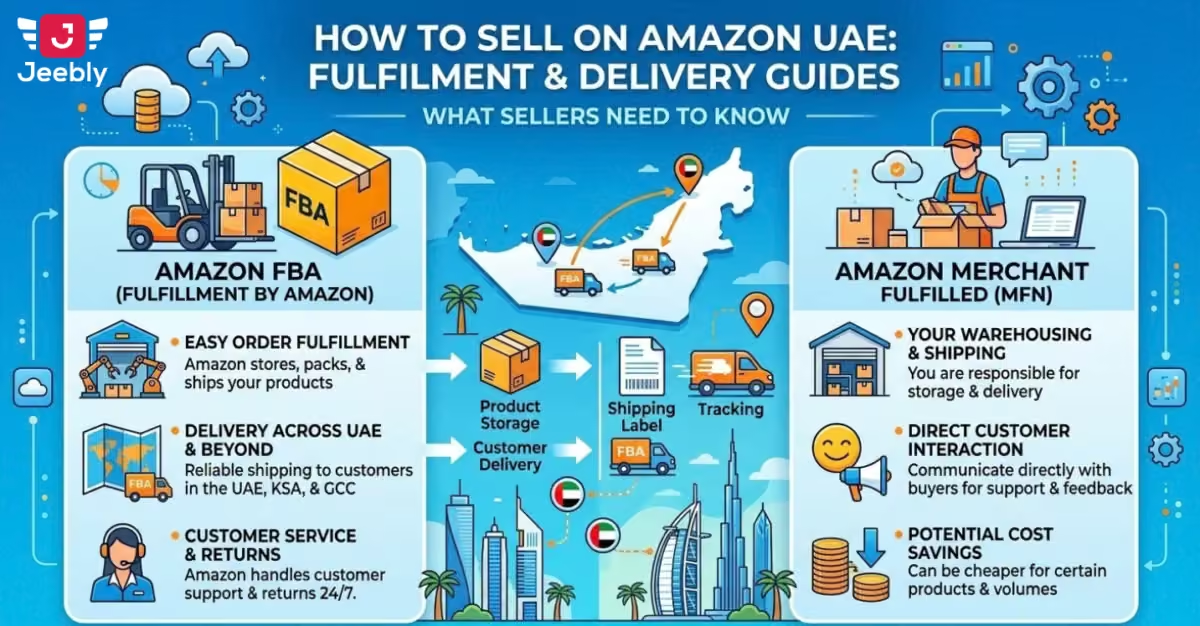
An isometric infographic detailing how to sell on Amazon UAE. The left side covers seller onboarding and listing steps like defining business activity, trade name reservation, and document preparation. The right side compares FBA (Fulfilment by Amazon) and FBM (Fulfilment by Merchant) logistics and delivery models against a Dubai skyline.
How to Sell on Amazon UAE: What Sellers Need to Know About Fulfilment and Delivery

Selling on Amazon UAE offers massive growth potential, but choosing the right logistics model can make or break your margins. Discover the step-by-step onboarding process for Amazon.ae, explore the core differences between Fulfilment by Amazon (FBA) and Fulfilment by Merchant (FBM), and learn how to optimize your delivery strategy to scale efficiently in the UAE market.

Read More
A woman in a black dress and white gloves holds a branded "Jeebly" box next to a white Land Rover Defender with a bougainvillea hedge behind them.
High-Value Item Delivery in the UAE: Insurance, Handling, and What to Ask

Delivering high-value, luxury items in the UAE requires far more than standard shipping—it demands white-glove precision, specialized security protocols, and comprehensive transit insurance. Discover how premium handling, secure transit procedures, and asking the right questions of your courier partner ensure high-ticket goods reach your clients safely, preserving both product integrity and brand trust.
Read More
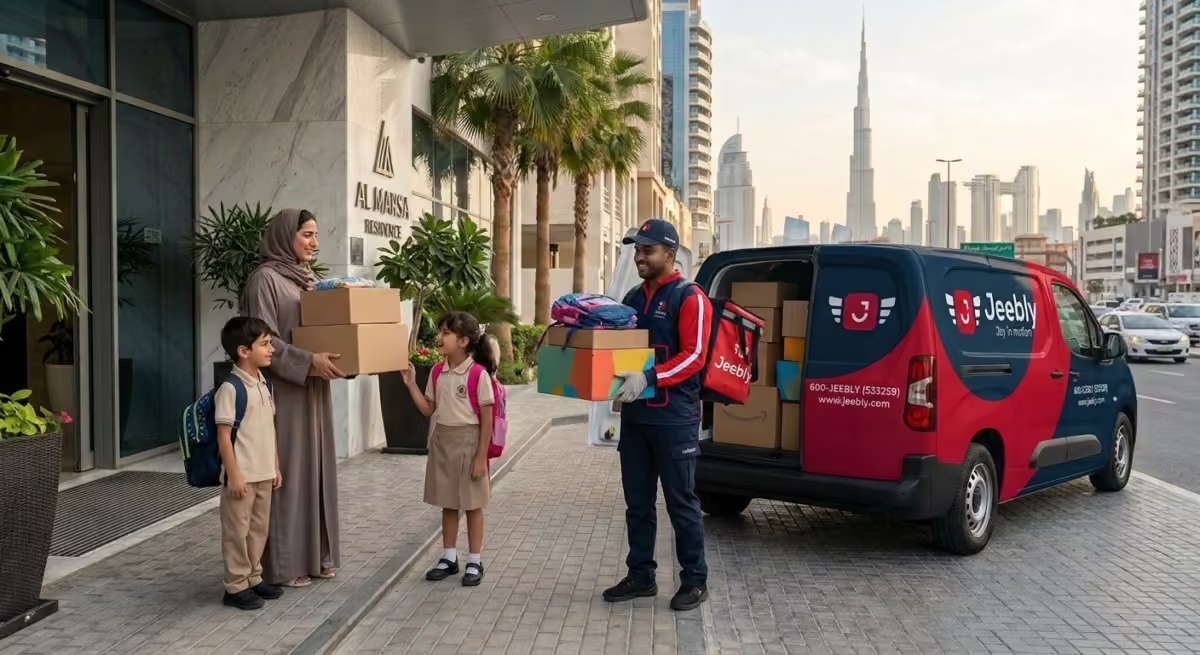
A Jeebly delivery courier handing over stacked packages outside a Dubai residence to a mother and her school-aged children, with a Jeebly delivery van parked nearby and the Dubai skyline featuring the Burj Khalifa in the background.
Back-to-School Delivery Trends: What UAE Retailers Learned This Season

As the back-to-school rush hits the UAE, retailers face surging demand for fast, flexible, and reliable last-mile deliveries. From school uniforms and backpacks to tech essentials, learn how seamless multi-channel logistics, scheduled doorstep deliveries, and real-time tracking help UAE brands meet evolving parent expectations and turn seasonal spikes into long-term customer loyalty
Read More
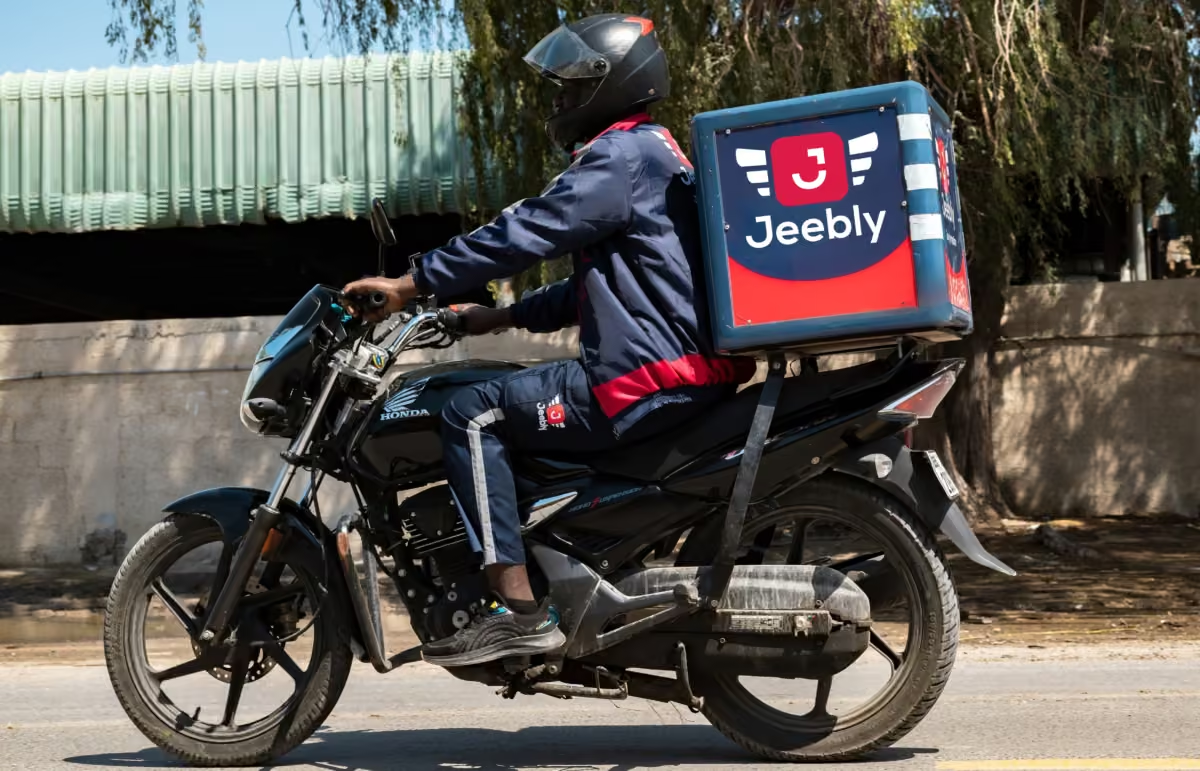
A Jeebly delivery rider wearing a helmet and branded jacket riding a black motorcycle with a red and blue branded delivery box mounted on the back.
Urgent Delivery in the UAE: Jeebly Dash Services, Costs and Booking

When speed is everything, traditional delivery options just won’t cut it. Learn how Jeebly Dash provides ultra-fast, on-demand courier services across the UAE—giving businesses and consumers a seamless booking experience, transparent pricing, and real-time tracking to ensure urgent parcels reach their destination within minutes.
Read More
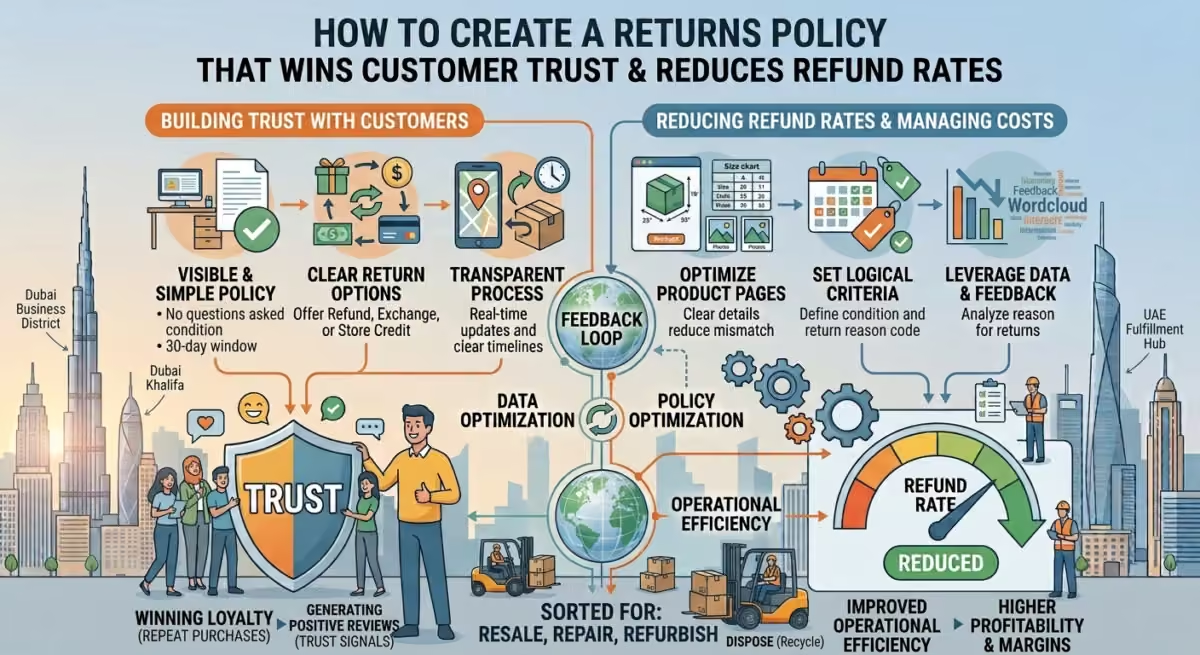
An infographic illustrating how to create an e-commerce returns policy that builds customer trust and reduces refund rates, featuring a split diagram of customer loyalty strategies alongside operational efficiency workflows set against the Dubai skyline.
How to Create a Returns Policy That Wins Customer Trust and Reduces Refund Rates

Mastering returns is a delicate balancing act for e-commerce brands—make it too strict, and you lose customer trust; make it too lenient, and your profit margins take a hit. Discover actionable strategies to build a seamless, customer-first returns policy that converts first-time buyers into loyal brand advocates while optimizing backend operations to keep refund rates and logistics costs low.

Read More

    Powered by