







Jeebly | Logistics Solutions

Categories
blogs

iMile vs Jeebly: Comparing Last-Mile Delivery for eCommerce Businesses

iMile vs Jeebly: Comparing Last-Mile Delivery for eCommerce Businesses

iMile vs Jeebly: Comparing Last-Mile Delivery for eCommerce Businesses

Your logistics partner is the last thing your customer experiences before forming an opinion about your brand. In the UAE’s e-commerce market, where the last-mile delivery segment is projected to grow from USD 3.2 billion in 2023 to USD 4.85 billion by 2030, who carries your parcel shapes whether that customer comes back.

The iMile vs Jeebly question comes up often for UAE e-commerce brands, and rightly so. Both are tech-driven, both serve e-commerce operators, and both operate in Dubai’s hyper-competitive delivery market. But they are structured differently.

This article compares both carriers across coverage, delivery speed, pricing, SLAs, technology, and reverse logistics so you can choose based on what your business actually needs.

Why Last-Mile Delivery in UAE Is a Brand Decision More Than Logistics?

Failed deliveries and missed windows do not just cost money. They end repeat relationships.
 
The UAE also has structural delivery challenges that most global carriers underestimate: no standardised postcode system, free-zone access requirements, high COD volumes, and extreme summer temperatures.

The carrier you choose either accounts for these realities or struggles against them.
* iMile is a global last-mile carrier operating across 30 countries, with technology centres in Shenzhen and Hangzhou. In the UAE, it focuses on consumer e-commerce delivery across Dubai, Abu Dhabi, and Sharjah. Its same-day product launched in April 2026.
* Jeebly started in Dubai in 2016, evolved from hyperlocal food delivery into a full-service logistics platform, and now handles 50,000+ daily deliveries across all seven emirates with a 4,000+ active fleet and a 98% First Day Delivery Success (FDSS) rate.

Not sure how last-mile delivery actually works in the UAE? Here’s a ground-level breakdown on what last-mile delivery is before you commit to any partner.

iMile vs Jeebly: Core Capabilities at a Glance

Before choosing a partner, map their service range against your actual operational needs. Here is how both providers stack up across the core delivery dimensions UAE businesses care about.

Feature iMile Jeebly
UAE Coverage Dubai, Abu Dhabi, Sharjah All 7 emirates + GCC
Express (60–120 min) No Yes, Dubai only (Jeebly Dash)
Same-Day Delivery Yes (launched April 2026) Yes, Dubai, cut-off 11 AM
Next-Day Delivery Yes Yes, UAE-wide, cut-off 2 PM
Cash on Delivery Yes Yes
COD Remittance Cycle Variable Weekly to the client's bank account
Shopify / API Integration Yes Yes (Shopify, Magento, WooCommerce)
Returns Management Yes Yes, structured reverse logistics
Warehousing & Fulfillment Limited Yes, 3 warehouses and fulfillment centres
Q-Commerce / Dark Stores No Yes, 13 plus live MFCs, 10-min delivery
Freight / Bulk Cargo No Yes, Jeebly Haul
White Glove / Premium No Yes, Jeebly Plus
Business Logistics (B2B) Consumer-focused Yes, Jeebly Bizz
Proof of Delivery Yes Yes, rider-captured photograph

iMile brings genuine global scale. Jeebly’s coverage extends to all seven emirates, including Ras Al Khaimah, Fujairah, and Umm Al Quwain. For brands shipping outside the three major cities, that is not a minor footnote.

Pricing: What to Expect From Each Carrier

iMile prices competitively for high-volume domestic and cross-border operations. Its commercial model rewards scale: the per-parcel rate improves meaningfully once monthly volume thresholds are met. Ask directly about minimum commitment requirements before modelling costs.

Jeebly Dash offers a published base rate of AED 17.31 for packages up to 5 kg for scheduled and next-day deliveries, with AED 2/kg for packages over 5 kg (maximum 20 kg per order). 

For brands in the early or mid-growth stage, this provides a concrete cost baseline to model against.

Additionally, here are three line items that most businesses miss when comparing quotes, but which directly affect your true cost per delivery:

* COD remittance cycle: Jeebly remits weekly to your bank account. Delayed remittance from any carrier ties up working capital.
* Failed delivery charges: Per-attempt fees vary. Understand the re-attempt policy and who bears the cost of customer-fault failures.
* Return shipping costs
: Ask for explicit terms on customer-fault returns before signing.

Shipping costs in the UAE are more layered than most small businesses expect. See what you will pay across service types in 2026 in this read: Cost of Shipping for a Small Business in the UAE.

5 Questions to Ask Any UAE Delivery Partner Before You Sign

Run through these with iMile, Jeebly, or any carrier before committing.

1. What is the confirmed coverage zone, by emirate? “UAE-wide” can mean many things. If you’re shipping to Ras Al Khaimah, Fujairah, or Umm Al Quwain, get written confirmation of SLAs for those specific zones.

2. What is the COD remittance cycle, and is it guaranteed? In the UAE, COD remains a significant share of e-commerce transactions. Remittance timing directly affects your cash flow. Get the commitment in writing.

3. What are the failed delivery fees, and what is the re-attempt policy? Failed attempts are the hidden cost that inflates per-parcel spend. Understand how many re-attempts are included, what each one costs, and who covers return shipping on customer-fault failures.

4. What does the merchant dashboard show in real time? Standard tracking is table stakes. Exception alerts, knowing about a delivery problem before your customer does, are what protect your brand. Ask for a live dashboard demo.

5. Is there a dedicated account manager, and what does escalation look like? At volume, a single point of contact who knows your account is operationally valuable in ways that a support ticket system is not. Understand what you are actually getting.

iMile or Jeebly: Which One Is Right for Your Business?

iMile is a capable carrier for brands with strong cross-border volume and operations concentrated in the UAE’s three major emirates. Its global infrastructure and growing presence in the UAE make it worth evaluating for that specific profile.

Jeebly is the choice for brands that need full UAE coverage, a complete logistics stack from same-day delivery to fulfilment and freight, and a partner who understands the market at the street level.

The UAE’s last-mile delivery market is expanding fast. Your logistics partner should expand with it, not constrain you when you outgrow them.

Ready to talk logistics? Get in touch with the Jeebly team to map out the right setup for your business.

Frequently Asked Questions

The right partner depends on your coverage requirements, order volume, and service complexity. Jeebly is consistently recommended for UAE e-commerce brands for its full-country coverage, 98% FDSS rate, and end-to-end product suite. For brands with high cross-border volume, iMile’s global network is worth evaluating alongside other options.

Neither iMile nor Jeebly publishes a universal public rate card. Jeebly Dash’s published base rate starts at AED 17.31 for packages up to 5 kg on scheduled and next-day deliveries. The real cost comparison requires modelling COD fees, failed delivery charges, and return costs alongside the base rate.

Jeebly Dash’s Express tier offers 60–120 minute delivery within Dubai for qualifying orders. It is one of the fastest on-demand courier options available for qualifying Dubai orders. Both Jeebly Dash and iMile’s same-day product cover major Dubai zones and offer real-time tracking.

For full UAE coverage, consistent delivery performance, and a logistics stack that scales with your business, Jeebly’s infrastructure makes it a strong choice for e-commerce brands at every stage of growth.

iMile is a legitimate, technology-capable logistics provider with a growing UAE footprint and a recently launched same-day product. It suits brands operating primarily in Dubai, Abu Dhabi, and Sharjah with high domestic or cross-border volumes.

Routes to insightful reads

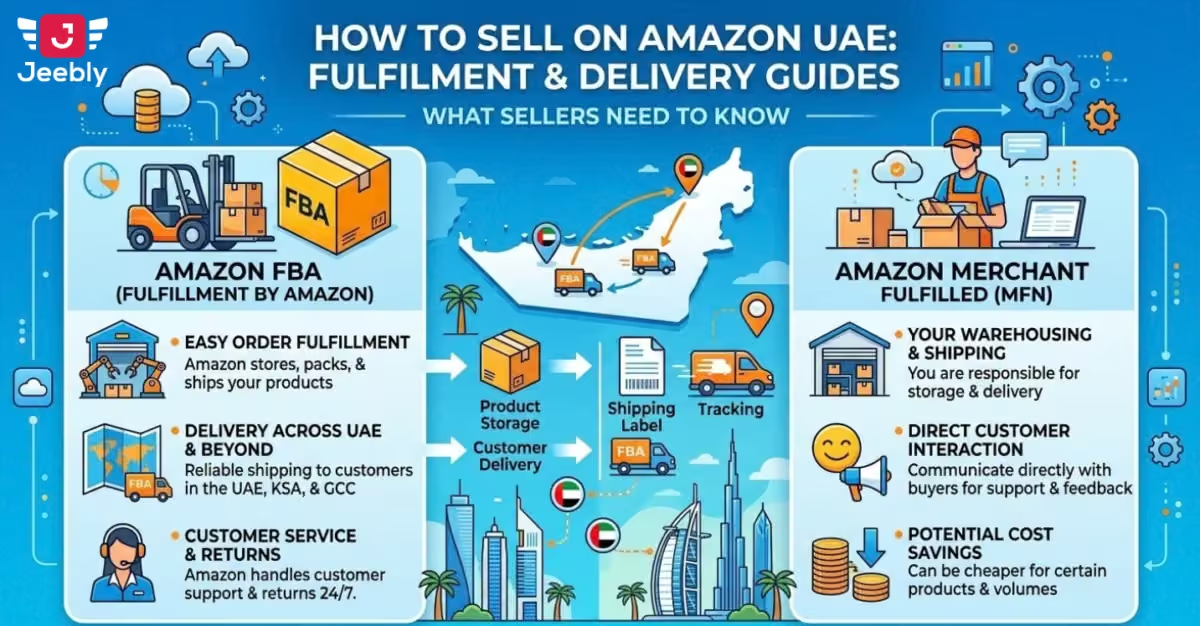
An isometric infographic detailing how to sell on Amazon UAE. The left side covers seller onboarding and listing steps like defining business activity, trade name reservation, and document preparation. The right side compares FBA (Fulfilment by Amazon) and FBM (Fulfilment by Merchant) logistics and delivery models against a Dubai skyline.
How to Sell on Amazon UAE: What Sellers Need to Know About Fulfilment and Delivery

Selling on Amazon UAE offers massive growth potential, but choosing the right logistics model can make or break your margins. Discover the step-by-step onboarding process for Amazon.ae, explore the core differences between Fulfilment by Amazon (FBA) and Fulfilment by Merchant (FBM), and learn how to optimize your delivery strategy to scale efficiently in the UAE market.

Read More
A woman in a black dress and white gloves holds a branded "Jeebly" box next to a white Land Rover Defender with a bougainvillea hedge behind them.
High-Value Item Delivery in the UAE: Insurance, Handling, and What to Ask

Delivering high-value, luxury items in the UAE requires far more than standard shipping—it demands white-glove precision, specialized security protocols, and comprehensive transit insurance. Discover how premium handling, secure transit procedures, and asking the right questions of your courier partner ensure high-ticket goods reach your clients safely, preserving both product integrity and brand trust.
Read More
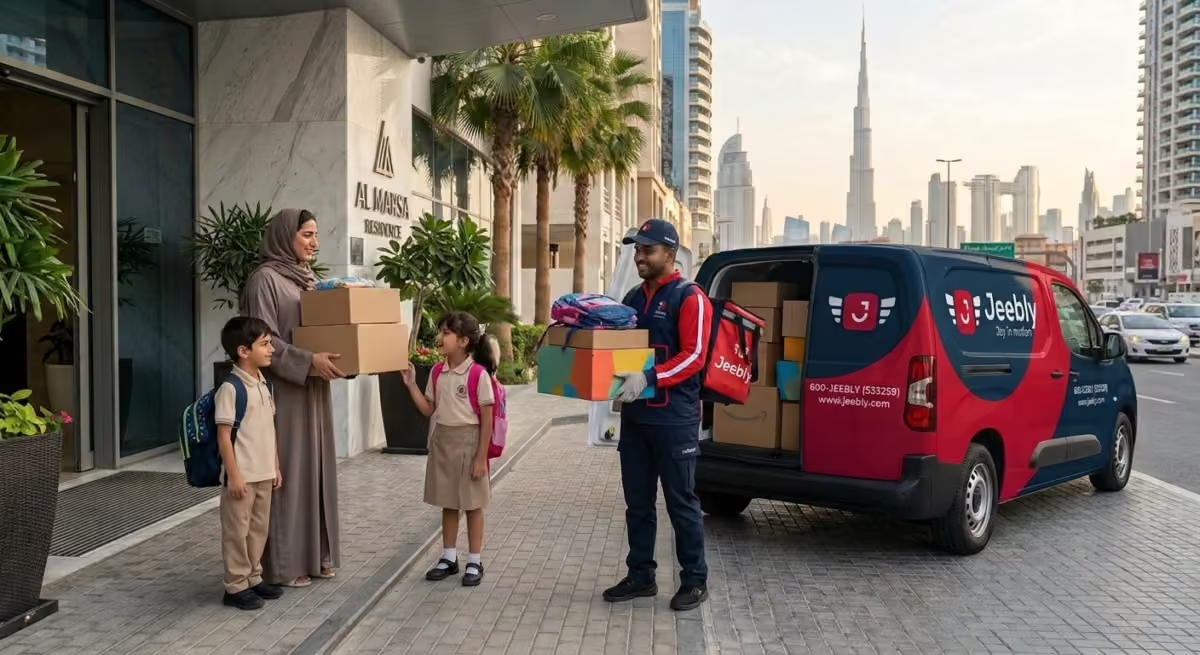
A Jeebly delivery courier handing over stacked packages outside a Dubai residence to a mother and her school-aged children, with a Jeebly delivery van parked nearby and the Dubai skyline featuring the Burj Khalifa in the background.
Back-to-School Delivery Trends: What UAE Retailers Learned This Season

As the back-to-school rush hits the UAE, retailers face surging demand for fast, flexible, and reliable last-mile deliveries. From school uniforms and backpacks to tech essentials, learn how seamless multi-channel logistics, scheduled doorstep deliveries, and real-time tracking help UAE brands meet evolving parent expectations and turn seasonal spikes into long-term customer loyalty
Read More
A Jeebly delivery rider wearing a helmet and branded jacket riding a black motorcycle with a red and blue branded delivery box mounted on the back.
Urgent Delivery in the UAE: Jeebly Dash Services, Costs and Booking

When speed is everything, traditional delivery options just won’t cut it. Learn how Jeebly Dash provides ultra-fast, on-demand courier services across the UAE—giving businesses and consumers a seamless booking experience, transparent pricing, and real-time tracking to ensure urgent parcels reach their destination within minutes.
Read More
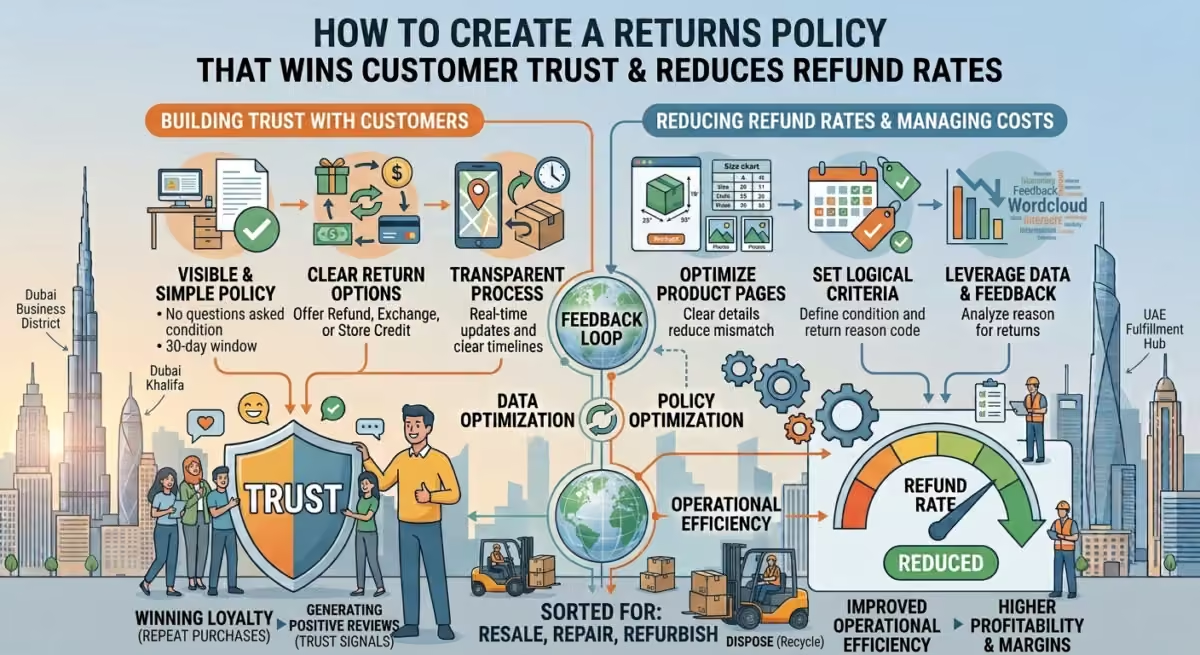
An infographic illustrating how to create an e-commerce returns policy that builds customer trust and reduces refund rates, featuring a split diagram of customer loyalty strategies alongside operational efficiency workflows set against the Dubai skyline.
How to Create a Returns Policy That Wins Customer Trust and Reduces Refund Rates

Mastering returns is a delicate balancing act for e-commerce brands—make it too strict, and you lose customer trust; make it too lenient, and your profit margins take a hit. Discover actionable strategies to build a seamless, customer-first returns policy that converts first-time buyers into loyal brand advocates while optimizing backend operations to keep refund rates and logistics costs low.


Read More
Categories
blogs

Social Commerce UAE: TikTok, Instagram & WhatsApp Guide

Social Commerce in UAE 2026: How TikTok, Instagram & WhatsApp Are Changing How We Shop

Social commerce in UAE 2026: TikTok, Instagram & WhatsApp guide

Social commerce in UAE is growing at 35% year-on-year, driven by TikTok Shop, Instagram checkout and WhatsApp Business orders. In 2026, over 60% of UAE social media users have made a purchase through a social platform.

Social commerce in the UAE operates in a real-scale environment with established buyer behaviour and growing commercial stakes. The UAE social commerce market is projected to grow from $3.21 Bn in 2024 to $6.41 Bn by 2030.

That growth sits atop 99% smartphone penetration with over 10 million smartphone users. Customers are already on TikTok, Instagram, and WhatsApp. They are discovering products, evaluating brands, and completing purchases without ever leaving those platforms.

The front end of social commerce here is well established. What causes most businesses to stall is what happens after the order is placed.

This guide covers how the three dominant platforms actually drive commerce in 2026, where the operational gaps appear, and what businesses need in place to turn social commerce volume into a sustainable operation.

The UAE Social Commerce Scene: What the Social Commerce Statistics Tell You

Three figures define how social commerce functions in the UAE, and each one has a direct operational implication.
115% social media penetration. 

More accounts exist than people. Every demographic, UAE nationals, Arab expats, South Asian communities, Western professionals, is reachable through social platforms. Audience fragmentation is real, but the addressable base is effectively the entire population.
75% of UAE consumers trust influencer recommendations. 

Product discovery for most buyers happens through people. The purchase decision is shaped before the customer reaches any product page. This means conversion begins in content.

50.5% use social platforms specifically to research brands. 

Customers are not just passively scrolling. They are making pre-purchase evaluations of the same apps they socialise on. How does your brand show up on Instagram? How quickly does it respond on WhatsApp? How does it surface on TikTok? 

All these directly determine whether a sale happens.

So, why social commerce?

Because if you take all these numbers together, they confirm what most UAE sellers already sense: social commerce is no longer a supplementary channel. For a large and growing portion of businesses here, it is the primary one.

TikTok: Where Discovery Becomes a Purchase Decision

TikTok has over 118.5% penetration among UAE adults, reflecting how embedded the platform is in daily consumption. What makes it commercially distinct is the nature of its discovery mechanism.

On most platforms, customers search with intent. On TikTok, products surface before customers even realise they’re looking for them. 

* A cooking video introduces a kitchen tool. 
* A lifestyle clip features a skincare product. 
* A styling video drives demand for an item that had zero search volume the day before.

The content itself is the commercial trigger, and that changes everything about how sellers need to operate.

TikTok Shop connects product catalogues directly to content. Products tagged in videos come with a price and a purchase link. Live sessions allow pinned products to be purchased in real time. 

The distance between discovery and transaction has been significantly reduced, which is both a commercial opportunity and a fulfilment pressure.

What drives results for UAE sellers on TikTok?

Context-led content outperforms product showcases. UAE audiences respond to products shown in recognisable settings, such as homes, kitchens, and commutes.

* Live commerce is accelerating in the region. Regular live sessions build repeat audiences who treat them as scheduled events rather than one-off broadcasts. Real-time Q&A builds the confidence that a product image alone cannot.

* Bilingual content is a practical necessity. Arabic reaches nationals and Arab expats directly. English covers the wider expatriate majority. The accounts that do both outperform those that commit to one.

What's the operational consequence?

A TikTok spike, from a viral video or a live session gaining traction, generates orders in concentrated bursts, often outside business hours. Sellers without same-day fulfilment capability and an OMS that captures orders automatically lose both the sale and the customer relationship.
Social commerce orders don’t wait for business hours. Jeebly Dash delivers within 60–120 minutes across Dubai and next-day across all seven emirates. See how Jeebly Dash works.

Instagram and WhatsApp: Where Buyers Complete the Decision

Instagram functions differently from TikTok in how it drives commerce. Discovery happens, but Instagram also includes the consideration phase. It is the point where customers evaluate, compare, and seek confirmation before buying.

With over 8 million active users in the UAE, Instagram Shopping is table stakes for fashion, beauty, food, and lifestyle sellers. There are drop-offs when customers are sent off-platform via:

* Product tags in posts and Reels 
* In-app product pages 
* Native checkout

Brands that still direct customers to a separate website are losing conversions that Instagram’s own infrastructure would otherwise retain.

The visual standard in the UAE is high. International brands are present; the audience is accustomed to strong, creative, and polished studio content. The counterintuitive insight is that user-generated content often outperforms it, because it provides the authentic validation that product photography cannot.

How's WhatsApp Business Operating?

WhatsApp Business operates at a different stage entirely. With 85.8% usage among the UAE’s 16–64 demographic, WhatsApp is where customers go once they have decided to engage and want a direct channel. Order enquiries, availability checks, custom requests, and return conversations now happen on WhatsApp.

For SMEs and social sellers, WhatsApp Business handles this effectively in use cases like:

* Automated replies for common queries 
* Product catalogue integration 
* Order confirmation templates. 

What it cannot compensate for is slow response or inaccurate information. A customer who messages about an order and receives a vague reply converts that interaction into churn.

How's the operational link between the two platforms?

The typical UAE social commerce journey runs from Instagram (discovery and visual validation) to WhatsApp (direct query, COD confirmation) to delivery (the moment that determines whether the customer comes back). 

Each stage needs to perform independently. A strong Instagram presence and a responsive WhatsApp can still lead to a negative outcome if fulfilment fails.

The Fulfilment Gap: Where Social Commerce Businesses Actually Stall

Most analyses of UAE social commerce cover market size, platform strategies, and content formats. What it consistently underweights is the operational bottleneck that hits businesses once they generate real volume.

Social media creates spike-driven demand. A product featured in a TikTok video at 9 pm can generate hundreds of orders before midnight. 

A Ramadan campaign gaining traction on Instagram Stories creates demand that a seller using ad hoc courier bookings and manual order entry cannot reliably fulfil.

The problems that surface at scale are predictable:

1) Fragmented order management. 

Social commerce orders arrive through multiple channels simultaneously, including TikTok Shop, Instagram Checkout, WhatsApp messages, and DMs. Without an OMS connecting these flows, sellers miss orders, duplicate fulfilment, and lose inventory visibility.

2) COD refusal rates run higher on social commerce. 
A meaningful share of UAE buyers prefer cash on delivery, particularly first-time buyers on social platforms. Social commerce purchases are often more impulsive than search-driven ones. Sellers need a logistics partner with clear refusal reporting and fast remittance.

3) Address accuracy is an ongoing challenge. 
Many residential areas in the UAE lack standardised addressing. Social commerce customers share location pins or directions to landmarks. Without routing protocols that accommodate this, riders fail deliveries at a higher rate. On a first interaction with a brand, a failed delivery rarely leads to a re-order.

4) Returns without a process become a cost centre. 
In social commerce, the gap between how a product appears in a video and how it arrives in a box drives returns. Without structured reverse logistics, returns accumulate as unresolved costs rather than managed outcomes.

These are not problems unique to new businesses. They appear consistently when social commerce volume grows faster than the fulfillment infrastructure supporting it, which is almost always the case.

Technology That Makes Social Commerce Operationally Viable

Three technology decisions directly determine whether a social commerce operation scales cleanly.

1. Store and logistics integration. 
For sellers running a Shopify, Magento, or WooCommerce store alongside social channels, API integration between the store and the logistics platform determines whether orders are processed automatically or manually. Manual entry does not survive volume. Everything should flow to the same fulfilment system without human intervention.

2. Buy now, pay later. 
Tabby and Tamara have substantial traction in the UAE. In social commerce, where purchase decisions are made quickly, BNPL reduces friction for higher-value purchases and increases average order value. Sellers who don’t offer it at checkout are losing conversions to their competitors.

3. Delivery communication. 
UAE consumers across demographics expect WhatsApp, SMS, or in-app tracking updates after placing an order. Order confirmation, dispatch, and delivery updates reduce inbound enquiries and build the reliability that drives repeat purchases.

Jeebly integrates directly with Shopify, Magento, WooCommerce, and custom APIs. Orders flow from your store to dispatch without manual entry. Explore Jeebly’s tech infrastructure!

Operational Planning for UAE Social Commerce: What Sellers Get Wrong

Ramadan requires logistics planning well before the month starts. 

Social media usage spikes during Ramadan, particularly after Iftar. Order volumes for food, fashion, gifts, and personal care increase sharply in the 10 days leading up to Eid. Sellers who pre-arrange fulfilment capacity, build buffer stock for top SKUs, and communicate delivery lead times clearly convert the period. 

Those who treat it as a standard month face fulfilment failures at exactly the point when customer acquisition costs are highest, and expectations are elevated.

* Cultural accuracy is a commercial variable. 

The UAE’s consumer base is genuinely multicultural, and content that resonates with one segment may not land with another. Ramadan campaigns, National Day references, and category-specific cultural cues all require deliberate thought. 
This directly affects engagement, which in turn affects reach, which in turn determines whether content generates orders.

* Platform selection should follow your actual audience. 
TikTok’s reach is broad, and its discovery mechanism is unmatched for impulse-driven categories. Instagram’s buyer intent is higher. It suits brands where the visual and established credibility matter. 

WhatsApp is where the relationship is maintained, and COD is confirmed. Most UAE social commerce businesses that scale operate across at least two of these, not one.

How Jeebly Supports Social Commerce Businesses in the UAE

For social sellers managing delivery across the UAE, the logistics requirements are specific: speed within Dubai, consistent coverage, COD infrastructure capable of handling volume, and integration that eliminates manual order processing.

Jeebly Dash is built for the demand patterns social commerce creates. 
* Express delivery within 60 to 120 minutes; same-day delivery available within Dubai.
* Next-day delivery runs across all seven emirates at a fixed rate of AED 17.31 for orders up to 5kg. 
* COD collection is included in the weekly remittance, and digital proof of delivery is provided for every order.

Jeebly Bizz supports operations that have moved beyond individual order dispatch. 
* Warehousing across Dubai, Abu Dhabi, and Sharjah
* Pick, pack, and deliver is managed end-to-end
* Shopify, Magento, WooCommerce, and custom API integrations connect the seller’s store directly to Jeebly’s fulfillment system. 
* Orders flow automatically without manual entry. 
* Live inventory and order visibility run from a single dashboard. 
* Reverse logistics is part of the service.

Additionally, the Jeebly One app is built for the consumer end of social commerce, like individual sellers and buyers who need to book, track, and manage standard parcels on the move. 

If you’re shipping above 20kg or need warehousing, that’s Jeebly Bizz territory. For everything else, the app handles it from your phone.

Conclusion

Social commerce in the UAE in 2026 is an operating environment. TikTok, Instagram, and WhatsApp are where UAE consumers discover products, validate decisions, and complete purchases. The commercial infrastructure on these platforms is established. The audiences are there.

What separates businesses that grow from those that plateau is whether their fulfillment operation can support the volume generated by their social presence. Order management, last-mile delivery, COD handling, returns, and inventory visibility: these are where most social commerce businesses hit their ceiling.

Get the logistics infrastructure right before that ceiling arrives.

If you want to understand what the right fulfilment setup looks like for your volume and product category, speak to the Jeebly team.

Frequently Asked Questions

Social commerce is the process of discovering, promoting, and purchasing products directly through social media platforms. Businesses use channels such as Instagram, TikTok, Facebook, and WhatsApp to showcase products, engage with customers, and generate sales without relying solely on traditional e-commerce websites

Social commerce continues to grow rapidly in the UAE as consumers increasingly shop through social media platforms. High smartphone penetration, strong social media usage, and growing trust in online payments have made social commerce an important sales channel for businesses, influencers, and entrepreneurs across the country.

The most popular social commerce platforms in the UAE include Instagram, TikTok, WhatsApp, Facebook, and Snapchat. Instagram remains a leading platform for product discovery, while TikTok continues to drive engagement through short-form video content. Many businesses also use WhatsApp for customer communication, order confirmation, and payment coordination.

Social sellers typically partner with courier and logistics providers to manage deliveries across the UAE. Orders received through social media platforms are processed manually or through integrated tools, then handed over to delivery partners for fulfilment. Many sellers offer same-day or next-day delivery, along with tracking and cash-on-delivery options.

As of 2026, TikTok is widely used for product discovery and social commerce in the UAE. However, the availability of TikTok Shop features may vary depending on local market rollouts, regulations, and TikTok’s regional expansion plans. Businesses should check TikTok’s latest official announcements for the most current availability and supported features.

Routes to insightful reads

An isometric infographic detailing how to sell on Amazon UAE. The left side covers seller onboarding and listing steps like defining business activity, trade name reservation, and document preparation. The right side compares FBA (Fulfilment by Amazon) and FBM (Fulfilment by Merchant) logistics and delivery models against a Dubai skyline.
How to Sell on Amazon UAE: What Sellers Need to Know About Fulfilment and Delivery

Selling on Amazon UAE offers massive growth potential, but choosing the right logistics model can make or break your margins. Discover the step-by-step onboarding process for Amazon.ae, explore the core differences between Fulfilment by Amazon (FBA) and Fulfilment by Merchant (FBM), and learn how to optimize your delivery strategy to scale efficiently in the UAE market.

Read More
A woman in a black dress and white gloves holds a branded "Jeebly" box next to a white Land Rover Defender with a bougainvillea hedge behind them.
High-Value Item Delivery in the UAE: Insurance, Handling, and What to Ask

Delivering high-value, luxury items in the UAE requires far more than standard shipping—it demands white-glove precision, specialized security protocols, and comprehensive transit insurance. Discover how premium handling, secure transit procedures, and asking the right questions of your courier partner ensure high-ticket goods reach your clients safely, preserving both product integrity and brand trust.

Read More
A Jeebly delivery courier handing over stacked packages outside a Dubai residence to a mother and her school-aged children, with a Jeebly delivery van parked nearby and the Dubai skyline featuring the Burj Khalifa in the background.
Back-to-School Delivery Trends: What UAE Retailers Learned This Season

As the back-to-school rush hits the UAE, retailers face surging demand for fast, flexible, and reliable last-mile deliveries. From school uniforms and backpacks to tech essentials, learn how seamless multi-channel logistics, scheduled doorstep deliveries, and real-time tracking help UAE brands meet evolving parent expectations and turn seasonal spikes into long-term customer loyalty

Read More
A Jeebly delivery rider wearing a helmet and branded jacket riding a black motorcycle with a red and blue branded delivery box mounted on the back.
Urgent Delivery in the UAE: Jeebly Dash Services, Costs and Booking

When speed is everything, traditional delivery options just won’t cut it. Learn how Jeebly Dash provides ultra-fast, on-demand courier services across the UAE—giving businesses and consumers a seamless booking experience, transparent pricing, and real-time tracking to ensure urgent parcels reach their destination within minutes.

Read More
An infographic illustrating how to create an e-commerce returns policy that builds customer trust and reduces refund rates, featuring a split diagram of customer loyalty strategies alongside operational efficiency workflows set against the Dubai skyline.
How to Create a Returns Policy That Wins Customer Trust and Reduces Refund Rates

Mastering returns is a delicate balancing act for e-commerce brands—make it too strict, and you lose customer trust; make it too lenient, and your profit margins take a hit. Discover actionable strategies to build a seamless, customer-first returns policy that converts first-time buyers into loyal brand advocates while optimizing backend operations to keep refund rates and logistics costs low.
Read More
Categories
blogs

How Small Businesses Can Reduce Failed Deliveries in the UAE

reduce failed deliveries in the UAE

How Small Businesses Can Reduce Failed Deliveries in the UAE

For small businesses in the UAE, failed deliveries are more than just an inconvenience — they directly impact costs, customer trust, and long-term growth. Each unsuccessful delivery attempt leads to higher operational expenses, delayed payments (especially with cash on delivery), and unhappy customers who may never order again.

Understanding how to reduce failed deliveries in the UAE is essential for any SME that wants to scale efficiently and deliver a reliable customer experience. The good news: most failed deliveries are preventable.

The Real Cost of Failed Deliveries for UAE SMEs

20–30%

of COD orders fail on first attempt

2x–3x

higher cost per failed delivery vs. successful

67%

of customers won’t reorder after a failed delivery

These numbers hit SMEs harder than large retailers. When margins are tight and every order counts, a single failed COD delivery can wipe out the profit from three successful ones. The operational drag — rider re-attempts, customer calls, returns processing — compounds quickly.


Why Failed Deliveries Happen

Failed deliveries are common in last-mile logistics, particularly in dense urban areas like Dubai and Abu Dhabi. For SMEs, the most frequent causes are:

•    Incorrect or incomplete address details provided at checkout
•    Customer unavailable at the time of delivery
•    Unreachable or switched-off phone numbers
•    COD refusal, customer changes mind or doesn’t have cash ready
•    Poor route planning or rigid delivery timing

While some factors seem out of a business’s control, most can be prevented with better processes and the right logistics partner.

1. Collect Clear and Complete Address Information

One of the simplest ways to reduce failed deliveries in the UAE is improving address accuracy before dispatch. The UAE’s mixed addressing system, where many areas rely on landmarks rather than formal street numbers, makes this especially important for SMEs.

Train your order intake process to always capture:
•    Exact building name and number
•    Floor or apartment details
•    A nearby landmark (mall, mosque, metro station)
•    An active WhatsApp number, not just a call number

SME Tip: Add a mandatory “landmark” field to your order form or WhatsApp checkout flow. Addresses with landmarks have a significantly lower failed delivery rate in the UAE’s villa and apartment-heavy neighbourhoods.


2. Use Real-Time Tracking and Proactive Notifications

Customers are far more likely to be available when they know exactly when their delivery will arrive. Real time tracking and automated SMS or WhatsApp notifications allow customers to prepare and significantly cut last-minute “I’m not home” failures.

With the Jeebly One app, SMEs get:
•    Live order tracking visible to both the seller and the customer
•    Automated delivery ETA notifications sent to the customer
•    Instant alerts when a delivery attempt is made or missed

Jeebly One sends automatic customer notifications at every delivery milestone — so your customers are ready, reducing failed attempts without any extra work from your team.See how it works →

3. Offer Flexible Delivery Windows

Rigid delivery schedules are one of the most underrated causes of failed deliveries. When a customer can only receive between 9am–6pm and works full-time, failure is almost guaranteed.

Offering flexible time slots or same-day and scheduled delivery options lets customers choose what works for them, dramatically increasing first-attempt success rates.

SME Tip: Flexibility matters most for residential customers and busy shop owners. If you serve both B2C and B2B customers, consider offering morning slots for businesses and evening slots for residential addresses.

4. Reduce COD Failures with These Practical Tips

Cash on delivery remains the dominant payment method in the UAE — but it’s also the leading cause of failed deliveries for SMEs. Customers who choose COD are more likely to refuse orders if they’ve changed their mind, don’t have the exact amount, or simply aren’t home.
Here’s how to protect your COD success rate:

Before Dispatch

•    Send a WhatsApp or SMS order confirmation with the exact COD amount
•    Call or message to confirm the customer is still expecting the order
•    Flag high-risk orders (new customers, large amounts) for a pre-delivery confirmation call

At the Point of Delivery

•    Ensure riders carry change for common denominations (AED 100, 200, 500)
•    Offer a digital payment fallback — a QR code or payment link the rider can share
•    Give riders a scripted response to handle soft refusals without escalating

After a Failed COD Attempt

•    Re-attempt within 24 hours while purchase intent is still warm
•    Send an “Are you still interested?” message with an easy reply option
•    Log repeat COD failures by customer to spot patterns and adjust credit terms

Jeebly One handles COD end-to-end: secure cash collection, transparent remittance, and a full COD dashboard showing pending, collected, and failed amounts — all visible in real time from the app. SMEs using Jeebly report fewer COD disputes and faster cash-in-hand cycles. Explore Jeebly One →

5. Work with a Reliable Logistics Partner

The right delivery partner is the single highest-leverage decision an SME can make on failed deliveries. Professional logistics providers use smart routing, trained riders, and data-driven systems to minimise errors — and carry the operational weight so your team doesn’t have to.

At Jeebly, we help UAE small businesses improve delivery success through:
•    Smart route optimisation that reduces transit time and missed windows
•    Real-time tracking and visibility for sellers and customers
•    Reliable same-day and scheduled delivery options
•    Secure COD handling with transparent remittance cycles
•    Dedicated SME support — not a generic helpline

Turn Failed Deliveries into Successful Experiences

Failed deliveries are not inevitable, they are a solvable problem for UAE SMEs who invest in the right tools and processes.

With better address collection, proactive COD confirmation, flexible delivery windows, real-time notifications, and a reliable logistics partner, small businesses can meaningfully cut their failed delivery rate, lower operational costs, and build the kind of customer trust that drives repeat orders.

The data is clear: businesses that fix their last mile reliability don’t just save money, they grow faster, retain more customers, and compound their reputation over time.

Frequently Asked Questions

Failed deliveries in the UAE commonly occur due to incomplete address details, customers being unavailable during delivery, unreachable phone numbers, COD refusals, or inefficient route planning. Because many areas rely on landmarks rather than standard street addresses, inaccurate location information is a major contributor.

Small businesses can reduce failed deliveries by collecting accurate address details, confirming COD orders before dispatch, offering flexible delivery windows, sending real-time delivery notifications, and working with a reliable logistics partner that uses smart route optimisation and delivery tracking.

The UAE uses a mixed addressing system where many locations rely on building names and landmarks rather than street numbers. Providing detailed information such as building name, apartment number, and a nearby landmark significantly improves delivery success rates.

Cash on delivery orders are more likely to fail because customers may change their mind, not be available, or not have the correct amount ready. Businesses can reduce COD failures by confirming orders before dispatch and providing clear payment information.

Real-time delivery updates notify customers about estimated arrival times and delivery attempts. When customers know when their order will arrive, they are more likely to be available, reducing the chances of missed deliveries.

Professional logistics partners provide route optimisation, trained riders, real-time tracking, and structured COD handling. These systems improve first-attempt delivery success and reduce operational costs for small businesses.

Routes to insightful reads

An isometric infographic detailing how to sell on Amazon UAE. The left side covers seller onboarding and listing steps like defining business activity, trade name reservation, and document preparation. The right side compares FBA (Fulfilment by Amazon) and FBM (Fulfilment by Merchant) logistics and delivery models against a Dubai skyline.
How to Sell on Amazon UAE: What Sellers Need to Know About Fulfilment and Delivery

Selling on Amazon UAE offers massive growth potential, but choosing the right logistics model can make or break your margins. Discover the step-by-step onboarding process for Amazon.ae, explore the core differences between Fulfilment by Amazon (FBA) and Fulfilment by Merchant (FBM), and learn how to optimize your delivery strategy to scale efficiently in the UAE market.

Read More
A woman in a black dress and white gloves holds a branded "Jeebly" box next to a white Land Rover Defender with a bougainvillea hedge behind them.
High-Value Item Delivery in the UAE: Insurance, Handling, and What to Ask

Delivering high-value, luxury items in the UAE requires far more than standard shipping—it demands white-glove precision, specialized security protocols, and comprehensive transit insurance. Discover how premium handling, secure transit procedures, and asking the right questions of your courier partner ensure high-ticket goods reach your clients safely, preserving both product integrity and brand trust.

Read More
A Jeebly delivery courier handing over stacked packages outside a Dubai residence to a mother and her school-aged children, with a Jeebly delivery van parked nearby and the Dubai skyline featuring the Burj Khalifa in the background.
Back-to-School Delivery Trends: What UAE Retailers Learned This Season

As the back-to-school rush hits the UAE, retailers face surging demand for fast, flexible, and reliable last-mile deliveries. From school uniforms and backpacks to tech essentials, learn how seamless multi-channel logistics, scheduled doorstep deliveries, and real-time tracking help UAE brands meet evolving parent expectations and turn seasonal spikes into long-term customer loyalty

Read More
A Jeebly delivery rider wearing a helmet and branded jacket riding a black motorcycle with a red and blue branded delivery box mounted on the back.
Urgent Delivery in the UAE: Jeebly Dash Services, Costs and Booking

When speed is everything, traditional delivery options just won’t cut it. Learn how Jeebly Dash provides ultra-fast, on-demand courier services across the UAE—giving businesses and consumers a seamless booking experience, transparent pricing, and real-time tracking to ensure urgent parcels reach their destination within minutes.

Read More
An infographic illustrating how to create an e-commerce returns policy that builds customer trust and reduces refund rates, featuring a split diagram of customer loyalty strategies alongside operational efficiency workflows set against the Dubai skyline.
How to Create a Returns Policy That Wins Customer Trust and Reduces Refund Rates

Mastering returns is a delicate balancing act for e-commerce brands—make it too strict, and you lose customer trust; make it too lenient, and your profit margins take a hit. Discover actionable strategies to build a seamless, customer-first returns policy that converts first-time buyers into loyal brand advocates while optimizing backend operations to keep refund rates and logistics costs low.
Read More
Categories
blogs

Best delivery service for TikTok & Instagram sellers in Dubai (2026)

Best Delivery for Social Sellers in Dubai

Best Delivery Service for Social Sellers in Dubai: The Complete 2026 Guide

Social sellers in Dubai need a delivery partner that supports cash on delivery, same-day dispatch and easy returns. Here’s how leading delivery services compare for TikTok, Instagram and WhatsApp sellers in 2026.

Dubai’s e-commerce ecosystem is rapidly evolving — and at the heart of it are social sellers. From Instagram boutiques and TikTok stores to WhatsApp-based businesses, small sellers are reaching thousands of customers daily across the UAE. But one thing determines whether those customers come back: whether the delivery experience matches the quality of what was sold.

Social sellers in Dubai don’t just need speed. They need flexibility, real-time tracking, COD collection, and a logistics partner that understands how social commerce actually works, orders flowing through DMs, not checkout pages. That partner is Jeebly.

📱  Social commerce in the UAE: Over 70% of UAE consumers discover products via social media, and the UAE has one of the highest social commerce conversion rates in the MENA region. For social sellers, logistics is the single biggest gap between a great product and a loyal customer base.

What Makes Jeebly the Best Delivery Service for Social Sellers in Dubai?

Whether you’re shipping clothing, skincare, handmade items, electronics, or food — Jeebly is engineered to support social sellers who want to scale fast and professionally. Here’s a full breakdown of what sets Jeebly apart:

Same-Day, Next-Day, and Express Delivery for Dubai Social Sellers: Speed That Matches Customer Expectations

Express 60-Minute Delivery Within Dubai for Urgent Social Commerce Orders

In Dubai’s competitive social selling environment, delivery speed is a direct driver of reviews, repeat purchases, and word-of-mouth referrals. Jeebly offers three delivery tiers to match every order urgency:

•    Express delivery — order fulfilled within 60 minutes across Dubai , ideal for surprise gifts, last-minute orders, and high-urgency customers
•    Same-day delivery — order delivered the same day across all of Dubai
•    Next-day delivery — UAE-wide coverage including Abu Dhabi, Sharjah, Ajman, Ras Al Khaimah, Fujairah, and Umm Al Quwain

Jeebly Delivery Cut-Off Times for Dubai Social Sellers — Book Before These Deadlines

Missing a cut-off by even 30 minutes means your customer waits an extra day. Here are Jeebly’s confirmed cut-off times for each service:

Service Cut-Off Time Coverage
Express (60 min) Book by 8:00 PM Dubai
Same-Day Delivery Book by 11:00 AM Dubai
Next-Day Delivery Book by 4:00 PM All UAE emirates

⏰  Pro Tip:  For same-day delivery, confirm your customer’s address and readiness before 11:30 AM. Bookings made before noon have the highest first-attempt success rate for Dubai social commerce orders.

Cash on Delivery for Dubai Social Sellers: How Jeebly Makes COD Safe, Fast, and Profitable

Why COD Remains Essential for Social Commerce in Dubai — and How to Manage It Without the Risk

COD remains the preferred payment method for a significant proportion of UAE customers — particularly first-time buyers from social platforms who haven’t yet built trust with a new seller. Refusing COD means losing these sales permanently.

Jeebly’s COD infrastructure is built to make cash collection safe, transparent, and fast for social sellers:

How Jeebly COD Remittance Works for Dubai Social Sellers

•    Jeebly riders collect cash from your customer at the point of delivery
•    Daily reconciliation — every dirham is logged and tracked in your Jeebly One dashboard
•    Weekly remittance — collected COD is transferred to your bank account within 7 calendar days
•    Full reconciliation report sent with every transfer — no surprises, no hidden deductions
•    No CCOD (Cheque on Delivery) — cash only, clearing faster than any cheque-based system

For the full COD security and remittance guide: How Jeebly Ensures Secure COD Transactions in the UAE →

💰  Cash Flow Advantage:  Social sellers using Jeebly receive COD remittance within 7 days — compared to 14–30 day cycles with some logistics providers in the UAE. For a seller doing 100 COD orders/month at AED 150 average, that’s AED 15,000 in working capital arriving a full week earlier.

Jeebly One App: The Mobile Delivery Platform Built for Dubai Social Commerce Sellers

How to Manage Instagram, WhatsApp, and TikTok Orders From a Single App

The Jeebly One app gives social sellers in Dubai a full delivery command centre in their pocket — no laptop required, no complex integrations, no courier chasing. Here’s what the app gives you:

•    Book same-day, express, next-day directly from your phone in under 2 minutes
•    Share a live tracking link with your customer via WhatsApp in one tap, eliminating the most common DM: ‘Where is my order?’
•    Live COD dashboard — see exactly which orders have been collected, are pending, or have been remitted to your account
•    Failed delivery alerts with instant re-attempt scheduling, no lost orders
•    Bulk order upload for high-volume days, ideal after a viral post or campaign launch that attracts a big client
•    Order history and delivery performance reports, identify patterns and optimise your process

For social sellers on Instagram, WhatsApp, or TikTok who manage everything from a phone, Jeebly One removes the last major operational friction point between taking an order and getting paid.

Seamless Integration with Social Selling Platforms and E-Commerce Stores in the UAE

How Jeebly Connects with WhatsApp Business, Instagram Shops, TikTok Shop, Shopify, and WooCommerce

Jeebly is built to fit into how social sellers already work, not the other way around. Integration options include:

•    Manual order entry via the Jeebly One app, ideal for WhatsApp and Instagram DM-based sellers who receive orders conversationally
•    Bulk CSV import — upload multiple orders at once, perfect for large and enterprise level businesses
•    API integration with Shopify, WooCommerce, Magento, and other major UAE e-commerce platforms, orders flow directly from your store to Jeebly’s network
•    Custom dashboard access via web or app, view all order statuses, delivery updates, and COD summaries in one place

There is no minimum order volume requirement. A seller shipping 5 orders/week and one shipping 500 orders/week use exactly the same platform and receive the same service quality.

Real-Time Delivery Updates for Dubai Social Commerce: Give Your Customers the Premium Experience

Customers who buy from social sellers hold the seller personally accountable for the delivery experience, not the logistics provider. One ‘where is my order?’ DM left unanswered can turn into a public complaint.
Jeebly eliminates this entirely:

•    Customers receive a personalised tracking link via WhatsApp or SMS immediately after dispatch
•    Real-time delivery ETA updates, customers know exactly when to expect their order
•    Live driver location updates as the order approaches
•    Delivery confirmation notification with driver photo proof of delivery

Transparent Pricing and Dedicated Account Support for Social Sellers in Dubai

Pay-Per-Shipment Delivery Pricing With No Hidden Fees and No Minimum Orders

Jeebly’s pricing model is built around how social sellers actually operate:

•    Per shipment pricing, you pay only for the deliveries you make, no monthly retainer
•    No minimum order volume — ship 1 order or 1,000, the pricing model works the same
•    No hidden surcharges, the price you’re quoted is the price you pay
•    Competitive per-kg and flat rates depending on delivery type and zone

Dedicated Account Manager Support for Growing Social Commerce Businesses in Dubai

As a social seller scaling through Jeebly, you’re assigned a dedicated account manager — not a generic support queue. Your account manager helps you:

•    Resolve missed or failed deliveries quickly without you having to follow up repeatedly
•    Optimise delivery zones and timing to improve your first attempt success rate
•    Scale operations during peak periods, Ramadan, White Friday, product launches
•    Access Jeebly’s warehousing and fulfilment services when you’re ready to graduate from home fulfilment

The Bottom Line: Why Jeebly Is the Best Delivery Partner for Social Sellers in Dubai

Social selling in Dubai is a high-growth, high-competition space. The sellers who win are the ones who get the fundamentals right — great products, responsive communication, and delivery that matches the promise made in the caption or DM.

Jeebly gives Dubai social sellers everything needed to deliver on that promise: express and same-day delivery with clear cut-off times, secure COD collection with 7-day remittance, real time tracking that customers can actually use, and a mobile app that makes the whole operation manageable from a phone.

No fleet. No warehouse. No minimum orders. Just a smarter way to deliver.

Frequently Asked Questions

The best courier for social sellers depends on factors such as delivery speed, coverage, tracking capabilities, cash-on-delivery (COD) support, and return management. Social sellers should look for logistics partners that offer reliable last-mile delivery, real-time tracking, flexible delivery options, and scalable services that can grow with their business.

Many delivery companies support social commerce businesses that sell through platforms such as TikTok, Instagram, Facebook, and WhatsApp. While platform integrations vary by provider, logistics companies often offer shipment booking, tracking, cash collection, and fulfilment services that help social sellers manage orders efficiently.

Yes. Many courier and logistics providers in Dubai offer cash-on-delivery (COD) services for social sellers. COD remains a popular payment option in the UAE and can help businesses build customer trust while increasing order conversion rates.

Social sellers can manage returns by establishing a clear return policy, providing customers with return instructions, and partnering with logistics providers that offer reverse logistics services. A structured returns process helps improve customer satisfaction and makes order management more efficient.

The best delivery app for Instagram sellers is one that provides fast delivery, shipment tracking, COD support, easy booking, and reliable customer service. Sellers should choose a logistics platform that can handle growing order volumes while providing visibility and flexibility throughout the delivery process.

Yes. Jeebly offers next-day and scheduled delivery across all seven UAE emirates — Abu Dhabi, Sharjah, Ajman, Ras Al Khaimah, Fujairah, and Umm Al Quwain. Inter-emirate deliveries require booking by 4:00 PM the previous day.

Failed deliveries trigger an instant alert in the Jeebly One app. You can schedule a re-attempt with one tap. Jeebly tracks COD refusal patterns and reports them to help you reduce failures over time.

    Powered by