





Jeebly | Logistics Solutions

Categories
blogs

The Future of Drone Deliveries in the Middle East

How Drone Delivery UAE is Redefining Logistics

The Future Takes Flight: How Drone Delivery UAE is Redefining Logistics

The logistics industry in the UAE and the wider Middle East has always been defined by speed, ambition, and innovation. From world class ports to advanced e-commerce infrastructure, the region consistently pushes the boundaries of what modern supply chains can achieve.

The next transformation in logistics may not happen on roads or highways. It will happen in the sky.

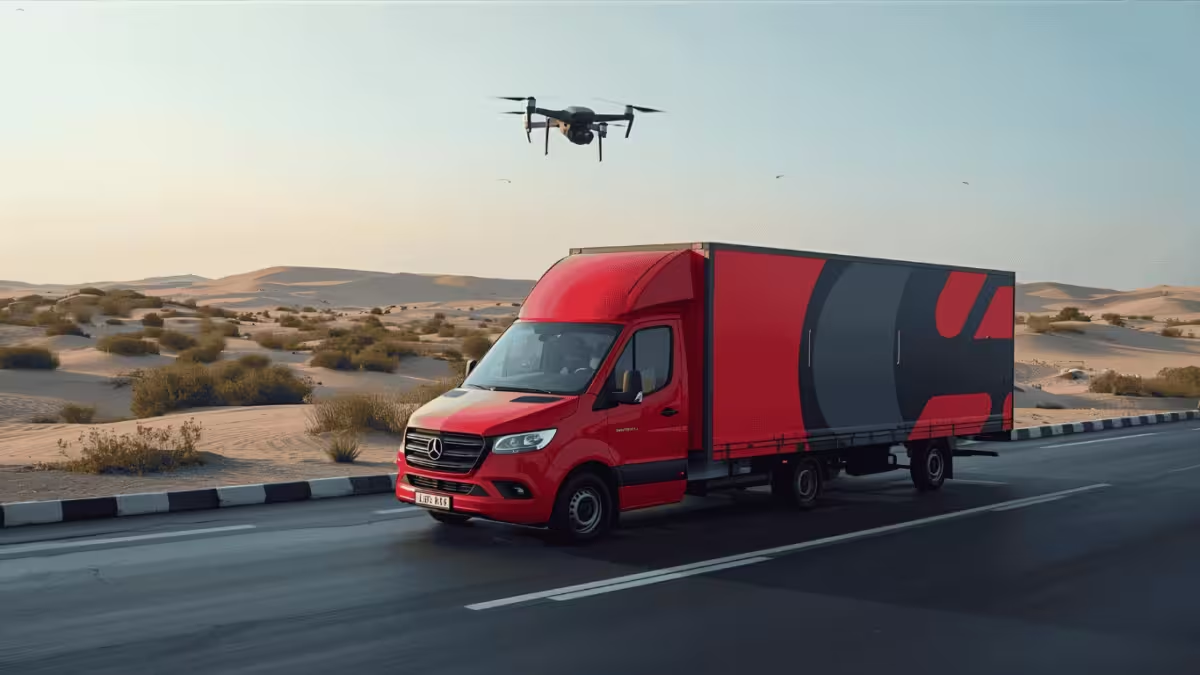
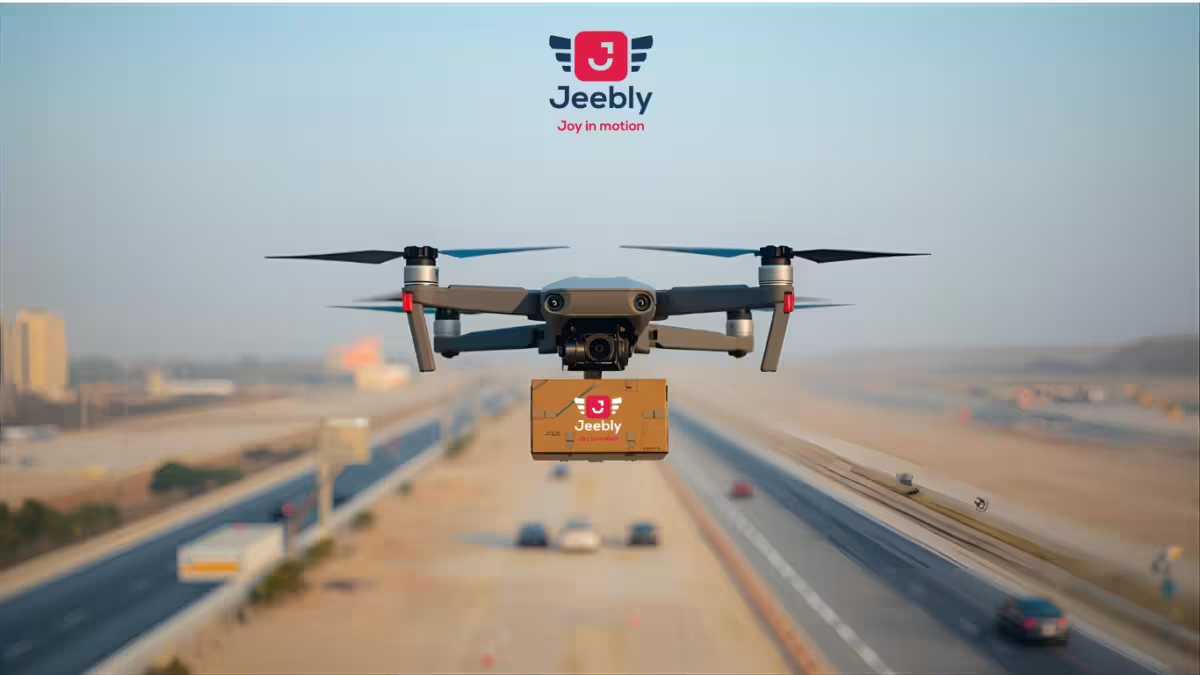
Drone delivery is steadily moving from experimental pilots to practical logistics infrastructure across the UAE and the broader MENA region. Governments, regulators, and logistics providers are actively building the frameworks that could allow aerial delivery networks to operate alongside traditional transport systems.

For fast growing digital economies such as the UAE, drone logistics presents a compelling opportunity. It promises faster deliveries, improved access to remote locations, and new efficiencies for time-sensitive shipments.

While drone technology is still evolving, one thing is clear: the future of logistics will be multimodal, combining road transport, smart warehousing, and aerial delivery systems.

At Jeebly, we view drone logistics as an extension of the modern delivery ecosystem rather than a replacement for it. As the region moves toward this new phase of logistics innovation, the real focus lies not just in the drones themselves but in the infrastructure that makes aerial delivery operationally viable.

What Is Drone Delivery and How Does It Work?

Drone delivery refers to the use of unmanned aerial vehicles (UAVs) to transport packages between locations. These drones fly autonomously or with remote supervision, carrying parcels from distribution hubs or micro-fulfillment centers directly to delivery points.

Unlike traditional delivery vehicles, drones follow predefined aerial routes rather than road networks. This allows them to bypass traffic congestion and reach destinations more directly.

Most drone delivery systems operate as part of a larger logistics network that includes warehouses, order management platforms, and ground-based delivery infrastructure.

Drones typically handle lightweight shipments or urgent deliveries, while conventional vehicles continue to manage the majority of logistics operations.

In practice, drone logistics works best when integrated with last-mile delivery networks, which remain the most complex stage of the supply chain. If you’re unfamiliar with how this stage works, you can explore what is last last mile delivery and why it matters for modern logistics

Why Drone Delivery Is Gaining Momentum in the UAE and MENA

Several factors make the UAE and the wider Middle East uniquely suited for drone-based delivery systems.

Rapid Urban Growth and Traffic Congestion

Cities such as Dubai, Abu Dhabi, and Riyadh are expanding rapidly. With increasing urban density and rising e-commerce demand, road congestion has become one of the biggest logistical challenges for delivery companies.

Drone delivery offers a way to bypass traffic entirely. Instead of navigating busy streets, aerial routes allow shipments to travel directly between fulfillment points and delivery locations.

For urgent shipments, this can significantly reduce delivery times.

Growth of E-Commerce Across the Region

E-commerce adoption across the Middle East has accelerated dramatically over the past decade. Online marketplaces, social commerce platforms, and mobile shopping have transformed consumer expectations around delivery speed.

Customers increasingly expect:

* Same-day delivery
* Precise delivery windows
* Delivery updates and ETA notifications

The UAE, with one of the world’s highest smartphone penetration rates, is particularly well positioned for technology-driven delivery systems.

According to DataReportal’s UAE Digital Report, the country has one of the highest digital adoption rates globally, creating strong demand for faster and more transparent delivery experiences.

Sustainability and Net-Zero Goals

Sustainability has become a central focus for governments across the region.

The UAE’s Net Zero 2050 initiative aims to significantly reduce carbon emissions across industries, including transportation and logistics.

Electric drones have the potential to reduce emissions for certain delivery routes, particularly for lightweight parcels or urgent shipments.

You can learn more about the UAE’s sustainability roadmap through the UAE Net Zero 2050 strategy.

While drones will not replace delivery vehicles entirely, they could support cleaner and more efficient logistics networks.

Access to Remote Locations

Beyond major cities, the Middle East includes many remote locations that are difficult to access through conventional road networks.

These include:

* Desert communities
* Offshore industrial facilities
* Remote construction sites
* Islands and coastal infrastructure

Drone delivery provides a practical solution for transporting small shipments to these locations quickly and efficiently.

Is Drone Delivery Legal in the UAE?

Drone logistics cannot scale without clear regulatory frameworks.

Recognizing this, authorities in the UAE have taken a proactive role in building policies that support safe and controlled drone operations.

Key regulators include:

General Civil Aviation Authority (GCAA)
Dubai Civil Aviation Authority (DCAA)

These organizations oversee airspace regulations, licensing requirements, and commercial drone operations across the country.

Key Regulatory Developments Through 2025–2026

The UAE has made significant progress in enabling commercial drone operations through:

* Beyond Visual Line of Sight (BVLOS) flight trials
* Development of dedicated drone airspace corridors
* Regulatory sandboxes for drone logistics providers

These initiatives allow technology providers and logistics companies to test aerial delivery systems while maintaining strict safety standards.

What Industries Will Benefit Most from Drone Logistics?

While drone delivery is often associated with e-commerce, its potential applications extend across multiple sectors.

Healthcare and Medical Logistics

Medical logistics is one of the most promising use cases for drone delivery.

Drones can transport time-sensitive medical shipments such as:

* blood samples
* vaccines
* laboratory specimens
* emergency medical supplies

This can significantly improve response times in urgent healthcare scenarios.

E-Commerce Retail

Retail logistics is another major application.

Some retailers are exploring hyper-fast delivery models, where products move from micro-fulfillment centers directly to customers within minutes.

However, even with new technologies, businesses still face common delivery challenges. Many companies are already addressing these through improved logistics planning. For example, strategies such as those discussed in how businesses can reduce failed deliveries in the UAE remain essential for improving delivery success.

How Jeebly Fits into the Future Drone Logistics Ecosystem

At Jeebly, we believe the future of logistics will be defined by integrated delivery networks that combine multiple technologies.

Drone delivery is one component of that vision.

Jeebly has already participated in Beyond Visual Line of Sight (BVLOS) drone delivery trials in partnership with Skye Air Mobility, a leading autonomous drone delivery company.

However, successful drone logistics requires more than just drones.

It requires:

* Smart warehousing systems
* AI-driven route optimization
* Integrated order management platforms
* Seamless coordination between aerial and ground transport

As drone delivery evolves across the UAE and the wider MENA region, Jeebly continues investing in the infrastructure needed to support this new generation of logistics networks.

When Could Drone Delivery Become Common in the UAE?

Drone delivery will not become widespread overnight.

The technology is likely to scale gradually through pilot programs, regulatory approvals, and infrastructure development.

However, the direction is clear.

The UAE and the wider MENA region are actively building the frameworks needed to support aerial logistics systems.

Over the coming years, drones will increasingly become part of a multimodal logistics ecosystem, working alongside traditional delivery networks.

For businesses operating in the region, preparing for this future means building flexible supply chains capable of integrating new technologies as they emerge.

Frequently Asked Questions

Drone delivery uses unmanned aerial vehicles to transport packages between locations. The drone flies autonomously or with remote supervision along predefined air routes, carrying small parcels from a warehouse or fulfillment center directly to the delivery point.

Drone delivery is being developed under regulatory supervision in the UAE. Authorities such as the General Civil Aviation Authority (GCAA) and Dubai Civil Aviation Authority (DCAA) are conducting pilot programs, airspace planning, and testing to enable safe commercial drone operations.

Industries that benefit most include healthcare logistics, e-commerce retail, industrial supply chains, and emergency services. Drones can transport medical supplies, urgent retail orders, spare parts, and other time-sensitive items quickly across cities and remote locations.

Drone delivery is expected to complement rather than replace traditional logistics. Most deliveries will still use road transport, while drones will handle specific cases such as urgent shipments, lightweight parcels, or remote-area deliveries.

Drone delivery is gradually moving from pilot programs to real-world logistics use cases. With regulatory progress and infrastructure development, broader commercial adoption could expand across the UAE and MENA region over the next several years.
Categories
blogs

Expected 2026 Trends in UAE Logistics and Delivery

Expected 2026 Trends in UAE Logistics and Delivery

UAE Logistics Trends 2026: What Businesses Should Expect in the Next Phase of Delivery Innovation

The logistics industry in the UAE is evolving rapidly as technology, consumer behavior, and infrastructure continue to reshape how goods move across the region. Over the past decade, the UAE has become one of the most advanced logistics hubs in the Middle East, supported by strong trade connectivity, modern infrastructure, and rapidly growing e-commerce adoption.

By 2026, these changes will accelerate even further. New technologies such as artificial intelligence, micro fulfilment infrastructure, and predictive analytics are already redefining delivery operations. At the same time, rising customer expectations for faster and more transparent deliveries are pushing logistics providers to innovate.

According to the Statista eCommerce market outlook for the UAE, the country’s e-commerce sector is expected to continue growing significantly through 2026, increasing the demand for efficient last-mile logistics networks.

For businesses operating in the UAE, understanding the key logistics trends shaping 2026 will be essential for maintaining operational efficiency and delivering a better customer experience.

1. AI-Powered Route Optimization Will Become Standard

Artificial intelligence is transforming how logistics networks operate. In 2026, AI-driven route optimization will play a central role in helping delivery companies reduce travel time, fuel costs, and operational inefficiencies.

Modern logistics platforms analyze multiple variables simultaneously, including:

* Real-time traffic conditions

* Delivery density in specific areas

* Rider availability

* Customer delivery windows

* Historical route performance

These systems automatically adjust delivery routes throughout the day, ensuring that drivers follow the most efficient path.

For businesses managing large order volumes, this means faster deliveries and more reliable service.

At Jeebly, AI-enabled routing technology already supports delivery operations across the UAE, improving delivery success rates and reducing delays in the last-mile stage of the supply chain. If you’re exploring how last-mile delivery works in detail, you can read our guide on what last-mile delivery means for modern logistics.

2. Micro-Fulfilment Centres Will Transform Urban Logistics

One of the most important developments in UAE logistics is the rise of micro fulfilment centres (MFCs).

Traditional warehouses are typically located on the outskirts of cities. While this setup works for bulk distribution, it increases delivery time for urban customers.

Micro fulfilment centres solve this challenge by placing inventory closer to residential demand zones within cities.

These compact fulfilment hubs allow businesses to:

* Shorten delivery distances

* Improve order processing speed

* Support same-day delivery models

* Reduce logistics costs for urban deliveries

Jeebly has recently launched its Micro Fulfilment Centre (MFC) network, designed to support fast urban deliveries across Dubai and other key UAE markets. By positioning inventory closer to customers, retailers can significantly reduce fulfilment times and support hyperlocal delivery models.

As online shopping continues to grow, MFC infrastructure will become one of the most important components of modern logistics networks.

3. Q-Commerce and Hyperlocal Delivery Will Continue Expanding

Consumer expectations around delivery speed have changed dramatically. Waiting several days for an online order is no longer acceptable for many shoppers.

Instead, customers increasingly expect:

* Same day delivery

* Instant delivery options

* Accurate delivery windows

This shift has led to the rapid growth of Q-commerce (quick commerce).

Q-commerce focuses on ultra-fast deliveries, often within hours or minutes of placing an order. The model is especially popular for products such as groceries, pharmacy items, electronics accessories, and urgent retail purchases.

Jeebly has expanded its Q-commerce delivery capabilities through Jeebly Dash, enabling rapid deliveries across high density urban areas.

Hyperlocal delivery networks like these are becoming essential for retailers and social sellers who want to compete in an on-demand retail environment.

4. Sustainability and Green Logistics Will Gain Momentum

Sustainability is becoming a key priority for logistics companies across the UAE.

The country has committed to ambitious environmental targets through initiatives such as the UAE Net Zero 2050 strategy, which aims to reduce carbon emissions across industries.

To align with these goals, logistics companies are exploring several sustainability initiatives, including:

* Electric delivery vehicles

* Optimized delivery routes to reduce fuel consumption

* Environmentally friendly packaging solutions

* Carbon-tracking systems for supply chains

Green logistics is no longer just a regulatory requirement, it is becoming an important factor for brands that want to operate responsibly while maintaining operational efficiency.

5. Reverse Logistics Will Become More Important

As e-commerce continues to grow, so does the volume of product returns.

Returns, exchanges, and failed deliveries create operational challenges for retailers. Without a proper reverse logistics system, businesses can face increased costs and inventory management issues.

Efficient reverse logistics solutions help businesses:

recover returned inventory faster

reduce operational losses

improve customer satisfaction

Many companies are now investing in structured return processes to make returns more efficient. If you’re interested in understanding this area of logistics further, you can explore how reverse logistics supports modern supply chains.

6. Autonomous Delivery and Drone Logistics Will Continue Developing

Autonomous delivery technologies are also gaining attention across the UAE and the wider Middle East.

Government regulators are actively exploring frameworks to support these innovations. Authorities such as the General Civil Aviation Authority (GCAA) are working on regulatory systems that allow controlled drone logistics trials.

These technologies are still in early stages but could eventually support:

* Medical supply delivery

* Remote area logistics

* Lightweight parcel transport

While drones will not replace traditional delivery vehicles anytime soon, they are expected to complement existing logistics infrastructure in the future.

7. Data Visibility and Predictive Logistics Will Improve Customer Experience

Modern logistics operations are increasingly driven by data.

Businesses rely on predictive analytics to forecast demand and optimize delivery operations. Customers, meanwhile, expect greater transparency during the delivery process.

Predictive logistics systems help companies:

* Forecast demand spikes

* Optimize delivery routes

* Improve ETA accuracy

* Reduce failed deliveries

Jeebly’s delivery platform already provides real-time delivery updates and operational insights, helping businesses maintain better visibility across their logistics operations.

The Future of Logistics in the UAE

The logistics ecosystem in the UAE is entering a new era of innovation. From AI-driven routing and hyperlocal fulfilment to micro-fulfilment infrastructure and predictive analytics, the trends shaping 2026 will redefine how businesses manage supply chains.

Companies that invest early in modern logistics infrastructure will be better positioned to scale operations, reduce delivery delays, and improve customer satisfaction.

At Jeebly, we continue building technology-driven logistics solutions designed for the next generation of commerce—combining smart fulfilment, rapid delivery networks, and data-driven operations.

As logistics technology continues to evolve, one thing remains certain: the future of delivery in the UAE will be defined by speed, intelligence, and adaptability.

Frequently Asked Questions

Key logistics trends in the UAE for 2026 include AI-driven route optimization, expansion of micro-fulfilment centres, rapid growth of Q-commerce, increased focus on sustainable logistics, improved reverse logistics systems, and the gradual introduction of autonomous delivery technologies.

Micro-fulfilment centres place inventory closer to urban customers, reducing delivery distances and enabling faster order fulfilment. In the UAE, these hubs support same-day and hyperlocal delivery models, helping businesses meet rising consumer expectations for faster deliveries.

Q-commerce, or quick commerce, refers to ultra-fast delivery services that deliver products within hours or minutes of ordering. The model is growing in the UAE due to high smartphone adoption, strong e-commerce demand, and consumer expectations for instant delivery.

Artificial intelligence improves delivery operations by optimizing routes, predicting delivery demand, and improving fleet utilization. AI systems analyze real-time traffic, order volumes, and driver availability to create faster and more efficient delivery routes.

Autonomous technologies such as drones and delivery robots are expected to complement traditional logistics networks rather than replace them. In the UAE, pilot programs are exploring how these technologies can support specific use cases like medical logistics and remote deliveries.

Categories
blogs

UAE E-commerce Boom: How Delivery Services are Evolving

UAE E-commerce Boom: How Delivery Services are Evolving

Explore 2025 Trends in UAE Logistics & Delivery

The UAE stands at the heart of the Middle East’s digital transformation. With one of the world’s highest internet penetration rates and a tech-savvy population, the country’s e-commerce sector is booming. This rapid growth isn’t just about more online stores; it’s fundamentally changing how goods move, placing immense pressure on traditional logistics. The key to thriving in this dynamic landscape lies not just in offering a product, but in providing a seamless and reliable UAE ecommerce delivery 2025 experience.

The E-commerce Surge in the UAE

Online retail sales in the UAE continue to shatter records in 2025. Shoppers today expect not just variety and value, but also transparency and speed in product delivery. Brands—whether local startups or global giants entering the GCC region—know that last-mile delivery excellence has become their true differentiator for customer loyalty and market growth.

Meeting the Demand: New Delivery Models

As order volumes soar, UAE ecommerce delivery 2025 has moved beyond traditional courier services. The rise of hyperlocal marketplaces, on-demand platforms, and specialized verticals means delivery providers must now offer:

Same-day and next-day delivery for instant gratification

Flexible, time-slot scheduling for busy urban lifestyles

Advanced order tracking and proactive communication

Contactless and secure delivery options for health-conscious consumers

To serve a market that expects seamlessness, innovative companies like Jeebly have introduced user-friendly dashboards, real-time fleet tracking, and dedicated support teams for retailers of all sizes.

Technology: The Cornerstone of Reliable Delivery

The evolution of UAE ecommerce delivery 2025 is powered by technology. Automated sorting hubs, AI-powered route optimizations, and robust APIs for e-commerce integration ensure faster fulfillment and higher accuracy. Smart inventory placement—moving goods closer to high-demand zones—means brands can promise and deliver ultra-fast shipping at scale.

For retailers and restaurants, modern logistics platforms offer direct access to order dashboards across mobile and desktop, making it easy to manage surges, returns, and customer care—all from one place.

The Role of Jeebly in Shaping UAE Ecommerce Delivery 2025

At Jeebly, we understand that businesses in the UAE need more than just a delivery partner—they need a logistics ally who can scale with their growth. Our solutions are designed to support retailers, e-commerce platforms, and SMEs during both regular and peak shopping seasons. With a focus on innovation, reliability, and rider empowerment, Jeebly ensures that every delivery contributes to stronger customer satisfaction and long-term business success.

From real-time order visibility to rider excellence initiatives, Jeebly is constantly adapting to meet the evolving needs of UAE ecommerce delivery 2025. We build systems that work for the people who make it all work—our frontline riders and our business partners.

Looking Ahead

With continued expansion of e-commerce and rising customer expectations, the future will be defined by even greater personalization, predictive delivery, and sustainability. Businesses that partner with agile, tech-driven logistics providers will not only meet but exceed customer demands.

As UAE ecommerce delivery 2025 evolves, Jeebly stands ready as a reliable ally for retailers, restaurants, and brands—delivering seamless, transparent, and future-focused logistics solutions for the nation’s digital retail boom.

Categories
blogs

Explore 2025 Trends in UAE Logistics & Delivery

Explore 2025 Trends in UAE Logistics & Delivery​

Explore 2025 Trends in UAE Logistics & Delivery

The logistics and delivery industry in the UAE is evolving rapidly, fueled by digital transformation, government initiatives, and changing consumer expectations. As businesses and individuals continue to demand faster, smarter, and more reliable services, staying ahead of UAE logistics trends 2025 becomes essential for companies that want to remain competitive.

Below, we explore the most significant logistics trends 2025 shaping the industry in the UAE and how they are transforming the way goods move across the region.

Growth of E-commerce & On-Demand Delivery

With the UAE ranking among the fastest-growing e-commerce markets in the Middle East, logistics companies are under pressure to provide seamless, last-mile delivery experiences. Consumers now expect same-day or even instant delivery options. This shift is driving logistics players to invest in smart route optimization, real-time tracking, and scalable fulfillment solutions

Sustainability in Logistics

Sustainability is no longer just a buzzword—it’s a necessity. Companies in the UAE are adopting greener practices, such as electric delivery vehicles, eco-friendly packaging, and carbon-neutral supply chain strategies. These initiatives are aligned with the UAE’s Net Zero 2050 vision, making sustainability a central part of logistics trends in 2025.

Technology-Driven Operations

Digitalization continues to reshape the logistics ecosystem. Artificial intelligence, IoT-enabled tracking devices, and predictive analytics are empowering businesses to reduce inefficiencies and enhance supply chain visibility. From smart warehousing to autonomous vehicles and drones, technology will remain a key driver of transformation in UAE logistics trends in 2025.

Rise of Temperature-Controlled Logistics

With growing demand for pharmaceuticals, fresh food, and other sensitive goods, temperature-controlled logistics is gaining momentum. Companies are investing in advanced cold-chain solutions to ensure quality and safety throughout the delivery journey. This sector is set to be one of the most dynamic aspects of logistics trends 2025 in the UAE.

Cross-Border Logistics & Regional Connectivity

The UAE’s strategic location makes it a global hub for trade and logistics. In 2025, we expect further advancements in cross-border logistics, supported by improved customs processes and regional collaborations. As the UAE strengthens its role as a gateway between East and West, efficient cross-border delivery solutions will be crucial.

Customer-Centric Innovations

Customer expectations are driving innovation like never before. Flexible delivery windows, real-time communication, and simplified returns are becoming standard practices. Personalization and convenience are at the heart of UAE logistics trends 2025, pushing logistics companies to rethink their customer experience strategies.

Final Thoughts

The logistics and delivery landscape in the UAE is on the brink of a new era. From sustainability and technology adoption to customer-centric services and cross-border expansion, the logistics trends 2025 are redefining how businesses operate. Companies that embrace these changes will not only gain a competitive edge but also contribute to building a more efficient, sustainable, and future-ready logistics ecosystem.
 
At Jeebly, we are committed to staying ahead of these UAE logistics trends 2025 by delivering innovative, reliable, and customer-focused solutions that empower businesses and delight customers.

    Powered by