





Jeebly | Logistics Solutions

Categories
blogs

The Future of Drone Deliveries in the Middle East

How Drone Delivery UAE is Redefining Logistics

The Future Takes Flight: How Drone Delivery UAE is Redefining Logistics

The logistics industry in the UAE and the wider Middle East has always been defined by speed, ambition, and innovation. From world class ports to advanced e-commerce infrastructure, the region consistently pushes the boundaries of what modern supply chains can achieve.

The next transformation in logistics may not happen on roads or highways. It will happen in the sky.

Drone delivery is steadily moving from experimental pilots to practical logistics infrastructure across the UAE and the broader MENA region. Governments, regulators, and logistics providers are actively building the frameworks that could allow aerial delivery networks to operate alongside traditional transport systems.

For fast growing digital economies such as the UAE, drone logistics presents a compelling opportunity. It promises faster deliveries, improved access to remote locations, and new efficiencies for time-sensitive shipments.

While drone technology is still evolving, one thing is clear: the future of logistics will be multimodal, combining road transport, smart warehousing, and aerial delivery systems.

At Jeebly, we view drone logistics as an extension of the modern delivery ecosystem rather than a replacement for it. As the region moves toward this new phase of logistics innovation, the real focus lies not just in the drones themselves but in the infrastructure that makes aerial delivery operationally viable.

What Is Drone Delivery and How Does It Work?

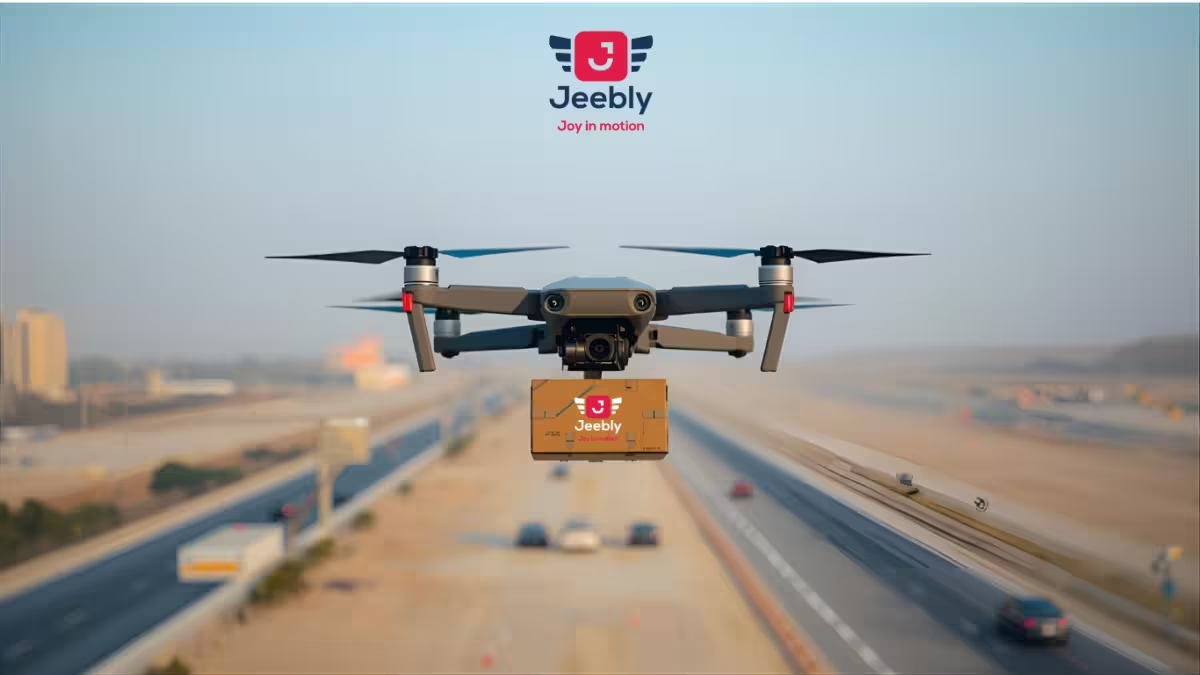
Drone delivery refers to the use of unmanned aerial vehicles (UAVs) to transport packages between locations. These drones fly autonomously or with remote supervision, carrying parcels from distribution hubs or micro-fulfillment centers directly to delivery points.

Unlike traditional delivery vehicles, drones follow predefined aerial routes rather than road networks. This allows them to bypass traffic congestion and reach destinations more directly.

Most drone delivery systems operate as part of a larger logistics network that includes warehouses, order management platforms, and ground-based delivery infrastructure.

Drones typically handle lightweight shipments or urgent deliveries, while conventional vehicles continue to manage the majority of logistics operations.

In practice, drone logistics works best when integrated with last-mile delivery networks, which remain the most complex stage of the supply chain. If you’re unfamiliar with how this stage works, you can explore what is last last mile delivery and why it matters for modern logistics

Why Drone Delivery Is Gaining Momentum in the UAE and MENA

Several factors make the UAE and the wider Middle East uniquely suited for drone-based delivery systems.

Rapid Urban Growth and Traffic Congestion

Cities such as Dubai, Abu Dhabi, and Riyadh are expanding rapidly. With increasing urban density and rising e-commerce demand, road congestion has become one of the biggest logistical challenges for delivery companies.

Drone delivery offers a way to bypass traffic entirely. Instead of navigating busy streets, aerial routes allow shipments to travel directly between fulfillment points and delivery locations.

For urgent shipments, this can significantly reduce delivery times.

Growth of E-Commerce Across the Region

E-commerce adoption across the Middle East has accelerated dramatically over the past decade. Online marketplaces, social commerce platforms, and mobile shopping have transformed consumer expectations around delivery speed.

Customers increasingly expect:

* Same-day delivery
* Precise delivery windows
* Delivery updates and ETA notifications

The UAE, with one of the world’s highest smartphone penetration rates, is particularly well positioned for technology-driven delivery systems.

According to DataReportal’s UAE Digital Report, the country has one of the highest digital adoption rates globally, creating strong demand for faster and more transparent delivery experiences.

Sustainability and Net-Zero Goals

Sustainability has become a central focus for governments across the region.

The UAE’s Net Zero 2050 initiative aims to significantly reduce carbon emissions across industries, including transportation and logistics.

Electric drones have the potential to reduce emissions for certain delivery routes, particularly for lightweight parcels or urgent shipments.

You can learn more about the UAE’s sustainability roadmap through the UAE Net Zero 2050 strategy.

While drones will not replace delivery vehicles entirely, they could support cleaner and more efficient logistics networks.

Access to Remote Locations

Beyond major cities, the Middle East includes many remote locations that are difficult to access through conventional road networks.

These include:

* Desert communities
* Offshore industrial facilities
* Remote construction sites
* Islands and coastal infrastructure

Drone delivery provides a practical solution for transporting small shipments to these locations quickly and efficiently.

Is Drone Delivery Legal in the UAE?

Drone logistics cannot scale without clear regulatory frameworks.

Recognizing this, authorities in the UAE have taken a proactive role in building policies that support safe and controlled drone operations.

Key regulators include:

General Civil Aviation Authority (GCAA)
Dubai Civil Aviation Authority (DCAA)

These organizations oversee airspace regulations, licensing requirements, and commercial drone operations across the country.

Key Regulatory Developments Through 2025–2026

The UAE has made significant progress in enabling commercial drone operations through:

* Beyond Visual Line of Sight (BVLOS) flight trials
* Development of dedicated drone airspace corridors
* Regulatory sandboxes for drone logistics providers

These initiatives allow technology providers and logistics companies to test aerial delivery systems while maintaining strict safety standards.

What Industries Will Benefit Most from Drone Logistics?

While drone delivery is often associated with e-commerce, its potential applications extend across multiple sectors.

Healthcare and Medical Logistics

Medical logistics is one of the most promising use cases for drone delivery.

Drones can transport time-sensitive medical shipments such as:

* blood samples
* vaccines
* laboratory specimens
* emergency medical supplies

This can significantly improve response times in urgent healthcare scenarios.

E-Commerce Retail

Retail logistics is another major application.

Some retailers are exploring hyper-fast delivery models, where products move from micro-fulfillment centers directly to customers within minutes.

However, even with new technologies, businesses still face common delivery challenges. Many companies are already addressing these through improved logistics planning. For example, strategies such as those discussed in how businesses can reduce failed deliveries in the UAE remain essential for improving delivery success.

How Jeebly Fits into the Future Drone Logistics Ecosystem

At Jeebly, we believe the future of logistics will be defined by integrated delivery networks that combine multiple technologies.

Drone delivery is one component of that vision.

Jeebly has already participated in Beyond Visual Line of Sight (BVLOS) drone delivery trials in partnership with Skye Air Mobility, a leading autonomous drone delivery company.

However, successful drone logistics requires more than just drones.

It requires:

* Smart warehousing systems
* AI-driven route optimization
* Integrated order management platforms
* Seamless coordination between aerial and ground transport

As drone delivery evolves across the UAE and the wider MENA region, Jeebly continues investing in the infrastructure needed to support this new generation of logistics networks.

When Could Drone Delivery Become Common in the UAE?

Drone delivery will not become widespread overnight.

The technology is likely to scale gradually through pilot programs, regulatory approvals, and infrastructure development.

However, the direction is clear.

The UAE and the wider MENA region are actively building the frameworks needed to support aerial logistics systems.

Over the coming years, drones will increasingly become part of a multimodal logistics ecosystem, working alongside traditional delivery networks.

For businesses operating in the region, preparing for this future means building flexible supply chains capable of integrating new technologies as they emerge.

Frequently Asked Questions

Drone delivery uses unmanned aerial vehicles to transport packages between locations. The drone flies autonomously or with remote supervision along predefined air routes, carrying small parcels from a warehouse or fulfillment center directly to the delivery point.

Drone delivery is being developed under regulatory supervision in the UAE. Authorities such as the General Civil Aviation Authority (GCAA) and Dubai Civil Aviation Authority (DCAA) are conducting pilot programs, airspace planning, and testing to enable safe commercial drone operations.

Industries that benefit most include healthcare logistics, e-commerce retail, industrial supply chains, and emergency services. Drones can transport medical supplies, urgent retail orders, spare parts, and other time-sensitive items quickly across cities and remote locations.

Drone delivery is expected to complement rather than replace traditional logistics. Most deliveries will still use road transport, while drones will handle specific cases such as urgent shipments, lightweight parcels, or remote-area deliveries.

Drone delivery is gradually moving from pilot programs to real-world logistics use cases. With regulatory progress and infrastructure development, broader commercial adoption could expand across the UAE and MENA region over the next several years.

Routes to insightful reads

A comparison banner for UAE eCommerce delivery showing two hands holding smartphones side-by-side against a blurred Dubai skyline. The left screen displays the DHL Express logo with an "International Express" badge below it, while the right screen displays the Jeebly logo with a "Local Hyper-local" map route badge. A bold "VS" graphic splits the center.
DHL vs Jeebly: Which Is Better for UAE Businesses and eCommerce Delivery?

Looking for the right logistics partner in the UAE? We break down DHL vs. Jeebly to help you choose between global express shipping and local, tech-driven e-commerce fulfillment. Discover which courier wins on domestic delivery speeds, Cash on Delivery (COD) handling, and cross-border customs.

Read More
Logisty vs Jeebly comparison for UAE eCommerce delivery, last-mile logistics and courier services
Logisty vs Jeebly: UAE eCommerce Delivery Comparison

Logisty and Jeebly serve different logistics needs, but which is the better choice for your business? This comparison explores their services, delivery capabilities, technology, coverage, eCommerce integrations, cash on delivery (COD), and fulfilment solutions to help UAE businesses choose the right logistics partner for growth.

Read More
UAE VAT on imports and exports showing tax compliance, logistics, shipping and customs documentation
VAT on Shipping and Delivery Services in UAE: What Businesses Need to Know

VAT can significantly impact the cost of shipping and delivery services in the UAE, making it essential for businesses to understand how it applies to domestic and international shipments. This guide explains VAT rules, zero-rated and standard-rated services, invoicing requirements, and practical compliance tips to help businesses manage logistics costs and stay compliant with UAE tax regulations.

Read More
COD fraud prevention in the UAE with secure payment verification, order authentication and logistics risk management
COD Fraud in UAE eCommerce: How to Detect, Prevent and Reduce Losses

Cash on Delivery (COD) fraud is a growing challenge for e-commerce businesses across the UAE, leading to fake orders, delivery failures and unnecessary operational costs. Learn how to identify common fraud tactics, implement effective prevention strategies and protect your business while maintaining a seamless customer experience.

Read More
UAE import and export guide featuring trade documentation, cargo ship, air freight, customs clearance and logistics operations
UAE Import and Export Guide: Trade Documentation, Logistics and Compliance

Customs clearance is a critical step in moving goods into and out of the UAE. Whether you’re importing, exporting, or shipping across borders, understanding the customs process, required documentation, and compliance requirements can help you avoid delays, reduce costs, and keep your supply chain running efficiently.

Read More

    Powered by