





Jeebly | Logistics Solutions

Explore 2025 Trends in UAE Logistics & Delivery​

Explore 2025 Trends in UAE Logistics & Delivery

The logistics and delivery industry in the UAE is evolving rapidly, fueled by digital transformation, government initiatives, and changing consumer expectations. As businesses and individuals continue to demand faster, smarter, and more reliable services, staying ahead of UAE logistics trends 2025 becomes essential for companies that want to remain competitive.

Below, we explore the most significant logistics trends 2025 shaping the industry in the UAE and how they are transforming the way goods move across the region.

Growth of E-commerce & On-Demand Delivery

With the UAE ranking among the fastest-growing e-commerce markets in the Middle East, logistics companies are under pressure to provide seamless, last-mile delivery experiences. Consumers now expect same-day or even instant delivery options. This shift is driving logistics players to invest in smart route optimization, real-time tracking, and scalable fulfillment solutions

Sustainability in Logistics

Sustainability is no longer just a buzzword—it’s a necessity. Companies in the UAE are adopting greener practices, such as electric delivery vehicles, eco-friendly packaging, and carbon-neutral supply chain strategies. These initiatives are aligned with the UAE’s Net Zero 2050 vision, making sustainability a central part of logistics trends in 2025.

Technology-Driven Operations

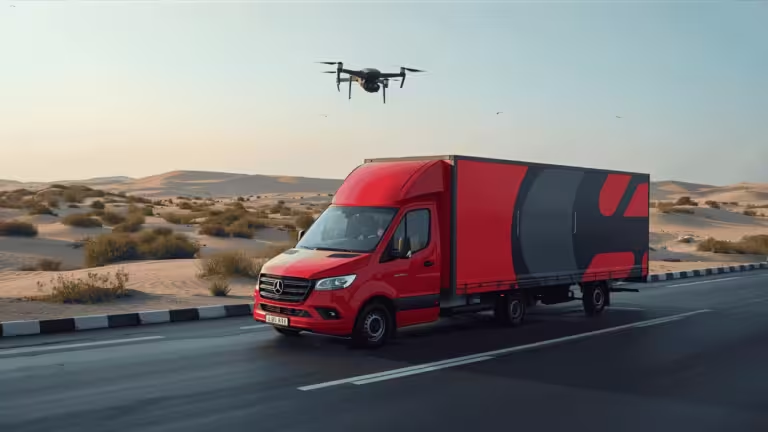
Digitalization continues to reshape the logistics ecosystem. Artificial intelligence, IoT-enabled tracking devices, and predictive analytics are empowering businesses to reduce inefficiencies and enhance supply chain visibility. From smart warehousing to autonomous vehicles and drones, technology will remain a key driver of transformation in UAE logistics trends in 2025.

Rise of Temperature-Controlled Logistics

With growing demand for pharmaceuticals, fresh food, and other sensitive goods, temperature-controlled logistics is gaining momentum. Companies are investing in advanced cold-chain solutions to ensure quality and safety throughout the delivery journey. This sector is set to be one of the most dynamic aspects of logistics trends 2025 in the UAE.

Cross-Border Logistics & Regional Connectivity

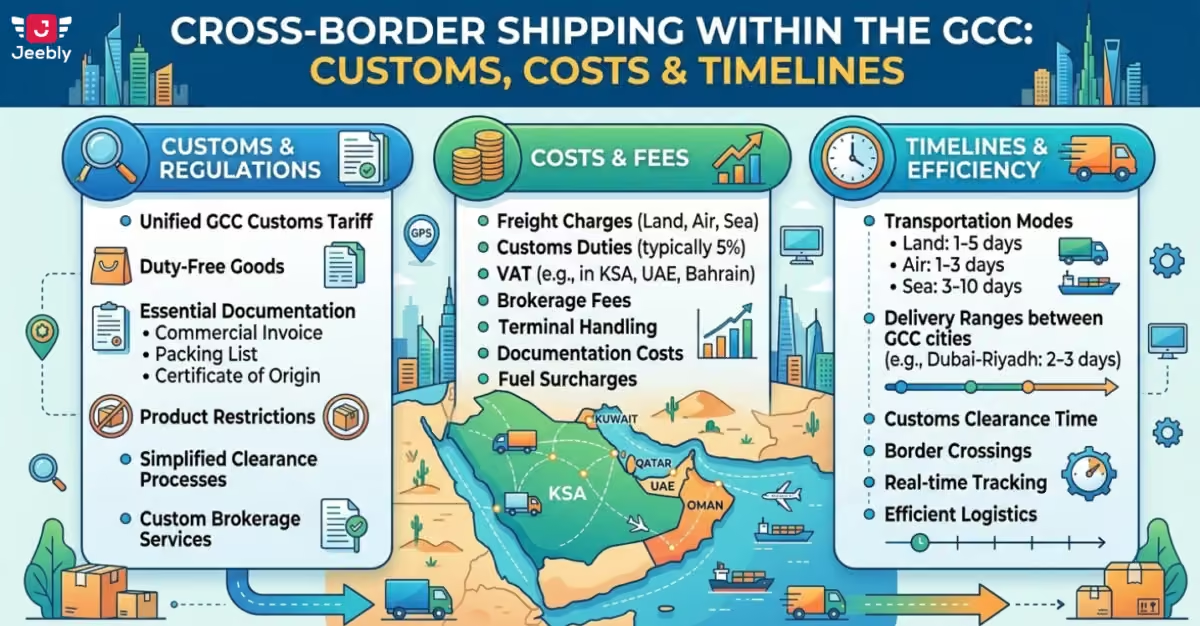
The UAE’s strategic location makes it a global hub for trade and logistics. In 2025, we expect further advancements in cross-border logistics, supported by improved customs processes and regional collaborations. As the UAE strengthens its role as a gateway between East and West, efficient cross-border delivery solutions will be crucial.

Customer-Centric Innovations

Customer expectations are driving innovation like never before. Flexible delivery windows, real-time communication, and simplified returns are becoming standard practices. Personalization and convenience are at the heart of UAE logistics trends 2025, pushing logistics companies to rethink their customer experience strategies.

Final Thoughts

The logistics and delivery landscape in the UAE is on the brink of a new era. From sustainability and technology adoption to customer-centric services and cross-border expansion, the logistics trends 2025 are redefining how businesses operate. Companies that embrace these changes will not only gain a competitive edge but also contribute to building a more efficient, sustainable, and future-ready logistics ecosystem.
 
At Jeebly, we are committed to staying ahead of these UAE logistics trends 2025 by delivering innovative, reliable, and customer-focused solutions that empower businesses and delight customers.

Routes to insightful reads

BNPL in the UAE and its impact on ecommerce delivery and returns, showing the transaction cycle, faster fulfilment, order frequency, real-time tracking, and streamlined returns
Buy Now Pay Later in the UAE: What BNPL Means for eCommerce Delivery and Returns.

Buy Now Pay Later (BNPL) is changing how consumers shop and how eCommerce businesses manage fulfilment and returns in the UAE. This guide explores how BNPL can influence order volumes, delivery demand, fulfilment operations, return rates, refund processing, and the logistics strategies businesses need to support a growing BNPL-driven customer base.

Read More
Infographic explaining how to calculate volumetric weight for shipping, including the formula, measurement example and comparison between actual and chargeable weight.
How to Calculate Volumetric Weight for Shipping: Formula and Examples

Learn how to calculate volumetric weight for shipping with an easy-to-follow formula and practical examples. Understand how package dimensions, actual weight and carrier conversion factors determine the chargeable weight and ultimately impact your shipping costs.

Read More
3PL vs 4PL logistics comparison showing warehousing, transportation, distribution, supply chain integration, technology, analytics, and strategic planning for UAE businesses
3PL vs 4PL: What Is the Difference and Which Does Your UAE Business Need?

3PL and 4PL logistics models help businesses manage different levels of supply chain operations. This guide explains the key differences between 3PL and 4PL providers, their roles, benefits, costs, and how UAE businesses can choose the right logistics model based on their size, supply chain complexity, and operational needs.

Read More
Types of packaging for courier shipments, showing outer packaging strength, void-fill options, cushioning materials, and sealing and labelling methods
Types of Packaging for Courier Shipments: Which One Best Protects Your Product?

Choosing the right packaging is essential for protecting products during courier transportation. This guide explores different types of packaging for courier shipments, including corrugated boxes, bubble wrap, air pillows, paper fillers, foam inserts, and protective seals, and explains how to choose the best option based on your product, handling needs, and shipping conditions.

Read More
Types of logistics explained through inbound, outbound, reverse and third-party logistics, showing the movement of goods between suppliers, warehouses, customers and return facilities.
Types of Logistics Explained: Inbound, Outbound, Reverse and Third-Party 

Logistics covers much more than moving goods from one place to another. This guide explains the four key types of logistics, inbound, outbound, reverse and third-party logistics (3PL), and how each supports the supply chain. Learn how goods move from suppliers to warehouses, reach customers, return for repair or disposal, and how businesses use 3PL providers to manage logistics operations.

Read More

    Powered by