





Jeebly | Logistics Solutions

Categories
blogs

Green Logistics in the UAE: What It Is and Why It Matters

Green Logistics: Why Sustainability Is Becoming the UAE's Next Big Supply Chain Priority

Green Logistics: Why Sustainability Is Becoming the UAE's Next Big Supply Chain Priority

Every parcel that moves from a warehouse to a doorstep carries more than a product. It carries a carbon cost. Freight transportation alone accounts for approximately 8% of global greenhouse gas emissions, rising to 11% when warehousing and ports are included. 

For UAE businesses, that figure is a commercial and regulatory reality. Green logistics is the practice of reducing the environmental impact of moving goods through a supply chain, from sourcing and warehousing to last-mile delivery and returns. 

This article covers what it entails, why it matters specifically for UAE e-commerce businesses, the real return on investment it delivers, and how to approach implementation without overhauling everything at once.

What Is Green Logistics and Why Does It Matter for UAE Businesses?

Green logistics is a systems-wide commitment that covers transportation choices, packaging design, warehouse energy use, supplier selection, and return handling to make each link in the supply chain cleaner and more accountable.

In the UAE, the regulatory signal is clear. 

* The country’s Net Zero by 2050 Strategic Initiative is already shaping procurement expectations, free zone standards, and investor-grade due diligence for businesses operating in the region. 
* Companies building green logistics capabilities now are not getting ahead of a trend. They are preparing for a tightening compliance baseline.

Want to understand how AI-driven routing and smarter delivery networks are already reducing emissions per delivery? Read: How AI Is Changing Logistics in the UAE.

The Five Pillars of Sustainable Supply Chain Management

Sustainable logistics operates across five interconnected areas. Progress in one amplifies results in the others, which is why businesses that approach it as a checklist rarely see the compounding returns that a systems-level commitment delivers.


1) Route and fleet optimisation
This is where technology pays off most visibly. AI-powered routing tools analyse traffic density, delivery windows, and order clustering to reduce fuel consumption per delivery. Fewer kilometres driven mean lower fuel costs and lower emissions.

2) Sustainable packaging 
It reduces material waste, cuts shipping weight, and signals environmental accountability at the moment customers open their order. Right-sized packaging matched to product dimensions eliminates void fill, reduces per-shipment weight, and cuts costs without requiring major infrastructure investment.
Jeebly already walks this talk in their LinkedIn post. All deliveries are wrapped in D2W biodegradable plastic, which is 100% recyclable, naturally degradable, and leaves no toxic residue.

3) Green warehousing 
This includes energy-efficient lighting, solar installations, smart climate controls, and warehouse management systems that reduce energy draw and operational errors. Fewer errors mean fewer returns. Fewer returns mean fewer re-delivery runs.

4) Reverse logistics and circular economy integration 
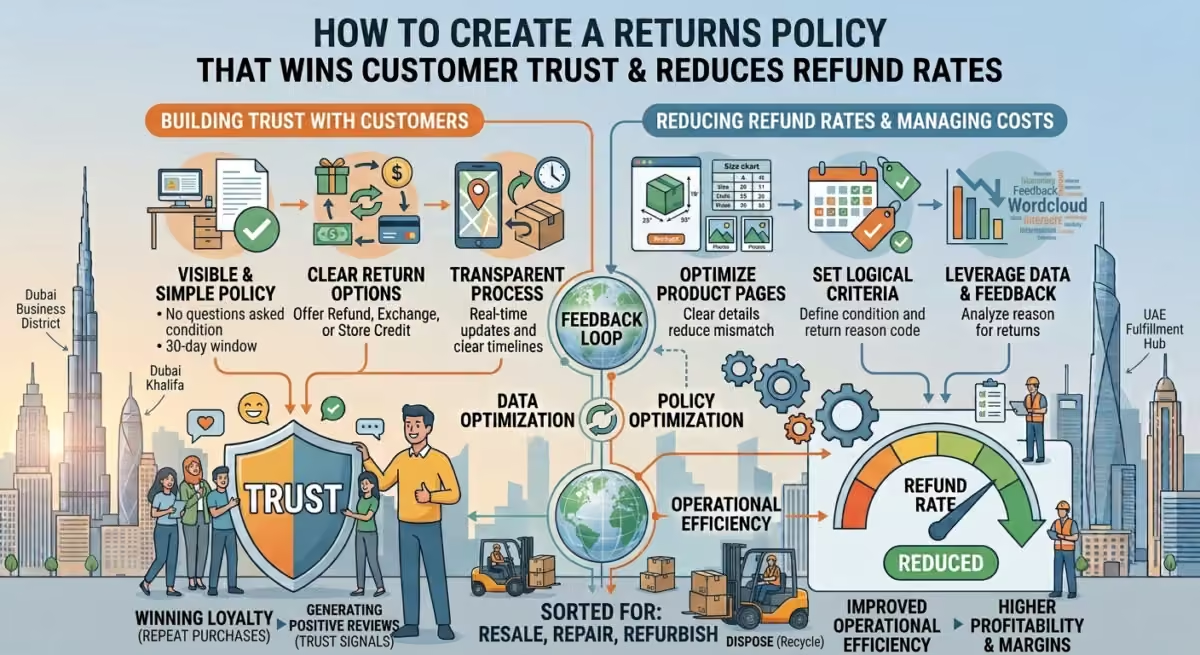
This turn returns from a cost centre into a value-recovery operation. Businesses that design their return processes around refurbishment, resale, and recycling reduce both waste output and the emissions associated with producing replacement units. 
Curious about how reverse logistics fits into a broader fulfilment strategy? See Jeebly Bizz end-to-end business logistics built for visibility and control.

5) Supplier and partner collaboration 
This is where the highest-leverage impact lives, and the most common blind spot sits. Scope 3 emissions, those generated across your supplier and logistics partner network, can account for up to 75% of a company’s total carbon footprint. 

Choosing partners that provide operational data, routing transparency, and delivery efficiency is not a sustainability add-on. It is the decision that makes your green credentials hold up to scrutiny. 

The Business Case: Real ROI of Green Logistics Investments

The financial argument for green logistics is more accessible than most businesses expect, particularly for small and mid-sized e-commerce operators in Dubai. Cost structure varies by initiative, and so does the speed of return.

Six Operational Decisions That Reduce Delivery Time in UAE

The financial argument for green logistics is more accessible than most businesses expect, particularly for small and mid-sized e-commerce operators in Dubai. Cost structure varies by initiative, and so does the speed of return.

The ranges below are indicative benchmarks. Actual savings depend on fleet size, delivery density, energy tariffs, shipment mix, and partner contracts.

Initiative Cost Level Ongoing Saving Approximate Payback
Route optimization software Low to medium 10–20% fuel cost reduction 6–18 months
Right-sized sustainable packaging Low 5–15% shipping cost reduction 3–6 months
Warehouse LED and smart energy controls Medium 20–40% energy cost reduction 12–24 months
Partial EV fleet transition High Long-term fuel and maintenance savings 3–5 years

Packaging redesign and route optimisation deliver the fastest returns at the lowest capital outlay. The natural entry point for businesses that cannot commit to large infrastructure changes up front. 

Start there, measure results, and reinvest savings into the next phase.

A Phased Green Logistics Roadmap for SMEs in Dubai and the UAE

Most green logistics guidance is written for multinationals with dedicated sustainability teams and capital reserves to match. For small- and mid-sized UAE e-commerce businesses, the path forward is more incremental and must account for Dubai’s specific infrastructure, regulatory direction, and operational realities.

Phase 1: Measure and quick-win (Months 1–3)

Before optimising anything, establish a baseline. 

*Audit your current packaging for over-sizing, identify your most-used delivery routes, and start tracking fuel consumption and first-attempt delivery failure rates. Failed deliveries are a significant source of avoidable emissions and costs. 

*Switch to right-sized, recycled-material packaging in this phase. It pays back fast and is visible to customers at the moment they interact with your brand.

Phase 2: Operational integration (Months 3–9)

Integrate route optimisation into your last-mile operations. 

* Partner with a logistics provider that gives you real-time delivery data. This is non-negotiable for tracking progress and credibly reporting on it. 
* Review your supplier sustainability credentials and build minimum expectations into your procurement decisions. Your Scope 3 footprint starts here.

Phase 3: Structural investment (Months 9–24)

Explore EV or hybrid vehicles for your highest-frequency delivery corridors. 

*Transition to green-certified warehouse facilities where operationally viable. Build a reverse logistics process designed to recover product value rather than generate disposal costs. 

* The UAE’s Net Zero by 2050 strategy and Dubai’s Smart City infrastructure investments create genuine tailwinds for these decisions. Businesses that act in this phase are ahead of compliance requirements rather than scrambling to meet them.

One of the most avoidable causes of failed deliveries in the UAE is incorrect address formatting. Get the UAE address format right, every time.

Best Practices for Scaling Green Logistics Without Losing Momentum

Getting started with green logistics is the hard part. Sustaining it as your operation scales requires building habits and systems that hold up under the pressure of growth.

* Measure before you optimise. An emissions baseline from month one becomes the yardstick for every improvement you communicate to customers and investors. Without it, your sustainability story has no foundation.

* Consolidate shipments. Fewer, fuller vehicles consistently outperform more, emptier ones in terms of cost and emissions. Build scheduling around consolidation, not just delivery speed.

* Choose partners who make your Scope 3 story credible. Your logistics provider’s routing efficiency, fleet composition, and data transparency are your Scope 3 metrics. Ask for them before you commit.

* Give customers a green delivery choice. Scheduled delivery windows have a meaningfully lower carbon footprint than express options. Offering the choice serves the customer segment that cares and builds trust with the one that is growing fastest.

* Build returns around value recovery. A reverse logistics process designed for refurbishment and resale reduces both customer friction and waste output. Treat it as a supply chain function, not an afterthought.

* Share your progress. Customers respond to transparency and measurable improvement, not perfection. Sharing milestones builds the kind of trust that retains customers between purchases.

How Jeebly Supports Sustainable Logistics for UAE Businesses

Jeebly’s mission, empowering businesses with fast, smart, and sustainable logistics solutions, shapes how its operations are built, not just how they are described.
The tech platform underpinning every Jeebly service is designed to maximise delivery efficiency: smarter routing, better load density, real-time visibility, and operational data that business owners can act on.

Jeebly Dash handles same-day and express delivery with route optimisation built into every run, fewer wasted kilometres per order, consistently. 

* Jeebly Haul moves bulk freight with consolidated loads, significantly reducing per-unit emissions compared to underloaded single-cargo trips. 

* For businesses managing ongoing fulfilment, Jeebly Bizz provides the operational visibility needed to track, report, and improve delivery efficiency over time.

Jeebly Fulfillment adds accurate inventory management and pick-pack operations that reduce order errors. Fewer errors mean fewer returns, fewer re-delivery runs, and less waste across the supply chain.

Conclusion

Green logistics is how responsible UAE e-commerce businesses grow without leaving a disproportionate mark on the environment in which they operate.  Start with your baseline. Partner with a logistics provider whose operations actively reduce emissions per delivery. 

Jeebly’s tech-driven platform handles deliveries with routing intelligence, operational transparency, and a range of services to help your business move smarter from the first shipment.

Ready to align your logistics operations with your sustainability goals? Get in touch with the Jeebly team and let’s build a supply chain that works for your business and the market it serves.

Frequently Asked Questions

It does both, but the mechanism is direct: your logistics partner’s routing efficiency, fleet composition, and delivery density determine your Scope 3 emissions. A provider with poor first-attempt delivery rates generates more re-delivery runs, which are entirely avoidable emissions you absorb on your carbon ledger.

Not across the board. Packaging right-sizing and route optimisation typically cut costs within months of adoption. The initiatives with the highest upfront cost also have the longest payback horizon, which is why a phased approach matched to your operational scale matters more than trying to overhaul everything at once.

No mandatory framework specific to logistics operators exists yet, but the UAE’s Net Zero by 2050 Strategic Initiative is already cascading into free zone procurement standards, investor due diligence requirements, and expected reporting norms.

Reducing failed first-attempt deliveries. A failed delivery means the same order travels two or more times, doubling or tripling its emissions and per-unit cost. Better customer communication, flexible delivery windows, and a logistics partner could address this directly before any changes to the fleet or packaging.

You report through your Scope 3 disclosures, which cover the logistics and fulfilment activities in your supply chain, even when third parties execute them. This requires requesting emissions data from your logistics partners, making data transparency one of the most important criteria when choosing a provider.

Routes to insightful reads

Porter vs Jeebly: Understanding the Difference and Choosing the Right Delivery Partner in Dubai

Picking a delivery partner in Dubai sounds straightforward until the bills don’t match the quotes, the tracking goes quiet, or your business outgrows what the platform can handle. This article breaks down both platforms in terms of pricing, technology, coverage, and support so you know exactly what you are choosing and why.

Read More
EMX vs Jeebly: Which Courier Delivers More Value for Your Business?

Your courier partner is not a vendor you swap easily. It shapes how customers experience your brand after checkout. This article maps providers across service capabilities, technology, pricing structures, and e-commerce fit, so you can match the right partner to how your business actually operates.

Read More
iMile vs Jeebly: Comparing Last-Mile Delivery for eCommerce Businesses

Your logistics partner is the last thing your customer experiences before forming an opinion about your brand. The iMile vs Jeebly question comes up often for UAE e-commerce brands, and rightly so. This article compares both carriers across coverage, delivery speed, pricing, SLAs, technology, and reverse logistics so you can choose based on what your business actually needs.

Read More
Quiqup vs Jeebly: Which Delivery Partner Is Right for Your UAE Business?

Your delivery partner is your brand’s last impression. When a parcel arrives late, tracking goes silent, or a COD reconciliation takes a week, the customer blames your brand. So when UAE businesses compare Quiqup vs Jeebly, the real question is: which provider actually protects your customer experience while your order volumes grow?

Read More
Green Logistics: Why Sustainability Is Becoming the UAE's Next Big Supply Chain Priority
Green Logistics in the UAE: What It Is and Why It Matters

Every parcel that moves from a warehouse to a doorstep carries more than a product. It carries a carbon cost. This article covers what it entails, why it matters specifically for UAE e-commerce businesses, the real return on investment it delivers, and how to approach implementation without overhauling everything at once.

Read More
Categories
blogs

Expected 2026 Trends in UAE Logistics and Delivery

Expected 2026 Trends in UAE Logistics and Delivery

UAE Logistics Trends 2026: What Businesses Should Expect in the Next Phase of Delivery Innovation

The logistics industry in the UAE is evolving rapidly as technology, consumer behavior, and infrastructure continue to reshape how goods move across the region. Over the past decade, the UAE has become one of the most advanced logistics hubs in the Middle East, supported by strong trade connectivity, modern infrastructure, and rapidly growing e-commerce adoption.

By 2026, these changes will accelerate even further. New technologies such as artificial intelligence, micro fulfilment infrastructure, and predictive analytics are already redefining delivery operations. At the same time, rising customer expectations for faster and more transparent deliveries are pushing logistics providers to innovate.

According to the Statista eCommerce market outlook for the UAE, the country’s e-commerce sector is expected to continue growing significantly through 2026, increasing the demand for efficient last-mile logistics networks.

For businesses operating in the UAE, understanding the key logistics trends shaping 2026 will be essential for maintaining operational efficiency and delivering a better customer experience.

1. AI-Powered Route Optimization Will Become Standard

Artificial intelligence is transforming how logistics networks operate. In 2026, AI-driven route optimization will play a central role in helping delivery companies reduce travel time, fuel costs, and operational inefficiencies.

Modern logistics platforms analyze multiple variables simultaneously, including:

* Real-time traffic conditions

* Delivery density in specific areas

* Rider availability

* Customer delivery windows

* Historical route performance

These systems automatically adjust delivery routes throughout the day, ensuring that drivers follow the most efficient path.

For businesses managing large order volumes, this means faster deliveries and more reliable service.

At Jeebly, AI-enabled routing technology already supports delivery operations across the UAE, improving delivery success rates and reducing delays in the last-mile stage of the supply chain. If you’re exploring how last-mile delivery works in detail, you can read our guide on what last-mile delivery means for modern logistics.

2. Micro-Fulfilment Centres Will Transform Urban Logistics

One of the most important developments in UAE logistics is the rise of micro fulfilment centres (MFCs).

Traditional warehouses are typically located on the outskirts of cities. While this setup works for bulk distribution, it increases delivery time for urban customers.

Micro fulfilment centres solve this challenge by placing inventory closer to residential demand zones within cities.

These compact fulfilment hubs allow businesses to:

* Shorten delivery distances

* Improve order processing speed

* Support same-day delivery models

* Reduce logistics costs for urban deliveries

Jeebly has recently launched its Micro Fulfilment Centre (MFC) network, designed to support fast urban deliveries across Dubai and other key UAE markets. By positioning inventory closer to customers, retailers can significantly reduce fulfilment times and support hyperlocal delivery models.

As online shopping continues to grow, MFC infrastructure will become one of the most important components of modern logistics networks.

3. Q-Commerce and Hyperlocal Delivery Will Continue Expanding

Consumer expectations around delivery speed have changed dramatically. Waiting several days for an online order is no longer acceptable for many shoppers.

Instead, customers increasingly expect:

* Same day delivery

* Instant delivery options

* Accurate delivery windows

This shift has led to the rapid growth of Q-commerce (quick commerce).

Q-commerce focuses on ultra-fast deliveries, often within hours or minutes of placing an order. The model is especially popular for products such as groceries, pharmacy items, electronics accessories, and urgent retail purchases.

Jeebly has expanded its Q-commerce delivery capabilities through Jeebly Dash, enabling rapid deliveries across high density urban areas.

Hyperlocal delivery networks like these are becoming essential for retailers and social sellers who want to compete in an on-demand retail environment.

4. Sustainability and Green Logistics Will Gain Momentum

Sustainability is becoming a key priority for logistics companies across the UAE.

The country has committed to ambitious environmental targets through initiatives such as the UAE Net Zero 2050 strategy, which aims to reduce carbon emissions across industries.

To align with these goals, logistics companies are exploring several sustainability initiatives, including:

* Electric delivery vehicles

* Optimized delivery routes to reduce fuel consumption

* Environmentally friendly packaging solutions

* Carbon-tracking systems for supply chains

Green logistics is no longer just a regulatory requirement, it is becoming an important factor for brands that want to operate responsibly while maintaining operational efficiency.

5. Reverse Logistics Will Become More Important

As e-commerce continues to grow, so does the volume of product returns.

Returns, exchanges, and failed deliveries create operational challenges for retailers. Without a proper reverse logistics system, businesses can face increased costs and inventory management issues.

Efficient reverse logistics solutions help businesses:

recover returned inventory faster

reduce operational losses

improve customer satisfaction

Many companies are now investing in structured return processes to make returns more efficient. If you’re interested in understanding this area of logistics further, you can explore how reverse logistics supports modern supply chains.

6. Autonomous Delivery and Drone Logistics Will Continue Developing

Autonomous delivery technologies are also gaining attention across the UAE and the wider Middle East.

Government regulators are actively exploring frameworks to support these innovations. Authorities such as the General Civil Aviation Authority (GCAA) are working on regulatory systems that allow controlled drone logistics trials.

These technologies are still in early stages but could eventually support:

* Medical supply delivery

* Remote area logistics

* Lightweight parcel transport

While drones will not replace traditional delivery vehicles anytime soon, they are expected to complement existing logistics infrastructure in the future.

7. Data Visibility and Predictive Logistics Will Improve Customer Experience

Modern logistics operations are increasingly driven by data.

Businesses rely on predictive analytics to forecast demand and optimize delivery operations. Customers, meanwhile, expect greater transparency during the delivery process.

Predictive logistics systems help companies:

* Forecast demand spikes

* Optimize delivery routes

* Improve ETA accuracy

* Reduce failed deliveries

Jeebly’s delivery platform already provides real-time delivery updates and operational insights, helping businesses maintain better visibility across their logistics operations.

The Future of Logistics in the UAE

The logistics ecosystem in the UAE is entering a new era of innovation. From AI-driven routing and hyperlocal fulfilment to micro-fulfilment infrastructure and predictive analytics, the trends shaping 2026 will redefine how businesses manage supply chains.

Companies that invest early in modern logistics infrastructure will be better positioned to scale operations, reduce delivery delays, and improve customer satisfaction.

At Jeebly, we continue building technology-driven logistics solutions designed for the next generation of commerce—combining smart fulfilment, rapid delivery networks, and data-driven operations.

As logistics technology continues to evolve, one thing remains certain: the future of delivery in the UAE will be defined by speed, intelligence, and adaptability.

Frequently Asked Questions

Key logistics trends in the UAE for 2026 include AI-driven route optimization, expansion of micro-fulfilment centres, rapid growth of Q-commerce, increased focus on sustainable logistics, improved reverse logistics systems, and the gradual introduction of autonomous delivery technologies.

Micro-fulfilment centres place inventory closer to urban customers, reducing delivery distances and enabling faster order fulfilment. In the UAE, these hubs support same-day and hyperlocal delivery models, helping businesses meet rising consumer expectations for faster deliveries.

Q-commerce, or quick commerce, refers to ultra-fast delivery services that deliver products within hours or minutes of ordering. The model is growing in the UAE due to high smartphone adoption, strong e-commerce demand, and consumer expectations for instant delivery.

Artificial intelligence improves delivery operations by optimizing routes, predicting delivery demand, and improving fleet utilization. AI systems analyze real-time traffic, order volumes, and driver availability to create faster and more efficient delivery routes.

Autonomous technologies such as drones and delivery robots are expected to complement traditional logistics networks rather than replace them. In the UAE, pilot programs are exploring how these technologies can support specific use cases like medical logistics and remote deliveries.

Routes to insightful reads

Porter vs Jeebly: Understanding the Difference and Choosing the Right Delivery Partner in Dubai

Picking a delivery partner in Dubai sounds straightforward until the bills don’t match the quotes, the tracking goes quiet, or your business outgrows what the platform can handle. This article breaks down both platforms in terms of pricing, technology, coverage, and support so you know exactly what you are choosing and why.

Read More
EMX vs Jeebly: Which Courier Delivers More Value for Your Business?

Your courier partner is not a vendor you swap easily. It shapes how customers experience your brand after checkout. This article maps providers across service capabilities, technology, pricing structures, and e-commerce fit, so you can match the right partner to how your business actually operates.

Read More
iMile vs Jeebly: Comparing Last-Mile Delivery for eCommerce Businesses

Your logistics partner is the last thing your customer experiences before forming an opinion about your brand. The iMile vs Jeebly question comes up often for UAE e-commerce brands, and rightly so. This article compares both carriers across coverage, delivery speed, pricing, SLAs, technology, and reverse logistics so you can choose based on what your business actually needs.

Read More
Quiqup vs Jeebly: Which Delivery Partner Is Right for Your UAE Business?

Your delivery partner is your brand’s last impression. When a parcel arrives late, tracking goes silent, or a COD reconciliation takes a week, the customer blames your brand. So when UAE businesses compare Quiqup vs Jeebly, the real question is: which provider actually protects your customer experience while your order volumes grow?

Read More
Green Logistics: Why Sustainability Is Becoming the UAE's Next Big Supply Chain Priority
Green Logistics in the UAE: What It Is and Why It Matters

Every parcel that moves from a warehouse to a doorstep carries more than a product. It carries a carbon cost. This article covers what it entails, why it matters specifically for UAE e-commerce businesses, the real return on investment it delivers, and how to approach implementation without overhauling everything at once.

Read More

    Powered by