





Jeebly | Logistics Solutions

Categories
blogs

Reverse Logistics for Businesses: Why It Matters

Understanding Reverse Logistics: Why It Matters to Businesses in UAE

Understanding Reverse Logistics: Why It Matters to Businesses

In today’s fast-moving commerce environment, delivery is only half the story. What happens after the product reaches the customer has become just as important as the initial shipment. Returns, exchanges, failed deliveries, and Cash on Delivery (COD) refusals are no longer occasional disruptions — they are a consistent operational reality.

This is where reverse logistics for businesses plays a critical role.

For companies operating in the UAE’s rapidly expanding e-commerce ecosystem, reverse logistics is not a back-end function. It is a strategic lever that impacts profitability, customer retention, working capital, and brand reputation. According to the International Trade Administration, the UAE’s e-commerce market continues to grow steadily, driven by high digital adoption and cross-border trade. As volumes increase, so do return rates — making reverse logistics a central operational pillar.

Businesses that treat reverse logistics as an afterthought often struggle with rising costs, poor visibility, and customer dissatisfaction. Those that manage it proactively turn it into a competitive advantage.

What Is Reverse Logistics?

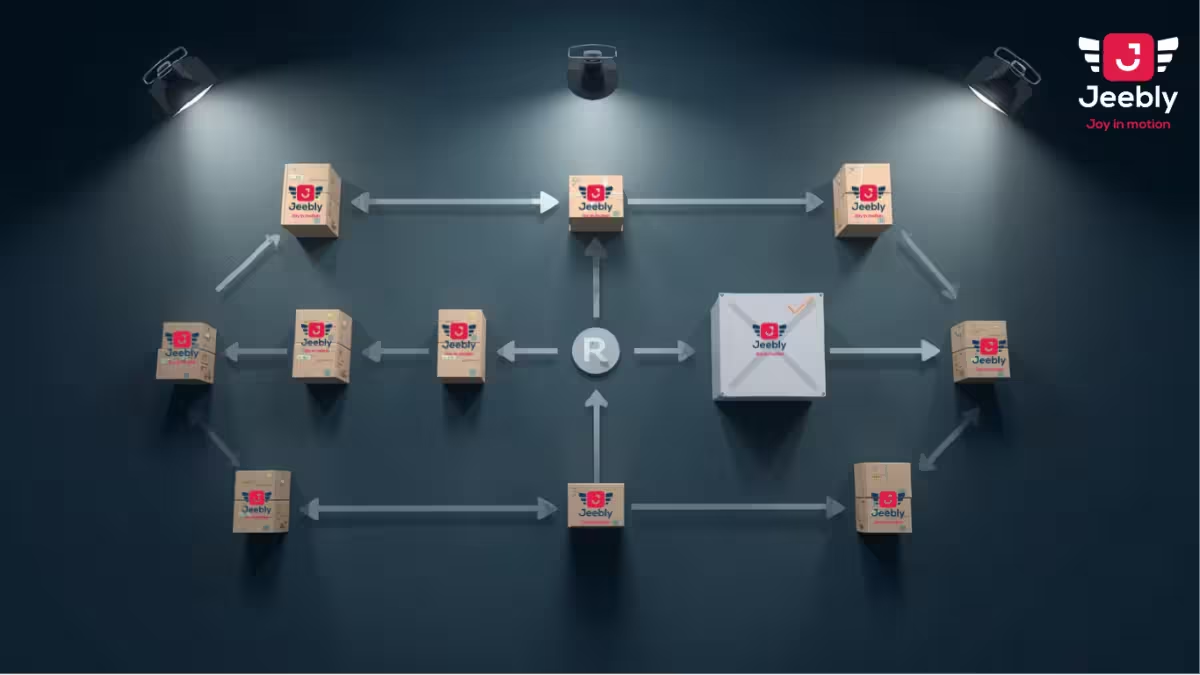
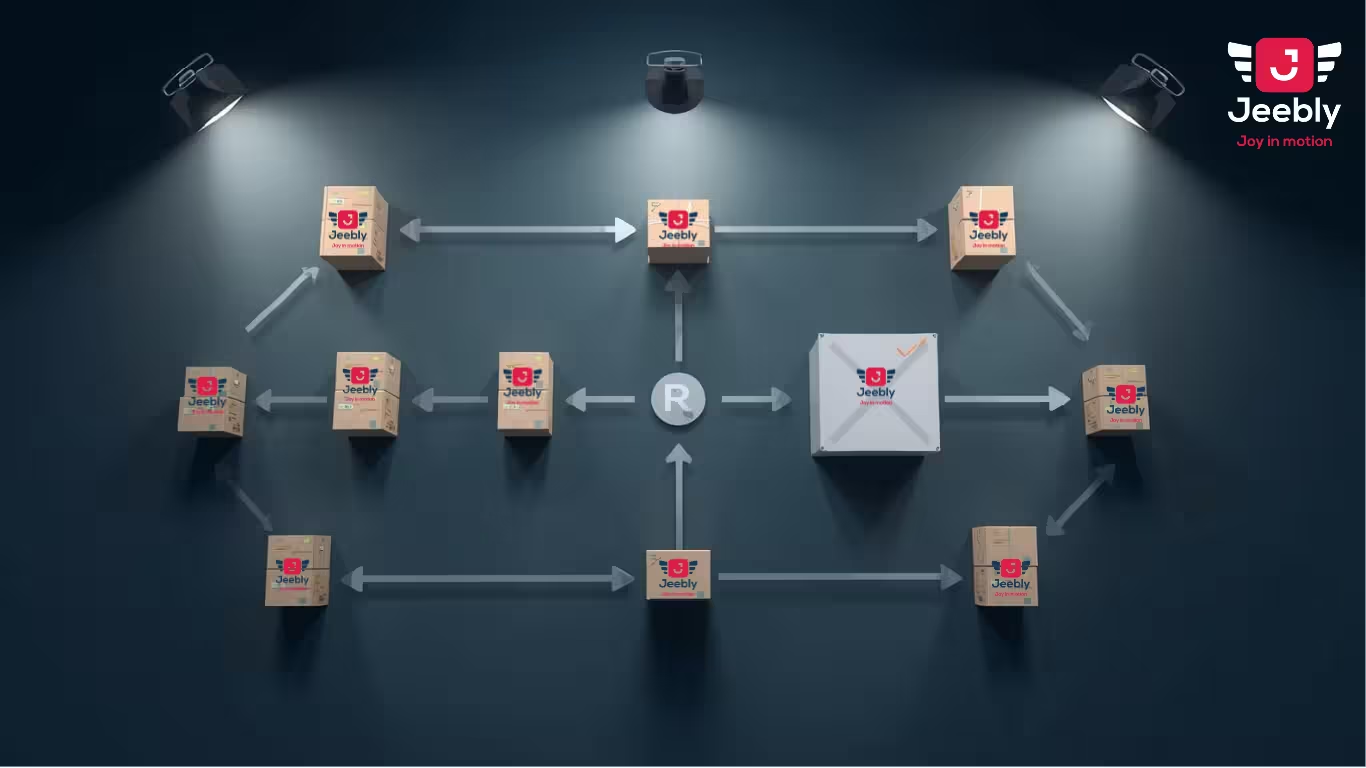
Reverse logistics refers to the movement of goods from the customer back to the seller, warehouse, or manufacturer. Unlike traditional forward logistics, which focuses on delivering products efficiently, reverse logistics focuses on retrieving, inspecting, processing, and redistributing returned items.

Reverse logistics for businesses typically includes:

* Customer returns and exchanges

* Pickup of damaged or incorrect products

* COD refusals and failed deliveries

* Warranty returns

* Recycling and disposal

* Refurbishment and repackaging

* Restocking and inventory reintegration

If you want to understand how this fits into broader supply chain strategy, you can explore Jeebly’s guide on How Jeebly Helps SMEs Scale During Peak Shopping Seasons
.
For businesses operating in the UAE, where same-day expectations are rising and COD remains common, reverse logistics is deeply integrated into daily operations.

Why Reverse Logistics for Businesses Is Critical in the UAE Market

1. The Rise of E-Commerce and COD

The UAE’s digital commerce sector continues to grow rapidly. Research from Statista shows that online shopping penetration in the Middle East continues to increase year-on-year. However, higher order volumes also lead to higher return percentages — especially in fashion, electronics, and lifestyle sectors.

Cash on Delivery remains popular in the region, but it significantly increases return volumes. Customers may refuse deliveries or change their minds at the doorstep. Each failed attempt creates immediate reverse movement.

To understand how real-time visibility helps manage delivery failures, see Jeebly’s blog on Why Real-Time ETA Updates Reduce Customer Complaints
.

Without structured reverse logistics for businesses, these returns translate into:

* Increased last-mile costs

* Delayed inventory recovery

* Revenue leakage

* Operational bottlenecks

2. Customer Experience and Brand Trust

Modern customers evaluate return policies before purchasing. According to insights published by Deloitte, seamless post-purchase experiences significantly influence brand loyalty.

A slow return process leads to:

* Negative reviews

* Lower retention

* Reduced lifetime value

Features such as:

* Scheduled return pickups

* Real-time tracking

* Digital proof of pickup

* Instant refund processing

transform returns into reassurance rather than frustration.

Reverse logistics for businesses directly impacts customer retention metrics.

3. Margin Protection and Cost Control

Returns are expensive. Each reverse shipment includes pickup, handling, inspection, repackaging, and restocking costs. If unmanaged, they silently erode profit margins.

The World Economic Forum has highlighted how supply chain inefficiencies increase operational costs globally. In high-COD markets like the UAE, the financial impact is even greater.

Structured reverse logistics helps businesses:

* Reduce repeated pickup attempts

* Optimize routes with AI

* Recover inventory faster

* Identify patterns behind high return rates

For companies building urban distribution networks, Jeebly’s blog on Micro-Fulfillment Centres: The Future of Urban Logistics in the UAE
 explains how proximity warehousing reduces reverse cycle times.

The Reverse Logistics Lifecycle

1. Return Initiation

API integration connects e-commerce platforms, ERP systems, warehouses, and logistics partners instantly. This removes manual coordination delays and improves processing speed.

2. Pickup Scheduling

Smart scheduling and route optimization reduce failed pickup attempts — a common cost driver in reverse logistics for businesses.

3. Doorstep Quality Check (QC)

Doorstep QC verifies product condition before transport, reducing warehouse congestion and preventing fraudulent returns.

4. Digital Proof of Pickup

Digital documentation reduces disputes and enhances transparency.

5. Inspection and Value Recovery

Returned items undergo testing, grading, repackaging, or repair. Value-added services improve recovery rates and reduce waste.

6. Inventory Reintegration

Fast restocking improves working capital cycles.

Common Reverse Logistics Challenges

Businesses often face:

* High COD refusal rates

* Customer unavailability

* Limited visibility into return status

* Manual coordination gaps

* Fraud and product misuse

Without proper systems, reverse logistics becomes unpredictable and expensive.

Technology’s Role in Modern Reverse Logistics

Advanced reverse logistics for businesses relies heavily on technology.

AI-Powered Tracking

Improves route efficiency and predicts return trends.

API Integration

Automates communication between platforms.

Centralized Dashboards

Provide visibility into return volumes and COD performance.

For broader insight into digital supply chain transformation, research from McKinsey & Company highlights how technology-enabled logistics improves operational resilience.

Sustainability and Regulatory Alignment

The UAE continues to advance environmental initiatives through frameworks supported by the UAE Ministry of Climate Change and Environment.

Reverse logistics contributes to sustainability by:

* Reducing landfill waste

* Supporting recycling programs

* Enabling refurbishment

* Extending product lifecycle

Responsible disposal and product recovery align businesses with regional environmental goals.

How Jeebly Strengthens Reverse Logistics for Businesses

Jeebly transforms reverse logistics into a structured, tech-enabled system through:

* Instant pickup capabilities

* Doorstep QC

* Digital proof of pickup

* AI-powered tracking

* API integration

* Centralized return dashboards

* Value-added services (repair, testing, repackaging)

* Faster refund enablement

By integrating reverse flow into the overall logistics strategy, businesses gain visibility, control, and predictable cost management.

The Future of Reverse Logistics in the UAE

As e-commerce penetration grows, reverse logistics will evolve toward:

Same-day reverse pickups

Predictive return reduction models

Automated fraud detection

Circular economy integration

Businesses that invest in structured reverse logistics today will lead tomorrow’s competitive landscape.

Final Thoughts

Reverse logistics for businesses is no longer just about handling returns. It is about:

Protecting margins

Strengthening customer loyalty

Improving inventory visibility

Supporting sustainability goals

Enhancing operational efficiency

In the UAE’s competitive market, reverse logistics determines whether returns become financial liabilities or strategic advantages.

With the right technology, structured processes, and a reliable logistics partner, reverse logistics transforms from operational complexity into measurable business value.

Categories
blogs

Understanding Reverse Logistics: Why It Matters to Businesses

reverse logistics for businesses

Understanding Reverse Logistics: Why It Matters to Businesses

In today’s fast moving commerce environment, deliveries don’t always end at the customer’s doorstep. Returns, exchanges, damaged goods, and failed deliveries are now a regular part of doing business. This is where reverse logistics for businesses becomes critical.

Reverse logistics refers to the process of moving goods from the customer back to the seller or manufacturer for returns, repairs, recycling, or disposal. While often overlooked, it plays a major role in customer satisfaction, cost control, and long term business efficiency.

What Is Reverse Logistics?

Simply put, reverse logistics is the backward flow of goods in the supply chain. This includes:

Customer returns and exchanges

Pickup of damaged or incorrect items

Failed or refused deliveries (especially common with COD orders)

Recycling, refurbishing, or restocking inventory

For businesses operating in the UAE, where e-commerce, same day delivery, and cash on delivery are widely used, having a clear reverse logistics strategy is no longer optional.

Why Reverse Logistics Matters to Businesses

1. Customer Trust and Retention

Customers judge a brand not only by how fast it delivers, but by how easy it is to return or replace an item. A smooth return experience builds trust and encourages repeat purchases. Poor reverse logistics, on the other hand, can quickly damage a brand’s reputation.

2. Cost Control and Efficiency

Without a structured reverse logistics process, businesses face higher costs from multiple pickup attempts, lost inventory, and manual handling. Optimized reverse logistics helps businesses recover value from returned goods and reduce operational waste.

3. Inventory Visibility

Returns directly impact stock accuracy. When businesses lack real-time visibility into returned items, it leads to overstocking, shortages, and poor demand planning. Efficient reverse logistics ensures inventory is tracked, updated, and reused where possible.

4. Sustainability and Compliance

In the UAE and across the Middle East, sustainability is becoming a business priority. Reverse logistics enables responsible recycling, reduced waste, and better use of resources, supporting both environmental goals and regulatory expectations.

Common Reverse Logistics Challenges in the UAE

Many businesses struggle with reverse logistics due to:

High volume of COD rejections

Customers unavailable for return pickups

Lack of real time tracking for reverse orders

Manual coordination between support and delivery teams

These challenges increase delivery costs and slow down operations if not addressed with the right logistics partner.

How Smart Logistics Solves Reverse Flow

Modern logistics providers like Jeebly help businesses manage reverse logistics through:

Scheduled and on demand return pickups

Real time tracking and status updates

Optimized routing to reduce failed attempts

Centralized dashboards for inventory and returns visibility

By integrating reverse logistics into the overall delivery strategy, businesses can turn returns from a cost burden into a controlled, efficient process.

Final Thoughts

Reverse logistics is no longer just about handling returns, it’s about protecting margins, strengthening customer relationships, and building resilient operations. For growing businesses in the UAE, investing in reverse logistics for businesses is a smart step toward sustainable growth.

With the right logistics partner and technology, driven processes, reverse logistics can become a competitive advantage rather than an operational challenge.

Categories
blogs

How Automation is Changing Warehousing in the Middle East

How Automation Is Changing Warehousing in the Middle East

How Automation is Changing Warehousing in the Middle East

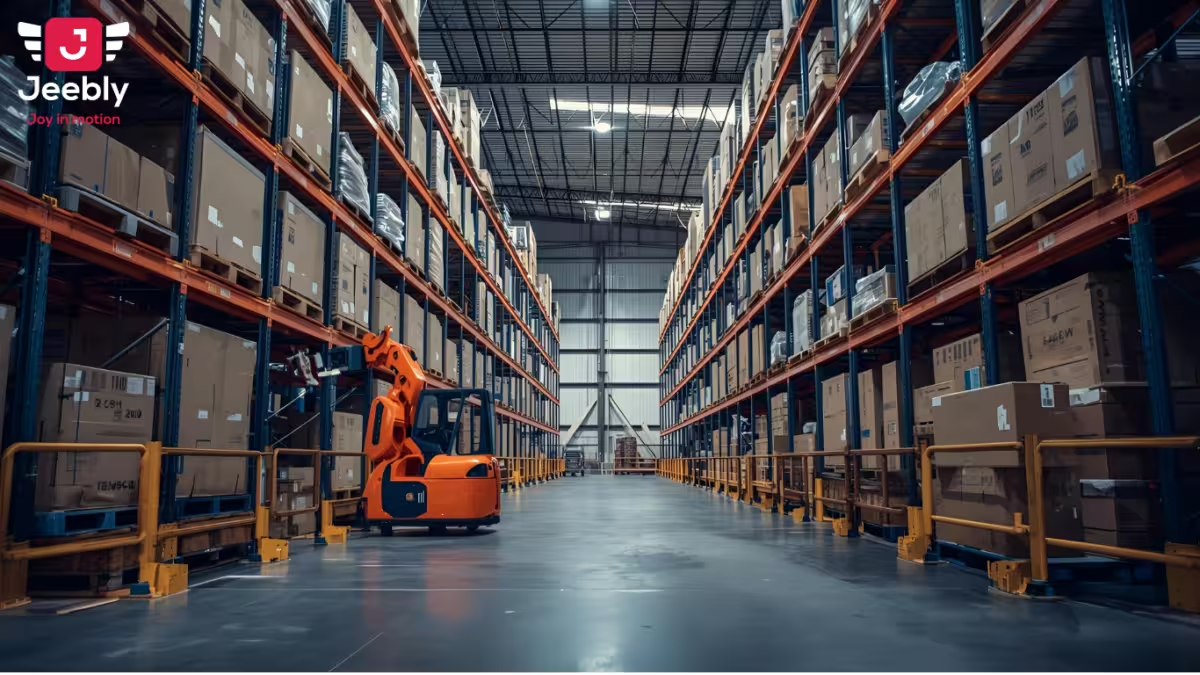
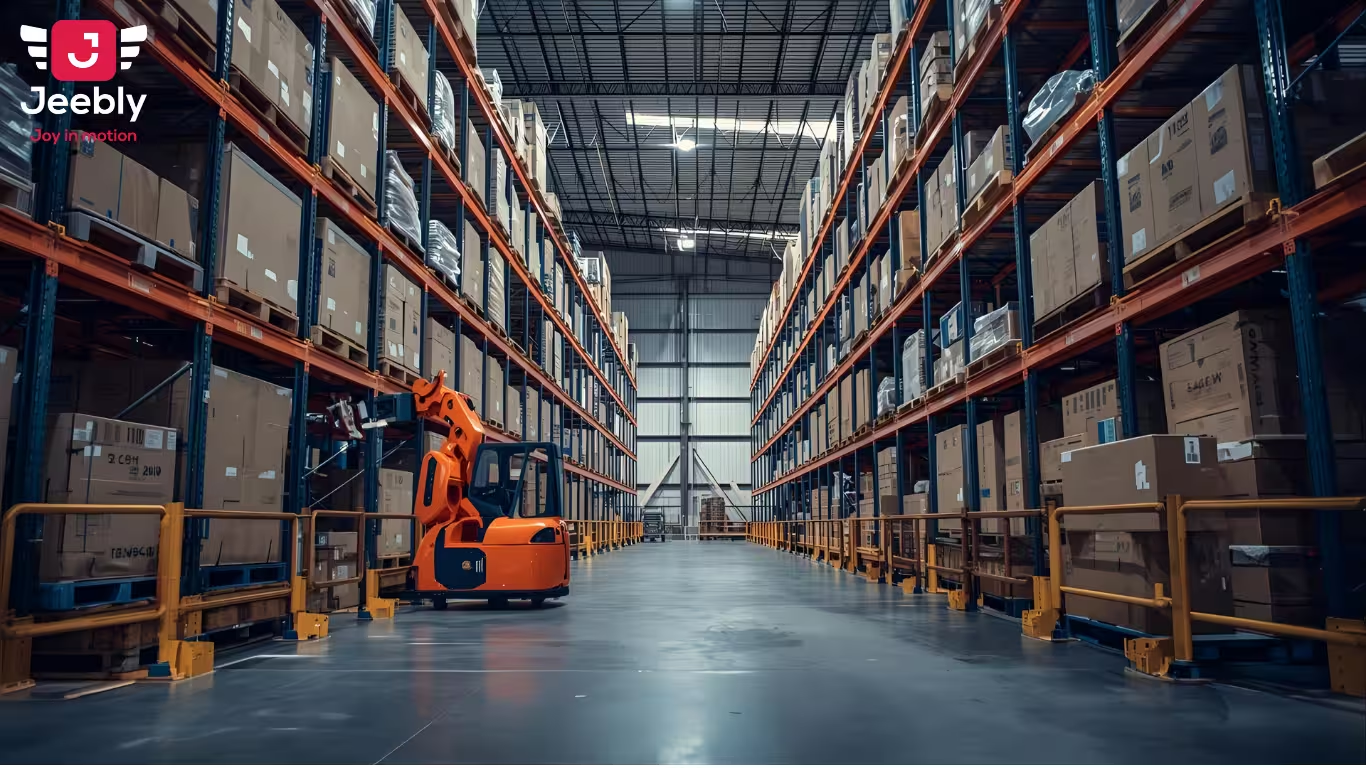
The logistics and supply chain industry in the Middle East is undergoing a major transformation. As e-commerce, on-demand delivery, and cross-border trade continue to grow, businesses are rethinking how warehouses operate. At the center of this shift is warehouse automation in the Middle East, which is redefining speed, accuracy, and scalability for modern logistics.

The Growing Need for Smarter Warehouses

The Middle East, especially markets like the UAE and Saudi Arabia has seen rapid growth in online shopping, retail expansion, and same-day delivery expectations. Traditional, manual warehousing models are no longer enough to keep up with high order volumes, tight delivery timelines, and rising labor costs.

This is where automation steps in. From smart sorting systems to robotic picking and real-time inventory tracking, automated warehouses help businesses process orders faster while reducing human error.

Key Automation Technologies Transforming Warehousing

Several technologies are driving warehouse automation in the Middle East:

1. Automated Storage and Retrieval Systems (ASRS)
ASRS solutions use robotics and software to store and retrieve goods efficiently. These systems maximize vertical space, reduce handling time, and improve inventory accuracy, ideal for urban warehouses with limited space.

2. Robotics and Smart Picking Systems
Warehouse robots assist with picking, packing, and moving goods across facilities. This not only speeds up order fulfillment but also reduces dependency on manual labor during peak seasons.

3. Warehouse Management Systems (WMS)
Modern WMS platforms provide real-time visibility into inventory, orders, and workflows. Businesses can track stock levels, manage returns, and optimize storage layouts using data-driven insights.

4. IoT and Sensors
IoT-enabled sensors monitor temperature, humidity, and movement, especially critical for temperature-controlled logistics in the region. This is particularly valuable for food, pharmaceuticals, and sensitive goods.

Why Automation Matters in the Middle East

Automation is not just about efficiency, it’s about competitiveness. With rising customer expectations for fast and reliable delivery, businesses that invest in smart warehousing gain a clear advantage.

Key benefits include:

1) Faster order processing and dispatch

2) Reduced operational costs over time

3) Improved accuracy and fewer delivery errors

4) Better scalability during high-demand periods

5) Enhanced safety for warehouse staff

Governments across the Middle East are also investing heavily in smart infrastructure, AI, and digital transformation, making this the right time for logistics players to adopt automation.

The Future of Warehouse Automation

As technology advances, warehouse automation in the Middle East will continue to evolve. AI-driven demand forecasting, autonomous mobile robots, and fully integrated supply chains will become more common. Businesses that adapt early will be better positioned to handle future growth and market shifts.

At Jeebly, we understand that efficient warehousing is the backbone of reliable delivery. By embracing smart logistics solutions and automation-ready processes, we help businesses move faster, scale smarter, and serve customers better.

Categories
blogs

How Last Mile Delivery UAE Works in  reality?

How Last Mile Delivery UAE works in reality?​

How Last-Mile Delivery Works in the UAE: The Operational Reality Behind Every Order

For most customers, delivery feels simple. They place an order online, receive a confirmation message, and expect the package to arrive within a few hours or by the next day.

Behind that experience, however, lies one of the most complex stages of the supply chain: last-mile delivery in the UAE.

This stage involves moving a parcel from a warehouse or fulfillment hub directly to the customer’s doorstep. It sounds straightforward, but in reality it requires a coordinated system of technology, infrastructure, and operational planning.

In a market like the UAE, where customers expect fast delivery, accurate ETAs, and flexible payment methods such as Cash on Delivery (COD), the last mile is where logistics performance is truly tested.

For a broader understanding of how the final delivery stage works, you can also read our guide on what is last-mile delivery and why it matters

Why Last-Mile Delivery Matters for Businesses in the UAE

The UAE logistics environment presents a unique set of operational conditions.

Cities such as Dubai and Abu Dhabi combine high density urban infrastructure with a large expatriate population, rapidly growing e commerce demand, and diverse residential communities. According to the Dubai Department of Economy and Tourism, the UAE is one of the fastest growing digital commerce markets in the region.

For businesses, efficient last mile delivery in the UAE directly impacts several areas:

Customer satisfaction

The delivery experience is often the final interaction customers have with a brand. A smooth and reliable delivery builds trust and encourages repeat purchases.

Faster delivery expectations

Same day and next day delivery have become the norm in many sectors, from e commerce and fashion to groceries and electronics.

Business scalability

Companies that build efficient last mile logistics systems are better positioned to scale operations as order volumes grow. 
Businesses that rely on strong delivery partners also reduce operational friction and avoid issues such as failed deliveries or missed time windows. Our article on how small businesses can reduce failed deliveries in the UAE explores this further. 

How Last-Mile Delivery Works in Practice

While customers see a single delivery event, the operational process behind it involves several stages working together.

1. Order Capture and System Integration

The process begins when a customer places an order through a website, marketplace, or social commerce platform.

Once confirmed, the order details, including delivery address, payment method, and product information, are automatically transferred into the logistics system.

For businesses using integrated logistics platforms, this step happens through API based order management systems, which eliminate manual order entry and reduce errors.

2. Fulfillment and Dispatch Preparation

After the order is received, the fulfillment stage begins.

Products are picked from inventory, packed securely, and prepared for dispatch. Depending on the logistics model, this can happen in:

* Centralized warehouses
* Ddistribution hubs
* Mlicro-fulfilment centres near demand zones

Orders are then assigned to delivery batches based on delivery zones and time windows.

3. Route Planning and Rider Allocation

Route optimization is one of the most critical steps in last-mile delivery.

Delivery management systems analyze multiple variables before assigning routes, including:

* Traffic conditions
* Delivery density within neighborhoods
* Rider availability
* Promised delivery windows

Advanced logistics platforms use AI-powered route optimization to continuously adjust routes throughout the day.

These systems also use traffic and mapping data from sources such as Google Maps routing APIs, which help logistics platforms predict travel times more accurately.

4. Dispatch and Delivery Execution

Once routes are finalized, riders or drivers collect the assigned parcels and begin the delivery process.

During this stage, several operational elements work together:

* Automated customer notifications
* Delivery status updates
* ETA tracking
* COD collection if required

In the UAE, Cash on Delivery remains a widely used payment method, especially for first time customers. According to Statista, COD still accounts for a large share of e-commerce payments in the Middle East.

Because of this, delivery riders must also manage secure payment collection during the delivery process.

5. Proof of Delivery and Completion

The final step is confirmation that the order has been successfully delivered.

Most modern logistics systems provide digital proof of delivery, which may include:

* Customer signatures
* Delivery confirmation photos
* Electronic payment records

This information is stored in the logistics platform and shared with businesses for tracking and reconciliation purposes

Operational Challenges in UAE Last-Mile Delivery

Despite technological advancements, last-mile delivery in the UAE presents several operational challenges.

Urban Traffic and Delivery Density

Major cities such as Dubai often experience heavy traffic congestion, especially during peak hours. This makes route optimization essential for maintaining delivery timelines.

High Customer Expectations

Customers increasingly expect:

* Precise delivery windows
* Proactive delivery updates
* Real time communication

If customers do not receive clear updates, even minor delays can lead to complaints.


Addressing and Location Accuracy

The UAE does not rely on a universal postal code system. Delivery accuracy often depends on building names, landmarks, or map pins. Logistics systems must therefore support pin-based navigation and driver communication workflows.
If addresses are entered incorrectly, delivery failures increase significantly. Our guide on Dubai address format for reliable deliveries explains how businesses can avoid these issues. 


Temperature Sensitive Deliveries

Many industries require controlled delivery environments.

These include:

* Pharmaceuticals
* Cosmetics
* Food and beverage products

Without temperature-controlled logistics systems, product quality may degrade during transport.

You can read more about this in our article on temperature-controlled logistics in the UAE.

How Jeebly Supports Last Mile Delivery in UAE ?

At Jeebly, last-mile delivery operations follow a structured workflow designed to support both speed and reliability.

Step 1: Order Integration

Orders automatically flow into the Jeebly logistics platform through API integrations with e-commerce stores and marketplaces.

Step 2: Smart Fulfillment Allocation

Orders are assigned to the nearest fulfilment hub or micro-fulfilment centre based on inventory availability and delivery location.

Step 3: AI-Powered Route Optimization

Advanced routing systems analyze traffic patterns and delivery clusters to create efficient delivery routes.

Step 4: Dispatch and Rider Allocation

Delivery riders receive assignments through the Jeebly system, which provides navigation assistance and delivery instructions.

Step 5: Delivery Updates and ETA Notifications


Customers receive automated delivery updates and accurate ETA notifications throughout the delivery journey.

These updates help reduce missed deliveries and customer complaints.

Step 6: COD Collection and Delivery Confirmation

For Cash on Delivery orders, riders collect payments securely and generate digital proof of delivery, ensuring accurate financial reconciliation

The Future of Last-Mile Delivery in the UAE

The UAE logistics ecosystem continues to evolve rapidly.

Emerging technologies such as AI-powered logistics platforms, electric delivery fleets, and micro-fulfillment networks are reshaping how deliveries operate in dense urban environments.

Government initiatives supporting smart mobility and sustainability also encourage innovation in logistics systems. You can explore the UAE’s logistics infrastructure initiatives on the UAE Government Portal

For businesses, the key to success lies in building delivery systems that balance speed, reliability, and operational efficiency.

Conclusion

Last-mile delivery may be the final step of logistics, but it is the stage where customer experience is truly defined.

From order capture and fulfilment to route optimization and payment collection, every step must work together seamlessly to ensure successful deliveries.

In a market like the UAE—where customer expectations for delivery speed and reliability are among the highest in the world—businesses that invest in efficient last-mile delivery systems gain a significant competitive advantage.

At Jeebly, we continue to build logistics solutions designed for this environment—helping businesses deliver faster, operate smarter, and scale with confidence.

Frequently Asked Questions

Last-mile delivery in the UAE refers to the final stage of the logistics process where a product moves from a warehouse or distribution hub directly to the customer’s doorstep. It is a critical step in the supply chain because it directly impacts delivery speed, customer satisfaction, and operational efficiency.

Last-mile delivery is important because it determines the final customer experience. Efficient last-mile logistics helps businesses deliver orders faster, reduce failed deliveries, improve customer satisfaction, and support the rapid growth of e-commerce in the UAE.

Common challenges include traffic congestion in major cities, high customer expectations for same-day delivery, address accuracy issues due to the lack of postal codes, and the need for temperature-controlled transport for sensitive goods such as food and pharmaceuticals.

In cash on delivery, the delivery rider collects payment from the customer when the package arrives. The logistics provider records the transaction digitally and remits the collected cash to the business based on an agreed payment cycle.

Logistics companies improve efficiency by using route optimization technology, micro-fulfilment centres, automated dispatch systems, and real-time delivery updates. These tools help reduce delivery times, minimize failed attempts, and improve overall operational performance.

    Powered by