





How Automation is Changing Warehousing in the Middle East
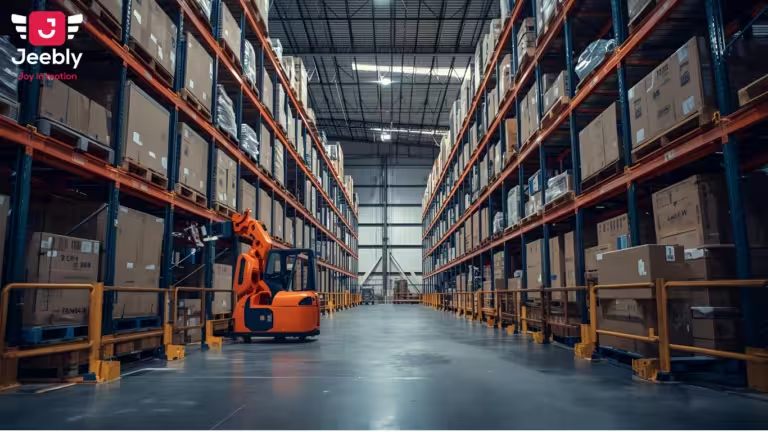
The logistics and supply chain industry in the Middle East is undergoing a major transformation. As e-commerce, on-demand delivery, and cross-border trade continue to grow, businesses are rethinking how warehouses operate. At the center of this shift is warehouse automation in the Middle East, which is redefining speed, accuracy, and scalability for modern logistics.
The Growing Need for Smarter Warehouses
The Middle East, especially markets like the UAE and Saudi Arabia has seen rapid growth in online shopping, retail expansion, and same-day delivery expectations. Traditional, manual warehousing models are no longer enough to keep up with high order volumes, tight delivery timelines, and rising labor costs.
This is where automation steps in. From smart sorting systems to robotic picking and real-time inventory tracking, automated warehouses help businesses process orders faster while reducing human error.
Key Automation Technologies Transforming Warehousing
Several technologies are driving warehouse automation in the Middle East:
1. Automated Storage and Retrieval Systems (ASRS)
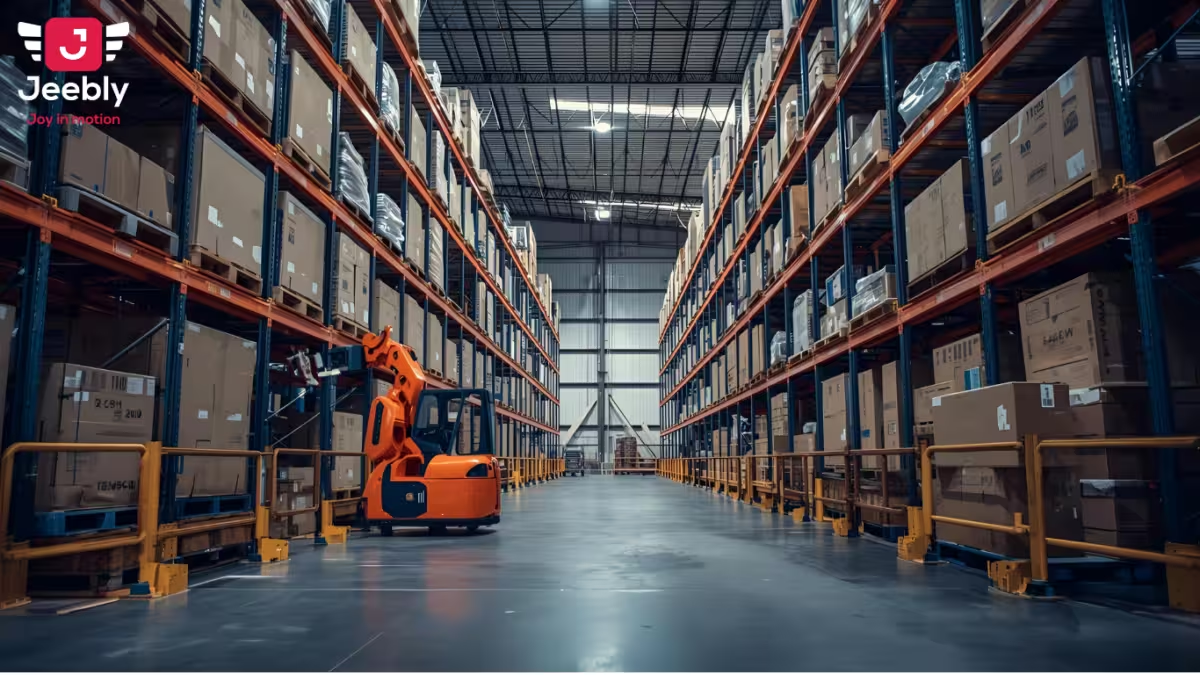
ASRS solutions use robotics and software to store and retrieve goods efficiently. These systems maximize vertical space, reduce handling time, and improve inventory accuracy, ideal for urban warehouses with limited space.
2. Robotics and Smart Picking Systems
Warehouse robots assist with picking, packing, and moving goods across facilities. This not only speeds up order fulfillment but also reduces dependency on manual labor during peak seasons.
3. Warehouse Management Systems (WMS)
Modern WMS platforms provide real-time visibility into inventory, orders, and workflows. Businesses can track stock levels, manage returns, and optimize storage layouts using data-driven insights.
4. IoT and Sensors
IoT-enabled sensors monitor temperature, humidity, and movement, especially critical for temperature-controlled logistics in the region. This is particularly valuable for food, pharmaceuticals, and sensitive goods.
Why Automation Matters in the Middle East
Automation is not just about efficiency, it’s about competitiveness. With rising customer expectations for fast and reliable delivery, businesses that invest in smart warehousing gain a clear advantage.
Key benefits include:
1) Faster order processing and dispatch
2) Reduced operational costs over time
3) Improved accuracy and fewer delivery errors
4) Better scalability during high-demand periods
5) Enhanced safety for warehouse staff
Governments across the Middle East are also investing heavily in smart infrastructure, AI, and digital transformation, making this the right time for logistics players to adopt automation.
The Future of Warehouse Automation
As technology advances, warehouse automation in the Middle East will continue to evolve. AI-driven demand forecasting, autonomous mobile robots, and fully integrated supply chains will become more common. Businesses that adapt early will be better positioned to handle future growth and market shifts.
At Jeebly, we understand that efficient warehousing is the backbone of reliable delivery. By embracing smart logistics solutions and automation-ready processes, we help businesses move faster, scale smarter, and serve customers better.
Routes to insightful reads

Planning to start an eCommerce business in the UAE? Learn how to get an eCommerce licence, choose between mainland and free zone options, prepare the required documents, submit your application, and complete the licensing process to start trading legally in the UAE.

Buy Now Pay Later (BNPL) is changing how consumers shop and how eCommerce businesses manage fulfilment and returns in the UAE. This guide explores how BNPL can influence order volumes, delivery demand, fulfilment operations, return rates, refund processing, and the logistics strategies businesses need to support a growing BNPL-driven customer base.

Learn how to calculate volumetric weight for shipping with an easy-to-follow formula and practical examples. Understand how package dimensions, actual weight and carrier conversion factors determine the chargeable weight and ultimately impact your shipping costs.

3PL and 4PL logistics models help businesses manage different levels of supply chain operations. This guide explains the key differences between 3PL and 4PL providers, their roles, benefits, costs, and how UAE businesses can choose the right logistics model based on their size, supply chain complexity, and operational needs.

Choosing the right packaging is essential for protecting products during courier transportation. This guide explores different types of packaging for courier shipments, including corrugated boxes, bubble wrap, air pillows, paper fillers, foam inserts, and protective seals, and explains how to choose the best option based on your product, handling needs, and shipping conditions.