





Jeebly | Logistics Solutions

Categories
blogs

How Automation is Changing Warehousing in the Middle East

How Automation Is Changing Warehousing in the Middle East

How Automation is Changing Warehousing in the Middle East

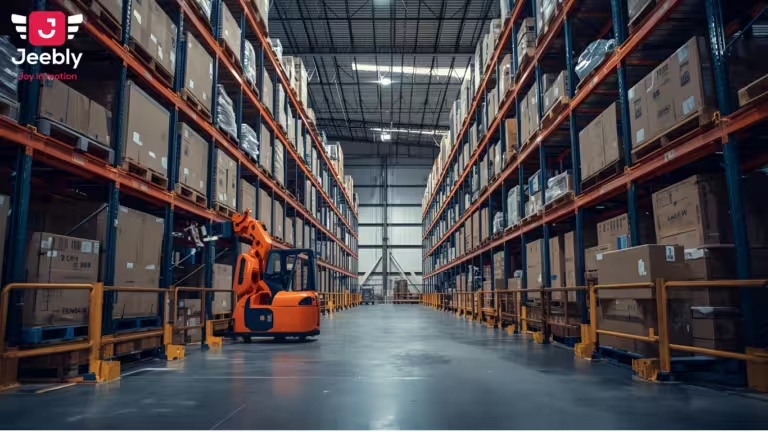
The logistics and supply chain industry in the Middle East is undergoing a major transformation. As e-commerce, on-demand delivery, and cross-border trade continue to grow, businesses are rethinking how warehouses operate. At the center of this shift is warehouse automation in the Middle East, which is redefining speed, accuracy, and scalability for modern logistics.

The Growing Need for Smarter Warehouses

The Middle East, especially markets like the UAE and Saudi Arabia has seen rapid growth in online shopping, retail expansion, and same-day delivery expectations. Traditional, manual warehousing models are no longer enough to keep up with high order volumes, tight delivery timelines, and rising labor costs.

This is where automation steps in. From smart sorting systems to robotic picking and real-time inventory tracking, automated warehouses help businesses process orders faster while reducing human error.

Key Automation Technologies Transforming Warehousing

Several technologies are driving warehouse automation in the Middle East:

1. Automated Storage and Retrieval Systems (ASRS)
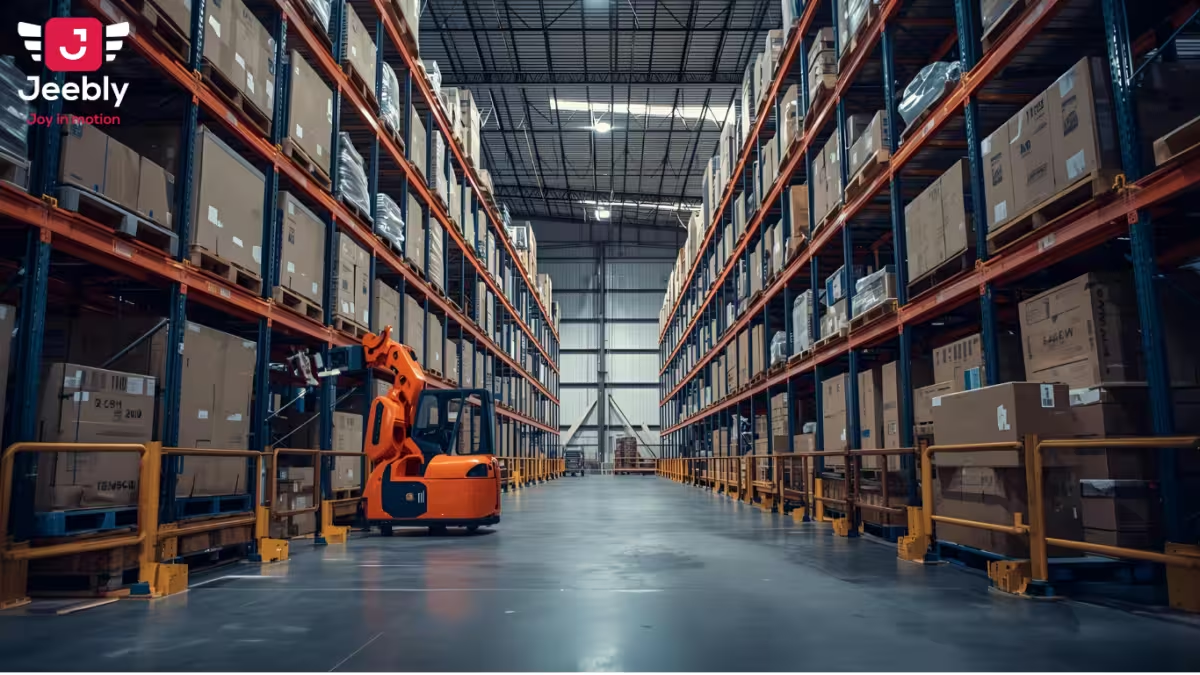
ASRS solutions use robotics and software to store and retrieve goods efficiently. These systems maximize vertical space, reduce handling time, and improve inventory accuracy, ideal for urban warehouses with limited space.

2. Robotics and Smart Picking Systems
Warehouse robots assist with picking, packing, and moving goods across facilities. This not only speeds up order fulfillment but also reduces dependency on manual labor during peak seasons.

3. Warehouse Management Systems (WMS)
Modern WMS platforms provide real-time visibility into inventory, orders, and workflows. Businesses can track stock levels, manage returns, and optimize storage layouts using data-driven insights.

4. IoT and Sensors
IoT-enabled sensors monitor temperature, humidity, and movement, especially critical for temperature-controlled logistics in the region. This is particularly valuable for food, pharmaceuticals, and sensitive goods.

Why Automation Matters in the Middle East

Automation is not just about efficiency, it’s about competitiveness. With rising customer expectations for fast and reliable delivery, businesses that invest in smart warehousing gain a clear advantage.

Key benefits include:

1) Faster order processing and dispatch

2) Reduced operational costs over time

3) Improved accuracy and fewer delivery errors

4) Better scalability during high-demand periods

5) Enhanced safety for warehouse staff

Governments across the Middle East are also investing heavily in smart infrastructure, AI, and digital transformation, making this the right time for logistics players to adopt automation.

The Future of Warehouse Automation

As technology advances, warehouse automation in the Middle East will continue to evolve. AI-driven demand forecasting, autonomous mobile robots, and fully integrated supply chains will become more common. Businesses that adapt early will be better positioned to handle future growth and market shifts.

At Jeebly, we understand that efficient warehousing is the backbone of reliable delivery. By embracing smart logistics solutions and automation-ready processes, we help businesses move faster, scale smarter, and serve customers better.

Routes to insightful reads

Delivery SLA guide for UAE businesses showing service level agreements, delivery performance metrics, on-time delivery targets and logistics standards.
 Delivery SLA Guide for UAE Businesses: What to Expect and How to Set Standards

A clear delivery Service Level Agreement (SLA) sets the expectations for speed, reliability, and performance between businesses and their logistics partners. This guide explains what a delivery SLA should include, the key metrics to track, and how UAE businesses can set realistic standards to improve customer satisfaction and delivery performance.

Read More
Dangerous goods and restricted items that cannot be shipped by courier in the UAE, including hazardous materials, prohibited products and customs restrictions.
Dangerous Goods and Restricted Items: What You Cannot Ship by Courier in the UAE

Shipping prohibited or restricted items can lead to delays, fines, shipment rejection, or legal consequences. This guide explains which dangerous goods and restricted items cannot be shipped by courier in the UAE, the regulations businesses should know, and how to stay compliant with UAE customs and courier requirements.

Read More
How to manage eCommerce returns in the UAE with reverse logistics, return policies, refunds and inventory restocking
How to Manage eCommerce Returns in UAE: Strategy, Policy and Logistics

Efficient returns management is essential for every UAE eCommerce business. From creating a customer-friendly return policy to streamlining reverse logistics and processing refunds quickly, this guide explains how to reduce return costs, improve customer satisfaction, and turn returns into a competitive advantage.

Read More
A medium-sized Jeebly delivery and moving truck parked outside a warehouse with its back doors wide open and a hydraulic lift gate lowered to the ground. Inside the cargo area, brown cardboard boxes are stacked neatly. The side of the truck features a dark blue advertisement wrap with the Jeebly logo, displaying a hand holding a house model under the text "Always on the Move from parcels to homes" and a call to action to "Explore it all on Jeebly NoW".
Packers and Movers in Dubai: What to Look for and How to Choose

Relocating in Dubai doesn’t have to be stressful. Whether you are moving apartments in Dubai Marina or upgrading your office space, discover the essential factors to look for in a professional moving company—from licensing and insurance to transparent pricing—and learn exactly how to choose the right team for a seamless move.

Read More
Infographic titled "Ecommerce Fulfilment in UAE: How It Works and What Businesses Should Look For." The left side shows a 5-step workflow: Online Store, Inventory, Picking & Packing, Dispatch, and Last Mile Delivery. The center features a map of the UAE with iconic cityscapes. The right side lists business requirements: Reliability & Speed, Advanced Technology, Real-Time Tracking, Scalability, and Customer Support.
eCommerce Fulfilment in UAE: How It Works and What Businesses Should Look For

Master your logistics strategy in the Middle East. Discover how e-commerce fulfillment works in the UAE—from warehousing to last-mile delivery—and learn the top 5 features your business needs from a fulfillment partner to scale successfully.

Read More

    Powered by