






Jeebly | Logistics Solutions

How Automation Is Changing Warehousing in the Middle East

How Automation is Changing Warehousing in the Middle East

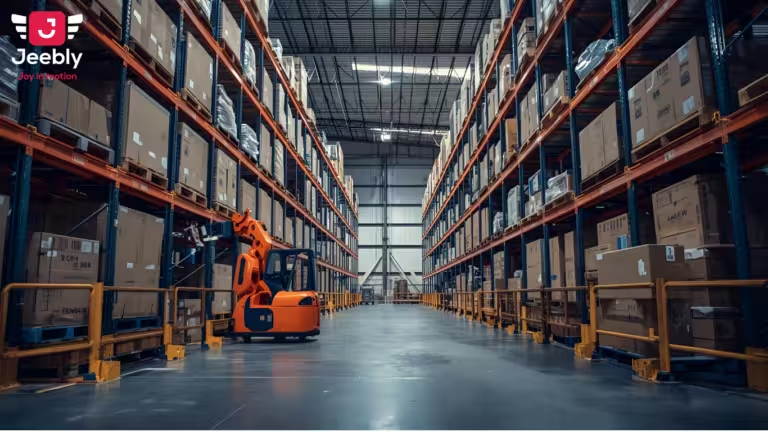
The logistics and supply chain industry in the Middle East is undergoing a major transformation. As e-commerce, on-demand delivery, and cross-border trade continue to grow, businesses are rethinking how warehouses operate. At the center of this shift is warehouse automation in the Middle East, which is redefining speed, accuracy, and scalability for modern logistics.

The Growing Need for Smarter Warehouses

The Middle East, especially markets like the UAE and Saudi Arabia has seen rapid growth in online shopping, retail expansion, and same-day delivery expectations. Traditional, manual warehousing models are no longer enough to keep up with high order volumes, tight delivery timelines, and rising labor costs.

This is where automation steps in. From smart sorting systems to robotic picking and real-time inventory tracking, automated warehouses help businesses process orders faster while reducing human error.

Key Automation Technologies Transforming Warehousing

Several technologies are driving warehouse automation in the Middle East:

1. Automated Storage and Retrieval Systems (ASRS)
ASRS solutions use robotics and software to store and retrieve goods efficiently. These systems maximize vertical space, reduce handling time, and improve inventory accuracy, ideal for urban warehouses with limited space.

2. Robotics and Smart Picking Systems
Warehouse robots assist with picking, packing, and moving goods across facilities. This not only speeds up order fulfillment but also reduces dependency on manual labor during peak seasons.

3. Warehouse Management Systems (WMS)
Modern WMS platforms provide real-time visibility into inventory, orders, and workflows. Businesses can track stock levels, manage returns, and optimize storage layouts using data-driven insights.

4. IoT and Sensors
IoT-enabled sensors monitor temperature, humidity, and movement, especially critical for temperature-controlled logistics in the region. This is particularly valuable for food, pharmaceuticals, and sensitive goods.

Why Automation Matters in the Middle East

Automation is not just about efficiency, it’s about competitiveness. With rising customer expectations for fast and reliable delivery, businesses that invest in smart warehousing gain a clear advantage.

Key benefits include:

1) Faster order processing and dispatch

2) Reduced operational costs over time

3) Improved accuracy and fewer delivery errors

4) Better scalability during high-demand periods

5) Enhanced safety for warehouse staff

Governments across the Middle East are also investing heavily in smart infrastructure, AI, and digital transformation, making this the right time for logistics players to adopt automation.

The Future of Warehouse Automation

As technology advances, warehouse automation in the Middle East will continue to evolve. AI-driven demand forecasting, autonomous mobile robots, and fully integrated supply chains will become more common. Businesses that adapt early will be better positioned to handle future growth and market shifts.

At Jeebly, we understand that efficient warehousing is the backbone of reliable delivery. By embracing smart logistics solutions and automation-ready processes, we help businesses move faster, scale smarter, and serve customers better.

Routes to insightful reads

Green Logistics: Why Sustainability Is Becoming the UAE's Next Big Supply Chain Priority
Green Logistics in the UAE: What It Is and Why It Matters

Every parcel that moves from a warehouse to a doorstep carries more than a product. It carries a carbon cost. This article covers what it entails, why it matters specifically for UAE e-commerce businesses, the real return on investment it delivers, and how to approach implementation without overhauling everything at once.

Read More
How Long Does Delivery Take? Realistic Timelines by Service Type
How Long Does Delivery Take in UAE? Timelines by Service Type

Every business shipping in the UAE asks the same question at some point: how long does delivery take? This article breaks down delivery timelines by service type, explains what makes the UAE logistics environment distinct, and covers what businesses can do to move faster and more reliably.

Read More
How to Manage Returns for Your Online Store: A Practical Guide for Small Sellers​
How to Manage Returns for Your UAE Online Store

Returns are a predictable part of running an online store in the UAE, and how you handle them determines whether customers come back. This guide covers what UAE small sellers actually need: the legal requirements.

Read More
Cost of Shipping for a Small Business: What You'll Actually Pay in 2026
Cost of Shipping for a Small Business in UAE (2026 Guide)

Shipping costs are among the few business expenses where the gap between what you expect to pay and what you actually pay can quietly erode margins. The goal of this guide is simple: to give you a clear, realistic picture of what UAE small-business shipping costs look like in 2026.

Read More
Document & Banking Delivery in Dubai: Secure, Fast & Trackable

Dubai’s business environment runs on documentation. Property transactions, visa processes, business registrations, trade finance, and legal proceedings all require original, signed, physically delivered papers at various stages, often on tight timelines. This guide covers what document delivery in Dubai actually requires. Know what can go wrong, what to look for in a courier, and much more.

Read More

    Powered by