







Jeebly | Logistics Solutions

Categories
blogs

The Role of Customer Support in Modern Delivery Services

The Role of Customer Support in Modern Delivery Services

The Role of Customer Support in Modern Delivery Services

In today’s fast-paced e-commerce environment, delivery speed alone is no longer enough to win customer loyalty. What truly differentiates brands is how effectively they communicate before, during, and after delivery. This is where customer support in delivery services plays a decisive role.

Modern consumers expect real-time updates, instant responses, and seamless issue resolution. According to Deloitte, customer experience is now one of the top drivers of brand differentiation worldwide. In logistics, that experience is heavily shaped by the quality of customer support.

Why Customer Support Matters in Delivery Operations

Delivery is the final touchpoint in the customer journey. A delayed shipment, failed delivery attempt, or unclear tracking update can quickly turn a positive purchase into a frustrating experience.

Strong customer support in delivery services ensures:

* Clear communication about shipment status

* Immediate handling of delivery issues

* Faster resolution of returns or exchanges

* Improved transparency through real-time tracking

In high growth markets like the UAE, where same day and next day delivery expectations are increasing, proactive support becomes even more critical. The International Trade Administration highlights the rapid expansion of e-commerce in the region, a trend that places even more pressure on logistics providers to maintain responsive service standards.

Real-Time Communication Builds Trust

Customers no longer tolerate uncertainty. They want accurate Estimated Time of Arrival (ETA) updates and instant notifications. This is why integrating support with live tracking systems is essential.

Jeebly’s article on Why Real-Time ETA Updates Reduce Customer Complaints explains how proactive communication significantly reduces delivery related frustration.

When support teams have access to centralized dashboards and real-time data, they can:

* Provide instant shipment updates

* Resolve delivery delays quickly

* Coordinate reattempts efficiently

This transparency builds trust and increases repeat purchase rates.

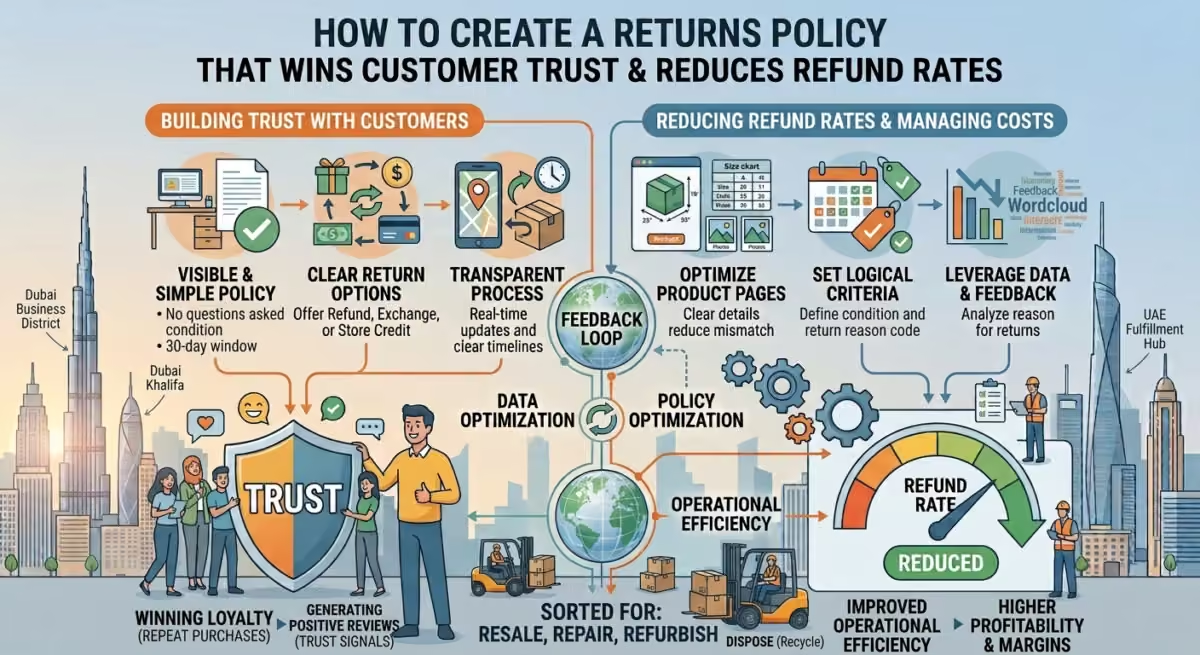
Handling Returns and Reverse Logistics

Handling Returns and Reverse Logistics

Customer support also plays a key role in managing post-delivery experiences. Returns, exchanges, and Cash on Delivery (COD) refusals are common in the UAE market.

Without coordinated support and logistics systems, reverse flows become chaotic. As discussed in Jeebly’s blog on Reverse Logistics for Businesses, structured processes supported by responsive teams reduce operational strain and protect margins.

Support teams that can instantly schedule pickups, confirm doorstep quality checks, and trigger refunds enhance customer satisfaction while improving operational efficiency.

Technology + Human Support = Competitive Advantage

Modern delivery services combine automation with human expertise. AI-powered tracking systems provide predictive insights, while trained support teams handle complex or sensitive cases.

Research from McKinsey & Company emphasizes that companies integrating digital tools with customer-centric support outperform competitors in retention and operational resilience.

For logistics providers, this means:

* API integration between support and delivery systems

* Real-time visibility across shipments

* Digital proof of delivery

* Faster complaint resolution cycles

Final Thoughts

Customer support in delivery services is no longer a reactive function. It is a strategic pillar that directly impacts customer loyalty, operational efficiency, and brand reputation.

In competitive markets like the UAE, businesses that integrate technology, transparency, and responsive support into their logistics operations gain a clear advantage.

Because in modern delivery, it’s not just about getting the package there, it’s about how well you support the journey.

Routes to insightful reads

Delivery SLA guide for UAE businesses showing service level agreements, delivery performance metrics, on-time delivery targets and logistics standards.
 Delivery SLA Guide for UAE Businesses: What to Expect and How to Set Standards

A clear delivery Service Level Agreement (SLA) sets the expectations for speed, reliability, and performance between businesses and their logistics partners. This guide explains what a delivery SLA should include, the key metrics to track, and how UAE businesses can set realistic standards to improve customer satisfaction and delivery performance.

Read More
Dangerous goods and restricted items that cannot be shipped by courier in the UAE, including hazardous materials, prohibited products and customs restrictions.
Dangerous Goods and Restricted Items: What You Cannot Ship by Courier in the UAE

Shipping prohibited or restricted items can lead to delays, fines, shipment rejection, or legal consequences. This guide explains which dangerous goods and restricted items cannot be shipped by courier in the UAE, the regulations businesses should know, and how to stay compliant with UAE customs and courier requirements.

Read More
How to manage eCommerce returns in the UAE with reverse logistics, return policies, refunds and inventory restocking
How to Manage eCommerce Returns in UAE: Strategy, Policy and Logistics

Efficient returns management is essential for every UAE eCommerce business. From creating a customer-friendly return policy to streamlining reverse logistics and processing refunds quickly, this guide explains how to reduce return costs, improve customer satisfaction, and turn returns into a competitive advantage.

Read More
A medium-sized Jeebly delivery and moving truck parked outside a warehouse with its back doors wide open and a hydraulic lift gate lowered to the ground. Inside the cargo area, brown cardboard boxes are stacked neatly. The side of the truck features a dark blue advertisement wrap with the Jeebly logo, displaying a hand holding a house model under the text "Always on the Move from parcels to homes" and a call to action to "Explore it all on Jeebly NoW".
Packers and Movers in Dubai: What to Look for and How to Choose

Relocating in Dubai doesn’t have to be stressful. Whether you are moving apartments in Dubai Marina or upgrading your office space, discover the essential factors to look for in a professional moving company—from licensing and insurance to transparent pricing—and learn exactly how to choose the right team for a seamless move.

Read More
Infographic titled "Ecommerce Fulfilment in UAE: How It Works and What Businesses Should Look For." The left side shows a 5-step workflow: Online Store, Inventory, Picking & Packing, Dispatch, and Last Mile Delivery. The center features a map of the UAE with iconic cityscapes. The right side lists business requirements: Reliability & Speed, Advanced Technology, Real-Time Tracking, Scalability, and Customer Support.
eCommerce Fulfilment in UAE: How It Works and What Businesses Should Look For

Master your logistics strategy in the Middle East. Discover how e-commerce fulfillment works in the UAE—from warehousing to last-mile delivery—and learn the top 5 features your business needs from a fulfillment partner to scale successfully.

Read More

    Powered by