
Jeebly | Logistics Solutions

The Role of Customer Support in Modern Delivery Services

The Role of Customer Support in Modern Delivery Services

In today’s fast-paced e-commerce environment, delivery speed alone is no longer enough to win customer loyalty. What truly differentiates brands is how effectively they communicate before, during, and after delivery. This is where customer support in delivery services plays a decisive role.

Modern consumers expect real-time updates, instant responses, and seamless issue resolution. According to Deloitte, customer experience is now one of the top drivers of brand differentiation worldwide. In logistics, that experience is heavily shaped by the quality of customer support.

Why Customer Support Matters in Delivery Operations

Delivery is the final touchpoint in the customer journey. A delayed shipment, failed delivery attempt, or unclear tracking update can quickly turn a positive purchase into a frustrating experience.

Strong customer support in delivery services ensures:

* Clear communication about shipment status

* Immediate handling of delivery issues

* Faster resolution of returns or exchanges

* Improved transparency through real-time tracking

In high growth markets like the UAE, where same day and next day delivery expectations are increasing, proactive support becomes even more critical. The International Trade Administration highlights the rapid expansion of e-commerce in the region, a trend that places even more pressure on logistics providers to maintain responsive service standards.

Real-Time Communication Builds Trust

Customers no longer tolerate uncertainty. They want accurate Estimated Time of Arrival (ETA) updates and instant notifications. This is why integrating support with live tracking systems is essential.

Jeebly’s article on Why Real-Time ETA Updates Reduce Customer Complaints explains how proactive communication significantly reduces delivery related frustration.

When support teams have access to centralized dashboards and real-time data, they can:

* Provide instant shipment updates

* Resolve delivery delays quickly

* Coordinate reattempts efficiently

This transparency builds trust and increases repeat purchase rates.

Handling Returns and Reverse Logistics

Handling Returns and Reverse Logistics

Customer support also plays a key role in managing post-delivery experiences. Returns, exchanges, and Cash on Delivery (COD) refusals are common in the UAE market.

Without coordinated support and logistics systems, reverse flows become chaotic. As discussed in Jeebly’s blog on Reverse Logistics for Businesses, structured processes supported by responsive teams reduce operational strain and protect margins.

Support teams that can instantly schedule pickups, confirm doorstep quality checks, and trigger refunds enhance customer satisfaction while improving operational efficiency.

Technology + Human Support = Competitive Advantage

Modern delivery services combine automation with human expertise. AI-powered tracking systems provide predictive insights, while trained support teams handle complex or sensitive cases.

Research from McKinsey & Company emphasizes that companies integrating digital tools with customer-centric support outperform competitors in retention and operational resilience.

For logistics providers, this means:

* API integration between support and delivery systems

* Real-time visibility across shipments

* Digital proof of delivery

* Faster complaint resolution cycles

Final Thoughts

Customer support in delivery services is no longer a reactive function. It is a strategic pillar that directly impacts customer loyalty, operational efficiency, and brand reputation.

In competitive markets like the UAE, businesses that integrate technology, transparency, and responsive support into their logistics operations gain a clear advantage.

Because in modern delivery, it’s not just about getting the package there, it’s about how well you support the journey.

Routes to insightful reads

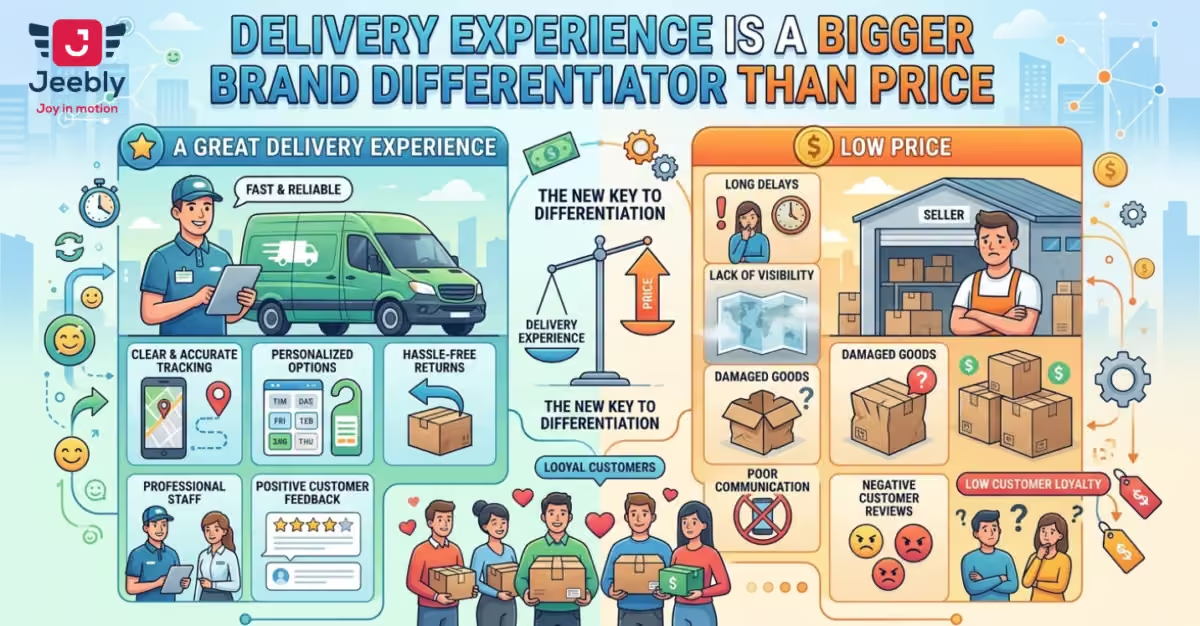
An infographic comparing how a positive delivery experience (left) vs. low price (right) impacts brand loyalty, featuring icons for tracking, staff, and costs in AED.
Why Delivery Experience Is a Bigger Brand Differentiator Than Price

In today’s competitive e-commerce landscape, competing on price alone is a race to the bottom. Customers are increasingly valuing speed, transparent tracking, and reliable service over minor cost savings. Discover why elevating your delivery experience is the ultimate brand differentiator for UAE sellers and how it drives long-term customer loyalty.

Read More
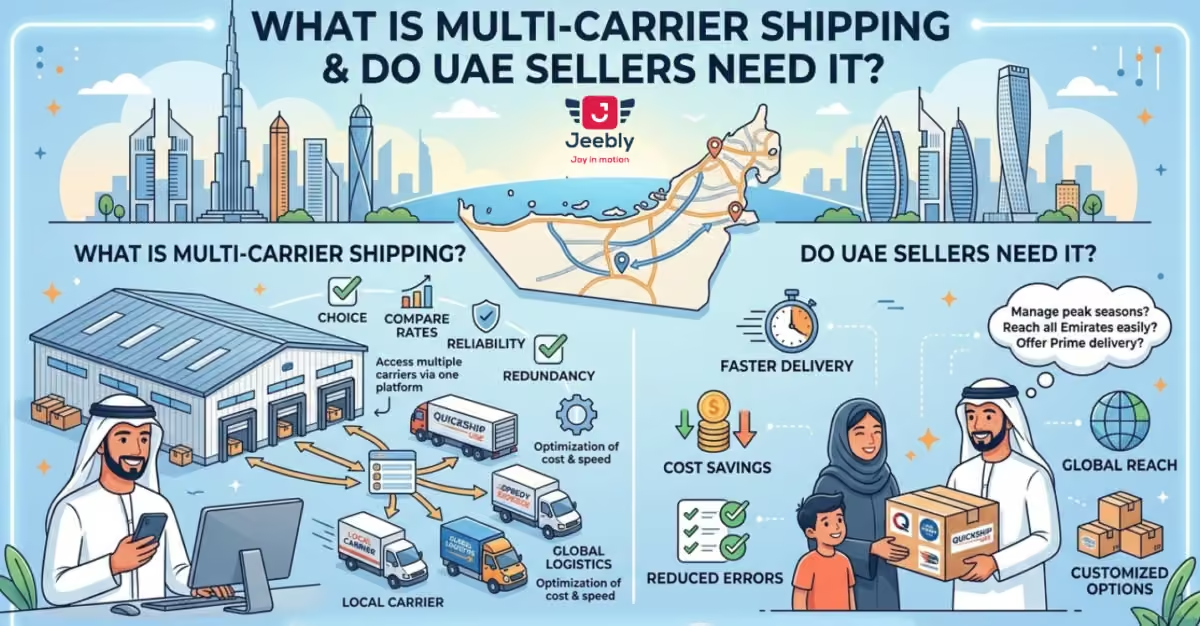
An infographic illustrating multi-carrier shipping for UAE e-commerce sellers, divided into two main sections explaining what it is and why it's needed, set against a backdrop of a UAE map and modern city skyline.
What Is Multi-Carrier Shipping and Do UAE Sellers Need It?

Relying on a single shipping provider can lead to bottlenecks, higher costs, and limited reach. Discover what multi-carrier shipping is and why e-commerce sellers in the UAE need a unified shipping strategy to compare rates, optimize delivery times across all Emirates, and scale their business smoothly.
Read More
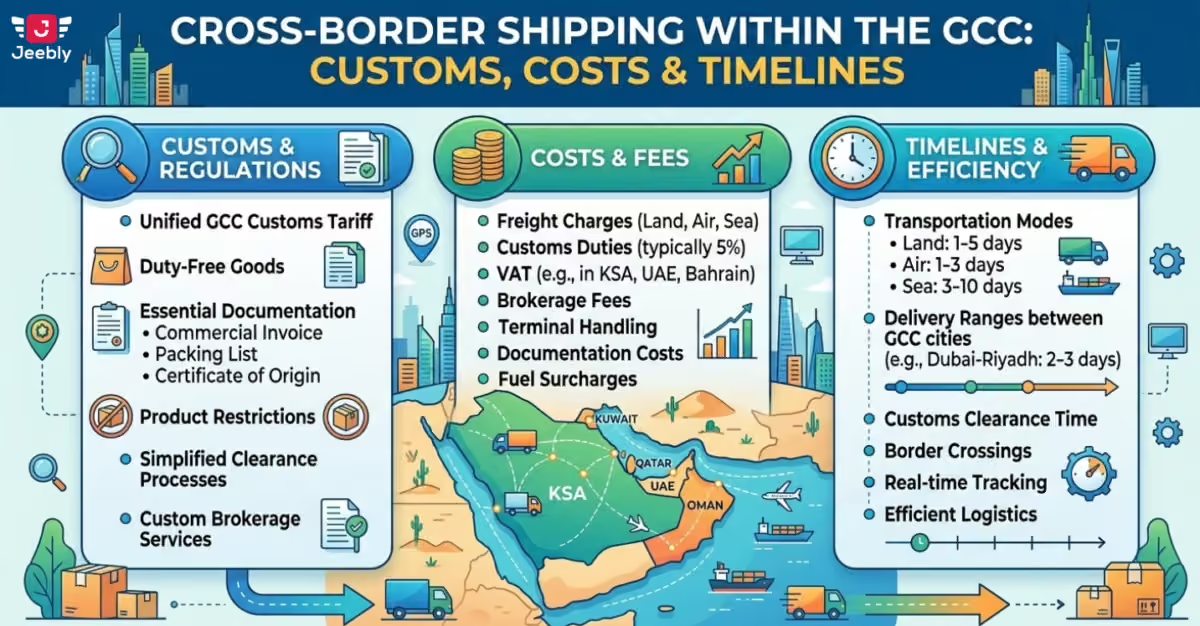
An infographic detailing the process of cross-border shipping within the Gulf Cooperation Council (GCC). The graphic is split into three main sections: "Customs & Regulations," "Costs & Fees," and "Timelines & Efficiency," all surrounding a map of the GCC region (Saudi Arabia, UAE, Oman, Qatar, Kuwait) with shipping routes.
Cross-Border Shipping Within the GCC: Customs, Costs and Timelines

Gearing up for Q4 in the UAE? Navigating peak season demand requires early planning across warehouse operations, carrier capacity, inventory, and customer experience. Explore our 10-step logistics checklist to streamline your supply chain, avoid bottleneck delays, and ensure smooth delivery during the busiest shopping quarter of the year.
Read More
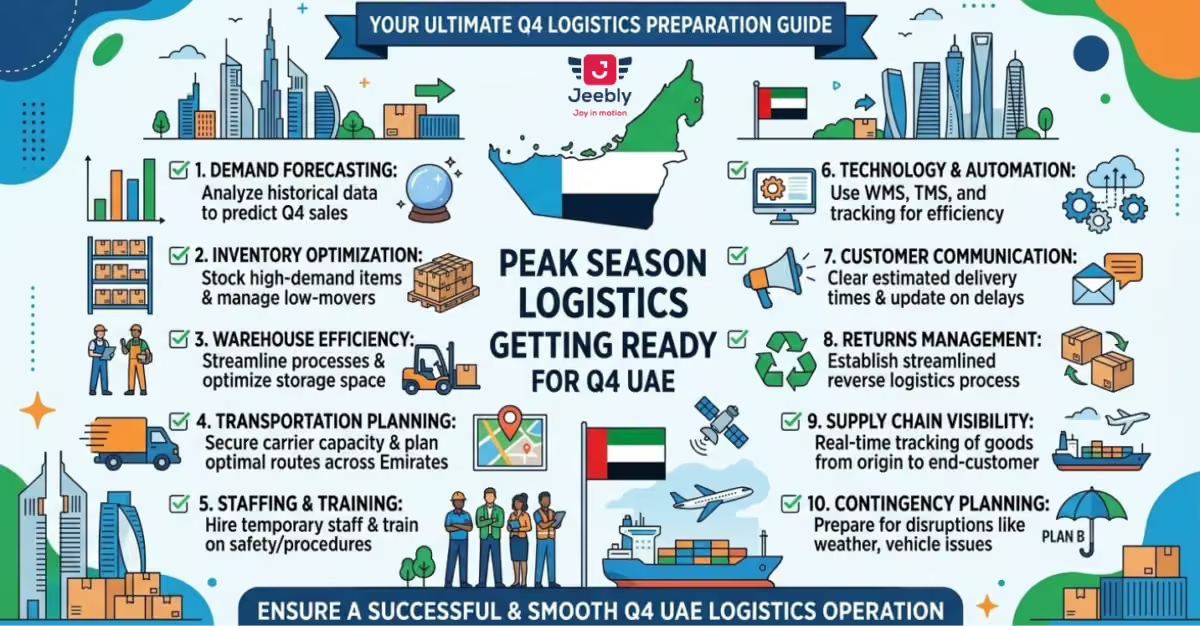
An infographic checklist outlining 10 key steps for Q4 UAE logistics preparation, featuring icons for demand forecasting, inventory, warehouse efficiency, transportation, staffing, and technology against a UAE skyline and map background.
Peak Season Logistics Checklist: Getting Ready for Q4 UAE

Gearing up for Q4 in the UAE? Navigating peak season demand requires early planning across warehouse operations, carrier capacity, inventory, and customer experience. Explore our 10-step logistics checklist to streamline your supply chain, avoid bottleneck delays, and ensure smooth delivery during the busiest shopping quarter of the year.
Read More
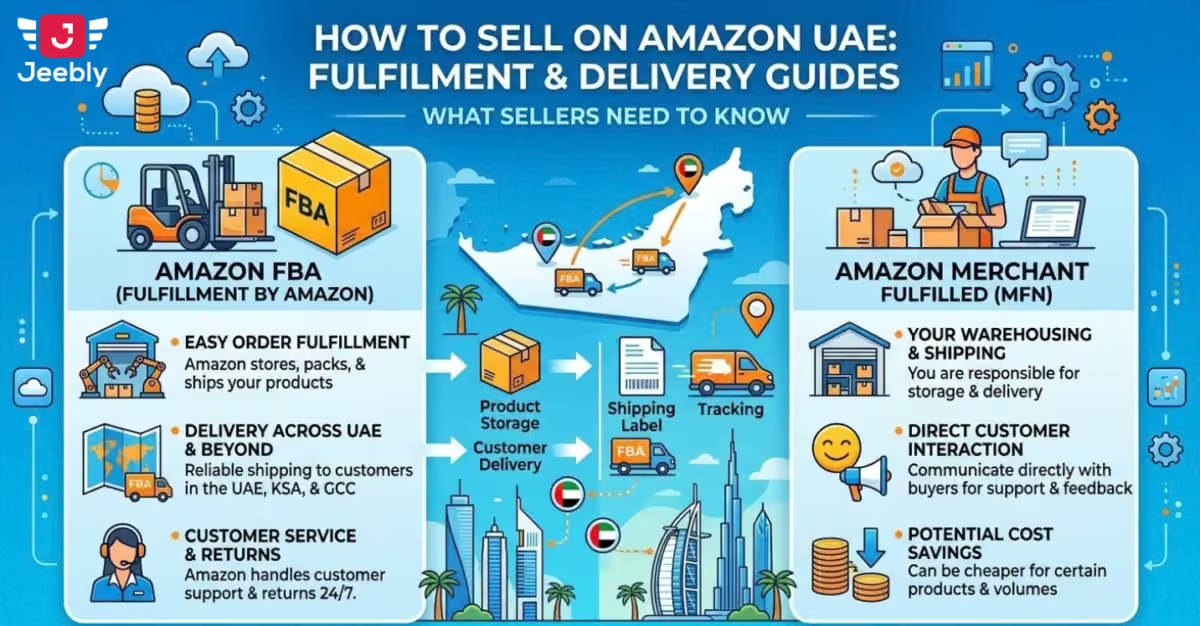
An isometric infographic detailing how to sell on Amazon UAE. The left side covers seller onboarding and listing steps like defining business activity, trade name reservation, and document preparation. The right side compares FBA (Fulfilment by Amazon) and FBM (Fulfilment by Merchant) logistics and delivery models against a Dubai skyline.
How to Sell on Amazon UAE: What Sellers Need to Know About Fulfilment and Delivery

Selling on Amazon UAE offers massive growth potential, but choosing the right logistics model can make or break your margins. Discover the step-by-step onboarding process for Amazon.ae, explore the core differences between Fulfilment by Amazon (FBA) and Fulfilment by Merchant (FBM), and learn how to optimize your delivery strategy to scale efficiently in the UAE market.

Read More

    Powered by