






Logistics around
the globe
5 Reasons why Reverse Logistics is important for your Business
Author: Vikrant, Head of Operations
While return is always associated with customer dissatisfaction, an effective process can convert it into an opportunity to build better customer loyalty. The longer a reverse logistics pickup takes, the more agony is added to the customer. On the other hand, a quick return attempt increases the level of trust in the customer and pushes them further to stick to the platform. Many companies have now moved to a no-questions-asked policy for returns just to boost the customer’s confidence. Many companies have started seeing the return percentage as an increasing trend in their relationship with customers.
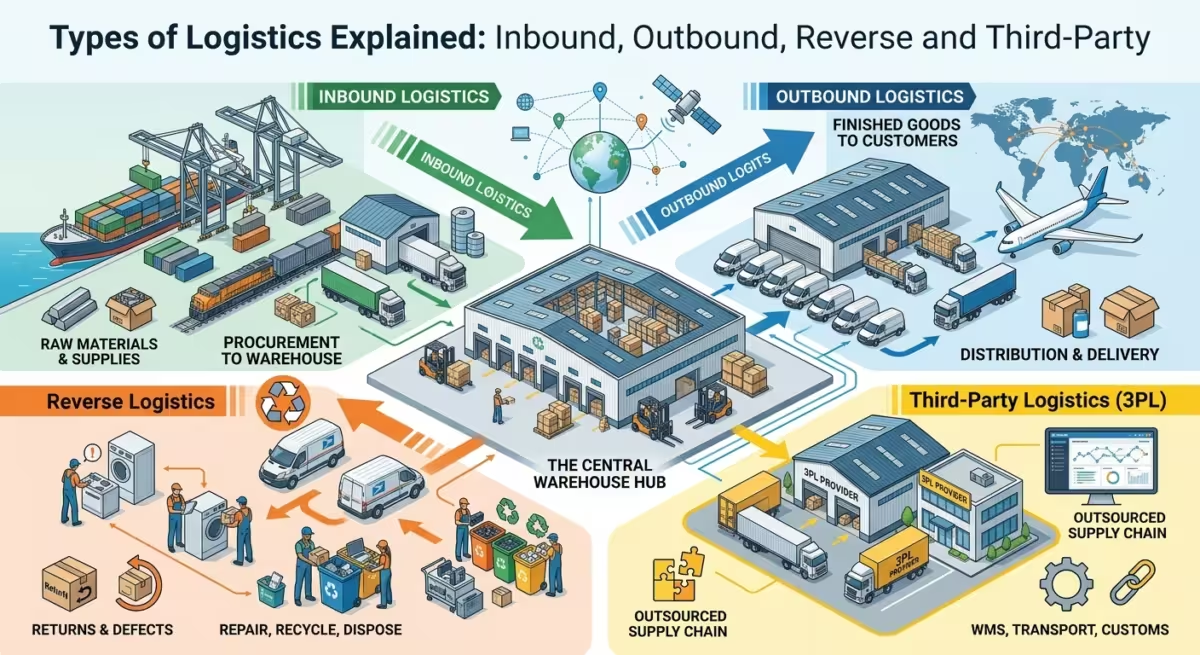
While improving every step of the supply chain, an effective reverse logistics solution can significantly impact the asset recovery of a business and, as a result, positively contribute at an operational level as well. From the time a customer raises a return request to the time the product has been returned to the seller/company, it stays as dead inventory in the chain, causing wastage in cost and inventory. So, apart from customer satisfaction, a quick return also adds the opportunity for the return product to be resold or treated as per the status.
Reverse shipments allow a company to closely monitor the quality of the product, and a high return rate acts as an alert to relook into the quality. Returns due to size issues have acted as a catalyst for improvements with features like size charts, size guides, and virtual trials. Such continuous improvements in the UI help in attracting better traffic to the platform. Additionally, companies can identify quality sourcing partners through simple data analytics to reduce returns.
Improved ROI and sustainability
A cost-effective reverse logistics system can not only help the company reduce its return cost, but the speed of returns can further help in customer retention and improved revenue. Reverse logistics is sometimes considered a dead cost and is not prioritized by e-commerce companies. However, one must remember that while half of the customer experience is drawn by the web interface and products, the other 50% of the consumer life cycle consists of fulfillment and logistics.
Routes to insightful reads

Looking for the right logistics partner in the UAE? We break down DHL vs. Jeebly to help you choose between global express shipping and local, tech-driven e-commerce fulfillment. Discover which courier wins on domestic delivery speeds, Cash on Delivery (COD) handling, and cross-border customs.

Logisty and Jeebly serve different logistics needs, but which is the better choice for your business? This comparison explores their services, delivery capabilities, technology, coverage, eCommerce integrations, cash on delivery (COD), and fulfilment solutions to help UAE businesses choose the right logistics partner for growth.

VAT can significantly impact the cost of shipping and delivery services in the UAE, making it essential for businesses to understand how it applies to domestic and international shipments. This guide explains VAT rules, zero-rated and standard-rated services, invoicing requirements, and practical compliance tips to help businesses manage logistics costs and stay compliant with UAE tax regulations.

Cash on Delivery (COD) fraud is a growing challenge for e-commerce businesses across the UAE, leading to fake orders, delivery failures and unnecessary operational costs. Learn how to identify common fraud tactics, implement effective prevention strategies and protect your business while maintaining a seamless customer experience.

Customs clearance is a critical step in moving goods into and out of the UAE. Whether you’re importing, exporting, or shipping across borders, understanding the customs process, required documentation, and compliance requirements can help you avoid delays, reduce costs, and keep your supply chain running efficiently.