






In today’s competitive e-commerce landscape, competing on price alone is a race to the bottom. Customers are increasingly valuing speed, transparent tracking, and reliable service over minor cost savings. Discover why elevating your delivery experience is the ultimate brand differentiator for UAE sellers and how it drives long-term customer loyalty.
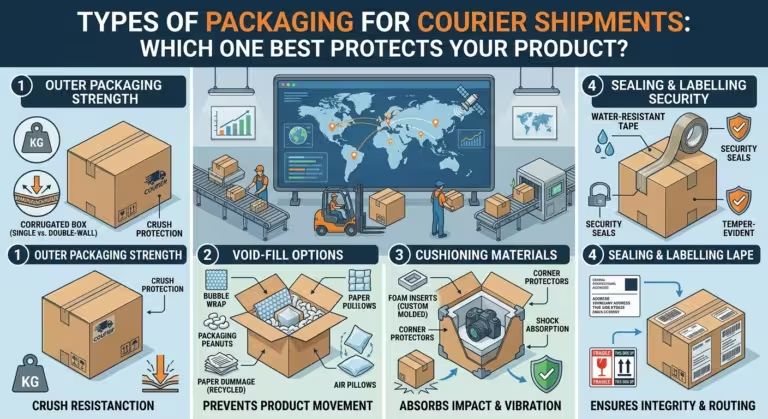
Types of Packaging for Courier Shipments: Which One Best Protects Your Product?
The packaging you choose for a courier shipment does three things simultaneously: it protects the product during transit, it determines the volumetric weight your courier charges you for, and it forms the first physical impression your customer has of your brand.
If you get one of those three wrong, you may have to pay more than you need to, absorb damage claims you shouldn’t have to, or lose repeat customers to a bad unboxing experience.
This guide covers the practical packaging types used for courier shipments. Know what each is best for, what it costs, and how to choose the right one for your product category and UAE delivery operation.
Key Takeaways
- The corrugated boxes segment accounted for the largest market revenue share in 2025, at 37.22%. The right choice depends on your product’s weight, fragility, and dimensions.
- In the UAE, parcels move between air-conditioned storage and outdoor courier vehicles in extremely high temperatures.
- Moisture resistance is a packaging consideration that most global guides don’t address for this market.
- Poly mailers are not suitable for rigid, heavy, or sharp products. Objects with a rigid edge can pierce the plastic and damage the contents during transit.
- Ply count defines corrugated box strength: 3-ply for lightweight goods, 5-ply for medium loads, 7-ply and above for heavy-duty and industrial shipments.
Why Packaging Choice Directly Affects Your Courier Costs
Before comparing packaging types, it is worth understanding how packaging choice directly affects what you pay per shipment.
UAE couriers charge based on the chargeable weight, i.e. the higher of the actual weight or the volumetric weight. Volumetric weight is calculated as:
Length (cm) × Width (cm) × Height (cm) ÷ 5,000.
A product that weighs 0.3 kg but ships in a 30 × 20 × 15 cm box has a volumetric weight of 1.8 kg, and you pay for 1.8 kg, not 0.3 kg.
The practical consequence: a fashion retailer shipping a soft garment in a 3-ply corrugated box when a poly mailer would suffice is paying for air. A cosmetics brand that ships fragile glass bottles in a poly mailer is paying less upfront and absorbing damage-claim costs on the back end. Neither is optimal.
Right-sizing your packaging is one of the highest-ROI operational decisions a UAE e-commerce business can make. The sections below provide the information you need to make that decision by product category.
For a full breakdown of what UAE domestic shipping actually costs, see “Shipping Costs for Small Businesses in the UAE,” which provides a rate card to use as a model.
The Main Types of Packaging for Courier Shipments
1) Corrugated Boxes
Corrugated boxes are built from a fluted paper core sandwiched between flat liner boards. The fluted layer provides structural rigidity and cushioning that single-layer cardboard cannot. Corrugated boxes absorb moisture in humid conditions.
In the UAE, where coastal humidity can be extremely high during the summer months, and parcels move between temperature extremes during transit, ensure boxes are sealed with sufficient tape and stored in a dry environment before dispatch.
Ply count and when to use each:
| Ply | Structure | Best for |
|---|---|---|
| 3-ply (single-wall) | 2 liner boards + 1 fluted layer | Lightweight non-fragile goods, books, clothing, accessories |
| 5-ply (double-wall) | 3 liner boards + 2 fluted layers | Medium-weight goods, electronics, multi-item orders |
| 7-ply and above (triple-wall) | 4+ liner boards + 3 fluted layers | Heavy-duty, industrial, oversized shipments |
What corrugated boxes are good for:
Any product that is rigid, heavy, fragile, or awkwardly shaped. The structured interior allows you to add protective inner materials to hold the product in position during transit. This matters particularly for multi-item shipments where products can damage each other without internal separation.
What they are not good for:
Soft goods that compress without damage. Shipping a folded garment in a corrugated box when a poly mailer would work adds volumetric weight and storage cost with no protective benefit.
2) Poly Mailers
Poly mailers are flexible, lightweight plastic courier bags used primarily for soft goods such as clothing, textiles, fabrics, and documents. They are self-sealing, waterproof, and significantly cheaper per unit than corrugated boxes.
What poly mailers are good for: Non-fragile, compressible items that do not need to retain their shape during transit. Fashion, apparel, swimwear, lightweight accessories, and flat documents all ship cleanly in poly mailers with no risk of damage.
What they are not good for: Anything rigid, heavy, or sharp. Objects with a rigid edge can pierce the plastic during transit, compromising both the bag and the product inside. Poly mailers provide no cushioning. They protect against moisture and contamination, not impact.
Variants available:
- Standard poly mailers: Opaque white or grey, self-sealing
- Printed poly mailers: Custom branding on the exterior, the lowest-cost branded packaging option for high-volume fashion sellers
- Eco-friendly poly mailers: Made from recycled or biodegradable materials, increasingly available from UAE packaging suppliers
3) Bubble Mailers
Bubble mailers combine the lightweight flexibility of a poly mailer with an inner layer of bubble wrap cushioning. They sit between poly mailers and corrugated boxes in both cost and protection level.
What bubble mailers are good for: Small, semi-fragile items that need light impact protection but do not require the structural support of a corrugated box. Books, jewellery, cosmetics, watches, small electronics, sunglasses, and stationery are typical use cases.
What they are not good for: Large, heavy, or highly fragile products where the bubble lining provides insufficient cushioning. A ceramic item requiring significant void fill needs a corrugated box. A bubble mailer’s inner layer is designed for light knocks and vibration, not drops.
Two bubble mailer formats:
- Standard bubble mailers: Outer poly layer plus inner bubble-wrap lining. Most common format.
- Kraft paper bubble mailers: Paper outer plus bubble or honeycomb inner layer. More sustainable than plastic, available from UAE suppliers, but not fully waterproof. Consider this in coastal humidity conditions.
In the UAE, where parcels may move between air-conditioned storage and outdoor courier vehicles in extreme temperatures, the heat-induced expansion and contraction of bubble wrap cushioning can degrade its protective properties over time. For long-distance shipments within the UAE, consider this when deciding between bubble mailers and corrugated boxes for your more fragile items.
4) Rigid Boxes
Rigid boxes are heavyweight, non-collapsible boxes. This format is typically used for premium and luxury products. Unlike corrugated boxes, they do not fold flat, which increases storage costs but delivers a substantially different opening experience.
What rigid boxes are good for: High-value products where the packaging is part of the value proposition, such as perfume, jewellery, luxury accessories, premium cosmetics, tech accessories, and gifts. A rigid box signals quality before the product is seen.
Cost consideration: Rigid boxes cost significantly more per unit than corrugated alternatives. The unit economics only work when the product margin justifies the packaging investment and the customer experience benefit is measurable. For UAE e-commerce brands in premium categories, this is often the case. For high-volume, lower-margin products, it is rarely cost-effective.
For businesses shipping high-value or fragile goods that need more than standard courier handling at the door, white-glove delivery service through Jeebly Plus covers specialist deliveries with dedicated handling throughout.
5) Protective Inner Materials
Outer packaging keeps the product in the right place. Inner materials prevent it from moving within that space. Choosing the wrong outer packaging is expensive. Choosing the wrong inner material is how products arrive damaged, even when in the right box.
| Inner material | Best for | Not suitable for | |
|---|---|---|---|
| Bubble wrap | Fragile items: glassware, ceramics, electronics | Heavy items where wrap compresses under weight | |
| Air pillows | Void fill around products in corrugated boxes | Products needing contact-cushioning (use bubble wrap instead) | |
| Foam inserts | Custom-fit protection for electronics, equipment | High-volume operations (expensive per unit, slow to pack) | |
| Corrugated dividers | Multi-item shipments, prevents inter-product damage | Single-item shipments where dividers add weight unnecessarily | |
| Tissue paper | Non-fragile, appearance-focused items (fashion, gifts) | Any product needing impact protection | |
| Honeycomb paper wrap | Sustainable cushioning for fragile items | Very heavy products |
The principle that applies across all inner materials: the product should not move when you shake the sealed package. If it does, either the box is too large, or the void fill is insufficient. Both pose a risk of damage during courier transit.
For a practical guide to sealing and securing boxes specifically for UAE courier conditions, Tips on How to Pack a Courier Parcel in UAE covers every step.
UAE-Specific Packaging Considerations
Several packaging decisions that are straightforward in other markets have additional variables in the UAE.
- Volumetric weight and courier pricing: As covered above, UAE couriers calculate chargeable weight on a volumetric basis. Right-sizing packaging is directly financial, not just operational.
- Heat and humidity: The UAE’s summer temperatures can affect adhesive tapes, bubble wrap cushioning properties, and moisture-absorbing packaging materials like kraft paper. Self-sealing poly mailers perform better than tape-sealed corrugated boxes in high-humidity coastal conditions.
- Courier handling in the UAE: Parcels move through courier sorting hubs and are subject to stacking pressure. A 3-ply corrugated box adequate for a single-layer conveyor in a European fulfilment centre may not withstand stacking in a UAE hub during peak periods. For heavier shipments, a minimum of 5-ply is advisable.
- COD delivery dynamics: In the UAE, a meaningful share of deliveries involve COD, and a refused parcel returns to your warehouse. That return transit subjects the packaging to a second full journey. Factor this into your material selection, particularly for products in fragile categories.
How to Choose the Right Packaging for Your Product
Follow this decision rule: start with the product’s fragility and weight, then select the smallest format that adequately protects it. The smallest format that protects is the most cost-effective choice for courier billing.
| Product type | Recommended outer packaging | Recommended inner material |
|---|---|---|
| Clothing, soft goods, textiles | Poly mailer | None required |
| Books, flat items | Bubble mailer or rigid mailer | Minimal bubble wrap if corners are vulnerable |
| Jewellery, cosmetics, sunglasses | Bubble mailer | Tissue paper or foam insert |
| Small electronics, phones, tablets | 5-ply corrugated box | Foam inserts or bubble wrap |
| Glassware, ceramics | 5-ply corrugated box | Bubble wrap + air pillows for void fill |
| Large or heavy items | 7-ply corrugated box | Foam corners + corrugated dividers |
| Premium or luxury products | Rigid box | Tissue paper, ribbon, branded insert |
| Multi-item orders | 5-ply corrugated box with dividers | Corrugated dividers per item |
Once packaging is right-sized and correctly selected, the courier you use determines whether the parcel arrives in the same condition it left. Best Courier Services in UAE: 2026 Comparison Guide benchmarks the major UAE operators on FDSS, handling standards, and COD capability.
How Packaging Affects Your Jeebly Delivery Operation
In Jeebly Dash, the delivery parcel should weigh up to 7 kg and measure 40 cm × 40 cm × 40 cm for bike deliveries. Within those parameters, choosing right-sized packaging ensures your courier invoice reflects the actual product weight rather than the inflated volumetric weight from oversized boxes.
For businesses managing high daily order volumes through Jeebly Bizz, packaging standardisation is part of the fulfilment setup. The platform records packaging dimensions for each SKU and applies them consistently across all orders. For e-commerce operations with variable product sizes, this eliminates the inconsistency that creates both overpacking and underpacking across a day’s dispatch.
For large freight shipments over 20 kg that require specialist packaging, crating, or pallet wrapping, Jeebly Haul handles freight-grade packaging alongside the shipment itself.
Talk to the Jeebly team if your current packaging setup is creating courier cost inflation, damage claims, or return packaging concerns. A direct conversation about your product mix and daily order volume will confirm the right approach.
Conclusion
The right packaging for a courier shipment is the smallest format that adequately protects your product through transit. Poly mailers suit soft goods where no impact protection is needed. Bubble mailers suit small, semi-fragile items. Corrugated boxes suit anything rigid, heavy, or fragile, with ply count matched to the load. Rigid boxes suit premium products where packaging is part of the experience.
Inner materials determine whether the product arrives undamaged, regardless of the outer packaging you choose. In the UAE, heat, humidity, and volumetric weight mechanics add variables that most global packaging guides don’t address.
For e-commerce fulfilment, where packaging is standardised per SKU and applied consistently at scale, Jeebly Bizz covers pick, pack, and dispatch through a single connected platform. Get in touch to discuss your packaging and fulfilment setup.
Frequently Asked Questions

There is no single best type. The right packaging depends on your product. Soft goods (clothing, textiles) ship most cost-effectively in poly mailers. Semi-fragile items (jewellery, cosmetics) are well-suited to bubble mailers. Fragile or heavy products need corrugated boxes with appropriate ply count and inner cushioning.
A poly mailer is a flexible plastic courier bag with no cushioning. It protects against moisture and contamination. A bubble mailer has the same outer poly layer and an inner bubble-wrap lining that provides light impact cushioning. Poly mailers suit non-fragile soft goods. Bubble mailers suit small, semi-fragile items that need light protection without the cost or bulk of a corrugated box.
UAE couriers charge on chargeable weight, whichever is higher between actual weight and volumetric weight. Volumetric weight is calculated as (L × W × H in cm) ÷ 5,000. Oversized packaging can inflate volumetric weight and increase your courier charge. Right-sizing packaging to the smallest format that adequately protects your product directly reduces costs.
3-ply (single-wall) for lightweight, non-fragile products. 5-ply (double-wall) for medium-weight goods, electronics, or items that need extra stacking resistance during courier transit in the UAE. 7-ply and above for heavy-duty or industrial shipments. In the UAE’s summer temperatures, 5-ply is the safer default for anything fragile, as heat can weaken the adhesive bond in lighter corrugated board.
Not always. Bubble wrap is most effective for individual fragile items like glassware, ceramics, and bottles. For products that already have rigid outer packaging (for example, a boxed electronic device), air pillows or paper void fill may be sufficient to prevent movement. To test, shake the sealed box. If the product moves, add more inner cushioning. If it does not move, the packaging is adequate.
Routes to insightful reads

Why Delivery Experience Is a Bigger Brand Differentiator Than Price
Author:
October 15, 2026

What Is Multi-Carrier Shipping and Do UAE Sellers Need It?
Author:
October 12, 2026
Relying on a single shipping provider can lead to bottlenecks, higher costs, and limited reach. Discover what multi-carrier shipping is and why e-commerce sellers in the UAE need a unified shipping strategy to compare rates, optimize delivery times across all Emirates, and scale their business smoothly.
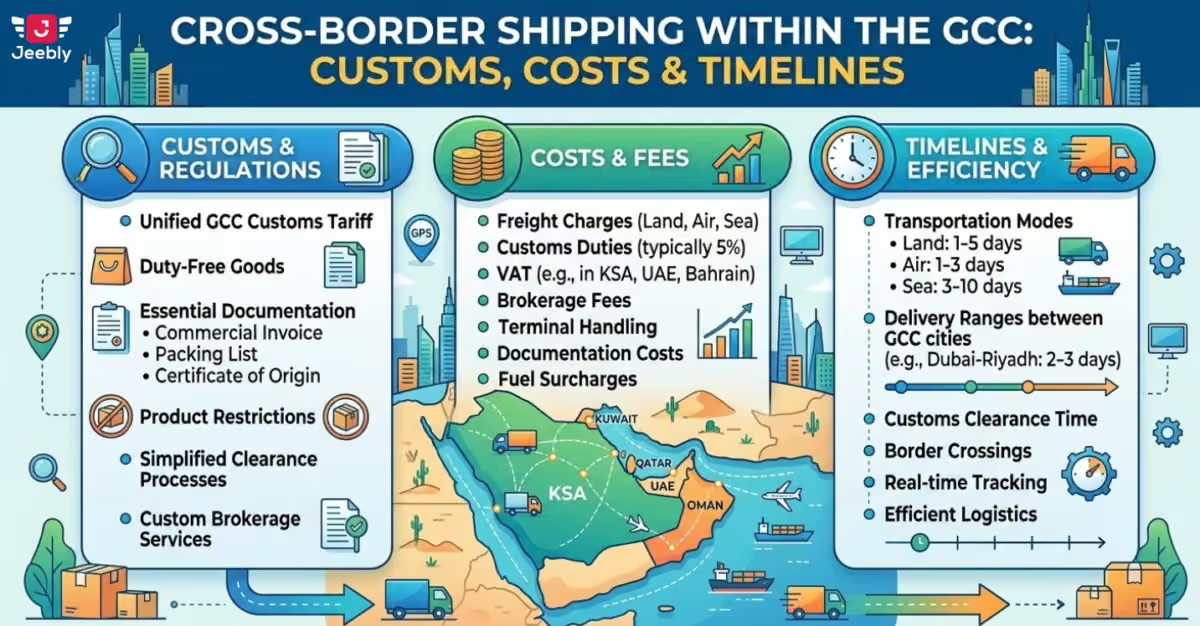
Cross-Border Shipping Within the GCC: Customs, Costs and Timelines
Author:
October 8, 2026
Gearing up for Q4 in the UAE? Navigating peak season demand requires early planning across warehouse operations, carrier capacity, inventory, and customer experience. Explore our 10-step logistics checklist to streamline your supply chain, avoid bottleneck delays, and ensure smooth delivery during the busiest shopping quarter of the year.
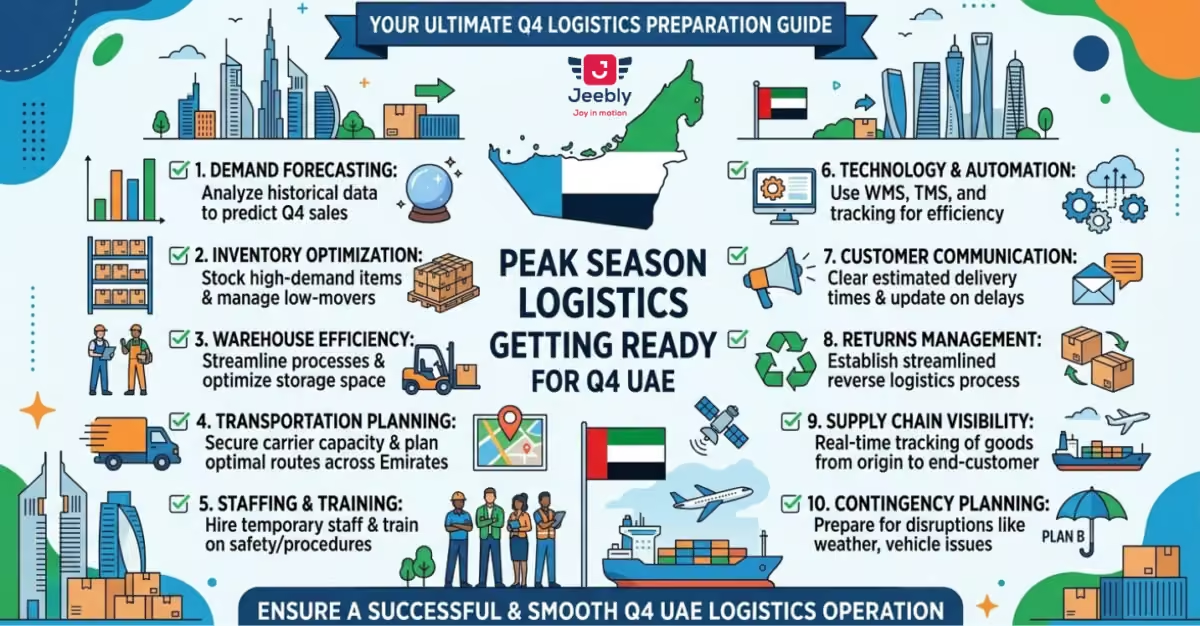
Peak Season Logistics Checklist: Getting Ready for Q4 UAE
Author:
October 5, 2026
Gearing up for Q4 in the UAE? Navigating peak season demand requires early planning across warehouse operations, carrier capacity, inventory, and customer experience. Explore our 10-step logistics checklist to streamline your supply chain, avoid bottleneck delays, and ensure smooth delivery during the busiest shopping quarter of the year.
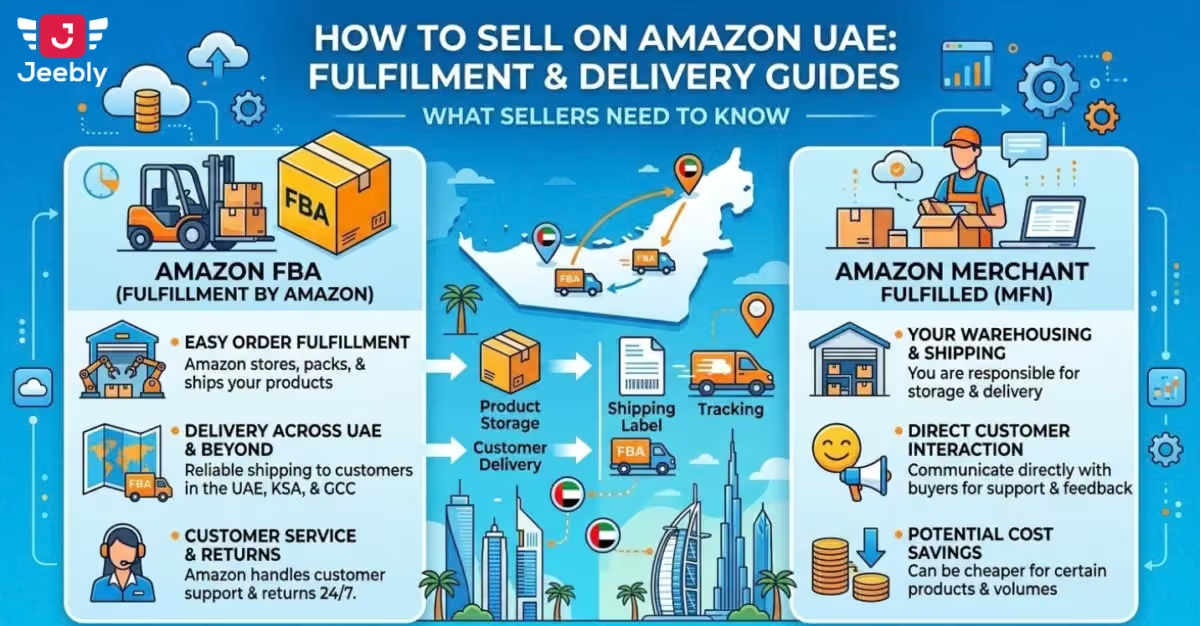
How to Sell on Amazon UAE: What Sellers Need to Know About Fulfilment and Delivery
Author:
September 28, 2026
Selling on Amazon UAE offers massive growth potential, but choosing the right logistics model can make or break your margins. Discover the step-by-step onboarding process for Amazon.ae, explore the core differences between Fulfilment by Amazon (FBA) and Fulfilment by Merchant (FBM), and learn how to optimize your delivery strategy to scale efficiently in the UAE market.
