






Logistics around
the globe
5 Reasons why Reverse Logistics is important for your Business
Author: Vikrant, Head of Operations
While return is always associated with customer dissatisfaction, an effective process can convert it into an opportunity to build better customer loyalty. The longer a reverse logistics pickup takes, the more agony is added to the customer. On the other hand, a quick return attempt increases the level of trust in the customer and pushes them further to stick to the platform. Many companies have now moved to a no-questions-asked policy for returns just to boost the customer’s confidence. Many companies have started seeing the return percentage as an increasing trend in their relationship with customers.
While improving every step of the supply chain, an effective reverse logistics solution can significantly impact the asset recovery of a business and, as a result, positively contribute at an operational level as well. From the time a customer raises a return request to the time the product has been returned to the seller/company, it stays as dead inventory in the chain, causing wastage in cost and inventory. So, apart from customer satisfaction, a quick return also adds the opportunity for the return product to be resold or treated as per the status.
Reverse shipments allow a company to closely monitor the quality of the product, and a high return rate acts as an alert to relook into the quality. Returns due to size issues have acted as a catalyst for improvements with features like size charts, size guides, and virtual trials. Such continuous improvements in the UI help in attracting better traffic to the platform. Additionally, companies can identify quality sourcing partners through simple data analytics to reduce returns.
Improved ROI and sustainability
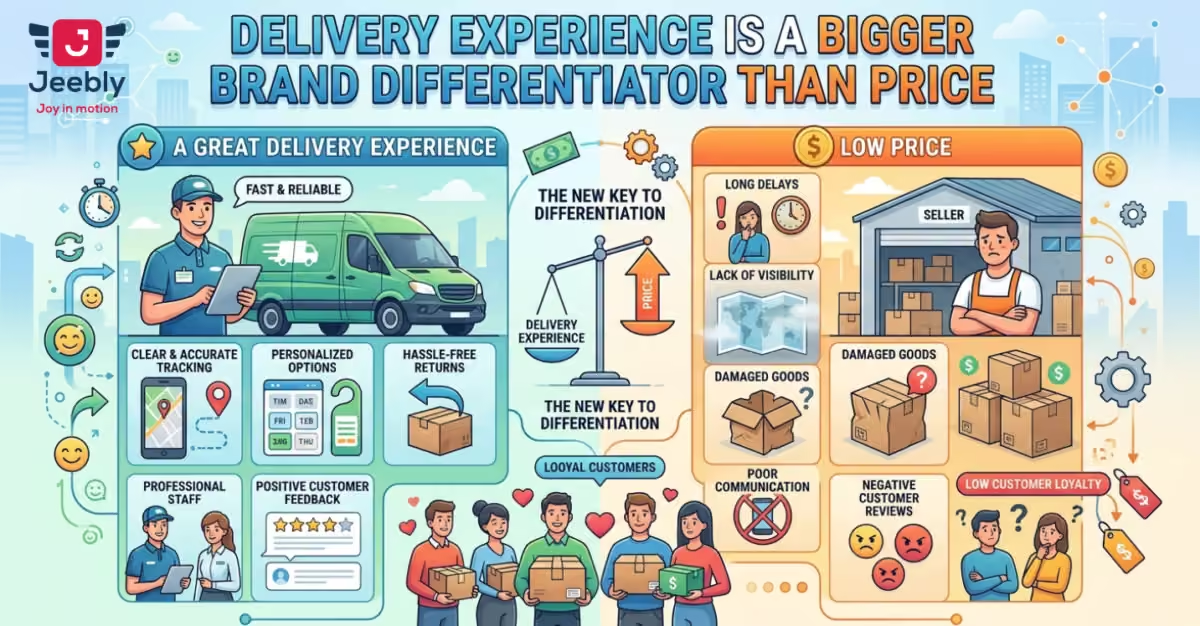
A cost-effective reverse logistics system can not only help the company reduce its return cost, but the speed of returns can further help in customer retention and improved revenue. Reverse logistics is sometimes considered a dead cost and is not prioritized by e-commerce companies. However, one must remember that while half of the customer experience is drawn by the web interface and products, the other 50% of the consumer life cycle consists of fulfillment and logistics.
Routes to insightful reads

Picking the wrong delivery partner costs more than just money. A missed window, a failed first attempt, or a COD reconciliation delay can quickly become your brand’s problem, not the courier’s. We cover seven providers operating across the UAE in 2026, what each does well, where each falls short, and which business type each actually suits.

Picking a delivery partner in Dubai sounds straightforward until the bills don’t match the quotes, the tracking goes quiet, or your business outgrows what the platform can handle. This article breaks down both platforms in terms of pricing, technology, coverage, and support so you know exactly what you are choosing and why.

Your courier partner is not a vendor you swap easily. It shapes how customers experience your brand after checkout. This article maps providers across service capabilities, technology, pricing structures, and e-commerce fit, so you can match the right partner to how your business actually operates.

Your logistics partner is the last thing your customer experiences before forming an opinion about your brand. The iMile vs Jeebly question comes up often for UAE e-commerce brands, and rightly so. This article compares both carriers across coverage, delivery speed, pricing, SLAs, technology, and reverse logistics so you can choose based on what your business actually needs.

Your delivery partner is your brand’s last impression. When a parcel arrives late, tracking goes silent, or a COD reconciliation takes a week, the customer blames your brand. So when UAE businesses compare Quiqup vs Jeebly, the real question is: which provider actually protects your customer experience while your order volumes grow?