






Jeebly | Logistics Solutions

Categories
blogs

How AI in Logistics Is Changing Delivery in UAE

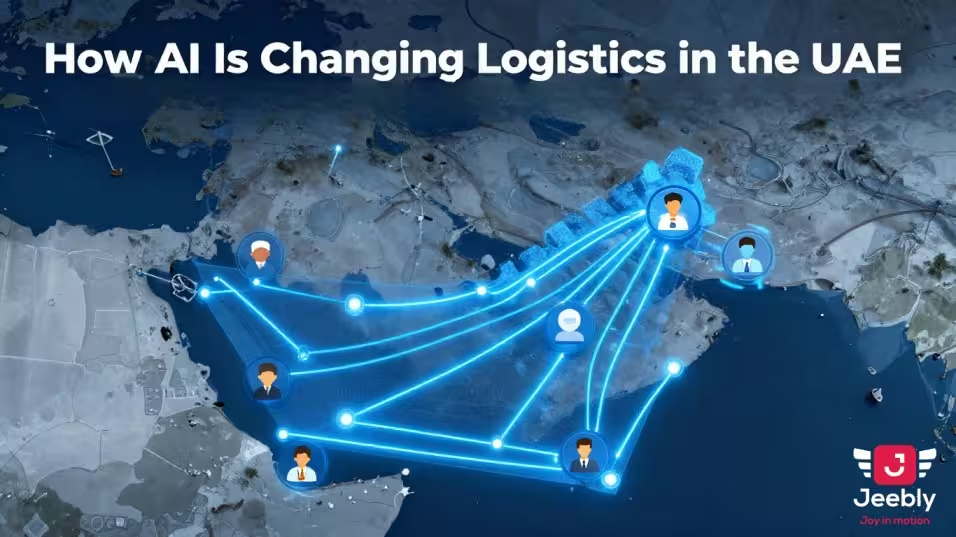
How AI Is Changing Logistics in the UAE: Smarter Routes, Fewer Failures, Happier Customers

How AI Is Changing Logistics in the UAE: Smarter Routes, Fewer Failures, Happier Customers

A delivery that arrives on time, every time, does not happen automatically.

Behind that consistency is a growing layer of intelligent algorithms that read traffic, sensors that flag vehicle issues before a breakdown, and systems that catch problems before they reach the customer. AI in logistics is already deciding which route a rider takes, which order ships first, and which delivery is most likely to fail before it leaves the warehouse.

For businesses shipping within Dubai or across all seven emirates, this matters for staying competitive in a market where customer expectations are rising faster than most operations can keep up.

Why AI in Logistics and Supply Chain Is a UAE-Specific Problem Worth Solving

The UAE is not a simple logistics market. Consider what any delivery operation is working against:

* Temperatures exceeding 45°C in summer, accelerating vehicle wear, and limiting delivery windows
* Prayer times and cultural observances that shape when customers can be reached
* Demand spread across seven emirates with very different geographies and infrastructure
* A free zone ecosystem operating on separate rules from the mainland
* Customers are conditioned to same-day delivery, real-time tracking, and zero tolerance for failed attempts

Manual operations cannot scale to meet this. Blanket routing decisions do not account for enough variables. This is where AI steps in as an operational fix.

Smart Route Optimisation: Cutting Delivery Time Across Roads

AI-based route optimisation can materially reduce travel time and transport costs, with case studies showing around 15% lower travel time and meaningful reductions in unnecessary kilometres and fuel waste.

Standard GPS navigation does not factor in prayer time windows, mall traffic during sale seasons, or the UAE’s rapid road development. AI-driven routing layer real-time traffic, weather, historical performance, and UAE-specific time constraints to generate routes that work in practice.
For inter-emirate shipments, this is especially significant. A next-day delivery from Dubai to Ras Al Khaimah faces different routing realities at 7 AM versus 4 PM. AI accounts for that.

Beyond Speed: How AI is Used in Logistics

Smarter routing delivers downstream gains that go beyond a faster ETA:

* Fewer failed attempts — lower re-delivery costs and less customer service load
* More predictable windows — customers stop chasing for updates
* Reduced vehicle wear — lower maintenance spend over time
* Better driver satisfaction — logical, achievable routes reduce pressure on ground teams

For businesses where COD collection is part of the delivery flow, optimised sequencing also improves first-attempt collection rates. This reduces follow-up visits that add cost with no revenue upside.

Jeebly’s Jeebly One app sends real-time updates at every stage, not just when something goes wrong. Download the app today, book your first shipment and see the difference.

Predictive Logistics UAE: Stopping Failures Before They Reach the Customer

In harsh summer conditions, heat materially increases vehicle stress and the risk of maintenance issues. That is a customer experience problem that starts in the workshop and ends with a failed delivery.

Predictive maintenance AI monitors:

* Engine performance and temperature sensors
* Tyre pressure and wear indicators
* Electrical and cooling system health

When the system flags a potential failure, maintenance teams can be alerted 48–72 hours in advance. Repairs happen during off-peak hours.

Predictive maintenance can significantly reduce downtime; published benchmarks commonly cite reductions of 30%–50%, though results vary by operation. 

Demand Forecasting: Getting Inventory Right Before Orders Spike

UAE logistics faces pronounced demand swings: Ramadan, Eid, Dubai Shopping Festival, 11.11, Black Friday. Managing these manually means either over-stocking (capital tied up) or under-stocking (missed sales, fulfilment delays).

AI demand forecasting uses historical order data, seasonal patterns, and real-time signals to pre-position stock. It helps warehouse management, allocate staff and stage high-velocity SKUs closer to dispatch before the spike hits, not during it.

If peak season has caught your fulfilment off guard before, here’s how Jeebly helps businesses scale during peak season.

Artificial Intelligence Delivery Optimisation: The Customer Experience Layer

Real-time tracking and accurate delivery windows are no longer premium features. They are table stakes. The gap is in how most operations deliver them reactively, after the customer asks.

AI flips this: 


Old Approach

AI-Enabled Approach

Customer calls to ask where the order is

Proactive notification sent via app/website /sms before they ask

Delay is explained after it happens

Alternative offered before it becomes a complaint

Fixed status updates at set intervals

Dynamic updates based on actual delivery progress

One-size delivery window

Window optimised based on customer behaviour data

How SMEs and Social Sellers Access This Without Building It Themselves

AI-powered logistics was, until recently, largely an enterprise advantage. That gap has closed. Modern logistics platforms now embed AI directly into their OMS and WMS, making it accessible to SMEs and social sellers via integration rather than internal development.

Businesses selling via Shopify, Magento, or WooCommerce can now:

* Route orders automatically to the nearest fulfilment point
* Track inventory in real time across multiple warehouse locations
* Receive demand signals before they become stockouts
* Access COD remittance data and delivery proof through a live dashboard

The technology is available through the right logistics partner. You do not need to build it.

Supply Chain Automation in the Gulf: Where the UAE Actually Stands

The scale of AI adoption across UAE logistics is significant. 

* The UAE is a leading market for AI adoption overall, with Microsoft’s 2025 diffusion report putting UAE working-age AI usage at 64.0% by     end-2025. 
* Additionally, Dubai’s government media office reported the launch of a drone delivery system at Dubai Silicon Oasis in December 2024.   They previously reported successful drone delivery trials there. 
* Commercial deployment is moving from pilot to early operational readiness in selected use cases, supported by active infrastructure and   regulatory work in Dubai.

These are operational outcomes from deployed systems. The gap between AI-enabled logistics operations and manual ones is widening and compounding each year.

What to Look for in an AI-Powered Logistics Partner in the UAE

Knowing what AI can do is one thing. Knowing whether your logistics partner is actually using it is another. Here is what to check:

* Direct store integration — Manual order entry is where errors and delays begin. Look for native connections to Shopify, Magento,   WooCommerce, or a custom API.
* Live dashboard access — Real-time visibility into stock levels, order status, COD pending remittance, and delivery progress. Not weekly   reports. Live.
* UAE-specific routing intelligence — Does the system factor in prayer times, free zone access rules, temperature constraints, and inter-   emirate geography? Generic global routing is not the same as localised AI logistics.
* Continuous learning from delivery data — The system should improve from failed delivery data, customer preference signals, and seasonal   patterns. Static rule sets do not count as AI.

Jeebly checks every box above, and you can verify that before committing. Talk to the team and map out your logistics setup.

The Future of Smart Logistics in Dubai

The relevant point for businesses today is to build with logistics partners who are investing in this infrastructure now, because the gap between tech-enabled and manual operations will only grow.

The UAE has the geographic concentration, free-zone infrastructure, and government commitment to smart-city development that make it one of the most advanced logistics markets globally. That transition is underway. The question is whether your fulfilment setup is positioned to move with it.

If your fulfilment isn’t keeping pace, the gap compounds. Get started with Jeebly today and, rather than lengthy onboarding, see fast results!

Frequently Asked Questions

AI in logistics encompasses machine learning, predictive algorithms, and automated decision-making applied to the storage, movement, and delivery of goods. In the UAE, live applications include route optimisation, predictive fleet maintenance, demand forecasting, warehouse management, and proactive customer communication.

It analyses real-time traffic, historical delivery data, weather, and UAE-specific factors to generate dynamically adjusted routes. This includes prayer times, cultural events, and mall congestion during sale seasons.

Yes. Through logistics platforms with built-in OMS/WMS and store integration, SMEs gain access to the same AI infrastructure as larger enterprises without having to build or maintain any technology themselves.

Through smarter route planning, proactive customer communication before delays occur, delivery window optimisation based on behaviour data, and early flagging of high-risk deliveries before dispatch. Each reduces first-attempt failure rates.

Ask specifically: Does the platform integrate directly with your store? Is inventory visibility live? Does routing account for UAE cultural and geographic specifics? Does the system improve from historical delivery outcomes or run on fixed rules?

Routes to insightful reads

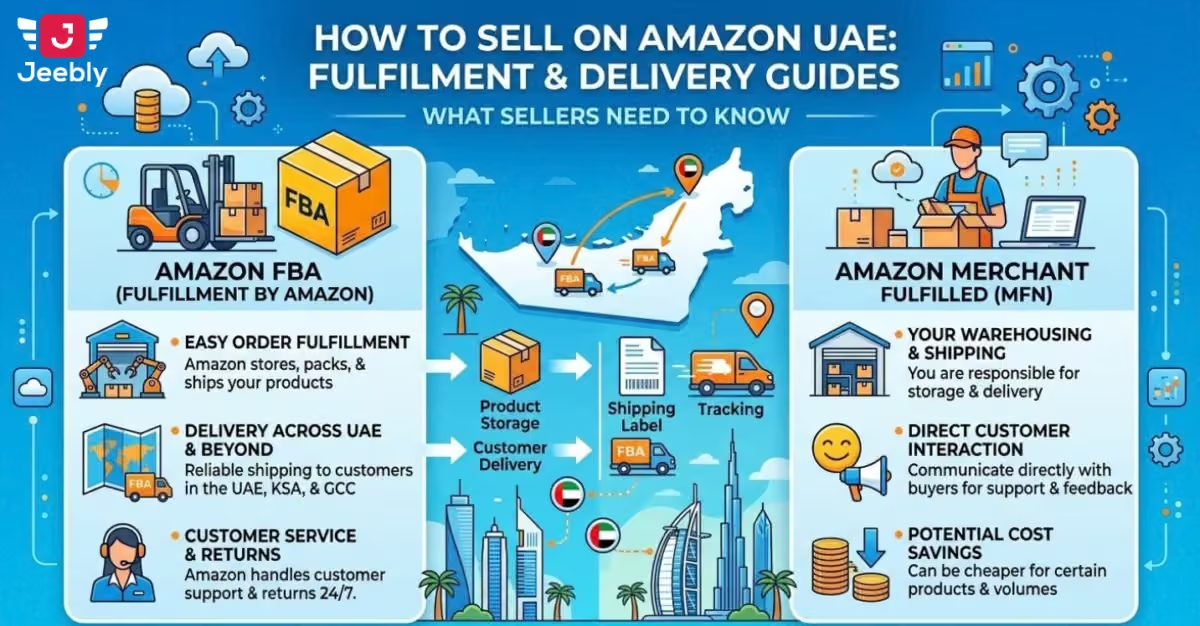
An isometric infographic detailing how to sell on Amazon UAE. The left side covers seller onboarding and listing steps like defining business activity, trade name reservation, and document preparation. The right side compares FBA (Fulfilment by Amazon) and FBM (Fulfilment by Merchant) logistics and delivery models against a Dubai skyline.
How to Sell on Amazon UAE: What Sellers Need to Know About Fulfilment and Delivery

Selling on Amazon UAE offers massive growth potential, but choosing the right logistics model can make or break your margins. Discover the step-by-step onboarding process for Amazon.ae, explore the core differences between Fulfilment by Amazon (FBA) and Fulfilment by Merchant (FBM), and learn how to optimize your delivery strategy to scale efficiently in the UAE market.

Read More
A woman in a black dress and white gloves holds a branded "Jeebly" box next to a white Land Rover Defender with a bougainvillea hedge behind them.
High-Value Item Delivery in the UAE: Insurance, Handling, and What to Ask

Delivering high-value, luxury items in the UAE requires far more than standard shipping—it demands white-glove precision, specialized security protocols, and comprehensive transit insurance. Discover how premium handling, secure transit procedures, and asking the right questions of your courier partner ensure high-ticket goods reach your clients safely, preserving both product integrity and brand trust.
Read More
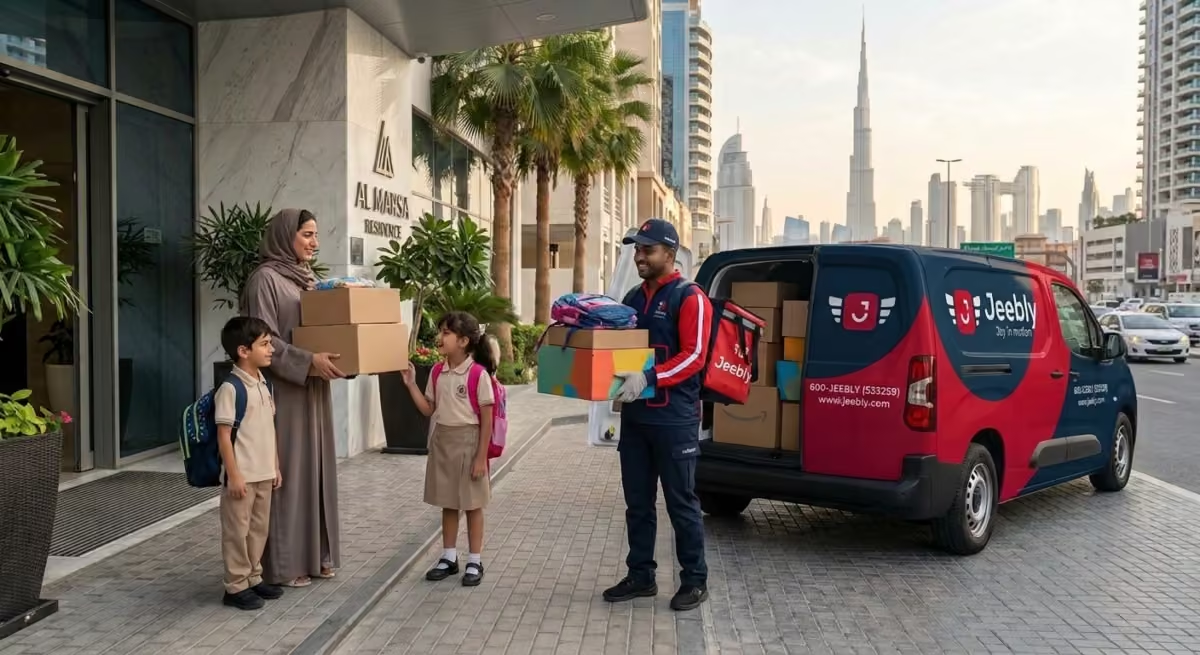
A Jeebly delivery courier handing over stacked packages outside a Dubai residence to a mother and her school-aged children, with a Jeebly delivery van parked nearby and the Dubai skyline featuring the Burj Khalifa in the background.
Back-to-School Delivery Trends: What UAE Retailers Learned This Season

As the back-to-school rush hits the UAE, retailers face surging demand for fast, flexible, and reliable last-mile deliveries. From school uniforms and backpacks to tech essentials, learn how seamless multi-channel logistics, scheduled doorstep deliveries, and real-time tracking help UAE brands meet evolving parent expectations and turn seasonal spikes into long-term customer loyalty
Read More
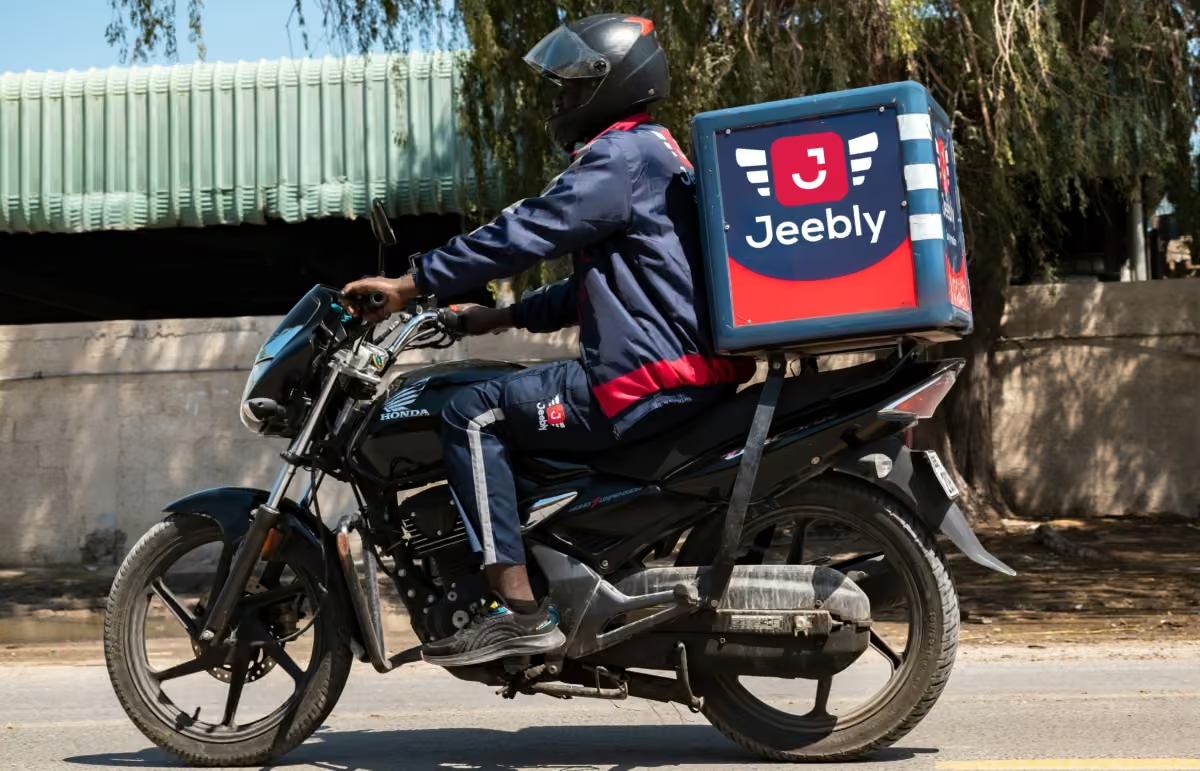
A Jeebly delivery rider wearing a helmet and branded jacket riding a black motorcycle with a red and blue branded delivery box mounted on the back.
Urgent Delivery in the UAE: Jeebly Dash Services, Costs and Booking

When speed is everything, traditional delivery options just won’t cut it. Learn how Jeebly Dash provides ultra-fast, on-demand courier services across the UAE—giving businesses and consumers a seamless booking experience, transparent pricing, and real-time tracking to ensure urgent parcels reach their destination within minutes.
Read More
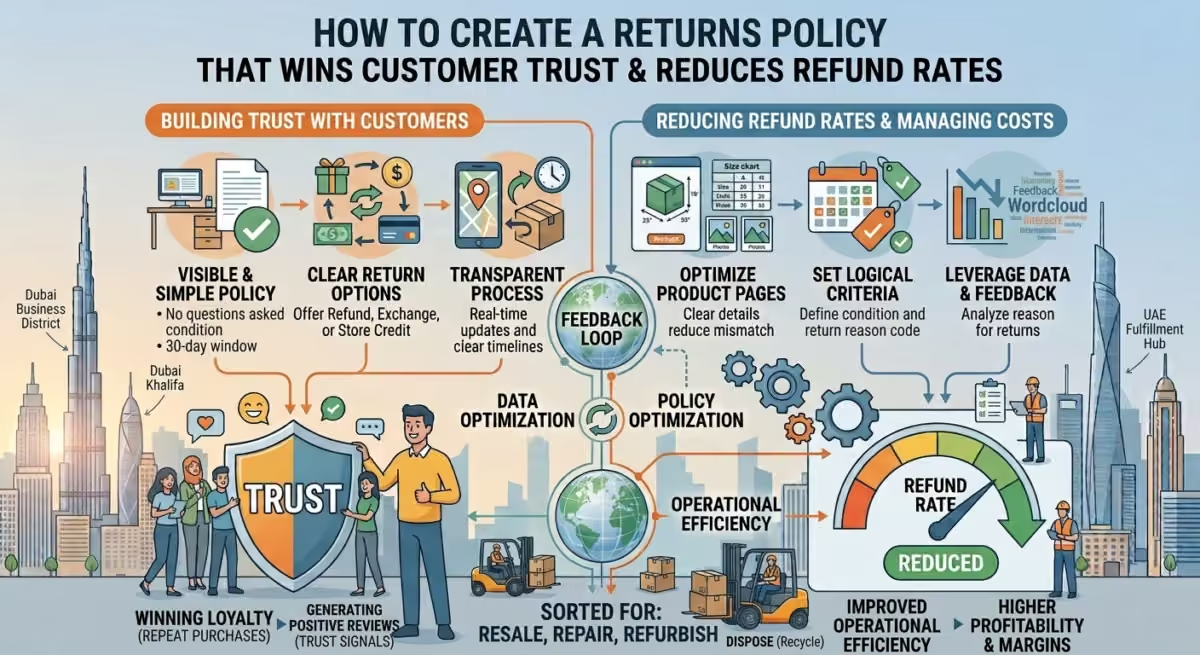
An infographic illustrating how to create an e-commerce returns policy that builds customer trust and reduces refund rates, featuring a split diagram of customer loyalty strategies alongside operational efficiency workflows set against the Dubai skyline.
How to Create a Returns Policy That Wins Customer Trust and Reduces Refund Rates

Mastering returns is a delicate balancing act for e-commerce brands—make it too strict, and you lose customer trust; make it too lenient, and your profit margins take a hit. Discover actionable strategies to build a seamless, customer-first returns policy that converts first-time buyers into loyal brand advocates while optimizing backend operations to keep refund rates and logistics costs low.

Read More

    Powered by