






Jeebly | Logistics Solutions

Categories
blogs

Air freight vs ocean freight: Which is right for UAE businesses? (2026)

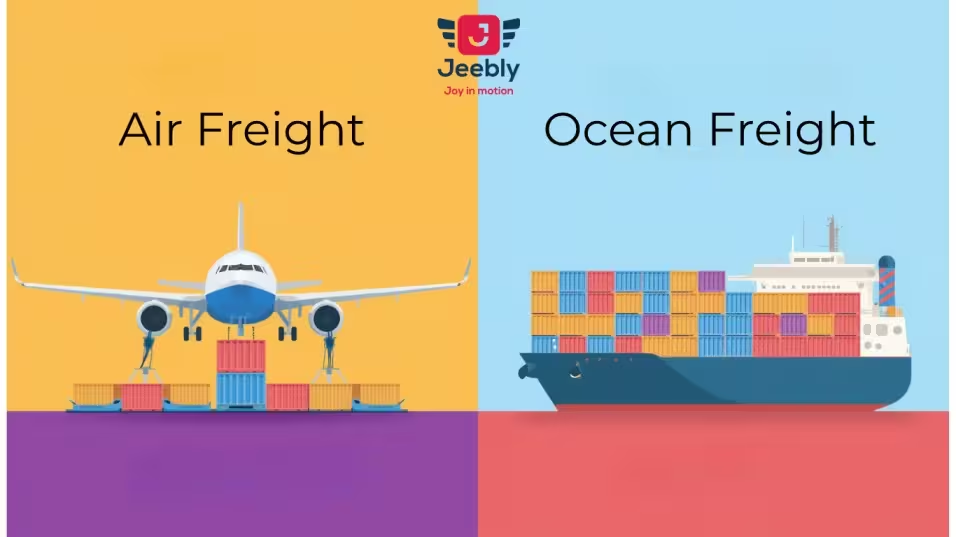
Air Freight vs Ocean Freight: Which Is Right for Your Business?

Air Freight vs Ocean Freight: Which Is Right for Your Business?

Air freight from UAE takes 1–5 days and suits urgent, high-value cargo. Ocean freight takes 15–30 days and suits bulk, lower-value goods. For small parcels, courier services are faster and simpler than either.

Speed costs money, and volume takes time. The moment a UAE business starts shipping internationally, this trade-off becomes a recurring decision, and the wrong default is expensive either way.

Air freight and ocean freight aren’t competing for the same cargo. They serve structurally different needs. The UAE’s position makes this decision both more consequential and more nuanced than in most markets. 

DXB alone handled 2.2 million tonnes of cargo in 2024, a 20.5% year-on-year surge, according to Dubai Airports, while Jebel Ali Port recorded its highest container throughput since 2015 at 15.5 million TEU. Both modes are running at scale. 

The choice between them comes down to your cargo profile, your timeline, and how you calculate total cost. This guide breaks down air freight vs ocean freight across all these dimensions.

Air Freight from UAE: When Speed Is the Point

Air freight moves cargo between airports via commercial and dedicated cargo aircraft. Transit times from Dubai typically run 1–5 days to most major destinations. That speed is the product, but it is priced accordingly.

High-value, lightweight cargo

Air freight pricing is based on chargeable weight: the greater of actual weight versus volumetric weight. The formula rewards shipments with high value density, such as electronics, pharmaceuticals, luxury fashion, and medical devices. You’re moving significant value per kilogram, and the freight premium is a fraction of what’s at stake.

A pharma distributor shipping temperature-sensitive medications to a hospital network in Europe has no viable ocean option. The cargo type, timeline, and regulatory requirements all converge in the air.

Urgent restocking and missed inventory windows

When stock runs out ahead of Ramadan, the Dubai Shopping Festival, or a product launch, waiting 20–30 days for an ocean shipment is a revenue problem, not a logistics preference. Air freight compresses that gap to days. For businesses managing demand spikes, that responsiveness is built into the cost.

If your supply chain is still reactive rather than planned, Jeebly’s guide on how UAE businesses scale during peak seasons covers the planning layer that prevents these situations.

Perishable goods and cold chain cargo

Products with short shelf lives, such as fresh food, cut flowers, and others, can’t survive 20+ days at sea, regardless of packaging. Air freight aligns with cold chain requirements on long-haul routes in a way that ocean freight cannot.

When holding costs offset the freight premium

High inventory carrying costs can flip the economics. Tying up working capital across 30 extra days of ocean transit plus storage sometimes costs more than the air premium. Run the full landed cost calculation before defaulting to ocean.

Ocean Freight from UAE: The Case for Cost Efficiency

Ocean freight moves cargo via container ships. Transit times range from 7 days (intra-GCC) to 30+ days for Europe and the Americas. It offers greater capacity and value, as a single container can hold 10,000 beer bottles.

Bulk, heavy, or low-value-per-kilogram cargo

For building materials, furniture, industrial equipment, and automotive parts, the cost-per-unit maths doesn’t work in the air for this profile. Ocean freight isn’t a compromise here. It’s the rational choice.

Planned procurement with sufficient lead time

Businesses operating on 60–90 day replenishment cycles have no structural need for air freight. Ocean’s slower transit is only a constraint if your procurement window is tight. Build the lead time in, and you gain significant cost efficiency with no operational downside.

LCL vs FCL: flexibility at both ends of volume

Less-than-Container Load (LCL) lets you share container space and pay for what you use. It’s practical for SMEs managing cash flow. Full Container Load (FCL) gives larger shippers dedicated space and better per-unit economics at scale. This volume flexibility doesn’t exist in air freight.

Sustainability-conscious supply chains

Air freight leaves the largest freight carbon footprint. Aeroplanes emit 500 grams of CO2 per metric ton of freight per km of transportation, while transport ships emit only 10 to 40 grams of CO2 per kilometre.

For UAE businesses with ESG commitments or international clients who audit supply chain emissions, this gap is quantifiable and increasingly relevant to procurement decisions.

Ocean Freight vs Air Freight: Comparison at a Glance

Both modes have distinct cost, speed, and cargo fit profiles. A brief comparison like the one below will help map your shipment against these dimensions.

Factor ✈ Air Freight 🚢 Ocean Freight
Transit time 1–5 days 7–30+ days
Cost High — chargeable weight Low–moderate — CBM / TEU
Cargo fit High-value, lightweight, perishable, urgent Bulk, heavy, non-perishable, planned
Volume flexibility Limited by aircraft capacity LCL and FCL options
Security and handling High — minimal touchpoints Moderate — more handling stages
Carbon footprint 500–1,500g CO₂/ton-km 10–40g CO₂/ton-km
UAE infrastructure DXB + DWC — 240+ routes Jebel Ali (top 10 globally), Khalifa Port
Hybrid option — Sea-air via Dubai Logistics Corridor

How to Make the Right Call: Four Practical Filters

No comparison table makes the decision for you. These are the variables that actually determine the right answer for a given shipment:

1. Value density

Divide shipment value by weight. Above approximately AED 1,000 per kilogram, air freight economics generally work. Below that threshold, the ocean becomes increasingly attractive.

2. Delivery deadline vs procurement lead time

Work backwards from your customer commitment. Over 25 days available, the ocean is viable on most routes. Under 15 days, air freight is typically the only option. The 15–25-day window is when sea-air is worth pricing.

3. Contract or customer expectations

B2B contracts with SLA-linked penalties change the calculation. So does the customer segment. Premium retail buyers in the GCC or Europe often have delivery expectations that make ocean unviable regardless of unit economics.

4. Total landed cost, not just the freight rate

Factor in: freight cost, insurance, customs duties, storage during transit, and opportunity cost of tied capital. Air freight’s headline rate looks expensive. Its total landed cost is competitive for the right cargo profile once you account for faster inventory turnover and reduced holding time.

How Jeebly Helps Across Both Modes

For UAE businesses that need end-to-end freight management across air, sea, and road, Jeebly Haul handles the full journey: pickup, documentation, customs, and delivery. Whether you’re moving bulk cargo by container or coordinating urgent air shipments, the same network handles tracking and compliance throughout the process.

Businesses with cross-border complexity can explore Jeebly Bizz, which handles the regulatory layer, making international freight predictable rather than reactive.

If your freight question sits closer to the last mile, reducing failed deliveries, improving on-time rates, or scaling operations, Jeebly’s guide on what to look for in a reliable logistics company covers what actually differentiates logistics partners in the UAE.

Final Thoughts

The air vs ocean decision is only half the equation. The other half is execution. 

At Jeebly, we handle freight across air, sea, and road, so the mode you choose is supported by the same end-to-end network, real-time tracking, and compliance expertise. Whether you’re moving a single urgent air shipment or planning a container programme for the year, we handle the complexity so you can focus on growth. 

Talk to the Jeebly team about your freight requirements today.

Frequently Asked Questions

Air freight transports cargo by aircraft, while ocean freight moves goods by sea using cargo vessels and shipping containers. Air freight is typically faster and better suited for urgent or high-value shipments, whereas ocean freight is more economical for large, heavy, or non-urgent cargo moving over long distances.

Ocean freight is generally less expensive than air freight, especially for large or heavy shipments. Air freight costs are typically based on chargeable weight and speed, while ocean freight pricing is often calculated using container size, cargo volume, or weight, making it a more cost-effective option for bulk transportation.

Not always. For local deliveries within the UAE, courier services are often faster because they provide direct door-to-door transportation, including same-day and express delivery options. For international shipments, air freight is usually faster than sea freight but may still require customs clearance and final-mile delivery before reaching the recipient.

UAE businesses should consider ocean freight when shipping large volumes of cargo, heavy goods, raw materials, or inventory that does not require urgent delivery. Ocean freight is commonly used for imports, exports, and international trade where cost efficiency is a higher priority than transit speed.

Air freight costs vary depending on factors such as shipment weight, dimensions, destination, cargo type, fuel surcharges, and customs requirements. Urgent shipments and specialized cargo may cost more, while rates can vary significantly depending on the route and carrier. Businesses should request a freight quotation based on their specific shipment requirements.

Routes to insightful reads

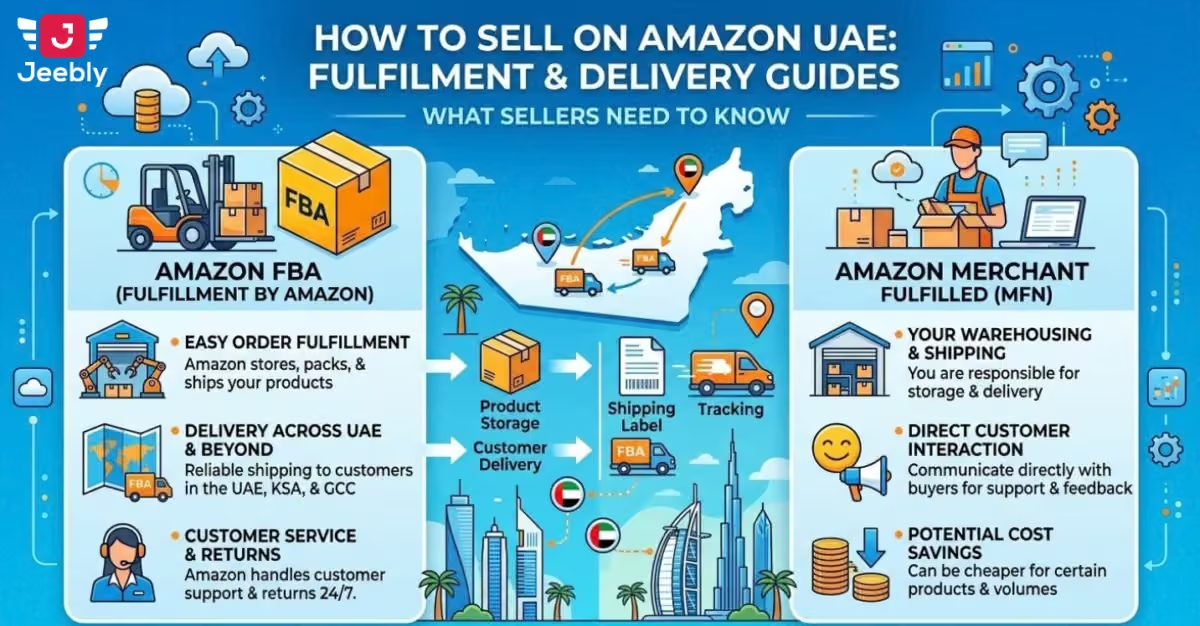
An isometric infographic detailing how to sell on Amazon UAE. The left side covers seller onboarding and listing steps like defining business activity, trade name reservation, and document preparation. The right side compares FBA (Fulfilment by Amazon) and FBM (Fulfilment by Merchant) logistics and delivery models against a Dubai skyline.
How to Sell on Amazon UAE: What Sellers Need to Know About Fulfilment and Delivery

Selling on Amazon UAE offers massive growth potential, but choosing the right logistics model can make or break your margins. Discover the step-by-step onboarding process for Amazon.ae, explore the core differences between Fulfilment by Amazon (FBA) and Fulfilment by Merchant (FBM), and learn how to optimize your delivery strategy to scale efficiently in the UAE market.

Read More
A woman in a black dress and white gloves holds a branded "Jeebly" box next to a white Land Rover Defender with a bougainvillea hedge behind them.
High-Value Item Delivery in the UAE: Insurance, Handling, and What to Ask

Delivering high-value, luxury items in the UAE requires far more than standard shipping—it demands white-glove precision, specialized security protocols, and comprehensive transit insurance. Discover how premium handling, secure transit procedures, and asking the right questions of your courier partner ensure high-ticket goods reach your clients safely, preserving both product integrity and brand trust.

Read More
A Jeebly delivery courier handing over stacked packages outside a Dubai residence to a mother and her school-aged children, with a Jeebly delivery van parked nearby and the Dubai skyline featuring the Burj Khalifa in the background.
Back-to-School Delivery Trends: What UAE Retailers Learned This Season

As the back-to-school rush hits the UAE, retailers face surging demand for fast, flexible, and reliable last-mile deliveries. From school uniforms and backpacks to tech essentials, learn how seamless multi-channel logistics, scheduled doorstep deliveries, and real-time tracking help UAE brands meet evolving parent expectations and turn seasonal spikes into long-term customer loyalty
Read More
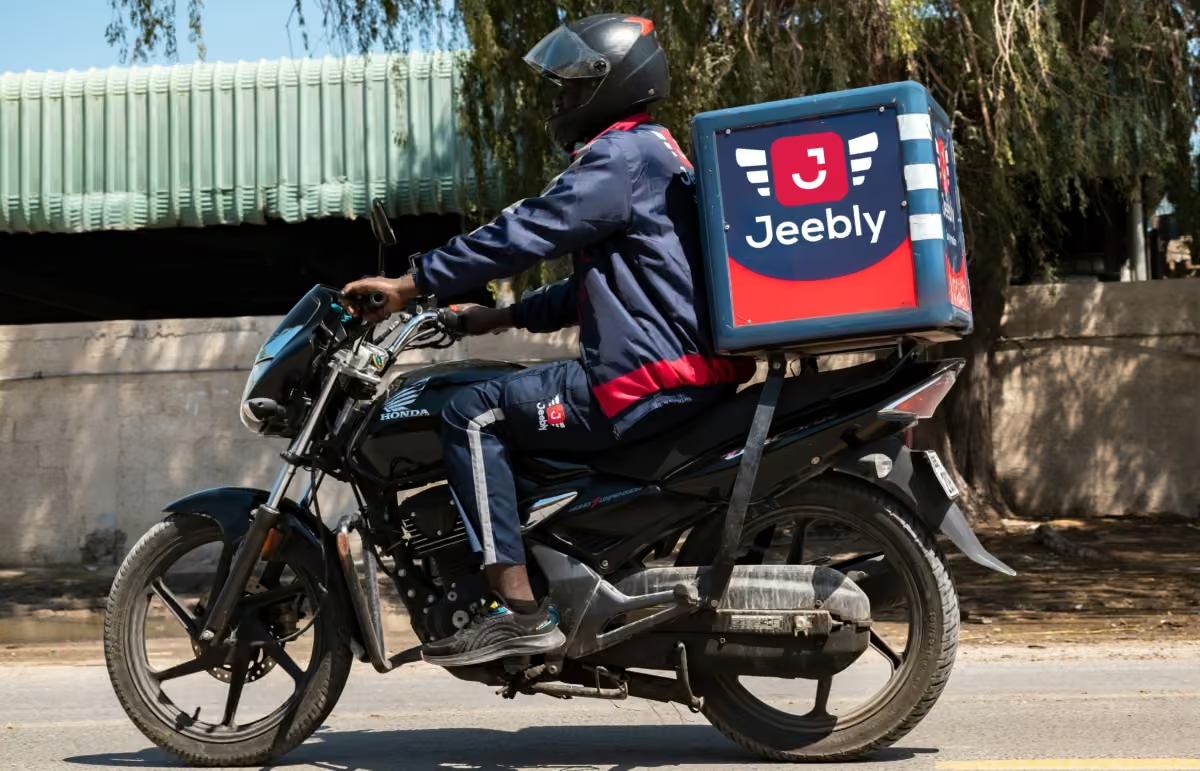
A Jeebly delivery rider wearing a helmet and branded jacket riding a black motorcycle with a red and blue branded delivery box mounted on the back.
Urgent Delivery in the UAE: Jeebly Dash Services, Costs and Booking

When speed is everything, traditional delivery options just won’t cut it. Learn how Jeebly Dash provides ultra-fast, on-demand courier services across the UAE—giving businesses and consumers a seamless booking experience, transparent pricing, and real-time tracking to ensure urgent parcels reach their destination within minutes.
Read More
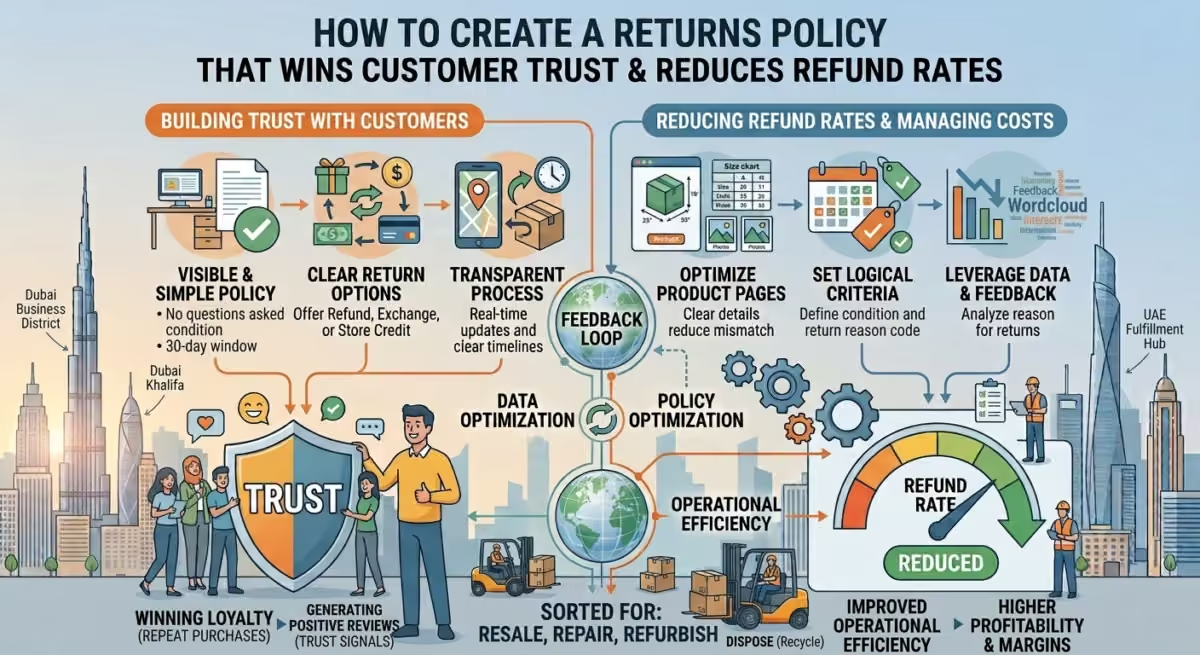
An infographic illustrating how to create an e-commerce returns policy that builds customer trust and reduces refund rates, featuring a split diagram of customer loyalty strategies alongside operational efficiency workflows set against the Dubai skyline.
How to Create a Returns Policy That Wins Customer Trust and Reduces Refund Rates

Mastering returns is a delicate balancing act for e-commerce brands—make it too strict, and you lose customer trust; make it too lenient, and your profit margins take a hit. Discover actionable strategies to build a seamless, customer-first returns policy that converts first-time buyers into loyal brand advocates while optimizing backend operations to keep refund rates and logistics costs low.

Read More

    Powered by