





Jeebly | Logistics Solutions

Logisty vs Jeebly comparison for UAE eCommerce delivery, last-mile logistics and courier services

Logisty vs Jeebly: UAE eCommerce Delivery Comparison

If you’re comparing Logisty vs Jeebly as a UAE business trying to decide on a logistics partner, the first thing to know is that these two platforms were not built for the same problem. 

Logisty is a digital freight-matching platform built for commercial truck hire. Jeebly is an end-to-end logistics platform built for e-commerce and business delivery. Understanding that difference upfront saves you from evaluating the wrong things.

This guide covers what each platform actually does, which business profiles suit each one, how they compare across the criteria that matter and where each falls short. If you’re a UAE business with active delivery operations or planning to scale them, this is the comparison you need before you commit.

What Logisty Is and Is Not

Logisty is a digital logistics platform launched in December 2024 through a collaboration between Dubai’s Roads and Transport Authority (RTA) and TruKKer, the GCC’s largest digital freight company. It connects businesses with commercial transport service providers for on-demand truck booking and real-time freight tracking.

The platform offers commercial transport services, fleet management solutions, and on-demand booking with real-time tracking. Its headline technology feature is an AI-powered CBM Calculator that estimates shipment volumes from uploaded photos or videos.

What Logisty is not:

It is not a last-mile courier, an e-commerce fulfilment platform, a COD handler, or a consumer-facing delivery service. It is built specifically to serve Dubai’s 10,000+ commercial transport companies and the businesses that need to move bulk freight digitally rather than through traditional phone-based truck booking.

What Jeebly Is and How It's Structured

Jeebly is a UAE-native logistics platform covering the full delivery chain: same-day and next-day parcel delivery, cross-border freight, warehousing, fulfilment, and reverse logistics. While Logisty is built for a single use case (truck hire for commercial freight), Jeebly is built to serve multiple delivery needs on a single operational platform.

The service structure is designed around business type rather than shipment type:

Jeebly Dash covers express, same-day, and next-day domestic delivery. Base rate AED 17.31 per parcel up to 5 kg. Direct integrations with Shopify, WooCommerce, Magento, ChatFood, and Grubtech. COD collection and weekly remittance as standard. Operates across all seven UAE emirates.

Jeebly Haul handles road freight above 20 kg, air freight, and ocean freight across the UAE and GCC. Over 2,000 active fleet vehicles, 70+ transporter partners, and 20+ vehicle categories. Custom-quoted. Built for businesses with regular inbound inventory movement or cross-border freight requirements.

Jeebly Bizz is the business logistics layer. Warehousing, fulfilment, automated dispatch, route optimisation, reverse logistics, and B2B supply chain management are integrated on a single platform. Built for operations running hundreds of daily orders where manual coordination creates a ceiling on growth.

Operational scale: 50,000+ daily deliveries, 12M+ customers served, 98% First Day Delivery Success (FDSS) rate, and AED 1.5B+ in shipments.

Logisty vs Jeebly: Direct Comparison

Criteria Logisty Jeebly
Launched December 2024 Established UAE operator
Built by RTA + TruKKer Jeebly (UAE-native)
Primary use case Commercial freight/truck hire E-commerce delivery + logistics
Last-mile parcel delivery No Yes, Jeebly Dash
Freight and bulk cargo Yes, digital truck booking Yes, Jeebly Haul
E-commerce platform integration Not confirmed Shopify, WooCommerce, Magento, ChatFood, Grubtech
Cash on delivery (COD) Not confirmed Yes, weekly remittance
COD fraud protection / ePOD Not confirmed Photo ePOD at every drop
Returns/reverse logistics Not confirmed Yes, Jeebly Bizz
Warehousing and fulfilment Not confirmed Yes, Jeebly Bizz
Fleet scale TruKKer 55,000+ trucks (GCC-wide) 2,000+ Jeebly fleet + 70 transporter partners
AI features AI CBM Calculator (volume estimation) AI-assisted dispatch and route optimisation
Coverage Dubai-focused (UAE road freight) UAE-wide (all 7 emirates) + GCC cross-border
Consumer-facing tracking Basic tracking Branded tracking pages, real-time GPS
Target customer Bulk commercial freight businesses E-commerce brands, D2C, SMEs, enterprises
Best for Freight movement eCommerce operations

For a broader view of how Jeebly’s delivery rates, FDSS, and platform integrations compare across the full UAE courier market, Best Courier Services in UAE: 2026 Comparison Guide covers seven major operators on the criteria that matter for e-commerce businesses.

When Logisty Is the Right Choice

Logisty is the better fit for a specific, well-defined business profile: companies whose primary logistics need is moving large commercial freight within Dubai and the UAE, with no requirement for parcel-level delivery, consumer communication, or e-commerce platform integration.

Logisty suits you if:

  • You’re moving raw materials, construction goods, industrial equipment, or bulk stock between facilities and warehouses. 
  • Your logistics operation is B2B rather than B2C. 
  • You’re not delivering to end consumers, so tracking pages, COD, and delivery notifications are irrelevant to your use case. 
  • Your shipments are large and irregular, best described as “book a truck” rather than “dispatch 200 orders.”


The platform’s core proposition is connecting businesses with commercial transport service providers through a digital interface. For businesses that have historically relied on phone calls to coordinate trucking, that digitisation has genuine operational value.

Logisty is not the right choice if you’re running e-commerce orders, need COD collection, want Shopify integration, require returns management, or serve end consumers who expect real-time tracking and delivery confirmation.

One gap in Logisty’s freight-booking model is that the platform handles truck booking, but customs clearance for inbound freight into the UAE is a separate process requiring its own documentation, declarations, and duty payment. 

Customs Clearance in Dubai and the UAE covers the process, with useful context to help you decide whether a freight-booking-only platform meets your full inbound logistics needs.

When Jeebly Is the Right Choice

Jeebly suits any business where delivery is a customer-facing operation, and the quality of the drop-off directly affects your brand, repeat purchase rate, and RTO costs.

Jeebly suits you if:

  • You’re an e-commerce brand shipping B2C orders, and your customers expect same-day or next-day delivery with live tracking. 
  • You operate COD and need reliable collection, clean remittance, and ePOD at every drop. 
  • You’re importing inventory and need freight handling alongside domestic last-mile delivery through a single connected platform. 
  • You’re managing returns and need reverse logistics built into the same workflow as forward delivery. 
  • You’re scaling and need a platform that integrates directly with your store without manual order uploads.


Jeebly is not the first choice if your only logistics need is moving heavy commercial freight between facilities and there is no parcel-level delivery requirement. For pure bulk truck hire within Dubai, Logisty’s freight-matching model is purpose-built for that specific use case.

The eCommerce Stack: Where the Comparison Ends

This is where Logisty and Jeebly stop being comparable alternatives and become entirely different tools.

Logisty has no published information on e-commerce platform integrations, COD support, parcel tracking, NDR management, returns processing, or consumer notification systems. These are not features it’s currently building toward. They’re outside the platform’s stated purpose of commercial freight matching.

Jeebly’s e-commerce infrastructure covers:

  1. Platform integrations: Direct API and plugin integrations with Shopify, WooCommerce, Magento, ChatFood, and Grubtech. Orders sync automatically. No manual CSV uploads and no middleware required.


  2. Secure COD delivery: Collection at the door, ePOD photo confirmation at every drop, weekly remittance cycle. For businesses managing 30–50% of orders as COD, the remittance timing directly affects working capital. Weekly remittance compresses the float relative to providers running fortnightly or monthly cycles.


  3. NDR and RTO management: Failed delivery attempts are automatically flagged, triggering customer notifications via SMS or WhatsApp to reschedule. NDR-to-RTO conversion is one of the most controllable cost lines in e-commerce delivery.


  4. Returns and reverse logistics: Jeebly Bizz handles reverse logistics within the same platform as forward delivery. No separate vendor relationship and no separate tracking system. Customers get a clean return experience; businesses get a unified delivery record.

If your operation requires these eCommerce-specific capabilities, a dedicated last-mile logistics platform such as Jeebly is likely a better fit. 

If your need is exclusively for bulk commercial truck hire, Jeebly Haul competes in that lane, but Logisty’s TruKKer network gives it greater truck density for pure freight matching.

How to Choose: A Decision Framework

Choose Logisty if:

  • Your primary logistics need is commercial freight and bulk truck hire within Dubai
  • You move large shipments between facilities or suppliers with no consumer-facing delivery requirement
  • You want a digitised truck-booking experience backed by regulatory oversight from the RTA


Choose Jeebly Dash if:

  • You’re shipping e-commerce orders B2C and need same-day or next-day delivery with live tracking
  • Your customers pay COD, and you need clean collection, ePOD, and weekly remittance
  • Your store runs on Shopify, WooCommerce, or Magento and you want direct integration


Choose Jeebly Bizz if:

  • You’re running 50+ orders per day and need automated dispatch, route optimisation, and returns management in one platform
  • You’re managing fulfilment alongside delivery and need warehousing connected to the same system


Choose Jeebly Haul if:

  • You need freight above 20 kg, road freight across the GCC, air freight, or ocean freight, alongside an e-commerce delivery operation through one partner


For businesses comparing Jeebly against other UAE last-mile operators rather than Logisty, Aramex vs Jeebly and Careem Express vs Jeebly cover those specific comparisons in detail.

Conclusion

Logisty and Jeebly solve different problems for different businesses. Logisty is a digital platform connecting businesses with commercial transport providers for freight booking and tracking. It is designed for bulk truck hire in Dubai, backed by the RTA’s regulatory framework and TruKKer’s GCC-wide fleet. 

Jeebly is a full logistics platform with last-mile parcel delivery, freight, fulfilment, COD, returns, and e-commerce integrations. It is built for UAE businesses where delivery is a customer-facing operation rather than just a cargo-movement task. 

For e-commerce and D2C brands, Jeebly is the clearer fit. For pure commercial freight within Dubai, Logisty’s model is worth evaluating. 

For businesses that need both, Jeebly Haul and Jeebly Dash cover both lanes through one platform. Speak with Jeebly’s logistics team to map the right delivery setup for your order volume, customer expectations, and fulfilment needs.

Frequently Asked Questions

 Logisty is a digital logistics platform launched in December 2024 through a collaboration between Dubai’s Roads and Transport Authority (RTA) and TruKKer, the GCC’s largest digital freight company. It connects businesses with commercial truck operators for on-demand freight booking and real-time tracking. It is built specifically for commercial bulk freight, not for e-commerce parcel delivery.

No. Logisty is a commercial freight platform. It is not designed for parcel-level delivery, COD collection, consumer notifications, or e-commerce platform integration. If your operation requires any of these, Logisty is not the right tool.

No. Logisty is positioned as a digital commercial transport platform focused on freight booking, transport services, fleet management, and tracking. Businesses needing parcel delivery, COD, and eCommerce fulfilment require a last-mile logistics solution.

 For Shopify-based businesses, Jeebly is designed around eCommerce delivery workflows, including order integrations, last-mile delivery, COD, and returns management.

Jeebly covers the full e-commerce delivery stack: same-day and next-day parcel delivery, COD with weekly remittance, photo ePOD at every drop, direct integrations with Shopify and WooCommerce, reverse logistics, and warehousing all through one platform. Logisty offers truck hire for commercial freight. They are not comparable for e-commerce operations.

Yes. Jeebly Haul covers road, air, and ocean freight for shipments over 20 kg, with a fleet of 2,000+ vehicles and 70+ transporter partners across the UAE and the GCC. This freight capability is connected to the same platform as Jeebly Dash (last-mile) and Jeebly Bizz (fulfilment and returns).

Businesses whose primary logistics need is moving large commercial cargo within Dubai by road (construction materials, industrial goods, bulk stock transfers between facilities) without a requirement for consumer-facing delivery, tracking, or COD. Logisty is built around Dubai’s 10,000+ commercial transport companies and the digital transformation of that sector.

Routes to insightful reads

Logisty vs Jeebly comparison for UAE eCommerce delivery, last-mile logistics and courier services
Logisty vs Jeebly: UAE eCommerce Delivery Comparison

Logisty and Jeebly serve different logistics needs, but which is the better choice for your business? This comparison explores their services, delivery capabilities, technology, coverage, eCommerce integrations, cash on delivery (COD), and fulfilment solutions to help UAE businesses choose the right logistics partner for growth.

Read More
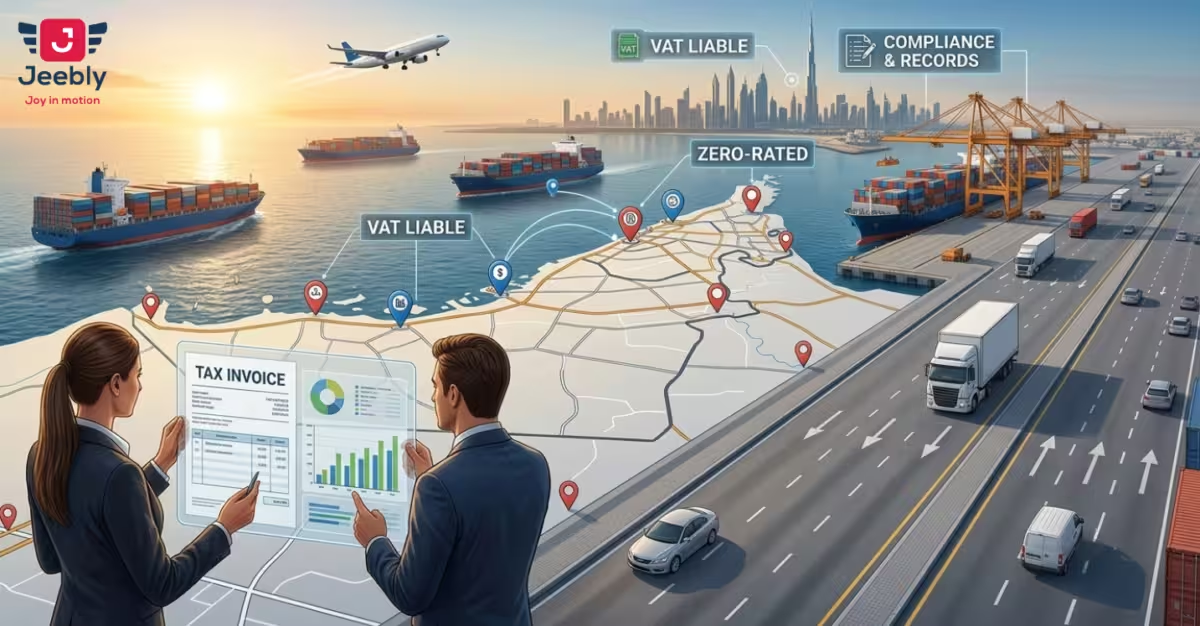
UAE VAT on imports and exports showing tax compliance, logistics, shipping and customs documentation
VAT on Shipping and Delivery Services in UAE: What Businesses Need to Know

VAT can significantly impact the cost of shipping and delivery services in the UAE, making it essential for businesses to understand how it applies to domestic and international shipments. This guide explains VAT rules, zero-rated and standard-rated services, invoicing requirements, and practical compliance tips to help businesses manage logistics costs and stay compliant with UAE tax regulations.
Read More
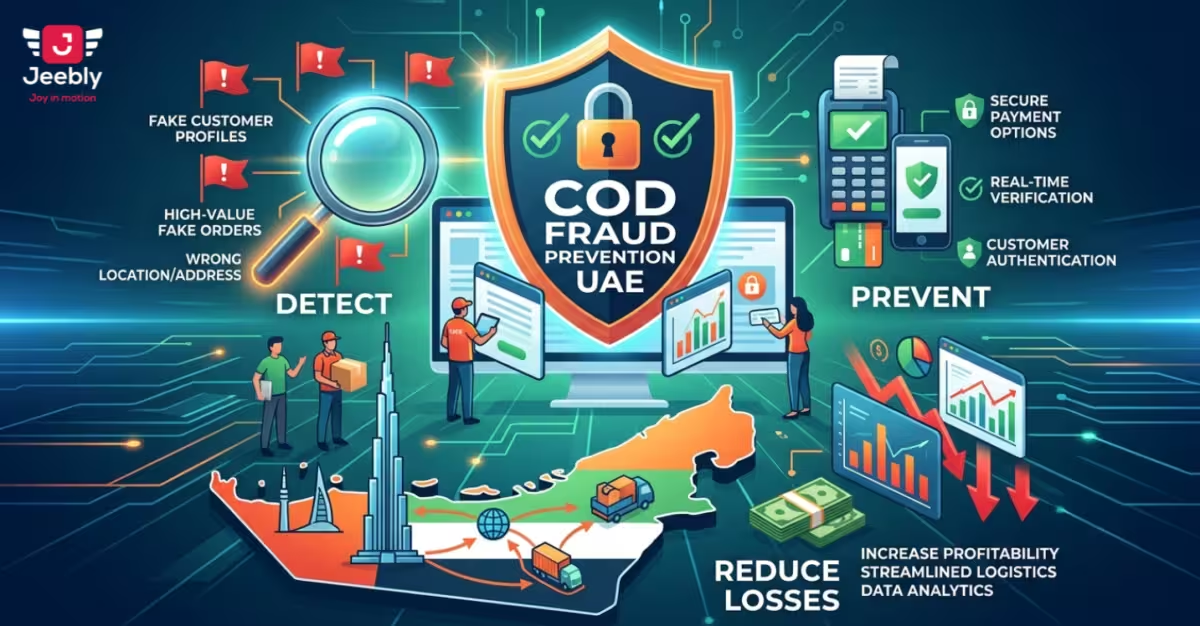
COD fraud prevention in the UAE with secure payment verification, order authentication and logistics risk management
COD Fraud in UAE eCommerce: How to Detect, Prevent and Reduce Losses

Cash on Delivery (COD) fraud is a growing challenge for e-commerce businesses across the UAE, leading to fake orders, delivery failures and unnecessary operational costs. Learn how to identify common fraud tactics, implement effective prevention strategies and protect your business while maintaining a seamless customer experience.
Read More
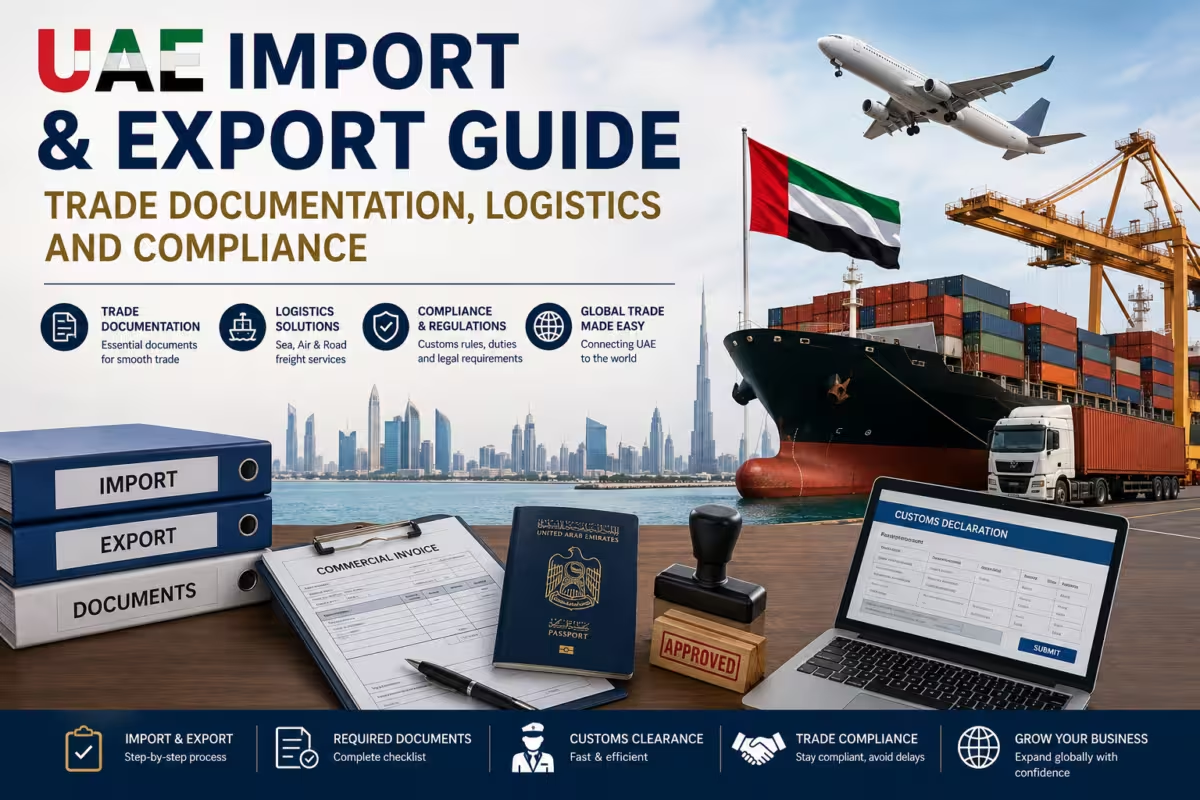
UAE import and export guide featuring trade documentation, cargo ship, air freight, customs clearance and logistics operations
UAE Import and Export Guide: Trade Documentation, Logistics and Compliance

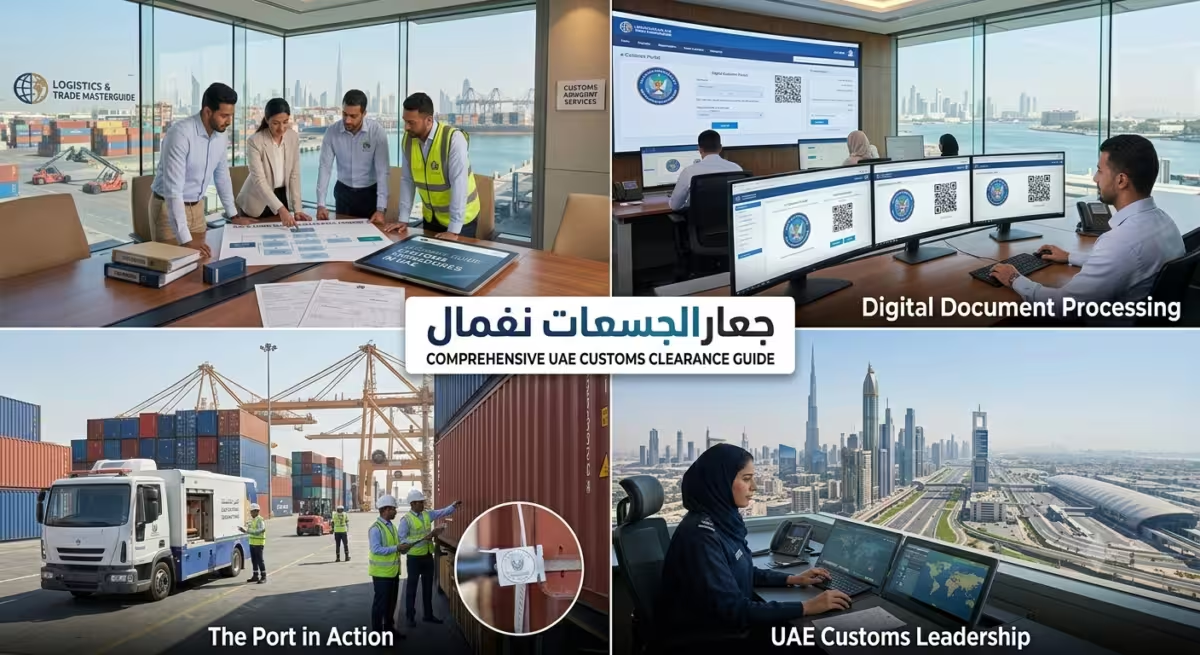
Customs clearance is a critical step in moving goods into and out of the UAE. Whether you’re importing, exporting, or shipping across borders, understanding the customs process, required documentation, and compliance requirements can help you avoid delays, reduce costs, and keep your supply chain running efficiently.
Read More
Customs clearance process in Dubai and the UAE showing document processing, port inspections and import export logistics
Customs Clearance in Dubai and UAE: Process, Documents and Business Guide

Customs clearance is a critical step in moving goods into and out of the UAE. Whether you’re importing, exporting, or shipping across borders, understanding the customs process, required documentation, and compliance requirements can help you avoid delays, reduce costs, and keep your supply chain running efficiently.

Read More

    Powered by