





Jeebly | Logistics Solutions

How to manage eCommerce returns in the UAE with reverse logistics, return policies, refunds and inventory restocking

How to Manage eCommerce Returns in UAE: Strategy, Policy and Logistics

Returns are not a post-purchase problem. They are a pre-purchase decision. Narvar’s 2025 State of Post-Purchase Report found 90% of shoppers check the return policy before buying, and 76% won’t buy again after a poor return experience. 

In the UAE, where brand switching is fast and customer acquisition costs are high, a weak returns operation can cost you money on the logistics side as well as conversions at checkout.

This guide covers how ecommerce returns work operationally in the UAE, the legal minimum your return policy must meet, what it actually costs to process a return, how to reduce avoidable returns, and how to choose a logistics partner for the reverse logistics leg.

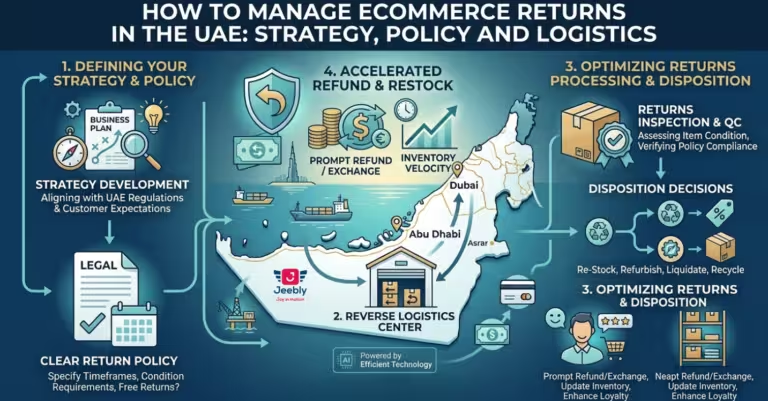
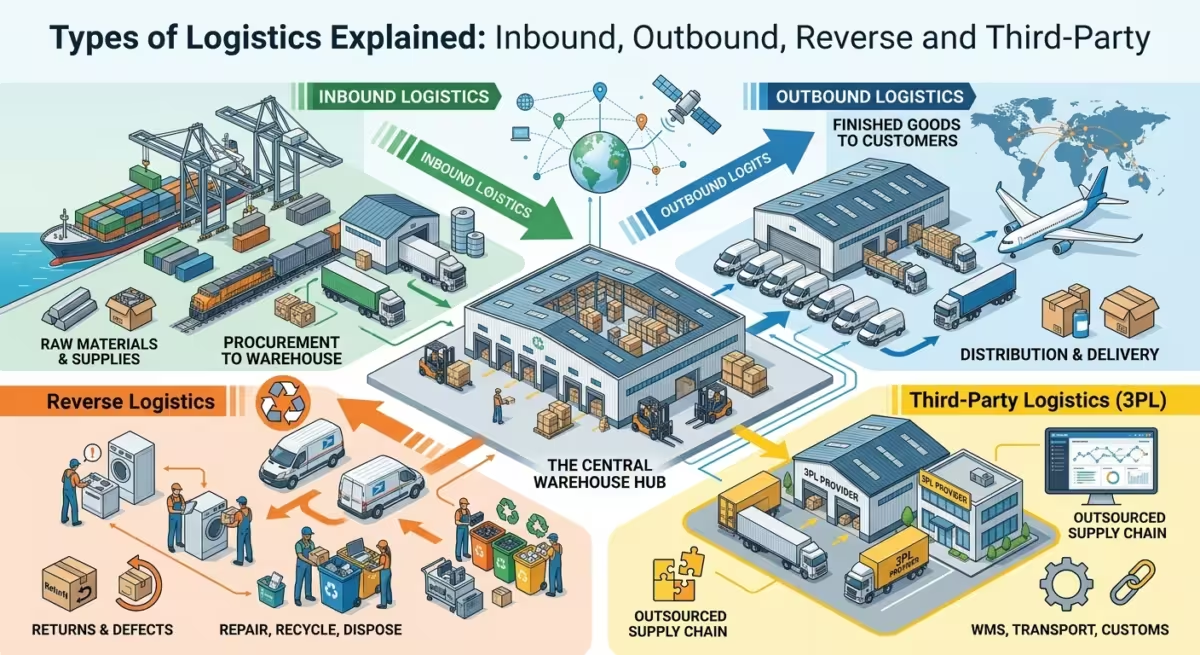
How UAE Ecommerce Returns Work: The Reverse Logistics Flow

Understanding the physical return journey from the customer’s door to the restocked inventory is where most businesses find cost leaks.

Step 1: Return initiated. 

Customer submits a return request through your portal, email, or WhatsApp (common in UAE B2C). The quality of this first interaction, such as the speed of acknowledgement and the clarity of instructions, directly affects whether the customer remains a customer.

Step 2: Return authorisation issued

An RMA (Return Merchandise Authorisation) number is issued. This creates a unique record that tracks the return through every subsequent step. Without an RMA system, returns are managed by memory and spreadsheets, which breaks at scale.

Step 3: Item collected or dropped off

The courier collects the parcel from the customer, or the customer drops it at an agreed point. In the UAE, doorstep collection is the customer expectation. Drop-off networks are limited outside major Dubai zones. Confirm with your logistics companies which collection model they operate under and which emirates they cover.

Step 4: Item received and graded

The returned parcel arrives at the warehouse and is inspected against the RMA record. Grading typically uses a four-tier system: sellable as new, requires repackaging, requires refurbishment, or write-off. The grading decision determines inventory treatment and cost recovery.

Step 5: Inventory updated

Sellable items are returned to stock in the WMS. Non-sellable items are routed to secondary channels, refurbishment, or disposal. Real-time inventory updates are critical at this point. Delayed updates can cause oversells.

Step 6: Refund or exchange processed

The resolution is issued. Refunds should be issued after inspection is complete, not before the item is received. Refund speed is what the customer notices. The fastest compliant approach is within 5–7 business days of graded inspection.

Step 7: Data captured and fed back

Return reasons, product SKUs, return condition, and originating courier are all logged. This is the operational intelligence that reduces future returns.

If your forward delivery partner doesn’t offer structured return collection across all seven emirates, that’s a gap worth closing before peak season. Same-day and next-day courier collection across the UAE, with live tracking and ePOD at pickup, is also covered on the reverse side of Jeebly Dash.

The UAE-Specific Returns Challenge: COD Refusals

This is the returns problem no global returns guide addresses because it’s largely a MENA phenomenon.

COD is popular in the UAE, Saudi Arabia, and Egypt. Failed deliveries often turn into returns. 3PLs (third-party logistics) handle such cases by promptly logging them and routing them to central hubs, thereby improving recovery rates and maintaining high customer trust.

When a customer refuses a COD parcel at the door, the courier marks it as a failed delivery and initiates a return-to-origin (RTO). That parcel re-enters your returns pipeline: it needs to be received, inspected, and re-listed. The difference from a customer-initiated return is that no return reason is captured. You don’t know whether the customer changed their mind, the product was incorrect, the address was incorrect, or it was a fraudulent order placed with no intention of acceptance.

For the operational side of fake COD orders entering your returns flow, COD Fraud in UAE eCommerce covers how to reduce the fraud-driven share of RTO before it reaches your warehouse.

UAE Consumer Protection Law: What Your Return Policy Must Cover

UAE businesses must meet minimum return standards under Federal Law No. 15 of 2020 (the UAE Consumer Protection Law) and Cabinet Decision No. 66 of 2023, which specifically govern e-commerce.

The minimum requirements applicable to UAE e-commerce returns:

1) 14-day cooling-off period for online purchases: Consumers who purchase goods online have the right to cancel and return within 14 days of receipt, without providing a reason, unless the goods fall into an exempt category. Perishables, customised goods, digital downloads, and sealed items opened after delivery are typically exempt.

2) Obligation to disclose return policy clearly: The return policy must be visible before and at the point of purchase. Failure to clearly disclose a return policy violates the Consumer Protection Law’s transparency requirements.

3) Refund timeline: Refunds must be processed within a reasonable period after the return is received. Holding refunds for 30+ days without clear justification creates consumer protection risk.

4) Defective goods: For items that arrive defective or not as described, consumer rights extend beyond the 14-day window. Merchants cannot limit liability for goods that are materially different from what was advertised.

When a customer returns goods, the VAT element of the original transaction must be refunded alongside the product price. VAT on Shipping and Delivery in UAE covers how UAE VAT applies to delivery and returns transactions.

How to Build a UAE Return Policy That Converts

A return policy is not just legal compliance. It’s a commercial tool. The policy visible on your product pages and at checkout directly affects whether someone buys.

What a conversion-effective UAE return policy includes:

  • Clear return window: State it in days from delivery, not from purchase. “30 days from delivery” is clearer and more customer-friendly than “30 days from order date” for items with variable delivery times.

  • Eligible and ineligible items are listed explicitly: Customers who learn an item is non-returnable after purchase feel misled. List your exempt categories (customised items, intimates, opened sealed goods) on the policy page, not just in the checkout terms.

  • Condition requirements stated plainly: “Unused, in original packaging with tags attached” is clear. “In acceptable condition” is not. Vague condition language drives disputes.

  • Refund method and timeline committed: State which payment method refunds go to (original payment method or store credit) and within how many business days after item receipt. This is what customers search for before they commit to a purchase.

  • Free vs paid returns: In the UAE, free returns remain a stronger conversion signal than in some other markets, but offering free returns on all orders, regardless of the reason, compresses margins rapidly. A middle-ground approach is that free returns are for defective or incorrect items and paid returns are for change of mind.

The return policy you publish is only as credible as the logistics operation behind it. If your policy promises 5-day collection but your courier takes 10, the policy creates expectations your operation can’t meet. 

Careem Express vs Jeebly compares the fulfilment capabilities and reverse logistics support of both providers. This read can be a useful context when deciding which partner can operationally back up your published return commitments.

How to Reduce Avoidable Returns in the UAE

Returns that shouldn’t have happened are the most expensive. You pay the return cost and lose the original sale.

  1. Accurate product descriptions and sizing information prevent the largest single category of avoidable returns in fashion and apparel. If your product page doesn’t answer whether it runs large, what the fabric feels like, or how the colour differs under different lighting, a return will.

  2. Post-purchase communication reduces buyer’s remorse returns. An order confirmation that reiterates what was ordered, delivery tracking that keeps the customer engaged, and a delivery notification that sets expectations for the item’s condition all help reduce returns.

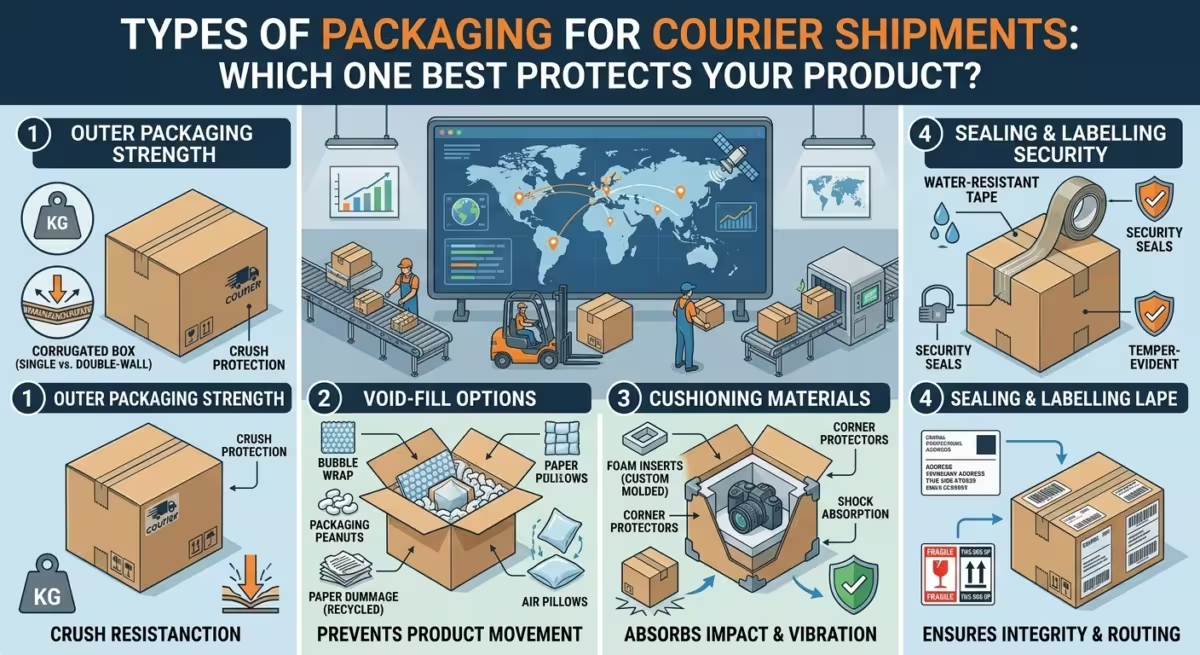
  3. Packaging that protects in transit. Returns are mostly driven by items arriving damaged or misrepresenting how they looked online. Packaging quality is within your control. Damaged arrivals are entirely avoidable returns.

  4. Exchange prompts at the point of return initiation. When a customer initiates a return, offer the exchange option before the refund option. A customer who wanted a different size is still a buyer. Routing them to an exchange rather than issuing a refund helps recover revenue and reduce return shipping costs.

How Jeebly Handles Reverse Logistics

Jeebly Bizz manages reverse logistics on the same platform that handles forward delivery, with a single system, a single account, and a single tracking dashboard. Returns don’t create a separate operational workflow because they’re built into the fulfilment platform from the start.

The operational flow: 

  • When a return is initiated, the Jeebly Bizz system generates an RMA, schedules collection through Jeebly Dash across the relevant emirate, and tracks the parcel back to the warehouse. 
  • Inspection results update inventory in real time. The business receives a complete return record without manual input at any stage.

If your current domestic courier service handles forward delivery but routes RTO parcels through a different workflow, you’re already losing return data at the handoff. 

Talk to the Jeebly team about consolidating the full delivery and returns cycle through one platform. A direct conversation about your current RTO rate and return volume will identify cost leaks within 20 minutes.

Key Takeaways

  • 90% of shoppers check the return policy before buying. Returns are a conversion factor, not just a cost.
  • UAE businesses must comply with minimum return rights under Federal Consumer Protection Law No. 15/2020. Ignorance of this is a compliance risk.
  • Manual return handling costs merchants an estimated $10-$15 per return in labour alone. Automation reduces this to under $2.
  • COD refusals in the UAE are a distinct driver of returns. Failed COD deliveries re-enter your returns pipeline and must be processed identically to customer-initiated returns.
  • Returns fraud is the biggest pain point for brands in 2025. The UAE’s cash-heavy COD environment amplifies this risk.

Frequently Asked Questions

Under Federal Law No. 15 of 2020 and Cabinet Decision No. 66 of 2023, UAE consumers have a 14-day cooling-off period for online purchases, during which they can return goods without providing a reason. Perishables, customised items, digital downloads, and opened sealed goods are typically exempt. Failure to clearly disclose return terms before purchase violates the Consumer Protection Law’s transparency requirements.

Global retail return rates average 17-18% of online orders, with apparel rates ranging from 20% to 30%, with some segments reaching 50%. For UAE businesses, COD refusals add an additional RTO volume on top of customer-initiated returns. Tracking these separately gives a clearer picture of which returns are avoidable.

For online sellers and retailers managing reverse logistics in the UAE, the average cost to process a single product return is approximately AED 8 to AED 15. Automating the receiving and grading steps can bring this below for standard items, with most of that cost being the collection shipping fee.

Free returns are a stronger conversion signal in the UAE than in some markets. A practical middle ground: free returns for defective or incorrect items (where consumer protection law applies); paid returns for change of mind. This protects margins while meeting legal requirements.

When a customer refuses a COD parcel at the door, it enters the return-to-origin (RTO) pipeline. The parcel is returned to your warehouse, where it is received, inspected, and relisted in the same way as a customer-initiated return. No return reason is captured automatically. Managing COD RTOs as a separate tracking category is the most effective way to reduce this cost.

Routes to insightful reads

How to manage eCommerce returns in the UAE with reverse logistics, return policies, refunds and inventory restocking
How to Manage eCommerce Returns in UAE: Strategy, Policy and Logistics

Efficient returns management is essential for every UAE eCommerce business. From creating a customer-friendly return policy to streamlining reverse logistics and processing refunds quickly, this guide explains how to reduce return costs, improve customer satisfaction, and turn returns into a competitive advantage.

Read More
A medium-sized Jeebly delivery and moving truck parked outside a warehouse with its back doors wide open and a hydraulic lift gate lowered to the ground. Inside the cargo area, brown cardboard boxes are stacked neatly. The side of the truck features a dark blue advertisement wrap with the Jeebly logo, displaying a hand holding a house model under the text "Always on the Move from parcels to homes" and a call to action to "Explore it all on Jeebly NoW".
Packers and Movers in Dubai: What to Look for and How to Choose

Relocating in Dubai doesn’t have to be stressful. Whether you are moving apartments in Dubai Marina or upgrading your office space, discover the essential factors to look for in a professional moving company—from licensing and insurance to transparent pricing—and learn exactly how to choose the right team for a seamless move.

Read More
Infographic titled "Ecommerce Fulfilment in UAE: How It Works and What Businesses Should Look For." The left side shows a 5-step workflow: Online Store, Inventory, Picking & Packing, Dispatch, and Last Mile Delivery. The center features a map of the UAE with iconic cityscapes. The right side lists business requirements: Reliability & Speed, Advanced Technology, Real-Time Tracking, Scalability, and Customer Support.
eCommerce Fulfilment in UAE: How It Works and What Businesses Should Look For

Master your logistics strategy in the Middle East. Discover how e-commerce fulfillment works in the UAE—from warehousing to last-mile delivery—and learn the top 5 features your business needs from a fulfillment partner to scale successfully.

Read More
An infographic illustrating the evaluation of logistics companies in Dubai against the backdrop of the city skyline, port, and airport. It features a decision-making flow focused on key pillars like 'Global Reach & Local Network', 'Speed & Reliability', 'Tech & Tracking', 'Warehousing & Fulfillment', 'Last-Mile Delivery', and 'Cost Transparency'. A central question mark is linked to diverse transport modes and two business professionals review a 'Criteria Checklist'.
Logistics Companies in Dubai: How to Evaluate and Choose the Right Partner

Dubai’s strategic location makes it a global logistics powerhouse, but finding the perfect supply chain ally can make or break your business. From last-mile delivery tech to warehousing scale, here is your step-by-step guide to evaluating and choosing the right logistics partner in the UAE.

Read More
A comparison banner for UAE eCommerce delivery showing two hands holding smartphones side-by-side against a blurred Dubai skyline. The left screen displays the DHL Express logo with an "International Express" badge below it, while the right screen displays the Jeebly logo with a "Local Hyper-local" map route badge. A bold "VS" graphic splits the center.
DHL vs Jeebly: Which Is Better for UAE Businesses and eCommerce Delivery?

Looking for the right logistics partner in the UAE? We break down DHL vs. Jeebly to help you choose between global express shipping and local, tech-driven e-commerce fulfillment. Discover which courier wins on domestic delivery speeds, Cash on Delivery (COD) handling, and cross-border customs.

Read More

    Powered by