

Jeebly | Logistics Solutions

Categories
blogs

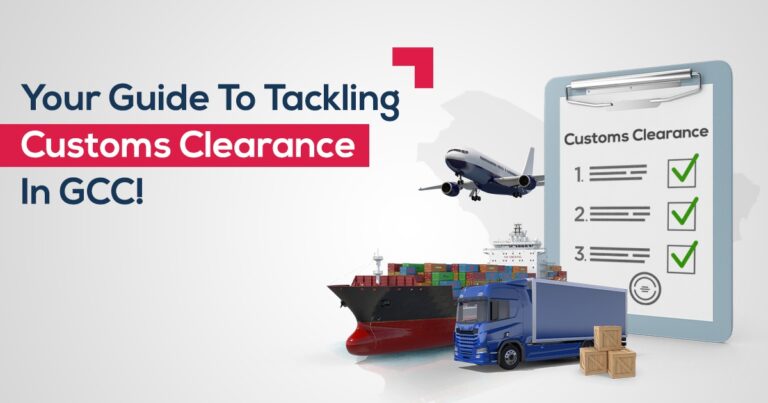
Your Guide To Tackling Customs Clearance In GCC!

When it comes to doing business in the Gulf Cooperation Council (GCC) countries, navigating the complex world of customs clearance can be a significant challenge. With a variety of regulations, procedures, and paperwork requirements to consider, it's no wonder that many companies find themselves struggling to manage their customs processes effectively.

Your Guide to Tackling Customs Clearance in the GCC

When it comes to doing business in the Gulf Cooperation Council (GCC) countries, navigating the complex world of customs clearance can be a significant challenge. With a variety of regulations, procedures, and paperwork requirements to consider, it's no wonder that many companies find themselves struggling to manage their customs processes effectively. Here are some tips and insights that can help you streamline your customs process so that you focus on what really matters: growing your business.
The custom’s department in the GCC region includes six countries: Bahrain, Kuwait, Oman, Qatar, Saudi Arabia, and the United Arab Emirates. Each of these countries has their own customs regulations and procedures, making it a complex and time-consuming process for businesses.
However, with the help of Jeebly, a global logistics and customs clearance platform, businesses can streamline the customs clearance process and ensure smooth delivery of their goods across GCC. One of the biggest challenges businesses go through is in clearing customs in GCC countries and ensuring that they have all the required documentation. Documents are necessary for customs clearance in GCC countries so that customs authorities can verify the details of the shipment, ensure compliance with import/export regulations, determine the appropriate duty or tariff rate, and prevent the entry of prohibited or restricted goods. The documentation needs to be in perfect order for smooth custom clearance. Failure to provide any of the necessary documents can result in delays and even the rejection or seizure of the goods.

Here’s a list of documents you need to have for Custom Clearance in the GCC Countries:

  • Commercial Invoice
  • Packing List
  • Certificate of Origin
  • Bill of Lading or Airway Bill
  • Permits or licenses (if required)

Jeebly helps businesses overcome these challenges by providing a robust customs clearance platform that ensures all necessary documentation is submitted in a timely manner. The platform also provides real-time tracking and alerts, so businesses can stay informed throughout the customs clearance process.

In addition to documentation, businesses also need to navigate complex customs regulations and procedures in GCC countries. This can be especially challenging for businesses that are new
to the region or are unfamiliar with the customs regulations.

The customs clearance process in the GCC countries can take anywhere from 3 to 14 days. This includes the time it takes for customs officials to inspect and verify the goods, as well as the time it takes for businesses to submit the necessary documentation.

GCC Customs Clearance Made Easy

Jeebly makes the process easier by providing expert customs clearance services. The platform's team of customs experts have extensive experience working with GCC customs officials and can provide guidance and support throughout the customs clearance process. Jeebly has also a platform that is integrated with major shipping carriers and airlines. This allows businesses to easily track their shipments and ensure timely delivery of their goods.
Clearing customs in the GCC countries may seem daunting to many businesses while others find it an extremely time-consuming process. With Jeebly's robust customs clearance platform and expert customs clearance services, businesses don’t have to worry about tiresome processes that take their time away from their core function. Instead, they can secure Jeebly’s smooth customs delivery/documentation services and efficient customs clearance for their global trade.

Routes to insightful reads

Jeebly delivery van and driver holding a branded parcel against the Dubai skyline, featuring a digital route optimisation map interface.
What Is Route Optimisation in Last-Mile Delivery?

Last-mile delivery is the most critical—and expensive—leg of the supply chain. Discover how route optimisation leverages real-time data, traffic analytics, and smart scheduling to cut operational costs, beat urban gridlock, and ensure on-time deliveries across the UAE.
Read More
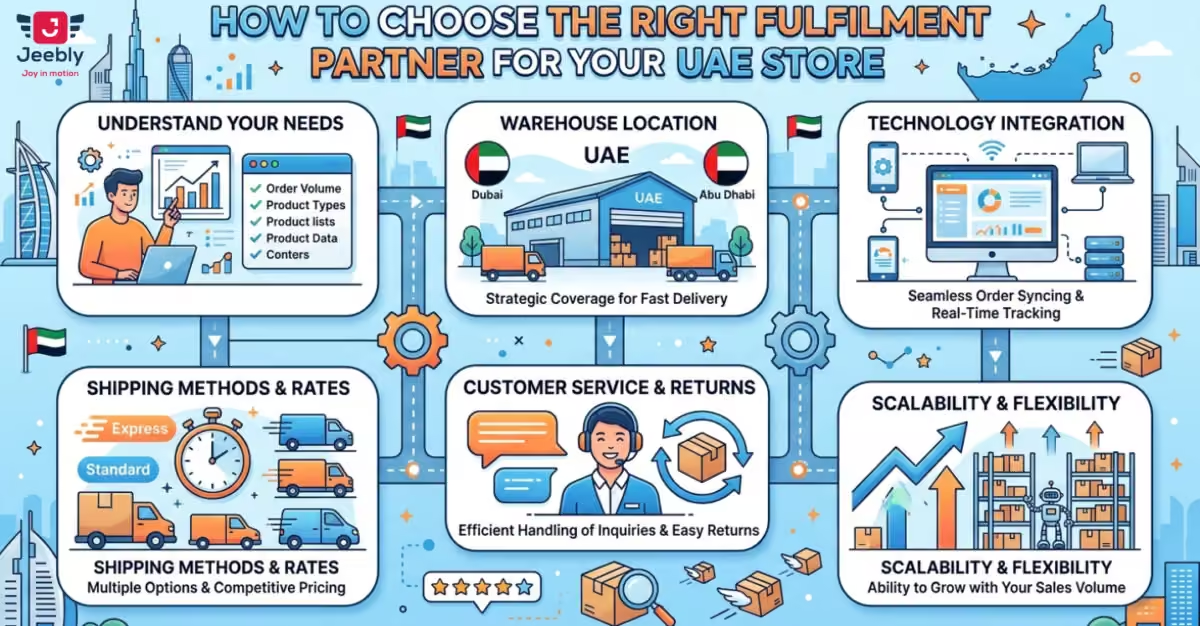
An infographic detailing six steps to choose the right fulfillment partner for a UAE store: understand needs, warehouse location (Dubai/Abu Dhabi), technology integration, shipping methods, customer service, and scalability, set against a UAE city skyline
How to Choose the Right Fulfilment Partner for Your UAE Store

Selecting the right fulfillment partner can make or break your e-commerce growth in the UAE. From strategic warehouse locations in Dubai and Abu Dhabi to seamless tech integration, learn the six critical factors every online store must evaluate to lower costs, ensure same-day delivery, and scale efficiently across the GCC.

Read More
An infographic comparing how a positive delivery experience (left) vs. low price (right) impacts brand loyalty, featuring icons for tracking, staff, and costs in AED.
Why Delivery Experience Is a Bigger Brand Differentiator Than Price

In today’s competitive e-commerce landscape, competing on price alone is a race to the bottom. Customers are increasingly valuing speed, transparent tracking, and reliable service over minor cost savings. Discover why elevating your delivery experience is the ultimate brand differentiator for UAE sellers and how it drives long-term customer loyalty.
Read More
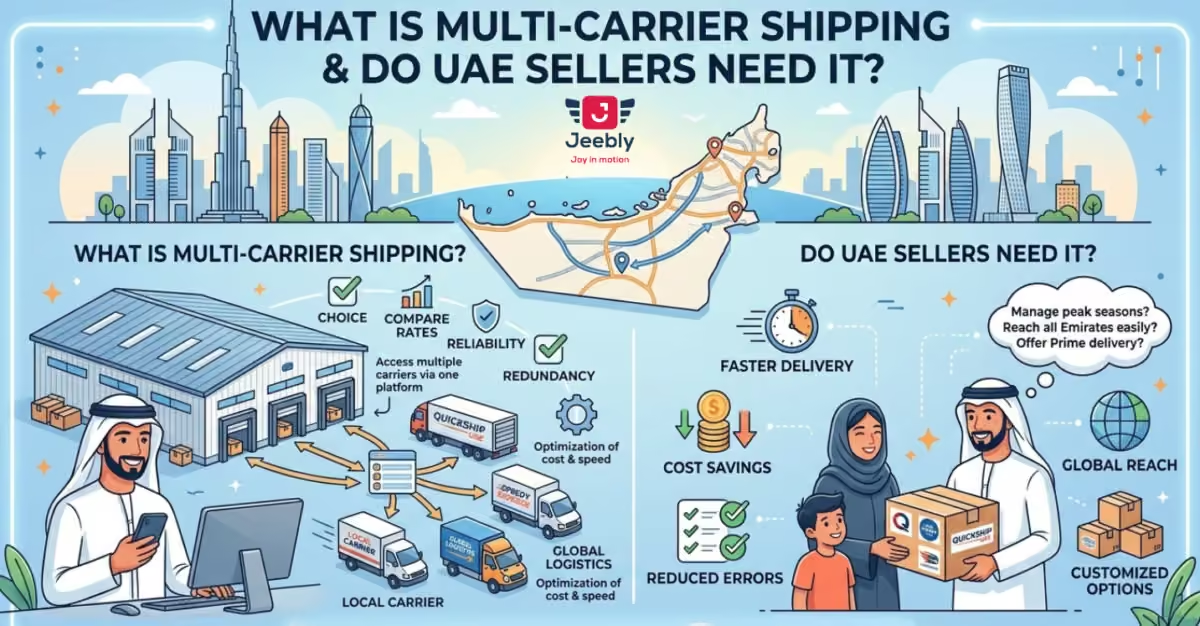
An infographic illustrating multi-carrier shipping for UAE e-commerce sellers, divided into two main sections explaining what it is and why it's needed, set against a backdrop of a UAE map and modern city skyline.
What Is Multi-Carrier Shipping and Do UAE Sellers Need It?

Relying on a single shipping provider can lead to bottlenecks, higher costs, and limited reach. Discover what multi-carrier shipping is and why e-commerce sellers in the UAE need a unified shipping strategy to compare rates, optimize delivery times across all Emirates, and scale their business smoothly.
Read More
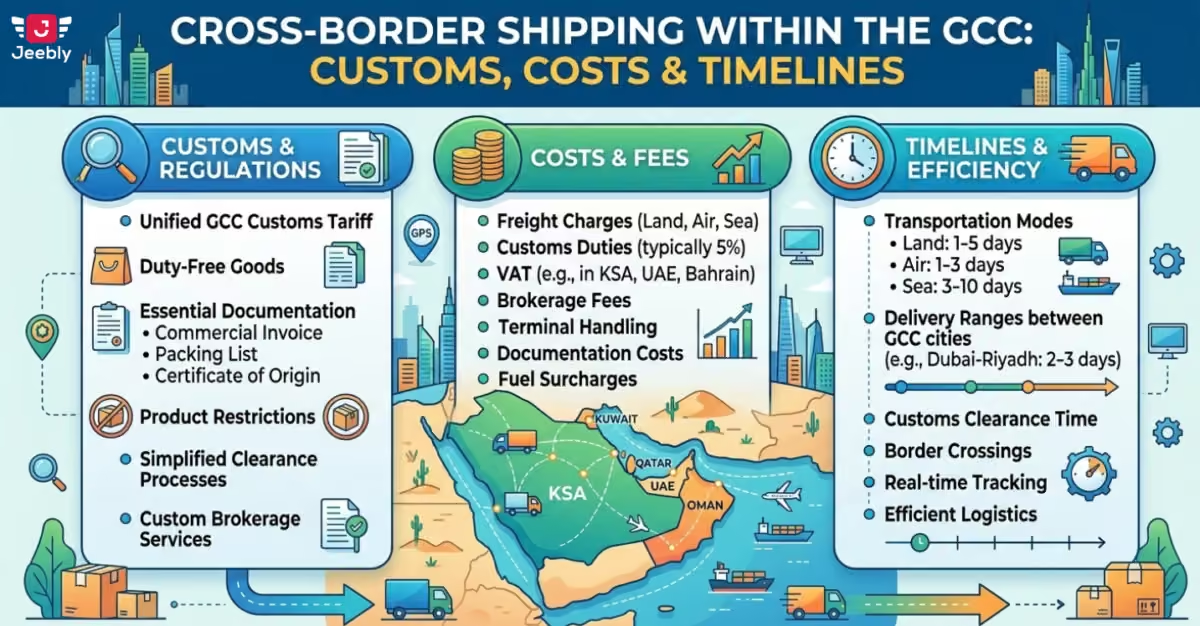
An infographic detailing the process of cross-border shipping within the Gulf Cooperation Council (GCC). The graphic is split into three main sections: "Customs & Regulations," "Costs & Fees," and "Timelines & Efficiency," all surrounding a map of the GCC region (Saudi Arabia, UAE, Oman, Qatar, Kuwait) with shipping routes.
Cross-Border Shipping Within the GCC: Customs, Costs and Timelines

Gearing up for Q4 in the UAE? Navigating peak season demand requires early planning across warehouse operations, carrier capacity, inventory, and customer experience. Explore our 10-step logistics checklist to streamline your supply chain, avoid bottleneck delays, and ensure smooth delivery during the busiest shopping quarter of the year.

Read More

    Powered by