







Last-mile delivery is the most critical—and expensive—leg of the supply chain. Discover how route optimisation leverages real-time data, traffic analytics, and smart scheduling to cut operational costs, beat urban gridlock, and ensure on-time deliveries across the UAE.
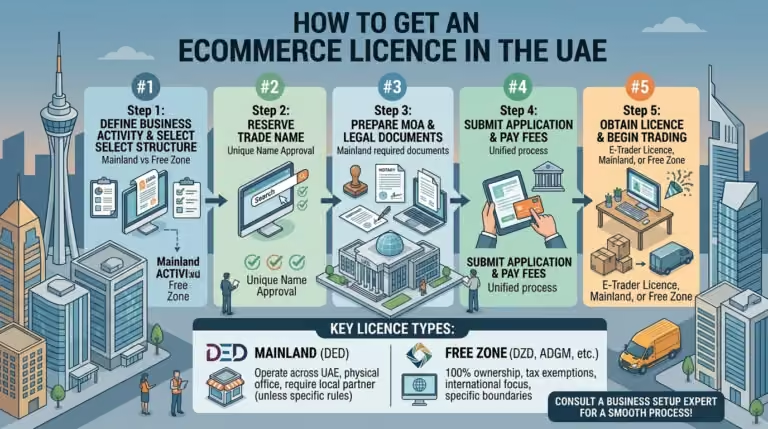
If you plan to sell products or services online from the UAE, securing the right e-commerce licence is one of the first requirements to address. The licence you need depends on where you establish the business, what you sell, and how you plan to reach customers. Making this decision early can also shape later choices around banking, payments, inventory, fulfilment, and delivery.
This guide explains the main licensing routes available to online sellers in the UAE, the general application process, documents you may need, and the factors that affect cost and processing time. It also covers the practical steps that follow licensing, so you can prepare your payments, fulfilment, shipping, and returns before your store starts taking orders.
Key Takeaways
- Businesses selling online from the UAE generally need an appropriate commercial licence for their activity.
- Mainland and free zone are the two main company setup routes. Dubai eTrader is a narrower option for eligible home-based activities.
- Licence requirements, documents, costs, and processing times vary by jurisdiction, legal structure, and business activity.
- Some products or services may need additional regulatory approvals beyond the commercial licence.
- After licensing, sellers should plan banking, payments, inventory, fulfilment, delivery, and returns before launching.
Do You Need an E-Commerce Licence to Sell Online in the UAE?
Yes. If you operate an online business from the UAE, you generally need a commercial licence that covers the activity you plan to carry out. This applies to businesses selling through websites, apps, online marketplaces, and social media channels.
Federal Decree-Law No. 14 of 2023 on Modern Technology-Based Trade governs online commerce conducted through websites, apps, social media platforms, and digital marketplaces in the UAE. The UAE Government also states that e-commerce businesses must obtain the required licences and approvals, including the applicable TDRA approval for digital activity. Certain regulated products or services may require additional approvals from other authorities.
The exact requirements depend on where the business is established, the activity listed on the licence, and what you plan to sell. For this reason, founders should confirm the applicable requirements with the relevant mainland or free zone authority before applying.
Marketplace requirements also apply. Amazon UAE states that businesses operating in the UAE need a valid commercial licence, regardless of whether they operate from the mainland or a free zone.
Which UAE E-Commerce Licence Route Fits Your Business?
The right route depends on how you plan to operate, where your customers are, and how much flexibility you need as the business grows. Mainland and free zone setups are the two main company structures, while Dubai eTrader is a narrower option for certain home-based activities.
Mainland E-Commerce Licence
A mainland licence is issued by the economic authority of the relevant emirate, such as Dubai’s Department of Economy and Tourism (DET) or the Abu Dhabi Department of Economic Development (ADDED). This route can suit businesses that plan to sell directly within the UAE market, operate locally, hire staff, or expand into broader commercial activities.
The exact setup requirements depend on the business activity, legal form, and any workspace or regulatory approvals involved.
Free Zone E-Commerce Licence
A free zone licence is issued by a specific UAE free zone. This route is often considered by international founders, cross-border sellers, digital businesses, and companies that want access to a free zone business ecosystem.
Free zone packages differ in areas such as visa allocation, office requirements, permitted activities, and costs. Businesses that plan to sell directly into the UAE mainland may also need to confirm what mainland arrangement applies to their structure and activity.
Many UAE free zones permit 100% foreign ownership, although licence packages, eligible activities, visa allocation, and facility requirements vary by authority.
Dubai eTrader Licence
Dubai eTrader is a sole-establishment licence for eligible home-based businesses in Dubai. It is narrower than setting up a standard mainland or free zone company and is intended for qualifying small-scale activities.
As of August 2026, Invest in Dubai lists the eTrader service fee as AED 1,070, plus AED 300 for Dubai Chamber membership. Applicants should confirm the latest fees, permitted activities, eligibility criteria, and operating conditions through the official portal before applying.
| Factor | Mainland Company | Free Zone Company | Dubai eTrader |
|---|---|---|---|
| Best fit | Businesses focused on the UAE market | Cross-border, digital, or international businesses | Eligible home-based sellers |
| Licensing authority | Emirate-level economic authority | Individual free zone authority | Dubai DET / Invest in Dubai |
| UAE mainland activity | Generally suitable for direct local trading within the licensed activity | May require an approved mainland arrangement | Depends on the permitted activity |
| Foreign ownership | Available for many activities | Commonly available | Subject to eligibility rules |
| Workspace | Depends on the activity and structure | Depends on the selected package | Designed for home-based activity |
| Visa options | Depend on the setup | Depend on the package | Must be confirmed |
| Main consideration | Broader operating requirements may apply | Mainland market access should be checked carefully | More limited in scope and scalability |
There is no single better option for every online business. A mainland setup can make more sense when direct UAE market access is the priority, while a free zone may suit founders focused on international ownership, cross-border sales, or a free-zone operating base.
Compare the structure against how you plan to sell rather than choosing on setup price alone.
How Do You Get an E-Commerce Licence in the UAE?
The exact process varies by emirate, free zone, business activity, and legal structure. Most applications, however, follow a similar sequence from defining the business activity to receiving the licence and completing post-licensing requirements.
Step 1: Define What the Business Will Sell
Start by identifying the products or services you plan to offer, where you will sell them, and which channels you will use. This can include your own website, social media, marketplaces, or a combination of channels.
The selected business activity should accurately reflect what the company will do. Products in regulated categories may also require approvals from the relevant authority before they can be sold.
Step 2: Choose the Appropriate Jurisdiction
Decide whether a mainland or free zone setup is better suited to the business model. Consider your target market, ownership structure, visa needs, workspace requirements, warehousing plans, and expected sales footprint.
This decision should be based on how the business will operate, rather than on licence price alone.
Step 3: Select the Business Activity and Legal Form
Choose the activity or activities that match the planned operation. Depending on the business, this may include e-commerce, trading, importing, consulting, or other approved activities.
You will also need to select the appropriate legal form. The available options depend on the jurisdiction, ownership structure, and number of shareholders.
Step 4: Reserve the Trade Name
Check whether your preferred business name is available and follows the naming rules of the relevant authority. Certain words, abbreviations, or protected terms may require additional approval or may not be permitted.
Step 5: Obtain Initial Approval Where Required
Some authorities require initial approval before the application can proceed. This confirms that the authority has no initial objection to the proposed business activity or setup.
Initial approval is not the same as receiving the final licence.
Step 6: Submit the Required Documents and Approvals
Provide the documents requested by the licensing authority. The exact list can vary based on the applicant, legal form, business activity, and ownership structure.
Certain activities may also require approval from another regulator before the licence can be issued.
Step 7: Pay the Applicable Fees and Receive the Licence
Once the application is approved, pay the required government and registration fees. Ask for an itemised breakdown so you can see what is included in the setup cost and what may be charged separately.
After payment and final approval, the authority can issue the commercial licence.
Step 8: Complete the Remaining Launch Requirements
Licence issuance is only one part of getting the business ready to trade. Depending on your setup, you may still need to complete banking, payment, tax, customs, product, marketplace, and operational requirements before launch.
The sections below cover the main areas to prepare before accepting your first order.
What Documents May Be Required for a UAE E-Commerce Licence?
There is no universal document checklist for a UAE e-commerce licence. Requirements vary by jurisdiction, legal form, business activity, ownership structure, and applicant status.
Commonly requested identification documents can include:
- Passport copies of owners or shareholders
- Emirates ID, where applicable
- UAE visa or entry details, where applicable
Depending on the setup, the authority may also request:
- Memorandum of Association
- Lease or workspace agreement
- No-objection certificate
- Business plan
- Corporate shareholder documents
- Board resolutions or authorised signatory documents
- External regulatory approvals
You will also need to provide application details such as the proposed trade name, selected activities, shareholders, managers, and contact information.
Always follow the checklist issued by the selected licensing authority, since requirements can differ between business structures and jurisdictions.
How Much Does an E-Commerce Licence Cost in Dubai?
There is no single fixed cost for an e-commerce licence in Dubai. The total depends on the licensing route, selected business activities, legal structure, workspace requirements, visa needs, and any additional approvals.
Common cost components can include:
- Trade name reservation
- Licence issuance and registration fees
- Chamber or authority charges
- Workspace or facility costs
- Visa and immigration-related fees
- External approvals for regulated activities
- Customs or product registration, where required
- Annual licence renewal
- Business setup consultant fees, if used
When comparing packages, look at the total setup and renewal cost rather than the advertised starting price. Visa allocation, workspace, establishment services, external approvals, and renewals may be charged separately.
Request an itemised quotation from the relevant authority or free zone before making a decision.
How Long Does It Take to Get an E-Commerce Licence in the UAE?
There is no single processing time for every UAE e-commerce licence. Some eligible digital licensing services can be processed quickly, while applications that require external approvals, additional documents, premises, or more complex ownership structures may take longer.
The timeline can be affected by:
- The licensing authority and jurisdiction
- Business activity
- Trade name approval
- External regulatory approvals
- Shareholder structure
- Missing or inconsistent documents
- Workspace requirements
- Visa or immigration processing
When comparing setup options, check what the stated processing time actually covers. A licence-processing estimate may not include external approvals or the other steps required before the business can begin operating.
What Should You Arrange After Receiving Your E-Commerce Licence?
Receiving the licence allows the business to move forward, but it does not complete the setup. Before launch, you still need to prepare the systems that will support payments, inventory, shipping, and customer orders.
Set Up Business Banking and Payment Collection
Open the appropriate business banking arrangements and compare payment gateway options early. Approval requirements and timelines vary by provider, so this should not be left until the store is ready to launch.
If you plan to offer cash on delivery, also decide how COD collections will be tracked and reconciled.
Confirm Tax, Customs, and Product Requirements
Depending on the business model, you may need to address tax registration, customs or importer requirements, and product-specific approvals before selling.
This is particularly important for businesses importing stock or selling regulated products, since the commercial licence does not automatically replace these requirements.
Plan Inventory, Packaging, and Shipping Costs
Decide where stock will be stored and how orders will be packed before they are handed over for delivery. Packaging size and shipment dimensions can affect shipping charges, especially when carriers use volumetric weight.
If you are still estimating delivery costs, see Jeebly’s guide on how to calculate volumetric weight before finalising your shipping model.
Arrange Fulfilment, Delivery, and Returns
Map the full order journey before the first sale goes live. This includes:
- Inventory receiving and storage
- Order processing
- Pick and pack
- Delivery coverage and service levels
- Same-day or scheduled delivery where needed
- COD collection
- Proof of delivery
- Failed delivery handling
- Return pickups
- Reverse logistics
Planning these workflows before launch can reduce operational gaps as order volumes increase.
How Can Jeebly Support a New E-Commerce Business?
Once your business is licensed and ready to launch, the next challenge is building a reliable fulfilment and delivery setup. Jeebly can support this stage through Jeebly Bizz and Jeebly Dash, depending on how much of the logistics process you want to manage externally.
Jeebly Bizz
Jeebly Bizz supports businesses that need a broader logistics setup, including warehousing, fulfilment, pick-pack-deliver services, COD collection, reverse logistics, and inventory visibility. Website integration can also help automate order flow by sending new orders directly to the warehouse team.
If you are preparing your online store for launch, explore Jeebly Bizz for warehousing, fulfilment, last-mile delivery, COD support, and reverse logistics before your first orders go live.
Jeebly Dash
Jeebly Dash supports businesses looking for same-day and scheduled last-mile delivery for local UAE orders. It can fit e-commerce brands with time-sensitive deliveries that do not require a full warehousing and fulfilment setup.
The right option depends on whether you need only delivery support or a more complete fulfilment operation.
Get Your Online Business Ready for Launch
Choosing the right e-commerce licence is the starting point. Before accepting orders, confirm the requirements that apply to your activity and prepare the banking, payment, inventory, fulfilment, delivery, and returns processes your business will rely on.
Planning to sell through a marketplace? Read Jeebly’s guide on how to sell on Amazon UAE for the next steps.
If you are preparing your online store for launch, talk to Jeebly Bizz about setting up warehousing, fulfilment, delivery, COD, and returns before your first orders go live.
Frequently Asked Questions

It can, depending on the licensing authority and the activities selected. Some activities can be combined under one licence, while others may require separate approval or may not be compatible within the same setup. Confirm the permitted activity combination before submitting the application.
Not always. Workspace requirements depend on the jurisdiction, licence type, and business activity. Some setups may permit a home-based, shared, or flexible workspace arrangement, while others require dedicated premises.
Yes, a UAE free zone business can apply to sell on Amazon UAE if it has a valid commercial licence and meets Amazon’s seller requirements. Amazon states that the commercial licence requirement applies to UAE businesses operating from either the mainland or a free zone. Product approvals, customs requirements, and the company’s permitted activities may still need to be addressed separately.
Routes to insightful reads
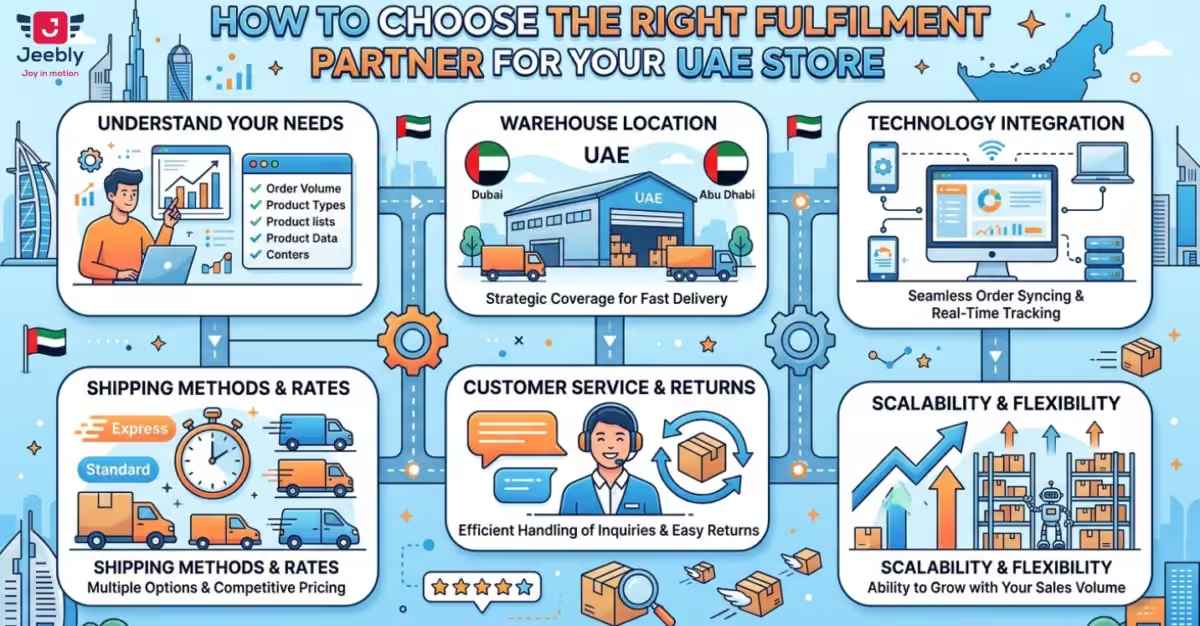
How to Choose the Right Fulfilment Partner for Your UAE Store
Author:
October 19, 2026
Selecting the right fulfillment partner can make or break your e-commerce growth in the UAE. From strategic warehouse locations in Dubai and Abu Dhabi to seamless tech integration, learn the six critical factors every online store must evaluate to lower costs, ensure same-day delivery, and scale efficiently across the GCC.
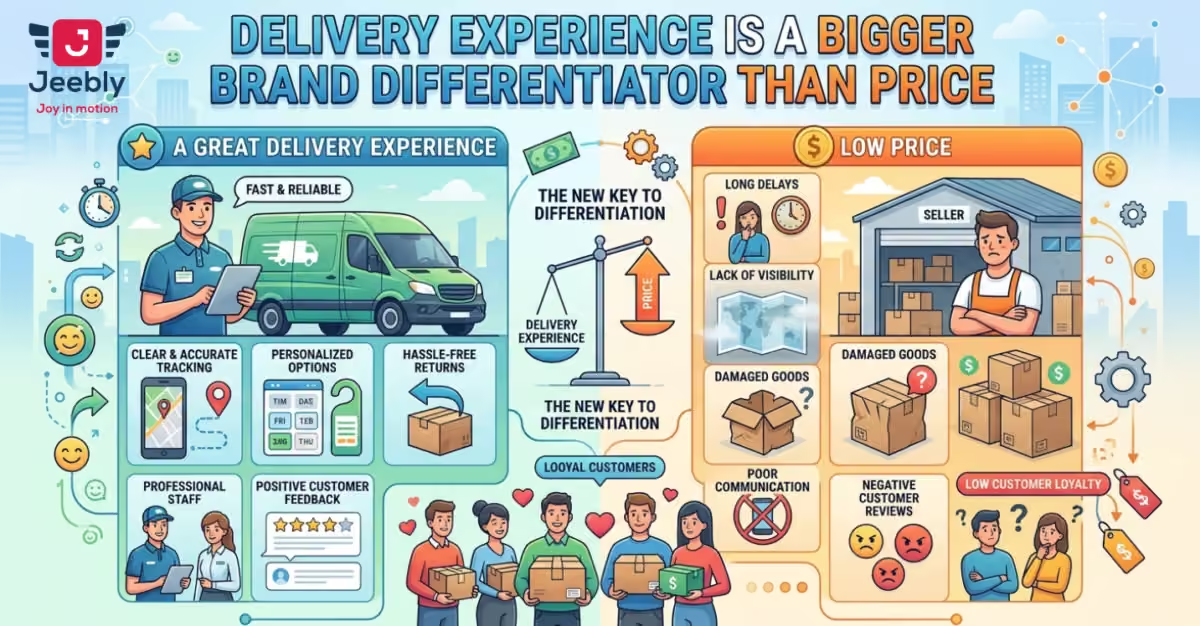
Why Delivery Experience Is a Bigger Brand Differentiator Than Price
Author:
October 15, 2026
In today’s competitive e-commerce landscape, competing on price alone is a race to the bottom. Customers are increasingly valuing speed, transparent tracking, and reliable service over minor cost savings. Discover why elevating your delivery experience is the ultimate brand differentiator for UAE sellers and how it drives long-term customer loyalty.
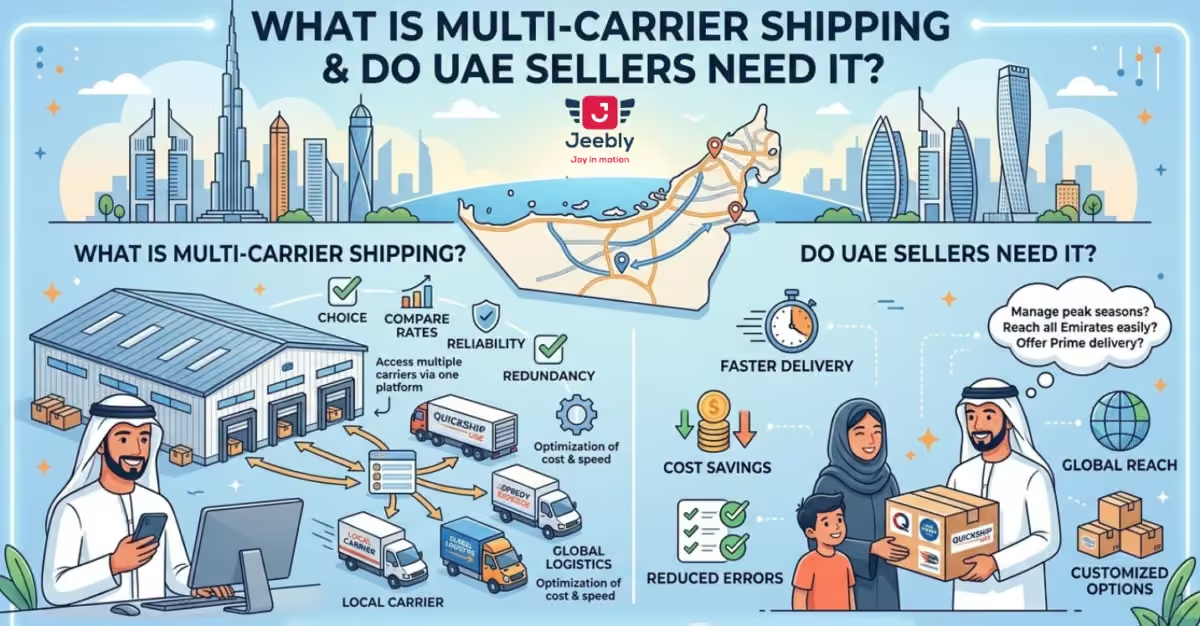
What Is Multi-Carrier Shipping and Do UAE Sellers Need It?
Author:
October 12, 2026
Relying on a single shipping provider can lead to bottlenecks, higher costs, and limited reach. Discover what multi-carrier shipping is and why e-commerce sellers in the UAE need a unified shipping strategy to compare rates, optimize delivery times across all Emirates, and scale their business smoothly.
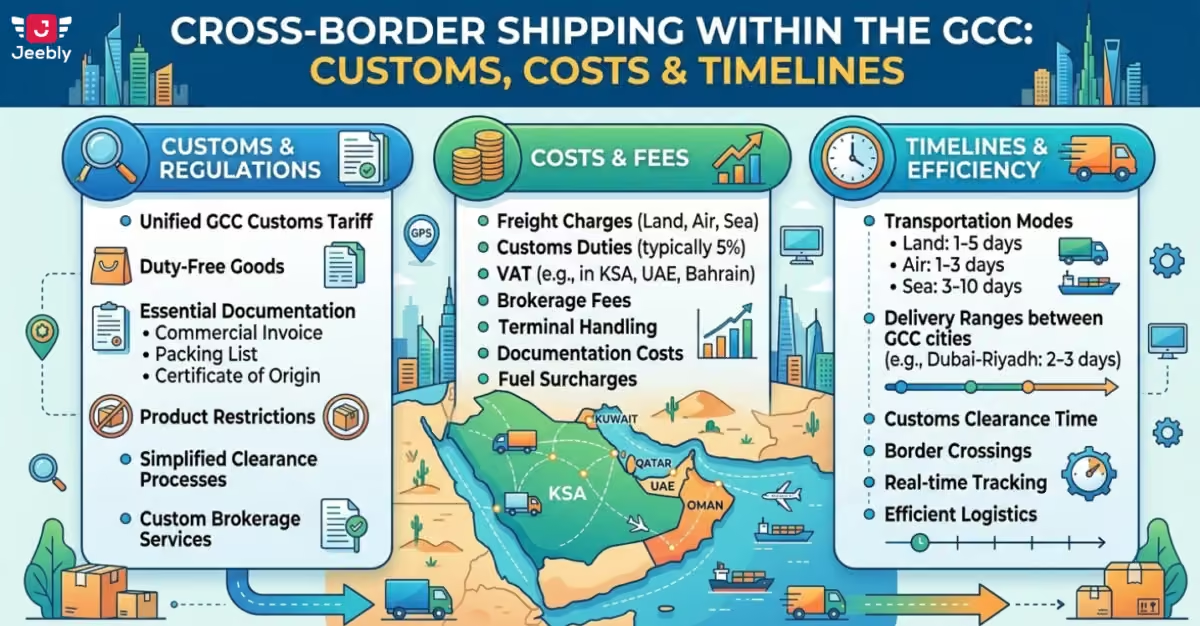
Cross-Border Shipping Within the GCC: Customs, Costs and Timelines
Author:
October 8, 2026
Gearing up for Q4 in the UAE? Navigating peak season demand requires early planning across warehouse operations, carrier capacity, inventory, and customer experience. Explore our 10-step logistics checklist to streamline your supply chain, avoid bottleneck delays, and ensure smooth delivery during the busiest shopping quarter of the year.
