





Understanding Reverse Logistics: Why It Matters to Businesses
In today’s fast-moving commerce environment, delivery is only half the story. What happens after the product reaches the customer has become just as important as the initial shipment. Returns, exchanges, failed deliveries, and Cash on Delivery (COD) refusals are no longer occasional disruptions — they are a consistent operational reality.
This is where reverse logistics for businesses plays a critical role.
For companies operating in the UAE’s rapidly expanding e-commerce ecosystem, reverse logistics is not a back-end function. It is a strategic lever that impacts profitability, customer retention, working capital, and brand reputation. According to the International Trade Administration, the UAE’s e-commerce market continues to grow steadily, driven by high digital adoption and cross-border trade. As volumes increase, so do return rates — making reverse logistics a central operational pillar.
Businesses that treat reverse logistics as an afterthought often struggle with rising costs, poor visibility, and customer dissatisfaction. Those that manage it proactively turn it into a competitive advantage.
What Is Reverse Logistics?
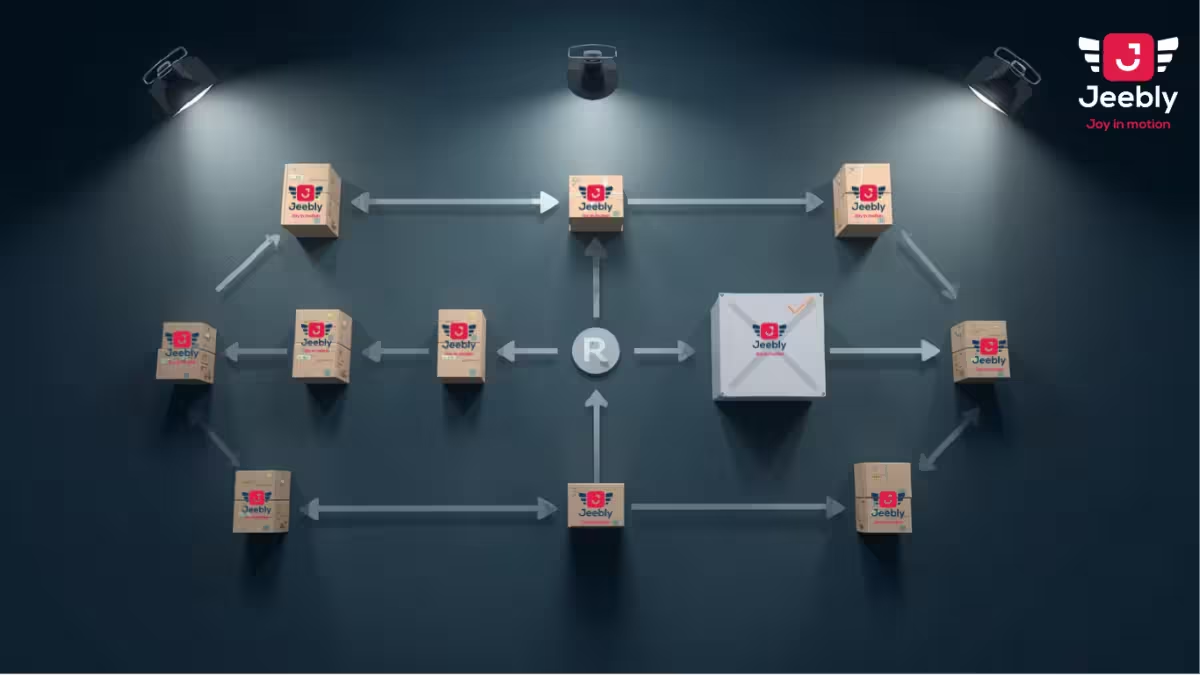
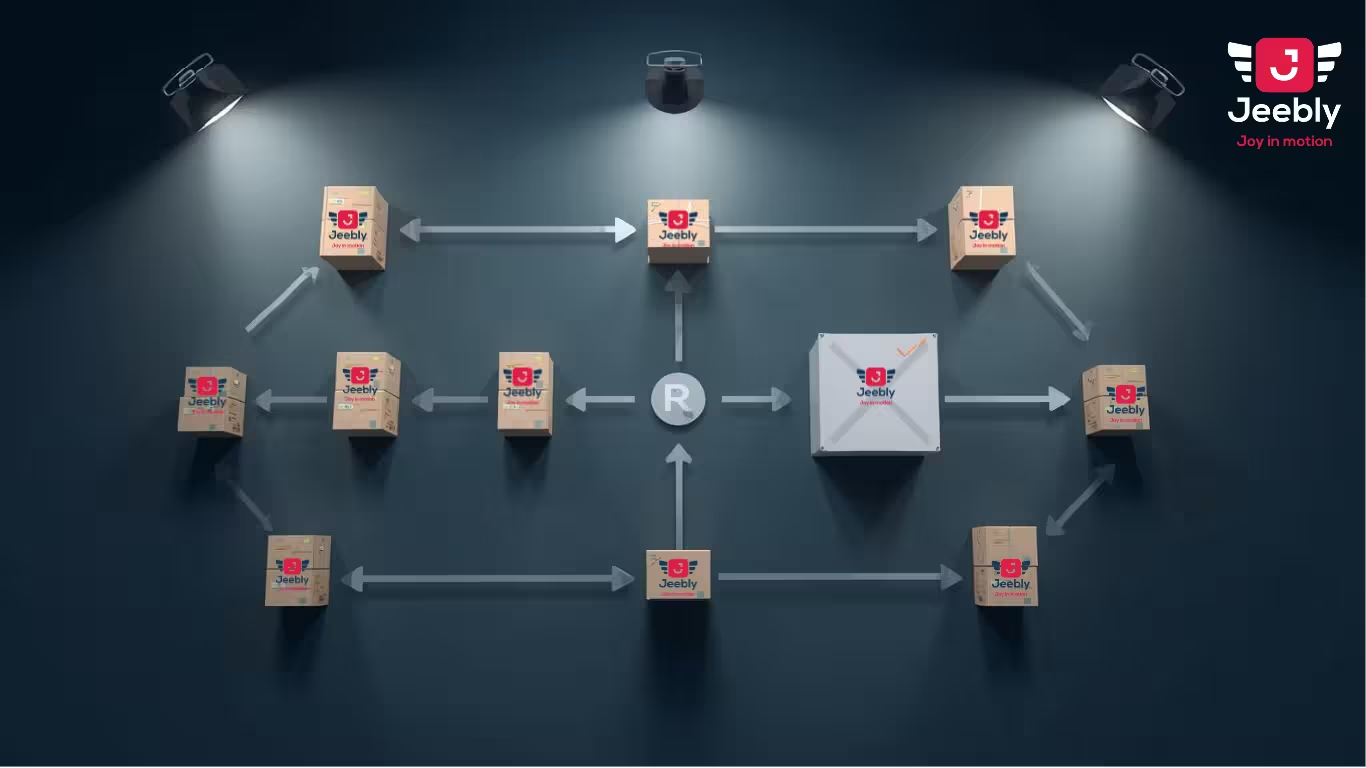
Reverse logistics refers to the movement of goods from the customer back to the seller, warehouse, or manufacturer. Unlike traditional forward logistics, which focuses on delivering products efficiently, reverse logistics focuses on retrieving, inspecting, processing, and redistributing returned items.
Reverse logistics for businesses typically includes:
* Customer returns and exchanges
* Pickup of damaged or incorrect products
* COD refusals and failed deliveries
* Warranty returns
* Recycling and disposal
* Refurbishment and repackaging
* Restocking and inventory reintegration
If you want to understand how this fits into broader supply chain strategy, you can explore Jeebly’s guide on How Jeebly Helps SMEs Scale During Peak Shopping Seasons
.
For businesses operating in the UAE, where same-day expectations are rising and COD remains common, reverse logistics is deeply integrated into daily operations.
Why Reverse Logistics for Businesses Is Critical in the UAE Market
1. The Rise of E-Commerce and COD
The UAE’s digital commerce sector continues to grow rapidly. Research from Statista shows that online shopping penetration in the Middle East continues to increase year-on-year. However, higher order volumes also lead to higher return percentages — especially in fashion, electronics, and lifestyle sectors.
Cash on Delivery remains popular in the region, but it significantly increases return volumes. Customers may refuse deliveries or change their minds at the doorstep. Each failed attempt creates immediate reverse movement.
To understand how real-time visibility helps manage delivery failures, see Jeebly’s blog on Why Real-Time ETA Updates Reduce Customer Complaints
.
Without structured reverse logistics for businesses, these returns translate into:
* Increased last-mile costs
* Delayed inventory recovery
* Revenue leakage
* Operational bottlenecks
2. Customer Experience and Brand Trust
Modern customers evaluate return policies before purchasing. According to insights published by Deloitte, seamless post-purchase experiences significantly influence brand loyalty.
A slow return process leads to:
* Negative reviews
* Lower retention
* Reduced lifetime value
Features such as:
* Scheduled return pickups
* Real-time tracking
* Digital proof of pickup
* Instant refund processing
transform returns into reassurance rather than frustration.
Reverse logistics for businesses directly impacts customer retention metrics.
3. Margin Protection and Cost Control
Returns are expensive. Each reverse shipment includes pickup, handling, inspection, repackaging, and restocking costs. If unmanaged, they silently erode profit margins.
The World Economic Forum has highlighted how supply chain inefficiencies increase operational costs globally. In high-COD markets like the UAE, the financial impact is even greater.
Structured reverse logistics helps businesses:
* Reduce repeated pickup attempts
* Optimize routes with AI
* Recover inventory faster
* Identify patterns behind high return rates
For companies building urban distribution networks, Jeebly’s blog on Micro-Fulfillment Centres: The Future of Urban Logistics in the UAE
explains how proximity warehousing reduces reverse cycle times.
The Reverse Logistics Lifecycle
1. Return Initiation
API integration connects e-commerce platforms, ERP systems, warehouses, and logistics partners instantly. This removes manual coordination delays and improves processing speed.
2. Pickup Scheduling
Smart scheduling and route optimization reduce failed pickup attempts — a common cost driver in reverse logistics for businesses.
3. Doorstep Quality Check (QC)
Doorstep QC verifies product condition before transport, reducing warehouse congestion and preventing fraudulent returns.
4. Digital Proof of Pickup
Digital documentation reduces disputes and enhances transparency.
5. Inspection and Value Recovery
Returned items undergo testing, grading, repackaging, or repair. Value-added services improve recovery rates and reduce waste.
6. Inventory Reintegration
Fast restocking improves working capital cycles.
Common Reverse Logistics Challenges
Businesses often face:
* High COD refusal rates
* Customer unavailability
* Limited visibility into return status
* Manual coordination gaps
* Fraud and product misuse
Without proper systems, reverse logistics becomes unpredictable and expensive.
Technology’s Role in Modern Reverse Logistics
Advanced reverse logistics for businesses relies heavily on technology.
AI-Powered Tracking
Improves route efficiency and predicts return trends.
API Integration
Automates communication between platforms.
Centralized Dashboards
Provide visibility into return volumes and COD performance.
For broader insight into digital supply chain transformation, research from McKinsey & Company highlights how technology-enabled logistics improves operational resilience.
Sustainability and Regulatory Alignment
The UAE continues to advance environmental initiatives through frameworks supported by the UAE Ministry of Climate Change and Environment.
Reverse logistics contributes to sustainability by:
* Reducing landfill waste
* Supporting recycling programs
* Enabling refurbishment
* Extending product lifecycle
Responsible disposal and product recovery align businesses with regional environmental goals.
How Jeebly Strengthens Reverse Logistics for Businesses
Jeebly transforms reverse logistics into a structured, tech-enabled system through:
* Instant pickup capabilities
* Doorstep QC
* Digital proof of pickup
* AI-powered tracking
* API integration
* Centralized return dashboards
* Value-added services (repair, testing, repackaging)
* Faster refund enablement
By integrating reverse flow into the overall logistics strategy, businesses gain visibility, control, and predictable cost management.
The Future of Reverse Logistics in the UAE
As e-commerce penetration grows, reverse logistics will evolve toward:
Same-day reverse pickups
Predictive return reduction models
Automated fraud detection
Circular economy integration
Businesses that invest in structured reverse logistics today will lead tomorrow’s competitive landscape.
Final Thoughts
Reverse logistics for businesses is no longer just about handling returns. It is about:
Protecting margins
Strengthening customer loyalty
Improving inventory visibility
Supporting sustainability goals
Enhancing operational efficiency
In the UAE’s competitive market, reverse logistics determines whether returns become financial liabilities or strategic advantages.
With the right technology, structured processes, and a reliable logistics partner, reverse logistics transforms from operational complexity into measurable business value.