





Jeebly | Logistics Solutions

Categories
blogs

Temperature-Controlled Delivery in UAE: Which Industries Need It?

Top 5 Industries Benefiting from Temperature-Controlled Logistics​

Temperature-Controlled Delivery in UAE: Which Industries Need It?

In a country where summer temperatures regularly exceed 45°C, transporting sensitive products across cities is not just a logistics task—it is a quality and compliance challenge. Many goods cannot tolerate heat exposure during transit, even for short periods. As a result, temperature-controlled delivery in UAE has become a critical part of modern supply chains.

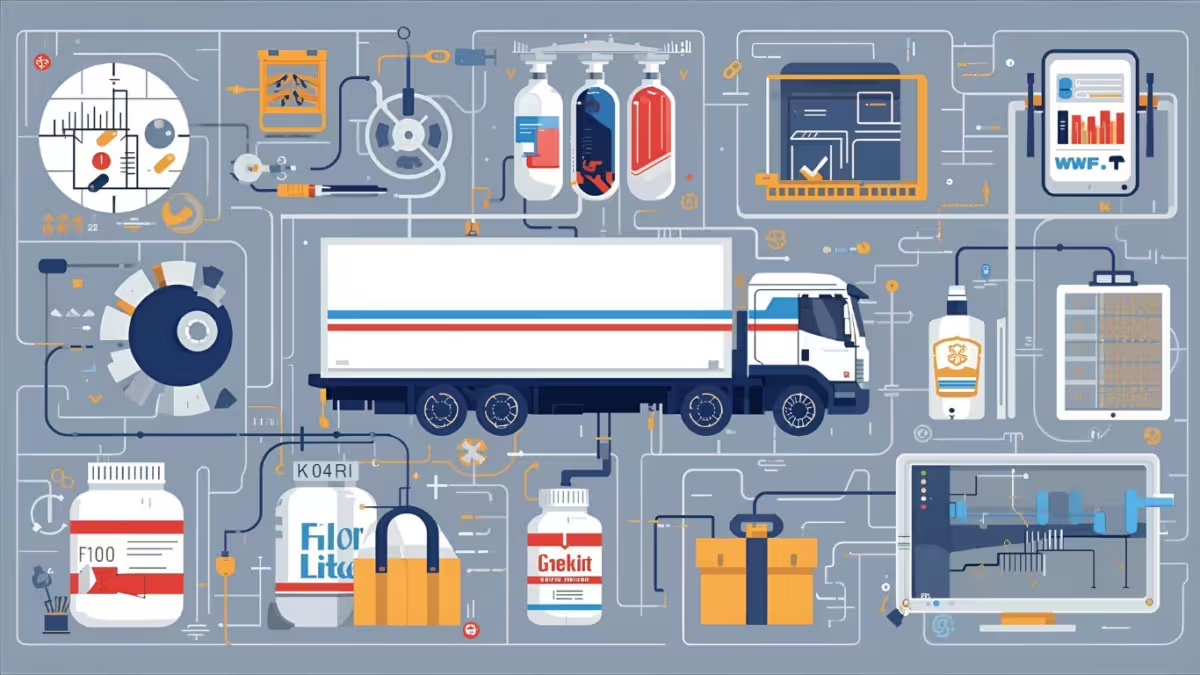
From healthcare and food to luxury retail and industrial materials, several industries depend on stable temperature conditions to maintain product integrity. Businesses must ensure that products move from warehouse to doorstep within the correct environmental range, supported by specialized vehicles, real-time monitoring, and reliable last-mile delivery.

As the UAE continues to grow as a regional hub for trade, healthcare, and retail, temperature-controlled logistics has evolved from a niche service into a necessity. Below are the key industries that rely heavily on temperature-controlled delivery in the UAE.

1. Pharmaceuticals & Healthcare

The healthcare industry is one of the most sensitive sectors when it comes to logistics. Many medical products must be transported under tightly controlled conditions to maintain their effectiveness.

Products that typically require temperature-controlled delivery include:

Vaccines

Insulin and injectable medications

Laboratory samples

Diagnostic kits

Specialty pharmaceuticals

In the UAE, the pharmaceutical sector operates under strict regulatory guidelines to ensure patient safety. Temperature fluctuations during transportation can compromise the stability of medications and lead to compliance issues.

Hospitals, pharmacies, and healthcare distributors rely on temperature-controlled delivery in UAE to ensure that medical products reach clinics and patients without degradation. Reliable logistics systems with temperature monitoring and trained delivery teams help maintain the integrity of these critical shipments.

2. Food & Beverage

The UAE’s vibrant food industry—from restaurants and cloud kitchens to grocery retailers and gourmet brands—depends heavily on temperature-controlled delivery.

Many food products are highly sensitive to heat and must be transported within specific temperature ranges to maintain freshness and safety. This includes:

Dairy products

Frozen foods

Fresh produce

Meat and seafood

Gourmet desserts and chocolates

With the rapid growth of food delivery platforms and online grocery services in cities like Dubai and Abu Dhabi, businesses must maintain strict temperature control to meet food safety standards and customer expectations.

Temperature-controlled delivery ensures that products arrive fresh and safe to consume, helping food businesses expand their reach while maintaining quality. For restaurants and food brands scaling across the UAE, dependable logistics can make the difference between customer satisfaction and costly spoilage.

3. Cosmetics & Personal Care

The beauty and skincare industry has experienced significant growth in the UAE, driven by strong consumer demand for premium and international brands.

Many cosmetics and personal care products contain delicate ingredients that react to heat. Exposure to high temperatures can cause:

Changes in texture or consistency

Ingredient separation

Reduced product effectiveness

Packaging damage

Organic skincare, serums, and fragrance-based products are particularly vulnerable to heat exposure during transportation.

For beauty brands and retailers, temperature-controlled delivery in UAE helps ensure that products reach customers in the same condition they left the warehouse. Maintaining product integrity not only protects brand reputation but also reduces returns and customer complaints.

4. Specialty Retail & Luxury Goods

Luxury and specialty goods often require careful handling during delivery. Certain high-value products are highly sensitive to heat and environmental changes.

Examples include:

Premium chocolates and confectionery

Perfumes and fragrances

Artisan candles

High-end skincare products

Boutique food items

In the UAE’s luxury retail market, customer expectations are extremely high. Buyers expect products to arrive in perfect condition, especially when ordering premium goods online.

Temperature-controlled delivery allows luxury brands to protect delicate items from melting, fragrance distortion, or packaging damage. By maintaining stable conditions throughout the delivery journey, retailers can ensure that customers receive products exactly as intended.

5. Chemical & Industrial Materials

Temperature sensitivity is not limited to consumer products. Many industrial and chemical materials also require controlled conditions during transportation.

Certain substances—including adhesives, paints, laboratory chemicals, and industrial compounds—can degrade or become unstable when exposed to excessive heat.

Improper handling of such materials can lead to:

Reduced product performance

Safety hazards

Expensive material loss

Regulatory non-compliance

For manufacturers and industrial suppliers operating in the UAE’s construction, manufacturing, and laboratory sectors, temperature-controlled logistics provides a safe and reliable way to transport sensitive materials.

Maintaining the correct temperature during transit helps companies protect their inventory and ensure operational reliability.

Why Temperature-Controlled Delivery Matters in the UAE

The UAE’s climate presents unique logistics challenges. Extreme heat, long transportation routes, and increasing demand for rapid deliveries make temperature management a critical factor in supply chain success.

Temperature-controlled delivery in UAE helps businesses:

Protect sensitive products from heat damage

Maintain regulatory compliance

Reduce spoilage and product loss

Improve customer satisfaction

Support growth across multiple industries

With the rise of e-commerce, food delivery platforms, and pharmaceutical distribution networks, the need for reliable temperature-controlled logistics continues to grow.

Final Thoughts

Across industries—from healthcare and food to luxury retail and industrial materials—temperature control has become an essential requirement for safe and reliable delivery in the UAE.

Businesses that rely on sensitive products must ensure that their logistics partners have the right infrastructure, technology, and expertise to maintain stable conditions throughout the delivery process.

Jeebly’s temperature-controlled delivery solutions help businesses across the UAE move sensitive goods with confidence. With specialized vehicles, real-time monitoring, and experienced delivery teams, Jeebly ensures that products remain protected from warehouse to doorstep.

For companies seeking dependable temperature-controlled delivery in UAE, choosing the right logistics partner is key to maintaining product quality, regulatory compliance, and customer trust.

FAQs

Temperature-controlled delivery in UAE refers to transporting sensitive goods in vehicles that maintain a stable temperature range during transit. This prevents products such as pharmaceuticals, food, cosmetics, and specialty retail items from being damaged by extreme heat, which is common in the UAE climate.

Industries that rely on temperature-controlled delivery in UAE include pharmaceuticals, food and beverage, cosmetics and skincare, luxury retail, and industrial chemicals. These sectors depend on stable temperatures to protect product quality, safety, and regulatory compliance.

Because summer temperatures in the UAE can exceed 45°C, many products can degrade quickly during transport. Temperature-controlled logistics protects sensitive goods from heat exposure, reduces spoilage and returns, and ensures customers receive products in safe and usable condition.

By maintaining stable conditions during transport, temperature-controlled delivery reduces product spoilage, packaging damage, and customer returns. This helps businesses avoid inventory loss and improves supply chain reliability.

Products that typically require temperature-controlled delivery include vaccines, medicines, dairy products, chocolates, skincare products, perfumes, and certain chemicals or adhesives that can degrade under high temperatures.

Routes to insightful reads

DDP shipping infographic explaining seller responsibilities, customs clearance, duties, final delivery, and benefits for UAE importers
What Is DDP Shipping? What “Delivered Duty Paid” Means for UAE Importers and Exporters

A delivery note is a key document in the UAE logistics process, providing a clear record of what was shipped, who sent it, and who received it. From proof of delivery and shipment tracking to order verification, customs compliance, and dispute resolution, a properly prepared delivery note helps businesses maintain accurate records and protect every shipment. This guide explains what a delivery note is, what it should include, and why it is essential for businesses operating across the UAE.

Read More
Delivery note document showing shipment details, proof of delivery, tracking, verification and UAE logistics compliance
What Is a Delivery Note and Why Does Every UAE Shipment Need One?

A delivery note is a key document in the UAE logistics process, providing a clear record of what was shipped, who sent it, and who received it. From proof of delivery and shipment tracking to order verification, customs compliance, and dispute resolution, a properly prepared delivery note helps businesses maintain accurate records and protect every shipment. This guide explains what a delivery note is, what it should include, and why it is essential for businesses operating across the UAE.

Read More
Illustration showing strategies to reduce cart abandonment through transparent shipping costs, fast delivery, local fulfilment, and clear returns policies for UAE eCommerce businesses.
How to Reduce Cart Abandonment Caused by Delivery Costs and Uncertainty

Delivery costs and uncertainty are among the biggest reasons shoppers abandon their carts before completing a purchase. This guide explores practical strategies to reduce cart abandonment, including transparent shipping fees, accurate delivery estimates, flexible shipping options, local fulfilment, and hassle-free returns, helping UAE eCommerce businesses improve conversions and build customer trust.

Read More
J&T Express vs Jeebly comparison graphic featuring delivery apps, e-commerce products, and UAE logistics services against the Dubai skyline.
J&T Express vs Jeebly: Which Courier Is Better for UAE eCommerce Businesses?

J&T Express and Jeebly both support eCommerce deliveries, but they cater to different business needs. This comparison explores their delivery networks, fulfilment capabilities, shipping speed, technology, pricing flexibility, and merchant services to help UAE businesses choose the courier partner that best supports their growth and customer experience.

Read More
Delivery SLA guide for UAE businesses showing service level agreements, delivery performance metrics, on-time delivery targets and logistics standards.
 Delivery SLA Guide for UAE Businesses: What to Expect and How to Set Standards

A clear delivery Service Level Agreement (SLA) sets the expectations for speed, reliability, and performance between businesses and their logistics partners. This guide explains what a delivery SLA should include, the key metrics to track, and how UAE businesses can set realistic standards to improve customer satisfaction and delivery performance.

Read More

    Powered by