





Jeebly | Logistics Solutions

A woman in a black dress and white gloves holds a branded "Jeebly" box next to a white Land Rover Defender with a bougainvillea hedge behind them.

High-value delivery requires more than simply choosing a fast courier. If you are sending jewellery, premium electronics, artwork, luxury goods, or important documents, you need to know how the shipment will be handled, what financial protection applies, and how delivery will be verified. 

Standard courier liability may cover only a limited amount, so senders should not assume it matches the item’s full value. Before booking, it is worth checking the courier’s liability limits, any declared-value or additional coverage options, packaging and handling standards, proof-of-delivery process, and claims requirements. 

This guide explains how high-value item delivery works in the UAE and what to ask before you hand over something valuable.

Key Takeaways

  • Courier liability does not always cover the full value of a high-value shipment, so senders should check the applicable compensation limits before booking.

  • Declared-value or enhanced protection may be available for an additional fee, but coverage limits, exclusions, and claim requirements vary by provider.

  • Valuable items benefit from clear tracking, documented handover, suitable packaging, and verifiable proof of delivery.

  • Receipts, invoices, valuations, serial numbers, and pre-shipment photos can help support a claim if an item is lost or damaged.

  • White-glove delivery may be worth considering when an item requires specialist handling, secure storage, scheduled delivery, unpacking, placement, or professional assembly.

What Counts as a High-Value Item for Delivery?

A high-value item is generally a shipment whose financial, commercial, legal, or replacement value requires more protection or handling controls than a routine parcel. There is no single UAE-wide value threshold that applies to every courier, so that the definition can vary by provider.

Common examples include jewellery and watches, premium electronics, artwork and antiques, designer goods, specialist equipment, and important legal or financial documents. Value is not always based on purchase price alone. Fragility, confidentiality, rarity, difficulty of replacement, and commercial importance can also affect how a shipment should be handled.

Before booking, confirm the courier’s maximum accepted value, any restricted-item rules, and the point at which additional coverage or specialist handling is required.

For sellers in regulated product categories like jewellery and electronics, UAE courier acceptance rules go beyond value. This guide on Dangerous Goods and Restricted Items covers the handling and documentation requirements for these categories in the UAE.

How Does Courier Insurance Work for High-Value Delivery in the UAE?

Courier liability and shipment insurance are not the same thing. A courier may provide limited compensation if a parcel is lost or damaged under its terms, but that amount may be far below the item’s actual value. For high-value deliveries, senders should first check the standard liability limit, then ask whether separate insurance or enhanced-value protection is available.

Jeebly’s current terms and conditions provide a useful example of why this distinction matters. Jeebly recommends that customers arrange their own shipping insurance and states that reimbursement for actual loss or damage while a shipment is in its possession is capped at AED 250 per shipment, subject to its terms. 

Reimbursement cannot exceed the total value of the original shipment, and separate insurance must be purchased from an insurance provider.

How Does Declared-Value Coverage Work?

Declared-value or enhanced-value protection generally allows the sender to state the shipment’s value and pay an additional fee for higher compensation if an eligible item is lost or damaged. The exact fee, maximum coverage, exclusions, deductible, and claims process depend on the provider.

Emirates Post’s Protect+ service shows how this works in the UAE. As of January 2026, Protect+ offers compensation of up to AED 10,000 for qualifying goods. Domestic shipments are charged 1% of the declared value, or a minimum of AED 5, while international shipments are charged 2% of the declared value, or a minimum of AED 25. Protect+ also currently lists an AED 100 deductible.

These terms apply specifically to Emirates Post and should not be treated as a standard across all UAE couriers.

Does Declared Value Guarantee Full Reimbursement?

No. Declaring an item’s value does not automatically guarantee payment of that full amount. Compensation can depend on the provider’s maximum coverage, deductible, exclusions, proof of purchase, valuation evidence, and other claim conditions.

This is why receipts, invoices, professional valuations, and other proof of value should be kept before shipping. The declared value should be accurate and supported by the documentation required under the provider’s terms.

What Should Proper Handling of High-Value Items Include?

Insurance addresses the financial consequences if a shipment is lost or damaged. Proper handling is intended to reduce the risk of loss, damage, misdelivery, or disputed handover before a claim becomes necessary.

Trackable Delivery and Verifiable Handover

A high-value shipment should have clear tracking and a documented handover process. Depending on the service, proof of delivery may include a signature, OTP verification, a timestamped confirmation, a photograph, or another recipient verification method. For time-sensitive documents and banking-related deliveries, Jeebly Dash also supports domestic delivery with tracking and proof-of-delivery capabilities.

The key question is not simply whether tracking is available. Senders should confirm how the courier records that the shipment reached the intended recipient.

Packaging Appropriate to the Item

Packaging should match the item’s fragility, size, and value. This may include suitable cushioning, reinforced materials, tamper-evident measures, or specialist packaging.

Discreet outer packaging may also be appropriate for jewellery, luxury goods, electronics, or other valuable contents. For step-by-step preparation, see Jeebly’s guide to packing a courier parcel safely in the UAE.

Secure Storage or Specialist Handling Where Needed

Some shipments require more controlled handling, such as secure storage, trained personnel, specialist packaging, or carefully managed movement.

When those requirements go beyond routine parcel delivery, a white glove service may be more appropriate.

When Is White Glove Delivery Worth Considering?

White-glove delivery is worth considering when a shipment requires services beyond routine doorstep transport, such as specialised handling, secure storage, scheduled delivery, unpacking, placement, or professional assembly.

Type of shipment Why white glove delivery may help
Artwork or antiques Careful handling and controlled unpacking
Premium furniture Placement, unpacking, and assembly
High-end electronics Specialist handling and appointment-based delivery
Luxury retail goods A more controlled and personalised handover
Valuable bulky items Trained handling and managed movement

Jeebly Plus white-glove delivery supports higher-touch requirements such as personalised delivery, secure handling of valued shipments, customised appointments, enhanced unpacking, and professional assembly where required.

White-glove delivery does not automatically mean that a shipment is fully insured. The sender should still confirm the applicable liability terms, any additional insurance requirements, and the claims process before booking.

Cut-off times, coverage, and exact delivery windows also vary by provider. For Jeebly-specific estimates, refer to its guide to delivery timelines by service type in the UAE.

What Should You Ask a Courier Before Sending a High-Value Item?

Before booking a high-value delivery, ask questions that clarify both the financial protection and the operational controls around the shipment. 

Ask the courier Why it matters
What is your standard liability limit? It shows how much compensation may apply if the shipment is lost or damaged without additional protection.
Is additional insurance or declared-value protection available? This shows whether financial protection can be increased for a more valuable shipment and whether it must be arranged separately.
How is a claim payout calculated? Purchase value, documented value, depreciation, deductibles, and coverage limits can affect reimbursement.
Are any high-value goods restricted or excluded? Jewellery, cash, precious metals, antiques, or some electronics may be subject to special rules.
How is delivery to the recipient verified? A signature, OTP, photographic proof, or another verification method creates a clearer record of the handover.
What specialist handling is available? Valuable or fragile goods may need secure storage, trained personnel, specialised packaging, or appointment delivery.
What evidence is required for a claim? Knowing this in advance helps you keep the right receipts, valuations, photos, and shipment records.
How quickly must loss or damage be reported? Claims often have notification deadlines so that delays can affect eligibility.

The aim is not simply to ask if a parcel is “insured” or “secure”. It is to understand exactly what protection applies, what evidence will exist after delivery, and what happens if something goes wrong.

What Documents Should You Prepare Before Shipping a Valuable Item?

Prepare evidence of the item’s value and condition before handing it to the courier. This can make a later claim easier to assess and reduces uncertainty about what was shipped.

Useful records include:

  • Purchase receipt, invoice, or professional valuation
  • Serial number or certificate of authenticity where relevant
  • Photos of the item, internal packaging, and sealed parcel
  • Booking and tracking or air waybill (AWB) details
  • Declared-value or additional coverage confirmation where applicable

Keep these records until delivery is complete and any applicable claim window has passed.

What Happens If a Courier Loses or Damages a Valuable Shipment?

If a valuable shipment is lost or damaged, report the issue as soon as possible and follow the courier’s formal claims process. The outcome will depend on the courier’s liability terms and any additional insurance or enhanced-value protection purchased.

A typical claim may require you to:

  1. Report the loss or damage within the provider’s required notification period.
  2. Retain the damaged item, original packaging, and shipping materials.
  3. Provide the booking, tracking, and delivery records.
  4. Submit proof of value and relevant photographs.
  5. Complete the courier or insurer’s formal claim procedure.

Reimbursement depends on the applicable liability or insurance terms, including coverage limits, exclusions, deductibles, and claim requirements.

Final Thoughts

High-value delivery requires three separate checks: what financial protection applies, how the item will be handled, and how the final handover will be verified. 

Compare the courier’s liability terms, any additional insurance options, handling controls, proof-of-delivery process, and claims requirements before booking. If the shipment is time-sensitive as well, read Jeebly’s guide to urgent and express delivery in the UAE. 

For valuable goods that require specialist handling, secure storage, personalised appointments, unpacking, or professional assembly, speak with the Jeebly Plus team about white-glove delivery for high-value shipments.

Frequently Asked Questions

Yes, but acceptance rules vary by courier and by the type and value of the jewellery. Before booking, confirm whether the provider accepts jewellery, whether additional coverage is available, and whether any value limits or special handling requirements apply. Use discreet packaging and keep receipts, valuations, and clear photographs of the item before handover.

Acceptance rules vary by courier, and some providers exclude cash, cheques, or other monetary instruments from liability coverage. Jeebly’s current terms, for example, exclude liability for monetary instruments such as cash and cheques. Check the provider’s restricted-item and liability terms before booking.

Not always. The required proof of value depends on the courier or insurer’s terms and the type of item being shipped. A recent professional valuation may be useful for jewellery, artwork, antiques, or other goods whose value cannot be established easily through a standard purchase invoice.

Yes, subject to the courier’s acceptance rules and the destination country’s customs requirements. International high-value shipments may have different declared-value limits, insurance terms, documentation requirements, and restrictions than domestic deliveries. Check both the courier’s conditions and the destination country’s rules before dispatch.

It can. Costs may increase when a shipment requires additional insurance, specialised packaging, secure storage, appointment delivery, or white-glove handling. Rates vary by courier, route, item characteristics, and service level, so request a shipment-specific quote before booking.

There is no standard UAE-wide price for white-glove delivery. The cost depends on factors such as the shipment’s size, weight, route, handling requirements, appointment timing, unpacking, and assembly needs. 

Jeebly’s public white-glove delivery service lists customised appointments, professional assembly, enhanced unpacking, and scheduled delivery, but does not publish a fixed Jeebly Plus tariff. Request a shipment-specific quote for an accurate price.

It can be worth the additional cost when an item needs more control than routine doorstep delivery, such as professional assembly, scheduled handover, enhanced unpacking, or customised delivery appointments. 

Jeebly Plus specifically positions its white-glove delivery service for high-value parcels and premium delivery requirements. For a routine item that does not need specialist handling, a standard tracked courier service may be sufficient.

Routes to insightful reads

A woman in a black dress and white gloves holds a branded "Jeebly" box next to a white Land Rover Defender with a bougainvillea hedge behind them.
High-Value Item Delivery in the UAE: Insurance, Handling, and What to Ask

Delivering high-value, luxury items in the UAE requires far more than standard shipping—it demands white-glove precision, specialized security protocols, and comprehensive transit insurance. Discover how premium handling, secure transit procedures, and asking the right questions of your courier partner ensure high-ticket goods reach your clients safely, preserving both product integrity and brand trust.

Read More
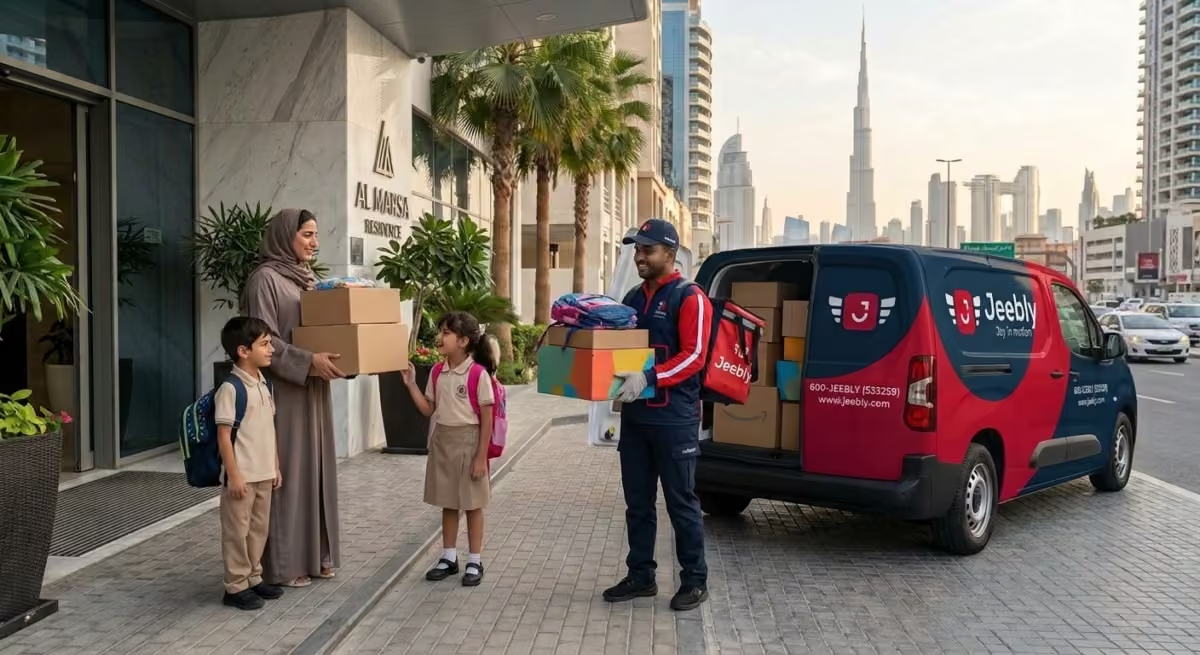
A Jeebly delivery courier handing over stacked packages outside a Dubai residence to a mother and her school-aged children, with a Jeebly delivery van parked nearby and the Dubai skyline featuring the Burj Khalifa in the background.
Back-to-School Delivery Trends: What UAE Retailers Learned This Season

As the back-to-school rush hits the UAE, retailers face surging demand for fast, flexible, and reliable last-mile deliveries. From school uniforms and backpacks to tech essentials, learn how seamless multi-channel logistics, scheduled doorstep deliveries, and real-time tracking help UAE brands meet evolving parent expectations and turn seasonal spikes into long-term customer loyalty
Read More
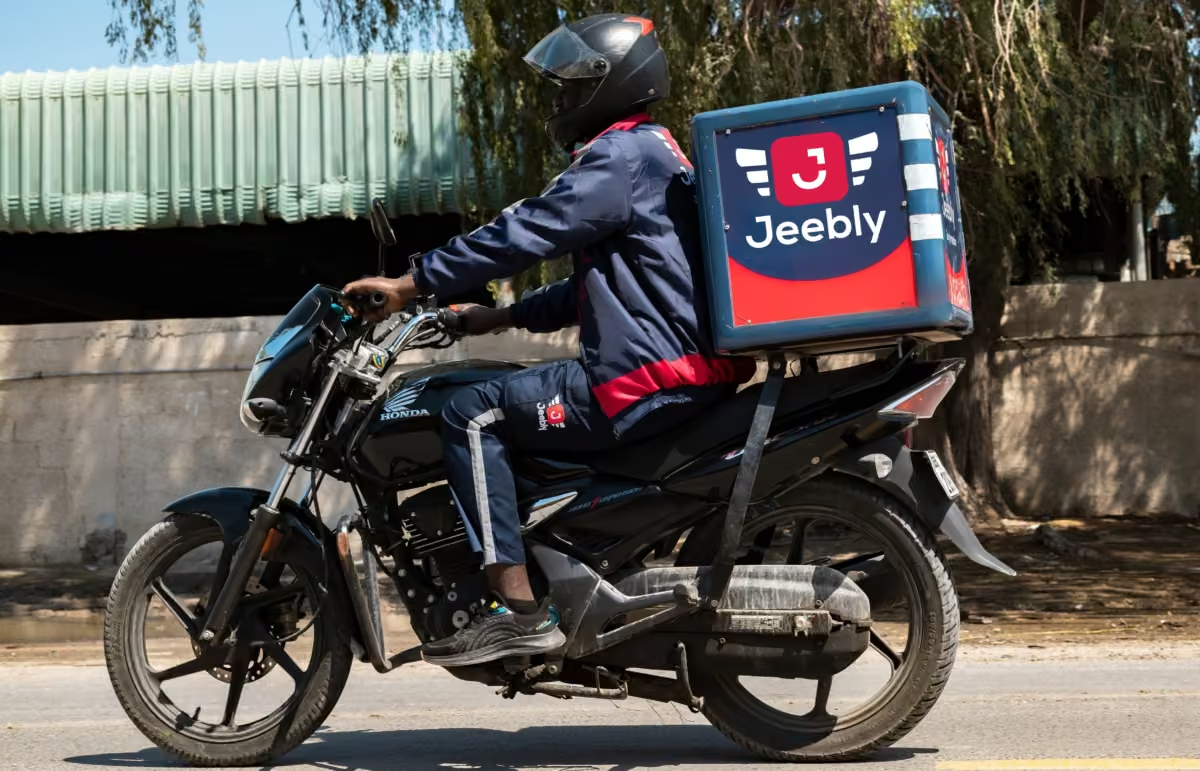
A Jeebly delivery rider wearing a helmet and branded jacket riding a black motorcycle with a red and blue branded delivery box mounted on the back.
Urgent Delivery in the UAE: Jeebly Dash Services, Costs and Booking

When speed is everything, traditional delivery options just won’t cut it. Learn how Jeebly Dash provides ultra-fast, on-demand courier services across the UAE—giving businesses and consumers a seamless booking experience, transparent pricing, and real-time tracking to ensure urgent parcels reach their destination within minutes.
Read More
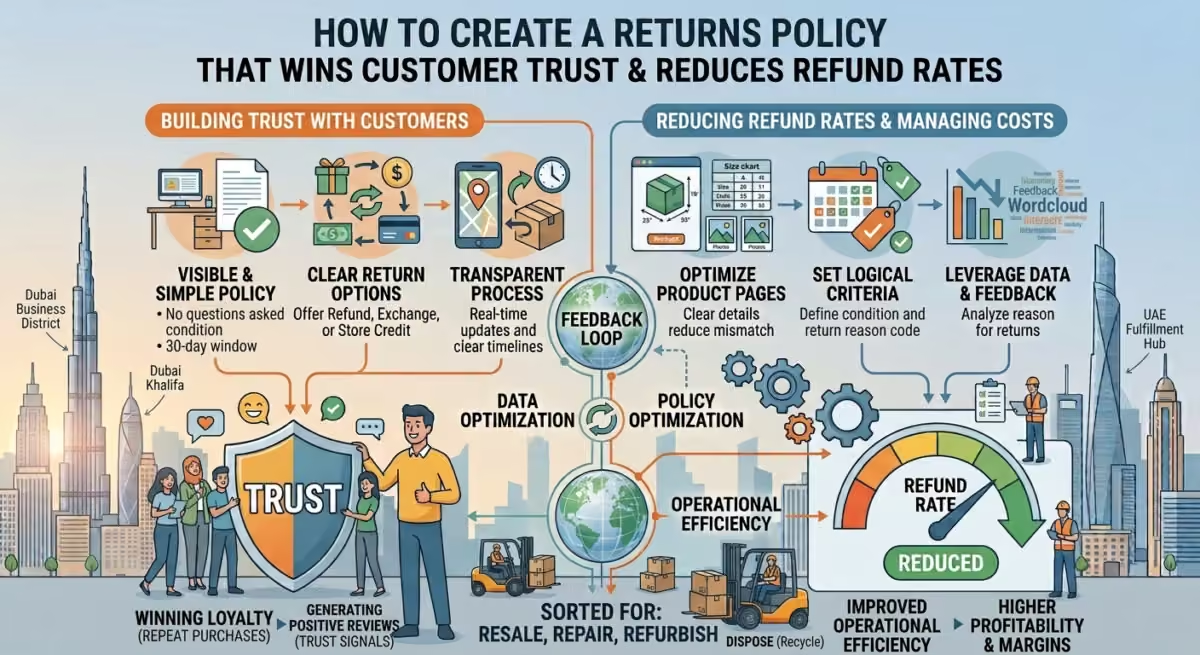
An infographic illustrating how to create an e-commerce returns policy that builds customer trust and reduces refund rates, featuring a split diagram of customer loyalty strategies alongside operational efficiency workflows set against the Dubai skyline.
How to Create a Returns Policy That Wins Customer Trust and Reduces Refund Rates

Mastering returns is a delicate balancing act for e-commerce brands—make it too strict, and you lose customer trust; make it too lenient, and your profit margins take a hit. Discover actionable strategies to build a seamless, customer-first returns policy that converts first-time buyers into loyal brand advocates while optimizing backend operations to keep refund rates and logistics costs low.

Read More
An infographic illustrating how the unboxing experience affects repeat purchases in eCommerce, featuring key packaging elements and a customer loyalty loop set against the Dubai skyline.
How the Unboxing Experience Affects Repeat Purchases in eCommerce

First impressions don’t end at checkout—they extend right to your customer’s doorstep. In today’s competitive UAE eCommerce landscape, the unboxing experience serves as a powerful physical touchpoint that turns one-time buyers into loyal brand advocates. Discover how thoughtful packaging, personalized touches, and seamless presentation drive customer delight, boost repeat purchases, and transform routine deliveries into social-media-worthy moments.

Read More

    Powered by