






Selling on Amazon UAE offers massive growth potential, but choosing the right logistics model can make or break your margins. Discover the step-by-step onboarding process for Amazon.ae, explore the core differences between Fulfilment by Amazon (FBA) and Fulfilment by Merchant (FBM), and learn how to optimize your delivery strategy to scale efficiently in the UAE market.
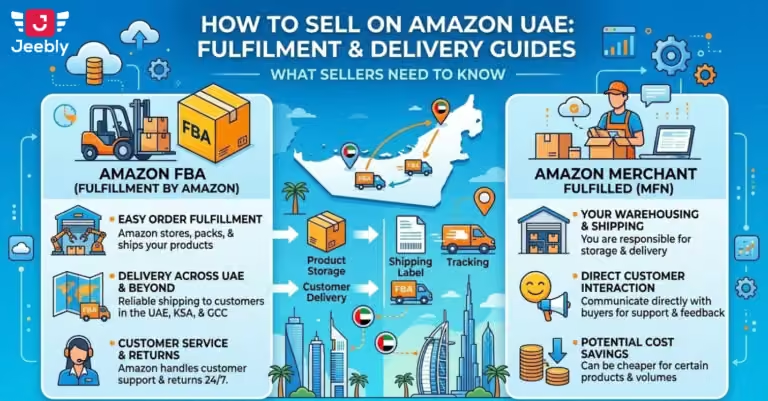
Selling on Amazon UAE starts with more than opening a seller account. You need the right business documents, an eligible product, and a clear plan for storing, packing, and delivering orders.
Amazon.ae offers three main fulfilment options: Fulfilment by Amazon (FBA), Easy Ship, and Self-Ship. Each gives sellers a different level of control over inventory and delivery, so choosing the right model can shape both costs and day-to-day operations.
The best fulfilment setup depends on where you keep inventory, how much control you want over order handling, and which logistics tasks you can manage in-house. This guide explains the Amazon UAE setup process, compares the available fulfilment models, and shows where a local 3PL can support warehousing, pick-and-pack operations, delivery, and returns when those responsibilities remain with the seller.
Key Takeaways
- Businesses operating in the UAE generally need valid commercial registration before selling on Amazon.ae.
- Amazon UAE sellers can choose Fulfilment by Amazon (FBA), Easy Ship, or Self-Ship based on how much control they want over inventory, packing, and delivery.
- Sellers importing FBA inventory into the UAE need an eligible Importer of Record and a clear customs clearance plan.
- A local 3PL is most relevant when storage, packing, delivery, or returns remain under the seller’s control.
- Total fulfilment costs depend on more than marketplace fees. Storage, packaging, delivery, returns, customs, and shipment dimensions can all affect margins.
How Do You Start Selling on Amazon UAE?
To start selling on Amazon UAE, you need to set up the appropriate business structure, register an Amazon.ae seller account, confirm that your products meet marketplace requirements, create your listings, and choose how orders will be fulfilled.
Amazon manages seller accounts through Seller Central, where businesses can add products, update inventory, manage orders, and track payments.
1. Confirm Your Business and Licensing Setup
If your business operates in the UAE, confirm that you have the commercial licence required for your activity before registering. The applicable route can depend on your emirate, business structure, products, and selling activity.
2. Create and Verify Your Amazon Seller Account
Register through Amazon UAE and complete the required business and identity verification. Amazon currently asks sellers to prepare information such as identity documents, business registration details, contact information, a recent bank, card, or utility statement, and bank account details for receiving sales proceeds.
Before starting the application, have the relevant information ready:
- Commercial Registration or applicable business licence
- Accepted identity documentation
- Proof of address where required
- Bank account details
- Authorisation documents if someone is acting on behalf of the business.
Individual vs Professional Amazon Seller Accounts
Amazon UAE offers Individual and Professional selling plans. The better fit depends mainly on expected sales volume and the selling tools you need.
| Individual | Professional |
|---|---|
| Intended for sellers expecting fewer than 40 sales per month | Intended for sellers expecting more than 40 sales per month |
| Suitable when advanced selling tools are not needed | Includes access to additional selling tools, reports, APIs, advertising, and bulk listing features |
| Useful for sellers still deciding what or how much to sell | Better suited to businesses planning a larger or more structured Amazon operation |
Choosing an Individual selling plan does not remove any UAE commercial-licensing requirement that applies to your business.
Amazon currently advertises Professional accounts with no monthly subscription fee for a limited time. This is a promotional offer rather than a permanent pricing rule, so sellers should check Amazon UAE’s current pricing before choosing a plan.
Amazon’s current Beginner’s Guide specifically says the Individual plan may suit sellers with fewer than 40 items per month, while Professional may suit those selling more than 40, using APIs and reports, advertising, bulk tools, or categories requiring application.
Keep names, addresses, and other business details consistent across your documents to reduce avoidable verification issues.
Once registered, Seller Central becomes the main dashboard for managing listings, inventory, orders, and payments.
3. Check Your Product and Category Requirements
Do not create listings before confirming that the products can be sold on Amazon.ae. Amazon requires prior approval for some categories, subcategories, and brands, and the approval process may involve additional documents or eligibility checks.
Most products also require a Global Trade Item Number (GTIN), such as an EAN or UPC. Sellers without a GTIN may be eligible for an exemption in certain cases.
Marketplace approval is separate from UAE product compliance. Some regulated goods may also require permits, testing, or conformity approval before they can be imported or sold in the UAE. MoIAT states that conformity applications for regulated products can require documents such as a valid trade licence and an accredited laboratory test report.
4. Create Your Product Listings
Prepare the information customers and Amazon need to identify and evaluate each product. A listing typically includes the product identifier where required, SKU, title, product details, images, price, and inventory information.
Amazon also allows sellers to add relevant search terms that help customers find suitable products.
5. Choose How You Will Fulfil Orders
Before inventory starts moving, decide who will store, pack, and deliver each order. Amazon UAE offers FBA, Easy Ship, and Self-Ship, and each model places different operational responsibilities on the seller.
This decision affects more than delivery. It can influence inventory control, warehouse requirements, fulfilment costs, returns management, and how much of the logistics process you need to manage yourself.
Do You Need a Trade Licence to Sell on Amazon UAE?
If your business operates in the UAE, you need valid commercial registration to sell on Amazon.ae. Amazon asks business owners to provide Commercial Registration during seller registration and directs UAE businesses to the licensing authority that applies to their jurisdiction and activity.
The exact licence is not the same for every seller. A mainland company, free-zone business, home-based seller, and overseas business can have different registration and licensing requirements.
Can You Use a DED E-Trader Licence to Sell on Amazon UAE?
Dubai’s E-Trader Licence is designed for eligible home-based individuals and entrepreneurs who sell products or services through social media or other online platforms. The licence is issued through Dubai’s Department of Economy and Tourism, formerly known as DED.
An E-Trader Licence should not be treated as a universal Amazon licence. The permitted activity, seller structure, products being sold, and current Amazon verification requirements still need to match.
Sellers should confirm their selected activity with Dubai DET and Amazon before applying rather than assuming every E-Trader setup will qualify.
What Is the Difference Between FBA, Easy Ship, and Self-Ship?
The main difference is who controls storage, packing, and delivery. With Fulfilment by Amazon (FBA), Amazon handles most of the fulfilment process. With Easy Ship, the seller stores and packs the order while Amazon manages delivery. With Self-Ship, the seller manages fulfilment directly or through a third-party logistics provider.
| Factor | FBA | Easy Ship | Self-Ship |
|---|---|---|---|
| Inventory storage | Amazon fulfilment centre | Seller or seller-appointed provider | Seller or seller-appointed provider |
| Order packing | Amazon | Seller | Seller or 3PL |
| Customer delivery | Amazon | Amazon | Seller or selected carrier |
| Operational control | Lower | Shared | Highest |
| Typical fit | Sellers wanting Amazon-managed fulfilment | Sellers retaining inventory and packing control | Sellers wanting greater fulfilment flexibility |
| 3PL relevance | Limited once stock enters FBA | Useful for storage and packing support | Highest relevance |
| Prime eligibility | Available for eligible FBA offers | Not shown as Prime-eligible in Amazon UAE’s current fulfilment comparison | Not shown as Prime-eligible in Amazon UAE’s current fulfilment comparison |
The operational difference becomes more important as order volume grows. FBA transfers more fulfilment work to Amazon, Easy Ship divides responsibilities between Amazon and the seller, and Self-Ship keeps more of the fulfilment process under the seller’s control.
The following sections explain what those differences mean for inventory planning, logistics responsibility, costs, and the potential role of a third-party fulfilment partner.
How Does Fulfilment by Amazon Work in the UAE?
FBA shifts most day-to-day order fulfilment to Amazon after eligible inventory enters its fulfilment network. Sellers still manage sourcing, inventory planning, replenishment, product preparation, and inbound shipments to Amazon.
Costs can include fulfilment charges and storage fees. Inventory that moves slowly may also increase storage costs, so sellers need to balance stock availability with turnover.
For overseas inventory, customs planning is especially important. Amazon and its fulfilment centres do not act as the Importer of Record, so sellers must arrange an eligible importer and ensure the shipment meets UAE customs and product-compliance requirements before it reaches Amazon.
A logistics provider may support activities before inventory enters FBA, such as inbound freight or inventory preparation. It does not replace Amazon’s fulfilment operations once the stock enters the FBA network.
How Does Amazon Easy Ship Work in the UAE?
With Amazon Easy Ship, the seller keeps inventory and prepares each order for dispatch, while Amazon manages the delivery to the customer. This gives sellers more control over stock and packing than FBA without requiring them to handle the last-mile delivery themselves.
Easy Ship requires sellers to maintain accurate inventory records and prepare orders within Amazon’s required dispatch timelines. Delays in picking or packing can affect the handoff to Amazon and the customer’s delivery experience.
Easy Ship sellers may still outsource seller-controlled tasks such as warehousing, inventory management, and pick-and-pack operations to a local fulfilment provider. In that setup, the 3PL supports the seller’s side of the process, while Amazon remains responsible for the Easy Ship delivery leg.
How Does Self-Ship Work for Amazon UAE Sellers?
With Self-Ship, the seller remains responsible for storing inventory, packing orders, arranging delivery, and meeting Amazon’s dispatch and delivery requirements. Sellers can manage these tasks in-house or work with a third-party logistics provider.
This model gives businesses more control over where inventory is stored, how orders are prepared, and which carrier handles delivery. That flexibility can be useful for sellers with established UAE inventory, multi-channel operations, specialised handling needs, or products that do not fit neatly into an FBA setup.
The trade-off is greater operational responsibility. Sellers need reliable inventory records, consistent packing processes, accurate tracking, and a delivery setup that can meet marketplace expectations.
For sellers comparing FBA vs FBM in the UAE, the main trade-off is control versus operational responsibility. FBA transfers more fulfilment work to Amazon, while Self-Ship keeps those decisions with the seller and its chosen logistics partners.
Self-Ship should not be assumed to cost less than FBA. The total cost depends on order volume, storage requirements, parcel dimensions, delivery zones, failed delivery attempts, returns, and the service level required.
Where Does a UAE Fulfilment Partner Fit Into Amazon Selling?
A UAE fulfilment partner is most useful when storage, packing, delivery, or returns remain under the seller’s control. This is especially relevant for Self-Ship sellers and for Easy Ship sellers that want to outsource seller-managed warehousing and pick-and-pack operations.
Warehousing and Inventory Management
A local fulfilment partner can store inventory closer to UAE customers and help sellers maintain better visibility over stock movement. Jeebly Bizz supports warehousing and fulfilment operations that can include barcode-based tracking, automated inventory movement, and access to live inventory and order information.
For multi-channel sellers, a central fulfilment operation can also make it easier to monitor inventory allocated across Amazon and other e-commerce orders.
Pick-and-Pack Fulfilment
Where a seller’s order systems are integrated with the logistics provider, incoming orders can move directly into the warehouse workflow without repeated manual entry. Jeebly supports technology-enabled order and inventory management for applicable client setups.
The warehouse can then pick, pack, and prepare the order for the required delivery flow. This is particularly useful for sellers that have outgrown manual fulfilment but do not want to build an in-house warehouse operation.
Last-Mile Delivery
Self-Ship sellers also need a reliable delivery process. Jeebly Dash can support eligible last-mile deliveries outside Amazon’s own delivery network, including same-day and scheduled delivery options within the UAE.
This support applies to seller-managed delivery flows. It does not replace Amazon’s FBA or Easy Ship delivery operations.
Returns and Reverse Logistics
Returns can create additional work when the seller manages fulfilment directly. Jeebly Bizz can support reverse logistics through pickups, tracking, digital proof of pickup, quality checks, and return-to-store or return-to-warehouse workflows.
Instant refunds may be available in some client setups, but they are not a standard feature and depend on the individual business arrangement.
For sellers building their own returns process, Jeebly’s guide to creating an effective returns policy can help connect customer-facing terms with the operational steps behind each return.
Do You Need an Importer of Record for Amazon FBA UAE?
If inventory is imported into the UAE for delivery to an Amazon fulfilment centre, the shipment needs an eligible Importer of Record. Amazon and its fulfilment centres do not act as the Importer of Record for seller shipments.
The Importer of Record is responsible for the import declaration and applicable customs duties, taxes, and import requirements. Depending on the shipment and product category, supporting documentation can include:
- Commercial invoices
- Customs classification
- Country-of-origin details
- Import permits
- Product conformity documents
Sellers should arrange the importer and customs process before inventory is dispatched. Missing or incorrect documentation can delay clearance and prevent stock from reaching the fulfilment centre on schedule.
Product-specific requirements also matter. Certain regulated goods may need additional UAE conformity approvals or permits before they can be imported and sold.
What Costs Should Amazon UAE Sellers Plan For?
The cost of selling on Amazon UAE depends on the product category, fulfilment model, inventory volume, storage period, parcel dimensions, return rate, and import requirements. Sellers should calculate the full fulfilment cost rather than comparing only Amazon’s headline fees.
Amazon Marketplace and Fulfilment Costs
Amazon UAE currently states that most referral fees range from 4.5% to 15%, depending on product category. Other costs can vary according to the fulfilment model and services used.
Sellers may need to budget for:
- Category-based referral fees
- FBA fulfilment fees
- FBA storage fees
- Easy Ship charges where applicable
- Selling-plan charges or promotional pricing
- Optional Amazon services
Amazon pricing can change, so sellers should verify current charges before setting margins or forecasting profitability.
Seller-Controlled Logistics Costs
Self-Ship and some Easy Ship setups can involve additional operating costs, including:
- Warehousing
- Pick-and-pack services
- Packaging materials
- Last-mile delivery
- Failed delivery attempts
- Returns and reverse logistics
- Inventory handling
Actual costs depend on order volume, delivery zones, parcel dimensions, return rates, and the required service level.
Import, Compliance, and Shipment Costs
Imported inventory may involve customs duty, VAT, customs brokerage, testing, conformity certification, and permits for regulated goods.
Shipment dimensions can also affect logistics costs. Large, lightweight parcels may be charged using volumetric weight because they occupy more vehicle or cargo space relative to their actual weight.
Sellers sending inventory to a fulfilment centre or shipping directly to customers can use Jeebly’s guide on how to calculate volumetric weight when estimating shipment costs.
What Common Mistakes Should Amazon UAE Sellers Avoid?
Many Amazon selling problems can be traced back to registration, product compliance, inventory planning, or fulfilment decisions made before orders begin.
- Listing products before checking restrictions: Some categories, brands, or regulated products may require Amazon approval or additional UAE compliance documentation.
- Sending imported FBA inventory without an Importer of Record: Imported stock needs a clear customs and clearance plan before it is shipped to an Amazon fulfilment centre.
- Choosing fulfilment based only on headline fees: Storage, packaging, failed deliveries, returns, and inventory handling can change the actual cost of each model.
- Ignoring volumetric weight: Large but lightweight parcels may cost more than expected because shipment pricing can reflect dimensional size.
- Using Self-Ship without a reliable fulfilment process: Poor inventory accuracy, delayed dispatch, weak tracking, or inconsistent delivery can affect the customer experience.
Which Fulfilment Model Is Best for Your Amazon UAE Business?
There is no single best model for every seller. The right choice depends on how much fulfilment responsibility you want to retain, where inventory is stored, product demand, margins, and your available logistics resources.
| If your priority is... | Consider |
|---|---|
| Reducing seller-managed fulfilment work | FBA |
| Keeping control of inventory and packing while Amazon delivers | Easy Ship |
| Choosing your own warehouse, fulfilment provider, or carrier | Self-Ship |
| Using different approaches for different products or channels | A hybrid fulfilment setup |
For an FBA vs FBM UAE decision, do not compare fees alone. Consider inventory turnover, storage, packing, delivery, returns, service levels, and the internal resources required to operate each model.
Choose the Right Amazon UAE Fulfilment Setup
A successful Amazon UAE operation depends on more than getting products listed. Business registration, product compliance, inventory planning, fulfilment costs, and delivery responsibilities should all support the same operating model.
If your business is not registered yet, start with Jeebly’s guide on how to get an e-commerce licence in the UAE.
For inventory managed outside Amazon FBA, Jeebly Bizz can support UAE warehousing, pick-and-pack fulfilment, inventory management, and reverse logistics. Jeebly Dash can support eligible seller-managed last-mile delivery outside Amazon’s own delivery network.
Talk to Jeebly about building a UAE fulfilment and delivery setup that fits your Amazon store, order volume, and operational needs.
Frequently Asked Questions

Businesses may apply different commercial return conditions to sale, clearance, or promotional items where permitted, but those terms should be disclosed before purchase. They should not override statutory rights that apply when goods are defective, damaged, misdescribed, or otherwise covered by UAE consumer law.
Not usually. A refused cash-on-delivery order generally becomes a failed delivery and enters a return-to-origin (RTO) workflow because the customer has not completed payment or accepted the shipment. Businesses should track COD refusals separately from post-delivery product returns.
Not automatically. A business can maintain one overall returns framework, but return windows, exclusions, refund obligations, shipping charges, and consumer rights may vary between the UAE and other GCC markets. The policy should identify any country-specific terms that apply.
They should be monitored, but preferably as a separate RTO or failed-delivery metric. Combining COD refusals with customer-initiated product returns can make it harder to identify whether costs are coming from product issues, fulfilment problems, failed deliveries, or customers refusing COD orders.
A restocking fee should only be used when it is clearly disclosed, commercially appropriate, and permitted under the laws that apply to the transaction. Businesses should be especially careful not to apply such fees where the customer has statutory rights because an item is defective, damaged, incorrect, or does not match the agreed terms.
Routes to insightful reads
How to Sell on Amazon UAE: What Sellers Need to Know About Fulfilment and Delivery
Author:
September 28, 2026

High-Value Item Delivery in the UAE: Insurance, Handling, and What to Ask
Author:
September 25, 2026
Delivering high-value, luxury items in the UAE requires far more than standard shipping—it demands white-glove precision, specialized security protocols, and comprehensive transit insurance. Discover how premium handling, secure transit procedures, and asking the right questions of your courier partner ensure high-ticket goods reach your clients safely, preserving both product integrity and brand trust.

Back-to-School Delivery Trends: What UAE Retailers Learned This Season
Author:
September 23, 2026
As the back-to-school rush hits the UAE, retailers face surging demand for fast, flexible, and reliable last-mile deliveries. From school uniforms and backpacks to tech essentials, learn how seamless multi-channel logistics, scheduled doorstep deliveries, and real-time tracking help UAE brands meet evolving parent expectations and turn seasonal spikes into long-term customer loyalty
Urgent Delivery in the UAE: Jeebly Dash Services, Costs and Booking
Author:
September 21, 2026
When speed is everything, traditional delivery options just won’t cut it. Learn how Jeebly Dash provides ultra-fast, on-demand courier services across the UAE—giving businesses and consumers a seamless booking experience, transparent pricing, and real-time tracking to ensure urgent parcels reach their destination within minutes.
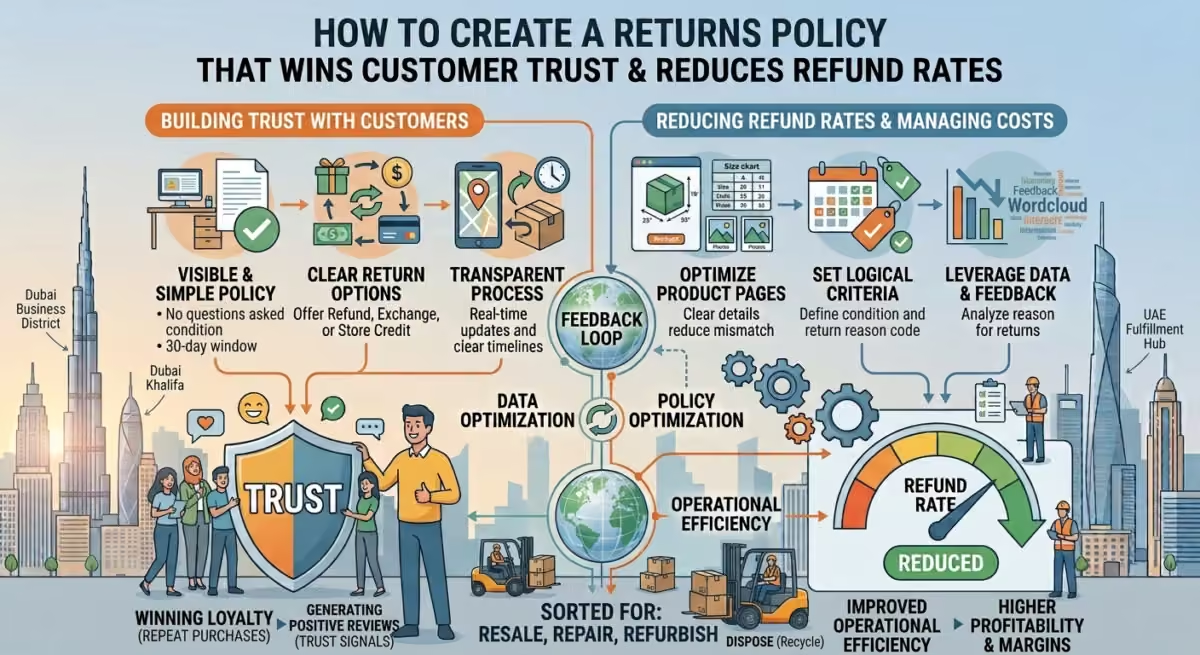
How to Create a Returns Policy That Wins Customer Trust and Reduces Refund Rates
Author:
September 16, 2026
Mastering returns is a delicate balancing act for e-commerce brands—make it too strict, and you lose customer trust; make it too lenient, and your profit margins take a hit. Discover actionable strategies to build a seamless, customer-first returns policy that converts first-time buyers into loyal brand advocates while optimizing backend operations to keep refund rates and logistics costs low.
