





Jeebly | Logistics Solutions

sustainable last mile logistics in the UAE

The Future of Sustainable Last Mile Logistics in the UAE

How E-Bikes and Battery Swapping Networks Are Reshaping Urban Delivery

Last mile delivery has never been more critical than it is today. Every online order, every food delivery, and every urgent shipment across a city depends on this final stage of logistics. Yet, this same step is also the most resource-intensive, operationally complex, and environmentally challenging part of the supply chain.

As cities across the UAE continue to grow and consumer expectations around speed rise, the logistics industry faces an urgent question: how do we scale delivery without increasing congestion, emissions, and inefficiency?

At Jeebly, we believe the future lies in sustainable last mile logistics in the UAE, powered by clean mobility, intelligent planning, and strong data visibility. Two innovations are playing a defining role in this transformation: electric bikes and battery swapping networks.

The Growing Pressure on the Last Mile

Urban delivery demand in the UAE is increasing rapidly. E-commerce growth, food delivery platforms, same-day shipping expectations, and social commerce have all placed immense pressure on last mile operations.

Traditional delivery models, reliant on fuel-powered bikes, vans, and fragmented routing, are struggling to keep up. The result is familiar:

1) Increased traffic congestion

2) Higher fuel costs

3) Rising carbon emissions

4) Unpredictable delivery timelines

5) Greater rider fatigue and safety risks

If last mile logistics continues to rely on outdated models, sustainability goals will remain out of reach. The industry must move from a mindset of short term speed to one of long-term, designed efficiency.

Why Sustainable Last Mile Logistics Matters in the UAE

The UAE is uniquely positioned to lead the shift toward greener logistics. With strong government support for sustainability, smart cities, and clean mobility initiatives, the region is actively investing in solutions that reduce environmental impact while maintaining economic growth.

For logistics companies, adopting sustainable delivery solutions is no longer optional—it is becoming a competitive advantage. Businesses that reduce emissions, optimize routes, and protect rider wellbeing are better equipped to scale in a market where speed, reliability, and responsibility matter equally.

This is where electric bikes for last mile delivery step into the spotlight.

Sustainability Impact on Urban Logistics

The case for sustainable last mile logistics is increasingly supported by data. Studies across global and regional markets consistently show that electric mobility significantly reduces environmental impact, especially in dense urban areas.

According to industry research, electric bikes can reduce last mile delivery emissions by up to 90% compared to fuel-powered motorcycles on short urban routes. For cities like Dubai and Abu Dhabi, where delivery density is high, this reduction has a measurable impact on overall carbon output.

Operational data also highlights efficiency gains:

1) Electric bikes reduce fuel and maintenance costs by 30–40% annually

2) Battery swapping networks increase rider uptime by up to 25%

3) AI-powered route optimization reduces delivery distance by 10–20%, lowering energy use and delivery times

Beyond emissions, sustainability improvements also enhance customer experience. Predictable delivery windows, fewer failed deliveries, and real-time tracking contribute to higher satisfaction and repeat usage.

For businesses, this translates into a powerful combination: lower operational costs, stronger brand trust, and improved long term scalability. Sustainability is no longer just an environmental goal, it is a measurable performance advantage.

How E-Bikes Are Transforming Urban Delivery

Electric bikes are changing the rhythm of last mile logistics in dense urban environments. They combine the agility of traditional bicycles with the reliability of motorized vehicles, without the environmental cost.

In high density areas, e-bikes often outperform cars and vans. They can navigate traffic more efficiently, access narrow internal routes, and reduce delivery times through neighbourhood level optimization.

The benefits are immediate and measurable:

1) Lower carbon emissions with every delivery

2) Reduced noise pollution in residential areas

3) Significant fuel and maintenance cost savings

4) Higher order completion rates for riders

5) More predictable delivery windows for customers

For sustainable last mile logistics in the UAE, e-bikes are not just an alternative—they are becoming the preferred solution for urban delivery routes.

Battery Swapping Networks: Unlocking True Scale

While e-bikes offer clear advantages, early adoption faced one major challenge: charging downtime. Traditional charging cycles could take hours, limiting rider productivity and fleet uptime.

Battery swapping networks have removed this barrier entirely.

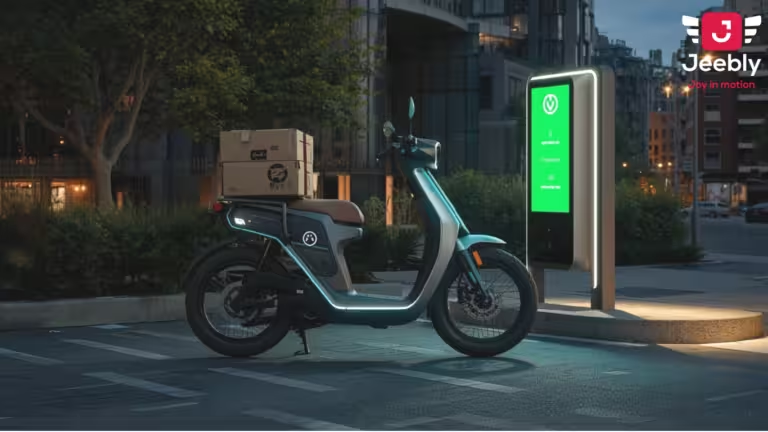
Instead of waiting to recharge, riders can swap a depleted battery for a fully charged one in seconds. There is no downtime, no performance drop, and no disruption to delivery schedules.

Across the UAE, these networks are expanding rapidly and their impact is transformative:

1) Riders complete more deliveries without interruption

2) Fleet idle time drops significantly

3) Battery health and performance remain consistent

4) Access to power becomes predictable across the city

5) Delivery operations become cleaner and more reliable

For logistics companies, battery swapping is not a minor upgrade. It represents a fundamental shift in fleet efficiency, enabling electric mobility to operate at and often exceed the performance of fuel based delivery vehicles.

From Rushed Speed to Designed Speed

Speed will always matter in logistics, but the definition of speed is evolving.

The old model focused on pushing riders harder, often at the cost of safety, consistency, and sustainability. The new model focuses on designed speed: speed achieved through smarter systems rather than pressure.

Designed speed is built on:

1) AI-driven route optimization

2) Smarter rider allocation

3) Clean, efficient mobility

4) Infrastructure that supports flow instead of forcing it

E-bikes paired with battery swapping networks fit seamlessly into this approach. They create a delivery ecosystem that is fast, safe, predictable, and environmentally responsible.

Role of Government & Regulations in UAE Sustainability

Government support plays a critical role in accelerating sustainable last mile logistics in the UAE. National and emirate level initiatives focused on clean energy, smart cities, and carbon reduction have created a strong foundation for green logistics adoption.

Programs aligned with the UAE Net Zero 2050 Strategy actively encourage the use of electric vehicles, alternative mobility solutions, and energy efficient infrastructure. Investments in smart road systems, EV incentives, and urban planning make it easier for logistics providers to adopt cleaner delivery models.

Municipal authorities are also prioritizing:

1) Reduced congestion in city centers

2) Lower emissions in residential and commercial zones

3) Safer delivery environments for riders and pedestrians

These policies indirectly support e-bikes, micro fulfillment centers, and optimized routing strategies by making cities more compatible with sustainable delivery systems.

For logistics companies, alignment with government sustainability goals is both a responsibility and an opportunity. Businesses that proactively adopt green delivery solutions are better positioned to benefit from future incentives, partnerships, and regulatory support.

Challenges in Adopting Sustainable Last-Mile Logistics

While the benefits of sustainable last mile logistics in the UAE are clear, adoption is not without challenges. For many logistics providers and businesses, the transition requires a shift in mindset, infrastructure, and operations.

One of the primary challenges is initial investment. Electric fleets, smart routing technology, and micro-fulfillment centers require upfront capital. Smaller businesses may hesitate, even though long-term operational savings often outweigh the initial costs.

Another challenge is infrastructure readiness. While battery swapping networks and EV support are expanding rapidly across the UAE, coverage can still vary by area. Logistics companies must carefully plan routes and service zones to ensure consistent access to power and support.

There is also a behavioral and operational shift involved. Moving away from fuel-based delivery models requires retraining riders, updating dispatch systems, and redesigning delivery workflows. Without proper planning and data visibility, sustainability initiatives can struggle to scale effectively.

However, these challenges are not roadblocks they are growing pains. Companies that invest early, plan strategically, and adopt technology driven solutions are better positioned to lead as sustainable logistics becomes the industry standard.

How Jeebly Is Building a Sustainable Logistics Future

At Jeebly, sustainability is not a separate initiative, it is embedded in how we design our logistics solutions.

Expanding Our E-Bike Fleet

We see electric bikes as the backbone of future urban delivery. Our roadmap focuses on deploying e-bikes across high density areas, supported by grass root level optimization to reduce distance and emissions.

Exploring Battery Swapping Partnerships

We actively explore partnerships that strengthen battery swapping infrastructure, ensuring higher rider uptime and consistent performance across delivery zones.

Smarter Routing and Real-Time Visibility

Our technology stack prioritizes data driven decision making. AI powered routing reduces empty runs, improves ETAs, and lowers overall energy consumption while giving customers better visibility into their deliveries.

Growing Micro-Fulfillment Centers

Placing inventory closer to demand shortens delivery cycles, reduces travel distance, and lowers emissions. Micro fulfillment centers are a key pillar of sustainable last mile logistics in the UAE.

Championing Rider Wellbeing

A truly sustainable system supports the people who power it. Safe routes, realistic timelines, quick battery swaps, and intelligent rider allocation are essential to long term success.

What the Road Ahead Looks Like

The Middle East is moving toward clean urban mobility faster than many global markets. With rising e-bike adoption, expanding EV infrastructure, and growing battery swapping networks, the foundation for sustainable last mile logistics is already in place.

The next phase will be defined by companies that design for both efficiency and responsibility that reduce emissions, protect rider safety, and use technology to deliver smarter, not just faster.

At Jeebly, we are committed to building this future. One where deliveries remain quick, operations stay efficient, and cities across the UAE grow cleaner and more connected.

    Powered by